Disclosure: Some links in this post are affiliate links. As an Amazon Associate I earn from qualifying purchases, at no extra cost to you. Learn more
Specs are compiled from manufacturer listings and verified buyer reviews and can change over time — please confirm the key details on the product page before buying.
Buying a Japanese mobile phone sounds simple until you hit the carrier question. Most of these handsets are sold as international or factory-open up models, so the real job is matching the phone to the network you actually use. This guide sorts eleven current open up Android phones by what they do well, which carrier bands they cover, and where each one makes you compromise.
This guide is built by comparing the manufacturers’ published specifications and the patterns across verified customer reviews, so you get each pick’s real strengths and trade-offs instead of marketing spin.
You will see battery capacity in mAh, display refresh rate in Hz, and camera megapixels explained in plain terms so you can compare them at a glance. These are the same numbers that decide how the best Japanese Mobile Phones hold up through a full working day.
Top Picks


How To Choose The Best Japanese Mobile Phones
The single most useful check you can make before buying is network compatibility, not camera megapixels. An open up international handset only works properly when its radio bands line up with your carrier. Several phones here run happily on T-Mobile, Mint, and Tello but are not recommended on Verizon without manual registration. Read the compatibility note on each listing before you add it to the cart.
Match the radio bands to your carrier first
Look for the 5G NR band list on the listing and compare it with the bands your carrier publishes. A phone that lists n41, n66, and n71 tends to cover T-Mobile well, while AT&T relies on a different set. If your carrier is Verizon, expect to contact customer service to whitelist the phone’s IMEI (the unique ID number every phone carries) before it will activate.
Battery capacity versus charging speed
Battery capacity is written in mAh, short for milliamp-hours — a bigger number means a larger tank. The phones here run from 4700mAh to 7400mAh. Charging wattage tells you how fast that tank refills, so a 80W charger tops up quicker than a 15W one. A large battery with slow charging still means you sit near a wall outlet longer.
Display smoothness and sunlight visibility
Refresh rate in Hz measures how many times per second the screen redraws, so a 165Hz panel scrolls more smoothly than a 60Hz one. Peak brightness in nits decides whether you can read the screen outdoors. Anything around 3000 nits and above is built for direct midday sun.
Side-by-Side Comparison
| Model | Best For | Battery (mAh) | Display | Storage / RAM | Amazon |
|---|---|---|---|---|---|
| Nothing Phone (2)★ Best Overall | Design lovers who want a clean OS | 4700 | 6.7″ LTPO OLED | 512GB / 12GB | Amazon |
| OnePlus 15RLongest Runtime | Marathon battery users | 7400 | 165Hz 1.5K | 256GB / 12GB | Amazon |
| Nothing Phone (3a)Best Everyday Value | Bright-screen everyday value | 5000 | 6.77″ 120Hz AMOLED | 128GB / 8GB | Amazon |
| Xiaomi Redmi Note 15 Pro 5G | High-resolution camera on a budget | 6580 | 6.83″ 120Hz 1.5K AMOLED | 256GB / 8GB | Amazon |
| Nothing Phone (3a) Pro | Zoom and concert photography | 5000 | 6.77″ 120Hz AMOLED | 256GB / 12GB | Amazon |
| Nothing Phone (4a) Pro | Brightest display and slim build | 5080 | 6.83″ 144Hz AMOLED | 128GB / 8GB | Amazon |
| Xiaomi 15T | Leica-branded camera tuning | 5500 | 6.83″ 120Hz AMOLED | 512GB / 12GB | Amazon |
| Nothing Phone (3) | Four 50MP cameras and Glyph play | 5150 | 6.67″ 120Hz AMOLED | 256GB / 8GB | Amazon |
| OnePlus 15 | Flagship speed with silicon-carbon battery | 7300 | 6.78″ 165Hz AMOLED | 512GB / 16GB | Amazon |
| HONOR Magic V5 | Foldable productivity with two screens | 5820 | 7.95″ foldable + 6.43″ OLED | 512GB / 16GB | Amazon |
| HONOR Magic V2 | Slim folding phone with a light body | 5000 | Foldable OLED | 512GB / 16GB | Amazon |
Detailed Reviews
1. Nothing Phone (2) — 512GB + 12GB RAM
Our pick — 4.5+★ from 450+ verified ratings; the strongest balance of quality and price.
A clean Android build with a rear light panel that earns its place
If you want a phone that feels unlike everything else on the shelf, the Nothing Phone (2) is the obvious starting point. The rear Glyph Interface is a set of LED strips you can assign to contacts and notification types, so you can see who is calling from across the room without waking the screen. The chassis uses 100% recycled aluminium for the mid-frame, which keeps the build feeling solid without extra weight.
The 4700mAh battery is the honest compression point. Nothing quotes up to 22.5 hours of use and a full charge in 55 minutes. Some buyers see it drop off sharply, while others stretch it through two days of battery saver. Where this phone wins people over most is plain quality and build — the internals hold up to a year of caseless daily use, drops included. Software is the other reason people stay: the Nothing OS 2.0 interface ships without carrier bloat, and updates arrive monthly.
What you give up is expandable storage, a headphone jack, and any real water rating beyond IP54 (dust-protected and splash-resistant, not submersible). There is also no charger in the box, and a full 0-100% charge from a standard adapter can take most of a day. Buy this for the design, the clean software, and the dual 50MP cameras. skip it if you routinely swap microSD cards or need to take calls in heavy rain.
What buyers keep coming back to
- Dual 50MP rear cameras with optical image stabilisation (a moving-lens system that cancels hand shake) so night shots stay sharp
- 512GB storage and 12GB RAM mean you can hold years of photos and keep apps open
- Monthly Nothing OS 2.0 updates clean up bugs without a factory reset
- 15W Qi wireless charging (pads that power the phone without a cable) plus 5W reverse charging for earbuds
Where it pulls its punches
- IP54 only, which handles splashes but not a dunk
- No headphone jack and no microSD slot
- Battery life is inconsistent depending on how you use it
Buy this one if: you want a distinctive phone with clean software and generous storage.
Think twice if: a headphone jack or waterproofing matters more than the look.
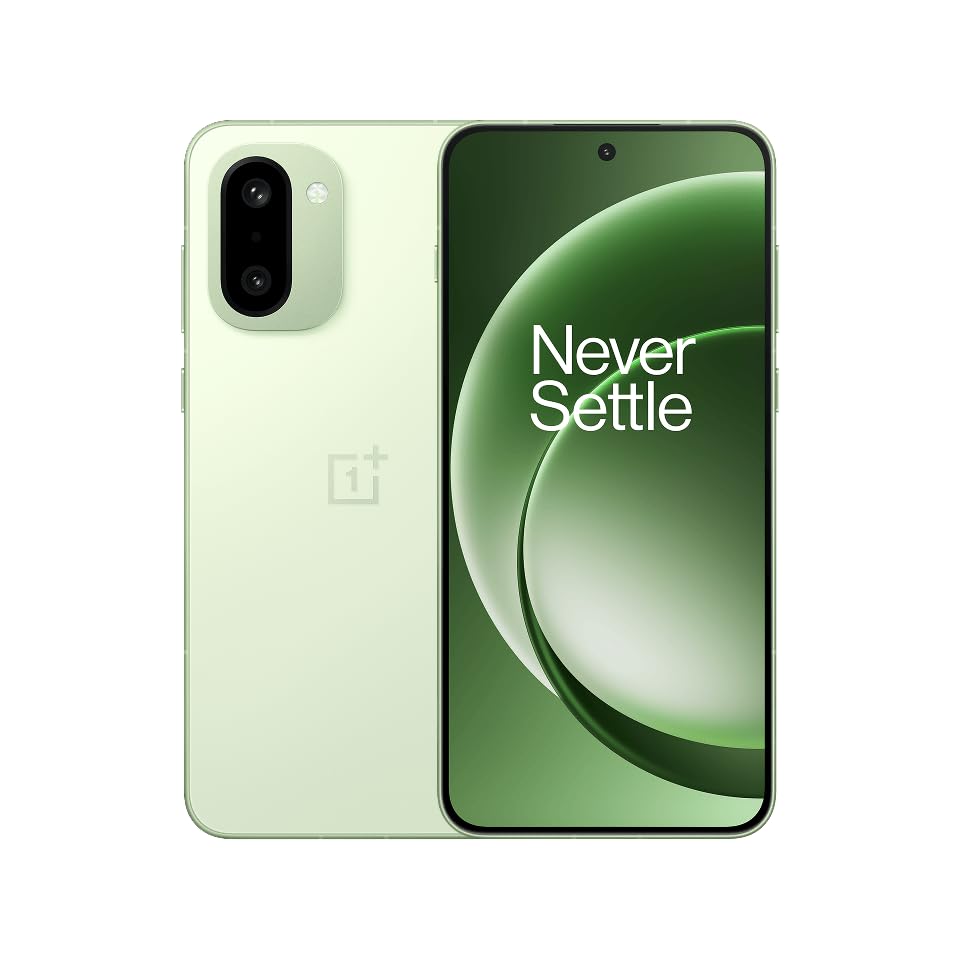
2. OnePlus 15R — 12GB RAM + 256GB Storage
The phone you charge on Sunday and forget about until Friday
OnePlus built this one around a 7400mAh battery, its largest ever, and it changes how you treat a phone. Buyers report stretching a full charge across seven to eight days of light use, dropping from 100% to 20%. Heavy users see a day and a half to two days, with 40-45% left after 15-18 hours of casual use. The 80W SUPERVOOC charger (OnePlus’s own fast-charging standard) tops it up fast enough that a meal break covers most of the fill.
Around that battery sits a 165Hz display with a 3200Hz touch response chip, which makes taps and swipes register almost instantly — the screen feels faster than a standard 60Hz phone under your thumb. The Snapdragon 8 Gen 5 processor runs OxygenOS 16 smoothly, and the listing claims the most complete IP ratings in the industry for dust and water resistance. Where it stumbles is the camera: it is decent, not exceptional, and one complaint is that the slick finish makes the phone slide off surfaces without a case.
The 6.83-inch screen is a genuinely large canvas, and that comes with bulk. If you have small hands or usually carry a phone in a pocket, budget for a case or a wrist strap. The 7400mAh battery is the number that carries this pick: it beats every other phone here on capacity, and the practical result is a phone you stop worrying about by lunchtime.
What the spec sheet promises: 165Hz smoothness, 5G on Snapdragon 8 Gen 5, and the largest battery in this whole article.
What it actually delivers: a genuinely fast interface and a battery that outlasts everything else on this list, with a camera that is simply fine.
Reach for this if: you want to leave the charger at home and still have power on day three.
Look elsewhere if: you shoot a lot of photos and expect flagship image quality.
3. Nothing Phone (3a) — 8+128GB
Bright enough to read at noon, quick enough to refill before coffee
This is the model to start with if you want the Nothing look without premium-tier commitment. The 6.77-inch AMOLED display pushes 3000 nits at peak and refreshes at 120Hz, which means text stays crisp in direct sun and scrolling feels buttery. A 5000mAh battery backs it, and 50W fast charging puts roughly half of it back in 19 minutes — enough to cover an evening of heavy use if you only remembered to plug in late.
The camera side runs a 50MP main sensor plus a 50MP telephoto with AI-assisted 30x zoom, and the 32MP front camera handles selfies and video calls. The Snapdragon 7s Gen 3 processor covers multitasking and gaming without lag. Charging is where buyers get genuinely surprised: several report going from empty to full in under an hour, and to 75% in 30 minutes. The display is the other repeated source of delight, described as clear and good-looking from the first power-on.
The caution sits in connectivity. This phone is not recommended on Verizon, and AT&T users have reported service issues. T-Mobile and its partner networks like Mint and Tello are the safer fit. There is also no charger or case in the box beyond what the listing shows, and users suggest grabbing a fast charging cable separately.
Reasons this sits high on the list
- 3000-nit AMOLED display stays readable in bright outdoor light
- 50W fast charging brings the 5000mAh battery back fast
- 50MP main plus 50MP telephoto covers wide and zoom shots
- Clean Nothing OS interface with no carrier bloat
The bits to check before you buy
- Verizon is explicitly not recommended
- AT&T compatibility is the most frequently flagged weak point
- No fast charger or protective case included
This is your phone if: you use T-Mobile or a partner network and want a bright, fast phone without stretching your budget.
Hold off if: you are locked into Verizon or heavily rely on AT&T coverage.
4. Xiaomi Redmi Note 15 Pro 5G — 256GB + 8GB
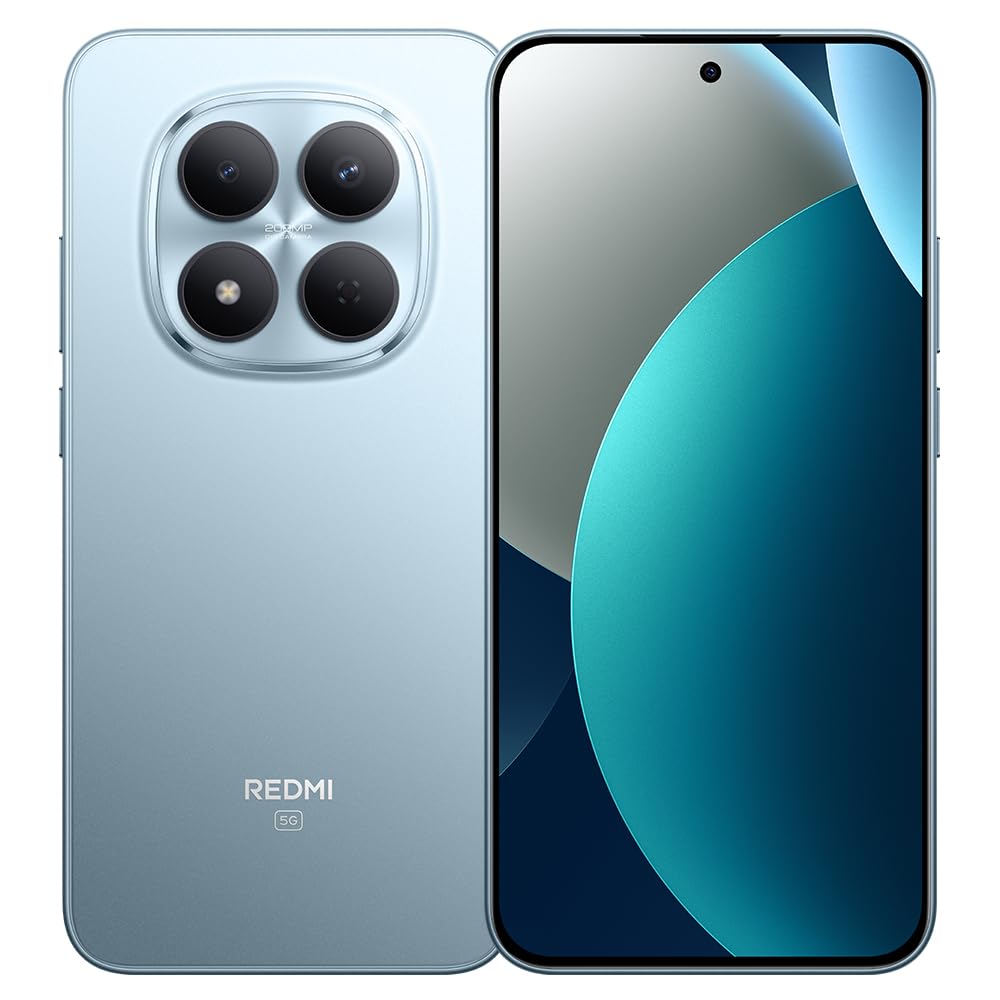
A 200MP sensor and a 6580mAh battery in the same mid-range shell
Xiaomi’s Redmi Note 15 Pro 5G leads with a 200MP main camera that has optical image stabilisation, which keeps shots sharp when your hands move. The 6.83-inch AMOLED display hits 3200 nits at peak and refreshes at 120Hz, so it handles sunlight as well as far more expensive phones. A MediaTek Dimensity 7400-Ultra processor runs the show, and the 6580mAh battery is a genuinely large tank for a phone that is not much bulkier than a standard handset.
Performance earns the loudest praise from owners — the phone feels snappy for shopping apps, payment wallets, and messaging, with 5G that works reliably on T-Mobile and its partner networks. Charging is fast too, with the bundled MI turbo charger reported to top up in minutes. What is less settled is the camera reputation: some buyers call the pictures great and the AI editing useful, others find the output a generation or two behind the market leaders. One 200MP sensor does not guarantee better pictures if the processing lags.
The compatibility notes deserve a careful read. In the US, it is T-Mobile, Mint, and Tello territory, and it needs an already-activated SIM. Verizon is not on the supported list. This is a build for someone who prioritises camera resolution and battery life over brand prestige — the display and speed consistently draw compliments, and the low-light camera is the one spot to temper expectations.
Why owners rate it so highly: the display, the performance, and the value land together, and the 6580mAh battery keeps it going through a full day of heavy app use.
Where it slips: the camera earns mixed marks, and the carrier list is narrow.
Best fit for: T-Mobile or Mint users who want the biggest camera sensor at a mid-range total.
Not the one for: Verizon customers or anyone who wants carrier-agnostic flexibility.
5. Nothing Phone (3a) Pro — 12+256GB

A periscope lens that brings the stage, the stadium, and the moon closer
Nothing made the 3a Pro for people who zoom constantly. The 50MP periscope lens (a sideways-folding telephoto that fits real optical magnification into a slim phone) delivers 3x optical and 60x ultra zoom with optical stabilisation. At night it can pick out the moon, and it handles concert and sports shots where you cannot get close. The 50MP front camera and 50MP main sensor with OIS cover the rest, with 4K video and a TrueLens Engine handling colour.
The 6.77-inch AMOLED screen hits 3000 nits, which makes mid-day outdoor use comfortable, and it refreshes at 120Hz with 2160Hz PWM dimming to reduce flicker fatigue. A 5000mAh battery backs it, with a claimed up to 2 days of use and 50W charging that reaches 50% in 20 minutes. Performance is the aspect owners praise most often, and owners describe the whole package as premium-feeling for the asking price. A dedicated Essential Key captures screens and voice memos, and the Essential Space AI transcribes and summarises meetings on-device.
The catch is that real-world battery life has fallen short of the marketing claim for some owners, even in standard mode. It charges quickly enough that the shortfall rarely tanks a day, but if you push heavy use, expect to top up before bedtime. The other consideration is the software learning curve if you are switching from a long-standing rival OS.
Where this phone shines
- 50MP periscope lens with 3x optical and 60x ultra zoom
- 3000-nit AMOLED with 120Hz refresh and 2160Hz flicker reduction
- 50W charging brings the 5000mAh battery to 50% in 20 minutes
- On-device Essential Space AI keeps voice notes and screens processed privately
Where you will feel the pinch
- Battery life can fall short of the claimed two days
- Switching from another OS means a learning curve
- Not recommended on Verizon without manual IMEI registration
The right pick for: concert-goers, wildlife watchers, and anyone who lives in the zoom lens.
Look past it if: you want the longest possible battery and rarely use telephoto.
6. Nothing Phone (4a) Pro — 8+128GB
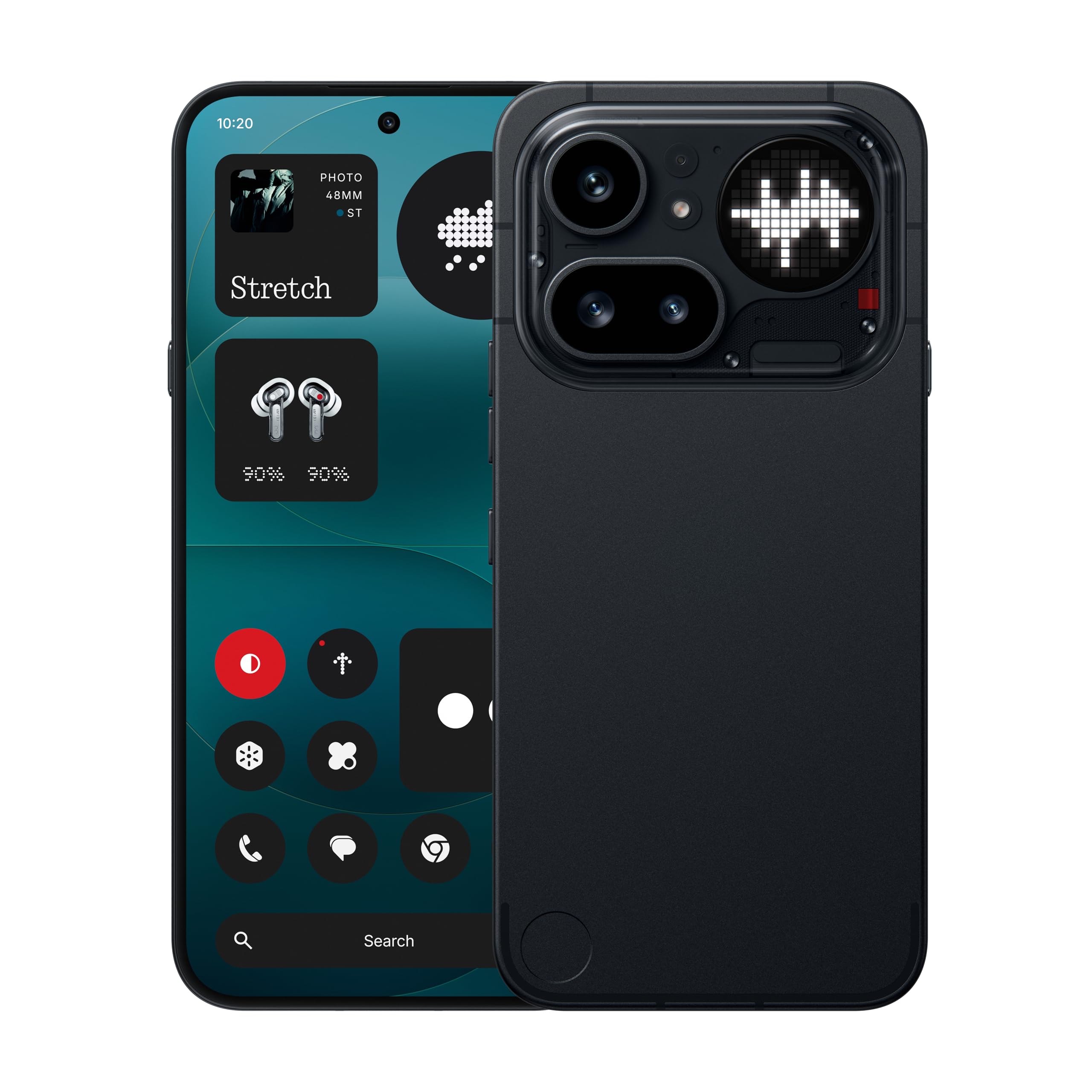
A 5000-nit screen that laughs at midday glare, wrapped in a slim aluminium body
The 4a Pro’s headline number is a 5000-nit peak brightness — the highest in this article — on a 6.83-inch 1.5K AMOLED panel that also refreshes at 144Hz. That brightness is not a vanity metric: it means you can read maps and messages in direct sun without shading the screen. Gorilla Glass 7i covers it, and the metal unibody is 7.9mm thin, so the phone slips into a pocket more easily than its screen size suggests. It carries an IP65 rating, which means dust-tight and protected against water jets.
The camera stack gives you a 50MP Sony main sensor with OIS, a 50MP periscope with 3.5x optical and up to 140x zoom, and an 8MP ultra-wide. Power comes from a 5080mAh battery with 50W charging that reaches 60% in 30 minutes, and the Snapdragon 7 Gen 4 runs Nothing OS 4.1 on Android 16. The Glyph Matrix — 137 individually controllable mini-LEDs on the back — acts as a small secondary display for notifications, timers, and battery status, and owners enjoy setting custom images on it. The open, bloat-free software and the all-day battery under heavy use are the repeated highlights.
Connectivity earns mixed notes: some users report smooth carrier activation, others run into issues. It is not recommended on Verizon without adding the IMEI manually, and the AT&T and T-Mobile support is partial rather than full. If you are on a partner network and want the brightest display possible in a thin phone, this is the pick — just confirm your bands first.
The standout spec: 5000 nits of peak brightness on a 6.83-inch 144Hz AMOLED, protected by Gorilla Glass 7i and squeezed into an aluminium body 7.9mm thin.
The honest trade: connectivity is the soft spot, so verify your carrier before committing.
Worth grabbing if: you want the brightest screen here and do not want a bulky phone.
Best to check bands first if: you are on Verizon or expect full 5G across AT&T and T-Mobile.
7. Xiaomi 15T — 512GB + 12GB
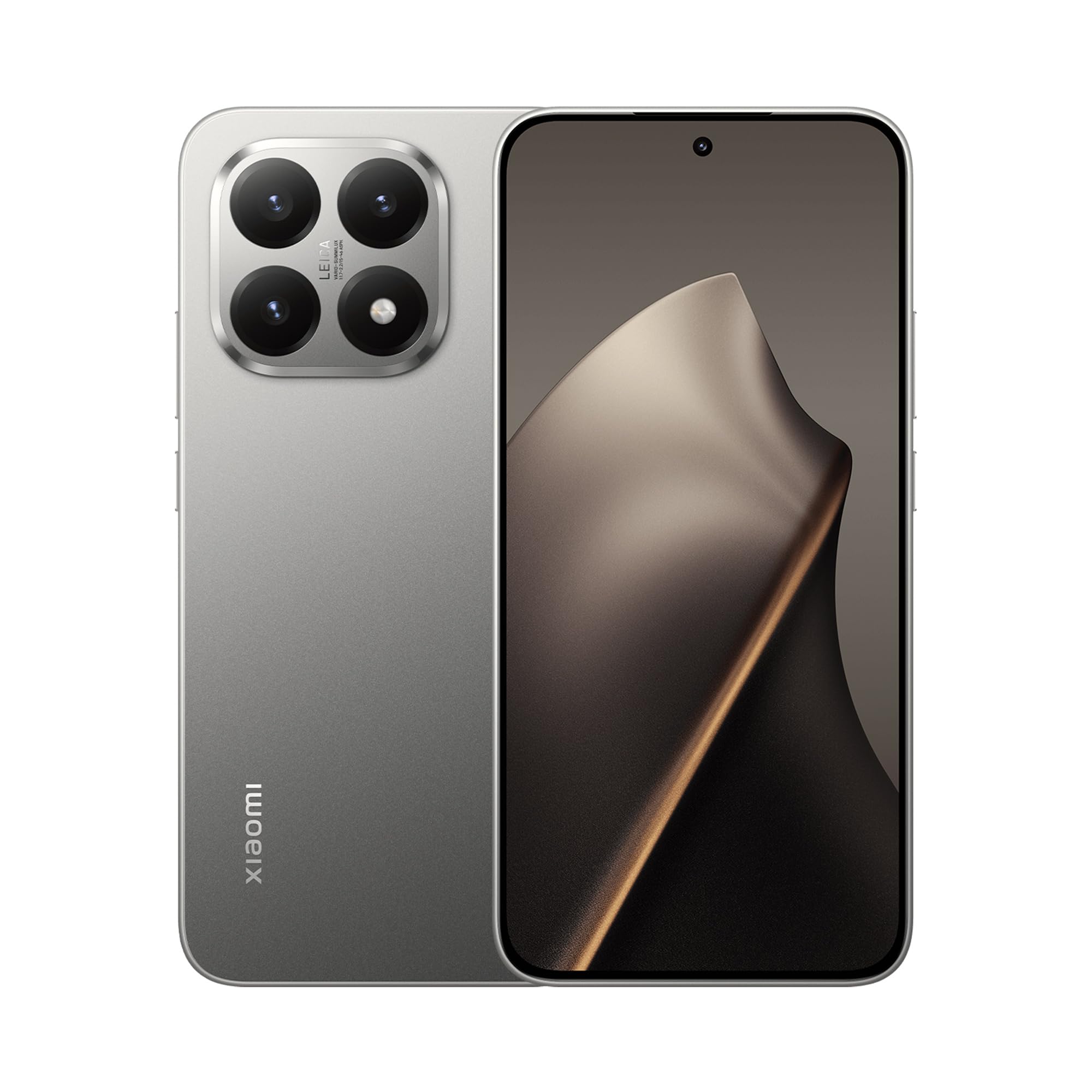
Leica glass, a 5500mAh Surge battery, and a very honest warranty warning
The Xiaomi 15T is the camera-first option: a Leica-tuned triple setup with a 50MP main sensor, a 50MP 46mm telephoto, and a 12MP ultra-wide, all under the VARIO-SUMMILUX lens. The 6.83-inch AMOLED is a 1.5K panel at 120Hz with 3200 nits peak brightness and Gorilla Glass 7i. Inside sits a MediaTek Dimensity 8400-Ultra on a 4nm process, with a 5500mAh Surge battery and 67W HyperCharge support. Storage is generous at 512GB with 12GB RAM for multitasking.
The big condition is support. This is an international model with no US warranty, and the listing states clearly that it works only on T-Mobile, Mint, and Tello — not Verizon, AT&T, Cricket, Sprint, Boost, or MetroPCS. That is a meaningful limitation for a US buyer. Charging is another thing to plan for: the box does not include the power adapter, so you either already own a capable charger or you buy one separately.
Note is that this is a small-review-count listing compared with the rest of the article, so the picture is still forming rather than settled. When it works, the Leica tuning and the bright AMOLED are the draws — but only if your network is on the supported list and you are comfortable buying without warranty coverage.
Strengths that stand out
- Leica-tuned triple camera with a dedicated 50MP telephoto
- 3200-nit 1.5K AMOLED display at 120Hz
- 5500mAh battery with 67W HyperCharge capability
- 512GB storage and 12GB RAM for heavy photo libraries
Limits worth knowing
- No US warranty on the international model
- Works only on T-Mobile, Mint, and Tello
- Fast charger not included in the box
Suits you if: you are on T-Mobile or Mint and want Leica optics with a large photo library.
Keep walking if: you need warranty coverage or use AT&T or Verizon.
8. Nothing Phone (3) — 256GB

Four 50MP cameras and a display that outshines the phone it replaced
Nothing Phone (3) takes the camera count seriously: four 50MP sensors covering main, periscope, ultra-wide, and front. Around them is a 6.67-inch 1.5K AMOLED at 120Hz with 460 PPI (pixels per inch, a measure of how sharp text looks) and 4500 nits peak brightness. The Snapdragon 8s Gen 4 on 4nm handles the heavy lifting, with 24GB LPDDR5X memory and UFS 4.0 flash storage spec heading the listing. IP68 (dust-tight and protects against being submerged in water) is on the spec sheet.
What buyers love most is how functional it is as a daily phone — fast, responsive, and reliable, with the OLED screen drawing particular praise. Battery life runs to all-day and beyond, and the physical Essential Key makes screen captures and voice memos quick. Design is another frequent winner: the distinctive look and the Glyph Matrix animations are the reason many buyers pick it over safer brand choices. Performance is the fastest of any Nothing phone here, and the cameras are well-liked but earn mixed notes — strong in good light, less consistent when pushed.
The trade-offs lean practical. It is a large phone, larger than some expect. Accessory choice is thin because of the design shape. And the AI transcription feature needs a Nothing account with a stated limit of 300 minutes. Buy it for the design, the four cameras, and the fast chip — not as the smallest phone in the bag.
The reason to choose this over the 3a Pro: four 50MP sensors instead of three, plus the higher-tier Snapdragon 8s Gen 4 chip.
The reality check: it is a big phone with limited case options, and the camera is mixed rather than flawless.
Made for you if: you want the most camera sensors Nothing sells and enjoy the Glyph play.
Better to skip if: you want a compact phone or need a wide choice of cases.
9. OnePlus 15 — 16GB RAM + 512GB Storage
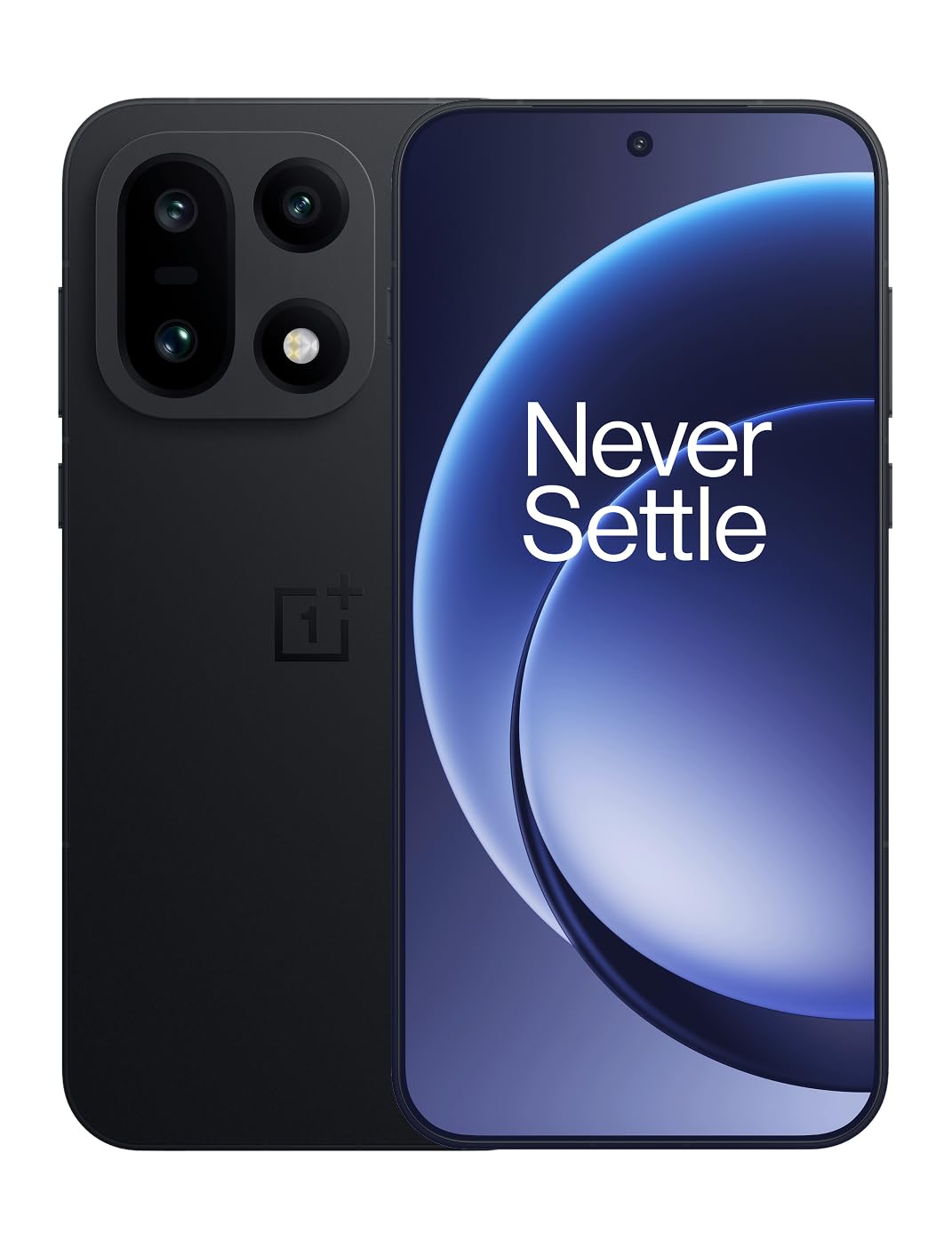
Silicon-carbon battery and flagship silicon, built for two-day sprints
The OnePlus 15 brings a 7300mAh silicon-carbon battery (a newer battery chemistry that packs more capacity into the same space) plus a tri-chip system built around the Snapdragon 8 Elite Gen 5. The result is speed that stays consistent under load and battery that buyers describe as lasting anywhere from 1.5 to 5 days depending on settings. The 6.78-inch AMOLED refreshes at 165Hz, so motion is smoother than a standard 120Hz panel. Charging is fast at the top end of the range, and the Triple 50MP camera covers wide, ultra-wide, and telephoto.
Owners mention the software runs fluid and multitasking stays crisp, and face and fingerprint open up work well. The camera is good rather than top-tier — solid in daylight, weaker at night. The 7300mAh battery (a high-capacity cell that holds charge longer than most flagships) is the defining feature. It makes the OnePlus 15 the flagship to pick if your charger cable never seems to be near the bed.
It is the heaviest-hitting phone in the OnePlus line here, and the price tier shows it. If camera is your priority, the Pixel-style competition still nudges ahead on night images. If raw speed and screen smoothness matter most, this is the better tool. The 16GB RAM and 512GB storage give you headroom for years, and the 165Hz display keeps the interface feeling new long after day one.
Go for this if: you want top-tier performance and a battery that lasts through multi-day trips.
Consider the 15R instead if: you like the battery story but want to keep the spend lower and can live with 12GB RAM and 256GB storage.
10. HONOR Magic V5 — 512GB + 16GB RAM
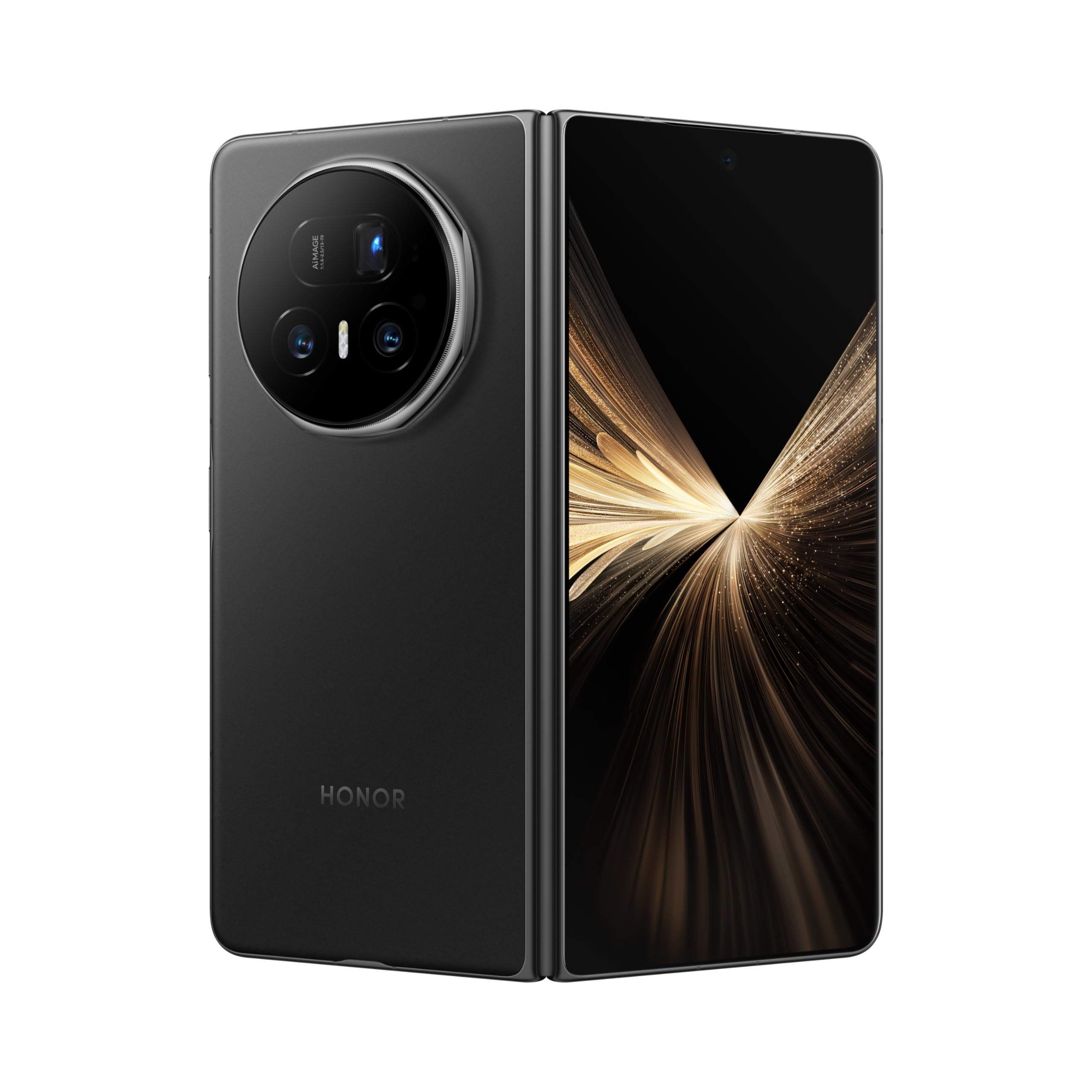
Two screens, a 5820mAh battery, and a genuinely pocketable fold
The Magic V5 is the fold here with the newly tuned hardware: a 7.95-inch inner foldable OLED at 2352×2172 pixels paired with a 6.43-inch outer OLED at 2376×1060. That is two full displays in one device, plus a 5820mAh battery to feed them. The Snapdragon 8 Elite with Adreno 830 graphics runs MagicOS 9.0.1 on Android 15, and there is 512GB storage with 16GB RAM. The camera stack is a 50MP + 50MP + 64MP rear trio and a pair of 20MP front cameras. Wi-Fi 6E and Bluetooth 6.0 round out connectivity.
Owners rate the screens and the productivity side highly: the dual display is excellent, the camera is near-professional, and the side fingerprint sensor is responsive. Battery life earns “XXL” praise from heavy users, and the light build makes a fold feel manageable in hand. There is some crease visible from the side, and curved front glass means gap-style screen protectors rather than standard ones.
The serious consideration is network fit. This is the international version and is not compatible with Verizon, Sprint, or US Cellular — plus one US buyer’s clear advice is not to buy the international model if you are in America. That is a strong signal to check your carrier before ordering. If you are a T-Mobile user who wants a big-screen fold with an excellent camera, this fits; if you need carrier flexibility, it does not.
What makes the fold feel worth it
- 7.95″ inner foldable OLED plus a 6.43″ outer screen
- 5820mAh battery fed by a flagship Snapdragon 8 Elite
- 50MP + 50MP + 64MP rear camera system
- 512GB storage and 16GB RAM for heavy multitasking
What to weigh first
- Not compatible with Verizon, Sprint, or US Cellular
- Visible center crease when viewed from the side
- Curved glass limits standard screen protectors
Meant for: T-Mobile users who want a foldable with flagship cameras.
Not for: buyers on Verizon or US Cellular, or anyone who wants a flat front glass protector.
11. HONOR Magic V2 — 512GB + 16GB RAM

The book-style fold that opens like a bar phone, not a brick
Folding phones used to mean carrying a brick twice the thickness of a normal handset. HONOR pushed against that with the Magic V2, which measures 9.9mm folded and 4.7mm unfolded at 231g — enough to feel like a regular phone in hand and in pocket. A titanium hinge with a gearless design lets the fold hover at multiple angles for video calls and split-screen work. A 5000mAh dual battery with dual-battery management runs the whole show, and the Snapdragon 8 Gen 2 with three Boost engines keeps multitasking fluid on MagicOS 7.2 and Android 13.
The appeal for buyers is the combination of slimness and real foldable utility. Owners compare it favourably with competing foldables and note the very thin profile when closed, plus a decent camera and smart battery management. The inner screen is best saved for multitasking and video at home — it is awkward to use fully on the move. The body gets extra grip from its vegan back material.
The honest caveat is fragility. The inner screen is delicate, so you really do need to handle it carefully, and one owner ended up with a defective screen and no clear support path. That is the rare case across many, but it is the price of the foldable form. Pick this for the slim design, the durability of the titanium hinge, and the price-to-fold ratio. pass on it if you need rock-solid service guarantees or treat your inner screen roughly.
The slim advantage: 9.9mm folded, 4.7mm unfolded, and 231g — a book-style fold that lives in a normal pocket.
The trade you accept: an inner screen that needs careful handling, and no clear direct manufacturer line for hardware problems.
Good match for: multitaskers who want a big inner screen without a thick brick in the pocket.
Less ideal for: anyone who wants a tough, drop-it-and-forget-it phone.
Know the Specs
Battery capacity and charging wattage
Capacity is written in mAh — milliamp-hours — and a bigger number means a larger energy tank. In this article the phones run from 4700mAh to 7400mAh, and that difference shows up as hours you are not hunting for a socket. Charging wattage tells you how fast the tank refills, so an 80W charger brings back more charge per minute than a 15W one. The best combination for a long day out is a larger battery and a capable adapter, which is why the bundled charger matters when you are comparing listings.
Refresh rate, brightness, and zoom
Refresh rate in Hz measures how many times per second the display redraws. A 120Hz screen is smoother than a standard 60Hz one, and a 165Hz panel is smoother still. Peak brightness in nits is about sunlight readability, with panels from 3000 to 5000 nits in this list built for outdoor use. Camera zoom works differently: optical zoom is real lens magnification, while ultra zoom depends on both the lens and the software — so a 60x label describes the maximum software-assisted reach, not the physical light path. Optical image stabilisation is what keeps those zoomed shots from blurring.
Common Questions
Will a Japanese mobile phone work with my US carrier?
Can I use a Nothing Phone on Verizon?
How much battery life should I expect from a 5000mAh phone?
Is a 165Hz display worth it over 120Hz?
Does the Nothing Phone Glyph Interface drain the battery?
How important is IP68 versus IP54 water resistance?
What does 60x or 140x zoom actually mean?
Can I use an international model phone in the US long-term?
Do these phones include a charger in the box?
How durable is a folding phone screen?
Can I expand storage with a microSD card?
The Bottom Line
For most people, the best Japanese Mobile Phones pick is the Nothing Phone (2). It gives you the cleanest no-bloat Android experience here, plus 512GB of storage (room for years of photos and apps), a solid dual 50MP camera, and a rear light panel no other phone matches. If you chase multi-day battery, the OnePlus 15R carries a 7400mAh cell (a high-capacity battery) that outlasts everything else in this article. And for a big inner screen with a near-professional camera, the HONOR Magic V5 earns its place — as long as you are on a supported carrier.
One practical nudge before you commit: confirm the radio bands against your carrier first, because the phone that looks best on paper is useless on a network it cannot join. The phones that survive that check — the Nothing Phone (2) with its outright quality, the OnePlus 15R with its 7400mAh tank, the HONOR Magic V5 with its foldable dual screens — are the ones worth the money.
How we choose
We do not accept paid placement. Every pick is matched to a real buyer and a real use-case; we do not hands-on test units.
Sources
Specifications: manufacturer listings and product documentation. Review insights: verified customer reviews, as of October 2026. Pricing: not shown on this page (it changes often); check the current price via the retailer link.
As an Amazon Associate, Aappliancez earns from qualifying purchases. This does not affect which products we feature.