Disclosure: Some links in this post are affiliate links. As an Amazon Associate I earn from qualifying purchases, at no extra cost to you. Learn more
Specs are compiled from manufacturer listings and verified buyer reviews and can change over time — please confirm the key details on the product page before buying.
Plant a Japanese maple in an afternoon-sun bed and its leaves can scorch by August. Most red maples sold as shade lovers crisp at the leaf edges once they face six or more hours of direct light. The fix is a variety bred to hold both its red color and its foliage through summer heat. Every pick below is sold as a live plant, rated for outdoor growing, and described by its grower as sun-tolerant or full-sun suited.
This guide is built by comparing the manufacturers’ published specifications and the patterns across verified customer reviews, so you get each pick’s real strengths and trade-offs instead of marketing spin.
You will see what each tree actually ships as, how tall it gets at maturity, and where owners say it thrives. That turns picking a heat-proof japanese maple for full sun into a spec-by-spec decision.
Top Picks

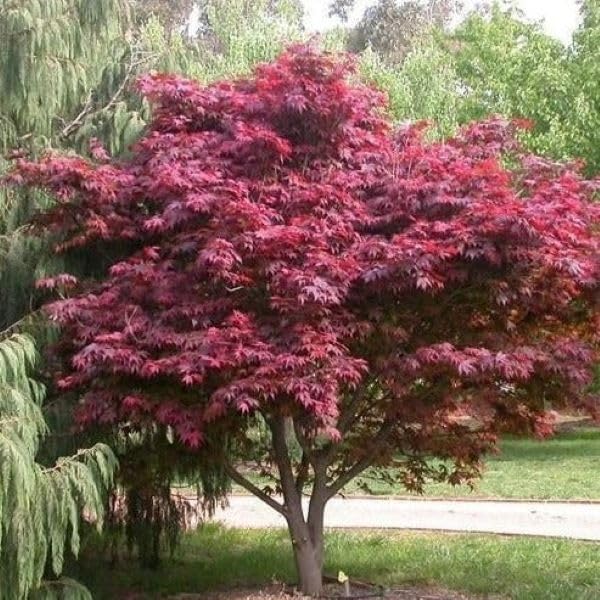
How To Choose The Best Japanese Maple for Full Sun
A Japanese maple that faces a full day of sun lives a very different life from one tucked in shade. Full sun will not kill the right variety, but it does change leaf color, soil drying speed, and weekly summer water needs. Three specs decide whether the planting works: the variety’s built-in sun tolerance, your USDA hardiness zone, and the soil volume the roots get.
Sun tolerance starts with the variety, not your watering can
Some maples hold their deep red through a hot summer; others fade to greenish red in the southern end of their range. Coral Bark (Sango Kaku) is listed for partial sun, Emperor 1 is listed for full sun to partial shade, and Tamukeyama is specifically described as a superior selection for hot, humid climates. Read the exposure line in every listing before you buy — a maple sold for partial shade will scorch on a south-facing wall.
Hardiness zones are your winter survival map
A USDA Hardiness Zone is a simple cold-tolerance rating: the lower the number, the colder the winter the tree can live through. Most Japanese maples here sit in Zones 5-8, with Butterfly rated 6-8 (a touch less cold-hardy). Buy a tree rated for your zone’s coldest winter, or you will be replanting next spring.
Match the pot size to the size you want to see
A “3-gallon nursery pot” holds more soil and typically ships a more established root system than a 2.5-quart or trade-gallon pot. Mature height is the other half: a Tamukeyama tops out around 8 feet, while Coral Bark reaches 20-25 feet. A 2.5-quart starter is a small tree that needs a few seasons to look like the pictures; the nursery-pot trees arrive larger but still young.
Side-by-Side Comparison
| Model | Best For | Mature Height | Sun Exposure Listed | USDA Zone | Amazon |
|---|---|---|---|---|---|
| Japanese Red Maple, 3 gal, Nursery Pot★ Best Overall | Small yards and focal points | 15-20 feet | Full sun or part shade | 5-8 | Amazon |
| Emperor 1 Red Japanese Maple (2.5 QT)Sun-Tested Pick | Late-frost gardens and small landscapes | 12-15 feet | Full sun to partial shade | 5-8 | Amazon |
| Coral Bark Japanese Maple Sango Kaku | Year-round red-stem interest | 20-25 feet | Partial Sun | 5-8 | Amazon |
| Red Laceleaf Weeping Tamukeyama | Hot, humid climates | 8 feet | Partial Shade | 5, 6, 7, 8 | Amazon |
| Butterfly Dwarf Upright Japanese Maple (Trade Gallon) | Containers and bonsai | 6-8 feet | Full sun to partial shade | 6-8 | Amazon |
| Brighter Blooms Bloodgood Japanese Maple | Beginner-friendly red focal tree | 15 feet | Full sun to partial shade | 5-8 | Amazon |
Detailed Reviews
1. Japanese Red Maple, 3 gal, Nursery Pot
Our pick — 4.0+★ from 100+ verified ratings; the strongest balance of quality and price.
A 15-pound nursery-pot tree that shows up bigger than the listing promises
This tree leads the list because of the size you actually unbox. Buyers report that a second order came in even larger than the first — “the second tree was even larger (ordered a 2-3′) at 5′.” That is a 15-pound root-and-soil package arriving on your porch, not a bare-root twig. The 3-gallon nursery pot carries enough soil and root mass that you are planting something with a head start.
It is built for sun. The growing conditions line says it thrives in full sun or part shade, in moist, well-drained soil, so a bright open bed is fine as long as the ground drains. Leaves stay red for most of the summer and shift greenish red during hot weather in the southern part of its range, then finish with reddish fall color. That seasonal shift is normal for a red Japanese maple in high heat — it is not stress, and the tree keeps its shape.
The habit suits a small yard. It grows compact and spreading, reaching a height and width between 15-20 feet at maturity, which makes it work as a single focal point in a residential landscape. What wins people over is the growth — owners talk about vigorous new push more than anything else, followed by how the tree looks in the ground. Root strength is the one mixed note in the feedback, so plant it into well-drained, slightly acidic soil with mulch and give it steady moisture the first season.
One structural weakness sits right in the sun-tolerant ceiling: the 15-20 foot height and width this tree reaches requires well-drained soil, and standing water the first season is what kills young maples. The recurring gripe is a tree that fails to push new growth after a wet planting — size the hole, amend the drainage, and mulch.
What Sun Gardeners Get
- Full sun or part shade, moist, well-drained soil
- 3-gallon nursery pot with a 15-pound rooted system
- Red color holds most of the summer through the heat
- 15-20 foot mature height and width for small yards
Where It Can Slip
- Root strength is the one mixed point in owner feedback
- Leaves shift greenish red in the hot southern part of its range
- Needs mulch and steady first-season watering to establish
Reach for this: a sun-facing bed in Zones 5-8 where you want a full-sized red focal tree in one planting.
Look elsewhere: if you need a tree that fits a patio container — the mature 15-20 foot spread will outgrow one fast.
2. Emperor 1 Red Japanese Maple – Live Plant – (2.5 QT)
The one that waits out late frosts and still colors up in open sun
Emperor 1 is the maple to pick if your spring brings a nasty cold snap after warm days. Its leaves bud out later than most Japanese maples, so late frosts that crisp an early-leafing tree leave this one untouched. The listing spells this out as better withstanding damage from late frosts than less cold hardy varieties. That single trait matters more than any cosmetic feature when you are planting in Zones 5-8.
Sun is where it does its best work. The listing states the tree displays its most intense color in full sun exposure, so a bright site does not wash this one out — it deepens it. Black-red bark sits under dark red foliage that turns brilliant scarlet in fall. Mature height is 12-15 feet and mature width is 12-15 feet, tight enough for a small landscape specimen. Coral Bark’s 20-25 foot height dwarfs this one, so Emperor 1 is the pick when space is your limit.
This tree earns its spot because of how it arrives. The care in shipping a live tree shows in the quality of what you unbox, and owners mention the tree lands “3 1/2 ft, well formed and promises to be a great accent to the yard.” It ships in a fabric grow bag rather than a plastic pot — the plant is growing in a 2.5-quart nursery pot but will not ship in it. It can also ship dormant from November through April, which is normal for a bare-root or bagged tree in the cold months.
Be honest with yourself about size when you order. Several owners found it smaller than the picture suggested, and one call it a starter tree rather than an instant specimen. If you want curb-appeal on day one, choose the larger 3-gallon nursery pot option above — this one is a young tree you grow into the look.
Frost-beating leaves: late-spring bud break is the standout spec here, and it buys you protection in Zone 5 and 6 gardens where a May cold snap is a real threat.
Color with sun: the listing calls full sun the site that produces the most intense color, so this is one maple that rewards an open, bright bed instead of punishing you for it.
Factor in the fabric bag shipping: the tree arrives in a grow bag, so have a pot or planting hole ready the day it lands.
Best used as: a colorful small-tree specimen in a frost-prone, full-sun bed where 12-15 foot scale fits your space.
Hold off if: you want the size in the photos on delivery — this is a grow-it-yourself starter.
3. Coral Bark Japanese Maple Acer palmatum Sango Kaku

The maple that earns its keep in winter, when everything else is gray
Most maples give you one season of drama; Coral Bark gives you four. The stems hold intense coral red year-round, new spring leaves emerge bright lime green, and fall brings yellow, orange, and pink before the leaves drop and leave the red bark alone on display. That is the pitch, and the appearance feedback backs it up — the bright red branches set against green leaves is what gets mentioned most in the reviews, by a wide margin.
Scale is the headline number here. This 3-year live tree reaches 20-25 feet at maturity. Emperor 1 tops out around 12-15 feet, so the Coral Bark is the far bigger tree and the one to choose for a corner planting or a backdrop, not a tight courtyard. It is listed for partial sun and deer-resistant, cold-hardy, and container-friendly as a young tree.
The reviews are genuinely mixed on how these arrive. Customers note healthy, well-branched trees at 36″ tall with excellent packaging, and strong growth after planting. Others get a much smaller sapling than the “3-year” label implies — tiny twigs around the thickness of a pencil — and a few report shipping damage that killed the top growth. The takeaway for you: buy knowing that a 3-year graft is a young tree, not an instant specimen, and inspect the box on arrival.
For a full-sun bed, plan around the partial-sun listing. Give this tree some afternoon relief in hot zones and let it take the morning light. The red bark color intensifies with more shade, so a spot with midday shelter actually brings out more of the hallmark stem color.
Why Coral Bark Stands Out
- Red bark shows year-round — winter interest no other pick has
- 20-25 foot mature height for a large landscape anchor
- Deer-resistant, cold-hardy, and container-friendly when young
- Lime green spring leaves with yellow-orange-pink fall color
Read Before You Buy
- Listed for partial sun, not full sun — plan midday shade
- A 3-year graft is a young tree, often smaller than expected
- Shipping damage reported on some units
Pick this if: you want a large maple with red winter stems and room for a 20-25 foot tree.
Think again if: you need a guaranteed full-sun performer or a large tree on arrival — order the nursery-pot option instead.
4. Red Laceleaf Weeping Japanese Maple Tamukeyama
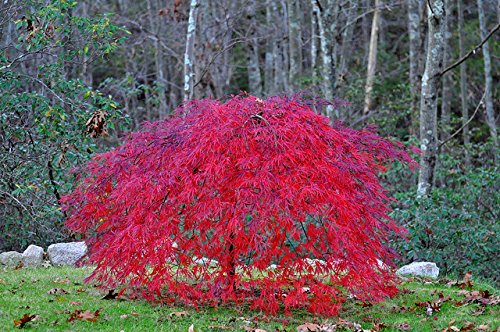
A cascading red weeper that was bred to laugh at hot, humid summers
In the Southeast and other humid, hot zones, the tricky part of growing maples is color fade. Tamukeyama was selected specifically for that climate. The listing calls it a superior selection for hot, humid climates that holds its color extremely well and describes it as among the most vigorous weeping Japanese maples. If your summers are muggy, this is the pick designed for them.
It is a cascading red laceleaf weeper that mounded to roughly 8 feet at maturity. Emperor 1’s 12-15 foot height and Coral Bark’s 20-25 foot height both clearly exceed the Tamukeyama’s 8 feet. So this is the compact choice in the lineup — right for a small bed, a slope, or a container that will not run away from you. Bright scarlet fall color finishes the season.
Owner experience is genuinely up and down, and worth reading carefully. The bright spots are shipments that arrive healthy even after a long postal delay, with leaves intact and roots firm — reviewers point out trees that took a late USPS trip in stride and kept growing.
Treat the partial-shade listing as real guidance in hot zones. Plant it where it gets morning sun and afternoon shelter, keep the soil sandy and well-drained, and it will do its best work. In cooler climates it will handle more direct light.
Built for humid heat: the listing’s “superior selection for hot, humid climates” line is the reason this tree sits on a full-sun list at all. It is the only pick on this list bred specifically for muggy summer gardens.
Set expectations on size: at 8 feet mature, this weeper stays compact — great for a small bed or slope, unsatisfying if you wanted a big anchor tree.
Best for: humid southern gardens (Zones 5-8) that need a compact, color-holding weeper.
Skip if: you need a tree that looks mature on delivery — the sapling that ships needs a few seasons to fill out.
5. Butterfly Dwarf Upright Japanese Maple Tree
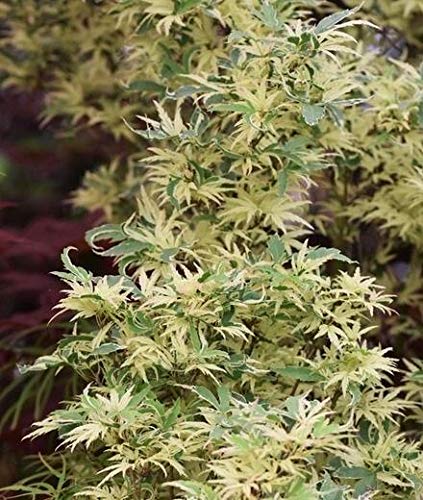
A dwarf, variegated maple that lets you keep the patio small and colorful
Butterfly is the maple for people who want a Japanese maple but do not have the yard for one. It is slow-growing and often dwarf in appearance, with densely held branches that carry leaves of very different sizes and shapes — the variegated look is the entire point. Silvery white-margined green leaves turn scarlet magenta in fall, and new spring growth comes in pink-tinged. At 6-8 feet tall and 4-6 feet wide, it fits a container, a bonsai trainer, or a small Asian-style garden bed.
Exposure is full sun to partial shade, and hardiness runs Zones 6-8 — a bit less cold-tolerant than the other picks. Plant it in a pot you can move, and you can give it morning sun and shade in the afternoon in hotter zones, which is the safe way to run a dwarf maple in a bright spot. The trade gallon pot it ships in is a middle size — larger than a starter cell, smaller than a 3-gallon nursery can.
The feedback warms up once the tree settles. Shoppers say dormant shipments that looked dead for months and then broke out with leaves the following spring — dormant shipping is normal, and it is worth waiting a full season before judging a Butterfly. Others note arriving plants in great condition thanks to thoughtful packing.
The honest limit: this is a slow grower, so if you want a tree that fills a gap this year, look at the nursery-pot pick above. Butterfly is one you buy for the long game and the container.
What Makes Butterfly Different
- Variegated leaves in multiple sizes and shapes
- Slow, dwarf growth — 6-8 feet tall, 4-6 feet wide
- Works in containers, bonsai, and small gardens
- Pink spring flush and scarlet-magenta fall finish
Know Going In
- Slow grower — years before it reaches its mature size
- Zone 6-8 only, less cold-hardy than the other picks
- Dormant shipping means a bare-looking tree may arrive in winter
Pick it for: a patio pot, a bonsai project, or a small bright bed where you want variegated color without a big footprint.
Look past it if: your garden sits in Zone 5 or you want visible size fast — this is a slow dwarf.
6. Butterfly Dwarf Upright Japanese Maple Tree Alternate Grower Batch
Same dwarf Butterfly profile, a different batch shoppers can also choose
This is a second trade-gallon listing for the same Butterfly dwarf cultivar — slow-growing, dwarf in appearance, with silvery white-margined green leaves on densely held branches that turn scarlet magenta in fall. Mature height 6-8 feet, width 4-6 feet, exposure full sun to partial shade, Zones 6-8. If the first Butterfly listing is out of stock, this is the alternative source for the exact same plant.
Reviewer feedback on this batch leans heavily on grafting quality. Some owners are delighted with a beautifully packed, healthy tree shipped from South Carolina to Texas. Others report the grafted plant died within weeks, or that the graft line left them unhappy even when the tree arrived looking great — a common reality with live grafted maples, and one worth knowing before you buy.
There is also a note in the description that the leaf traits resemble ‘Inaba Shidare’ rather than Butterfly, which one buyer flagged as a mismatch to expectations. It is worth reading the current listing copy carefully if exact cultivar match matters to you.
For a full-sun spot, this is a dwarf tree suited to containers or small beds. Give it the same afternoon-shade protection as any dwarf maple in a hot zone, and expect a slow grower.
Same variegation, different source: identical cultivar, same mature 6-8 foot dwarf scale, and the same pink spring flush.
Watch the graft: a few buyers found the graft line problematic, so inspect the union between the rootstock and the top growth when yours lands.
Get this one if: you want the Butterfly dwarf and need an alternate source or batch to order from.
Hold back if: you need bulletproof graft quality — check the plant on arrival and use the warranty if the graft looks poor.
7. Brighter Blooms Bloodgood Japanese Maple Tree, 3-4 ft.

A 3-4 ft. tree on arrival, aimed at first-time maple planters
Bloodgood is the maple most people picture when they hear “red Japanese maple,” and this 3-4 foot starter is the most beginner-friendly way to get one. It ships as an established 3-4 ft. tree rather than a twig. It is listed as among the most popular red Japanese maple varieties, and the care is described as extremely easy — a big advantage if this is your first ornamental tree. Mature height is 15 feet.
The listing includes a real warranty worth noting: any plant that suffers damage in delivery is covered, and the tree is guaranteed true to type and in healthy condition. The warranty explicitly does not cover cosmetic leaf damage, and it explains that dropped or discolored leaves are a normal plant response to heat or darkness — trim them and new growth follows. That is useful context for a sun planting, because some leaf shed in a hot first week is expected.
Owner feedback is warm on the tree itself but mixed on delivered size. Buyers report trees that came as advertised and are growing well, and a few note the tree arrived scrawny before pushing strong growth and surviving winter. Several say it was smaller than the advertised photos suggested. A recurring point: a “Bloodgood” starter can carry green leaves before they age into the deep red, which is normal for the cultivar.
One practical note for a full-sun bed: federal shipping restrictions mean orders to AK, AZ, and HI will be cancelled — check your state before you buy.
Grower warranty: Brighter Blooms guarantees the plant is true to type and healthy on arrival, with coverage for delivery damage — a real-safety-net detail you do not get on every live-plant listing.
Arrives as a tree: the 3-4 foot shipping size is the standout spec here — enough presence that the plant looks like a tree in the ground from day one.
Plan for green-to-red: Bloodgood foliage can start green and darken to red as the tree matures, so do not panic if new growth is not the crimson you expected in year one.
Best for: a first-time maple planter in Zones 5-8 who wants a tree-sized starter and a grower warranty.
Avoid if: you live in AK, AZ, or HI — this vendor cannot ship to those states.
Know the Specs
USDA Hardiness Zone
A USDA Hardiness Zone is a simple cold-tolerance map. The lower the zone number, the colder the winter a plant can live through. Most Japanese maples on this list are rated Zone 5-8, meaning they will survive winters from Zone 5’s cold through Zone 8’s mild ones. Butterfly is narrower — Zone 6-8 — so if you garden in Zone 5, buy a Zone 5-rated pick instead.
Mature Height & Width
Mature height is how tall the tree gets once fully grown — not how tall it arrives. A Tamukeyama tops out around 8 feet, Bloodgood and Emperor 1 reach 12-15 feet, the nursery-pot red maple reaches 15-20 feet, and Coral Bark can hit 20-25 feet. Match the number to your space, because a 25-foot maple dropped into a 6-foot bed will crowd everything around it in a decade.
Sun Exposure Line
Every listing publishes an exposure — the range of sun the grower says the tree handles. “Full sun to partial shade” means either works; “partial sun” or “partial shade” means the tree wants shelter from the harshest midday light, especially in hot zones. A sun-tolerant maple that also holds its color in heat — like Tamukeyama or Emperor 1 — is the safest bet for a south-facing bed.
Pot Size & Shipping Form
Pot size tells you how much soil and root the tree ships with. A 2.5-quart pot or trade gallon is a starter; a 3-gallon nursery pot carries a more established root system. Some maples ship dormant in winter as bare-root or bagged plants — normal behavior, not a dead tree. Give a dormant arrival a full spring season before you judge it.
Common Questions
Will a red Japanese maple survive a full-sun south-facing bed?
How long until a starter maple looks like the listing photos?
Why did my maple arrive as a bare stick with no leaves?
Which Japanese maple holds its red color best in heat and humidity?
What is a trade gallon pot and how is it different from a 3-gallon nursery pot?
Can a Japanese maple live in a container permanently?
Do I need to water a sun-planted Japanese maple more often?
Why did my Bloodgood Japanese maple arrive with green leaves?
Which zone does a Japanese maple need in a hot climate?
Why do some maple listings say partial sun when I need full sun?
The Bottom Line
The best japanese maple for full sun for most yards is the Japanese Red Maple in a 3-gallon Nursery Pot, because it ships large, thrives in full sun or part shade, and matures to 15-20 feet for a strong focal point. If late frost or a tighter space is your worry, the Emperor 1 Red Japanese Maple buds out later and stays a compact 12-15 feet. And if hot, humid heat is your climate, the Tamukeyama Weeping Maple is the one selected to hold its red through the muggiest summer.
How we choose
We do not accept paid placement. Every pick is matched to a real buyer and a real use-case; we do not hands-on test units.
Sources
Specifications: manufacturer listings and product documentation. Review insights: verified customer reviews, as of October 2026. Pricing: not shown on this page (it changes often); check the current price via the retailer link.
As an Amazon Associate, Aappliancez earns from qualifying purchases. This does not affect which products we feature.