Disclosure: Some links in this post are affiliate links. As an Amazon Associate I earn from qualifying purchases, at no extra cost to you. Learn more
Specs are compiled from manufacturer listings and verified buyer reviews and can change over time — please confirm the key details on the product page before buying.
If you are shopping for Italian hiking boots, the real question is not which brand looks best in a photo. It is which pair will still hold its shape after a thousand trail miles, keep your feet dry in slop, and support you when you are carrying a loaded pack down a rocky descent. This guide walks you through nine Italian-made and Italian-styled boots, explains what each one does well, and tells you plainly who each pair is actually for.
This guide is built by comparing the manufacturers’ published specifications and the patterns across verified customer reviews, so you get each pick’s real strengths and trade-offs instead of marketing spin.
Italian boots are usually cut on a narrower, closer-fitting last than American boots, so figuring out your true size before you buy matters as much as the sole. Below you will find the fit notes, waterproofing details, and construction facts that decide whether a boot suits your foot and your terrain, all in one place for these Italian hiking boots.
Top Picks

How To Choose The Best Italian Hiking Boots
Italian boots are built around a closer-fitting last, and that single fact explains most of the sizing complaints you will read on any listing. Get your size right and the rest of the decision gets much simpler. Here is what actually matters when you are standing in front of nine pairs and trying to pick one.
Start With the Last, Not the Look
The last is the foot-shaped form the boot is built around, and Italian makers tend to build on a narrower one. That gives you a locked-in heel and precise control on technical ground. The trade-off is that wide feet need to size up or look for a boot the maker explicitly calls a wide fit. Always check whether the listing describes the fit as narrow, true to size, or wide before you commit.
Leather Upper and Waterproofing Are Two Separates
You get durability and a shape that molds to your foot over time from a full-grain leather upper (the thick outer hide). A Gore-Tex membrane (a thin waterproof liner inside the boot) keeps water out. Some Italian boots use both, some use a different breathable membrane, and some rely on the leather alone for water resistance. Decide if you want the extra breathable layer or the simpler leather-only build.
Match Stiffness to Your Terrain
A stiff midsole is the plate between your foot and the outsole, and it is what stops a sharp rock from poking through on a rough descent. Stiff boots shine under a heavy pack and on uneven ground. They feel clumsy on flat, smooth paths and city pavement. A lighter, softer boot is friendlier for day hikes and casual wear. Pick the stiffness that matches how you actually hike.
Traction and Resoleability
The outsole lugs are the rubber teeth under the boot, and their depth and shape decide grip on mud, rock, and wet stone. A resoleable leather boot can have its outsole replaced by a cobbler, which stretches its service life well past a glued-together synthetic boot. If you buy once and want to keep a pair for years, ask whether the boot can be resoled.
Side-by-Side Comparison
| Model | Best For | Upper | Waterproofing | Weight | Amazon |
|---|---|---|---|---|---|
| Asolo TPS 535 LTH V Evo★ Best Overall | Technical backpacking and long-distance hiking | 2.2–2.4 mm full-grain leather | Water-resistant leather with Cambrelle lining | — | Amazon |
| Danner Mountain Light II 5″ Gore-TexBuilt to Last | Cold-weather hiking and everyday wear | Thick full-grain leather | Gore-Tex | — | Amazon |
| Grisport PeaklanderWider Fit | Wider feet wanting a lighter walking boot | Waxed leather | — | — | Amazon |
| Grisport Quatro | All-round walking with ankle support | Leather | Waterproof and breathable | — | Amazon |
| Kenetrek Corrie II Hiker | Hunting and rugged day hikes | Leather and nylon lace-to-toe | Windtex waterproof breathable membrane | — | Amazon |
| Meindl Comfort-Fit Light Hiker | Wide toe boxes and all-day wear | Waxed nubuck full-grain leather | Gore-Tex | 4.56 lb (package weight) | Amazon |
| SCARPA Kinesis Pro GTX | Technical trails under heavy packs | 2.4 mm Smoothout leather | GORE-TEX Performance Comfort | 1 lb 14 oz (1/2 pair, size 42) | Amazon |
| La Sportiva Makalu | Mountaineering, crampons and pole climbing | Leather | — | 2 pounds (package) | Amazon |
| Zamberlan 1996 VIOZ LUX GTX RR | Backcountry backpacking and hunting | Leather | Gore-Tex | — | Amazon |
Detailed Reviews
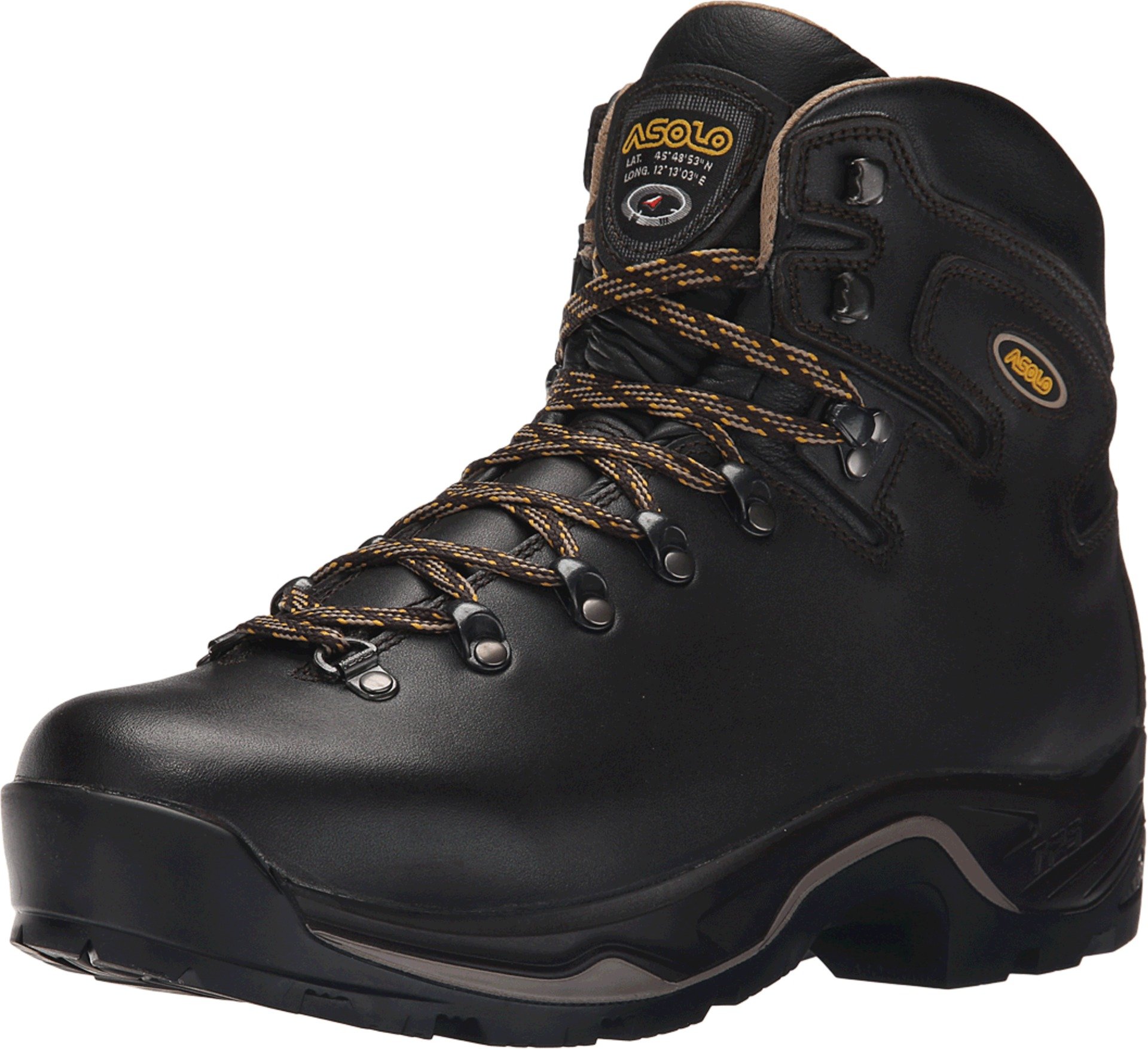
1. Asolo Men’s TPS 535 LTH V Evo Boots
Our pick — 4.5+★ from 300+ verified ratings; the strongest balance of quality and price.
The leather backpacking boot that keeps earning its place after half a decade of real use.
This is the pair to buy if you want a boot that feels like it was built for the long haul. The 2.2–2.4 mm full-grain leather upper is a thick hide, not a thin coated fabric, and that thickness is why the boot holds its shape and shrugs off scuffs rather than shredding at the seams. Owners describe a boot that keeps performing through backpacking, rough terrain, and heavy loads, and some have kept the same pair going for years of daily work on top of weekends on the trail.
The traction story is the T.P.S. outsole — a system with three shock absorbers placed under the parts of your foot that take the biggest wallop during walking. Plain version: your heel and forefoot stop getting hammered on downhill stretches. The self-cleaning lugs are shaped to shed mud as you move, so grip stays consistent across mixed ground instead of clogging up. That combination is why the quality and durability of this boot dominate what owners talk about most.
Water resistance comes from the leather itself rather than a plastic-feeling liner, and the Cambrelle lining is a soft inner layer that cushions the foot. Buyers report: “Had mine for 5 years after work and on weekends.” That is the honest pitch: a full-grain leather boot you can resole and keep wearing. The one thing to know before you buy is the fit runs narrow, so wide feet should size up or look elsewhere.
What Wins People Over
- Full-grain leather at 2.2–2.4 mm thickness that resists scuffs and holds shape
- Self-cleaning lugs shed mud instead of packing it in
- Resoleable, so the boot lives far past a glued synthetic sole
- Rubber toe cap protects the front edge on rocky ground
Where It Asks More of You
- Runs narrow, and wide feet may need to size up
- Some pairs need a proper break-in period before they feel molded
- Round laces are harder to untie after a double knot
Made for: backpackers and trekkers who want one leather pair they can resole and keep for years.
Pass if: you have a genuinely wide foot and need a boot that fits broad from the start.
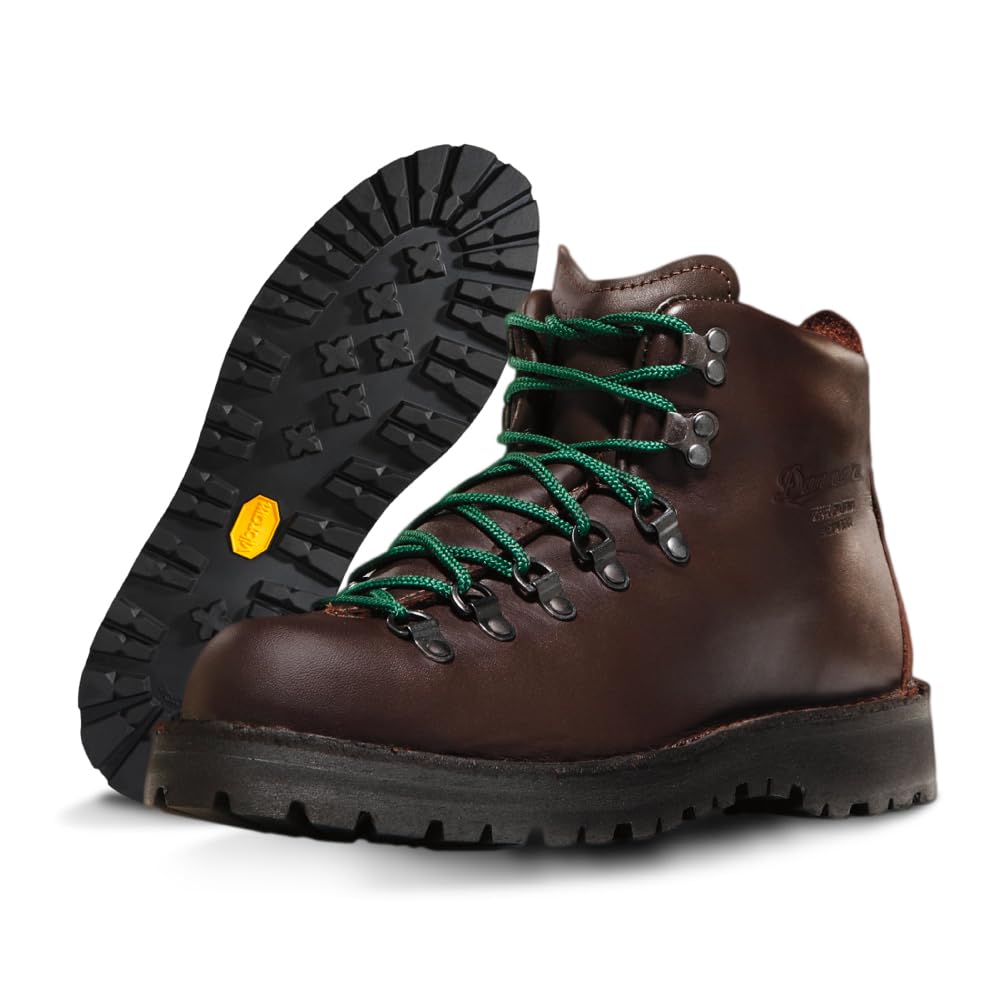
2. Danner Mountain Light II 5″ Gore-Tex Waterproof Hiking Boots
A hobnail-tough leather classic that punishes your heels for two weeks, then rewards you for years.
The Mountain Light II is the boot you reach for when the weather is cold and the trail is long and you want a leather boot that will outlive a synthetic one. The Gore-Tex membrane is a thin waterproof lining, so rain and snowmelt stay outside while your feet breathe inside. Stitchdown construction — the sole stitched to the upper rather than glued — adds stability on a ladder or an uneven descent, which is why this style stays popular with people who work in their boots.
Durability is what the leather delivers. Owners mention: “After 9 months and ~400 miles of hiking plus daily wear, most comfortable boots owned with minimal wear.” That is the payoff — a boot that gets more comfortable and more shaped to your foot the longer you wear it. The cost is a serious break-in; the same owner clocked blisters over the first 15 miles and needed roughly 25 miles before the leather let go.
Here is the honest catch. Fit and comfort divide owners. Some find the boot snug and true to size if they size down half a step, while others find it narrow and report achilles pressure and heel cup issues. The included Airthotics insoles have a slippery plastic heel cup that lets the foot slide, so swapping in a firmer insole is a common fix. Treat this as a boot for a buyer willing to size carefully and break it in properly.
Best when the cold bites: the all-leather build and Gore-Tex lining handle cold-weather hiking and daily wear without a bulky synthetic shell.
What to plan for: expect a real break-in — the leather is thick, and until it softens you will feel it. Once broken in, it conforms and stops fighting you.
Buy this if: you want cold-weather hiking and daily wear in one durable, resoleable leather boot.
Think again if: you expect instant comfort or you have a wide foot that needs room right away.
3. Grisport unisex-adult Hiking Boot
The one Italian-style boot here that openly admits its last is roomier than the rest.
If you have a foot that gets pinched by the narrow Italian cut, this Peaklander is the answer. Grisport says outright it is a slightly wider fitting boot than the others in the line, and it is cut in a unisex size range. The waxed leather upper is a durable, attractive hide that holds up to walking while looking smart enough for daily use — a good match for the person who wants Italian leather without the usual squeeze.
It is also one of the lighter pairs in this line, which matters on a long walk where every ounce on your foot becomes fatigue by the end of the day. The Boot comes in Black as well as the brown, so you have a color choice. For a hiker who values a comfortable, genuine leather boot over a technical crampon-ready build, this one is a sensible middle ground that stays out of the way of your foot.
The honest limit is the build. This is a lowland walking boot, not a stiff backpacking boot, so it suits trails and everyday walking better than technical terrain under a heavy pack. There are no published customer reviews for this exact listing to tell you how it sizes in the real world, so order carefully and check the sizing chart. It is still a strong pick for the wider-footed walker who wants a lighter waxed leather boot for trails and everyday walking.
Reach for it if: narrow Italian lasts have hurt your feet and you want a roomier waxed leather walking boot.
Handle with thought if: you need a stiff, crampon-ready backpacking boot instead of a lighter walking pair.
4. Grisport womens Quatro

Italian leather, a real Vibram sole, and an ankle support system built for uneven ground.
The Quatro is the pair to look at if you want a walking boot that gives your ankle something to lean on. It carries a patented ankle support system along with a Vibram rubber outsole — the same rubber family used across serious hiking boots for grip on rock and trail. The triple-density shock absorbing sole is a three-layer cushion under your foot that soaks up impact across the heel, midfoot, and forefoot.
Waterproof and breathable protection sits at the core of this boot, so wet grass and shallow puddles stay outside while your feet stay dry on a full day out. The leather upper brings the durability Italian boots are known for, and the cut is offered across a range of sizes. That combination makes it a good everyday walking boot for the person who wants ankle confidence on uneven paths without a rigid mountaineering build.
The thing to weigh is that this listing has no published owner feedback attached, so the sizing runs on the manufacturer’s chart. Leather boots of this type typically want a proper break-in before they soften, and the close Italian cut generally rewards accurate sizing over guessing. Check the conversion from UK to EU on the listing before you order so the size matches the foot you actually have.
Why it clicks: the ankle support system plus a Vibram outsole gives you grip and side-to-side stability in one walking boot.
Size honestly: the leather cut is close and there is no owner review thread to fall back on, so measure first and consult the UK-to-EU chart.
Pick this if: you want leather, ankle support, and a Vibram sole in a waterproof all-rounder.
Hold if: you need published sizing feedback before committing to a leather boot.
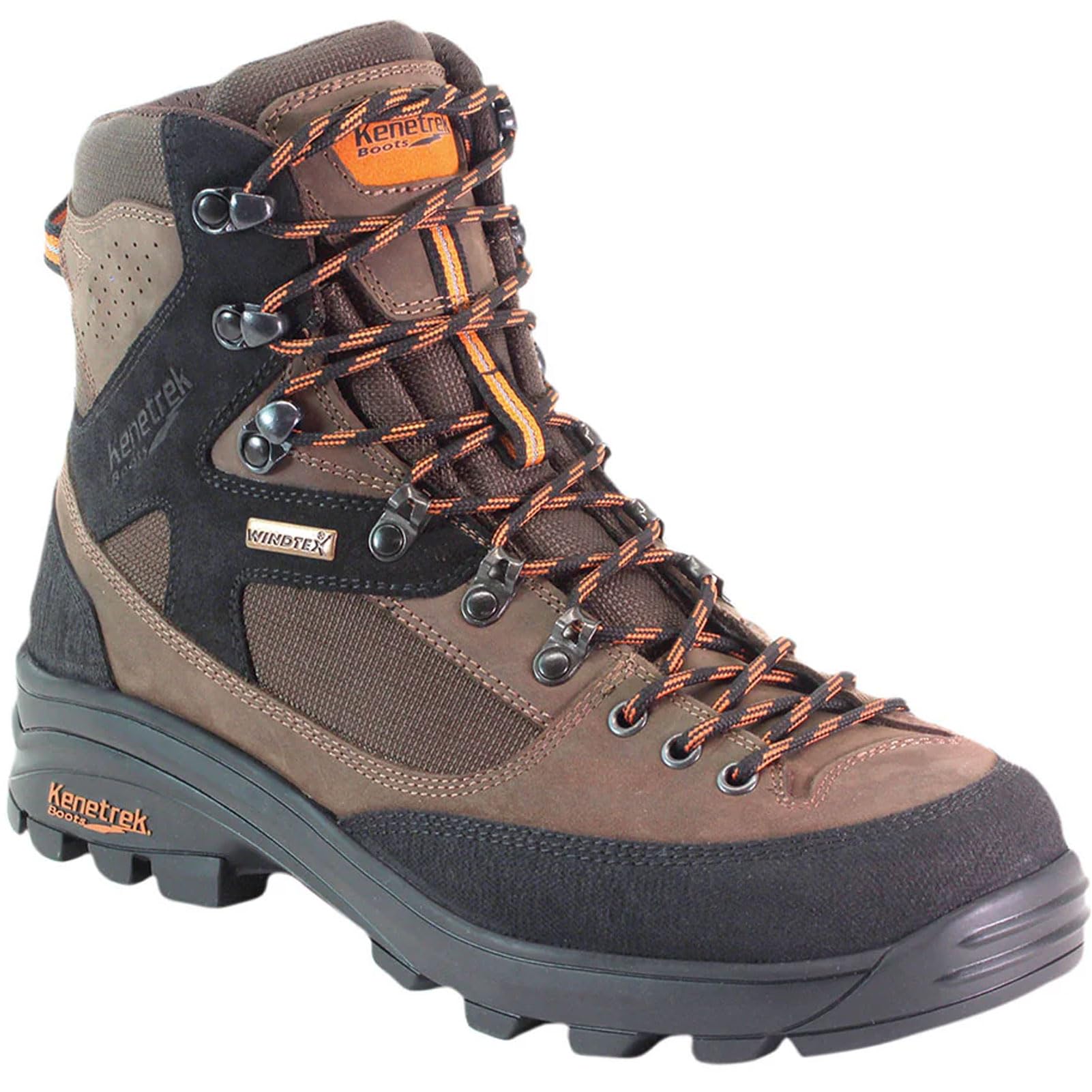
5. Kenetrek Men’s Corrie II Hiker Hiking Boots
A 7-inch hunting hiker that comes from the start already comfortable on your foot.
Some leather boots make you earn comfort over weeks. The Corrie II starts the relationship on better terms. It opens with a lightweight leather-and-nylon lace-to-toe upper, gives you 7 inches of support up the ankle, and keeps the whole thing flexible enough that day one feels fine. The Windtex membrane is a waterproof breathable liner doing the same job a Gore-Tex layer would — pushing rain out while letting sweat vapor escape.
Under your foot, a 5mm nylon midsole (a thin stiff plate) adds arch support and shock absorption on rough ground, with a deep heel pocket that keeps your foot anchored so it does not slide around during a long day. Reinforced toe and heel guards protect the parts that bash first, and the double and triple stitching is the kind that holds up. Grapon outsoles bring the grip for hiking, hunting, backpacking, and general rough-ground use.
The thing everyone raves about is the look — a solid, well-finished boot you are happy to wear. What to watch is durability at the sole: one pair held up for 9 months before the sole separated on the right boot. That is a single report out of a small review pool, so read it as a fit note for heavier use rather than a pattern. For most hunters and hikers this is a comfortable, sturdy 7-inch boot that feels broken in within the first few miles.
Where It Earns Its Keep
- Comfortable from the first wear, with a true-to-size fit
- 7-inch upper gives real ankle support on uneven ground
- Windtex waterproof breathable membrane for wet weather
- Reinforced toe and heel guards resist abrasion
What to Keep in Mind
- One report of the sole separating after 9 months
- Small review pool, so less long-term feedback to lean on
Built for: hunters and hikers who want an out-of-the-box comfortable leather-and-nylon boot with a 7-inch collar.
skip it if: you want the stiffest, most heavy-duty backpacking boot you can find.
6. Meindl Men’s Comfort-Fit Light Hiker

A wide toe box and a cork insole that molds to your foot with every mile.
Most Italian boots squeeze the toes. This one goes the other way. Meindl builds it on a Comfort Fit last that leaves plenty of room up front while still snugging the heel, so your toes spread naturally and your heel stays locked. The upper is soft full-grain waxed nubuck leather — a scuff-resistant hide that resists abrasion — and it is backed by 100% waterproof, breathable Gore-Tex to keep rain and dew out. It is genuinely Made in Italy.
The detail that sets this boot apart is the fleece-covered cork insole, which forms itself to the shape of your foot over time so the comfort customizes with each step. Meindl’s Multigrip outsole is built to cushion and protect underfoot. The build is aimed at the person who wants a lightweight daily boot they can hike and work in all day — owners describe wearing it without end-of-day fatigue and a husband’s previous pair still in good shape after a decade.
What you should know: the boot runs large for some feet, and the sizing wall can leave a buyer stuck if their size sells out. There is also an isolated report of sole separation on a new pair. Given a small review base, treat those as things to watch rather than a rule. For a wide-footed hiker who wants Italian leather, a cork insole, and a roomy toe box, this is the pick.
Your boot if: your toes feel cramped in narrow Italian lasts and you want cork-and-fleece comfort underfoot.
Weigh this: the fit runs large on some feet, so confirm your size against the chart before ordering.
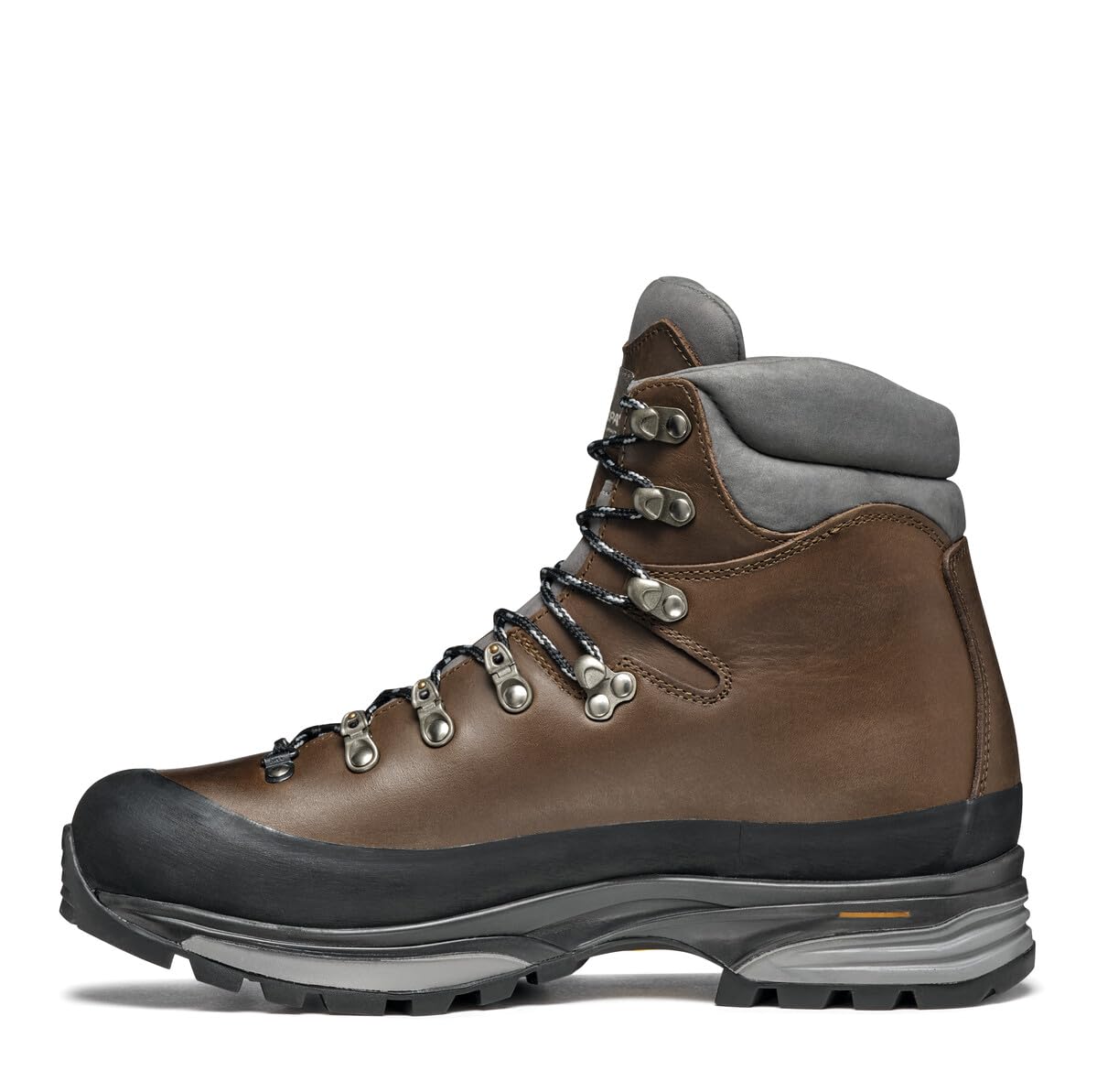
7. SCARPA Men’s Kinesis Pro GTX Hiking Boots
The boot for a tilted, rooted, pack-heavy trail where grip and ankle control decide the day.
If your hikes lean technical, the Kinesis Pro is built for that exact job. It uses a 2.4 mm Smoothout leather upper — a thick, protective hide — with a GORE-TEX Performance Comfort membrane keeping water out while letting vapor through. The Vibram Biometric / XS Trek outsole is a grippy rubber engineered for mixed, wet, and uneven terrain, and the 2D PU midsole is a firm cushion layer that stabilizes your foot on rough ground. It weighs 1 lb 14 oz for half a pair in size 42.
Under a heavy pack on the kind of trail that tilts and rolls, that firm platform is what keeps your ankle from rolling and your foot from sliding. The pulley eyelets let you cinch the laces quickly, and the thick supportive leather means the boot stays watertight and holds its shape. This is a boot for backpackers who load up, not for a casual stroll on a smooth path.
The main compromise is stiffness and break-in. One pair took roughly 220 km before it softened fully, which is a lot of miles before the leather yields. The fit also runs a little narrower than other boots, so a wide foot may need to size up. On wet smooth rock the grip is not its strongest suit. Treat it as a stiff technical backpacking boot that repays a long break-in with durability under a loaded pack.
What it is for: steep, rocky, and rooted terrain under a 45-pound pack, where the sole and midsole keep grip and ankle support locked in.
The trade: it demands a long break-in and runs narrow, so it suits committed backpackers more than occasional walkers.
For you if: you hike technical trails with a loaded pack and want a stiff, watertight leather boot.
Not for you if: you want a comfortable boot from the start without a long break-in.
8. La Sportiva Makalu Mountaineering/Hiking Boots

A proper mountaineering boot with a stiff full shank for crampons and steep ground.
This is not a casual day-hike boot, and it does not pretend to be. The Makalu is built for technical mountaineering and traditional climbing — rock walls, traversing, icy slopes, and Via Ferrata — with a stiff full shank (a rigid plate inside the sole) that spreads the load across your whole foot and keeps it rigid under a pack. It is crampon compatible, so it pairs with the metal spikes you strap on for icy terrain, and the full leather upper brings the protection a mountaineering boot needs.
The comfort story that keeps coming through is the ankle and arch support. A steel shank stiffens the sole enough that you can spend long hours in the boot without your foot and leg going numb, which is why people who climb poles and work tree care reach for it. Linemen and tree climbers in particular call out the comfort and the support on the job. The boots break in against your foot and then hold their shape.
The honest limit: this is a heavy, stiff boot that takes real break-in. One owner logged a full 50 miles before it settled, and the fit runs small enough that many size up a half EU step. It also is not a waterproof-lined boot in the classic Gore-Tex sense, so river crossings and deep puddles are not its lane. For steep technical ground and heavy packs, the durability and support are the trade you are buying.
What It Delivers on Steep Ground
- Stiff full shank for crampon use and heavy-pack stability
- Strong ankle and arch support under load
- Durable leather build that holds up to job-site and trail abuse
- Crampon compatible for icy slopes and Via Ferrata
What You Trade for It
- Heavy and stiff — not suited to light hiking
- Long break-in, with many owners sizing up
- Not a waterproof-lined boot for deep water
Made for: mountaineers, climbers, and working climbers who need crampon compatibility and a rigid sole.
Stay away if: your hiking is light day trails on flat terrain.
9. Zamberlan 1996 VIOZ LUX GTX RR Boots
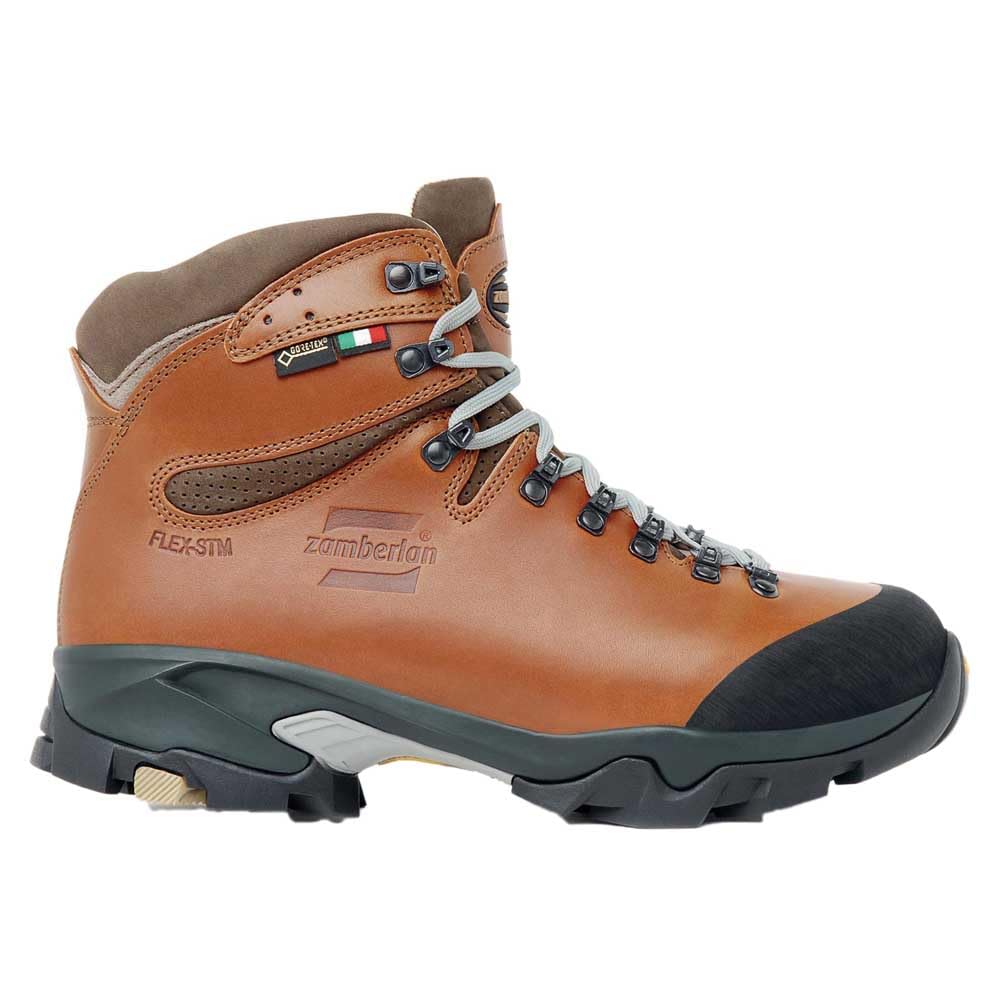
An Italian backpacking boot so well-made it has owners planning on passing it down.
This is the upgrade to Zamberlan’s best-selling boot, and it is aimed at the buyer who wants a leather backpacking boot for the long haul — backcountry trekking, hunting, and any trip that demands a supportive midsole and a high degree of foot protection. The Gore-Tex lining keeps water out, the build is designed to be resoled by Zamberlan when the outsole wears, and the reinforced toe takes the first hits on rock since it is where the boot meets the trail.
Owners who have lived in this boot call it one of the best-made pairs they have tried after decades of cycling through brands, and one reports a first pair still going strong at about ten years of very heavy use. That is what you are really buying: a resoleable leather boot with a decade-plus service life in front of it. The fit is true to size on a leather that is roomy at the toe yet locked at the heel, and the somewhat less narrow cut leaves room for a heavier sock or an extra insole.
The catch is weight and stiffness. The boot runs somewhat heavy, and one owner needed to break in the still-stiff sole because the heel sat high enough to make the arch complain for a mile or so. It also wants a leather oiling right away to keep the hide supple. Plan for a break-in and treat it as a long-term investment rather than a slip-on-and-go boot.
The long game: resoleable leather construction and a reinforced toe mean this boot is built to give you many years of service, not one season.
The honest cost: somewhat heavy and stiff from the start, so it asks for a break-in and an immediate leather oiling.
Choose it if: you want a resoleable Italian leather backpacking boot built for backcountry and hunting use.
Choose lighter if: you want a light day-hike boot that feels soft from the first step.
Know the Specs
Upper Leather Thickness
When a boot lists a leather thickness like 2.2–2.4 mm, that is the actual gauge of the hide on the outside of the boot. Thicker full-grain leather is stiffer and takes longer to break in, but it holds its shape and resists scuffs and cuts that would chew through a thinner hide. It is the reason a well-made leather boot can be resoled and kept for years rather than replaced season by season. Thinner or softer leather feels more comfortable on day one but tends to show wear sooner.
Waterproof Membranes
A membrane like Gore-Tex or Windtex is a thin liner inside the boot that blocks liquid water while letting sweat vapor pass out. That is what keeps your foot dry on a wet trail without turning the boot into a sauna. Some leather boots skip the liner and instead rely on treated or waxed leather for water resistance — breathable and simpler, but it typically needs re-treating over time to keep working. Neither is wrong; it depends on how wet your trails get.
Midsole and Shank Stiffness
The midsole is the layer between your foot and the outsole, and a shank is a stiff plate buried inside it. A firmer midsole or a full shank spreads a heavy-load impact across the whole foot and stops sharp rocks from poking through. Stiff boots are the right tool for packed-down technical ground. Softer midsoles flex more and feel kinder on smooth paths and city streets. Pick stiffness based on the terrain you actually walk, not the roughest trail you can imagine.
Outsole and Lugs
The outsole is the rubber bottom of the boot, and the lugs are the raised teeth molded into it. Deep, widely spaced lugs grip loose dirt and rock and shed mud as you step. A rubber like Vibram is chosen for how it grips wet and uneven surfaces. Lug shape and rubber compound change how the boot handles a wet river rock versus dry granite. Warmer, southern trails often prefer a softer compound for grip, while hard rock asks for a lug that resists rounding off.
Common Questions
Do Italian hiking boots run narrow compared with US sizing?
What is the difference between a leather boot with Gore-Tex and one without?
How long does a leather hiking boot take to break in?
Can I resole an Italian leather hiking boot?
Are these boots suitable for hunting and rough off-trail work?
Should I size up for a heavier sock in a leather boot?
How do I keep the leather upper from drying and cracking?
Is a full shank boot like the Makalu overkill for normal day hikes?
Which of these boots works best for widest feet?
The Bottom Line
For most hikers, the finest pick of these Italian hiking boots is the Asolo TPS 535 LTH V Evo — a resoleable full-grain leather boot with self-cleaning lugs and the kind of durability that earns repeat buyers. If a wide toe box and cork comfort are what your feet need, the Meindl Comfort-Fit Light Hiker is the friendlier cut. And for technical ground and heavy packs where ankle control decides the day, the SCARPA Kinesis Pro GTX is the one to reach for. One honest nudge: the Asolo carries a 4.5+ rating here, and owners praise its build quality above all — pair that with the resoleable construction and it is the safest long-term bet in the group.
How we choose
We do not accept paid placement. Every pick is matched to a real buyer and a real use-case; we do not hands-on test units.
Sources
Specifications: manufacturer listings and product documentation. Review insights: verified customer reviews, as of October 2026. Pricing: not shown on this page (it changes often); check the current price via the retailer link.
As an Amazon Associate, Aappliancez earns from qualifying purchases. This does not affect which products we feature.