Disclosure: Some links in this post are affiliate links. As an Amazon Associate I earn from qualifying purchases, at no extra cost to you. Learn more
Specs are compiled from manufacturer listings and verified buyer reviews and can change over time — please confirm the key details on the product page before buying.
When the power drops, what you actually need is a battery big enough to keep your fridge, router, and phone chargers alive until the grid comes back — and an inverter strong enough to handle the compressor kick when the fridge restarts. That is the whole job. Capacity in watt-hours tells you how long you stay powered; continuous output in watts tells you what you can plug in at once; and the battery chemistry tells you how many years you get before it fades. Everything else on the spec sheet is detail around those three numbers.
This guide is built by comparing the manufacturers’ published specifications and the patterns across verified customer reviews, so you get each pick’s real strengths and trade-offs instead of marketing spin.
Home backup units have quietly split into two worlds: featherweight camping boxes and heavy LiFePO4anks built for real outages. This breakdown of the inverter and battery for home covers both, so you buy the one that fits your house, not the one with the loudest badge.
Top Picks

How To Choose The Best Inverter and Battery for Home
Buying home backup power is really a math problem dressed up as a shopping decision. You add up the watts your essentials draw, multiply by the hours you want them to run, and that total tells you the capacity you need. Getting this wrong in either direction costs you — too small and your fridge cuts out mid-outage, too large and you are hauling weight and paying for headroom you will never touch.
Start With The Load You Actually Care About
Write down the three or four things you refuse to lose: a fridge, a router, a few lights, maybe a CPAP machine. A modern fridge compressor typically cycles rather than running flat out, so a unit with a continuous rating in the 600W range can keep a small fridge going, while a full-size unit with a 1800W to 2400W continuous rating handles the startup surge without tripping. That startup surge — the brief spike when a compressor or motor first kicks on — is why peak wattage ratings matter as much as the continuous number.
Why LiFePO4 Changed The Category
Older backup batteries used lead-acid or early lithium chemistries that lost meaningful capacity after a few hundred cycles. LiFePO4 (lithium iron phosphate — a battery chemistry known for stability and long cycle life) pushes that into the thousands of cycles range while holding capacity. That is the single biggest reason today’s home backup units can credibly claim a decade of daily use where older designs could not.
Side-by-Side Comparison
| Model | Best For | Capacity | Continuous Output | Weight | Amazon |
|---|---|---|---|---|---|
| EF ECOFLOW Delta 3★ Best Overall | Whole-home essentials and fast top-ups | 1024Wh | 1800W | 12.5 kg | Amazon |
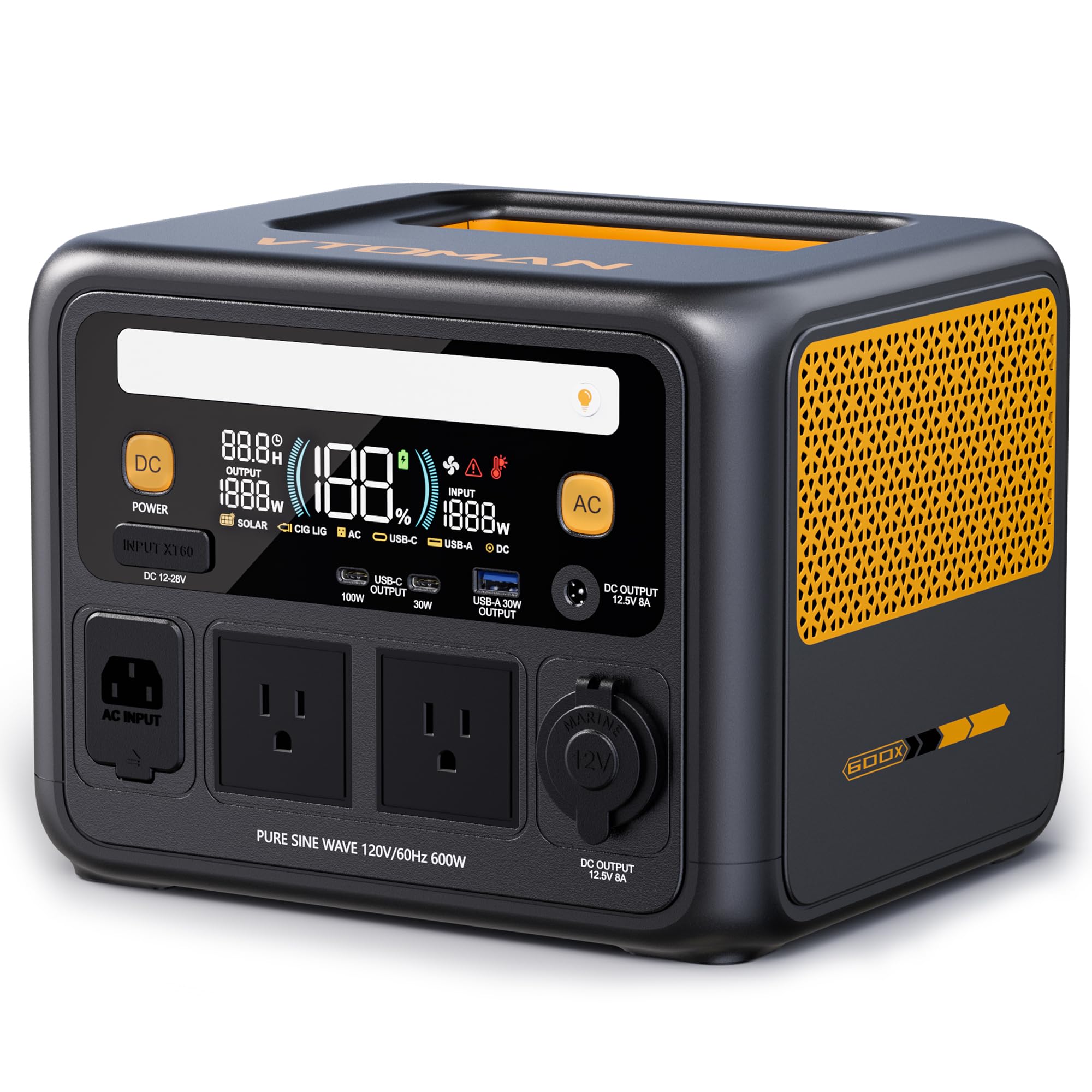
| VTOMAN Jump 600XBudget Champion | Light travel and one-handed carry | 268.8Wh | 600W (1200W peak) | 9.9 lb | Amazon |
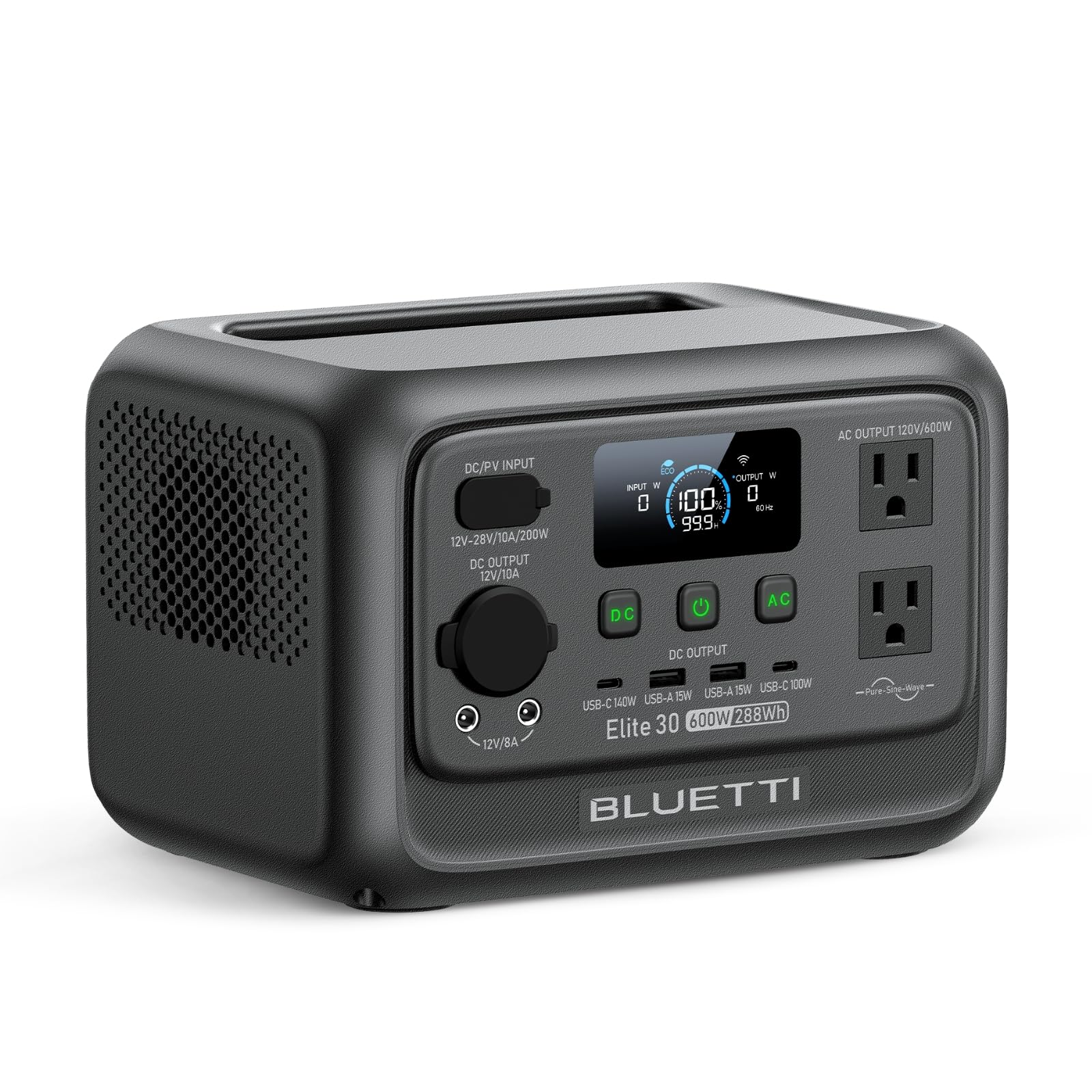
| BLUETTI Elite 30 V2Compact Pick | Small-space UPS and travel power | 288Wh | 600W (1500W lifting) | 9.5 lb | Amazon |
| ECO-WORTHY EnergyRock 280Ah | Permanent RV and off-grid installs | 280Ah (3584Wh) | 200A BMS | — | Amazon |
| BLUETTI Elite 100 V2 | Balanced home backup and camping | 1024Wh | 1800W (2700W lifting) | 25 lb | Amazon |
| AFERIY P210 | Long-runtime multi-device households | 2048Wh | 2400W (4800W peak) | 54 lb | Amazon |
| Jackery Explorer 2000 v2 | Portable 2kWh home emergency kit | 2042Wh | 2200W | 39.5 lb | Amazon |
| Anker SOLIX C2000 Gen 2 | Whole-home offset and appliance running | 2,048Wh | 2,400W (4,000W peak) | 41.7 lb | Amazon |
Detailed Reviews
1. EF ECOFLOW Delta 3 Portable Power Station, 1024Wh 1800W
Our pick — 4.5+★ from 1,000+ verified ratings; the strongest balance of quality and price.
The 1024Wh box that refills before your coffee cools.
If your outage plan is “keep the fridge and the router alive, then get back to full within the hour,” this is the one to beat. It holds 1024Wh of LiFePO4 capacity — enough to power a fridge overnight and still have headroom — and delivers 1800W continuous with 2700W peak, so motor startups do not bow it out. Against the VTOMAN Jump 600X it holds 3.8x the capacity and 3.0x the continuous output for a house that needs real headroom. The DELTA 3 charges from 0 to full in 56 minutes on AC, reaches 80% in about 30 minutes, and can take up to 500W of solar input when you want to run it off the roof.
What wins people over is the build and the sheer flexibility of the interface — 13 appliances running simultaneously is not marketing, and the app lets you cap charge and discharge rates so you decide when the fan spin-up happens. It is expandable up to 5kWh with DELTA 3, DELTA Pro 3, or DELTA 2 Max battery packs, so the same box grows as your needs do. The 5-year customer service window and the IP65 battery pack (splash-proof, dust-proof, oil-proof) round out a unit that is clearly built for a decade, not a season.
The honest catch is the acoustics and the weight. The fan runs loudly during fast charge for up to about 60 minutes, and the unit weighs 12.5 kg — not something you want to carry up stairs repeatedly. Neither is a defect; both are the cost of the fast-charge speed and the metal-heavy build that makes it durable.
1024Wh 1800W output
- 1024Wh LiFePO4 capacity with 1800W continuous and 2700W peak output for fridge and appliance startups
- 0 to 100% charge in 56 minutes on AC, 80% in 30 minutes — the fastest top-up in this comparison
- Expandable up to 5kWh with DELTA 3, DELTA Pro 3, and DELTA 2 Max battery packs as your needs grow
- 13 outlets live at once; X-Boost runs resistive appliances pulling over 2600W
heavier than smaller units
- At 12.5 kg (around 27 lb) it is a two-hand lift, not a one-hand grab
- Cooling fans spin audibly during the fast charge phase, sometimes for up to an hour
home backup: your priority is a single box that can charge faster than you can cook dinner and grow from 1kWh to 5kWh over the years.
light travel: portability matters more than charge speed — the 12.5 kg heft is real.
2. VTOMAN Jump 600X Portable Power Station
Nine pounds of winter backup that fits behind the passenger seat.
Put this one in your car and forget about it — 9.92 lb is a true one-hand carry, and at 9.4 × 8.1 × 7.2 in it slides behind a seat or into the bottom of a cupboard. The 268.8Wh LiFePO4 battery runs a small fridge for hours of gentle use or a coffee maker for a morning’s worth of boost, and the 600W continuous output with 1200W peak handles the compressor kick on a small appliance. Nine outlets — including 100W USB-C PD, a 30W USB-C, and a 30W USB-A — mean phones, tablets, cameras, and one heavier device all get topped up at once. Against the DELTA 3 it carries 268.8Wh rather than 1024Wh, but it also weighs about a fifth as much and offers 50-minute recharge to 80%.
Where the VTOMAN earns its keep is cold-weather downtime. Charge it fully, leave it in the car or a cupboard, and it will still read full months later — that is the LiFePO4 chemistry doing what it is supposed to, and the self-developed LIFEBMS with 12 built-in protections (including short-circuit and anti-spark protection) means the cell-level safety is handled by dedicated hardware rather than a chip’s best guess.
The trade-off is capacity. At 268.8Wh, this is a coffee-and-lights unit, not a run-the-fridge-for-a-day unit, and the 600W continuous ceiling means an electric kettle plus a space heater plus a laptop at the same time is not going to work. Charge it, keep it topped up, and treat it as a very reliable short-duration answer.
600W 9 ports: the flat-top design is a small thing that turns out to matter — this unit stacks neatly on a shelf or in a tub of emergency gear without wasting space, and the front LED cycles through five brightness modes for when the room goes dark.
small devices: the household that wants a grab-and-go winter backup for the kettle, the lights, and the phone chargers without committing to a 25-pound box.
large appliances: running a full-size fridge overnight — for that you need the 1kWh class.
3. BLUETTI Elite 30 V2 Portable Power Station
The backpack-sized UPS that keeps your router online when the block goes dark.
For a home office, a small server rack, or a router-and-modem pair that absolutely cannot blink off, this little BLUETTI does the specific job a wall-mounted UPS used to do — but with a battery that does not need replacing every few years. The 10ms UPS switchover (ten milliseconds is the brief gap between the grid dropping and the battery taking over) is fast enough that a home server rides through an outage without rebooting. The 288Wh LiFePO4 battery and 600W continuous output cover routers, modems, and the occasional laptop without drama; Power Lifting Mode pushes the ceiling to 1500W for the rare heavier load.
What makes this unit genuinely interesting is the efficiency angle. UltraCell technology and the smart cooling system cut standby draw to 4.5W, DC draw to 5W, and AC draw to 8W — meaning that at idle it is sipping, not gulping, and the runtime you expect is the runtime you get. Add 0-80% charge from a wall outlet in 45 minutes, 0-100% in 70 minutes, and a genuine carrying-handle-and-backpack form factor at 9.5 lb, and it slots into a bedside or desk drawer without complaint.
Its real limits are size and load type. 288Wh will not run a fridge or a space heater through the night, and if you are expecting to power heavy appliances you need a bigger class of unit. For routers, laptops, phones, small lights, and the more modest CPAP machines, it is the quiet, fast-switching answer that nobody notices until the grid goes down.
For the record, the review pages sum it up: owners describe this as a “great UPS” that replaces a 1500VA battery backup with a runtime that is appreciably longer, and a couple of them point out the app control but no USB auto-shutdown, so you manage it consciously rather than set-and-forget.
short trips: the priority is keeping the internet, the desktop, and the phone chargers alive through short blackouts with a battery you can also throw in a backpack.
extended camping: you need to run appliances — the 288Wh capacity is built for gadgets, not for a fridge.
4. ECO-WORTHY EnergyRock 12V 280Ah Lithium Battery
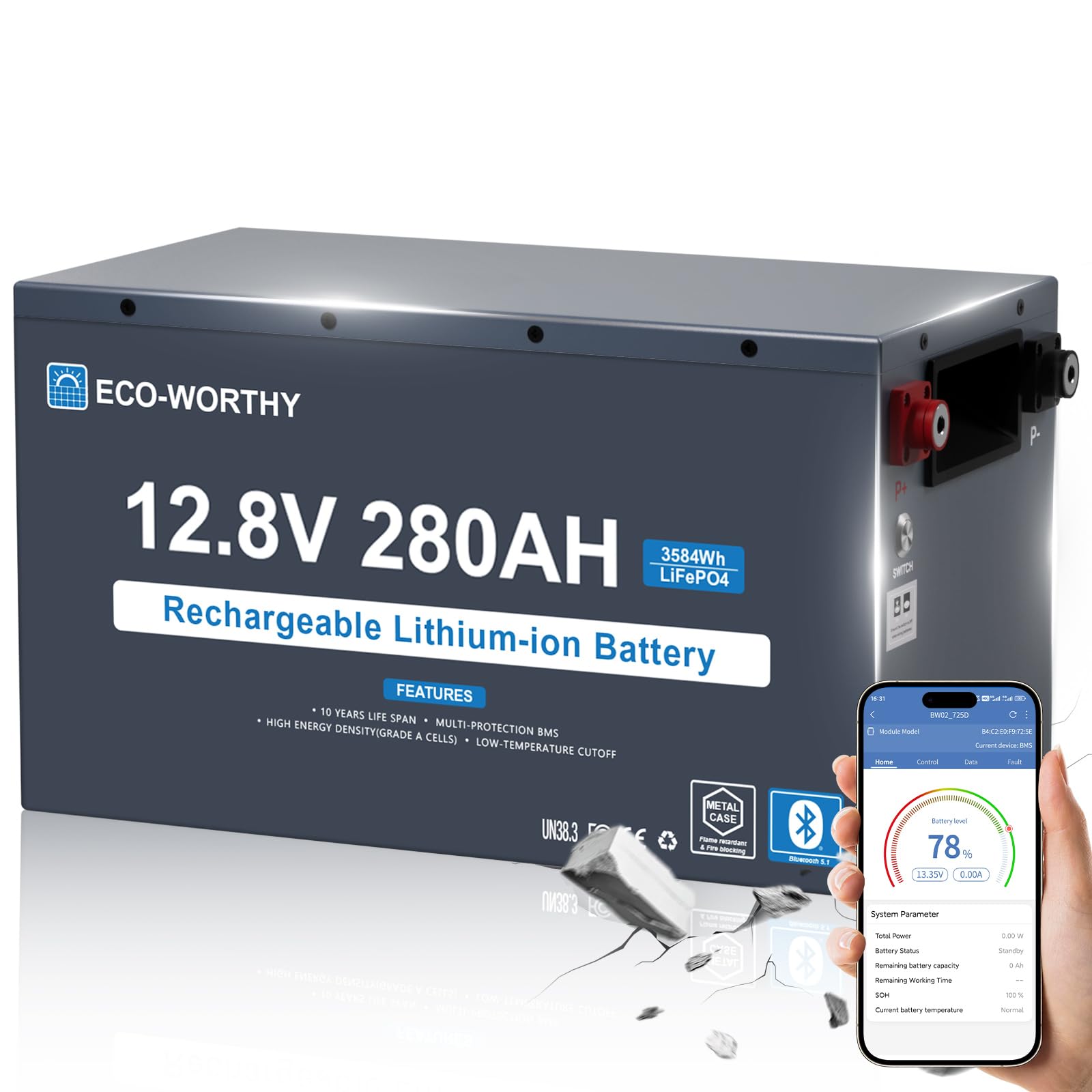
A 280Ah chunk of lithium armor built to live bolted inside a van.
Different category of choice entirely: this is not a portable box you carry inside during a storm, it is a permanent battery you install once and wire into an inverter, a charge controller, and solar. At 12.8V and 280Ah it stores 3584Wh of usable energy (that is the practical number to compare against the portable stations above), runs up to 200A continuous via its built-in BMS, and comes in a reinforced metal case with four mounting feet so you can bolt it straight into an RV or camper without adding a battery box. The metal enclosure is not cosmetic — it adds heat resistance and fire protection to the single heaviest component in the system.
The Bluetooth monitoring and low-temperature protection are what separate this from cheaper lithium cells. The onboard BMS cuts charging automatically in cold weather to protect the cells from cold damage (and cuts off under 20°F / -7°C), which is the exact failure mode that ruins lead-acid batteries in winter. The safety switch disconnects the discharge circuit with one push, so you can service the system without pulling cables. Recommended charging is a 12V (14.6V) LiFePO4 charger, or a solar controller set to 14.6V absorption, equalization off, float disabled at 13.8V if disabling is not an option.
Two review-page threads are worth noting. Fridge running is the headline — this cell keeps an RV fridge alive through a multi-day trip on a modest solar panel, and it also throws enough instant current to start a 1/2 HP sump pump or a table saw. One recurring fit note is that it is slightly wider than a regular deep-cycle battery, so measure the bay before you commit. It is also roughly the weight of a single deep-cycle AGM unit while carrying far more stored energy, so the physical swap in a camper is surprisingly easy.
280Ah metal case: three-year manufacturer coverage, front-mounted terminals that prevent accidental bridging between posts, and a real on/off switch instead of a bare lug.
solar storage: anyone wiring an RV, van, off-grid cabin, or home sump-pump inverter circuit who wants a battery that lasts through thousands of cycles and can be monitored from a phone.
portable use: plug-and-play portability — this one expects wiring, a compatible charger, and a measured mounting spot.
5. BLUETTI Elite 100 V2 Portable Power Station
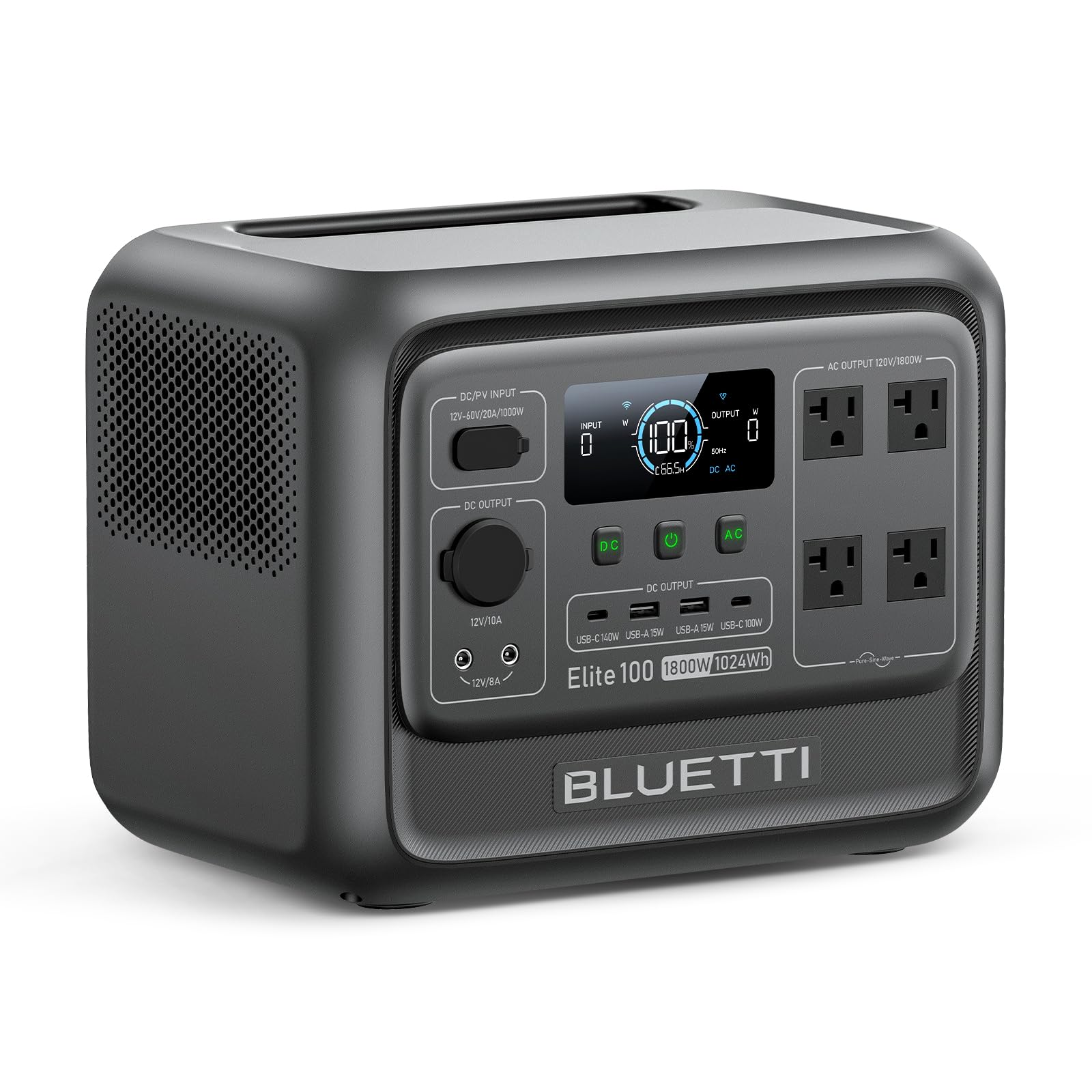
One kilowatt-hour, eleven ports, and a fan you will forget is running.
At 25 lb with a hidden carry handle, this BLUETTI sits in the balance between the pocket rocket and the full-size workhorse. 1024Wh of LiFePO4 battery paired with 1800W continuous AC output (2700W Power Lifting) covers everything from a camping weekend to a home outage where the router, the TV, and the fridge all need to keep going. Eleven ports mean you are charging the laptop, the phones, the tablet, and the camera batteries simultaneously without unplugging anything, and 0-80% recharge in roughly 45 minutes on AC TurboBoost gets you back in the game faster than dinner takes to cook. BLUETTI rates the LiFePO4 pack at 4,000-plus cycles to 80% capacity and a 10-year lifespan for daily use.
The feature that separates it from the DELTA 3 and the VTOMAN is the 10ms UPS switchover paired with a silent mode at just 30dB — half the noise of a typical 1kWh station. That combination is what makes it a legitimate bedroom or living-room appliance rather than a garage-only tool: it will hold your Wi-Fi up during a blip and it will not wake anyone while it does it. The app supports Wi-Fi and Bluetooth, plus remote monitoring and OTA firmware updates, so you can see the state of the battery from the couch.
The honest note is at the top end of the load curve. 1800W continuous will not run a full-size water heater or a central AC unit, and stacking several high-draw appliances on the same circuit will trip the internal protection. If your outage plan includes heavy appliances, step up to the 2kWh class. Otherwise, this is the “just plug in and use it” tier of home backup.
weekend camping: you want one box that handles camping, tailgating, home backup, and router duty without ever feeling like you overpaid.
full home backup: you plan to run a space heater or a big AC — the continuous ceiling sits at 1800W.
6. AFERIY P210 Portable Power Station

Two kilowatt-hours and sixteen sockets for a full-house outage plan.
If your goal is to keep the whole house running — fridge, freezer, lights, Wi-Fi, a couple of fans — the AFERIY steps up from the middle weight class with 2048Wh of LiFePO4 storage and a 2400W pure sine wave inverter rated to 4800W peak. AFERIY rates the LiFePO4 pack at 3,500 cycles and specifies a decade of daily use, backed by a 7-year extended warranty. Six AC outlets, four USB-C (20W and 100W), two USB, a car outlet, and an XT60 300W DC output add up to 16 ports running at once. During hurricane backup, fans pulling a 290-320W load ran close to seven hours on a single charge.
The quietness side is impressive — under 30 dB at full load and just 16 dB under normal load — so powering a router or a fan overnight does not become a noise decision. The 10ms UPS switchover keeps servers, routers, and computers online through an outage. The AFERIY app handles monitoring and automation setup, and the whole package weighs 48.5 lbs with integrated handles, so it is a two-person move but not a permanent-landmark kind of weight.
The one design quirk to know about is the bypass mode that activates when you are running off wall AC. In that mode, the unit can cap live output well below the 2400W continuous rating, with the full inverter power available only when the unit is drawing from its own battery. For most users that is a non-issue because the whole point of the unit is battery operation, but if your plan is to run heavy draws while the AFERIY is plugged into the wall, plan around it.
off-grid living: multi-person households or small businesses that want one large box to cover an extended outage with plenty of sockets for everything.
carry often: you want something small enough to move between rooms one-handed — the 48.5 lb chassis is a two-hand lift.
7. Jackery Explorer 2000 v2 Portable Power Station

A 2kWh lithium pack that stays under forty pounds.
The Jackery Explorer 2000 v2 is the answer for the household that wants big capacity without the two-person carry. At 39.5 lb it undercuts almost every other 2kWh unit — the brand specifies it as 41% lighter and 34% smaller than typical LiFePO4 stations in the same class, using the same Cell-to-Body (CTB) construction that EV makers use to stack cells directly into the frame. 2042Wh feeds three AC outlets at a combined 2200W, and the USB-C PD 100W port fast-charges a laptop without any adapter in the chain. The UL1778 test certification on the UPS side is unusual and note — that is the standard that actually governs uninterruptible power supplies, and this unit switched over in 20ms to pass it.
Charging is where this thing earns its travel credibility. 0-80% in 66 minutes on AC fast charge, 0-100% in 102 minutes using the Emergency Super Charging mode through the app, or six hours on 400W of solar. Silent Charging mode lands a full charge in five hours at just 30dB, which means you can top it up in a hotel room or a van overnight without waking anyone. The CPAP angle is real — CPAP users report running it three nights on a single charge, enough margin to stop worrying about it. Smart temperature control adjusts fan speed to keep the unit quiet at part load.
The main note is that UPS switchover is 20ms rather than the 10ms the two smaller BLUETTI options offer, so it is technically slower — fine for most routers and appliances, less ideal for a desktop that is very sensitive to power gaps. And at the top of the load curve, this is a 2200W box, not a whole-home solution, so run it as a house-essentials unit rather than a central AC replacement.
emergency power: the camper or short-term outage planner who wants 2042Wh of capacity they can actually lift into a car without help.
budget buyers: your priority is the fastest possible UPS switchover — the 20ms threshold here is slower than the smaller BLUETTI units above.
8. Anker SOLIX C2000 Gen 2 Portable Power Station
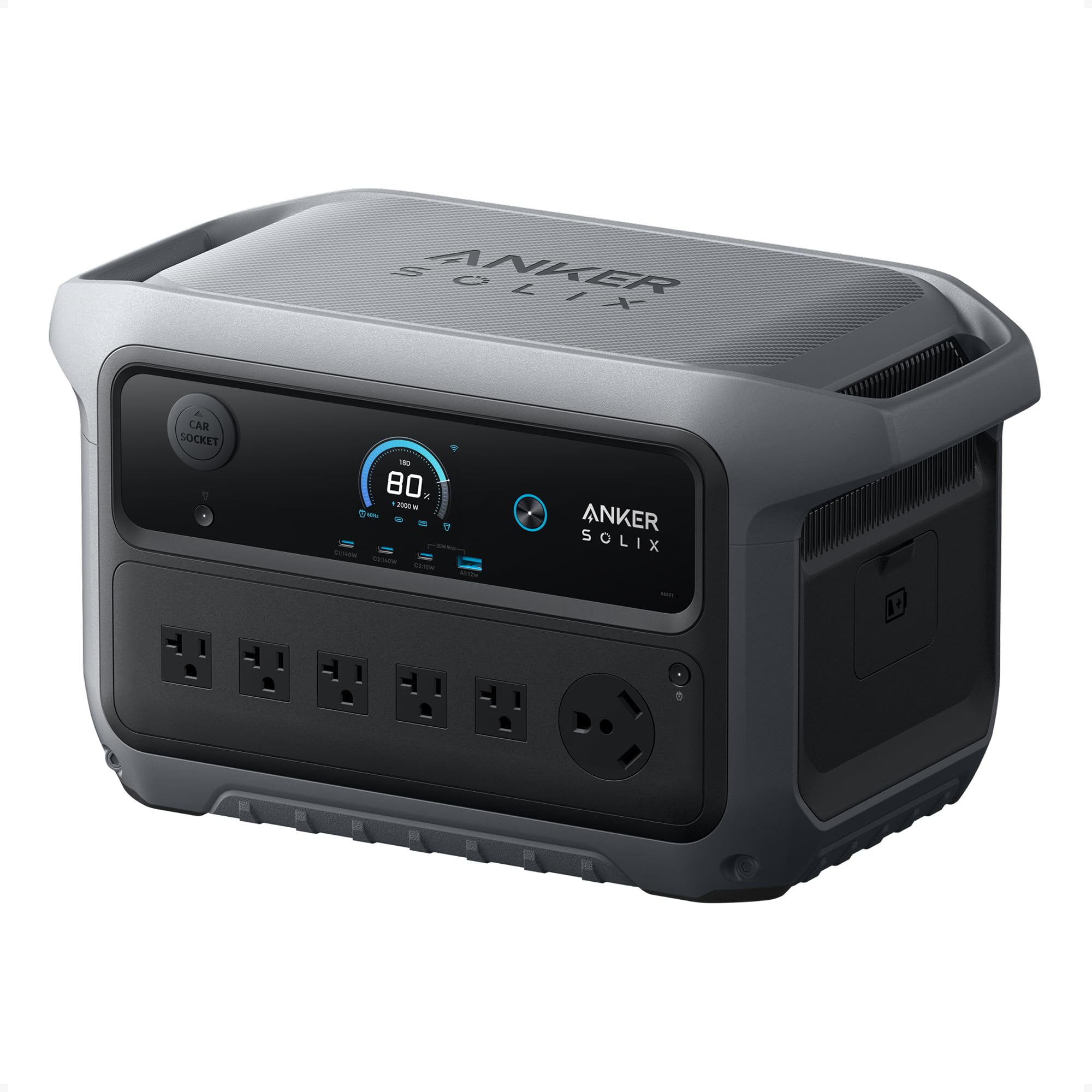
A 4,000W peak inverter with a 9W standby habit that runs a full-size fridge.
The C2000 Gen 2 is what you buy when “will it run the fridge?” stops being a question. 2,048Wh of LiFePO4 capacity combined with 2,400W continuous and 4,000W peak output handles most window and RV air conditioners, and the massive peak covers appliance startup surges that trip smaller units. Its 9W standby draw is low enough to run a dual-door fridge for up to 32 hours on a single charge. Adding an expansion battery doubles capacity to 4kWh, stretching that same dual-door fridge runtime to 64 hours. Full recharge from AC and solar takes 58 minutes, and if you are on the road, the 800W alternator charging option refills to 100% in three hours from a car.
Small but important detail: at 41.7 lb with an 18.1 × 9.8 × 10.1 in footprint, the C2000 Gen 2 is 25% lighter and 29% smaller than similar-class products — small enough to slide under a counter or TV stand for storage. The car alternator charging capability is genuinely rare and worth calling out because it turns a long drive into a top-up window instead of dead time. Anker’s support reputation also comes up repeatedly — buyers who received a damaged unit in transit report fast replacement with clear communication, and the dual-unit owners call the operation “extremely fast, efficient, compact, slick.”
The honest catch is on the input side. When AC input is connected, output is capped at 1,800W, not the full 2,400W, and there are reports that AC input can override some charge settings and cause an overload trip if you try to run heavy loads while plugged into the wall. That is normal behavior for this class of unit — the full inverter power lives on battery — so plan your heavy draws around the battery state, not the wall being live.
2048Wh Gen 2
- 2,048Wh base capacity expandable to 4kWh — 32 hours to 64 hours of dual-door fridge runtime depending on configuration
- 4,000W peak output runs most window and RV A/C units and handles startup surges safely
- 58-minute full recharge, plus 800W alternator charging to 100% in 3 hours in a car
- 9W standby draw — practically nothing lost while the unit sits idle
high upfront cost
- AC input limits output to 1,800W, well below the 2,400W continuous rating — full power only on battery
- 41.7 lb is carryable but not a one-hand grab; use the case-on-wheels approach for regular moves
appliance backup: running real appliances during an outage — fridge, window AC, microwave, coffee maker — is the whole point of buying a power station.
small gadgets: you want a bottomless 4,000W draw while plugged into the wall — that is not how the AC input is designed to work.
Know the Specs
Watt-Hours (Wh) — How Long You Stay On
Watt-hours are the fuel gauge of a home backup unit. They tell you how much stored energy you have, so 1024Wh means roughly one kilowatt-hour of capacity to spend, and 2048Wh means twice that runway. A modern fridge cycling on and off typically draws far less than its peak rating over the course of an hour, which is why a 1kWh station can carry a fridge overnight while a 250Wh station will flatten in a hurry. Match the number to your overnight essentials, not to your worst-case scenario.
Continuous Watts vs. Peak Watts — What You Can Run
The continuous rating is what the inverter can hold steady for hours. The peak rating is what it can survive for a few seconds at a time, usually when a compressor or motor first kicks on. A fridge that runs at 200W might spike to 800W for the half-second the compressor engages, so a unit rated 600W continuous and 1200W peak handles that gracefully, and a unit rated below the surge may trip out the moment the fridge tries to start. Buy at least the peak headroom your heaviest appliance demands on startup.
Common Questions
How many watt-hours do I actually need to run a fridge through a blackout?
Will a portable power station run my central air conditioner?
Can I install the ECO-WORTHY 280Ah battery in a camper without a battery box?
What is the difference between LiFePO4 and regular lithium in a home battery?
Is 10ms UPS switchover fast enough for a desktop PC or home server?
Can I charge these units with solar panels at home?
Do I need pure sine wave output to protect my electronics?
How long will a LiFePO4 home backup battery actually last?
What is low-temperature protection on a home battery for?
The Bottom Line
For most homes, the inverter and battery for home winner is the EF ECOFLOW Delta 3, because it hits the balance of 1024Wh LiFePO4 capacity, 1800W continuous output, and 56-minute full recharge, and it grows to 5kWh as your backup plan expands. If you want the appliance-running class with a 4,000W peak inverter and fridge-friendly runtime, the Anker SOLIX C2000 Gen 2 is the whole-house answer. And for the grab-and-go winter backup at the bag-friendly end of the range, the VTOMAN Jump 600X is the one to reach for — its 9.92 lb chassis and 268.8Wh LiFePO4 pack make it the easiest to keep topped up and ready.
How we choose
We do not accept paid placement. Every pick is matched to a real buyer and a real use-case; we do not hands-on test units.
Sources
Specifications: manufacturer listings and product documentation. Review insights: verified customer reviews, as of October 2026. Pricing: not shown on this page (it changes often); check the current price via the retailer link.
As an Amazon Associate, Aappliancez earns from qualifying purchases. This does not affect which products we feature.