Disclosure: Some links in this post are affiliate links. As an Amazon Associate I earn from qualifying purchases, at no extra cost to you. Learn more
Specs are compiled from manufacturer listings and verified buyer reviews and can change over time — please confirm the key details on the product page before buying.
You want water that stays cold on a long climb and a pack that does not bounce with every step. That is the whole job of an insulated hydration bladder, and the best of them do it without a plastic aftertaste or a leak soaking your spare layer. Below you will find the packs and reservoirs that actually hold temperature, plus the honest limits on each one.
This guide is built by comparing the manufacturers’ published specifications and the patterns across verified customer reviews, so you get each pick’s real strengths and trade-offs instead of marketing spin.
Insulation is what separates a good trail day from a miserable one, and the right pack keeps your drink cold for hours without bouncing on the descent. Here is how to pick the best insulated hydration bladder for your next hike.
Top Picks
How To Choose The Best Insulated Hydration Bladder
An insulated hydration bladder is a water reservoir with a tube you sip from on the move, wrapped in some form of thermal barrier so the drink does not turn warm and plastic-tasting. The pack around it carries the bladder, your layers, and your snacks. Picking well means matching the water you carry to the length of your day — not just the biggest bladder on the shelf.
Match the bladder liters to your outing, not your ambition
A 3-liter bladder (100 ounces) covers most full-day hikes, and it is the size that shows up in every pack here. The trade-off is weight: a full 3L bladder is heavy, and several owners of these packs note that a filled bladder eats the space in the smaller compartments. If you mostly do 5-mile loops, a 2-liter bladder is plenty and leaves room for a sandwich. Think of the bladder as the fuel tank and the pack as the trunk — you want both sized for the trip you actually take.
Cool time is the number to check
Insulation is the reason you are reading this rather than buying a plain reservoir. The claim you will see repeated across these packs is cool retention measured in hours — an insulated compartment or tube extends the window before your water goes lukewarm. Some packs quote up to 5 hours and at least 4 hours; others claim the insulated liner keeps drinks cool up to 6 hours, especially when you add ice. Those figures only work when the bladder sits inside the insulated pocket with a cold source, so check that the pack actually has a dedicated thermal sleeve before you buy.
The bite valve and tube design decide whether you love it
A bite valve is the soft mouthpiece you bite and suck to release water. A poor valve is the most common annoyance in this category — users describe awkward tips that require pulling out to sip, caps that drip when you bend over, and valves that need open up before they flow. Look for a wide top opening for cleaning, a quick-connect that lets you remove the tube from the bladder, and a twist or locking shut-off so nothing leaks in your car. A removable drinking tube also makes drying the bladder far easier.
Fit and strap setup beat pocket count
A pack that bounces is a pack you stop wearing. Adjustable chest and waist straps keep the load close to your back, and a padded, vented back panel stops the pack from pressing hot against your spine. A narrow profile suits smaller frames better than a wide boxy pack, while larger users need straps that extend far enough to sit comfortably. If you are tall or broad-shouldered, check strap length before anything else.
Side-by-Side Comparison
| Model | Best For | Bladder Capacity | Pack Capacity | Insulation | Amazon |
|---|---|---|---|---|---|
| Mothybot Insulated Hydration Backpack★ Best Overall | All-day hiking comfort | 3 liters | 3 liters | Insulated compartment, cool up to 5 hours | Amazon |
| ATBP Tactical Molle Hydration PackMost Versatile | Gear-heavy tactical days | 3 liters | 3 liters | Temperature retention noted by owners | Amazon |
| Maelstrom Lightweight Hydration Backpack | Long day hikes with cargo | 2 liters (accepts up to 3L) | 20 liters | Separate insulated compartment | Amazon |
| Badlands Hydration Reservoir | Replacing a worn bladder | 3 liters | — | Hydrafusion insulated drinking tube | Amazon |
| Water Buffalo Sherpa 22L | Multi-day park treks | 2 liters | 22 liters | Waterproof zippers, rain cover | Amazon |
Detailed Reviews
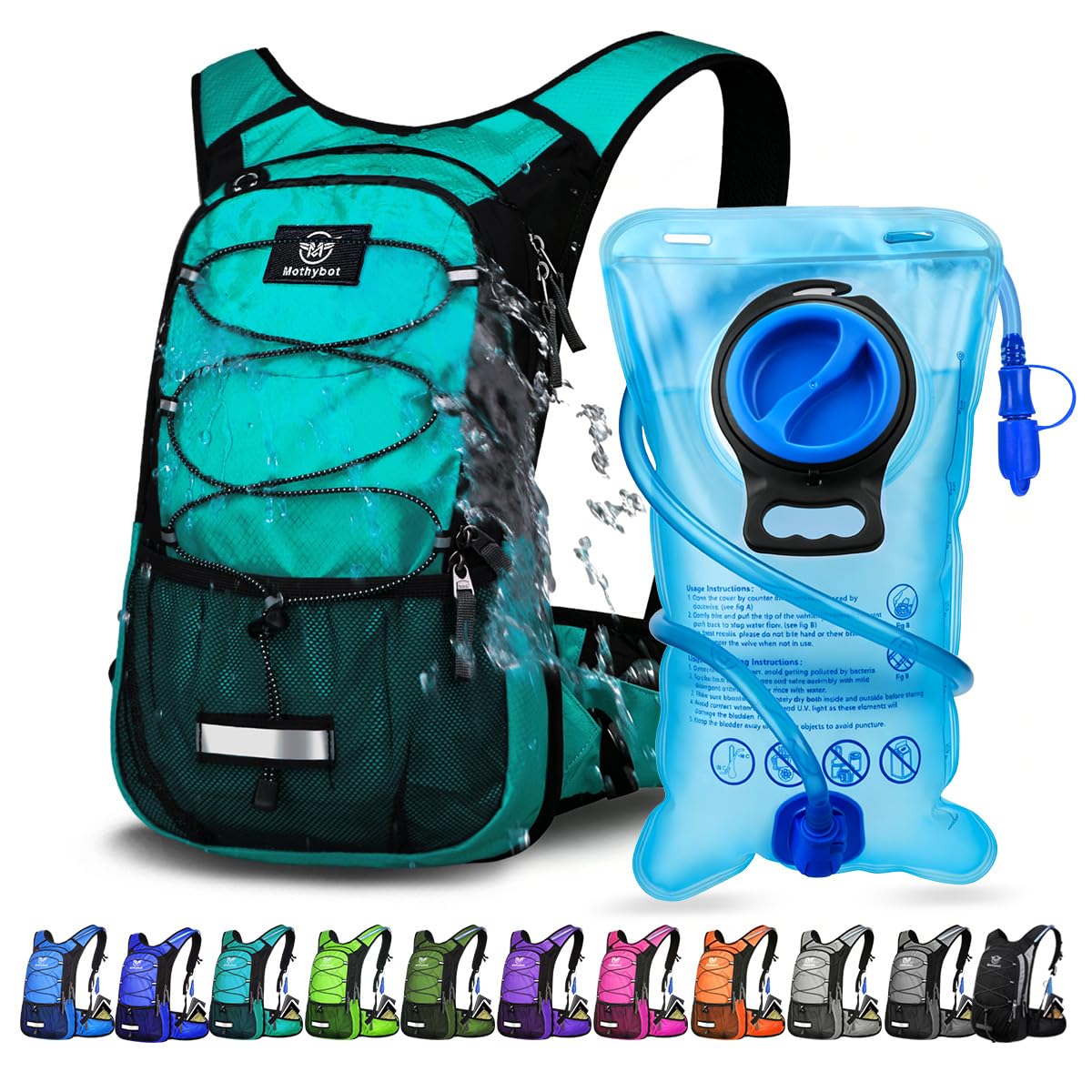
1. Mothybot Insulated Hydration Backpack 3L
Our pick — 4.5+★ from 650+ verified ratings; the strongest balance of quality and price.
The pack that keeps 3 liters cold for hours and still swallows a puffy jacket.
The number that makes this the top pick is cool retention: Mothybot says the insulated bladder compartment keeps your drink cold for up to 5 hours, at least 4 hours. That is the difference between cold water at the summit and warm plastic two hours in. The 3-liter bladder (that is 100 ounces) is BPA-free and food-grade, so it handles a full mountain day without a refill.
Space is the second win. This pack carries a 3-liter load inside a 3-liter-capacity daypack with 5 pockets, and the front stretch mesh pocket holds a layer you shed mid-climb. Compared with the Water Buffalo Sherpa, which offers 22 liters of pack space to 2 liters of bladder, this one balances water volume and cargo instead of favoring the trunk. The leak-proof design uses a click-in connection on the removable insulated drinking tube rather than a screw thread, which is exactly the failure point that trips up other bladders. Owners rate the overall quality highest here — it is what wins people over most — and the storage runs a close second.
The honest limit is size range. The straps do not extend far for larger bodies, so broad-shouldered or big-frame hikers will find it less comfortable than the Maelstrom, which adjusts across more shapes. A few also note the waist straps sit narrow. One practical tip that shows up in owner feedback: run a cleaning kit through the bladder before your first trip, because a first-use off taste is common if you skip it. As the review pages put it: “No leaks, plenty of pockets and storage, comfortable for 5-mile and 13-mile hikes.” That is a pack owners keep reaching for.
What makes it the winner
- Insulated bladder compartment keeps water cold up to 5 hours, at least 4
- 3L (100 oz) BPA-free bladder holds a full day of water
- Click-in removable insulated tube avoids the screw-thread leak problem
- Front mesh and waist pouches carry layers and phone
- Clip on the right shoulder strap fixes the hose in place
Where it asks you to compromise
- Straps do not extend far, so it fits larger frames less well
- Waist straps run narrow and can feel tight
- Bladder can need a cleaning-kit run before the first sip tastes right
Grab this one: it is the right pick for day hikers who want cold water for a full outing and storage to spare.
Step up in size instead: if you are broad-shouldered or big-framed, the strap reach here will feel short.
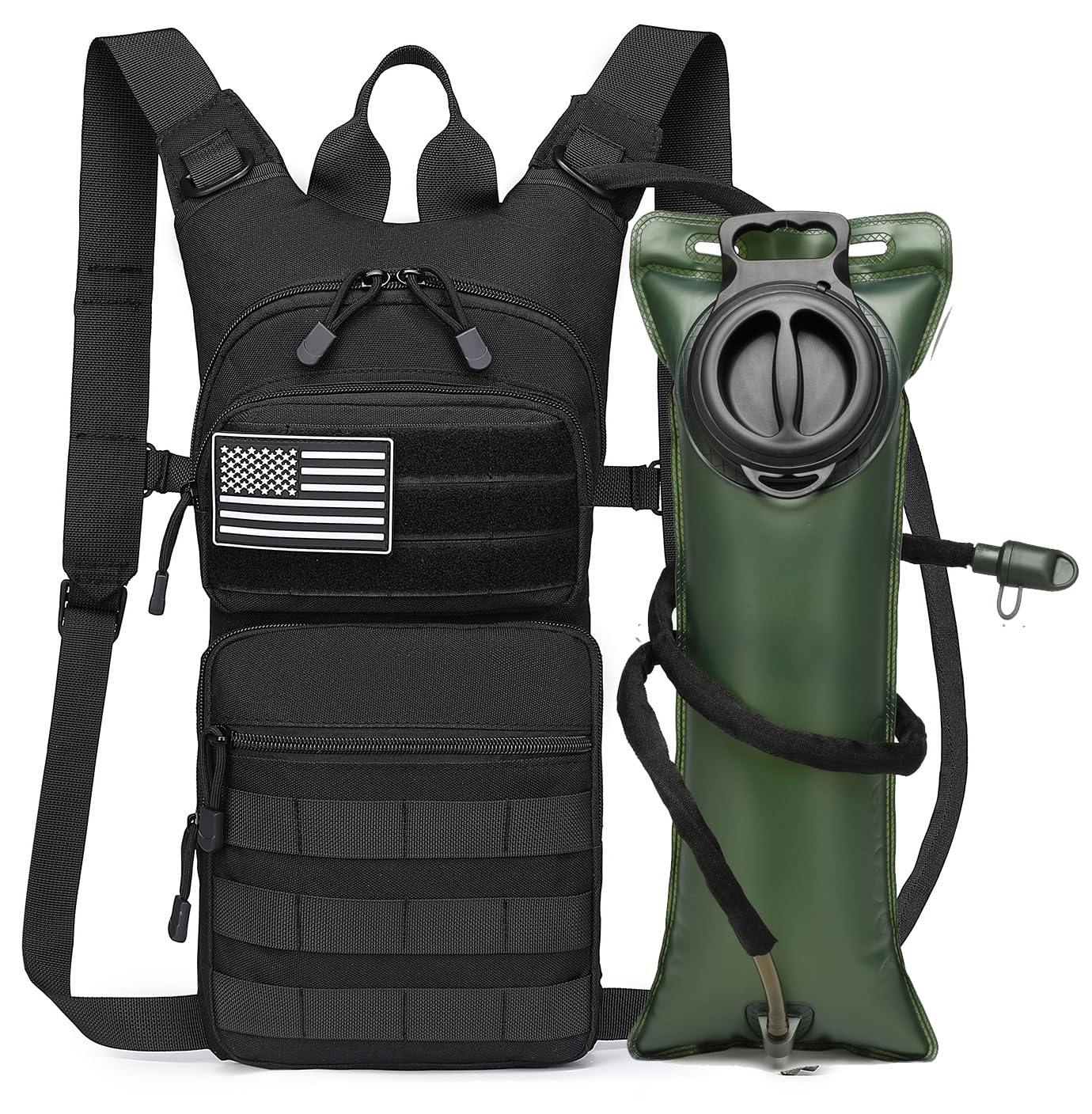
2. ATBP Tactical Molle Hydration Pack with 3L TPU Bladder
Seven pockets of tactical storage wrapped around a 3-liter bladder for gear-heavy days.
If you carry tools, a knife, and a charger alongside your water, the 7-pocket layout here is the reason to pick it. The Maelstrom above packs 8 pockets into a 20-liter bag, but this one keeps a tight tactical profile with molle webbing for clipping gear on. The bladder itself is a 3-liter TPU reservoir (100 ounces), and buyers report it does hold temperature — a real plus for a pack at this tier.
Functionality is what owners praise most after the overall quality, and you can feel why: the adjustable straps dial in fast, and filling the bladder is straightforward thanks to a broad opening. A land surveyor bought two of these for working far from a truck water supply, and the pack carried the day. For Big Bend trips and similar long, dry outings, that capacity earns its keep.
Here is the catch you need to weigh. Durability is the weak spot — straps have been known to give out, and the cap on the bladder is described as weak enough that water can escape if you bend over. Size also runs smaller than the photos suggest, so a full bladder crowds the other pockets. If you want a pack that survives brutal use and stays dry in every position, the Badlands reservoir is the sturdier bet for the water side. But for the money, the fabric, stitching, and zippers here are genuinely good, and it has held up on real park trips.
Gear-hauler value: 7 pockets plus molle webbing give you more mounting points than the 5-pocket Mothybot, and the 3L TPU bladder carries a full day of water.
The cap is your weak link: a weak bladder cap can weep when you lean forward, so stow it upright and treat the closure with care.
Reach for this if: you want tactical mounting options and 7 pockets on a budget-minded pack.
Look elsewhere if: you plan to abuse the straps or need a dribble-proof cap for bending and kneeling.
3. Maelstrom Lightweight Hydration Hiking Backpack
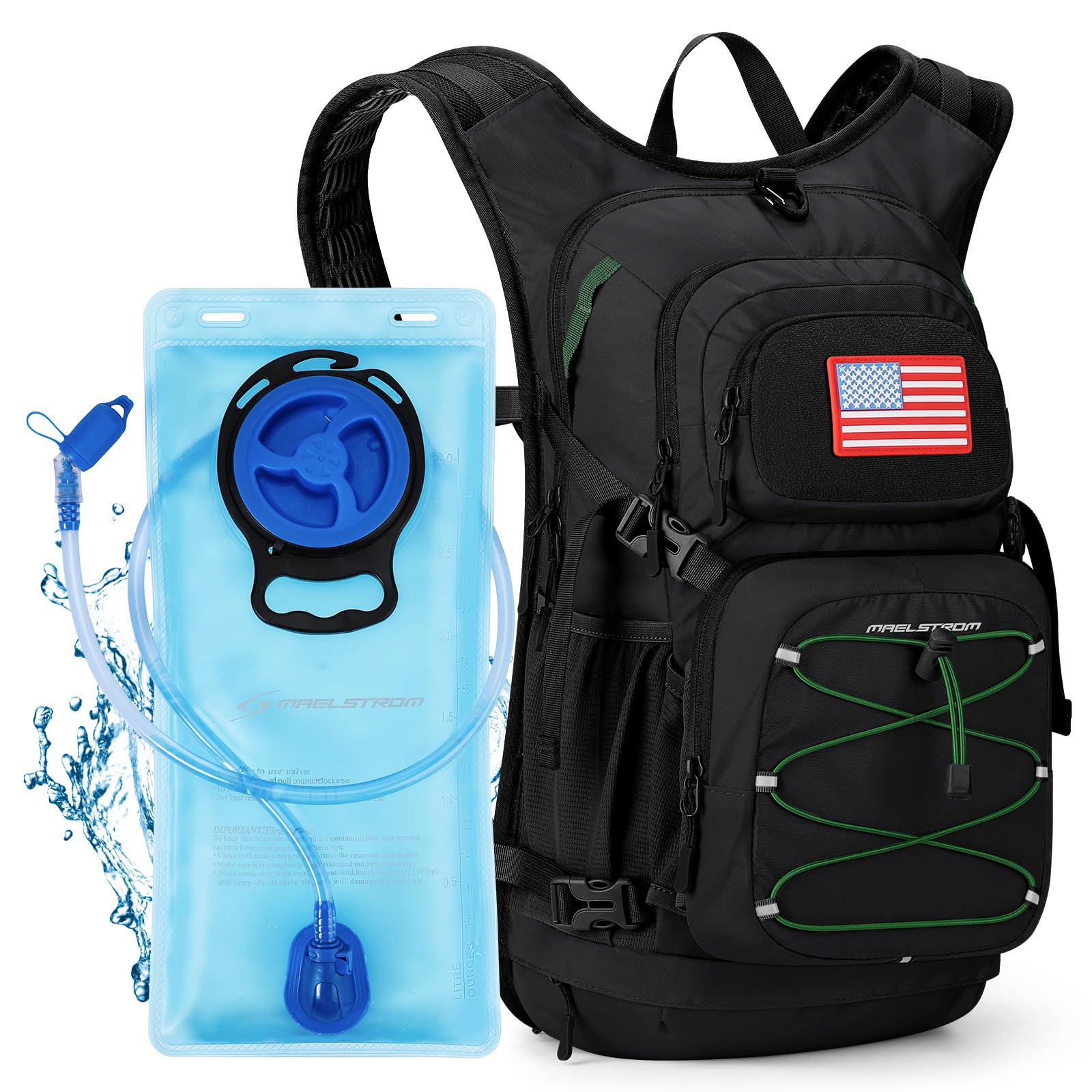
A 20-liter cargo hauler that carries a sweatshirt, a camera, and cold water without the bulk.
Twenty liters is the headline here, and it is a genuine gap. The Maelstrom carries 20 liters of pack space versus the 3 liters of pack capacity on the Mothybot — the Maelstrom gives you a real daypack alongside the water. Eight pockets handle a laptop, a windbreaker, and a helmet, and the bottom pocket swallows a sweatshirt. Owners call it deceptively large for a 20-liter pack. A 3D breathable padded back and adjustable chest and waist straps keep the load steady.
The bladder is a 2-liter BPA-free soft flask with bilateral hose outlets, and the bag supports dropping in a 3-liter bladder if you want more. The separate insulated compartment takes ice packs and keeps drinks cool for hours — one owner says the insulated liner kept drinks cool up to 6 hours with ice in the mix. A high-flow bite valve (you bite the outlet and sip) refills fast when you are thirsty. What wins people over most across the reviews is the overall construction quality, and the storage runs second.
The trade-off is the bite valve’s learning curve. The valve needs a small pull to open up before it flows, which confuses first-timers, and the straw can hold a faint plastic taste on the very first use even after a good wash. The waist straps also sit narrow and can feel less comfortable than the padded shoulder straps. On the plus side, the stiff back plate keeps air moving across your spine, and the chest and waist straps stop the load from shifting on rocky descents.
Built for cargo: 20 liters and 8 pockets let you pack a camera, first-aid kit, and flip flops alongside the insulated bladder compartment.
Mind the valve: the bite valve must be pulled out slightly to open up, so read the instructions before your first sip.
This is your bag: for hikers who want one pack that hauls gear and water for a full day.
Try before you commit: if you dislike fiddly valves or narrow waist straps, the fit may bother you on long descents.
4. Badlands Hydration Reservoir with Insulated Drinking Tube

A 3-liter reservoir with an insulated tube that keeps cold water cold all the way to your mouth.
This one is the water side, not the pack. If your current daypack is fine but your bladder leaks or turns water warm in the tube, the Badlands is the upgrade. It holds 3 liters, weighs 4.96 ounces, and fits packs such as the Badlands 2200 perfectly — it slides in where a standard 3L bladder would go. Its Hydrafusion technology insulates the drink tube itself, so the last sip is as cold as the first, and the Elite Surge Valve is designed to flow steadily without dripping.
Cleaning is where it pulls ahead of pack-mounted bladders. The full-width top opening fills and cleans in seconds, and the reservoir is fully reversible so it dries completely. A Plug-N-Play connector lets you detach the tube from the bladder in one motion and replace it if it ever fails. It is BPA- and PVC-free, so you should not fight a plastic taste — though one buyer still reports a faint plastic flavor at first. It comes with an unconditional lifetime warranty, and the fused, rock-solid tube insulation holds up.
The real caveat is instructions. A recent 2-liter version shipped with no guidance and a changed opening design, which had one owner hunting a video before they could open it safely. Buy this as a replacement reservoir for a pack you already love, not as a standalone first purchase — you still need a pack with an insulated pocket to get the full cooling benefit. The quality here is what owners praise most, with easy cleaning close behind.
The cold-water case
- Insulated Hydrafusion tube keeps water cold from bladder to mouth
- Fully reversible, full-width opening dries fast and cleans easily
- Plug-N-Play connector detaches the tube for replacement
- BPA- and PVC-free with an unconditional lifetime warranty
What to know before you buy
- Ships as a reservoir only — you need a compatible pack to use it
- Some versions arrive without instructions, and the opening design has changed
- A faint plastic taste can linger on the first uses
Right if: you already own a pack with a bladder sleeve and want a colder, cleaner reservoir inside it.
Wrong if: you need a full pack, or you want an opening that works from the start without a tutorial.
5. Water Buffalo Sherpa 22L Hiking Hydration Backpack
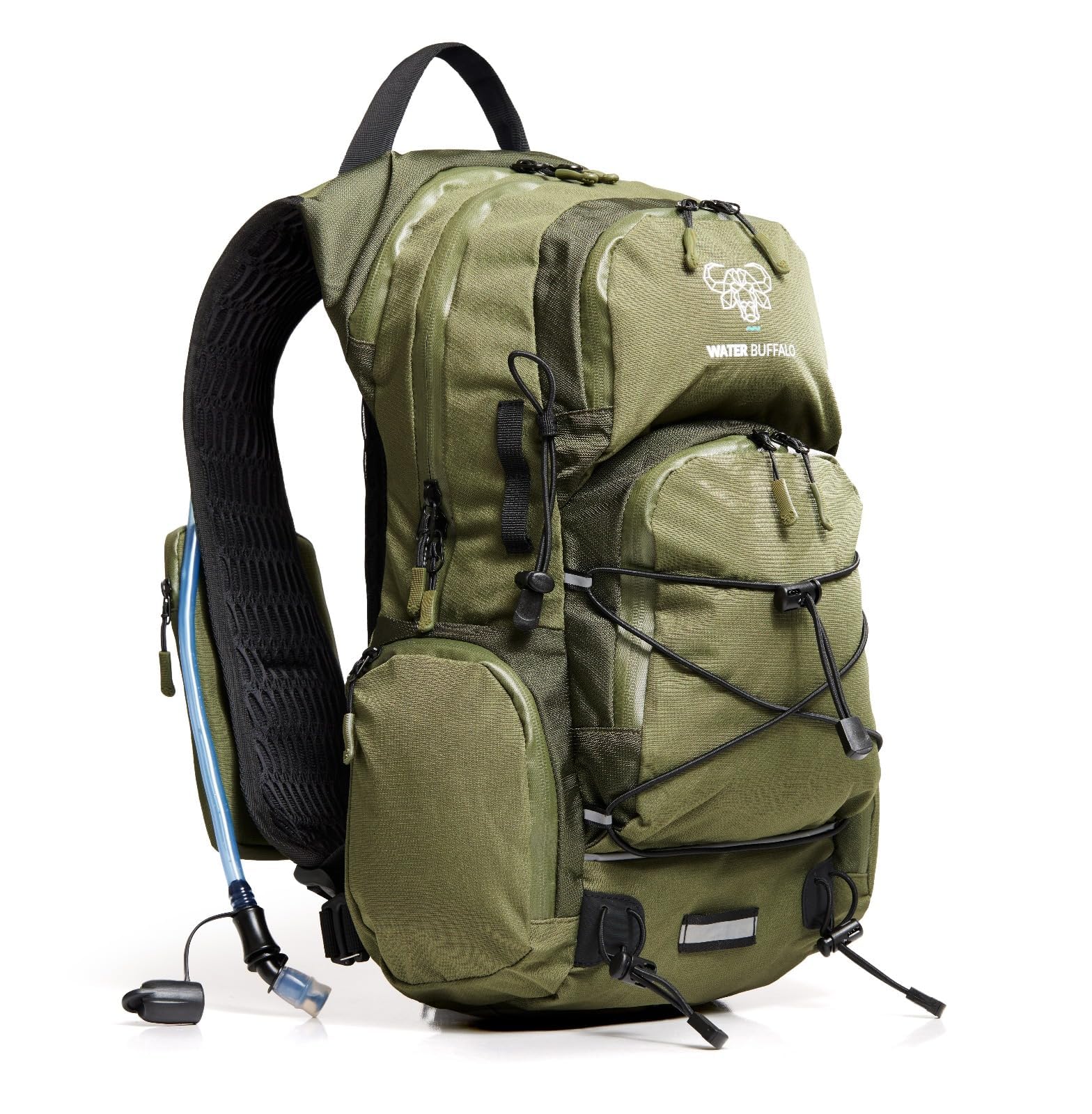
The widest pack of the group, built for long national-park days with room to spare.
Twenty-two liters makes this the biggest trunk here, and the 2-liter BPA-free bladder keeps the load manageable. Six storage pockets and a padded back cover snacks, layers, and a phone, and the trekking pole holders keep your hands free on steep sections. Waterproof zippers add a layer of rain protection that the lighter packs above do not spell out. The material is 150D ripstop polyester and 420D jacquard nylon — durable fabrics that shrug off brush and pack abrasion.
Owners put it through real parks: Zion, Yellowstone, the Tetons. The narrow profile suits smaller frames so the straps do not rub your arms, and the fit reaches a 6’3″, 300-lb hiker too. What wins people over most is the quality of the build, with storage a strong second.
The included bladder is the honest weak point. It has no wide mouth for cleaning, the threaded tube can cross-thread and wear, and there is no insulated sleeve — so water heats up in the sun, which undercuts the whole insulated-bladder goal. A couple of straight-talking owners suggest buying the pack and swapping in a better reservoir, or adding a rain cover to hold the weather off. Shoulder straps divide opinion: a few find them stiff as cardboard, so try the fit before a long day. Bladder aside, the 22-liter bag itself is the star.
Your move: buy it as a roomy daypack and plan to pair it with a better insulated reservoir.
Dodge it if: you want cold water without adding a replacement bladder or extra insulation.
Know the Specs
Bladder Capacity vs Pack Capacity
These are two different numbers. Bladder capacity is how much water you can carry, measured in liters (3 liters is 100 ounces). Pack capacity is how much gear the bag around it holds, also in liters. A 3-liter bladder inside a 3-liter pack is all water and little gear; a 2-liter bladder inside a 22-liter pack means most of your space is for layers and snacks. Match the water volume to your outing length, and match the pack volume to your cargo.
Insulation and Cool-Retention Hour Ratings
Insulation is a thermal barrier around the bladder or the tube. It works by slowing heat transfer, so your drink stays cold for a stated window — several packs here quote cool retention up to 5 hours and at least 4 hours, and some liner claims reach up to 6 hours with ice. The insulation only helps when the bladder sits inside the insulated compartment and you add a cold source like ice packs. An insulated tube keeps the water cold from bladder to your mouth, which is why some reservoirs wrap the tube and the water, not just one of them.
Bite Valve and Quick-Connect Fittings
A bite valve is the soft mouthpiece you bite and suck to release water. A quick-connect fitting lets you remove the tube from the bladder. Both affect daily use far more than insulation does. Look for a valve with a twist or locking shut-off so it will not leak in the car, and a wide bladder opening so you can clean and dry it. Removable tubes also let you replace just the tube if it wears out rather than the whole reservoir.
Strap Fit and Back Ventilation
A pack is only as good as its fit. Adjustable chest and waist straps keep the load against your back and stop it bouncing. A 3D padded or vented back panel lets air move between you and the pack. Narrow packs suit smaller frames, while larger users need straps that extend further. Try the straps before a long hike, because stiff or short straps will wear on you over a day of climbing.
Common Questions
How many hours does an insulated hydration bladder keep water cold?
Is a 3-liter bladder too much water for a short hike?
What is the difference between a hydration reservoir and a hydration pack?
Why does my water taste like plastic from a new bladder?
How do I stop my hydration bladder from leaking in my pack?
Will a 3-liter bladder fit in a 20-liter hiking backpack?
Do I need an insulated tube or an insulated bladder compartment?
How do I clean and dry a hydration bladder so it does not grow mold?
Which fit is better for a taller or bigger hiker?
Can I use a 2-liter bladder in a pack designed for 3 liters?
The Bottom Line
For most hikers, the insulated hydration bladder winner is the Mothybot Insulated Hydration Backpack because it pairs a 3-liter BPA-free bladder with an insulated compartment that keeps water cold up to 5 hours, at least 4, and adds a click-in tube that avoids the screw-thread leak. Owners back it too: 4.5+ stars across 600+ reviews. If you want tactical mounting and 7 pockets at a lower tier, grab the ATBP Tactical Molle Hydration Pack. And for a 20-liter cargo hauler with a separate insulated sleeve, the Maelstrom Lightweight Hydration Backpack is the one to reach for. If you already own a pack and just want colder water and a cleaner bladder, the Badlands Hydration Reservoir is the upgrade that makes the most of the sleeve you have.
How we choose
We do not accept paid placement. Every pick is matched to a real buyer and a real use-case; we do not hands-on test units.
Sources
Specifications: manufacturer listings and product documentation. Review insights: verified customer reviews, as of October 2026. Pricing: not shown on this page (it changes often); check the current price via the retailer link.
As an Amazon Associate, Aappliancez earns from qualifying purchases. This does not affect which products we feature.