Disclosure: Some links in this post are affiliate links. As an Amazon Associate I earn from qualifying purchases, at no extra cost to you. Learn more
Specs are compiled from manufacturer listings and verified buyer reviews and can change over time — please confirm the key details on the product page before buying.
If your feet burn, tingle, or go numb walking to the kitchen, the right insole can make standing and walking steadier. The wrong one — a stiff, hard-arched slab — can press into sore spots and make burning worse. This guide covers five inserts for neuropathy: cushioned under the ball and heel, supportive enough to keep you upright, and clear about their drawbacks.
This guide is built by comparing the manufacturers’ published specifications and the patterns across verified customer reviews, so you get each pick’s real strengths and trade-offs instead of marketing spin.
You want padding that softens steps, an arch that holds without digging in, and a fit that works inside the shoes you actually wear. Below you’ll find the full breakdown of the best insoles for neuropathy.
Top Picks

How To Choose The Best Insoles for Neuropathy
Neuropathy changes what your foot tells your brain. Numbness stops you noticing a small rub before it becomes a sore, and burning or tingling makes hard pressure feel worse than it should. That flips the usual “more arch support is better” advice. What you want first is cushioning and even pressure distribution, then support that holds your foot in a natural line without digging into the arch.
Cushioning Comes Before Firmness
Soft, shock-absorbing material — a plastazote or memory-foam topper, for example — conforms to the shape of your foot and spreads load across a wider area. That keeps sharp pressure off the ball of your foot and the heel. A rock-hard orthotic can hold a foot in place, but on a numb or burning foot it can feel like standing on a ridge.
Match the Arch Height to Your Foot
A medium or neutral arch profile usually suits sensitive feet because the bump under the midfoot stays gentle. Very high, hard arches feel good to a flat-footed walker who needs lift, but they can press on an already-tender arch. Look for “cushioned” or “neutral” arch language in the listing and weigh it against how much support your own foot actually needs.
Check Shoe Room and Trim-to-Fit Details
Most full-length inserts sit best in shoes where the factory insole lifts out. Check how much vertical room is left in the shoe, because a thick insert can crowd the toe box or push your heel up. Trim-to-fit models let you match the outline of your old insert, while size-ordered pairs skip the scissors entirely.
Side-by-Side Comparison
| Model | Best For | Arch Support | Cushioning Material | Length (in) | Amazon |
|---|---|---|---|---|---|
| PowerStep Pinnacle Insoles★ Best Overall | Firmer support with heel cushioning and a reliable fit | Premium arch support | Dual-layer cushioning | 14.2 | Amazon |
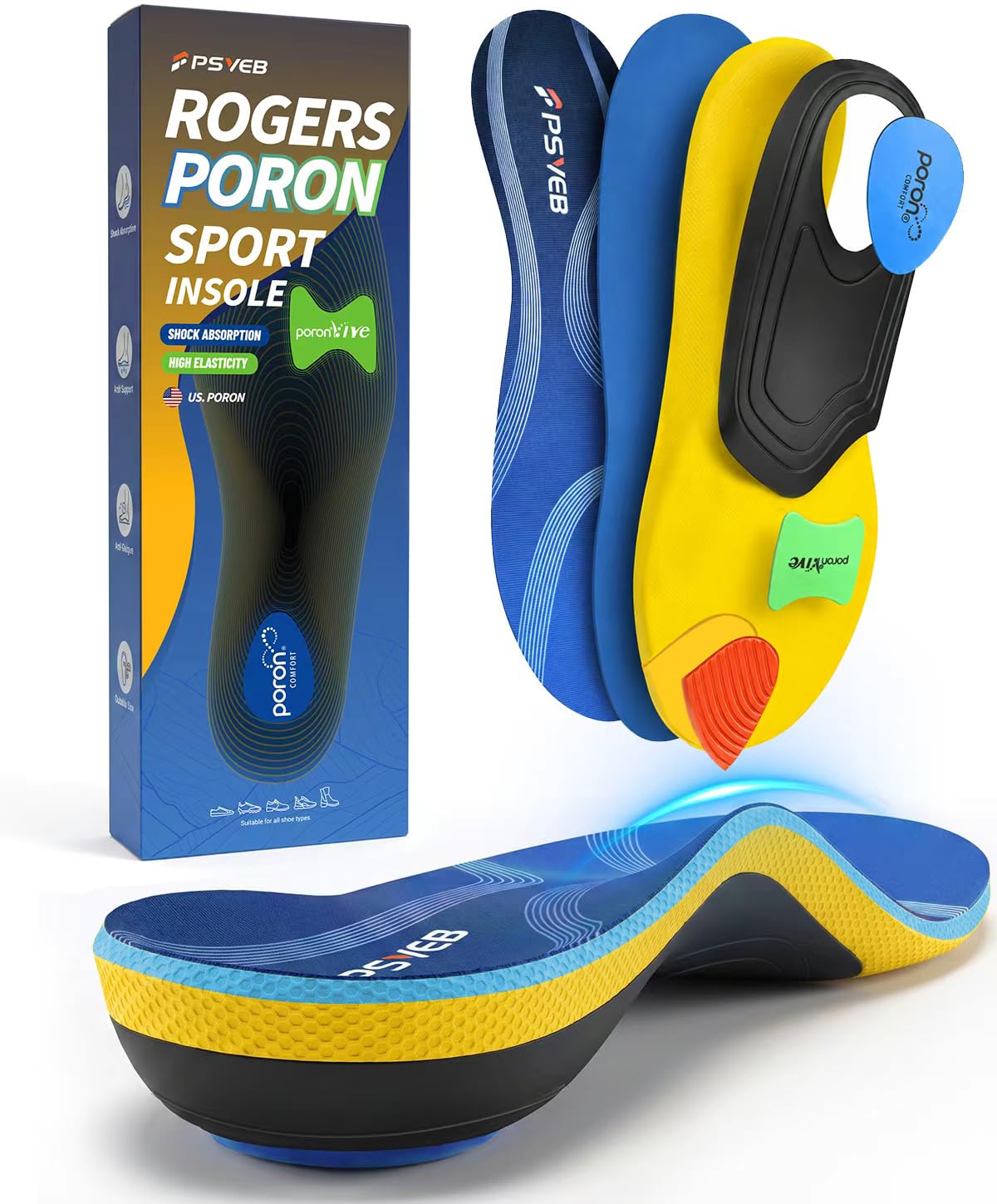
| Professional Heavy Duty Support OrthoticsBest for Work Boots | Work boots and heavier users wanting firm, stable support | Ergonomic three-point Golden Triangle | Double PORON cushioning | 12.2 | Amazon |
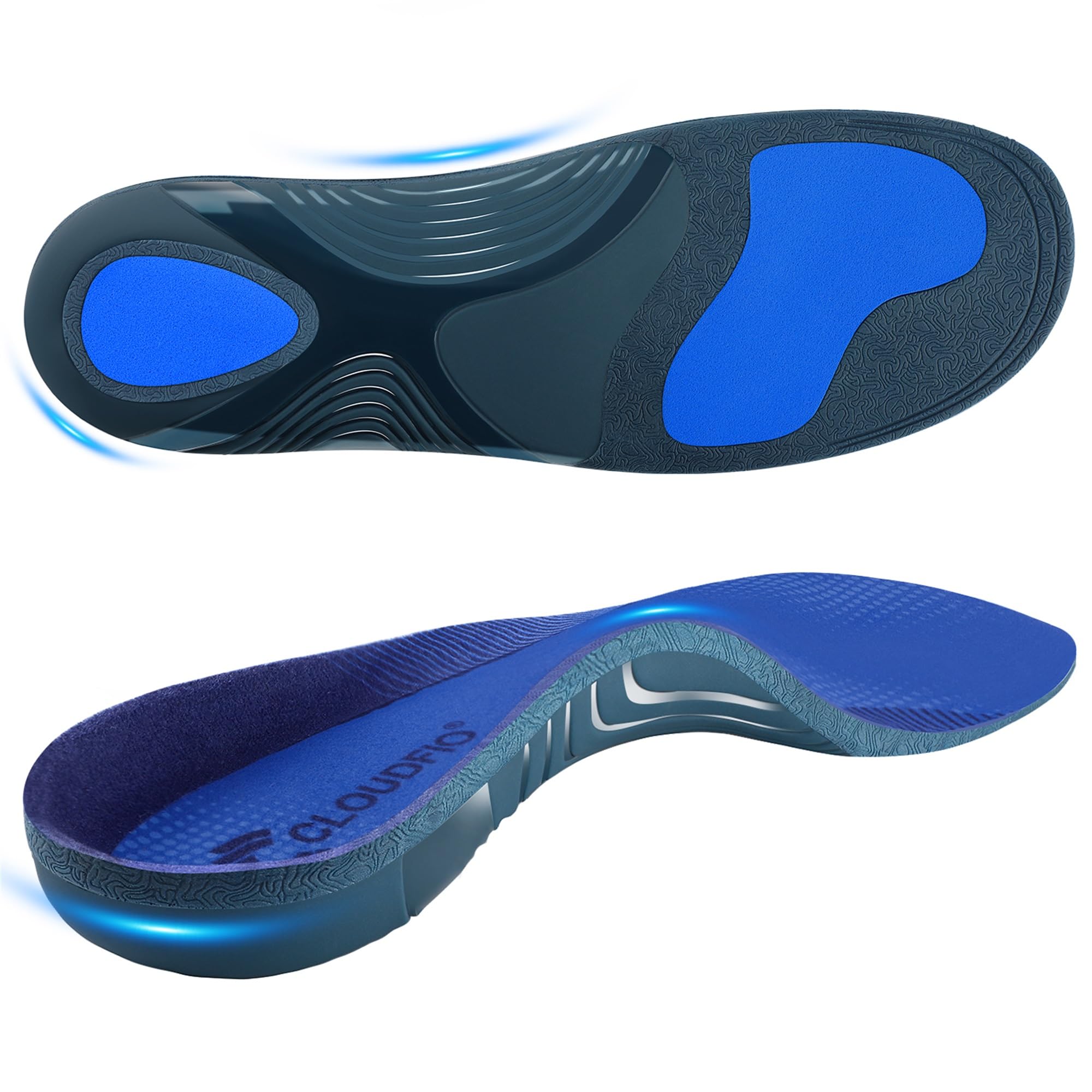
| Cloudflo Plantar Fasciitis Insoles | Long shifts on concrete floors | High arch support | Thick Ortholite with PU heel pad | 12.2 | Amazon |
| 10 Seconds Pressure Relief 3030 | Everyday cushioned comfort and metatarsal pressure | Medium/cushioned | Plastazote memory foam with metatarsal pad | 14.57 (package) | Amazon |
| Kelaide Orthotics Arch Support Insoles | Ball-of-foot and Morton’s neuroma pain | Neutral arch support | Premium foam with breathable fabric | 12.36 (package) | Amazon |
Detailed Reviews
1. PowerStep Pinnacle Insoles, Plantar Fasciitis Relief
Our pick — 4.5+★ from 31,500+ verified ratings; the strongest balance of quality and price.
The firmer, stable insert that people with tricky feet trust to hold position all day.
A firmer, stabilising insert with the biggest and most settled following in this lineup. It arrives pre-sized by shoe size (Men’s 10-10.5, Women’s 12-12.5 in this version) and needs no trimming, so you drop it straight into a shoe where the factory insole pulls out. The dual-layer build puts a softer layer over a firmer arch shell, which gives you cushioning at the heel without the arch collapsing under your weight.
The dual-layer cushioning holds up day after day, so the comfort is still there on morning two hundred. People who stand or walk all day describe the relief showing up quickly: “Rock-hard insoles improved lower back pain immensely and plantar fasciitis ~65% (with compression socks), no heel pain after 90-min daily gym cardio.” The dual-layer cushioning also earns room in running shoes, walking shoes, work boots, and some casual pairs, and the arch stays firm enough to keep a heavy foot from rolling inward.
That firmness is the one catch to weigh carefully. The arch is a real, high-feeling bump, and a sensitive, numb, or newly-treated foot may need a slow break-in — start with an hour a day and build up. The insert is somewhat thick too, so check that your gym shoe still has room in the toe box and around the heel before you commit.
Where the Pinnacle Wins
- Reliable dual-layer cushioning plus a firm arch that holds its shape through long days
- Sold by shoe size, so there’s no trimming to get wrong — Women’s 12-12.5 and Men’s 10-10.5 versions
- Backed by a 30-day money-back guarantee and made in the USA
- Holds up over years of use, based on long-term owner experience
Who It’s Not For
- The arch is genuinely firm and may feel intrusive at first on a very sensitive foot
- Somewhat thick, so it can tighten the fit of a low-volume shoe
- Needs a shoe with a removable factory insole to seat properly
Make this your pick if: you want a proven, firm-support insert with heel cushioning and size-matched fit for work or walking shoes.
Think twice if: your feet can’t tolerate a high, firm arch — you’d be better served by the medium-arch 10 Seconds 3030 above.
2. Professional Heavy Duty Support Pain Relief Orthotics
A budget-friendly heavy-duty insert built for work boots and bodies carrying real weight.
This is the pick for the person who spends shifts on hard floors or in work boots. It’s built around double PORON cushioning — a shock-absorbing foam layer that spreads impact — and an “Golden Triangle” three-point support layout that presses gently into the forefoot, arch, and heel. A deep U-shaped heel cup keeps the back of your foot from sliding sideways as you walk. At 12.2 inches long it fits a range of boot and shoe sizes.
The heel cushioning is the star: “These are very comfortable and the cushion in the heel works really well.” People who stand all day describe good pressure distribution and stability, and the firm base feels supportive rather than squishy. The fabric top is skin-friendly and breathable, so your feet stay cooler than they would on a bare foam slab.
The honest trade-off is thickness. Some people find them thicker than expected, so a tight shoe or a shallow slip-on may crowd your toes. In a work boot with a removable factory insole they seat nicely. Give them a day or two to settle into your routine — firm inserts often feel different on day one than on day seven.
Best in a boot: the three-point support and deep heel cup make this a natural fit for work boots, standing shifts, and anyone over 230 lbs wanting firm stability without a premium outlay.
Size with care: thickness is the recurring note, so measure the shoe’s interior before you buy, and expect a slightly snugger fit than your current insert.
The value play: a solid, budget-friendly heavy-duty insert for work boots and all-day standing.
The catch: it is on the thicker side, so low-volume shoes may feel tight.
3. Cloudflo Plantar Fasciitis Insoles Men Women
The rock-solid TPU arch that keeps its shape through ten-hour shifts on concrete.
Cloudflo’s pitch is longevity under load. The core is a hard, rigid TPU (a stiff, shape-holding plastic) arch shell, and it’s rated for users weighing 220+ lbs. On top sits a thick Ortholite cushioning layer with a PU heel pad that takes the sting out of each footfall. The velvet top cloth is breathable and designed to keep odor down in work boots and sneakers. At 8.82 ounces it’s the heaviest insert here.
It’s built for 10-hour shifts on hard floors — nurses, teachers, retail staff, chefs, and mail carriers. People in those jobs describe the arch holding up well and the shoe fitting fine, including high-arched wearers. It’s also trimmable, so you can cut it to match your own shoe outline, and the sporty look doesn’t scream medical insert. For walkers logging serious daily steps, the rigid TPU arch and thick Ortholite cushion absorb hours of impact without flattening.
The fit is where it varies by shoe. It’s a high-arch insert, so a very flat foot may feel more push than it wants — break it in slowly. Some wearers find it doesn’t work with every pair of shoes; deep boots and roomy sneakers suit it better than slim slip-ons. And because it’s a bit chunky, check you can still wiggle your toes once it’s in place.
Built for the concrete floor: hard TPU arch, thick Ortholite top, and a PU heel pad make this the go-to for long standing shifts and heavier users.
Pair it with the right shoe: the high arch and chunky profile want a roomy boot or sneaker, not a tight, shallow pair.
Pick it for: long standing shifts and heavier users who want a rigid arch that won’t soften by midday.
Look elsewhere if: your feet are very flat or your shoes are slim — the high arch needs room.
4. 10 Seconds Pressure Relief 3030 Insoles

A medium-arch, memory-foam topper that molds to the shape of a tender foot.
If hard arches are the enemy, this is the opposite approach. The 3030 uses a plastazote memory-foam topper that slowly molds to the shape of your foot, and the arch is deliberately medium and cushioned rather than firm and high. A built-in metatarsal pad sits under the ball of the foot to redistribute pressure there. It’s trim-to-fit, so you shape it to your shoe, and it suits everyday wear. The design references relief for diabetics and plantar fasciitis.
This is the comfiest cushion in the maker’s line, and the metatarsal pad earns its keep. People with ball-of-foot pain describe a genuine difference: after a few days the larger, differently shaped pad relieves pressure on the second and third metatarsal heads, and one wearer hiked over five miles with only minimal discomfort. The plastazote foam molds to your foot instead of pressing back, so a numb or tender foot lands softer than on a rigid shell. It’s also a popular choice for hiking boots and full workdays.
The caveat is that cushions don’t last forever under heavy daily use. The plastazote gives over time, and the maker’s own reviewers suggest replacing it when pain returns. It’s also not the firm support some flat-footed walkers want. For a sensitive, burning, or neuropathic foot that needs a gentle, pressure-spreading bed, that softness is the point.
Softest landing here: medium cushioned arch plus memory-foam topper and metatarsal pad make it the gentlest choice for pressure-sensitive feet.
Plan for replacement: the cushion compresses with age, so treat it as a wear item and swap it when it flattens.
Choose it when: you want a gentle, molding cushion with a metatarsal pad and a medium arch for everyday wear.
skip it if: you need a firm, high-arch shell for strong flat-foot support.
5. Kelaide Orthotics Arch Support Metatarsalgia Insoles

Purpose-built for burning, tingling ball-of-foot pain and Morton’s neuroma.
The Kelaide names the exact problems neuropathy buyers deal with: metatarsalgia, Morton’s neuroma, and general ball-of-foot pain. Its built-in metatarsal pad lifts and cushions the sensitive spot behind your toes, while a neutral arch supports the foot without a hard ridge. A soft premium-foam top layer and breathable fabric cut heat and friction. The heel is wrapped low enough to leave room for most athletic, walking, work, and some dress shoes.
Where this one shines is the ball of the foot. People with Morton’s neuroma and metatarsalgia describe real all-day comfort and relief from the pressure that made every step sting. The textured top fabric also stops socks from sliding or twisting underfoot, which matters more than you’d think on a numb foot. One wearer who’d dealt for years with foot pronation describes the inserts holding the foot in a pain-free line. For ball-of-foot pain first and arch support second, it’s a strong, targeted pick.
The caveat is width. Some buyers find them too narrow for normal-width slippers and very roomy shoes. New metatarsal-pad users often need a short break-in too, adding time each day until the pad feels natural under the forefoot. Neither issue makes it a bad insert — just budget for a fitting adjustment before you judge it.
Targeted relief: the metatarsal pad and neutral arch hit ball-of-foot and neuroma pain that general inserts miss, in shoes you already own.
Mind the width: narrow slippers and wide shoes can feel cramped, so fit it in your regular walking shoes first.
Made for: burning, tingling ball-of-foot pain and Morton’s neuroma in everyday shoes.
Consider the fit: if you wear wide slippers, the narrower profile may feel snug.
Know the Specs
Arch Height and Firmness
Arch height is how far the insert rises under the middle of your foot; firmness is how hard that rise feels. A medium, cushioned arch spreads load gently and suits sensitive feet. A firm, high arch holds a rolling foot steady but can press into a tender spot. For neuropathy, start gentle and only go firmer if you truly need strong flat-foot support.
Cushioning Material at a Glance
Look at what sits between your foot and the base: plastazote memory foam molds to your foot’s shape, PORON foam absorbs impact, and a PU or Ortholite layer adds bounce. Softer materials feel kinder on a burning foot but wear faster. Firm shells last longer but feel harder. Many inserts mix a soft top with a firm base for both.
Common Questions
Are softer insoles better than firm ones if I have neuropathy?
Will an insole help the burning and tingling in my toes?
Can these insoles go in shoes where the original insole is glued in?
Do I need to trim these inserts to fit my shoes?
How long do cushioned insoles usually last before they need replacing?
Is a metatarsal pad different from arch support?
Will a high-arch insert make numbness worse at first?
Can I wear these insoles in slippers or barefoot-style shoes?
Which insert is best if I’m over 200 lbs?
Should I remove my shoe’s original insole before adding a new one?
The Bottom Line
For most people buying the best insoles for neuropathy, the PowerStep Pinnacle Insoles is the safe, proven pick — size-matched, dual-layer cushioned, and long-standing among people who live in their shoes. If you want the gentlest, most pressure-spreading cushion, reach for the 10 Seconds 3030, whose medium arch and memory-foam topper suit a tender foot. And for burning ball-of-foot or Morton’s neuroma pain specifically, the Kelaide Orthotics is built for that exact spot. One nudge: the Pinnacle has the deepest track record of any pick here, so if your feet can take a firm arch, start there.
How we choose
We do not accept paid placement. Every pick is matched to a real buyer and a real use-case; we do not hands-on test units.
Sources
Specifications: manufacturer listings and product documentation. Review insights: verified customer reviews, as of October 2026. Pricing: not shown on this page (it changes often); check the current price via the retailer link.
As an Amazon Associate, Aappliancez earns from qualifying purchases. This does not affect which products we feature.