Disclosure: Some links in this post are affiliate links. As an Amazon Associate I earn from qualifying purchases, at no extra cost to you. Learn more
Specs are compiled from manufacturer listings and verified buyer reviews and can change over time — please confirm the key details on the product page before buying.
If your arch flattens the moment you put weight on it, the fix is not more cushioning — it is an insole that props the middle of your foot back up before your ankle rolls inward. Low arches (often called flat feet or fallen arches) collapse downward and inward under load, which is why your knees, shins and lower back take the hit after a long shift. The four picks below each hold that middle section up in a different way, so the real question is which one matches your foot and your shoes.
This guide is built by comparing the manufacturers’ published specifications and the patterns across verified customer reviews, so you get each pick’s real strengths and trade-offs instead of marketing spin.
Your arch height and your shoe decide the pick, because a deep, firm orthotic (a stiff, molded support) can feel wrong in a slim trainer, while a flexible one can feel weak in a work boot. The shortlist below covers both ends, and each entry tells you plainly who it fits and where it falls short. The goal is the insoles for low arches that match your arch height and your daily footwear.
Top Picks
How To Choose The Best Insoles for Low Arches
The mistake most low-arch buyers make is buying softness. A squishy insole feels lovely in the shop, but soft foam gives way under a collapsing arch, so your foot keeps rolling inward — just on a plusher surface. What you actually want is a firmer shell under the midfoot that resists that roll, with cushioning layered on top for impact.
Match the arch support to how far your foot collapses
If your arch is only mildly low and your foot flattens slightly when you stand, a flexible insole that bends with the foot is enough — it supports without fighting your stride. If your arch disappears completely under weight, look for a firmer, deeper support and a deeper heel cup, because that combination keeps the heel centered and stops the inward drift that throws off your knees and hips.
Check the heel cup before anything else
The heel cup is the raised bowl at the back of the insole that cradles your heel bone. In a low-arch foot it does most of the quiet work: a deeper U-shaped cup holds the heel in place so the ankle does not roll inward on every step. Shallow cups suit dress shoes and slim trainers; deeper cups suit boots, walking shoes and long standing shifts.
Decide between factory sizing and trim-to-fit
Some insoles come pre-cut to a size band, which means you pull them out and drop them in. Others need trimming along printed lines to match your shoe. Trim-to-fit gives a closer match in unusual footwear but takes a few minutes and a steady hand — and it is one-way, so cut a little at a time.
Think about the shoe, not just the foot
A thick, firm orthotic can crowd a narrow trainer and push your toes up against the front. A low-profile insole slides into dress shoes and casual shoes without stealing room. If you rotate between work boots and running shoes, decide which pair gets the support and buy for that pair first.
Side-by-Side Comparison
| Model | Best For | Arch Support Style | Weight | Sizing | Amazon |
|---|---|---|---|---|---|
| Professional Heavy Duty Support Pain Relief Orthotics★ Best Overall | Long shifts in work boots | Three-point support, deep U-shaped heel cup | 5.93 ounces | Ready to wear, no cutting needed | Amazon |
| Superfeet Run Cushion Low Arch Insoles | Running and all-day standing | Flexible low-arch support, medium heel cup depth | 4.16 ounces | Trim to fit, 7.5–9 M / 8.5–10 W | Amazon |
| Copper Fit Arch Relief Orthotics | Dress shoes and everyday wear | Adaptive arch support, stabilizing heel cup | 4.7 ounces | Small, trim to fit | Amazon |
| Heavy‑Duty Arch Support Inserts for Men & Women | Skate shoes and flat-soled footwear | Heavy-duty arch support for high and flat feet | 2.89 ounces | Size L | Amazon |
Detailed Reviews
1. Professional Heavy Duty Support Pain Relief Orthotics
Our pick — 4.0+★ from 1,000+ verified ratings; the strongest balance of quality and price.
The pair that turns a steel-toe work boot into something you can stand in all day.
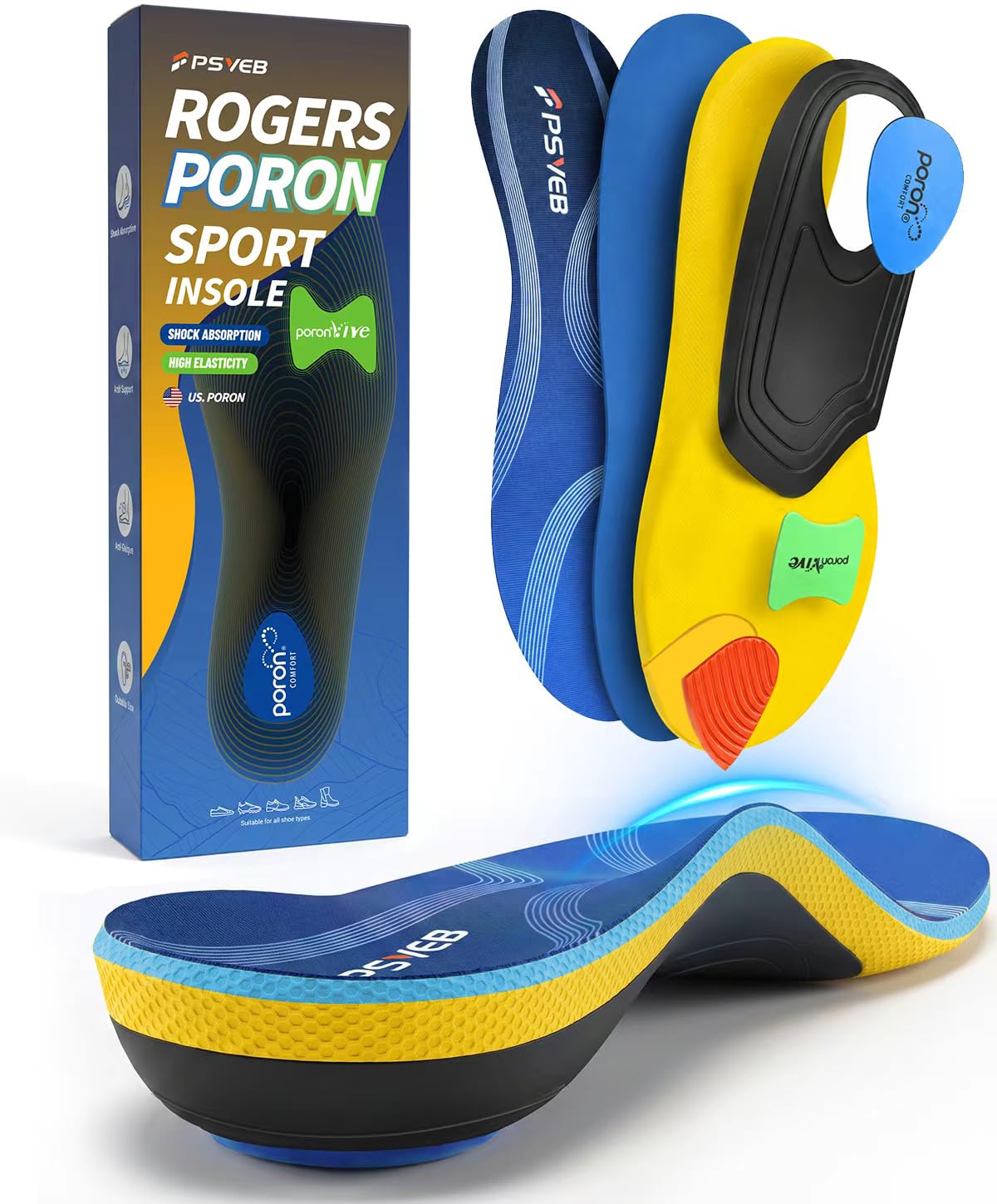
This is the crowd favorite here — 4.0+ stars across 1,300+ ratings — and what wins people over is the build quality, closely followed by sheer comfort. The construction is built around two layers of PORON (a dense shock-absorbing foam that rebounds rather than pancakes) plus a full PU base layer, so the insole pushes back against a collapsing arch instead of sagging into it. That rebound is what keeps the arch from sagging flat by mid-morning.
The arch section uses a “Golden Triangle” layout: three support points at the forefoot, midfoot and heel. For a low arch specifically, that midfoot point is the one that matters, because it holds the middle of your foot up while the deep U-shaped heel cup keeps your heel sitting straight. Buyers report the heel cushioning is where it clicks: “These are very comfortable and the cushion in the heel works really well. I am using them in my work boots and felt the difference immediately.”
Two things to know before you buy. First, they do not need cutting — the pair arrives ready to drop into your shoes, which takes the guesswork out of sizing. Second, thickness draws mixed reactions, with part of the crowd finding them chunkier than expected. That bulk is the point in a work boot, where extra room in the toe box absorbs it, but in a slim trainer it will push your foot upward. At 5.93 ounces for the pair they are also on the heavier side, which is a fair trade for the firmness.
Where this pair earns its place
- Dual PORON cushioning absorbs impact without going flat under a low arch
- Deep U-shaped heel cup keeps the heel centered and limits side-slip
- Three-point support covers forefoot, midfoot and heel in one shell
- Arrives ready to wear — no trimming or measuring required
Where it asks something back
- Thicker than some buyers expect, which crowds slim shoes
- At 5.93 ounces it is the heavier option in this group
- Firm feel takes a day or two to get used to if you normally wear soft foam
Reach for this if: you spend long hours on concrete in work boots and want firm, stable support that arrives ready to wear.
Think twice if: you plan to wear them in tight, slim trainers where the extra thickness will press on your toes.
2. Superfeet Run Cushion Low Arch Insoles, 7.5–9 M / 8.5–10 W
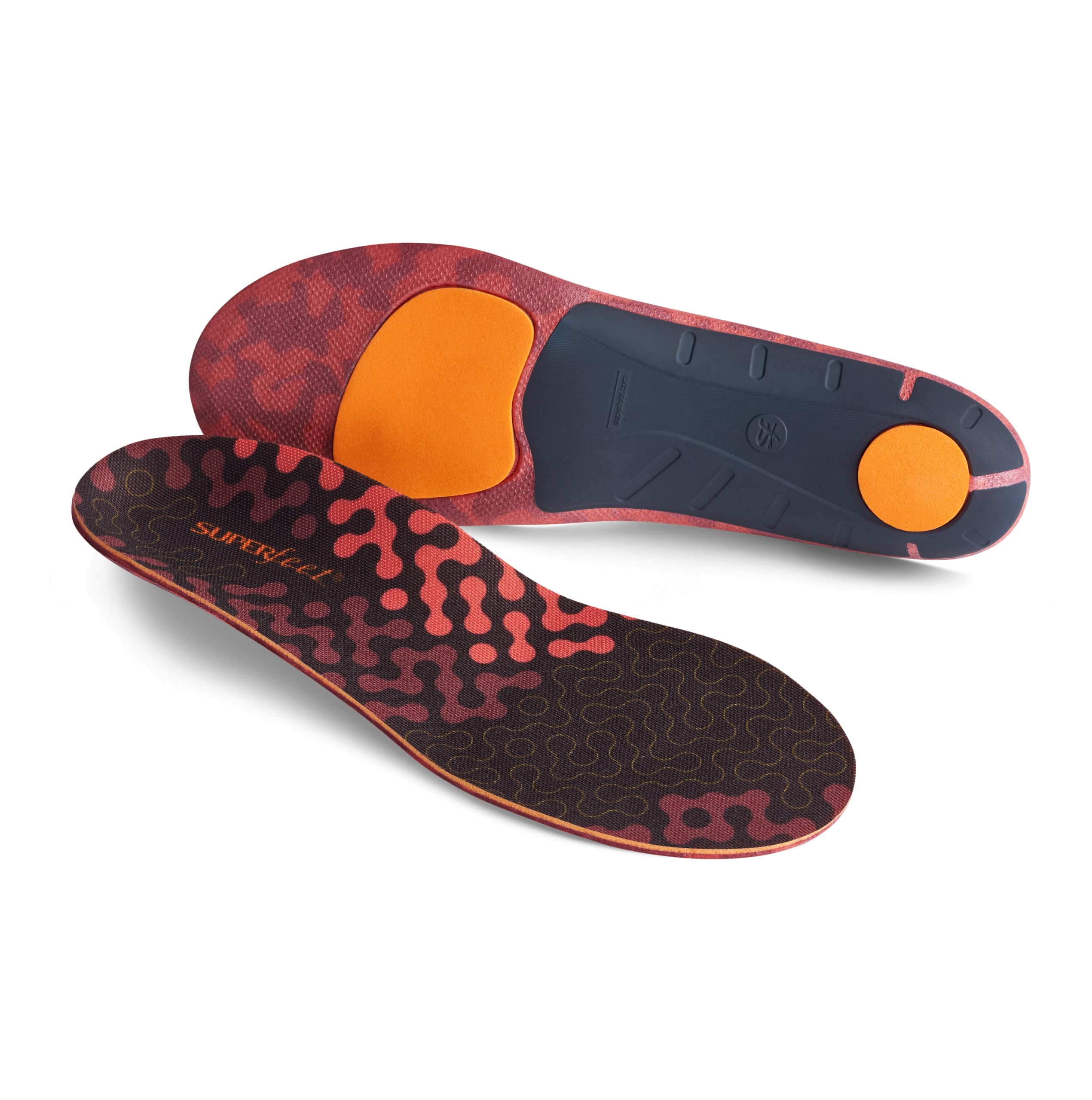
Purpose-built for the flat foot that is already mid-stride, not standing still.
Superfeet names this one for the low arch outright, and the design reflects it: the arch section flexes with your foot through the step instead of locking it in place. That flex is what the patented Adaptive Comfort Technology does — it bends at the heel-to-toe transition so your foot rolls through cleanly, which is exactly what a rigid orthotic can interfere with when you run.
Buyers talk about the fit most, and it is easy to see why. You can trim these to fit, and this listing is sized 7.5–9 in men’s and 8.5–10 in women’s. The maker’s advice is to size up and trim down if you land between sizes. At 4.16 ounces the pair is light enough to disappear in a running shoe, so you forget it is there on a long run. The medium heel cup depth (how deep the back cradle sits) keeps them comfortable in roomy-to-moderate footwear rather than demanding a deep boot. On scale: at 13.63 inches long they are a far longer footprint than the compact Heavy-Duty inserts lower down this list. That is simply because one is a full-length running insole and the other a short insert.
Longevity is where this one gives you pause. Durability is the sore spot, with reports of the layers separating after repeated use. Treat them as a wear item rather than a permanent fixture, and keep an eye on the edges. Value also splits opinion: some consider the support worth the premium, others less so. The upside is real, though, and arch relief is the payoff most runners come for. One runner logging 6–9 miles a week reports arch and tendon soreness easing within two months. If you want one flexible insole for both running and standing shifts, this is the polished choice.
The honest trade-off: you are paying premium money for a flexible, well-shaped insole — and accepting that the layers may not last as long as the support suggests.
Who it fits: runners and walkers with low or nearly flat arches who need the insole to move with the foot, not against it.
The runner’s call: pick these if your day involves miles, not just hours, and you want the arch supported without a rigid slab under your midfoot.
The caveat to weigh: check the seams periodically — the build has a history of coming apart with hard use.
3. Copper Fit Arch Relief Orthotics
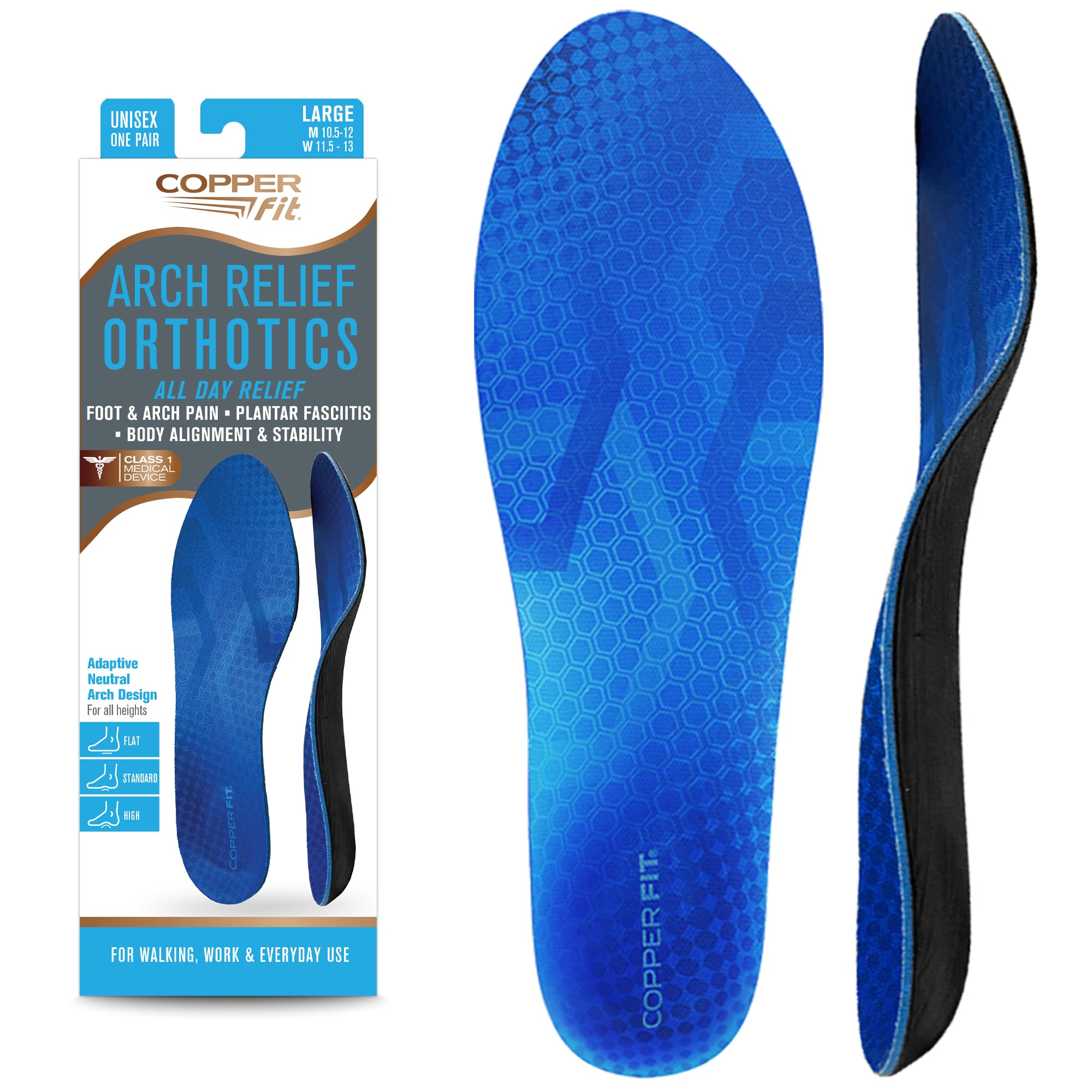
The low-profile pair that slides into dress shoes without stealing toe room.
Copper Fit’s entry is the adaptable one. The arch section is designed to mold toward the shape of your foot, and the maker lists it for low, medium and high arches alike. That helps if you are not certain where your foot sits on the scale. Underneath sits a stabilizing heel cup that holds the heel in place, plus a shock-absorbing heel pad that takes the sting out of hard pavement. The memory foam layer on top adds cushioning that reduces the tired, hot feeling in your feet at the end of a standing day.
Arch support is the feature that carries this insole, and the fit runs a close second. The material is built to be cut, and buyers routinely trim them down to fit everything from walking shoes to boots. One buyer swapped them into worn-out Brooks walking shoes and found the support and comfort a clear step up, trimmed to size and fitted perfectly. Another wears them in every athletic shoe they own and says heel pain has stayed away since.
The trade-off is stiffness. Opinions split here: some find them comfortable, others describe the feel as stiff as a board. There is also a break-in period the maker is upfront about — a few hours a day for the first couple of days while your feet adjust to the new alignment. And at 4.7 ounces the pair is heavier than the flexible Superfeet option above, though you will not notice it once they are in the shoe. If you wear dress or casual shoes all day and want low-profile support, this is the pair that earns its keep.
What makes it easy to live with
- Adaptive arch section adjusts to low, medium and high arches
- Low-profile design fits dress, casual and work shoes
- Trim-to-fit material makes matching odd shoe sizes simple
- Shock-absorbing heel pad softens impact on hard floors
What to accept going in
- Stiffness divides opinion — some find them board-like
- Needs a short break-in period before full-day wear
- Memory foam can run warm in hot weather
Good fit for: anyone who needs arch support inside dress shoes or casual shoes and does not want a thick orthotic crowding the toe box.
Less ideal for: buyers who want immediate softness underfoot — the break-in period is real and the feel is firm at first.
4. Heavy‑Duty Arch Support Inserts for Men & Women
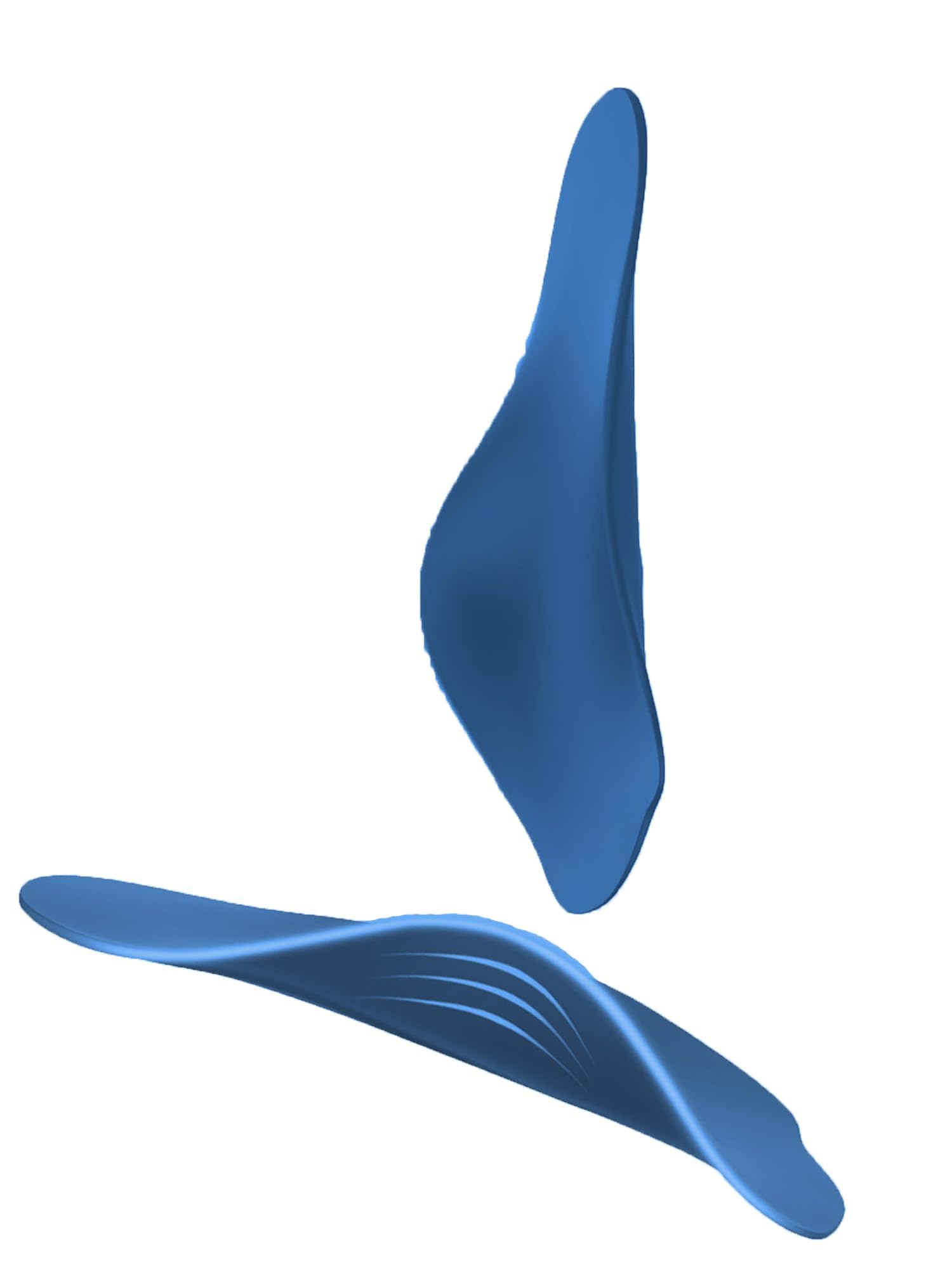
A near-weightless insert for flat-soled shoes that offer you no support at all.
This is the lightest option here by a clear margin. The brief is simple: heavy-duty arch support for both high arches and flat feet, aimed at walking comfort in shoes that give you nothing underneath.
It is also the newest and least-reviewed pick on this list, sitting at 3.5+ stars on a small handful of ratings. Judge it on what it promises rather than a long track record. What owners mention is encouraging: “After 35 years of this, my legs started aching bad. I got these inserts and haven’t had the pain.” That comes from someone wearing skate shoes with no support at all. That is exactly the scenario this insert is built for: a flat, unstructured shoe that leaves your arch with nothing to lean on.
The catch is straightforward. A lightweight insert does not have the dense foam layers of a heavy orthotic, so do not expect the same deep, boot-style cushioning. It is best treated as support for a shoe that already offers some comfort, not a complete overhaul of a hard, unforgiving sole. Sizing runs to a single Size L listing, so check that against your shoe size before committing. If you want a 2.89-ounce insert for skate shoes, sneakers or casual flats, this is the one to try first.
The standout number: 2.89 ounces for the pair makes it the lightest insole here — light enough that you will not feel it in a heavier shoe.
Where it falls short: with limited reviews and a featherweight build, it delivers support rather than plush cushioning, so a hard-soled shoe will still feel hard.
Worth grabbing if: your skate shoes or flat-soled sneakers leave your arch unsupported and you want a light insert that fixes it without adding bulk.
Look elsewhere if: you need a deep, cushioned orthotic for long hours on concrete — the heavier picks above suit that better.
Know the Specs
Arch support type and flex
The arch section is the raised middle of the insole, and how it behaves under your weight decides whether it helps. A flexible arch (like the Superfeet low-arch design) bends with the foot through each step, which suits runners and walkers who want a natural roll. A firmer, three-point shell (like the Professional Heavy Duty orthotics) resists the inward collapse of a flat arch and suits long standing shifts. Neither is better in the abstract — match the flex to how much your foot collapses under load.
Heel cup depth
The heel cup is the raised bowl at the back that cradles your heel bone. A medium-depth cup sits comfortably in most shoes and is the middle ground Superfeet uses. A deep U-shaped cup keeps the heel firmly centered and adds stability, but it takes up more room, which is why it works best in boots and roomier footwear. For a low arch that rolls inward, the cup is doing quiet, constant work — so it deserves as much attention as the arch itself.
Common Questions
Will these insoles fit my shoes if I wear a wide fit?
Do insoles for low arches need a break-in period?
Can I wear low-arch insoles in work boots?
Is a flexible insole or a firm one better for flat feet?
Can I cut an insole down to fit a smaller shoe?
How long do arch support insoles last?
Will an insole help if my low arches cause knee or shin soreness?
How much does an insole add to the weight of my shoe?
Do I need a different insole for running than for standing all day?
The Bottom Line
For most people with low arches, the insoles for low arches winner is the Professional Heavy Duty Support Pain Relief Orthotics. It gives firm three-point support and a deep heel cup in a pair that arrives ready to wear, with no trimming and no guesswork, and it is the highest-rated pick here. If you run or walk miles and need the arch to move with your foot, choose the Superfeet Run Cushion Low Arch Insoles, even if you keep an eye on the seams. If you just need low-profile support inside dress or casual shoes all day, the Copper Fit Arch Relief Orthotics slides in without stealing room. The lightest option, the Heavy‑Duty Arch Support Inserts, rounds out the list for flat-soled shoes: small, cheap to try, and honest about what it delivers.
How we choose
We do not accept paid placement. Every pick is matched to a real buyer and a real use-case; we do not hands-on test units.
Sources
Specifications: manufacturer listings and product documentation. Review insights: verified customer reviews, as of October 2026. Pricing: not shown on this page (it changes often); check the current price via the retailer link.
As an Amazon Associate, Aappliancez earns from qualifying purchases. This does not affect which products we feature.