Disclosure: Some links in this post are affiliate links. As an Amazon Associate I earn from qualifying purchases, at no extra cost to you. Learn more
Specs are compiled from manufacturer listings and verified buyer reviews and can change over time — please confirm the key details on the product page before buying.
When the fat pad under your foot thins out, every step lands on bone instead of cushion — and that is the exact problem this guide solves. The picks below are chosen for one job: putting padding and support back under the ball of your foot and heel so standing, walking and working stop hurting. Some are slim enough for dress shoes, some are built for boots, and one is the clear crowd favorite with the strongest owner record.
This guide is built by comparing the manufacturers’ published specifications and the patterns across verified customer reviews, so you get each pick’s real strengths and trade-offs instead of marketing spin.
Thin padding is the whole story here: a 1.6mm insole disappears into dress shoes, while a 4.8mm one only works in boots. Read on for the best insoles for fat pad atrophy.
Top Picks

How To Choose The Best Insoles for Fat Pad Atrophy
Fat pad atrophy means the natural cushion under the ball of your foot and heel has worn thin. That changes what you need from an insole: you are looking for a pad that sits under the forefoot, plus a firm base that stops your foot from slamming down on bone. Arch support alone will not do it.
Start by measuring the factory insole you pull out of your shoe. That number decides everything — a thick insole wedged into a tight shoe creates new pressure points instead of removing them.
Thickness has to match your shoe, not your pain
A 1.6mm insole slips into dress shoes and cycling shoes where thicker ones physically will not go. A 3.2mm build suits everyday footwear. A 4.8mm insole needs boots or shoes with a removable factory insole to make room.
Choose the thickness your shoe can swallow first. If the insole crowds your toes, you will trade forefoot pain for toe cramping, which is a worse deal.
Look for the metatarsal pad
The metatarsal pad is the raised bump that sits just behind the ball of your foot. It lifts and spreads the long bones of the forefoot, which is what takes pressure off a thinned fat pad and off irritated nerves between the toes.
Insoles built for ball-of-foot pain carry this pad by design. General comfort insoles often do not, so check the description for the pad before you buy.
Heat-moldable beats guessing
A heat-moldable insole softens in the oven and then hardens around the exact shape of your foot while you stand in your shoes. That matters if your arch is unusually low or unusually high, because a one-shape-fits-all base will rock or leave a gap.
If you wear a half size, sizing down to the nearest full size is the safer call with moldable insoles, since the edges can be trimmed but not added back.
Side-by-Side Comparison
| Model | Best For | Key Cushioning | Profile / Thickness | Moldable | Amazon |
|---|---|---|---|---|---|
| MOVE Game Day Performance Insole★ Best Overall | Court and field athletes | Patented arch support, Active Heel protection | Molded forefoot, full length | No — pre-shaped | Amazon |
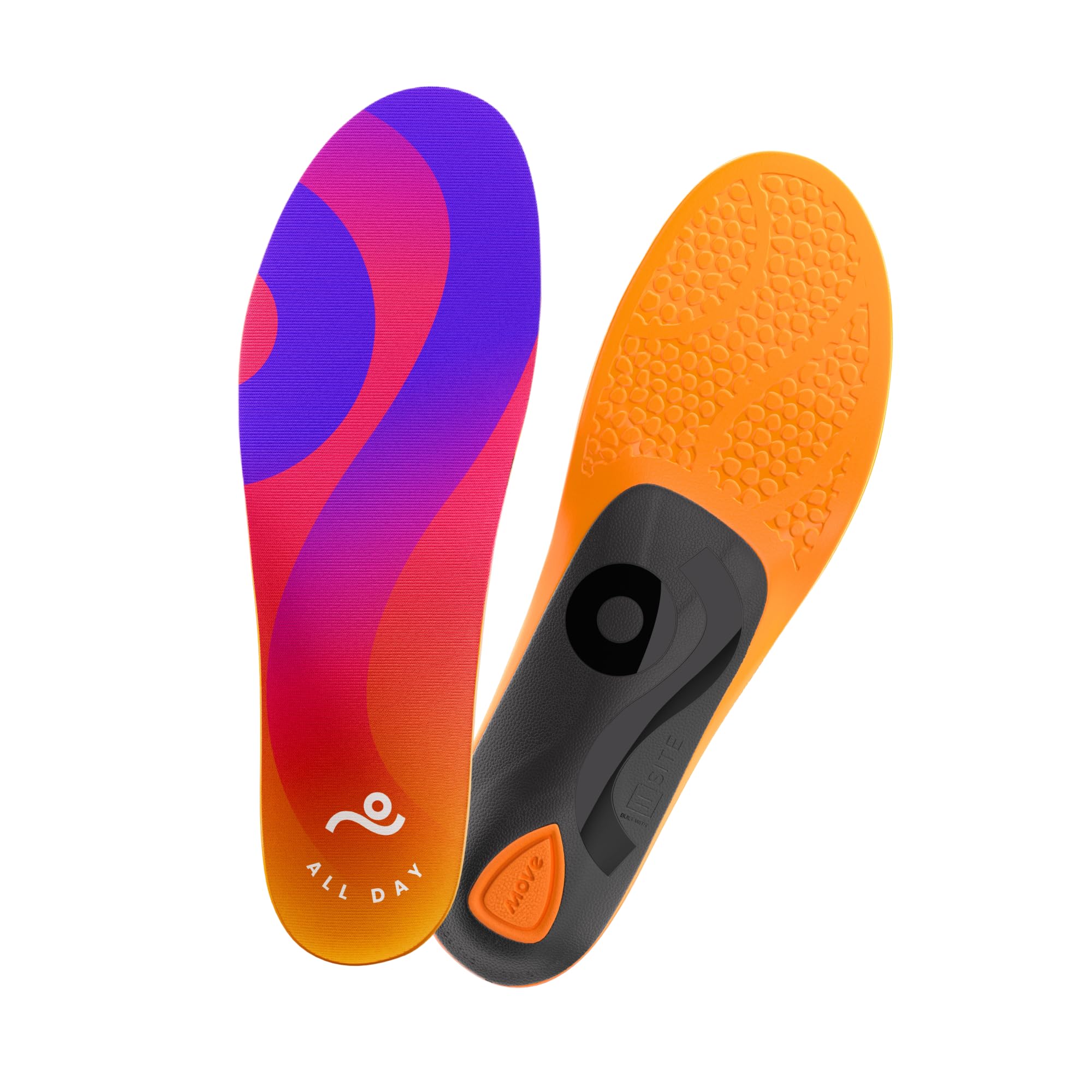
| MOVE All Day Comfort InsoleTop Performer | Long shifts on hard floors | Recharge Foam, Active Heel Technology | Full length with X-Frame plate | No — pre-shaped | Amazon |
| SOLE Active Thick Insoles | Boots and high-volume shoes | Built-in metatarsal pad, cushiony base | Thick — needs wiggle room | Yes — 200°F for 2 minutes | Amazon |
| SOLE Active Thin + Met Pads Insoles | Dress, cycling and slim shoes | Firm base with built-in met pad | Thin — 1.6mm | Yes — heat-moldable | Amazon |
| Metatarsalgia Insoles with Metatarsal Pads (Orthostride) | Everyday walking and light activity | Metatarsal pad, U-shaped heel cup | Slim build for roomy shoes | No — pre-shaped | Amazon |
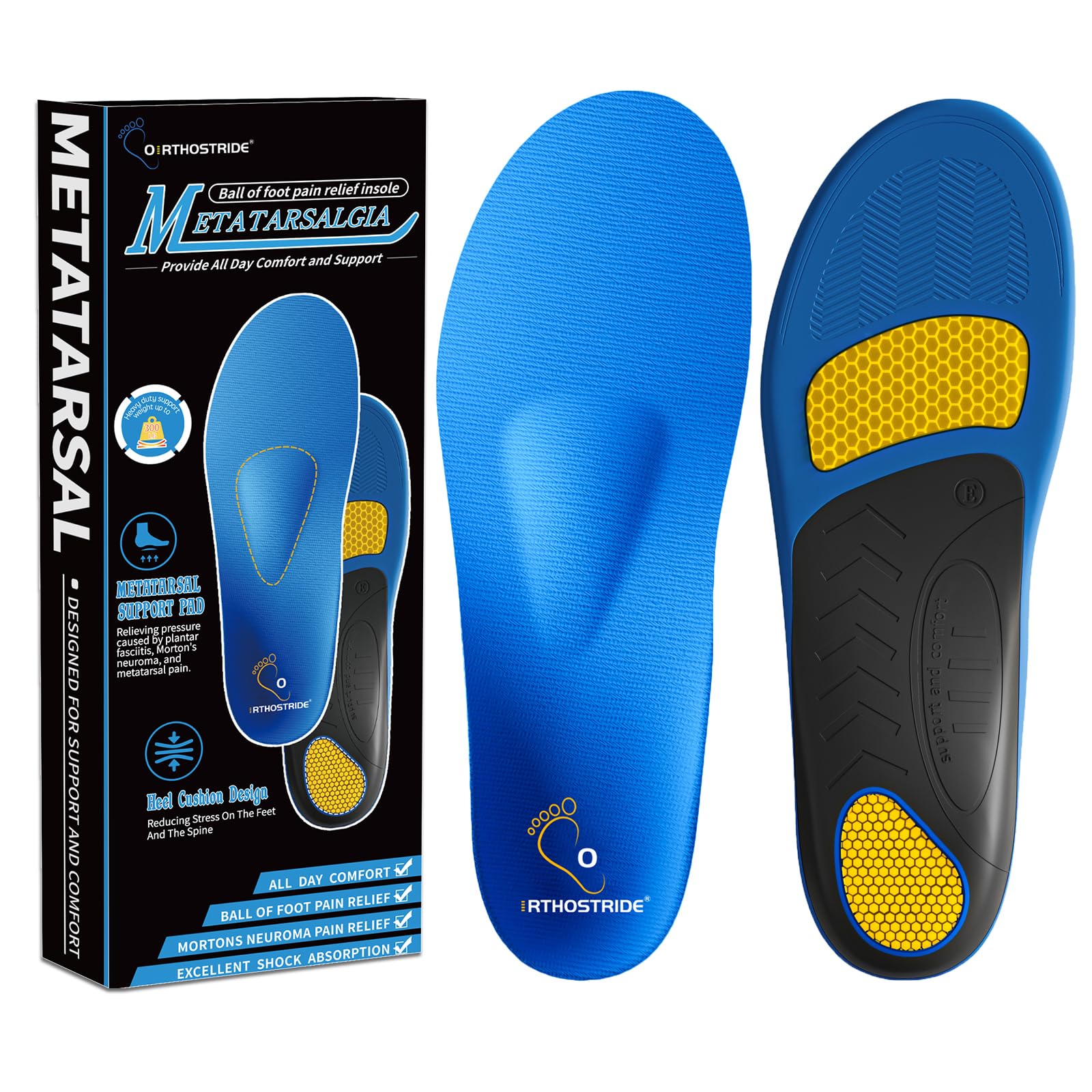
| Orthotic Insoles with Metatarsal Pads | Wide-fit sneakers and work boots | Shock-absorbing PU foam, metatarsal pads | Full coverage, needs roomy toe box | No — trim to fit | Amazon |
| Metatarsalgia Insoles (Cushwork) | Trying a met pad on a budget | Heavy duty arch support, met pad | Wider than standard shoes | No — spot clean only | Amazon |
Detailed Reviews
1. MOVE Game Day Performance Insole
Our pick — over 4.5★ from 800+ verified ratings; the strongest balance of quality and price.
The insole that turns a tired court shoe back into a cushioned one
If your forefoot aches after every run or pickup game, this is the pick to start with. MOVE’s Game Day is the crowd favorite here — 4.6 stars across 840 ratings — and it earns that on a simple promise: a patented arch support that mimics what a custom insole does, plus Active Heel, Ankle and Foot Protection that softens the shock hitting your pressure points.
What wins people over is sheer build quality. Buyers describe ankles that used to throb after every basketball session turning pain-free enough to wear the insoles at work too. The gym crowd gets the most dramatic returns: one buyer walked away from five-plus years of shin splints, ran a mile on the treadmill and a mile outdoors under 11 minutes, and reported a one-hour longer gym session in shoes that had already been written off.
Here is the honest catch. At 4.66 ounces it is the lightest pick on this list — 8.15 ounces lighter than the Orthostride orthotic pair — and that low weight comes from a thinner heel cushion than some heavier rivals. A 45-year-old buyer at 220 pounds with bad knees and ankles rated the heel cushioning at the bottom of a six-brand comparison and called it fine for walking, not sprinting. So if you are a heavier runner chasing max shock absorption, weigh that against the lighter feel.
What buyers keep coming back for
- Patented arch support built to replicate a custom insole’s fit
- Active Heel, Ankle and Foot Protection that cuts shock at pressure points
- Molded forefoot that conforms to your foot and shoe for a secure hold
- Light at 4.66 ounces — 8.15 ounces under the Orthostride orthotic pair
Where it asks you to compromise
- Heel cushioning runs thinner than heavier competitors for high-impact running
- No heat-molding, so the arch shape is fixed as shipped
- Best in athletic and work footwear, not slim dress shoes
Step into these if: you play court or field sports, or you’re on your feet all day and want light support that kills the after-game ankle ache.
Think twice if: you’re a heavier runner who needs maximum heel cushion and the lightest build on this list won’t absorb enough impact for you.
2. MOVE All Day Comfort Insole
Built for the concrete-floor workday that outlasts every cushioned sneaker
Nurses, warehouse staff and anyone clocking long shifts on hard surfaces are the people this insole was shaped for. The move here is MOVE’s Recharge Foam, which is meant to absorb impact and help your feet recover, backed by X-Frame Torsional Support that steadies your heel and midfoot while still letting you move.
Cushioning is what everyone talks about. The plush foam softens the fatigue and soreness that builds through a long day on concrete, and buyers wearing this pair through a whole shift say it keeps their feet and knees from aching the way they used to. A rigid midfoot stability plate plus an extra heel cushion is the one-two punch that makes this a natural fit for anyone whose fat pad is thinning under hours of standing.
The trade-off runs the other way from the Game Day. This is the everyday comfort model, not a sports insole, so it isn’t tuned for sprinting or lateral cuts — and value is where opinions split hardest, with some buyers fine paying a little more for the extra comfort and others questioning every dollar. If you live in sneakers and need plush, this is the pair; if you’re a serious runner, the Game Day above is the better match.
The foam story: Recharge Foam is the headline feature, designed to take pressure off your feet, knees and back while the X-Frame plate keeps your midfoot from rolling through a long day of standing.
Who should skip: If your priority is athletic cushioning for running and court sports, this comfort-first build isn’t the same tool as the Game Day pick.
Made for the 12-hour floor: teachers, nurses, and warehouse crews who need the plush foam and midfoot stability to hold up through a full shift.
Leave it on the shelf if: you’re chasing sports-level cushioning for sprints and cutting — that’s a different insole’s job.
3. SOLE Active Thick Insoles – Custom Moldable, Multiple Sizes

Thick, moldable, and sized for the boots that swallow thinner insoles whole
The SOLE Active Thick is the option for work boots, winter boots, hiking boots and roomy sneakers with a thick removable factory insole. Its built-in metatarsal pad lifts and spreads the bones across your forefoot, which is the move that takes load off a thinned fat pad, and the moldable base adapts to any arch height rather than forcing you into one preset shape.
Molding it takes two minutes in a 200°F oven, then two minutes standing in your shoes while it sets. Owners who have been buying these for years report the rigid rubberized plastic bottom outlasting cork, a cushiony and sturdy feel, and a durable build that keeps performing in steel-toe work shoes through long shifts. Buyers with plantar fasciitis report the rigid base easing morning heel pain, and many reorder the same pair.
The honest limit: thickness is the price of that support. Several buyers report they need extra room in the shoe, and the half-size rule matters — round down to the nearest full size for a better fit, because the edges trim but the base doesn’t shrink. If your shoes are tight to begin with, look at the SOLE Active Thin below instead. If you wear a 300-pound-plus frame doing factory work, this is the sturdier, long-lasting route.
Moldable and built to last: heat-moldable at 200°F for 2 minutes to fit any arch height, and the rigid rubberized plastic bottom is what owners mention outlasts cork and holds up for 1+ year.
Thickness trade-off: this insole wants a shoe with wiggle room or a thick removable factory insole — in a snug shoe it will crowd your toes.
Boot-wearers, this is your pair: if your footwear has removable insoles or space to spare, the moldable, durable build handles long shifts and rough terrain.
skip it if: your shoes are already tight — this thick base needs a roomy interior or it won’t seat right.
4. SOLE Active Thin + Met Pads Insoles

The one that hides inside dress shoes and still lifts the ball of your foot
Here’s the insole for the person whose footwear leaves no room to spare — dress shoes, cycling shoes, minimalist sneakers. At 1.6mm it’s thin enough to disappear into low-volume shoes, yet it still carries a built-in met pad that lifts and spreads the forefoot bones to ease metatarsalgia and Morton’s neuroma pressure.
It’s heat-moldable to low, medium or high arches, and like the thick version it asks you to size down if you’re between sizes and trim the edges for a snug, precise fit. Cyclists with early Morton’s neuroma say the met pad resolves the pain inside their cycling shoes, and hikers and lifters call the firm base more stable than a cork-bottom orthotic.
The trade-off is firmness — thin insoles feel hard at first, and customers note it takes a few uses to get used to. The fit is the strong suit here, and the met pad is the reason this pair earns its spot for slim-shoe wearers chasing forefoot support. If your shoes are roomy, the thick SOLE above gives more cushion; if they’re tight, this is the pair that fits.
Fits where nothing else will: the 1.6mm profile slips into dress shoes, cycling shoes and minimalist sneakers, and the built-in met pad still spreads forefoot pressure in that slim space.
Firm on purpose: reviewers point out the firmness takes a few uses to adjust to — that thin build supports, but it doesn’t pillow.
For the tight-shoe wearer: if your dress, cycling or minimalist shoes can’t fit anything thicker, this slim, moldable pair delivers forefoot cushion without the bulk.
Not for you if: you want a soft, plush feel underfoot — this insole is firm by design to fit slim footwear.
5. Metatarsalgia Insoles with Metatarsal Pads

A met-pad insole that keeps its grip for daily walking and standing
The Orthostride metatarsalgia insole carries the three things this category wants — a built-in metatarsal pad, an ergonomic orthotic arch, and a U-shaped heel cup — in a slim 4.97-ounce build. The met pad takes pressure off the forefoot, while the U-shaped heel cup steadies your ankle to reduce the roll that strains a thinned fat pad.
Shoppers say the met pad under the ball of the foot eases pressure on long walks, and several report it holding up for six months of steady wear. Standing for hours is where it shines — buyers who are on their feet for long periods say it makes a real difference through the day.
The main thing to know: this is a comfort layer, not a rigid orthotic. Buyers whose feet need a firm, stable base find the memory foam too soft to hold an arthritic ankle steady, and the fabric build can hold odor if you don’t rotate it. The other watch-out is fit — the insole is best suited to shoes with internal space, so slip it into casual shoes or low-volume sneakers. Not for you if you need a hard, rigid plate.
The support trio: metatarsal pad plus U-shaped heel cup plus orthotic arch — the combination buyers report helps with ball-of-foot and heel pressure during everyday activities.
Comfort-layer caveat: some buyers wanting a rigid, stable orthotic find the memory foam too soft, and the fabric build holds odors if not rotated between pairs.
Good match: everyday walkers and light-activity wearers with roomy casual shoes or sneakers who want a comfortable met-pad layer at value pricing.
Not for you: if your ankle needs a firm orthotic plate for stability, this memory-foam build is too soft for that job.
6. Orthotic Insoles with Metatarsal Pads
Full-coverage cushioning built for wide-fit sneakers and work boots
This is the insole for anyone whose shoes already have room to spare. The full-coverage build pairs built-in metatarsal pads with a deep U-shaped heel cup and shock-absorbing PU foam, which spreads impact and keeps your feet cool and dry through a long day. It is best suited to wide-fit sneakers, work boots and athletic shoes with a spacious interior.
At 8.15 ounces it is the heaviest insole on this list — noticeably heavier than the 4.66-ounce MOVE Game Day — and the support is what buyers value most, with the metatarsal pad praised for easing forefoot pressure. Just trim the edges for a snugger seat: it was cut down to fit a 9.5 Skechers, so expect to trim yours too. The break-in is real: start at 2-4 hours a day and work up.
The catch is the toe box. The front edge runs about 1/4-inch thick, which owners mention causes cramping and burning in flexible sneakers with a snug toe; cutting the toe off ruins the feel. That thickness plays nicely in roomy boots but fights any tight toe box, so size your shoe to fit it. If your footwear is snug, look at the slim SOLE Active Thin instead — this is the one for shoes with spare space.
Built for roomy footwear: PU foam plus a deep U-shaped heel cup give strong shock absorption, and the metatarsal pads ease forefoot pressure — best in wide-fit sneakers and work boots with internal space.
Give it a break-in: start at 2-4 hours a day, and trim the edges to fit — the 1/4-inch toe thickness can feel tight in slim shoes.
Good for wide shoes: work boots and wide-fit sneakers owners who want full-coverage cushioning and can give the insoles a break-in period.
Pass if: your shoes have a snug toe box — the 1/4-inch toe thickness crowds flexible sneakers.
7. Metatarsalgia Insoles for Ball of Foot Pain (Cushwork)

The tackle-box pair for trying a met pad without the commitment
Cushwork’s metatarsalgia insole is the entry-level way to try a forefoot-support design. It brings the shape this category wants — a built-in met pad for ball-of-foot pain plus heavy duty arch support — and Cushwork suggests replacing it once support fades, usually around 6 months of regular use. Expect a 1-2 week break-in as your foot adjusts.
Buyers who get on with it say their feet feel good through a 3-mile walk, and it’s aimed squarely at metatarsalgia and ball-of-foot pressure. That said, this one draws the widest range of experiences on the list: some feet take to the firm met pad right away, and others find it sets off their metatarsalgia and needs the shoes cleared of their factory insoles first.
Two housekeeping points. The design runs wider than standard shoes, so clear out the existing insoles and leave room — the met pad pushes the forefoot support forward. And it’s spot-clean only with mild detergent, never machine-washed, so treat the cover gently. If you want to test whether a met pad helps at all before spending more, this is the pair; if you need longer-term support, the Orthostride above is the one.
Why this pair earns its place
- Built-in met pad targets metatarsalgia and ball-of-foot pain
- Heavy duty arch support for a firm, supportive ride
- Backed by Cushwork customer service on a budget-tier pick
What to plan for
- 1-2 week break-in before it feels right underfoot
- Wider than standard shoes — clear out the factory insoles for best fit
- Spot clean only, never machine-washed
For the curious: buyers who want to test whether a met pad helps their forefoot before spending more, with room in their shoes to spare.
Look elsewhere if: you need long-term support or have a snug shoe — this pair runs wide and is meant to be replaced as it wears.
Know the Specs
Metatarsal pad
The metatarsal pad is the raised bump built into the insole just behind the ball of your foot. It lifts and spreads the long forefoot bones to take pressure off a thinned fat pad and irritated nerves between the toes. Look for it in the product description — general comfort insoles often leave it out.
Insole thickness
Thickness decides which shoes the insole will actually fit. SOLE lists 1.6mm for slim shoes, 3.2mm for everyday footwear and 4.8mm for boots. Measure your factory insole before you buy, and round down a half size for a better fit.
Common Questions
Will a metatarsal pad actually help thin fat pads under the ball of my foot?
How do I pick the right insole thickness for my shoes?
Can I wear insoles for fat pad atrophy in dress shoes and cycling shoes?
How does heat molding work and do I need it?
Which insole is best if I stand all day on concrete?
Do I need to remove my shoe’s original insoles first?
How long should a pair of insoles for foot pain last?
What is the difference between a rigid orthotic and a cushioned insole?
How do I clean and keep my insoles fresh?
What should I do if a new pair feels uncomfortable at first?
The Bottom Line
For most people shopping the insoles for fat pad atrophy, the MOVE Game Day is the safest bet — it is the crowd favorite for arch support and forefoot relief, and it delivers the lightest, most versatile ride for sports, work and everyday wear. If your shoes are roomy and you want thick, moldable cushioning for boots, grab the SOLE Active Thick. And for dress shoes, cycling shoes and any footwear with no room to spare, the SOLE Active Thin + Met Pads is the one to reach for — it packs a met pad into just 1.6mm.
Wherever you start, give a new pair a proper break-in of a couple of weeks before you judge it, and keep the factory insole on hand in case you need to swap back. Forefoot padding is a personal fit, but one of these seven will put cushion back under the ball of your foot.
How we choose
We do not accept paid placement. Every pick is matched to a real buyer and a real use-case; we do not hands-on test units.
Sources
Specifications: manufacturer listings and product documentation. Review insights: verified customer reviews, as of October 2026. Pricing: not shown on this page (it changes often); check the current price via the retailer link.
As an Amazon Associate, Aappliancez earns from qualifying purchases. This does not affect which products we feature.