Disclosure: Some links in this post are affiliate links. As an Amazon Associate I earn from qualifying purchases, at no extra cost to you. Learn more
Specs are compiled from manufacturer listings and verified buyer reviews and can change over time — please confirm the key details on the product page before buying.
Cuboid syndrome pain sits on the outer edge of your foot, just behind the little toe — and it fires with every step you take. If that is the ache you are dealing with, the fix is not a random drugstore insert. You need a full-length insole with real arch support and a metatarsal pad (a raised cushion that sits behind the ball of your foot). That combination takes load off the outside edge and spreads pressure more evenly. Below are seven insoles chosen for that job, sorted by what each one actually does well.
This guide is built by comparing the manufacturers’ published specifications and the patterns across verified customer reviews, so you get each pick’s real strengths and trade-offs instead of marketing spin.
Some picks here are firm and orthotic-feeling, others are deeply cushioned, and one is a thin carbon plate for a stiff big toe.
Top Picks
How To Choose The Best Insoles for Cuboid Syndrome
Most people assume the fix for outer-foot pain is more cushion. In practice, cushion alone rarely holds the foot in a stable position. What tends to help is a firm arch that supports the midfoot and a metatarsal pad that spreads pressure across the ball of the foot instead of letting one spot take it all. Get the arch and the pad right and each step loads the outer edge less.
Start with the arch, not the padding
A neutral or high arch support lifts the middle of your foot and helps keep the arch from collapsing inward. When the arch holds, the small bones along the outside edge — where your cuboid sits — stop taking the full load on each step. Firm support beats soft support here. Soft gel feels nice for a minute but gives way under your body weight and does little to steady the foot.
Check the metatarsal pad placement
The metatarsal pad is a raised cushion that sits just behind the ball of your foot, before the toes. Its job is to spread weight across all the metatarsal heads instead of loading one or two. Placement matters more than size — a pad that sits too far forward does nothing, while one sitting right behind the ball eases pressure through the whole forefoot. Several picks here build the pad in permanently; some let you adjust it.
Match thickness to your shoes
A thicker insole gives more shock absorption but eats up room in the shoe. If your main pair is a roomy work boot or a wide trainer, a thicker insert is fine. Slim dress shoes and low-volume sneakers need a thin insert, and many buyers end up going up half a shoe size instead of trimming the insole down. Any insole that you cut must be trimmed gradually — a little at a time, then test the fit.
Firm break-in is normal
If a firm-arch insole feels strange on day one, that is expected. Feet used to soft cushioning take a few days to adjust to proper support, and walking in them for short stretches first helps. If the arch shape matches your foot, the soreness fades within a week. If a spot stays hot under the ball of your foot after a week, the pad position is wrong for your foot and you should swap picks.
Side-by-Side Comparison
| Model | Best For | Arch Style | Metatarsal Pad | Approx. Weight | Amazon |
|---|---|---|---|---|---|
| Deepballfeet Metatarsalgia Insoles★ Best Overall | All-day ball-of-foot relief | Supportive PU base | Built in | 7.41 oz | Amazon |
| PowerStep BridgeBest Value | Flexible walking comfort | Adaptable neutral arch | No | 5.61 oz | Amazon |
| FitGeno Plantar Fasciitis Insoles | Heavier frames, long shifts | Rigid high arch | No | 7.05 oz | Amazon |
| Kelaide Orthotics Arch Support Insoles | Value orthotic comfort | Neutral arch | Built in | 9.91 oz | Amazon |
| 10 Seconds Pressure Relief 3030 | Deep cushion all day | Medium cushioned arch | Built in | 4.97 oz | Amazon |
| Cushwork Metatarsalgia and Morton’s Neuroma Insoles | Flexible all-day support | Neutral arch, U-shaped heel | Built in | 4.94 oz | Amazon |
| Tega Design Carbon Fiber Orthotic | Big-toe joint limitation | Rigid carbon plate | No | 3.84 oz | Amazon |
Detailed Reviews
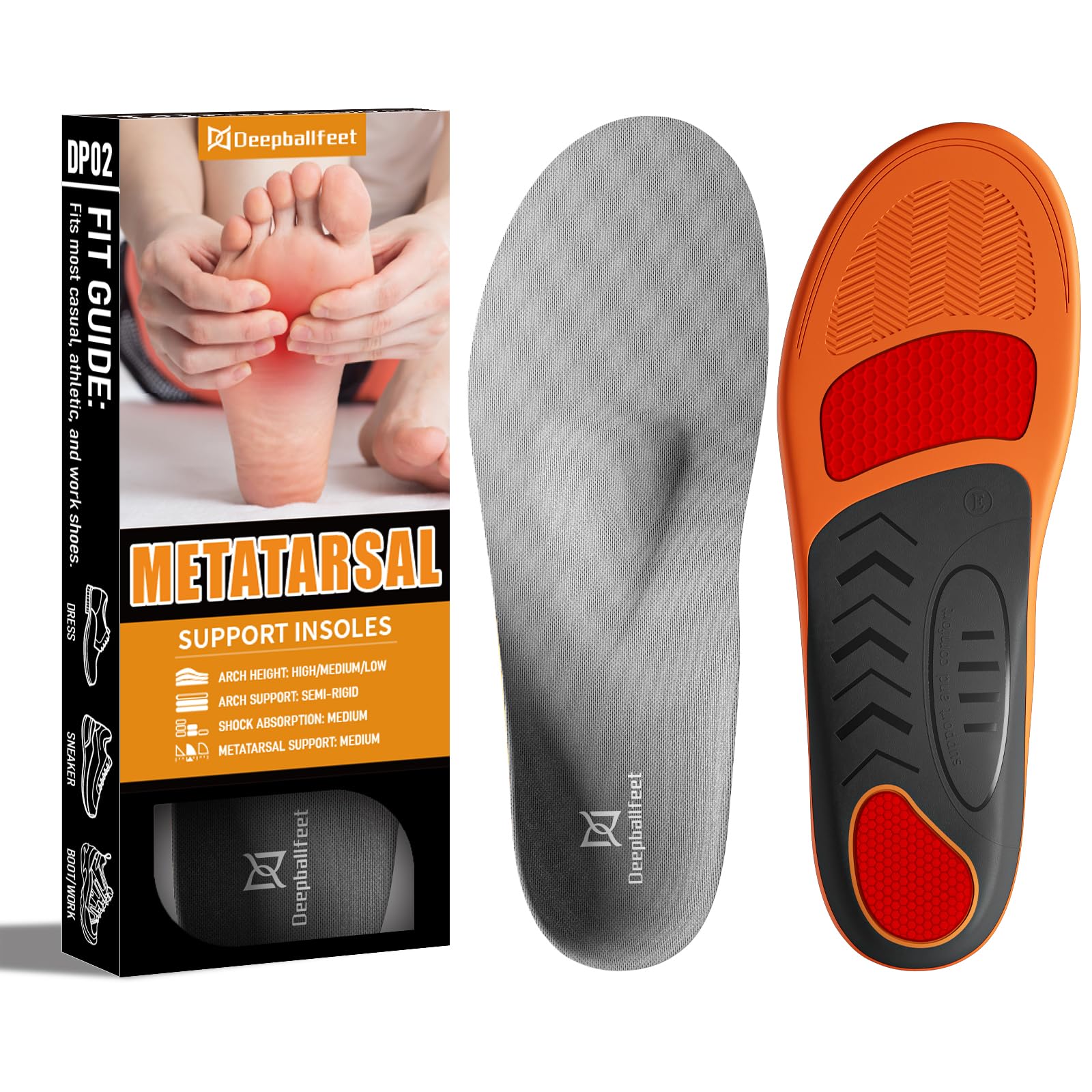
1. Metatarsalgia Insoles
Our pick — 4.5+★ from 200+ verified ratings; the strongest balance of quality and price.
The built-in forefoot pad plus firm PU base is the combination that most closely matches what an angry cuboid actually needs.
What makes this Deepballfeet insert the top pick is the way it spreads pressure. A built-in metatarsal cushion sits behind the ball of your foot, and a supportive PU base — that is polyurethane, a dense foam that holds its shape under weight — keeps the foot from rolling outward. On top of that, dual GEL cushions under the forefoot and heel soak up impact on every step. That is the mix you want for outer-edge pain: support underneath, cushion on top.
You get a firmer, more substantial feel underfoot, and that comes from the weight: 7.41 ounces, noticeably heavier than the PowerStep Bridge at 5.61 ounces. The cushioning handles long shifts without turning mushy, and buyers report that standing and walking for long stretches becomes bearable again. One buyer who had cycled through roughly ten other brands said these were “Only brand (of ~10 tried) relieving deep callus pain on ball of foot from high arches.” That kind of result is rare among inserts buyers cycle through.
The catch is thickness. These are deliberately slightly thicker than a standard insole, so they fit roomy work boots, wide sports shoes, or casual shoes — not a snug dress shoe. If you wear a slim sneaker, expect to size up or trim. The arch support holds up over full workdays, but the extra padding creates a walking feel a few buyers describe as unnaturally soft, with one calling it “Too much foam padding creates a false walking experience.” For most people the support outweighs that, but if you prefer a hard, unyielding orthotic feel, this is not the one.
What earns it the crown
- Dual GEL pads in the forefoot and heel absorb impact on hard pavement
- Built-in metatarsal cushion spreads ball-of-foot pressure
- Supportive PU base steadies the foot through a full workday
- Breathable fabric top keeps feet cooler during long shifts
Where it asks for room
- Thicker than standard insoles — best in wide or roomy shoes
- The soft, pillowy feel is not for everyone who wants firm support
- Heavier than some lighter-weight alternatives
Grab these if: your outer-foot ache radiates from the ball of the foot and your shoes run roomy, wide, or roomy-toed.
Look past them if: you wear slim dress shoes or want a hard, rigid orthotic feel rather than deep cushioning.
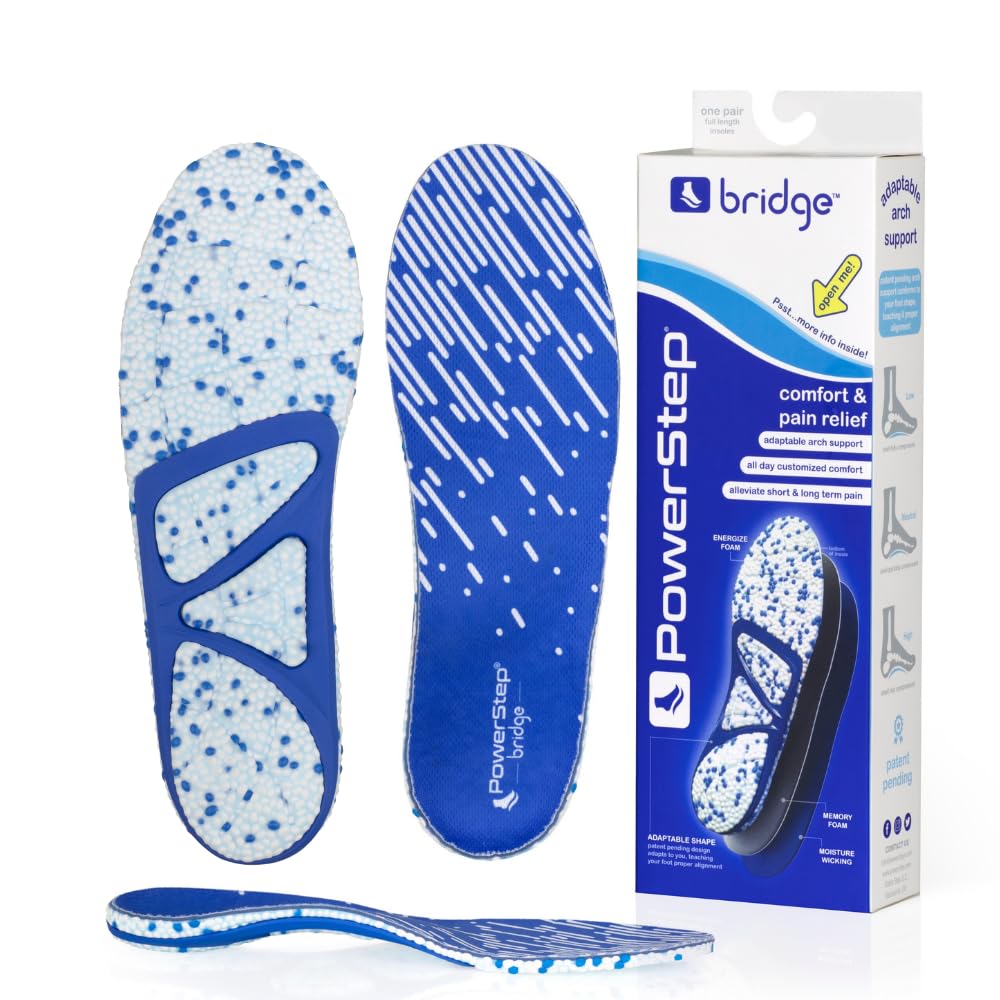
2. PowerStep Bridge
A flexible arch that moves with your foot, not against it — built for people who walk a lot but want a softer feel.
The PowerStep Bridge is a hybrid rather than a rigid orthotic. Its arch is designed to adapt to your foot shape, and a dual-layer cushion pairs memory foam with energize foam. PowerStep claims the dual-layer foam returns 55% of energy with each step. A moisture-wicking mesh top helps cut heat and sweat. If you want to soften a hard walk or add gentle arch support to a neutral shoe, this insert shifts your foot into a better position without fighting it.
You feel the flex through the gait — it does not lock the foot the way the Deepballfeet insert does, and the arch is listed as neutral rather than high. It is a step lighter, at 5.61 ounces, so it disappears inside a sneaker or dress shoe. One deliberate note: there is no built-in metatarsal pad on this model. If your cuboid pain comes with actual forefoot pressure, a pad-equipped pick like the Cushwork does more work on the ball of the foot. If your pain is more about instability and a sore outer edge, the flexible support is the right tool.
Where the Bridge falls down is lifespan. The energize foam is comfy from the first day, but owners mention the foam compresses over time in high-mileage wear. One reviewer noted it was “Comfortable from the start for first month, but began falling apart at start of month 2 under ~10k steps/day in work boots.” If you walk thousands of steps daily in work boots, plan on replacing them sooner rather than later. For shorter everyday wear the value holds up well.
The real trade-off: The easy break-in and low weight make these a good first orthotic, but a heavy daily step count chews through the foam. Consider this the comfort-first, replace-sooner option, not the marathon option.
The right home for this one: a light-to-moderate walker who wants a flexible, honest-value insert that adapts to a neutral arch.
Find another pick if: you need a built-in metatarsal pad or you log very high daily steps in boots.
3. FitGeno Plantar Fasciitis Insoles
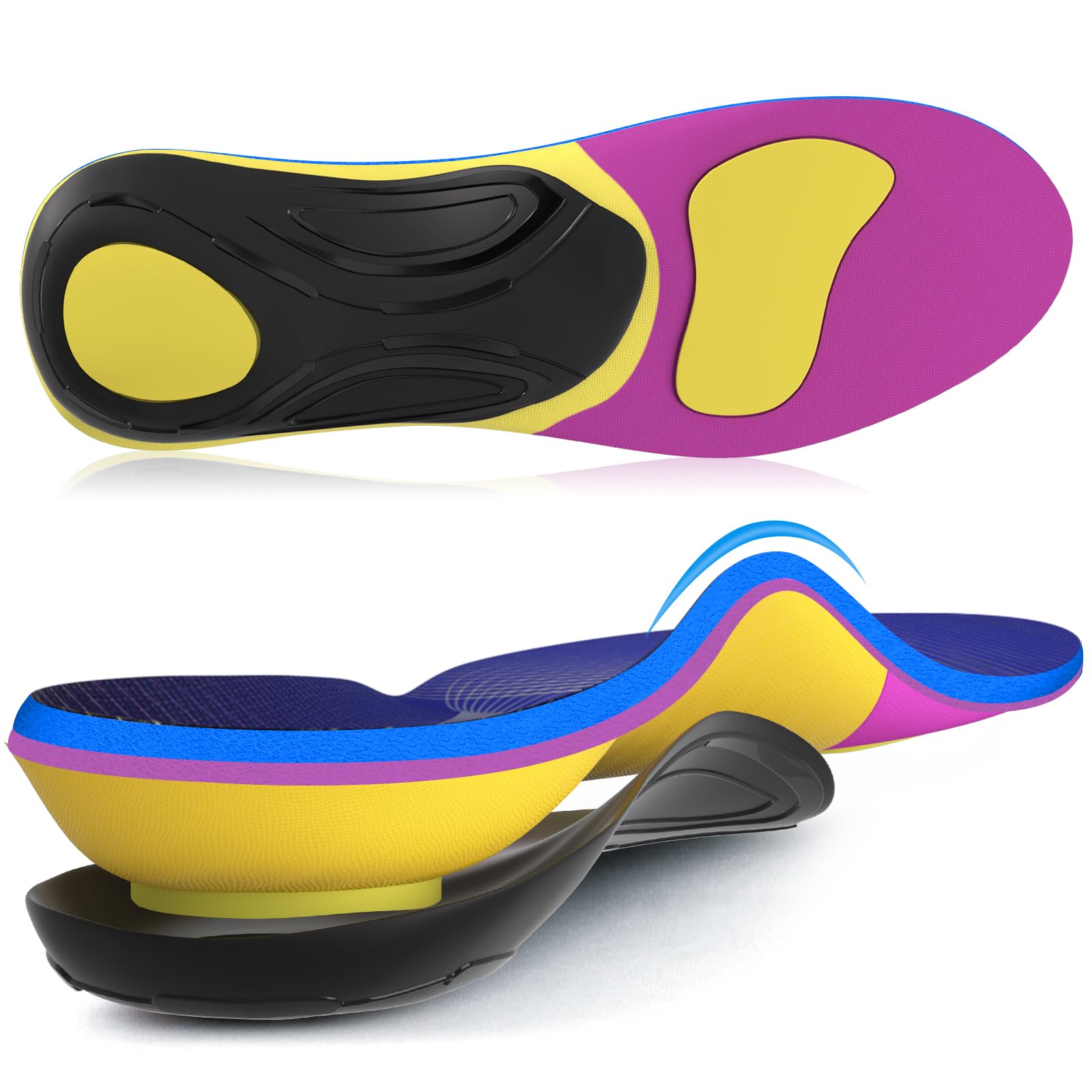
A dense, rigid arch plate built specifically to hold a heavier body in line through a long workday.
FitGeno built this insert for people at 220 lbs and above, and the numbers back up the purpose. The high arch is rigid rather than springy, and a deep heel cup holds your foot in a stable position. Poron foam — a cushioning material used in foot orthotics — lines the heel and ball of foot to absorb impact. The TPU arch plate (thermoplastic polyurethane, a firm but slightly flexible plastic) is removable, so you can drop the profile if you want a flatter feel in a slim shoe.
Read the customer pattern and it is clear the arch does the work. Quality and arch support are the two things buyers bring up most often. Nurses, teachers, and retail workers wearing these for full shifts report the foot holds its position through hours of standing. One buyer with four bone spurs summed it up: “Excellent items. No more hurting feet. Like so many others I’ve tried before. Bought 2 now.”
The honest catch is firmness. This is not a plush insert, and the rigid arch takes a real break-in — a few days of short wear before a full shift is the way to go. Cushioning gets mixed commentary because the arch is hard by design; if you have a sensitive spot under the heel, the firmer platform will let you know about it. Size tip: trim to your shoe, and start with the top layer only if your shoe runs narrow.
The build: The rigid high arch, deep heel cup, and removable TPU plate make this a genuine support tool, not a soft comfort pad.
One adjustment to plan for: The firmness is the point, but it means a gradual break-in rather than instant relief on day one.
Buy it for: heavier frames, long standing shifts, and arches that need holding up through the whole day.
Pass it up for: a shoe that is already tight, or feet that want soft cushioning under the heel.
4. Orthotics Arch Support Insoles
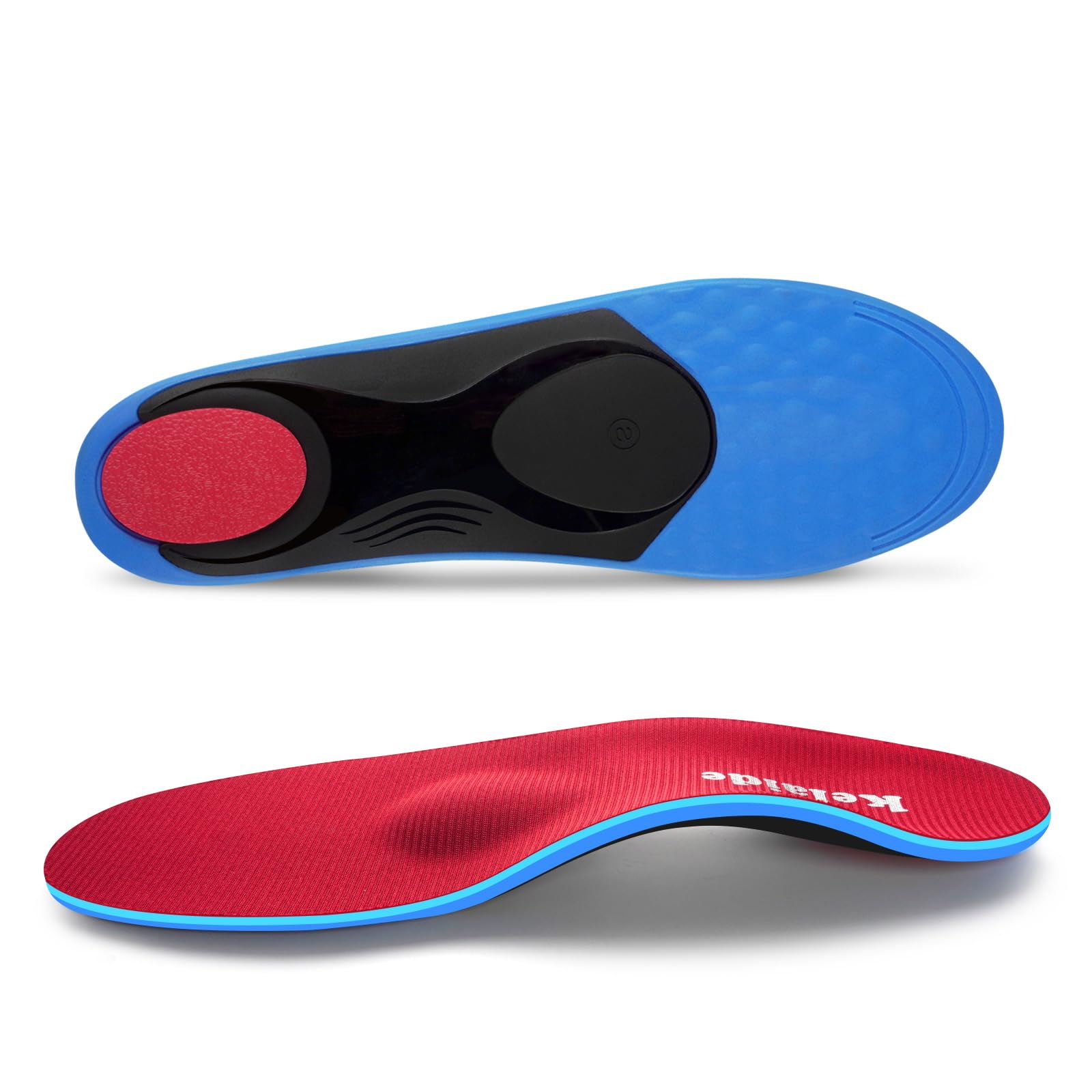
Full-length support with a metatarsal pad and a neutral arch — the do-everything pick for daily shoes.
The Kelaide insert is the heaviest here at 9.91 ounces, and that weight shows in its solid build. A neutral arch stabilizes the foot, a built-in metatarsal pad supports the ball of foot, and a soft foam-and-breathable-fabric top layer manages heat and friction. It is designed to fit athletic, walking, running, work, and some casual and dress shoes. For a daily wearer who wants a real orthotic feel without custom pricing, this is the sensible step.
Comfort is the aspect buyers mention most, and the reviews back a familiar pattern: smart casual shoes, house shoes, and boots all work. Long-standing users report that a proper arch change feels strange for the first few days. One buyer with foot issues and shoe-lined comfort issues put it plainly: “Very comfortable. These insoles wear well in my MukLuks. I have foot issues and the insoles give great support to the areas of my feet that are a problem.” The textured top also stops socks from sliding and twisting — a real annoyance with smooth inserts.
Where it stumbles is width. The insert is a touch narrow in some slippers and wide-fitting shoes. If you are between widths, trim and test before assuming. A few first-time metatarsal users also report a too-firm break-in period. Neither is a dealbreaker for a roomy everyday shoe, but it is worth knowing before you buy.
Why it earns its place: Rarely does an everyday insert combine a genuine neutral arch, a metatarsal pad, and a stay-put textured top in one package.
One asterisk: It runs narrow for wide-fit shoes and slippers, so trim-to-fit and a test walk are smart before you commit the full day.
Pick this for: daily shoes, house slippers, and casual boots where you want steady support without a custom-orthotic price.
Skip this for: wide-fitting slippers or shoes where a narrow, full-length insole needs heavy trimming.
5. 10 Seconds Pressure Relief 3030

The plushest pad here, with a Plastazote top that softens onto your foot shape over the first few days.
If your cuboid pain comes with a sore ball of foot and you want the most forgiving surface under it, this is your insert. The 10 Seconds 3030 is the comfiest insole its maker builds. A Plastazote memory foam topper — a moldable closed-cell foam — warms and shapes to your foot, giving customized shock absorption. Poron strike pads cushion the heel and help reduce the impact that travels up the leg. A medium cushioned arch and a metatarsal support pad complete the package. It is the softest of the seven, and the lightest at just 4.97 ounces.
What customers note lines up with the build. The plastazote top molds to your foot in a few days, the metatarsal pad is shaped to spread pressure across the forefoot rather than dig in, and long-day walkers find the cushioning holds up. Buyers running through several brands and landing on this one are common. If you wear a boot all day and the ball of your foot is the hot spot, the extra forefoot padding earns its keep.
Consider the fit question more carefully than you would elsewhere. The wider, softer platform fits roomy work boots and slip-ons well, but heel elevation runs higher than some sneaker pockets like, so a boot fit can feel awkward. A few buyers also note that the foam top gets slippery against socks over time. It remains the most comfortable pick in this set — just match the shoe to it.
The cushioning that sells it: The plastazote top molds to your foot within days, and the Poron heel pads take the sting out of hard floors.
The fitting caveat: Higher heel elevation and the looser foam fit suit boots and slip-ons more than low-profile sneakers.
Reach for these if: your priority is cushioning under a sore ball of foot and you wear roomy boots or slip-on shoes.
Choose a different shape if: you wear low-profile sneakers that dislike higher heel elevation.
6. Cushwork Metatarsalgia Insoles

A low-profile orthopedic build that puts real metatarsal support under the ball of the foot without bulk.
The Cushwork insert stands apart for how much support it packs into a slim shape. A U-shaped heel cup — the walls that hold your heel centered — increases stability and reduces the chance of rolling the ankle on uneven ground. A durable EVA base (ethylene-vinyl acetate, a lightweight foam) plus a high-performance shock-absorbing foam layer gives double-layer cushioning. A built-in metatarsal pad cushions the ball of your foot. For the price of a standard insert, it behaves like a much beefier orthotic.
The design fits a lot of feet without drama. Owners with wide feet, bunions, and collapsed arches find the neutral arch and metatarsal pad keep the foot aligned without needing to trim. One buyer who had wide feet and bunions called the support “best insoles for Morton’s Neuroma” after pairing them with work boots. It is the kind of insert that quietly disappears into a wide shoe and lets you get through a two-mile walk without thinking about your foot.
There is a profile trade-off, though. People who are used to a stiff orthotic find the cushioning on the Cushwork soft in the midfoot. And the lower profile means less padding than the 10 Seconds under heavy impact, which matters if you stand on concrete all day. It is the better choice for walking and all-day wear than for pure shock absorption.
Why it’s the smart everyday pick
- U-shaped heel cup steadies the ankle on rough ground
- Built-in metatarsal pad spreads forefoot pressure
- Low-profile build fits without needing to trim
- Breathable, non-slip top helps keep feet dry
Where it trades a little away
- Midfoot cushioning is softer than a rigid orthotic
- Less impact padding than the deepest cushioned option
- Wide shoes fit best; slim shoes can feel tight
Your match if: you want balanced all-day support in a slim profile, especially in wide shoes and work boots.
Better off elsewhere if: you need maximum impact padding on hard concrete floors.
7. Morton´s Extension Orthotic, Carbon Fiber Rigid Insole
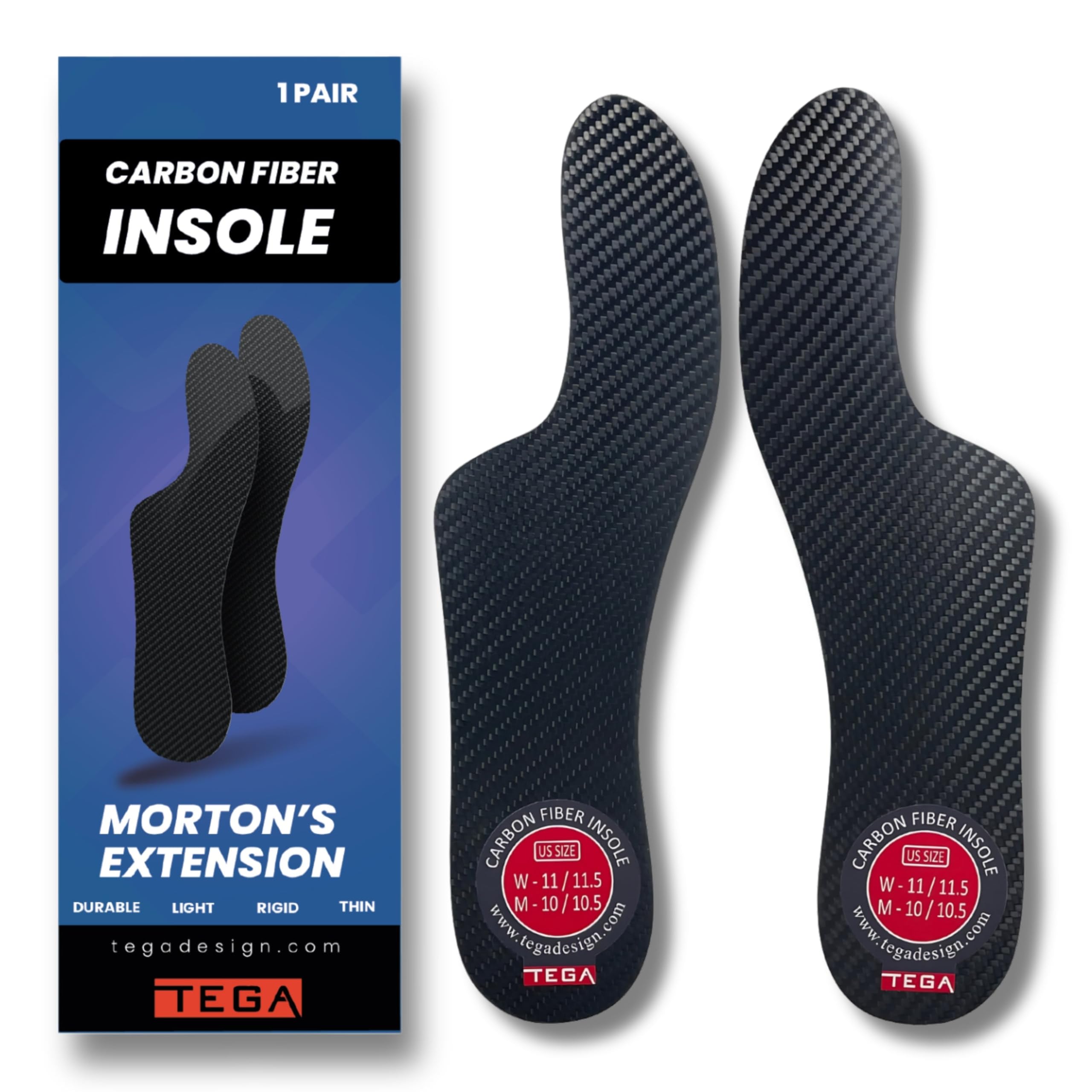
Barely thicker than a credit card, but stiff enough to force your big toe to stop doing the painful work.
This Tega Design plate is a different kind of product. It is 100% genuine 3K carbon fiber — real carbon fiber plate — and it is thin, lightweight at 3.84 ounces, and extremely rigid. The job is to limit the motion of the big toe joint, which is what helps with hallux limitus, hallux rigidus, and turf toe. If your issue involves a stiff or arthritic big toe that flares with push-off, this is the tool. It comes as a pair, one for each foot.
Sizing needs care. The manufacturer tells you to pull out your shoe’s original insole, measure it, and match the length in inches to the size chart. There are no half sizes, so a snug shoe may need realignment. One buyer with hallux rigidus reported the plate cut big-toe pain by at least 80% and let them walk 18 holes of golf pain-free after custom orthotics failed. At 0.28 inches in package height, it adds barely any bulk — but it does add some toe-box height, which matters in narrow shoes with existing bone spurs.
The honest limit is that this is a rigid plate, not a comfort insole. The edges are sharp, so it belongs under a soft shoe lining rather than next to bare skin. And for some feet, adding the plate under an already high built-in arch makes a shoe feel crowded. If you need a full-length cushiony orthotic, this is the wrong product — that is a different job.
What it solves: The rigid carbon plate limits how far your big toe can flex on push-off, taking load off a stiff, arthritic joint.
Where it asks for care: The sharp edges and no-half-sizes sizing mean narrow shoes and barefoot wear are not its friends.
Pick this when: a stiff or arthritic big toe is driving the pain and you need to limit its range of motion.
Keep looking if: a full-length cushioned insole is what your foot actually needs, or your shoe has a fixed high arch.
Know the Specs
Metatarsal pad
A metatarsal pad is a raised cushion sitting behind the ball of your foot, before the toes. Its job is to spread the pressure of each step across the metatarsal heads — the five bones at the ball of the foot — rather than loading a single spot. For cuboid syndrome and forefoot pain, it is the difference between spreading the load and creating a pressure point. Look for a pad that is built in and correctly placed, or one you can reposition. Several inserts here build it in permanently, which is simpler than a loose glue-on pad.
Arch support and firmness
Arch support is about holding the foot’s shape, not padding it. A firm, shaped arch lifts the midfoot and helps the foot roll through each step more evenly. A deep-heel-cup design centers the heel and adds stability. That matters for outer-edge pain because a stable foot takes less load on the cuboid. A softer, flexible arch gives a gentler feel but does less to correct foot alignment. Neither is wrong — one is for people whose feet need steadying, the other for people who want comfort through the day.
Common Questions
Can insoles actually help cuboid syndrome?
Should I go for a firm arch or soft cushioning for outer-foot pain?
How do I trim an insole to fit my shoe?
What if my shoe is already tight with the insole inside?
How long do insoles last before they need replacing?
Can I wear these insoles in dress shoes and slippers?
What is the difference between a metatarsal pad and an arch support?
Do I need a carbon fiber plate for cuboid pain?
Will a firmer insole feel painful at first?
Are these insoles suitable for wide feet?
The Bottom Line
For most people dealing with outer-foot pain, the winner is the Deepballfeet Metatarsalgia Insoles, because the combination of a built-in metatarsal pad, a firm PU base, and dual GEL cushions covers the two things that matter most — spreading pressure and absorbing impact. If you need a firm arch for a heavier frame and long shifts, the FitGeno is the sturdier build. And if soft comfort under a sore forefoot is what you want, the 10 Seconds 3030 is the plushest of the bunch.
The one detail to get right before you order: match the thickness to your shoe, and give a firm arch a few days of short walks before you judge it. With cuboid pain, shoe fit comes before insole choice. Pick the insert that matches both your arch and your shoe’s volume, and relief is more likely to follow.
How we choose
We do not accept paid placement. Every pick is matched to a real buyer and a real use-case; we do not hands-on test units.
Sources
Specifications: manufacturer listings and product documentation. Review insights: verified customer reviews, as of October 2026. Pricing: not shown on this page (it changes often); check the current price via the retailer link.
As an Amazon Associate, Aappliancez earns from qualifying purchases. This does not affect which products we feature.