Disclosure: Some links in this post are affiliate links. As an Amazon Associate I earn from qualifying purchases, at no extra cost to you. Learn more
Specs are compiled from manufacturer listings and verified buyer reviews and can change over time — please confirm the key details on the product page before buying.
If your arch flattens when you stand, the fix is not a softer insole — it is an insert with a firm, shaped arch that props the foot back up before your heel and knee take the hit. That single idea separates the picks below, and it is why a rock-hard orthotic can beat a plush gel pad for a low arch even though it feels worse on day one. Below you get eleven real options, sorted by what each one actually does for a flat or low arch, so you can match the insert to your shoe, your weight and your workday.
This guide is built by comparing the manufacturers’ published specifications and the patterns across verified customer reviews, so you get each pick’s real strengths and trade-offs instead of marketing spin.
A flexible shell that moves with your foot can matter more than raw thickness, so read the arch profile before you buy.
Top Picks


How To Choose The Best Inserts for Low Arches
A low arch does not mean a weak arch — it means your foot needs help holding its shape once weight lands on it. The insert you pick has to do that job inside your actual shoe, at your actual weight, for the hours you actually stand. These three checks narrow the field fast.
Match the arch shell to the collapse, not to the cushion
A cushioning layer softens impact, but it does not lift a fallen arch. Look for a firm support shell first, then judge the foam as the comfort layer on top. A rigid TPU plate (a stiff plastic support board) sits under the arch and keeps it from rolling inward. That is the part that changes how your heel and knee feel by the end of a shift.
Check shoe volume before you buy a full-length insert
Full-length orthotics take up room. On a lot of shoes the factory insole pulls right out to make space — check that first. If it does not, or your shoes run snug, a thinner insert or a small adhesive arch pad avoids the cramped-toe problem that makes people give up on full-length pairs.
Expect a break-in window, and size it to your body weight
Firm arch support rarely feels great on the first step. Most makers suggest short wear sessions at first, then longer days. Heavier users tend to compress softer foam faster, so a thicker, stiffer support shell usually lasts better if you are on your feet for long shifts.
Side-by-Side Comparison
| Model | Best For | Arch Type | Form | Weight | Amazon |
|---|---|---|---|---|---|
| PowerStep Pinnacle★ Best Overall | All-around daily relief | Firm, full-length | Full-length, no trim | 3.2 ounces | Amazon |
| PowerStep BridgeMost Flexible | Flexible support for active days | Adaptable, neutral | Full-length, trimmable | 5.61 ounces | Amazon |
| VALSOLE Heavy Duty OrthoticsHigh-Support Pick | Long shifts on hard floors | High, firm | Full-length | — | Amazon |
| Superfeet Run Cushion Low Arch | Running and walking with flat feet | Low arch, flexible | Full-length, trim to fit | 4.16 ounces | Amazon |
| WalkHero High Arch Support Inserts | Everyday pain relief | High, semi-rigid | Full-length, no trim | 6.38 ounces | Amazon |
| WalkHero Plantar Fasciitis Insoles | All-day standing jobs | High, rigid | Full-length, no trim | 7.05 ounces | Amazon |
| CRUVHEAL Sport Insoles | Court and training shoes | Neutral | Full-length, trimmable | 9.14 ounces | Amazon |
| Welnove Gel Arch Supports | Open shoes and dress heels | Soft, low profile | Adhesive pad, 8 pairs | 10.23 ounces | Amazon |
| GVIIPK Multi-Height Orthotics | Budget starters | 3.5cm or 3.1cm | Full-length, cuttable | 7.05 ounces | Amazon |
| Plantar Fasciitis Arch Orthoic Insert | Matching arch height by color | Blue = low arch | Full-length | 2.89 ounces | Amazon |
| Plantar Arch Support Shoes Inserts | Light arch support at low cost | Firm arch | Full-length | 2.89 ounces | Amazon |
Detailed Reviews
1. PowerStep Pinnacle Insoles
Our pick — 4.5+★ from 31,500+ verified ratings; the strongest balance of quality and price.
The rock-hard arch that finally props a fallen foot back up
If your arch collapses the moment you stand, this is the insert most people should start with. The Pinnacle is a firm full-length orthotic that holds a shaped arch under the whole foot, with dual-layer cushioning on top. The result is a stiff midfoot lift and a softer heel landing in one drop-in piece. It ships in paired shoe sizes — including this M 6-6.5 / W 8-8.5 option — so you order the size you wear rather than trimming to fit.
What wins people over is the comfort, and it shows up fast: owners describe standing and walking on a hard, high arch after years of soft factory insoles. Relief reports cluster around plantar fasciitis and flat feet, and wide-footed buyers like how much of the footbed the insert covers. The arch is high and firm, so it presses where your foot has never been pressed. Owners who stick with it through the adjustment period tend to report the biggest shifts in how their feet feel by day’s end.
The honest catch is firmness. The arch reads as hard to anyone new to orthotics, and that is the trade-off for a support shell that does not flatten. It is also the pick most likely to tighten a snug gym shoe, and it needs shoes where the factory insole pulls out. As owners put it: “Rock-hard insoles improved lower back pain immensely and plantar fasciitis ~65% (with compression socks).”
firm plantar support
- Firm high arch that holds up under a full day on your feet
- Dual-layer cushioning softens the heel while the arch stays stiff
- Ordered by shoe size, so no trimming needed for most buyers
- Made in the USA and HSA/FSA eligible
trim to fit
- The arch is genuinely firm — give yourself an adjustment period
- Somewhat thick; it tightens snug gym shoes
- Needs shoes with a removable factory insole
try pinnacle first: you want one firm, full-length insert that covers flat feet, heel pain and daily standing without any trimming.
budget alternative: your shoes run narrow or you cannot swap out the factory insole.
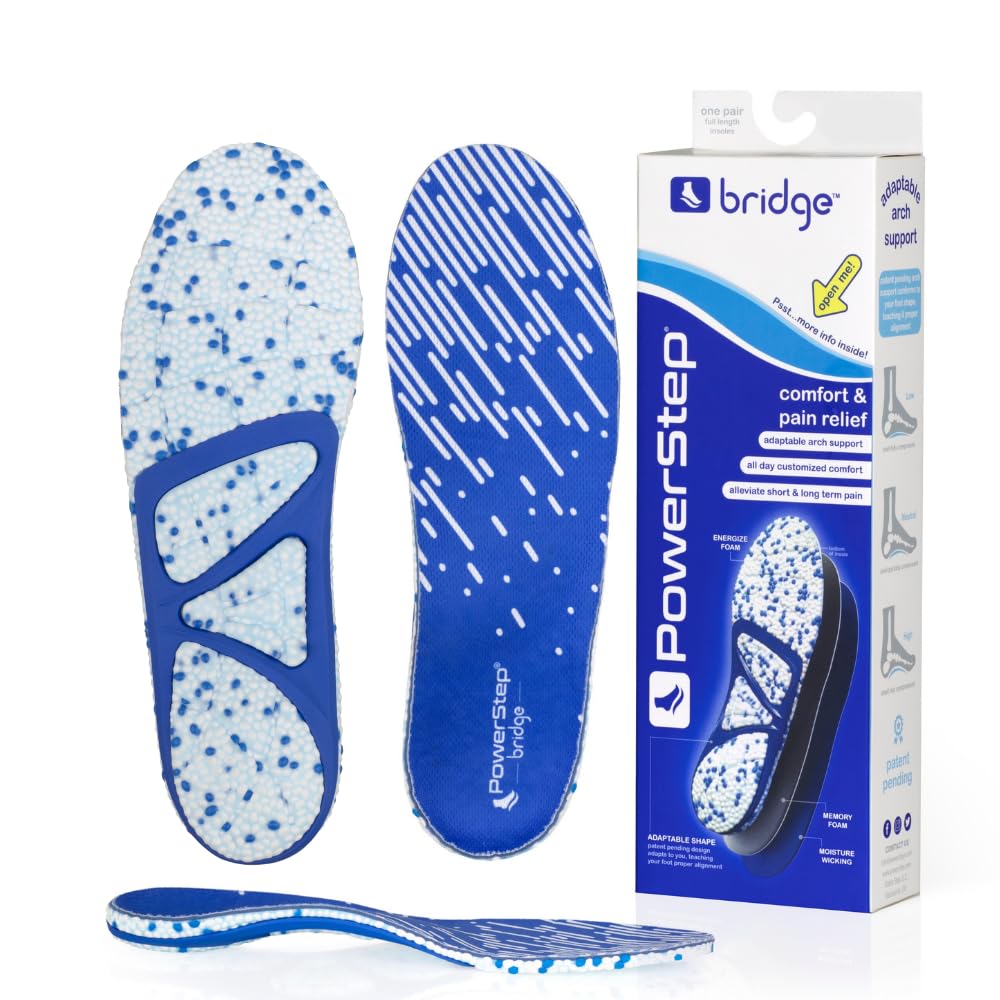
2. PowerStep Bridge Flexible Arch Insoles
The arch that bends with your stride instead of fighting it
Some low arches want support that moves, not a plate that holds them stiff. The Bridge answers that with a flexible arch shell that adapts to your foot’s shape, and a dual-layer build pairing memory foam with energize foam. That foam is rated for 55% energy return, so each step gets a little spring back. A moisture-wicking mesh top cover helps keep heat and sweat down, so your foot does not slide on a hot afternoon.
Fit is the thing buyers care about most, and the shape suits a range of feet. The insert is trimmable, so you cut it to match the factory insole you pull out. It covers men’s 4 to 13.5 and women’s 5 to 14.5 across five sizes, which means most people can find a close starting point. The 5.61-ounce build is heavier than the 2.89-ounce Plantar Arch Support Shoes Inserts reviewed later, but the extra weight is cushioning you can feel underfoot.
The trade-off owners flag is longevity. Some report the Bridge holding up well for months, while others find it starts breaking down under heavy daily use. At 4.38 x 1.75 x 14.25 inches it is a long full-length piece, so it wants a roomy shoe rather than a tight dress style. Treat it as a flexible comfort-support insert for moderate activity, not an indestructible workhorse.
flexible pick: anyone who wants a softer, springier support insert for walking, casual wear and boots, without paying for a rigid shell.
rigid seekers: if you rack up heavy daily mileage, expect to replace it sooner than a stiff orthotic.
3. VALSOLE Heavy Duty Support Pain Relief Orthotics
Built for anyone who spends a long shift standing on hard floors
This is the pick for the person who is on their feet for hours and needs a firm arch that does not give out. VALSOLE’s heavy-duty orthotic is built for larger users and work boots, with a high arch and a firm, shock-absorbing base. The intent is a support shell that keeps its shape when a lot of weight comes down on it, so the arch does not flatten by mid-afternoon. It slots neatly into boots and work shoes, which is where people notice the difference fastest.
Buyers with heel pain and sore arches report relief within days of wearing these. A long-shift worker who logs hours on top of hours says the support holds up through the whole stretch. For a lot of people the combination of a firm arch and heel cushioning is the rare pairing they were looking for.
The recurring gripe is that the arch is firm, and some buyers find it too hard at first. Others need shoes with a little extra room once the insert is in. The honest read: this is a support-first insert, not a plush one, so give yourself a short adjustment period before you judge it. If comfort on step one is your priority, an insert with more foam may suit you better.
heavyweight choice: if you need a firm, heavy-duty arch that survives long days in boots and work shoes and relief matters more than pillow-soft comfort.
slim shoe fans: your shoes are already snug or you dislike a firm arch underfoot.
4. Superfeet Run Cushion Low Arch Insoles, 7.5–9 M / 8.5–10 W
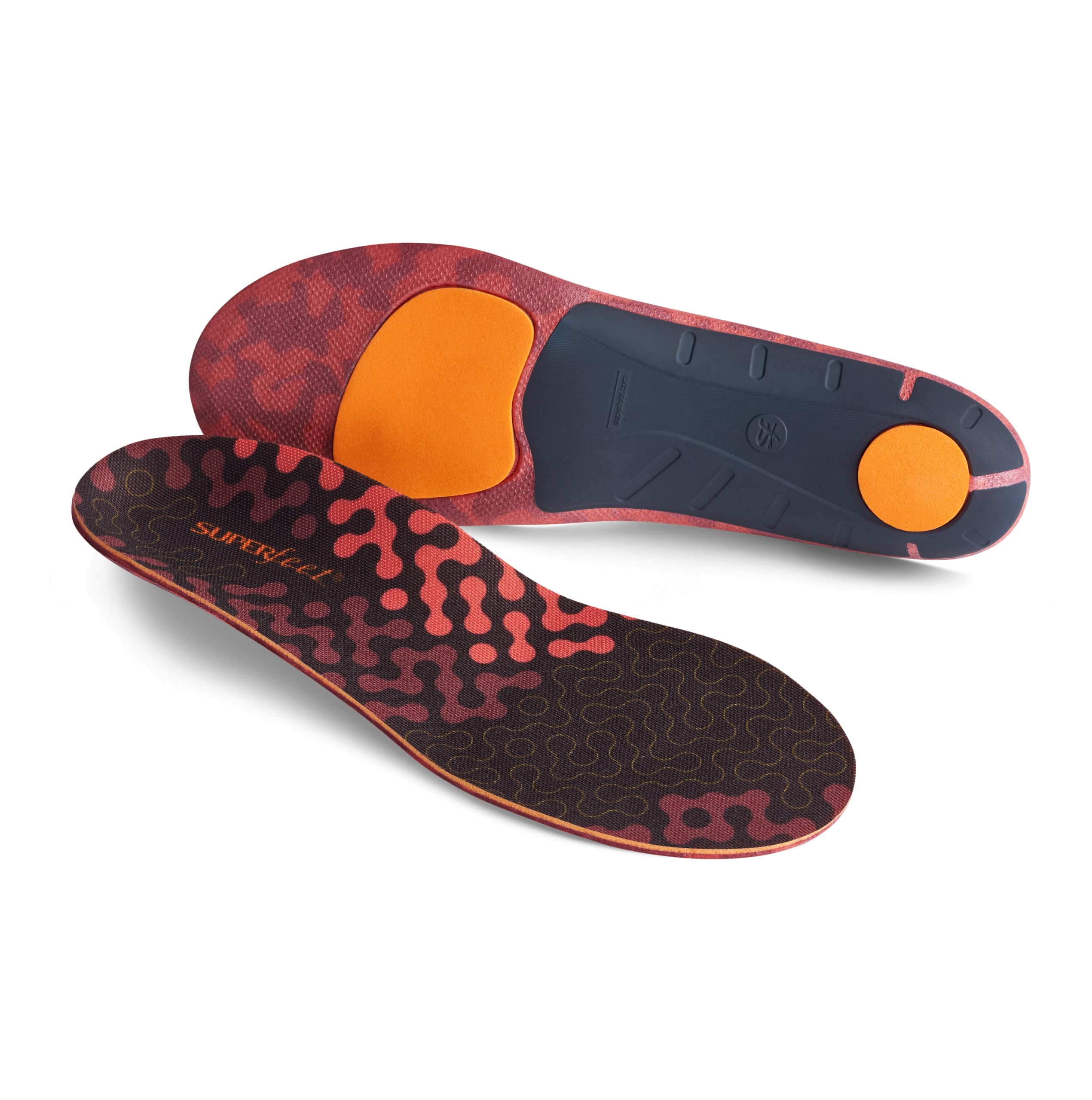
A low-arch insert shaped for running shoes and long walks
Flat-footed runners tend to get overlooked, and the Superfeet Run Cushion is built with that buyer in mind. It is a low-arch orthotic, so the shape suits feet that sit close to the ground rather than forcing a tall, hard bump under the midfoot. The patented Adaptive Comfort Technology flexes with your foot, which helps your heel-to-toe turnover feel quicker and smoother. That is a support insert designed to move with your running and walking shoes, not fight them.
The 4.16-ounce build is light for a full-length orthotic, and the roomy-to-moderate fit suits running and walking footwear. It is trim to fit, so you cut along the guide to match the factory insole you remove. Superfeet’s sizing advice is simple: if you are between sizes, size up and trim down. A moisture-wick top cover helps keep odors down, and the medium heel cup depth keeps the heel comfortably cradled.
The thing to know is durability and thickness. Some owners find the cushioning and support excellent while the insert holds up, while others report it coming apart sooner than they expected. Thin shoes and tight fits can feel crowded. It is a running-focused insert, so pairing it with a shoe that already has room for a firm arch gets you the best result.
runner pick: a flat-footed runner or walker who wants a light, flexible low-arch insert shaped for athletic shoes.
wide feet: if you need a long-lasting workhorse for daily work boots, a heavier orthotic will outlast it.
5. WalkHero High Arch Support Inserts
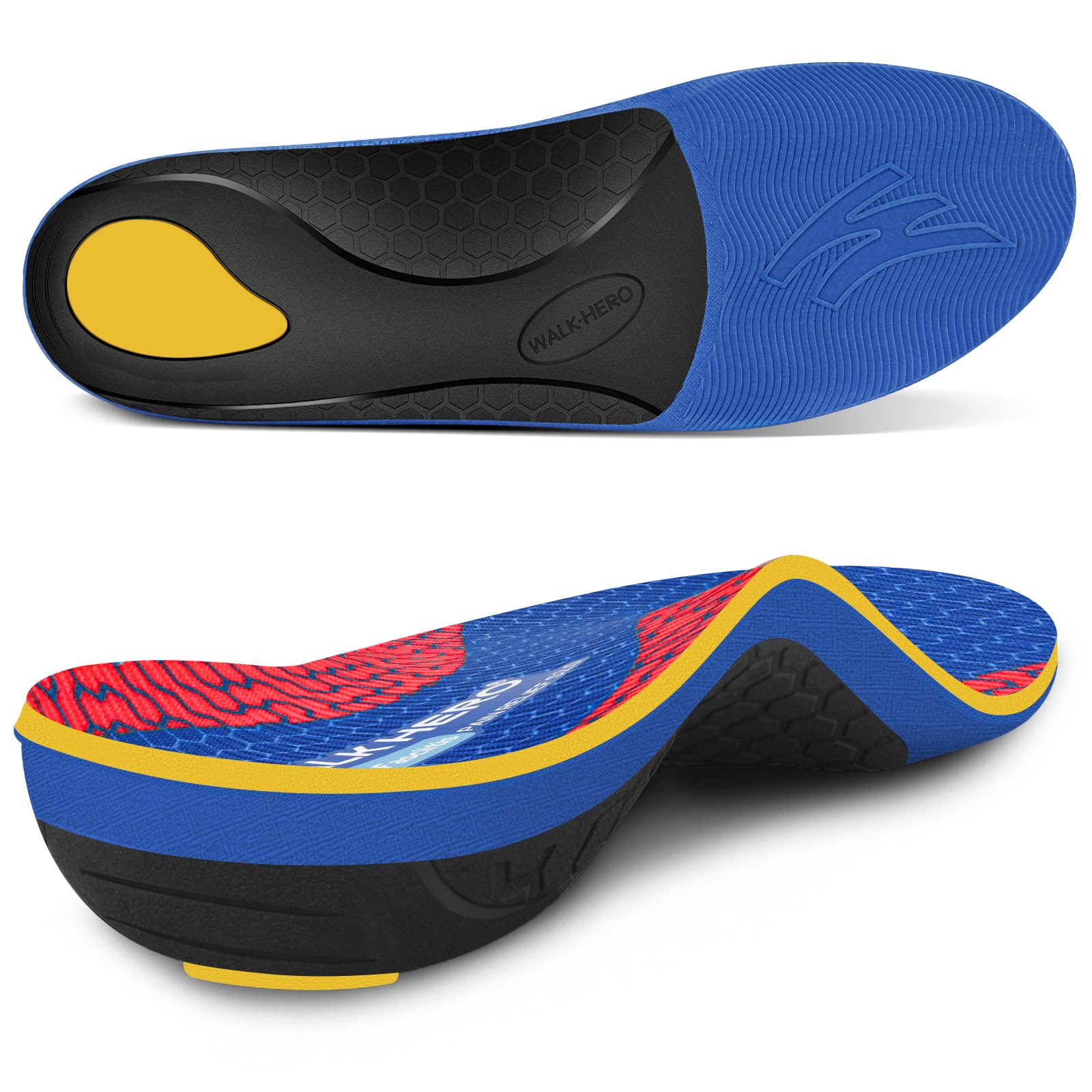
Semi-rigid support that bends a little but still holds your arch
A semi-rigid arch shell is a smart middle ground for a low arch that does not want a hard plate. This WalkHero design keeps a contoured arch profile with a deep heel cup, so it supports from heel to toe and helps limit overpronation — the inward roll that wears out flat feet fast. High-density foam and EVA absorb daily impact, with a reinforced PU shock pad in the heel. The shell still flexes, so your foot does not feel locked in a cast.
Quality is what buyers talk about most with this one, and the daily relief holds up in reviews. After a short adjustment, owners walk further with less discomfort, and some prefer it to their custom insoles. The full-length design covers the whole footbed, and the 6.38-ounce build keeps it substantial enough to feel planted.
One honest limit: the cushioning may wear faster for very heavy users, and narrow shoes can be hit or miss with a full-length insert. It also asks for a short break-in period, since firm support feels different from a soft factory insole. Give it a few days of shorter wear before you decide, and check your shoe has room at the toe and heel.
high arch lift: quality and arch support, and the everyday comfort that comes with a semi-rigid shell compared with a hard orthotic.
arch lift pick: someone who wants a supportive but not punishing arch for everyday wear and long walks.
flat feet: you weigh well over 200 pounds and expect the cushioning to last through heavy daily mileage.
6. WalkHero Plantar Fasciitis Relief Insoles
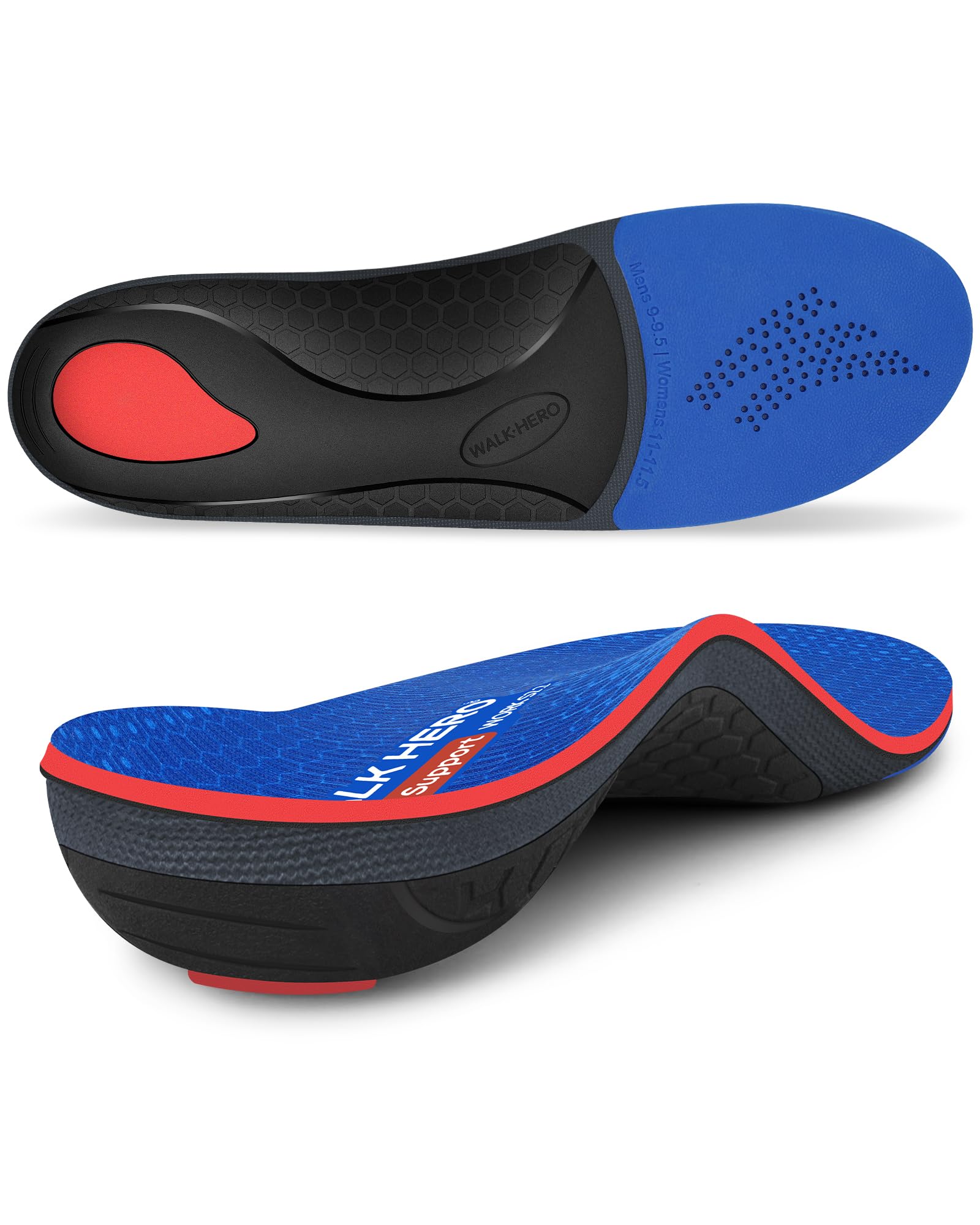
Rigid arch support aimed at twelve-hour shifts on concrete
For long shifts on hard floors, a rigid arch that refuses to flatten is the point. This WalkHero pair uses a rigid support shell under 3D-contoured arches and a deep U-shaped heel cup that wraps the heel to stop sliding. That is what keeps a tired foot from rolling inward when you are standing for hours. A high-density EVA base and soft foam layers add cushioning, plus thickened heel pads and forefoot buffers for multi-directional impact absorption.
Owners on long shifts report less soreness and swelling once they wear these. The arch reads as stiff rather than pillowy, so it fixes a fallen arch rather than masking it with foam. Sizing is straightforward with no cutting, since it comes precision-sized for your regular shoe. The 7.05-ounce build gives it a planted feel underfoot, and the deep heel cup helps with stability on uneven surfaces.
The honest trade-off is the break-in. These are firm orthotics that feel nothing like your factory insoles, so the maker advises starting with 2 to 3 hours a day and building up over one to two weeks. Expect some initial pressure on the arch before your foot adjusts. Once through that window, most wearers report a steadier, less achy day.
relief seeker: you log long days on your feet and want rigid arch support that lasts through the shift.
roomy shoe need: you want instant softness with no break-in period.
7. CRUVHEAL Sport Shock Absorbing Insoles

Cushioned gel inserts for court shoes and training days
This one is for the athlete rather than the all-day stander. CRUVHEAL’s sport insert is built around strategically placed gel pads that soften impact and reduce fatigue in basketball, running and training. A deep curved heel cup and non-slip gel heel pads hold it firmly in place during fast breaks and sprints. The intent is support that absorbs the hard landings so your legs are not doing all the work.
Owners with active lifestyles respond well to the springy, cushioned ride. The 9.14-ounce build is the heaviest on this list, but that mass is where the shock absorption comes from, so it earns its place in a court or training shoe. It is designed for sneakers, running, tennis and pickleball footwear, so double-check your size before you buy. CRUVHEAL backs it with one-year coverage, even after trimming, which is a real vote of confidence.
The honest note: the fit is a mixed bag for some buyers, and one common tip is to go up half a size in the shoe. Durability also varies, with heavy-mileage users replacing it sooner. Allow 3 to 7 days to adapt, starting with 2 to 5 hours of wear daily, and give it a chance before you judge the ride.
shock absorbing sport: a springy, gel-cushioned insert that shines in court and training shoes where impact absorption matters.
runs small: it runs substantial, so a slightly roomier shoe keeps your toes from feeling crowded.
sport pick: active sports like basketball, tennis and running where you want cushioning and shock absorption under hard landings.
dress shoes: you need a thin insert for tight dress shoes or a rigid high arch.
8. Welnove 8-Pair Gel Arch Support Insoles

The little adhesive pad that goes where full-length inserts cannot
Not every shoe has room for a full-length orthotic. Welnove’s answer is a small, self-adhesive gel arch pad that sticks to the inside of your shoe and provides soft support right under the arch. It is sized at 0.47 inches of height in this version, with a 0.3-inch option also available for less lift. That soft-gel build adds cushioning without turning your dress shoes or sandals into something a full insert would never fit.
What wins people over is adhesion — owners describe the pads staying put through an entire day, including in open-toe and open-back dress shoes. The eight-pair set covers several shoes at once, and the pads move between them if you want to shift the support. They are ideal for high heels, boots, sneakers, cleats, loafers and sandals, which makes the 10.23-ounce pack a flexible kit rather than a single pair of inserts. Flat feet, heel pain and arch fatigue are the problems these are made for.
The honest catch is subtle. The fit and adjustability get mixed feedback — some find the shape proper, others say it is not quite right. The pad edges can feel scratchy if the placement is off, so try a spot before you commit. Start with a pair in one shoe and check the pressure points before you stick the rest.
bulk buy: you need flexible arch support in dress shoes, sandals or heels where a full orthotic will not fit.
long wear: you need a firm, high arch that lifts a fallen arch — a gel pad cushions rather than corrects.
9. GVIIPK 280+lbs Plantar Fasciitis High Arch Support Insole
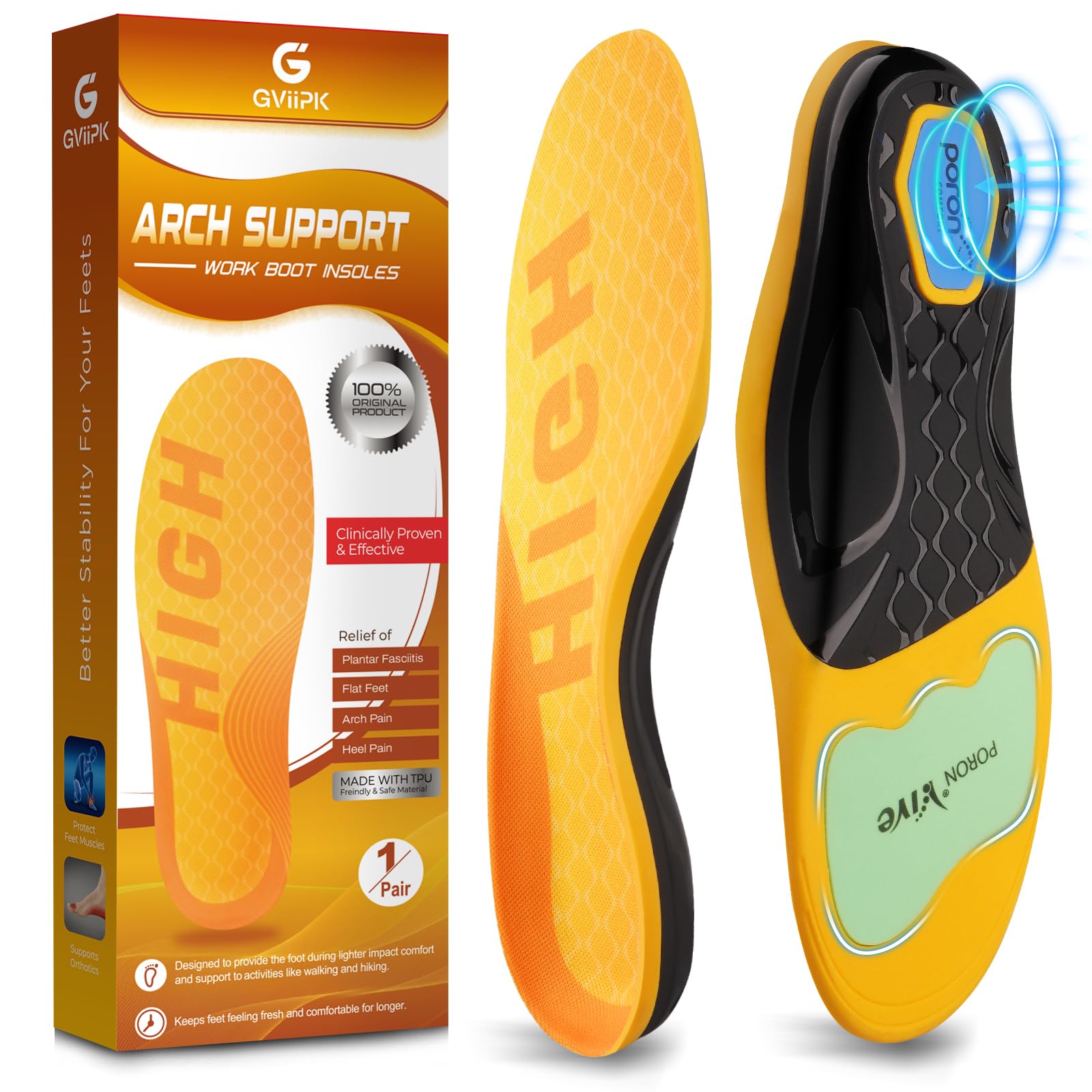
A graded two-height insert for testing how much arch you need
This is the cheap way to find out what your arch can handle. GVIIPK’s insole offers a graded system with a high 3.5cm support and a medium 3.1cm support, so you can start firm and step down to a maintenance height. The idea is a one-step path from correction to everyday wear, all inside one pair. A high-strength TPU support plate penetrates the core of the arch to stabilize the foot structure.
It is built for stubborn foot problems and heavier users, with a dual-layer PORON cushioning system for shock absorption under the heel and forefoot. You can cut the insert to fit different shoe types, so it works in athletic, work and casual shoes. The 7.05-ounce build is substantial, and the breathable, sweat-wicking fabric tops the whole thing.
The trade-off you should expect from a budget buy is finesse. Some owners find the insert does not stay put without a little attention to placement. The support is real for the price, but it is not as finely finished as a premium orthotic. It is a solid starter if you want to dial in arch height before spending more.
heavyweight try: you want to test a firmer arch on a tight budget and like the idea of two heights in one pair.
light users: you need an insert that stays locked in place with no fuss.
10. Plantar Fasciitis Arch Orthoic Insert

The insert that asks you to pick your arch height by color
Some inserts assume one arch fits all. This one sorts it by color: black for high arches, grey for medium arches and blue for low arches. For a flat foot, the blue version is the one to look at. That color-coding takes the guesswork out of matching support to your foot type, and the ergonomic shape is meant to support alignment from the arch down through the lower body. The 2.89-ounce build is light, so it will not weigh down your shoe.
This is a smaller, newer listing with a thin review record, so the picture is less complete than the long-running picks here. What owners say so far is mixed, and the most common complaint is bulk in the shoe. If your shoes run tight, a thinner insert may suit you better than this full-length design.
The honest read: the color-matched concept is genuinely useful if you want to dial in a low-arch profile specifically, but the limited feedback means you are taking more of a chance than you would with something tried and tested at volume. Buy it for the idea of a tailored arch height, and stay realistic about shoe room.
orthotic arch lift: separate colors for high, medium and low arches, so your flat foot does not get handed a tall bump.
firm edges: a small, newer listing with a thin track record and a bulk-in-shoe complaint.
ortho option: you specifically want a low-arch insert and like the idea of matching height by color.
soft cushion fans: you want a proven track record or your shoes have little spare room.
11. Plantar Arch Support Shoes Inserts (OUOKK)

A light, firm arch insert for a low-cost experiment
At 2.89 ounces, this is the lightest full-length option here and a low-cost way to try an arch insert before spending more. The shape leans firm and sturdy, so it holds an arch rather than padding it, and it is meant to sit inside your shoes as a full-length support. Buyers who need high arch support have had good things to say about it, with one happy buyer going back for a second pair.
At the same time, the feedback is split and the listing is thin. Some users want a taller arch than this provides, and a few find the material hard and unforgiving, especially anyone expecting a soft, plush insert. An owner also flagged that the way it attaches inside the shoe could be better, suggesting a more removable design would earn more stars. With so little feedback to go on, treat this as a trial purchase rather than a sure thing.
If you want a light, firm insert for a low cost and accept the wider spread of opinions, it is worth a look. If you need certainty or a soft ride, the bigger, better-reviewed picks above are the safer buy.
trial pick: a first try at a firm full-length arch insert when you want to spend as little as possible.
daily wear: you need a soft insert or firm proof of consistent quality before you commit.
Know the Specs
Arch height and firmness
Arch height is how far the insert lifts your midfoot off the shoe bed. In this list the range runs from a soft gel pad at 0.47 inches up to a graded insole at 3.5cm, with labels like “low arch” or “high arch” on full-length picks. Firmer inserts lift more when a foot collapses, while softer ones add comfort rather than correction. Match the firmness to how far your arch gives way under weight, and give your feet a short break-in window either way.
Form factor and shoe fit
A full-length insert covers the whole footbed and takes up more room inside the shoe, while an adhesive pad sits under just the arch and fits even in sandals. Full-length options in this list weigh from 2.89 ounces up to 9.14 ounces, and heavier usually means more cushioning and shock absorption. Check whether your shoe’s factory insole pulls out to make space, and if it does not, look at a trim-to-fit or adhesive style.
Common Questions
Will a firm insert hurt at first if my arches are low?
Can I wear a full-length insert in sandals or open shoes?
Do I need to remove my shoe’s factory insole first?
How long should a pair of arch inserts last?
What is the difference between a full-length insert and an arch pad?
Will a high arch insert work for flat feet, or do I need a low-arch one?
Can I trim a full-length insert to fit my shoes?
Do inserts for low arches work in work boots?
Should I go up a shoe size for a thick insert?
The Bottom Line
For most flat-footed buyers, the inserts for low arches winner is the PowerStep Pinnacle, because its firm full-length arch props up a fallen foot while the dual-layer cushioning keeps your heel from taking the hit. If you want support that flexes with your stride instead of holding it stiff, reach for the PowerStep Bridge. And if your long days happen on concrete or in work boots, the rigid WalkHero Plantar Fasciitis Relief Insoles are built to hold their shape through the shift.
The crowd favorite on this list carries a firm reputation and a long wall of owners behind it — a real reason to start your search there rather than with a cheap experiment.
How we choose
We do not accept paid placement. Every pick is matched to a real buyer and a real use-case; we do not hands-on test units.
Sources
Specifications: manufacturer listings and product documentation. Review insights: verified customer reviews, as of October 2026. Pricing: not shown on this page (it changes often); check the current price via the retailer link.
As an Amazon Associate, Aappliancez earns from qualifying purchases. This does not affect which products we feature.