Disclosure: Some links in this post are affiliate links. As an Amazon Associate I earn from qualifying purchases, at no extra cost to you. Learn more
Specs are compiled from manufacturer listings and verified buyer reviews and can change over time — please confirm the key details on the product page before buying.
Spotted lanternflies do not eat a little and leave — they pierce, suck, and coat your tree in sticky honeydew until the branches look varnished and the leaves yellow. If you have found the grey, spotted wings on your patio or a smear of sap on your car, you want a spray that actually knocks the population down before it spreads to the next tree. The short answer: a concentrated spray you mix yourself and apply in calm weather is the most reliable way to treat tree trunks and shrubs, and the picks below are the ones worth your time.
This guide is built by comparing the manufacturers’ published specifications and the patterns across verified customer reviews, so you get each pick’s real strengths and trade-offs instead of marketing spin.
You will see how each bottle is mixed, how far it reaches, and which one suits a small garden versus a row of shade trees. The aim is simple: pick the right bottle of insecticide for spotted lanternfly and stop the spread before it reaches your best tree.
Top Picks
How To Choose The Best Insecticide for Spotted Lanternfly
Spotted lanternflies feed on the sap of tree of heaven, grapevines, maples, and a long list of fruit trees, so the product you choose has to reach bark and foliage rather than sit in a bottle on the shelf. The wrong assumption most first-time buyers carry is that any bug spray works. In practice you need something labeled for the plants you own, mixed at the rate on the label, and applied when the weather will cooperate.
Concentrate or ready-to-spray
A concentrate is a bottle of active ingredient you dilute in water yourself. You get far more treated surface from one small bottle, which matters when you are spraying the trunks of several shade trees. A ready-to-spray bottle hooks straight to a garden hose and takes seconds to set up, but you are paying for water and you finish it faster.
Check the label against your plants
Some formulas are labeled for trees, shrubs, and ornamentals only, while others cover vegetables and fruit trees too. Read that list before you buy. A bottle that is not labeled for the fruit tree in your yard should not go on it, no matter how well it works on ornamentals.
Volume, mixing area, and how far one bottle goes
Liquid volume in fluid ounces tells you how much product is in the bottle, not how much spray you end up with. The label’s mixing rate — often given as square feet treated per ounce — is what actually tells you whether one bottle handles a single rose bed or a whole row of trees.
Weather and timing
Apply in calm weather when rain is not predicted for the next 24 hours. Wind carries spray off target, and rain within a day washes the active ingredient off the leaf before it can work. Spraying the trunk and lower foliage in still air gives you the best chance of a clean hit.
Side-by-Side Comparison
| Model | Best For | Liquid Volume | Item Form | Item Weight | Amazon |
|---|---|---|---|---|---|
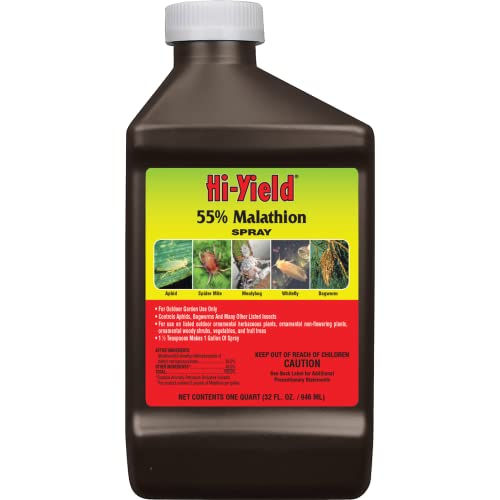
| Hi-Yield 55% Malathion Spray, 32 oz★ Best Overall | Foundation and trunk spraying | 32 fluid ounces | Oil | 2.5 pounds | Amazon |
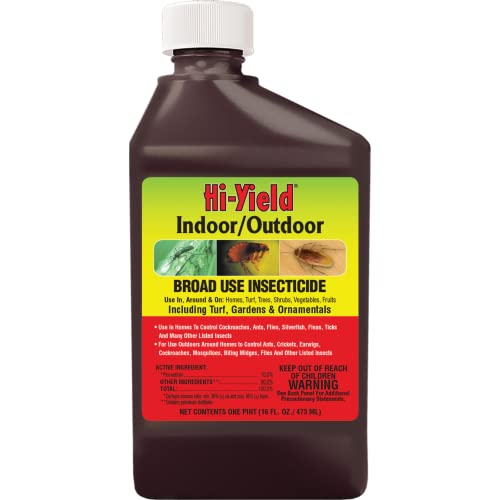
| Hi-Yield Indoor/Outdoor Broad Use Insecticide, 16 ozBest Value | Lawn and garden mixing | 16 fluid ounces | Liquid | 16 ounces | Amazon |
| BioAdvanced Tree & Shrub Insect Killer, 32 oz | Hose-end convenience | 32 fluid ounces | Liquid | 2.1 pounds | Amazon |
| Pyrethrin Bonide Garden Insect Spray Concentrate, 16 oz | Garden beds and ornamentals | 16 fluid ounces | Spray | 16 ounces | Amazon |
| Bonide Systemic Insect Control, 16 oz | Long-term ornamental protection | 16 fluid ounces | Spray | 16 ounces | Amazon |
Detailed Reviews
1. Hi-Yield (32029) 55% Malathion Spray, 32 oz
Our pick — 4.5+★ from 650+ verified ratings; the strongest balance of quality and price.
A 32-ounce malathion concentrate that treats trunks, shrubs, and fruit trees and earns its keep on hard-to-kill pests.
This is the pick for anyone with a row of trees or a foundation line to defend. The active ingredient is 55% Malathion, an oil-based concentrate you mix with water and apply with a hose-end or tank sprayer. At 32 fluid ounces it holds double the volume of the Hi-Yield 16-ounce broad-use bottle, so one purchase goes further if you have multiple trunks and shrubs to cover.
Buyers single out its effectiveness more than anything else, and the label backs that up with a long pest list. The label covers aphids, thrips, spider mites, lace bugs, bagworms on Arborvitae, borers and ants on peach trees, and spiders and wasps in a shed. The catch is the odor. It is an oil-based formula with a strong smell, so mix it outdoors and keep the sprayer away from the house while you work.
The application rule on the label is easy to follow: apply in calm weather when rain is not predicted for the next 24 hours. Sprayers vary, and so does the rate for each plant, so read the label before you mix. It is intended for herbaceous plants, ornamental non-flowering plants, shrubs, vegetables, and fruit trees, and the formula meets USDA specifications. Weighing 2.5 pounds, the bottle has a bit of heft in hand — noticeably heavier than the 2.1-pound BioAdvanced bottle, but still one-hand manageable while you refill a tank sprayer.
Where it earns its keep
- 55% Malathion active ingredient in an oil concentrate you mix to the label rate.
- 32 fluid ounces — double the volume of the Hi-Yield 16-ounce broad-use bottle.
- Label covers aphids, thrips, spider mites, lace bugs, bagworms, borers, ants, and more.
- Works on ornamentals, shrubs, vegetables, and fruit trees.
- Meets USDA specification.
What to plan around
- Strong oil odor — mix outdoors, not in a closed garage.
- Needs calm weather and no rain for 24 hours after application.
- Application rate varies by plant and sprayer, so the label is required reading.
Worth buying for: gardeners with several trees or a long foundation to treat who want one bottle that covers a lot of ground.
Think twice if: you spray near open windows — the oil smell is the trade-off, and a quiet outdoor mixing spot is your friend.
2. Hi-Yield (32009) Indoor/Outdoor Broad Use Insecticide, 16 oz
The small bottle that stretches across a whole lawn because half an ounce treats a thousand square feet.
If your lanternfly problem starts at the edge of a lawn and runs up into garden vegetables, this is the bottle to reach for. Half an ounce of the liquid mixes with water and treats up to 1,000 square feet, which means the 16-ounce bottle covers a serious amount of ground for a small container. It readily mixes with water for a tank-type or power sprayer, so you can do a whole yard in one session.
It is labeled for indoor and outdoor use and covers ticks, mosquitoes, termites, fleas, cockroaches, and more; the full list is on the label. A buyer with fruit trees reported it worked very well there, and the label does allow use on trees, lawns, and garden vegetables. The one honest note is odor — some find it mild compared to other products, while others find it strong. Plan to spray on a day when you are not hosting company.
Mixing is the thing to get right here. Application varies by plant and method, and the bottle does not spray on its own — you supply the sprayer. Read the label for the mix rate, and mix only what you need for the job in front of you.
Best of both worlds: one bottle that handles the lawn, the garden vegetables, and the fruit trees on the label — rare for a single container this size.
The honest caveat: it is a concentrate, so it arrives with no sprayer; budget for a tank or power sprayer if you do not already own one.
Reach for this if: you need broad coverage over a lawn and garden without buying several different bottles.
Look elsewhere if: you want something you can point and spray straight out of the container — this one needs a sprayer.
3. BioAdvanced Tree & Shrub Insect Killer Spray, 32 oz

Hooks to your garden hose and hits the top of a tall shrub without a ladder.
For tall shrubs and tree trunks you cannot reach from the ground, this is the bottle that saves your shoulders. It is a ready-to-spray formula that connects to any garden hose for even application, and it kills listed insects on contact — aphids, Japanese beetles, caterpillars, whiteflies, and other listed pests. It keeps killing listed insects on trees and shrubs for up to 2 weeks, so one pass covers a trunk instead of a weekly re-spray.
What buyers rave about is reach. Spraying high up on a tall bush from ground level is the scene that keeps coming up, and it is the same reason a hose-end bottle beats a hand pump on mature shrubs. It weighs 2.1 pounds, a touch lighter than the 2.5-pound Hi-Yield malathion bottle, so hauling it around the yard is easy. Its 32 fluid ounces match the Hi-Yield malathion volume, though the hose hookup and 2-week control window are what change how you use it.
The recurring advice on the label is worth repeating: let the application dry before pets and kids are back in the area. One thing to be clear on — hose-end concentrates like this are for the listed outdoor trees and shrubs. Never point a spray at a neighbor’s beehive or any pollinator nest; that is both illegal and harmful. Keep the spray on your own labeled plants.
Why people keep buying it: the hose hookup and the up-to-2-week control window make a big shrub job a short one, and the reach up a tall plant is the part everyone notices.
Worth knowing: it is a contact killer on the listed insects, so thorough coverage of the leaf and trunk is what makes it work — a quick mist misses the pest.
The pick for: anyone with tall shrubs or tree trunks who would rather drag a hose than climb a ladder.
Not the one for: a spot-treatment job on a single small plant where a pump sprayer gives you more control.
4. Pyrethrin Bonide Garden Insect Spray Concentrate, 16 oz

A pyrethrin concentrate that covers a broad range of insects and is labeled safe for beneficial insects.
This one suits the gardener who wants a broad-spectrum spray but does not want to wipe out the good bugs along with the bad. It is a pyrethrin-based concentrate labeled for a broad range of insects and called out as safe for beneficial insects, which matters in a garden that relies on pollinators and predators.
What people love about it is that it stays useful across a whole season of garden problems. The 16-ounce concentrate is labeled for aphids, including in hot weather when other sprays can burn tender plants, and for clearwing borers on lilacs and other shrubs. It also holds longer than a typical contact spray, so one application covers a stretch of the season instead of a single afternoon.
The bottle is a concentrate, so you mix it in water at the label rate before you spray. One note on expectations: it is a contact-style spray for the listed insects, so you still need to cover the target thoroughly. Gardeners who stay on top of the spray schedule tend to see the best results.
Why gardeners like it
- Pyrethrin formula labeled to control a broad range of insects.
- Called out as safe for beneficial insects.
- 16-ounce concentrate that mixes with water at the label rate.
- Holds without constant re-application in typical garden use.
Things to plan for
- It is a concentrate — you supply the sprayer.
- Contact spray, so full coverage of the target matters.
A fit for: gardeners who want a broad-spectrum spray that spares the beneficials working their beds.
Pass on it if: you need a large-volume bottle for several mature trees — a 16-ounce concentrate expects careful, targeted use.
5. Bonide Systemic Insect Control, 16 oz Concentrate
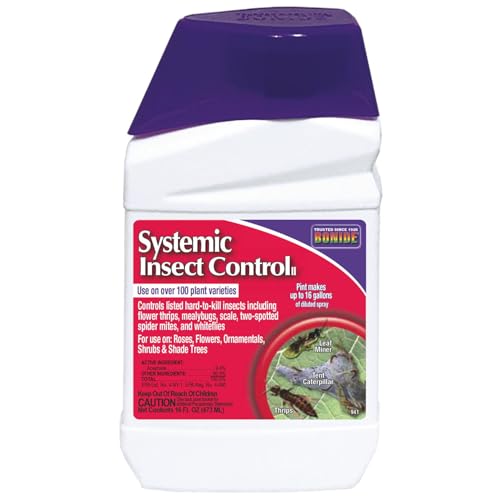
One small bottle that makes sixteen gallons and feeds protection into the plant itself.
This is the pick for ornamentals you cannot possibly spray every leaf of — roses, flowering shrubs, and beds where the pest hides deep in the foliage. It is a systemic concentrate, meaning the plant takes the product up and the insect meets it while feeding. One 16-ounce bottle makes up to 16 gallons of spray, and it is labeled for over 100 plant varieties.
The formula controls hard-to-kill listed insects including thrips, mealybugs, scale, 2-spotted spider mites, and whiteflies. It is intended for outdoor residential use only, and the label is clear that it is not for vegetable or fruit plants — it is labeled for flower beds, roses, shrubs, and other listed ornamental plants. Apply to affected plants every 7 to 10 days as long as the infestation occurs.
The smell is the honest part of this one. It carries a strong, earthy odor that lingers indoors even after watering, so move houseplants somewhere ventilated for a while after treatment. The upside is value: 16 gallons of mixed spray from one bottle is a lot of coverage, and the measuring cup included in the bottle makes mixing easy. It meets EPA specification and weighs 16 ounces, so a single bottle lasts through several spray rounds.
Where it shines: the systemic action and the 16-gallon yield give you long, thorough protection on roses and flowering shrubs.
Read before you buy: it is labeled for ornamentals, not vegetables or fruit plants — if your plan involves a fruit tree, pick a different bottle from this list.
Choose it for: roses, flowering shrubs, and ornamentals that need protection from insects hiding deep in the foliage.
Skip it for: vegetables or fruit you plan to eat — the label excludes those plants.
Know the Specs
Liquid volume in fluid ounces
This is how much product is in the bottle, not how much spray you end up with. A 32-ounce bottle holds double the liquid of a 16-ounce bottle, but the mixing rate on the label decides how many plants that liquid actually treats. Check the volume and the mix rate together before you buy.
Item form: oil, liquid, or spray
The form tells you how it goes on. An oil-based concentrate like malathion mixes into a tank and clings well to trunks; a liquid concentrate mixes readily with water for a power sprayer; a ready-to-spray bottle is pre-diluted for a hose hookup. The form you pick should match the sprayer you own.
Mixing rate and treated area
The label gives a rate, often expressed as area per ounce — for example, up to 1,000 square feet per ½ ounce of insecticide. That number is your real coverage guide. A small bottle with a lean mixing rate can out-cover a bigger bottle that is mixed rich.
Labeled plants and use sites
A product is only appropriate for the plants the manufacturer lists on the label. Some are labeled for ornamentals and shrubs only; others include vegetables and fruit trees. Match the label to your yard, and never apply a product to a plant it does not list.
Common Questions
Will any of these actually work on spotted lanternfly?
Can I spray these on a fruit tree and still eat the fruit?
How long do I have to wait after spraying before rain?
Which bottle is safest around pollinators and beneficial insects?
Do I need to buy a sprayer separately?
How often should I reapply during an active infestation?
What does “systemic” mean on the Bonide bottle?
Why do people complain about the smell on some of these?
Can I mix these with a fungicide or fertilizer?
How do I dispose of leftover mix safely?
The Bottom Line
For most people fighting spotted lanternflies on trees, shrubs, and a foundation line, the insecticide for spotted lanternfly that gives you the most ground per bottle is the Hi-Yield 55% Malathion Spray — 32 fluid ounces, a 55% malathion formula, and a label that covers trees, shrubs, and a long list of hard-to-kill pests. If you want the easiest possible application on tall shrubs, grab the BioAdvanced Tree & Shrub Insect Killer and hook it to your garden hose. And if your battle is on roses and flowering ornamentals rather than edible crops, the Bonide Systemic Insect Control stretches 16 gallons of spray out of a single bottle. Match the label to the plant you are treating, spray in calm weather with no rain forecast for 24 hours, and protect beneficial insects while you work.
How we choose
We do not accept paid placement. Every pick is matched to a real buyer and a real use-case; we do not hands-on test units.
Sources
Specifications: manufacturer listings and product documentation. Review insights: verified customer reviews, as of October 2026. Pricing: not shown on this page (it changes often); check the current price via the retailer link.
As an Amazon Associate, Aappliancez earns from qualifying purchases. This does not affect which products we feature.