Disclosure: Some links in this post are affiliate links. As an Amazon Associate I earn from qualifying purchases, at no extra cost to you. Learn more
Specs are compiled from manufacturer listings and verified buyer reviews and can change over time — please confirm the key details on the product page before buying.
Beetles are stubborn in a way that surprises most people. Adult Japanese beetles shred leaves in a week, and their grubs chew through your lawn roots before you ever see the damage. The right insecticide depends on which stage you are fighting — adult beetles on leaves or grubs in the soil — and where you are spraying. Here is the short answer before we get into specifics. For a broad liquid spray that handles both indoor and outdoor infestations, the Hi-Yield Broad Use concentrate is the strongest all-around pick. If you are hunting the grubs under your lawn, Milky Spore is the long game. And if avoiding harsh chemicals matters most to you, the Southern Ag Conserve spray is your one.
This guide is built by comparing the manufacturers’ published specifications and the patterns across verified customer reviews, so you get each pick’s real strengths and trade-offs instead of marketing spin.
Beetles come in different shapes and attack different parts of your yard. You do not need to become an entomologist to win. The trick is matching the insecticide form to your target pest and reading the label before you spray. I read every label and every spec so you do not have to.
Top Picks

How To Choose The Best Insecticide for Beetles
The biggest mistake most buyers make is buying one product expecting it to handle everything from grubs in the soil to egg-laying adults on the leaf. Beetle control does not work that way. You need to pick the product for the stage and the location. Here is what actually matters when you are standing in the aisle.
Know the target — old adult beetles or larvae in the soil
Japanese beetles lay eggs in your lawn, and the young grubs hatch and feed on grass roots. A granular or dust product you work into the soil targets that stage. A liquid spray works on adults feeding on foliage. Some products, like Milky Spore, do both over time because it contains a bacteria that infects and kills grubs. Read the label and match the target species before you buy anything.
Match the form to your method
Concentrates like the Hi-Yield and Bonide Systemic formulas need to be mixed with water and poured into a tank or sprayer. They reach into foliage and soil quickly, but you must measure accurately and follow the dilution rate on the label. Diatomaceous Earth products are applied dry as a dust, which works well for crawling beetles around foundations and in cracks. Both methods work, but they suit different jobs.
If you are treating a large lawn, a concentrate that covers square footage is more efficient. If you are spot-treating a flower bed or around baseboards, a dust product saves you the mixing step. Think about how and where you will apply before you pick a formula.
Check the safety language for pets and edible plants
Some products are safe around pets and can be used on gardens and vegetables, while others are for ornamental use only. The Bonide Systemic is not for vegetable or fruit plants. The Southern Ag Conserve is an organic formula that many buyers use around chickens and other animals. The Milky Spore is a naturally occurring bacteria that specifically targets Japanese beetle grubs. If you have animals that will walk where you spray, look for products labeled for use around them.
Read the label for any strong odor
Several concentrates have a strong scent, especially the systemic ones. That smell is often a sign the product is working and usually fades after watering or a few hours, but it can linger indoors. If you need to treat houseplants or an enclosed space, plan to move plants outside or ventilate the room while the product dries. That one step keeps a small, manageable trade-off from turning into a real surprise.
Side-by-Side Comparison
| Model | Best For | Form | Size | Target Species | Amazon |
|---|---|---|---|---|---|
| Hi-Yield Broad Use Insecticide★ Best Overall | Broad liquid spraying | Liquid concentrate | 16 oz | Ticks, mosquitoes, fleas, ants, others | Amazon |
| Bonide Diatomaceous EarthBest Value | Dry dusting indoors and outdoors | Dust / powder | 80 oz (5 lbs) | Ants, beetles, roaches, silverfish, slugs, others | Amazon |
| Southern Ag Conserve Naturalyte | Organic foliar spraying | Liquid concentrate | 16 oz | Worms, caterpillars, fire ants, scale | Amazon |
| Bonide Systemic Insect Control | Systemic protection on ornamentals | Liquid concentrate | 16 oz | Thrips, mealybugs, scale, spider mites, whiteflies | Amazon |
| Milky Spore Japanese Beetle Killer | Grub control in lawns | Powder | 10.1 oz | Japanese beetle grubs | Amazon |
Detailed Reviews
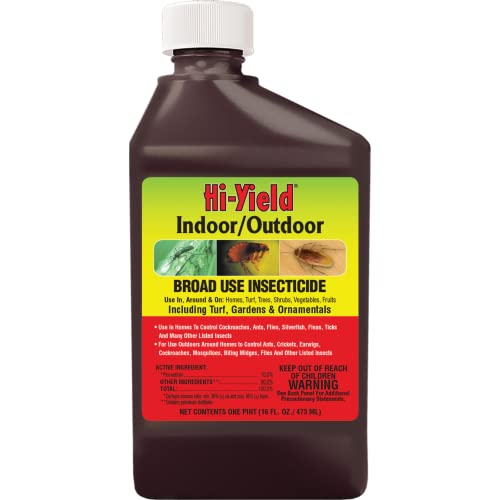
1. Hi-Yield (32009) Indoor/Outdoor Broad Use Insecticide, 16 oz
Our pick — 4.5+★ from 400+ verified ratings; the strongest balance of quality and price.
Sixteen ounces of concentrate that treats up to 1,000 square feet per half ounce — and most owners have barely dented the bottle.
Here is why you should pay attention to this bottle if your beetles are a mixed bag. The label lists ticks, mosquitoes, termites, fleas, and cockroaches among its controlled species, and it works on lawns, trees, and garden vegetables. That range is the point — you are not narrowing your spray to one pest. You mix it with water and either a tank sprayer or a power sprayer carries it into the foliage. The dilution rate is the key number: half an ounce per 1,000 square feet. Get that right and a 16-ounce bottle stretches across many applications. Four hundred-plus buyers have this one sitting in the garage, and the effectiveness consensus is strong.
What wins people over is that it simply works on the bugs they bought it for. Fruit trees are a recurring theme — the spray handled yard and garden pests well enough that buyers came back to say so. Pay attention to the safety note, though. It is a broad-spectrum liquid and the odor is noticeable. Spray when you plan to leave the house for a few hours, and keep pets off the treated area until it dries. The label is your guide on re-entry.
Compared with the Milky Spore bag, this one is an immediate-action tool, not a soil-bacteria program. Use it on adult beetles feeding right now and on the crawling insects around your foundation. The Bonide Diatomaceous Earth provides a bigger weight of product — 80 ounces versus 16 — but it works differently, as a dry dust rather than a wet spray. Think of this Hi-Yield as the general-purpose option and the Bonide as your dusting specialist.
What earns its keep
- Treats up to 1,000 square feet per half ounce — a small pour covers a lot of ground
- Broad label list including ticks, mosquitoes, fleas, and cockroaches
- Works on lawns, trees, and garden vegetables with one bottle
- Mixes readily with water in a tank-type or power sprayer
What to plan around
- Noticeable odor — spray when you can leave for a few hours
- Broad-spectrum means it is not selective about which insects it kills
- Requires a sprayer and accurate measuring — the bottle is concentrate
Grab this one if: you want a single liquid concentrate for beetles, ants, and other crawling and flying pests around your home and garden.
Think twice if: you are treating only grubs under the lawn — a soil product like Milky Spore is the better fit for that stage.
2. Bonide Diatomaceous Earth Crawling Insect Killer, 5 lbs
Eighty ounces of dust that kills dozens of crawling species by physically damaging their exoskeleton — no resistance possible.
If you have a crawlspace, a barn, or a garden path where beetles and their crawling friends keep showing up, this bag is your workhorse. The active ingredient is diatomaceous earth, a fine powder made from fossilized aquatic organisms. Insects that walk through it pick up the sharp particles, and the micro-abrasion damages their outer shell so they dry out and die. The label says insects die within 48 hours of contact and cannot build immunity to the powder. You can dust it dry or mix it into a slurry and spray it. Pet safety is the most-praised aspect — buyers describe their dogs licking the dust off their noses with no ill effect.
The honest catch here is application. The powder is light and it goes where the air pushes it. If you have a low-dust tolerance, plan your treatment so you are not breathing the cloud. The label calls for light application, and that is the key to making it work without a mess. A few buyers report that the bag has no resealable closure, so you will want a clip or a container to store what you do not use. Do not expect a miracle cure for a full-scale infestation — treat it as one piece of a larger pest strategy.
Compared with the Hi-Yield concentrate, this bag holds 80 ounces against 16 — five times the product by weight — but it works slowly and only on contact. You get coverage and volume, not speed. The Southern Ag spray below, on the other hand, is a low-toxicity liquid that targets worms and caterpillars. Both are natural-leaning options, but they suit different pests and different application styles.
An unattached applicator problem: the bag is a bag, not a dispenser. Buy a puffer or a small scoop if you plan to get the powder where it needs to go. Loose application is fine for broad areas like a garden bed; for cracks and crevices, a dedicated tool makes the job faster and keeps your hands out of the dust.
A realistic limit: effectiveness divided between successes and complaints. Some owners mention it did not kill every species they tried it on. Grasshoppers and earwigs are the recurring misses. Crawling beetles and ants, the ones that pick up the powder, fare better.
The right buy for: pet owners who want a physical-kill dust for crawling beetles, fleas, and ants around the home and garden.
Not your tool if: you are looking for a fast knockdown where the insects never come in direct contact with the powder.
3. Southern Ag Conserve Naturalyte Insect Control, 16oz – Pint

Sixteen ounces of organic concentrate that stretches into eight gallons of finished spray — enough for a season of garden work.
This one earns its place if you want to spray around a garden without worrying about the bugs that help you. The active ingredient is spinosad, a compound derived from a soil bacterium, and the label lists foliage-feeding worms, caterpillars, citrus leafminers, and fire ants among its targets. That is a narrow list on purpose. It does a very good job on the soft-bodied pests and the caterpillars that chew leaves, and it does it without the harsh chemical profile of a broad-spectrum concentrate. Buyers describe spraying it around yard chickens and garden beds without a poisoning concern. No odor is another advantage over the stinkier systemic formulas. For organic growing, it is OMRI-listed, which means it meets standards for certified organic production.
Think about the money before you buy. Customers note mixed value for money, and that depends on the concentration level. You pay for a pint (about 473 ml) that you mix down into a spray, not for a jug of pre-mixed liquid. The maker and the label say patience is required — one fire ant or whitefly treatment may need a follow-up. A deep-set infestation in a large bed can take weeks of consistent application, and that is the cost of a softer product. Do not expect a one-and-done kill.
Compared with the Bonide Systemic Insect Control, the Conserve is the organic, foliar-contact option, while the Bonide is designed to travel inside the plant. The Hi-Yield concentrate above lists a wider set of nuisance pests, including ticks and mosquitoes, that this one does not mention.
Where it shines: buying it as a mix-station product for a serious gardener. A single pint makes up to 8 gallons of spray, so the upfront cost spread across a whole season lands in a reasonable spot — especially if you are already committed to organic gardening.
Reach for it when: you want an organic, low-toxicity foliar spray for caterpillars, leafminers, and fire ants in a garden shared with animals.
Look elsewhere if: your beetle problem is the adult chewing holes in an ornamental shrub — a systemic product keeps working from inside the plant.
4. Bonide Systemic Insect Control, 16 oz Concentrate
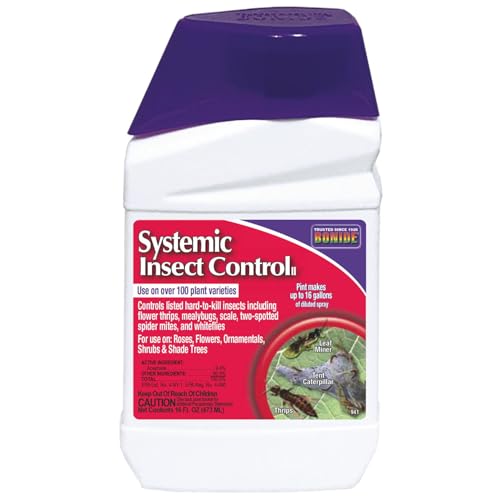
A pint of concentrate that makes 16 gallons of spray, moving inside shrubs to kill the pests you never see.
Systemic means the product is absorbed into the plant’s tissue, so an insect that feeds on a leaf or stem ingests the active ingredient directly. That matters most for the hard-to-kill insects like thrips, mealybugs, scale, and spider mites. The label lists those along with 2-spotted spider mites and whiteflies. It is designed for outdoor residential use only, and it is not labeled for vegetable or fruit plants. Application is every 7 to 10 days while the infestation persists. That schedule is the commitment — it works, but you have to stick with it.
What the review pages sum up is a product that clearly works but that you will smell. A strong earthy, organic odor is the recurring mention, and buyers describe it drifting around the house while they water their ornamentals. The easy fix is to keep treated plants outdoors or in a garage for the drying period. The upside is immediate effect on fungus gnats and other indoor-plant pests, and the ease of mixing. It comes with its own measuring cup and blends into water more easily than a granular product.
The comparison against the Diantomeous Earth above is important for your beetle case. The systemic formula is not a top-listed beetle product, but many insects that damage lawns and gardens are the same ones it handles — and it keeps working for a while after you spray, unlike a contact product. Against the Milky Spore below, the Bonide is a foliage spray while the Milky Spore is a soil-dwelling bacteria for grubs.
Standout strengths
- Makes 16 gallons of spray from one 16-ounce bottle — a substantial dilution ratio
- Systemic action moves inside plant tissue to reach hidden insects
- Works on thrips, mealybugs, scale, spider mites, and whiteflies
- Mixable with certain fungicides and fertilizers for one application
Real limitations
- Heavy earthy odor that can linger indoors — ventilate or dry plants outside
- Not labeled for vegetable or fruit plants — ornamental use only
- Requires repeated applications every 7 to 10 days during an outbreak
Your product if: you are treating ornamental shrubs, roses, or houseplants for pests that hide and feed from inside the leaf.
Skip the spray if: you are growing vegetables or fruit that you plan to eat — the label excludes them, so a different product from this list is safer.
5. Milky Spore 80010-9 Japanese Beetle and Other Beetle Killer
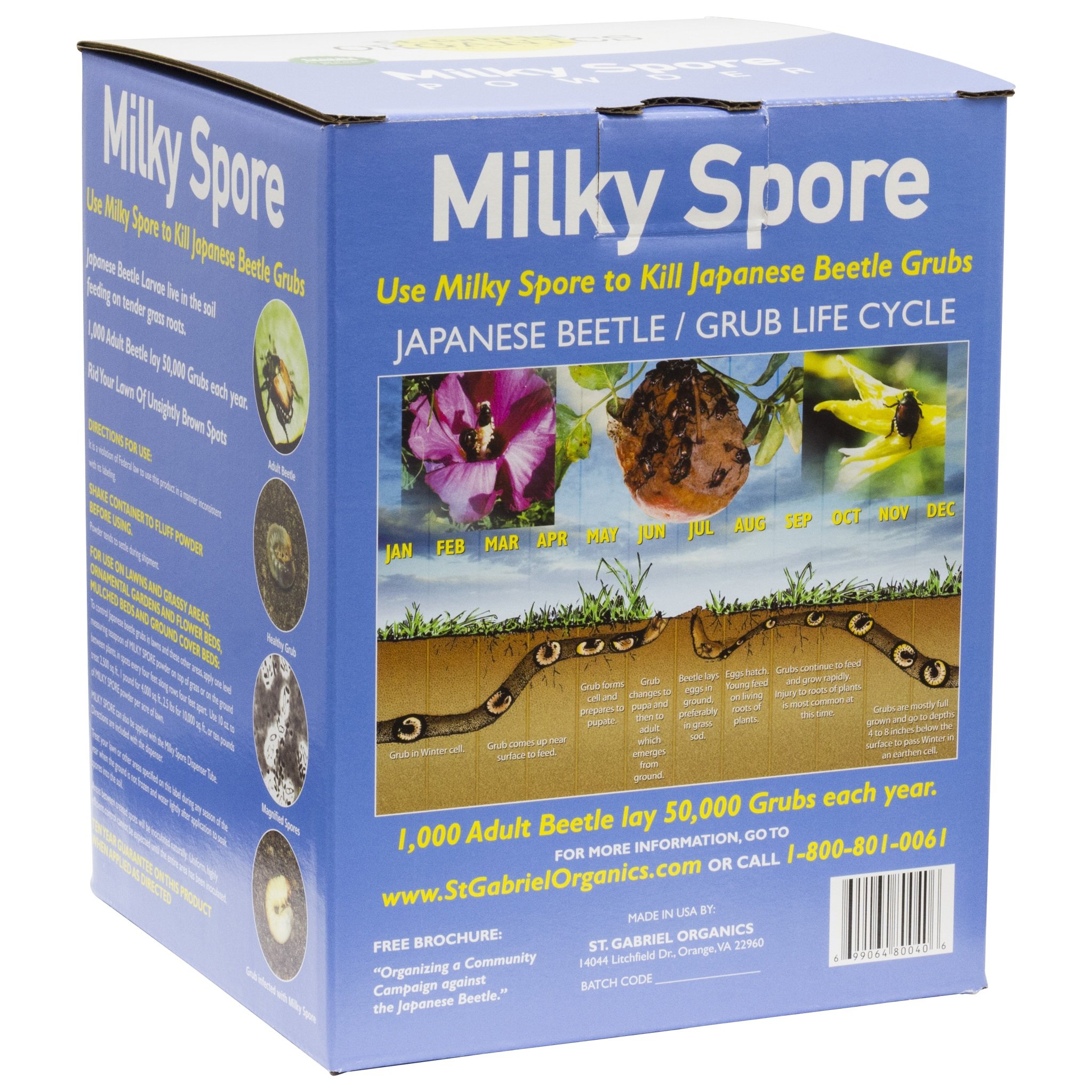
The one product here that targets the grub stage on purpose — and keeps working in your soil for years.
If your Japanese beetle problem starts with dead patches in the lawn, this is the product that addresses the cause rather than the symptom. Milky Spore contains bacteria that infect and kill Japanese beetle grubs in the soil. Once established in the soil, the spores persist and keep infecting Japanese beetle grubs for multiple seasons. Buyers describe working it into the soil or spreading it on top and watering it in. One bag covers a large area — a small bag applied thinly can treat a substantial lawn. It is made in the United States and comes as a powder you spread, rake into the soil, or mix with water as a soil drench.
Two practical points stand out. First, a few reviewers point out that using the full-strength concentration on a test patch was the most effective method they tried, but the powder is fine and can drift if you apply it on a windy day. Second, the label says soil temperature matters: the bacteria are inactive below 50°F. Apply in warmer months for best results. The other quibble is about the packaging itself — the product arrives as a loose bag, not a box as shown in some images, which makes storage less tidy. A sealable container solves that easily.
This is the slowest-working product in the list. You will not see beetles vanish overnight. The buy-in is the trade-off: multiple applications over the first season to establish the bacteria, then long-term protection. Compared with the Bonide Systemic, which affects insects on foliage, the Milky Spore stays in the soil. The two are not substitutes — they can work together across a property.
What you are paying for: the long game. One established application protects your lawn for multiple seasons, and the bag is built to cover a large property when spread thin. For a gardener who has fought grubs for years, that timeline is the real value.
Worth it for: homeowners with a lawn full of Japanese beetle grubs who are ready to treat the soil, not just the leaves.
The honest watch-out: the bacteria needs warm soil to establish and shows results over months, not days — see that as a multi-season investment, not a quick spray.
Know the Specs
Concentrate Versus Ready-to-Use
A concentrate is a bottle of full-strength active ingredient that you dilute with water yourself. A ready-to-use bottle is already mixed. A concentrate like the Hi-Yield gives you more value by volume because you can cover a large area from one bottle, but you must measure and mix. The soak ratio matters. If you over-dilute, the spray is weak. If you under-dilute, you waste product. The bottle tells you the right ratio. Follow it, and you get the coverage the label claims.
Systemic Versus Contact
A contact insecticide kills only the insects it lands on. A systemic is absorbed into the plant’s tissue, and pests that feed on the plant take in the product. Systemics keep working inside the plant for a while, which is why they are useful for hidden pests like thrips and scale. Contact products give immediate knockdown but wear off. That is why the Bonide systemic product has a reapplication window of 7 to 10 days during an active infestation while a contact spray like the Hi-Yield concentrate is applied as needed.
Common Questions
Will a liquid insecticide like Hi-Yield kill Japanese beetles and grubs?
Is diatomaceous earth safe around dogs and cats?
How long does Milky Spore stay active in the soil?
Can I use Southern Ag Conserve around chickens and in a vegetable garden?
Why do some products say not for use on vegetables?
Do I need to reapply the concentrate after rain?
Which product works fastest on a beetle infestation?
Is the smell of the Bonide Systemic dangerous?
Do multiple misting applications or a single strong application work better?
The Bottom Line
If you are fighting beetles on more than one front — adult beetles chewing leaves right now and crawling pests around your foundation — the Hi-Yield Broad Use concentrate handles the widest range from one bottle. It treats up to 1,000 square feet per half ounce, and it mixes easily with water. The Bonide Diatomaceous Earth is the one to reach for if you want a pet-safe dust for crawling beetles in cracks and garden beds. And for the long game under your lawn, the Milky Spore attacks grubs at the root cause. Three different products, three honest jobs. Pick the one that matches the stage your beetles are in, and you will not waste a season fighting the wrong enemy.
How we choose
We do not accept paid placement. Every pick is matched to a real buyer and a real use-case; we do not hands-on test units.
Sources
Specifications: manufacturer listings and product documentation. Review insights: verified customer reviews, as of October 2026. Pricing: not shown on this page (it changes often); check the current price via the retailer link.
As an Amazon Associate, Aappliancez earns from qualifying purchases. This does not affect which products we feature.