Disclosure: Some links in this post are affiliate links. As an Amazon Associate I earn from qualifying purchases, at no extra cost to you. Learn more
Specs are compiled from manufacturer listings and verified buyer reviews and can change over time — please confirm the key details on the product page before buying.
If your diesel is starting rough, idling loud, or lighting up the dashboard with a filter warning, you likely need a cleaner that actually removes deposits from the injectors — not a bottle of generic “performance boost.” The picks below all do real work on the fuel system, but each is built for a different job. The right one depends on whether you are fighting carbon, cold weather, or bacteria in the tank.
This guide is built by comparing the manufacturers’ published specifications and the patterns across verified customer reviews, so you get each pick’s real strengths and trade-offs instead of marketing spin.
Each additive below treats the fuel system in its own way, and each cleans something different. Some suit high-mileage trucks, others suit farm equipment. You can match a bottle to your problem in a couple of minutes. The aim is simple: help you pick an injector cleaner diesel that targets your exact symptom the first time.
Top Picks

How To Choose The Best Injector Cleaner for Diesel
The first thing to sort out is the symptom, because diesel additives are not interchangeable. A bottle that lifts cetane and lubricates a high-pressure pump does a different job than a biocide that kills growth in a stored tank. Match the product to the problem you actually have and you spend once instead of guessing.
Cetane rating and why it changes how the engine feels
Cetane is the diesel version of an octane number — a measure of how readily the fuel ignites under compression. Pump diesel often lands lower than an engine would like, especially in winter blend, so a booster that raises cetane points can shorten the lag before combustion. You notice it as an easier cold start, a quieter idle, and less diesel clatter at a stoplight. Some formulas here claim a cetane boost up to 8 points, which is a big swing on a bottle you pour in at fill-up.
Lubricity: protecting the pump and injectors
Ultra-low-sulfur diesel carries less of the natural lubricant that older fuel had, and modern high-pressure pumps and injectors depend on that film to avoid wear. A lubricity improver restores it, so moving parts glide instead of grinding. Watch for the measured claim — one product here is tested to improve lubricity by 43% on a standard bench method, which is far more useful to compare than a vague promise.
Cold-weather gelling and water
In freezing weather, wax crystals form in diesel and clog the filter, which is exactly when the truck refuses to start. An anti-gel additive shrinks those crystals so the fuel keeps flowing, and some also act as a demulsifier that separates water so it can be drained rather than pushed into the injectors. If you park outside in the cold, this matters as much as cleaning.
Deposits, DPF warnings, and how a cleaner helps
Carbon and varnish build up on injector tips over thousands of miles, which throws off the spray pattern and can trigger a “filter full” warning on the diesel particulate filter. A good injector cleaner dissolves internal deposits so the spray atomizes properly again. Look for a formula built for common-rail engines and real treatment capacity per bottle.
Side-by-Side Comparison
| Model | Best For | Bottle Size | Treatment Capacity | Key Focus | Amazon |
|---|---|---|---|---|---|
| Liqui Moly Super Diesel Additive★ Best Overall | Everyday fuel-system upkeep | 300 ml | — | Cetane boost & lubricity | Amazon |
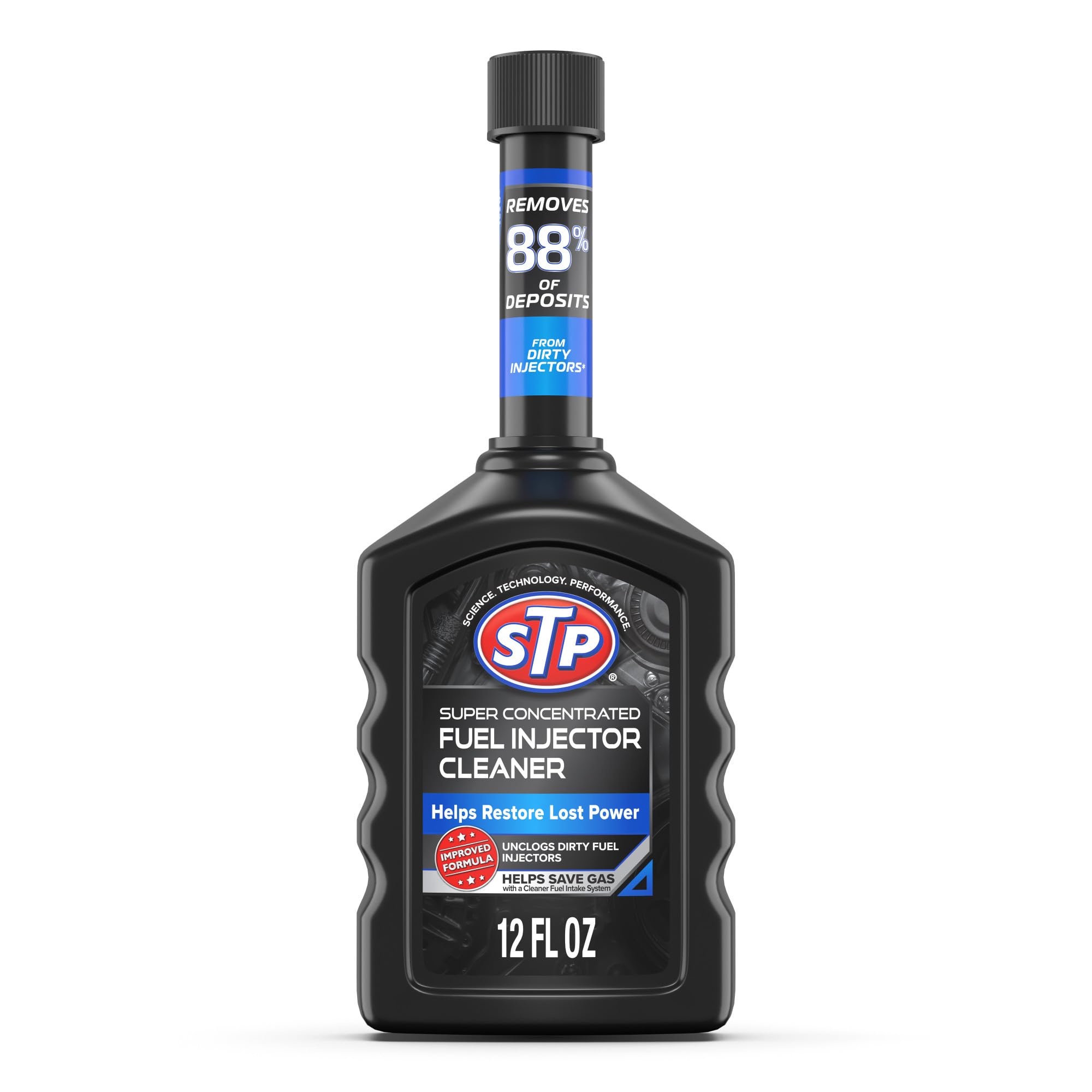
| STP Super Concentrated Fuel Injector CleanerBest Value | Unclogging dirty injectors | 12 oz | — | Cleans injector deposits | Amazon |
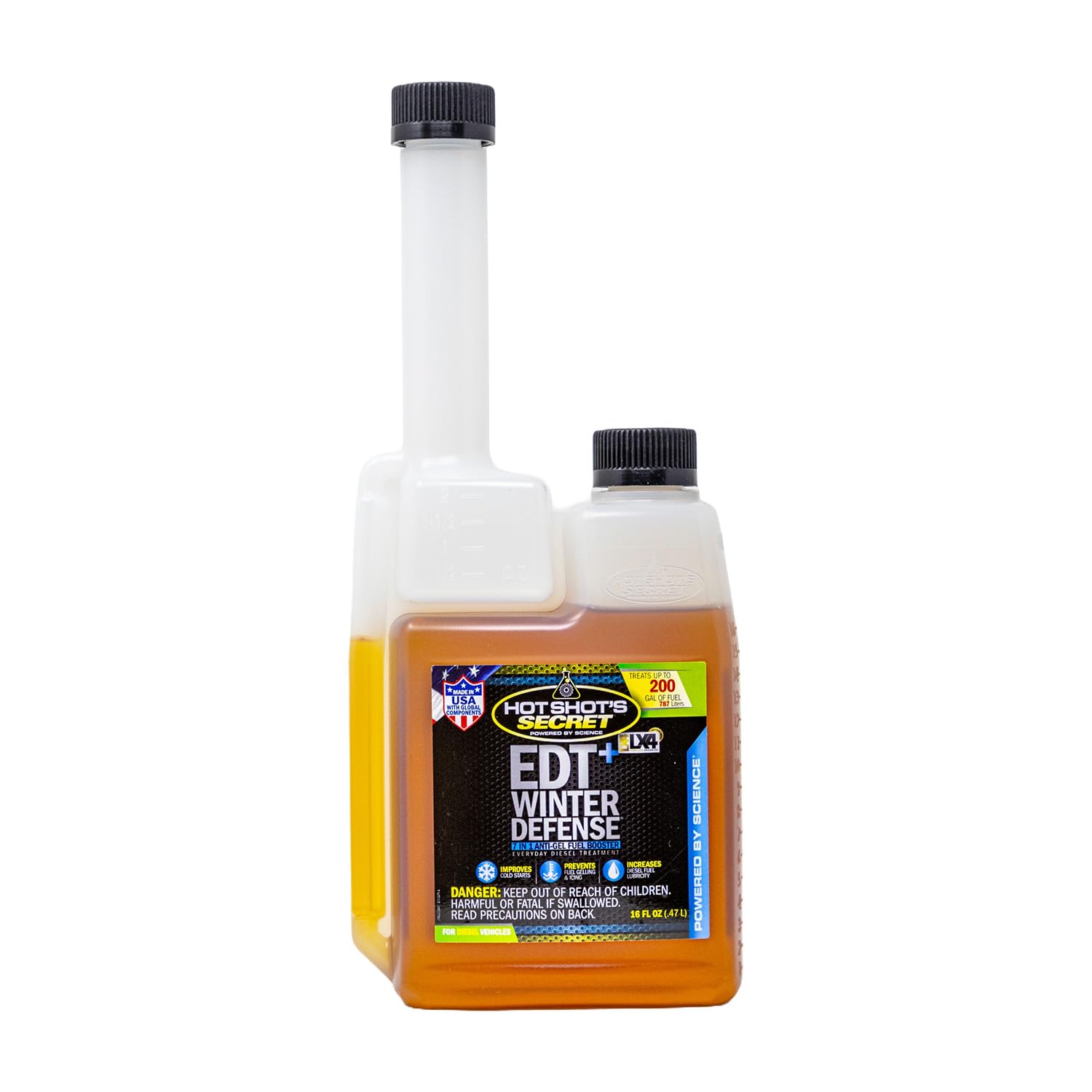
| Hot Shot’s Secret EDT+ Winter DefenseWinter Specialist | Cold-weather protection | 16 oz | Up to 200 gallons | 7-in-1 anti-gel & cleaner | Amazon |
| Lucas Oil Diesel Deep Clean | Clearing filter-related codes | 16 oz | — | DPF & injector cleaning | Amazon |
| FPPF Killem Biocide | Killing tank bacteria | 16 oz | 1,920 gallons | Bacteria & fungi control | Amazon |
| Stanadyne Performance Formula 4-Pack | Preventive maintenance dosing | 4 × 8 oz | 100 gallons total | Injector cleaner & cetane | Amazon |
| Archoil AR6300 Winter Treatment | Full winter package | 41 oz | Up to 275 gallons | Anti-gel & DPF care | Amazon |
| BG 245 Premium Diesel Cleaner | Common-rail deposit removal | — | — | Hard deposit removal | Amazon |
| Lucas Oil Fuel Injector Cleaner 12-Pack | Bulk single-dose convenience | 5.25 oz each | — | Cleans & lubricates | Amazon |
| Stanadyne Performance Formula 2-Pack | Long-term fleet supply | 2 × 0.5 gallon | 500 gallons total | Multi-purpose protection | Amazon |
| Opti-Lube XPD All-Season | Year-round lubrication | 1 gallon | 512 gallons | Lubricity & economy | Amazon |
Detailed Reviews
1. Liqui Moly Super Diesel Additive 300 ml
Our pick — 4.5+★ from 950+ verified ratings; the strongest balance of quality and price.
The everyday bottle that keeps a high-mileage diesel idling clean without a garage visit.
Here is the pick that earns the top spot: a cetane-boosting, lubricity-minded additive that owners pour in as routine upkeep. The 300 ml bottle is a regular dose, not a huge jug, which suits a single fill-up or two depending on your tank. The flash point is listed at 63.0 degrees_celsius, and the package weight comes to 0.76 pounds — a small, shelf-friendly container that stores easily in a truck box or garage.
The formula quality is what wins people over. Drivers running everything from a 2005 Silverado Duramax to a 135K-mile Audi A7 TDI describe the engine smoothing out within a day of the first dose. On higher-mileage German TDIs, owners say the fuel system gets the lubrication its high-pressure pump wants, and they notice a cleaner idle and less diesel smell. On a 200k-mile stock diesel, one long-term tester saw regen intervals (the gap between exhaust filter burn-offs) climb from 384 to 533 miles after treatment. That same tester noted his prior Liqui Moly DPF Protector had pushed intervals to 625 miles, so the gain depends on where you start.
Highway mileage gains of a couple of miles per gallon are a commonly reported second benefit on high-mileage diesels. The honest catch is dosage economics: a small bottle treating a large tank means frequent re-buys, so the cost per fill can add up for a daily driver logging serious miles. It is still a smart fit for anyone who does the routine maintenance already and wants a trusted name doing it.
What earns the top spot
- Cetane boost and lubricity in one small, easy-to-store bottle
- Reported smoother idle and less diesel smell on older TDIs
- Trusted for regular preventative maintenance on high-mileage engines
Where it asks more of you
- The 300 ml size means re-buying often for big tanks or heavy mileage
- Deposit-cleaning power sits below the deep-clean formulas that target severe fouling
Reach for this if: you want one dependable bottle to keep a healthy diesel running clean as part of regular upkeep.
Look elsewhere if: you are chasing a hard deposit or a filter warning — pair a dedicated cleaner with it instead.
2. STP Super Concentrated Fuel Injector Cleaner, 12 Oz
A wallet-friendly concentrate built to break up deposits and bring back lost throttle response.
The problem this bottle solves is straightforward: rough idle, a stumble on acceleration, or a misfire when the engine is cold. Those symptoms usually trace back to dirty injectors spraying unevenly, and the concentrated detergent here targets exactly that. You pour the 12 oz bottle into the tank and let it work over the next drive. The formula is made with jet fuel as a high-quality carrier for the active ingredients.
Performance is what owners praise most, and it shows up in concrete ways. A 2007 Yukon owner cleared a rough idle within a couple of days of adding it, and a three-year-old Chevrolet Colorado with a cold-start miss smoothed out after a quarter tank. One driver even cleared a persistent check-engine light linked to a worn catalytic converter by running two bottles alongside a tank of premium fuel. Mileage gains are the second draw, with one short-trip car reported jumping from 33 MPG to 39 MPG after a dealer engine cleaning.
The trade-off worth knowing: this is a gasoline-focused injector concentrate, so if you run a modern common-rail diesel, choose a diesel-specific formula instead — the carrier and detergent blend are tuned differently. For gas trucks and cars, though, the value per bottle is hard to argue with, and it is a rare find in the larger 12 oz size on local shelves.
The value read: for the price of a couple of coffees you get a concentrated cleaner that clears cold-start misses and idle vibration, which is why it holds a strong rating across a big pile of owners.
The best fit: a gas-powered car or truck showing early injector symptoms, especially on short-trip driving.
Not the one for: a diesel truck — reach for a diesel-tuned cleaner so the chemistry matches your fuel.
3. Hot Shot’s Secret EDT+ Winter Defense Fuel Additive, 16 oz
The one bottle that fights gelling, water, and dirty injectors once the temperature drops.
When the forecast heads below freezing, the worry is wax crystal formation turning your diesel to jelly and stranding you at the pump. This 7-in-1 formula attacks that directly by shrinking the wax crystals so the fuel still passes through the filter at 20°F below the cloud point, which is the temperature where wax starts to solidify. It also acts as a demulsifier — it separates water out of the fuel rather than letting it reach the injectors — and it claims protection down to -40°F.
The daily-use detail that matters is how far it stretches. The 16 oz squeeze bottle treats up to 200 gallons, with a base dose of 2 oz per 25 gallons that you double below 0°F. Beyond anti-gel, it delivers a cetane boost of up to 7 points and improves lubricity up to 32%, so a cold morning start comes easier and the high-pressure pump gets a protective film. Buyers chasing hard cold starts point to the stiction-clearing effect on older Powerstrokes, with one describing the improvement on the very first fill-up after a year of nagging injector symptoms.
Temperature retention is the next thing that keeps this in the toolbox, and it earns its keep in places that get brutal. A driver in -20 Quebec weather got a cold truck started after days sitting with only a short block-heater warm-up. The recurring gripe is simply the cost — this is a premium winter treatment, so some buyers rotate to a cheaper anti-gel in mild months. If your winters are real, the protection justifies the spend.
The winter advantage
- Prevents gelling below the cloud point and separates water as a demulsifier
- Covers cetane, lubricity, and injector cleaning in one dose
- 16 oz bottle treats up to 200 gallons
What to weigh
- Premium pricing puts it above basic anti-gel bottles
- Best saved for cold season rather than year-round for some drivers
Buy it if: your diesel sits outside and cold-weather starts are your biggest headache.
Think twice if: you drive in a mild climate — a year-round formula does more for you.
4. Lucas Oil 16 Oz. Diesel Deep Clean

Built for the driver staring down a filter warning and a dealership quote.
If your dash has thrown an “Exhaust Filter Full” or “Reduced Power” message, this is the bottle that a lot of owners reach for before booking service. The 16 oz dose is designed to clean injectors, reduce particulate matter in filters, restore lost power, and improve acceleration. Weighing in at 249 g, it is a compact container you can keep behind the seat.
The experiences around this one are dramatic when it works. A 2016 Nissan XD 5.0 diesel came out of limp mode within 10 minutes of the dose and cleared the fault in 30 minutes, with highway mileage climbing from 17.8 to 20.2 MPG. A 2023 Ram 2500 6.7 Cummins owner cleared a full DPF that a dealer wanted to replace, using the full bottle plus a stationary regen and a highway run. Several drivers report regen intervals stretching back out — one described a floor of around 325 miles restored after five regens averaged about 30% longer.
The honest limit to know: a few buyers find the cap leaks even when tightened, so wipe it down before it sits in the truck. And like any additive, it will not fix a physically clogged filter every time. For routine maintenance between regens, it is a sensible safeguard.
What stands out: it targets the filter-side and injector-side of the same problem at once, which is why high-mileage truck owners keep it in the rotation every few fill-ups.
The real trade-off: the bottle cap is the weak point owners flag — treat it carefully and it stays clean in the cab.
Pick this when: a diesel particulate filter warning has you weighing a repair bill against one more additive dose.
Skip it for: a healthy engine with no filter symptoms — a lighter cleaner keeps things tidy with less fuss.
5. 00119 KILLEM BIOCIDE 16 OZ. BOTTLE

For the tank that has sat too long and started growing something.
Diesel can grow bacteria and fungus, and few drivers realize it until the filters start clogging or the fuel line screen stops up. This biocide is built to control that growth, reduce corrosion, and clear slime, and the 16 oz bottle treats 1,920 gallons of fuel — an enormous stretch per container. It meets EPA specification, so you are getting a formula made for real tank treatment rather than a generic additive.
Effectiveness is what wins people over here, and it shows up across everything from semi trucks to farm equipment. A driver with algae in a semi was changing filters every 5,000 miles instead of at the 15,000-mile oil change; after treatment, filters lasted until the next oil change. A John Deere owner dosing 1 oz per fill-up stopped the repeated clogging of the tank’s fuel line screen. Others describe it clearing green pond scum from a stored tank with two applications a few days apart.
The catch is patience: biocide kills over time, not overnight, and stubborn algae can take a while to fully clear. It is also a maintenance dose, not a one-and-done — most owners keep treating to keep tanks under control. Wear gloves and follow the directions, and this becomes the single most useful bottle for anyone with stored or seasonal fuel.
Why tank owners keep it
- One 16 oz bottle treats 1,920 gallons of diesel
- Controls bacteria, fungi, slime, and corrosion in stored fuel
- Meets EPA specification
The honest catch
- Works slowly — heavy growth can take repeated doses over time
- Needs gloves and careful handling per the label warnings
Best for: farm tanks, RVs, semis, and equipment that sits with fuel in the tank.
Not for: a daily driver with clean, fresh fuel — this is a biocide, not a power booster.
6. Stanadyne Performance Formula Diesel Fuel Additive 4 × 8 oz

The four-bottle set that turns injector cleaning into a scheduled habit instead of a repair.
This is preventive medicine, sold as a 4-pack of 8 oz bottles. Each bottle treats up to 25 gallons of diesel, giving the set 100 gallons of total capacity across four separate doses. The maker recommends using it 4 to 6 times a year when performance issues appear, which lines up neatly with the bottle count. The formula is a one-tank clean-up mix of concentrated detergents designed to remove both internal and external deposits in a single treatment.
Performance is the standout, and it shows up on machines that were headed for the shop. A 25-year-old John Deere tractor that coughed and stalled came back to a smooth surge after 2 oz of the cleaner plus the Performance Formula. A rough-running 2004 Ram 5.9 Cummins that looked like it needed new injectors cleared completely by the second tank. Owners also note less black smoke, smoother starting, and quieter injectors at high mileage — and this is the only diesel injector cleaner in the lineup made by a fuel injection manufacturer.
What you should weigh is the dosing discipline: each 8 oz bottle is meant for a specific amount of fuel, so pour carefully to get the ratio right and keep the bottles sealed. This is also a lighter cleaner than a deep-clean formula, so severe carbon may need the heavier options above. For routine upkeep across a fleet or several vehicles, the four-pack keeps you stocked for months.
Routine-maintenance angle: small bottles, clear ratios, and enough doses to carry a truck through a full year of seasonal use.
The right call for: owners who want an easy, repeatable injector-cleaning schedule across several machines.
One caveat: if your problem is severe deposit fouling, step up to a deep-clean formula for that job.
7. Archoil AR6300 Winter Diesel Treatment (41 oz)
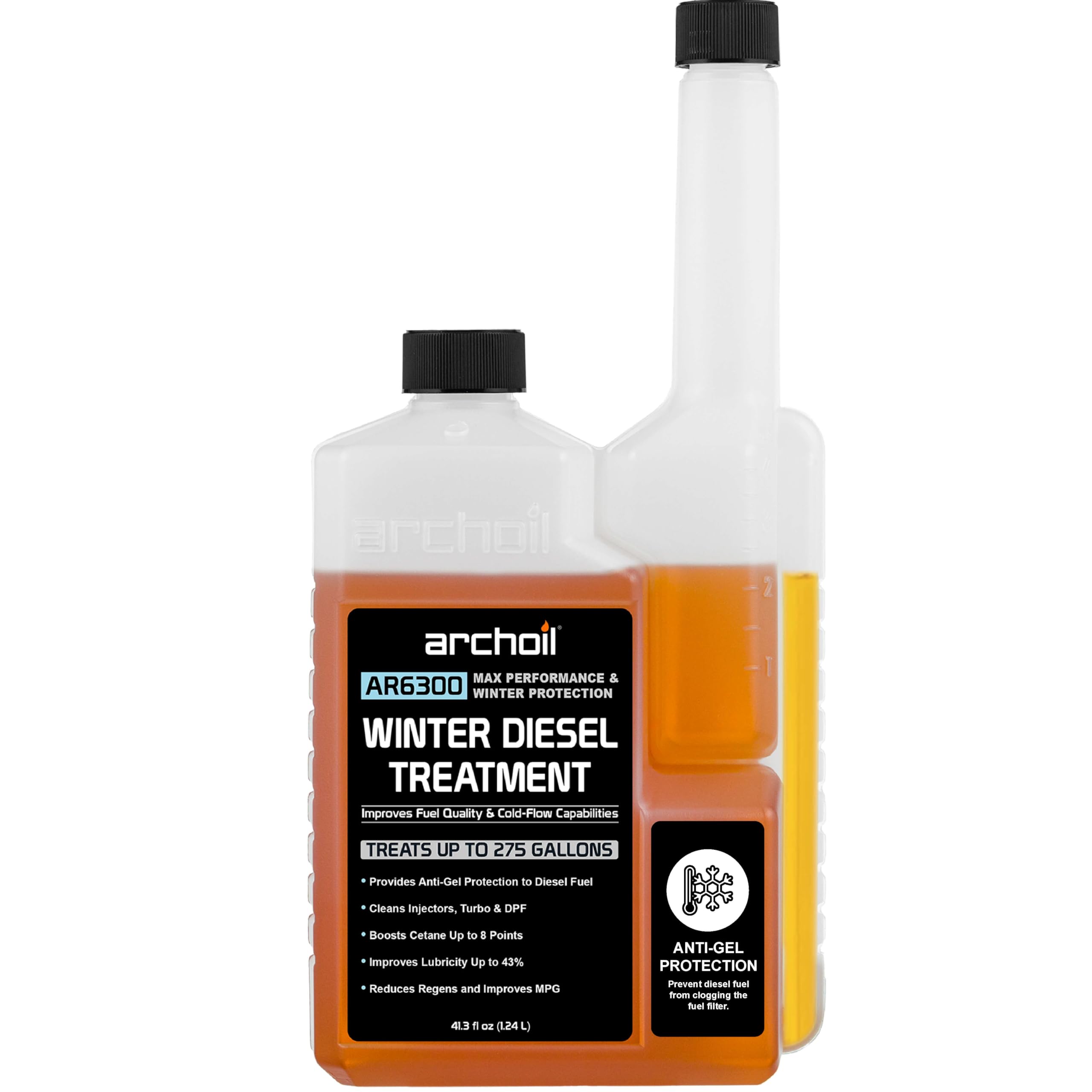
A big-bottle winter treatment that packs anti-gel, cetane, and DPF care into one pour.
The 41 oz bottle treats up to 275 gallons, and the long neck with a measuring chamber makes dosing clean at the pump. That size suits a heavy user who fills often through the winter. Behind the easy pour, the formula doubles as a cetane booster up to 8 points and is tested to improve lubricity by 43% on the ASTM D6079 bench method — a real measured figure, not a marketing line.
What it does beyond anti-gel is the reason it earns premium money. It targets injector deposits to restore spray patterns, works on DPF and turbo deposit formation to keep regens in check, and helps keep diesel flowing when the temperature drops. Drivers report fewer and shorter regen cycles since switching, and mileage gains that make the cost easier to swallow. A Chevy 3500 owner on a factory tune saw DEF use drop and picked up a couple of miles per gallon. A Quebec driver got a cold truck started at -20°F after days sitting, using a short block-heater warm-up first.
The honest caveat is that it is a winter-specific formula, so the maker points you to their year-round treatment for the rest of the year, storing leftover AR6300 in a cool, dark spot. Some drivers find the warm-month formula gains slightly more mileage. If your winters are long and cold, this is a strong package to run from first freeze to spring.
What it brings to winter
- 41 oz bottle treats up to 275 gallons
- Cetane boost up to 8 points and 43% lubricity improvement on a tested method
- Targets injector, DPF, and turbo deposits as well as gelling
Worth knowing
- Winter-specific — most drivers switch to a year-round formula in warm months
- Premium pricing puts it among the pricier bottles per season
Buy it for: a long, cold winter and a truck that needs anti-gel plus real cleaning in one dose.
skip it if: your climate stays warm — the year-round version fits better.
8. BG 245 Premium Diesel Fuel System Cleaner

The professional-grade cleaner built specifically for high-pressure common-rail engines.
Modern common-rail diesels run their injectors at extreme pressure, and carbon deposits on the tips can throw white smoke, rough idle, or a check-engine light. This formula is built for exactly that — it removes hard deposits inside the injectors, cleans the whole injection system, and is described as especially effective in high-pressure common-rail engines. It also targets improved cold start, smoother idle, and lower emissions. The bottle weighs 1.5 pounds, a compact quart-size container for a deep-clean dose.
Functionality is the thing that wins mechanics over. A Case 580C with a rough idle ran like new after half a bottle and 15 minutes of fast idle, avoiding an injector cleaning bill. A 2020 Ram 2500 6.7 cleared a check-engine light that had been on for months after a couple of tanks of treated fuel. A 6.7 Powerstroke with white smoke from dirty injector tips returned to normal after about half a tank, with mileage restored from about 18 to 20+.
The mixed signal here is value for money — this is a premium bottle that some buyers feel is expensive for the job, and there are no dosage ratios printed on the label, only exposure warnings. That means you lean on experience or a mechanic to dose it right. For a failing injector symptom where the alternative is a big repair, it is money well spent.
The case for it: it tackles the toughest deposit problems in the highest-pressure diesels, which is where cheap cleaners run out of steam.
Read the label first: without printed dosing ratios, you will want a clear idea of how much to add before you pour.
Best for: a common-rail diesel showing white smoke, a persistent check-engine light, or a rough idle.
Not ideal for: a budget-minded driver treating a healthy engine — the cost only makes sense when you are fixing a symptom.
9. Lucas Oil Fuel Injector Cleaner 5.25 oz (12-Pack)

Twelve pocket-sized doses that make a fuel-system top-up as easy as opening a bottle.
This is a case of twelve 5.25 oz single-dose bottles, each small enough to slide into a glove box or the well behind a seat. The formula cleans and lubricates the fuel system, increases the life of pumps and injectors, and neutralizes the problems that come with low-sulfur fuel. It is built to boost power and miles per gallon by helping burn off excess exhaust emissions. The full case weighs 4.18 pounds.
Value for money is what buyers praise most, and the case format is the reason. Buying in bulk beats picking up single bottles at a local store, and owners appreciate how easy the long neck pours into the tank without spilling. A retired teacher reported the engine running smoother the week after using a full bottle, with less sputter at stoplights and less steering-wheel shake. On a 7.3L gas engine, one driver saw mileage rise from 11 to 14 while noting the lifters ran quieter.
The recurring gripe is packaging — a few buyers report drips from a loose cap, so check each bottle before it rides in the cab. That is an annoyance rather than a fault with the cleaner itself. If you want a convenient single dose per fill and don’t mind the small bottle, the case keeps you stocked for a long stretch.
What the case gives you
- Twelve single-dose 5.25 oz bottles, each glove-box sized
- Cleans and lubricates while protecting pump and injector life
- Long neck pours clean into the tank
Small snags
- Some caps arrive loose and drip, so check before storing
- The 5.25 oz size means a full bottle suits a modest amount of fuel
Best for: anyone who wants a grab-and-pour dose ready in the truck for every other fill-up.
Think twice if: you run a large tank — you may need more than one small bottle per fill.
10. Stanadyne Performance Formula Diesel Fuel Additive 2-Pack

Half-gallon jugs that keep a whole season of fill-ups covered without reordering.
Two half-gallon jugs, each treating 250 gallons of diesel, give this set 500 gallons of total coverage. The jugs are made of high-density polyethylene, and the whole package weighs 6.5 pounds. It is the multi-purpose version of the Stanadyne formula — it restores or increases horsepower through cleaner combustion, reduces smoke and particulates, and works on on-road, off-road, and marine engines alike. Independent tests cited by the maker show an average of 4% improvement in MPG, with gains up to 9.6%.
Gas mileage is the top draw, and owners put it to work on real engines. A 2002 Duramax owner has logged over 150,000 miles on one set of injectors and credits the every-fill-up habit. Another describes the injectors responding to the cetane and lubrication, noting the engine ran smoother with a distinct injector sound. The half-gallon format works for a driver with a big tank — you measure with a graduated cup and store the jug in the truck bed.
Dosing precision matters here: the mix ratio runs at 3.75 oz per gallon of fuel, so a measuring cup keeps the job clean. The jugs are large, so you also want a spot to store them without spills. For the heavy user logging serious miles or running a fleet, the coverage per set is tough to top.
Why the size matters: 500 gallons of treatment means fewer reorders and a consistent dose at every fill-up, which is exactly how this formula is meant to be used.
The match: a high-mileage driver or small fleet running a big tank and wanting steady protection.
Look elsewhere if: you only fill a small tank now and then — the jugs are more than you need.
11. Opti-Lube XPD All-Season Diesel Fuel Additive – Gallon
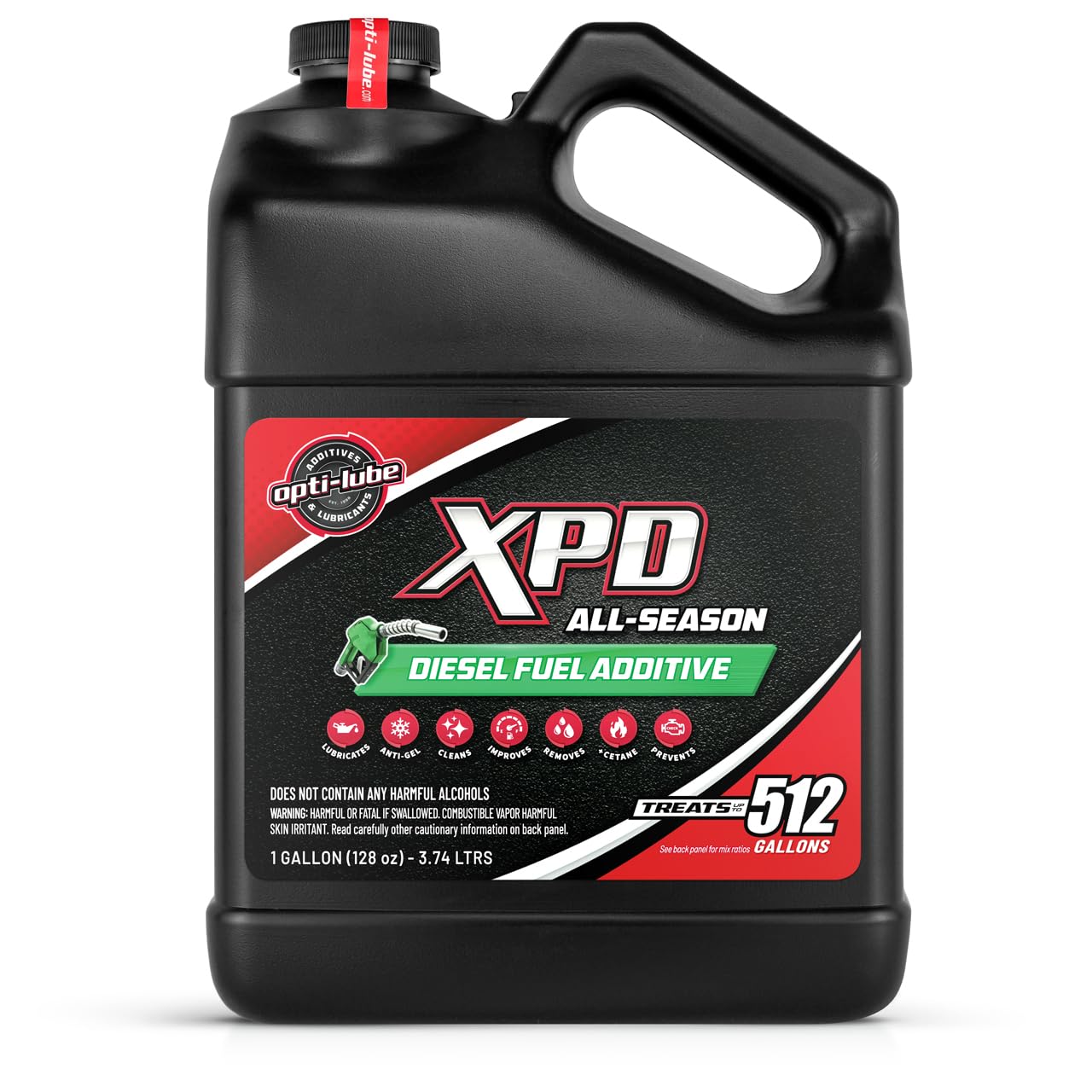
A one-gallon bottle built to protect a diesel through every season at once.
The big number here is 512 gallons of treatment from a single gallon bottle at 7.73 pounds, so the cost per treated fill stays low. The formula is built to boost the lubricity of ultra-low-sulfur diesel, clean injectors and prevent future buildup, act as a demulsifier that separates water, and more than double the storage life of standard diesel. It also contains enough anti-gel to keep fuel flowing down to -10°F, and it is compatible with emissions systems.
Fuel efficiency is the thing that pulls buyers in, and it holds up. Drivers report mileage gains, quieter engines, and smoother acceleration with better cold starts. One owner with years on a 2014 Superduty simply says it runs smooth, and the anti-gel covers winter months while the same bottle works in summer. Lubricity is the quiet benefit — the pump and injectors get a protective film that supports long-term injector life.
One thing to size up honestly: not every driver sees a mileage gain. A few report their MPG actually dropped on a heavy-duty Cummins before switching brands, so your results depend on your engine and how rich the additive makes the mix. It is also among the pricier gallons, though the 512-gallon treatment spreads that cost thin. If year-round protection in one bottle is your goal, this earns its place.
Why it works all year
- One gallon treats up to 512 gallons of diesel
- Anti-gel keeps fuel flowing down to -10°F for winter starts
- Demulsifier separates water and more than doubles storage life
What to factor in
- Mileage gains vary — some heavy-duty trucks see no improvement
- Premium gallon pricing sits above budget bottles
Best for: a driver who wants one bottle to cover lubrication, cleaning, and winter flow all year.
Weigh the cost if: you are chasing pure MPG — the protection is the real value, not the fuel savings.
Know the Specs
Cetane number and cetane boost
Cetane measures how easily diesel ignites under compression — the higher the number, the shorter the delay before combustion. Pump diesel often runs lower than an engine would prefer, especially in winter, so a booster adds points to speed ignition. You feel it as an easier cold start and a quieter idle. A formula claiming a boost up to 8 points is a meaningful step up over a bottle that only cleans.
Lubricity and the ASTM D6079 method
Ultra-low-sulfur diesel has less natural lubricant than older fuel, and the high-pressure pump and injectors need that film to avoid wear. Lubricity improvers restore it. The ASTM D6079 bench test is how formulators measure that improvement, so a tested figure like 43% is something you can compare between products instead of trusting a vague claim about “protection.”
Anti-gel, cloud point, and pour point
As diesel cools, wax crystals form at the cloud point — the temperature where they start to solidify — and that is when filters clog and the engine stalls. An anti-gel additive shrinks those crystals so fuel keeps flowing. A formula rated to protect at 20°F below the cloud point, or down to -40°F, is what you want if you park outside in a hard winter.
Treatment capacity and dosing ratios
Treatment capacity tells you how many gallons one bottle covers, which is the truest way to compare cost. A 16 oz bottle that treats 200 gallons is dosed far leaner than a small bottle meant for one tank. The dosing ratio — how many ounces per gallon — is what keeps your mix correct, so a graduated measuring cup helps you hit it precisely instead of eyeballing.
Common Questions
Will a diesel injector cleaner fix a check-engine light caused by a DPF warning?
Is a biocide the same as an injector cleaner?
Can I use a winter anti-gel additive in summer?
How often should I add diesel injector cleaner to my truck?
What is the difference between cetane boost and lubricity?
Will a fuel additive damage my diesel particulate filter?
How much additive do I add per gallon of diesel?
Do I need a different cleaner for a common-rail engine?
Will an injector cleaner actually improve my fuel mileage?
Is it safe to use two different diesel additives together?
Can diesel really grow bacteria and fungus in the tank?
The Bottom Line
For most diesel owners looking to keep the fuel system clean, the winner is the Liqui Moly Super Diesel Additive. It pairs a cetane boost (a lift in the fuel’s ignition quality) with lubricity in a small bottle that fits routine upkeep on high-mileage engines. If cold weather is your enemy, grab the Hot Shot’s Secret EDT+ Winter Defense for its anti-gel and water-separating formula. And when you need to break up hard deposits inside a common-rail injector (the precision fuel nozzle on modern diesels), the BG 245 Premium Diesel Fuel System Cleaner is the one to reach for.
Match the bottle to the symptom and you will not waste money guessing. A cleaner for carbon, a biocide for stored fuel, and an anti-gel for winter are three different tools — owning the right one for your engine and climate is what keeps it running clean year after year.
How we choose
We do not accept paid placement. Every pick is matched to a real buyer and a real use-case; we do not hands-on test units.
Sources
Specifications: manufacturer listings and product documentation. Review insights: verified customer reviews, as of October 2026. Pricing: not shown on this page (it changes often); check the current price via the retailer link.
As an Amazon Associate, Aappliancez earns from qualifying purchases. This does not affect which products we feature.