Disclosure: Some links in this post are affiliate links. As an Amazon Associate I earn from qualifying purchases, at no extra cost to you. Learn more
Specs are compiled from manufacturer listings and verified buyer reviews and can change over time — please confirm the key details on the product page before buying.
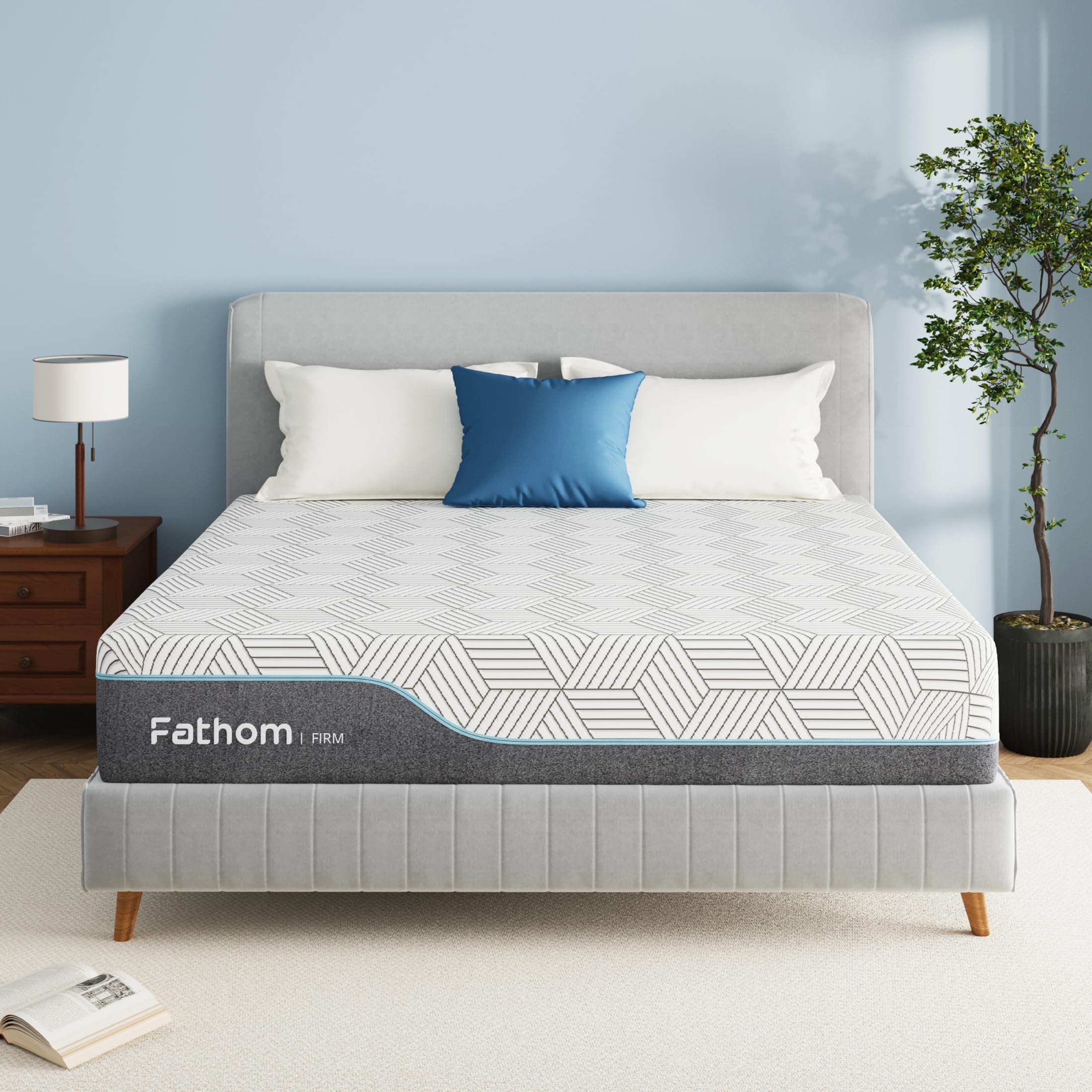
If your back aches every morning and your budget is tight, you do not have to choose between the two. A genuinely firm mattress — one that holds your hips and shoulders on top instead of swallowing them — now exists at entry-level prices. The picks below are all firm or extra firm, all shipped in a box, and all built for people who want support without paying premium-bed money. The FATHOM Firm Queen 10 Inch is the one to start with, because it pairs a true firm memory foam feel with a fiberglass-free removable cover and a 10-inch profile that fits a standard frame.
This guide is built by comparing the manufacturers’ published specifications and the patterns across verified customer reviews, so you get each pick’s real strengths and trade-offs instead of marketing spin.
You will see exactly how thick each bed is, which sleeping positions it suits, and where a soft edge or a slow expansion might catch you out. Here is the honest shortlist of the inexpensive firm mattress options that actually hold their shape.
Top Picks
How To Choose The Best Inexpensive Firm Mattress
“Firm” on a listing page tells you almost nothing, and that is the hard part of buying a firm bed on a budget. A cheap foam bed can arrive rock hard and then soften within months. What you actually want is a bed that starts firm and stays firm — and that depends on construction, thickness, and how the layers are stacked. If you want to lie on top of the bed rather than sink into it, keep reading.
Foam density matters more than the label
A memory foam mattress is only as supportive as its base layer. Look at the construction: the picks here that last tend to pair a conforming memory foam top layer with a high-density support foam underneath, or a pocket coil core. Pure memory foam without a dense base is the type that sags at the hips after a year. All-foam beds also tend to sleep warmer than hybrids, so if you run hot, lean toward a spring build or a gel-foam top.
Thickness is a fit decision, not a quality score
A 9-inch bed is the low-profile option — it suits bunk beds, daybeds, trundles and platform frames where a deep mattress would sit too tall. A 10-inch queen is the standard boxed size. A 12-inch build adds extra comfort layers. A 14-inch bed is the deepest here, and it will sit noticeably higher on the frame. Match the thickness to your furniture, not to a number that sounds more premium.
Check the fiberglass and certification claims
Many cheap memory foam beds use a fiberglass sock inside the cover as a fire barrier. It is fine until the cover is damaged, and then glass fibers can end up on your floor. The picks below that advertise fiberglass-free covers and CertiPUR-US foam are the safer choice for a household with pets or kids. CertiPUR-US is a foam certification for content and durability; it is not a firmness guarantee.
Give any boxed bed time to expand
Every mattress here arrives compressed and rolled. Most reach close to full height within hours, but the maker guidance is usually 24 to 72 hours for full expansion. Cold weather slows it down. Do not judge firmness on the first night — the foam needs to open up, and your body needs a week or two to adjust to a firmer surface.
Side-by-Side Comparison
| Model | Best For | Thickness | Construction | Firmness | Amazon |
|---|---|---|---|---|---|
| FATHOM Firm Queen 10 Inch★ Best Overall | Back and stomach sleepers on a tight budget | 10 inches | Memory Foam | Firm | Amazon |
| BedStory 14 Inch Extra Firm QueenDeepest Firm Feel | Couples who want a deep, extra-firm hybrid | 14 inches | Hybrid | Extra Firm | Amazon |
| Breezleep Queen 12 Inch Hybrid | Guest rooms and first boxed-mattress buyers | 12 inches | Hybrid | Medium Firm | Amazon |
| Avenco Queen 12 Inch | Anyone who wants firm edges on a foam bed | 12 inches | Memory Foam | Medium Firm | Amazon |
| Zinus Green Tea 10 Inch Queen | Spare rooms and first apartments | 10 inches | Memory Foam | Medium | Amazon |
| Ottomanson 9 Inch Queen Hybrid | Bunk beds and low platform frames | 9 inches | Pocket Spring | Firm | Amazon |
| RRESTA Firm 14 Inch Hybrid (Full) | Heavier sleepers who want coil support | 14 inches | Pocket Spring | Firm | Amazon |
Detailed Reviews
1. FATHOM Firm Queen Mattress 10 Inch Memory Foam
Our pick — 4.5+★ from 1,000+ verified ratings; the strongest balance of quality and price.
Firm enough for a bad back, priced like a spare-room bed — that is the trick this 10-inch foam queen pulls off.
Start with what it is: a 10-inch memory foam queen that measures 80 by 60 inches, so it drops straight onto a standard queen frame without towering over it. The top layer is AeroFusion gel memory foam — gel is mixed into the foam to pull heat away — and it is paired with a zippered jacquard cover you can actually take off and wash. That removable cover is rare at this tier and it is the detail that makes the bed easier to live with long term.
What earns it the top spot is how it holds its firmness. The consensus from the review pages is that this bed stays firm and does not turn soft under body heat, which is the failure mode that ruins budget memory foam. Owners describe a surface with cushioning on top but no sinking — people who came from expensive hybrid beds that developed dips report this one staying flat. One verified buyer woke after the first night with severe lower back pain nearly gone, and another said it eased sciatic aches after several other brands failed. Side, back and stomach sleepers all show up in that feedback, which is unusual for a firm bed.
Two honest notes. Expansion is quick by boxed-bed standards — many report it usable within 24 hours — but the stated full-expansion guidance is 72 hours, so give it a full weekend before you judge it. And if you are a lighter side sleeper who likes a soft cradle, a firm bed like this will feel like more than you bargained for; a thin topper is the usual fix. The fiberglass-free build and 10-year protection are the long-game reassurance here.
What holds up
- Truly firm surface that stays firm rather than softening with body heat.
- Removable, washable, fiberglass-free cover with a zip — uncommon in this tier.
- Gel memory foam top layer built to resist heat build-up overnight.
- CertiPUR-US foams and a 10-year protection plan.
Where it asks something of you
- Firm is firm — light side sleepers may want a topper for shoulder and hip comfort.
- Full expansion takes up to 72 hours, so first-night impressions can be misleading.
- All-foam build, not a hybrid — heavier sleepers who want a coil bounce should look at a spring model instead.
Reach for this if: you sleep on your back or stomach, want genuine firmness, and need a washable cover without paying hybrid prices.
Think twice if: you are a light side sleeper who needs a plush cradle or you want a spring-core feel under you.
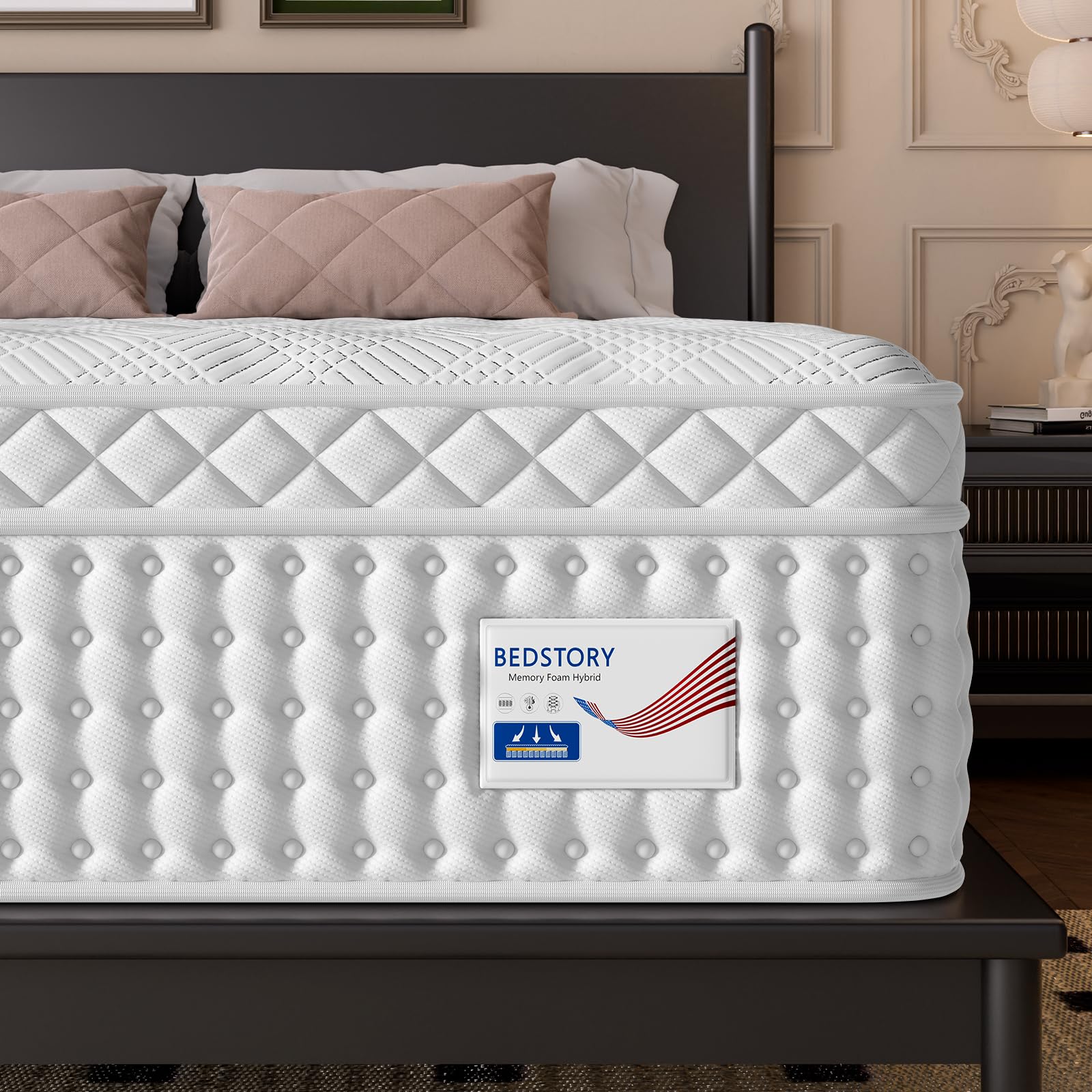
2. BedStory 14 Inch Extra Firm Queen Hybrid
At 14 inches deep, this is the most mattress you can put on a queen frame while still calling it extra firm.
Fourteen inches is the headline, and it is not decoration. Compare it to the FATHOM queen at 10 inches — that is a 4-inch gap, and on a standard frame it means the bed sits noticeably higher, closer to a hotel bed than a low platform setup. The extra volume comes from a pocket spring core wrapped in a soft rebound top layer over a strong support base, plus a zonal support system that firms up under your shoulders, waist and hips differently. It also weighs 87 pounds, so plan for two people to haul it upstairs.
Where it earns its place is the response from heavier and pregnant sleepers. The most-praised quality on this listing is overall build, with firmness close behind, and the story that repeats is back support. One pregnant buyer sharing it with her 230-pound husband reports both of them getting good support, less back pain and deeper sleep. That is exactly the pair a soft bed fails. The cover is fiberglass-free and the foams carry CertiPUR-US and Oeko-Tex certification, so it arrives without the chemical smell that plagues cheaper foam.
The catch is expansion and break-in. The maker asks for 48 to 72 hours, and because the top is memory foam over springs it starts genuinely extra firm and eases off after a week or two of sleeping. One buyer put it plainly: “It’s definitely firm but breaks in over time.” Give it a month before you decide. There is also a 365-night trial, which takes most of the risk out of trying an extra-firm bed.
The thickness payoff: a 14-inch profile gives you more comfort layers before you reach the springs, so you get firm support without the hard-on-the-bones feel of a thin foam slab.
Worth knowing: at 87 pounds this needs two people to move, and the extra-firm surface may be too much for a light side sleeper without a topper.
The verdict: the pick for couples and heavier sleepers who want a tall, extra-firm hybrid with a coil core and a long trial window.
The trade-off: it starts extra firm and needs weeks to settle — and it weighs enough that setup is a two-person job.
3. Breezleep Queen Mattress 12 Inch Hybrid

A 12-inch hybrid that lands between soft and firm — the safe middle for a room you do not sleep in every night.
What matters most here is the spring count and zoning, not the thickness. This is a 12-inch hybrid (a bed that mixes steel springs with foam): individually pocketed high-carbon steel springs, each wrapped in its own fabric so it moves on its own, topped with gel memory foam and a multi-zone support layer that firms up under shoulders, lumbar, hips and legs. The cover is polyester with an open-core structure intended to let heat escape, so you sleep cooler. At 12 inches it is neither a low-profile bunk bed nor a towering hotel slab — a comfortable middle for a standard queen frame.
What buyers respond to most is the construction — the build quality is the top-praised aspect on this listing, with value a close second. People who had never bought a boxed bed before describe being surprised at how well it matched beds that cost three times as much. Motion isolation is a real strength: independent springs absorb movement, so a partner turning over does not ripple across the surface. Setup is simple — unbox, unroll, wait.
Honest downside: this bed is medium firm, not a true firm. If your whole reason for buying is a hard, unyielding surface, this is the wrong pick — buyer feedback on comfort is mixed, with some side sleepers mentioning hip and shoulder soreness while back sleepers do well. Some reviewers also note springiness under pressure points. The maker recommends a full 72-hour aeration period (three days to air out), and following it matters more on a hybrid than on foam because the springs need to settle into the foam.
Who it is built for: guest rooms, first apartments, and anyone switching from an old coil bed who wants a supportive but not punishing surface.
Not the pick for: strict firmness seekers — this is medium firm and will feel soft if you want a hard bed — or side sleepers who need deep pressure relief at the hip.
Pick this if: the bed is for a guest room or a first boxed-mattress buy and you want coil support with motion isolation for two people.
Look elsewhere if: you need genuine firmness — the medium-firm surface here is closer to soft for a heavy side sleeper.
4. Avenco Queen Mattress 12 Inch Memory Foam

The firm edge is the selling point here — you can sit on the side to pull your socks on without the whole corner giving way.
Avenco builds this as a 12-inch memory foam queen with dual-layer foam and reinforced edges. That edge detail matters more than most people realize on an all-foam bed: without it, the perimeter sinks when you sit down, so the bed feels smaller than it is and you slide off the side. Here the edges are built up to hold firm across all sleeping positions. The cover is a removable fabric, the foams are CertiPUR-US certified, and the maker backs it with a 100-night trial, which is the shortest trial of the top picks here.
On feel, this is medium firm — described by owners as a balance of soft and supportive with a plush top and no excessive sinkage. The quality and comfort of the foam are the aspects most praised on the listing, and the reviews read like people who expected to be disappointed and were not. One reviewer noted it “fluffed up quickly and was a lot of bang for the buck.” It arrives compressed, unrolls by hand, and needs up to 72 hours to reach full height.
Here is the honest catch. Inflation is where the feedback splits — several buyers report it settling closer to 8 or 9 inches instead of the advertised 12, so measure after 72 hours and check it against the listed 80-by-60-inch footprint. Like most foam beds it is medium firm, not a hard bed, so it is a better fit for back and side sleepers than for someone hunting the hardest surface on the list.
what separates it: reinforced edges give you the full sleeping surface and a firm place to sit, which all-foam beds at this tier often lack.
The one to watch: not every unit reaches the full 12 inches — check expansion inside the 72-hour window and use the 100-night trial if it falls short.
Built for: couples who sit on the edge of the bed and anyone who wants a foam bed that does not lose its footprint at the perimeter.
Not for: hard-surface seekers — the medium-firm top will cradle rather than stop you — and buyers who cannot wait on expansion.
5. Zinus Memory Foam 10 Inch Green Tea Mattress, Queen

The most-reviewed bed on this list — and the honest read is that it is a great spare-room mattress and a short-lived main bed.
Zinus stacks this 10-inch queen in layers: 2.5 inches of conforming memory foam on top, 2 inches of airflow-enhancing comfort foam in the middle, and 5.5 inches of high-density support foam at the base. The memory foam is made with green tea and ActivCharcoal. A 10-year limited warranty covers it, and a queen built this way is rated up to 500 pounds. The firmness is listed as medium, so treat it as a soft-medium that leans firmer when the room is cold.
Comfort is the thing that wins people over — the response on that count dwarfs everything else, with value a distant second. The pattern is that owners are stunned a bed this inexpensive sleeps this well. A 6-foot-7, 250-pound sleeper and a 4-foot-11, 140-pound sleeper sharing one reported relief from hip, rib and back pain. Another owner, replacing a sagging coil bed, called it the best mattress owned and reported no dips after a year of monthly rotation.
The honest trade-off is durability on a main bed. It is built as a medium foam bed, and a longer-term report describes it softening after four months and needing rotation more often, which is the usual lifespan story for budget foam under a heavier body. Its edges are soft, so sitting on the side is not its strong suit. As a guest-room, first-apartment or one-year holdover bed, the value is hard to argue with.
What it gets right
- Green tea and ActivCharcoal memory foam with a CertiPUR-US certification for the foam.
- Five-layer foam stack with 5.5 inches of high-density support at the base.
- Very low entry-level price for a queen, with a 10-year limited warranty.
- Expands quickly in a warm room — many reach close to full height within hours.
What to plan around
- Best treated as a spare or guest bed — heavy nightly use is where the foam softens first.
- Soft edges make sitting on the side uncomfortable.
- Listed as medium, not firm — a strict firmness seeker may find it too cradling.
- All-foam build sleeps warmer than a hybrid coil bed.
The best-fit buyer: a spare room, guest bed or first apartment that gets a mattress a few nights a week rather than a decade of heavy nightly use.
Where it falls short: main-bed durability under a heavier sleeper and soft edges that give when you sit down.
6. Ottomanson 9 Inch Queen Firm Hybrid

Nine inches of genuine firmness for the frames every other mattress here is too tall for.
This one is defined by its height — 9 inches, the lowest on the list. That matters if your bed is a bunk, a trundle, a daybed or a platform frame with a low headboard: a 14-inch slab will swamp it, while a 9-inch bed sits flush. Under the surface it is a hybrid, with a pocket coil core and high-density foam layers to keep the middle from sagging. The cover is polyester and the foam is CertiPUR-US certified and fiberglass free.
For a slim bed it delivers a lot of firmness. Buyers compare it directly to a flagship extra-firm bed that costs many times more, and the response backs that up — comfort is the most-praised aspect, firmness the second. Back support is the frequent theme, and one long-term owner sleeping on a split-king adjustable frame says it gave “phenomenal sleep” once broken in. If you want a hard surface that pushes back instead of cupping you, this is the one.
The real caution is break-in time. A firm hybrid can start genuinely hard — one buyer on an adjustable base described side sleeping as painful for the first few nights, needing a topper, before the surface softened over months. Give it the stated 24 to 48 hours to expand, then plan on a few weeks of adjustment. Another buyer noted the corners did not fully pop out, which is common with compressed foam, and flagged the plastic packaging as heavy. It is also note the same buyer reported sweating in a hot room on this build, so a hot sleeper should add a breathable topper.
The fit: bunk beds, trundles, daybeds and low platform frames that cannot take a deep mattress — plus anyone who genuinely wants a hard bed.
The honest limit: it starts very firm and can be rough on side sleepers until it breaks in, and the compressed corners may not fully round out.
7. RRESTA Firm 14 Inch Hybrid Mattress, Full

A 14-inch firm hybrid built for the sleeper who bottoms out on foam — and this one ships as a full, not a queen.
This is the only full-size bed here, at 74 by 54 by 14 inches, so check your frame before you order — it will not slot into a queen base. The build is a seven-layer hybrid: individually wrapped pocketed coils in a high-gauge steel core, gel-infused memory foam on top, and a zoned support system tuned to the lumbar zone. The maker claims the coil core absorbs 90% of motion transfer, and the perimeter uses a reinforced steel coil edge. The foams are CertiPUR-US and OEKO-TEX certified and the build is fiberglass-free. It weighs 76.2 pounds.
Heavier sleepers should look here first, and the coil core is why — the foam-and-spring stack is engineered to stop you pressing through to the coils and feeling them, which is the complaint solid foam beds run into at higher weights. Owners routinely compare it to far pricier names. Build quality is the most-praised aspect on this listing, firmness second, and owners repeatedly report waking without hip or back aches. One owner who moved to it after years on higher-end beds called it the best bed they had owned.
Now the two catches, both real. It is heavy and awkward — the maker’s own note and owner reports agree it takes two people to move, and it gets heavier once it sucks in air. The second is edge support: despite the reinforced perimeter, a small set of owners mention the edges sinking when they sat down soon after unpacking, so if you need to sit on the side to dress, plan for that. Allow 48 to 72 hours to expand and give it a few nights of adjustment — one buyer found it firmer than expected at first, then grew to love it.
Why the coil core earns its keep: a 7-layer stack with a high-gauge pocketed coil core and zoned lumbar support is built to hold heavier bodies on top of the surface rather than letting them sink through.
Before you order: confirm you have a full-size frame, and line up a second person for setup — 76.2 pounds rolled up is a two-person lift.
Right for: heavier sleepers and couples who want a firm coil bed with a full-size footprint and a long trial window.
Size caution: this is a full, not a queen — and the edge support is the one part of the build that does not always live up to the label.
Know the Specs
Firmness vs. Construction
Firmness is what you feel on top; construction is what keeps it firm. A memory foam bed relies on its base support layer to stop the top from sinking — that is why a well-built 10-inch foam bed can feel firmer than a cheap 14-inch one. A hybrid pairs pocket coils (independent springs, each wrapped in fabric) with foam on top, so the springs handle support and the foam handles cushioning. A pocket coil build usually holds firmer under a heavy sleeper and isolates motion better for couples, while an all-foam build conforms more closely to your shape. Firmness labels on listings are relative — one brand’s firm is another’s medium — so compare construction, not just the word.
Thickness and What It Changes
Thickness tells you how deep the comfort layers run before you hit the support core, and how high the bed will sit. A 9-inch bed is low-profile and built for bunks, trundles and platform frames. A 10-inch queen is the boxed-bed standard. A 12-inch build adds comfort layers and a more cushioned feel. A 14-inch bed has the deepest stack and sits highest, which changes what frame it suits. Match the thickness to your furniture first, then to the feel you want — and remember that more inches does not automatically mean firmer.
Expansion and Break-In Time
Every bed here arrives compressed and rolled. Most manufacturers ask for 24 to 72 hours for the foam to reach full height, and cold delivery weather slows that down. A firm hybrid often starts harder than its final feel and softens over the first weeks of sleeping, so the first night is not the real test. Measure the height after the expansion window and, if it is short, use the trial period rather than assuming you bought a dud.
Edge Support, Fiberglass and Certification
Edge support is whether the perimeter stays firm when you sit on it — important on an all-foam bed, where a soft edge makes the usable surface feel smaller. Fiberglass is the fire barrier some cheap foam covers use; a fiberglass-free cover avoids the risk of glass fibers escaping if the cover tears. CertiPUR-US is a foam certification for content and durability, and Oeko-Tex covers the fabric. Neither guarantees firmness, but both tell you what is inside the bed before it is delivered.
Common Questions
How long before a firm mattress in a box is ready to sleep on?
Is a firm mattress good for back pain?
Will a 9-inch mattress fit a standard queen frame?
What is the difference between firm and extra firm?
Do these mattresses need a box spring?
How do I know a budget foam mattress will not sag in a year?
Is fiberglass used in cheap memory foam mattresses?
Should I add a mattress topper to a firm bed?
How heavy are these mattresses to move upstairs?
Which of these suits a hot sleeper best?
The Bottom Line
For most people hunting a firm bed on a tight budget, the FATHOM Firm Queen 10 Inch is the one worth buying — it holds a genuinely firm feel, ships with a removable fiberglass-free cover, and does not soften under body heat. If you want extra-deep support for a couple or a heavier sleeper, the BedStory 14 Inch Extra Firm gives you the tallest, hardest surface here at 14 inches. And if you are working with a low frame or a bunk bed, the Ottomanson 9 Inch is the one to reach for, because a hard mattress that actually fits the frame you own beats a deeper one that does not.
How we choose
We do not accept paid placement. Every pick is matched to a real buyer and a real use-case; we do not hands-on test units.
Sources
Specifications: manufacturer listings and product documentation. Review insights: verified customer reviews, as of October 2026. Pricing: not shown on this page (it changes often); check the current price via the retailer link.
As an Amazon Associate, Aappliancez earns from qualifying purchases. This does not affect which products we feature.