Disclosure: Some links in this post are affiliate links. As an Amazon Associate I earn from qualifying purchases, at no extra cost to you. Learn more
Specs are compiled from manufacturer listings and verified buyer reviews and can change over time — please confirm the key details on the product page before buying.
Most people buying a propane heater for a big room get burned by one number: the square-footage claim on the box. A unit rated for 450 square feet will not warm an open-plan living room plus kitchen, because heat has to travel across that space and through doorways. The picks below are the ones that actually move enough heat for large rooms, sorted by what each one does best.
This guide is built by comparing the manufacturers’ published specifications and the patterns across verified customer reviews, so you get each pick’s real strengths and trade-offs instead of marketing spin.
You will see the difference between ventless blue-flame convection heat, radiant panels, and forced-air blowers, and which one suits a garage versus a finished basement. Every unit here is measured on the numbers that decide whether a large room stays warm, so this is a straight read on the indoor propane heaters for large rooms worth your money.
Top Picks


How To Choose The Best Indoor Propane Heaters for Large Rooms
A large room changes what matters in a propane heater. You are not just fighting cold air; you are fighting distance, doorways, and cold floors. A heater that feels fierce from two feet away can leave the far end of a 1,000-square-foot room chilly. So the first job is matching the heat method to the shape of your space.
Match the heating method to your room shape
Radiant heaters warm people and objects directly, the way sunlight does, so they work well when you sit in front of them on a patio or in a workshop. Convection and blue-flame heaters warm the air, which then drifts across a room. Forced-air heaters push that warm air with a fan, so they reach further into an open garage or barn. If your large room is one open box, think convection or forced air. If it is a space where you sit in one spot, radiant can be plenty.
Read BTU output before the square-foot number
BTU stands for British thermal unit, a measure of heat energy. A heater’s BTU output tells you how much heat it produces per hour. The square-footage rating is a rough estimate made under ideal conditions, so treat it as a ceiling, not a promise. A room with high ceilings, big windows, or open doorways needs more BTUs than its floor area suggests. Buy the higher-BTU unit when your room sits at the edge of a rating.
Decide between ventless, vented, and direct-vent
A ventless heater burns propane inside the room and releases the exhaust, including moisture, into your air. That is why ventless units are often used in ventilated spaces and why some owners run a fan or dehumidifier alongside them. A direct-vent heater pulls combustion air from outside and sends exhaust out through a wall, so it needs a vent hole but keeps indoor air cleaner. Vented units work during a power outage with no blower, which is why they show up in cabins and sheds.
Check the safety shut-offs and the certification
Look for an oxygen depletion sensor (ODS), a small probe that shuts the unit down if oxygen drops too low. Tip-over protection cuts the gas if the heater gets knocked over. Certification matters too: CSA and ANSI are independent safety standards bodies, and a unit carrying either mark has been tested against published safety rules. For a heater burning fuel inside your home, these are the features to confirm first.
Side-by-Side Comparison
| Model | Best For | Heat Output | Coverage | Heating Method | Amazon |
|---|---|---|---|---|---|
| GASLAND MHA18B★ Best Overall | Garages and workshops | 18,000 BTU | 450 sq. ft. | Radiant | Amazon |
| ProCom Ventless QNSD250TBiggest Coverage | Big open living spaces | 25,000 BTU | 1,100 sq. ft. | Ventless fireplace | Amazon |
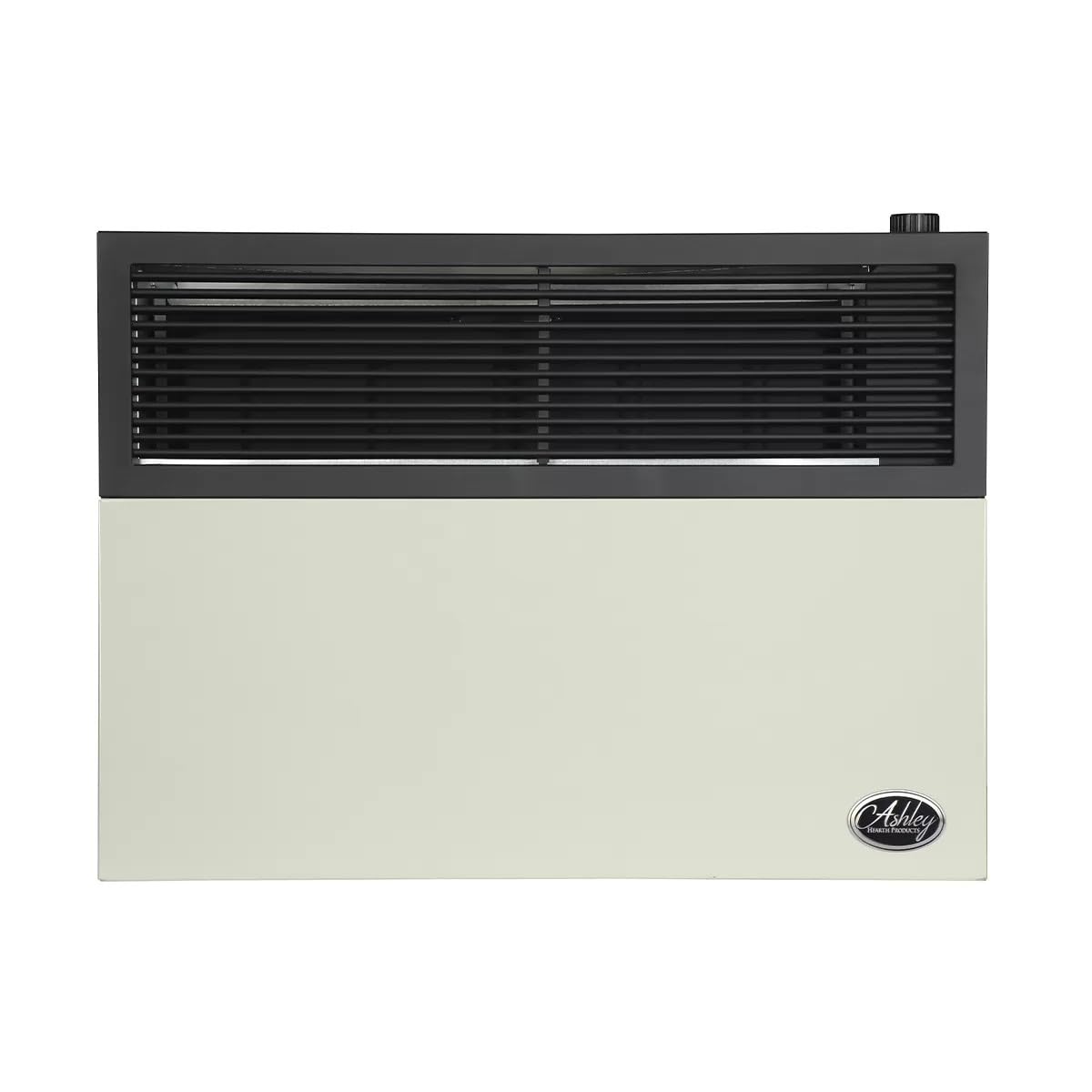
| Ashley Hearth Direct VentBest Vented Pick | Cabins and mobile homes | 17,000 BTU | 570 sq. ft. | Radiant, direct vent | Amazon |
| Mr. Heater 20,000 BTU | Bedrooms and backup heat | 20,000 BTU | 700 sq. ft. | Convection, blue flame | Amazon |
| PAULINN 3-Mode | Patios and well-ventilated rooms | 18,000 BTU | 450 sq. ft. | Radiant | Amazon |
| THE BOSS Portable | Camping and porch sitting | 12,000 BTU | 400 sq. ft. | Radiant | Amazon |
| Remington LP Forced Air | Job sites and large garages | 60,000 BTU | 1,500 sq. ft. | Forced air | Amazon |
| ProCom ML100TBA-B | Bedrooms and small living rooms | 10,000 BTU | 500 sq. ft. | Blue flame, forced air | Amazon |
Detailed Reviews
1. GASLAND MHA18B Propane Heater, 18,000 BTU
Our pick — 4.5+★ from 1,500+ verified ratings; the strongest balance of quality and price.
A cabinet heater that rolls where you need it and hides the tank out of sight.
The 18,000 BTU radiant element warms spaces up to 450 square feet, and buyers praise its heat output above all else. Radiant heat means it warms the objects and people in front of it rather than only the air, so it feels warm fast when you roll it into a cold garage. The built-in wheels and easy-carry handle move it between rooms without a lift. The tank sits inside the cabinet, which keeps a 20-pound cylinder out of view.
You get heat with no electricity at all — just hook up a 20-pound liquid propane cylinder (the standard grill-style tank). That matters when a storm knocks the power out, because the heater keeps running when everything else quits. Buyers report it “efficiently heats open-concept rooms fast,” and they like the fuel use too, with one noting “3 tank refills over winter.” It carries CSA certification (a safety standard for gas appliances), plus a tip-over shut-off and a low-oxygen shut-off that cut the gas if the unit gets knocked over or oxygen drops. Three heat modes — high, medium, low — let you dial it back once the room is warm.
The honest catch is starting it. The piezo igniter takes patience, and some owners find the low setting fussy to light on the first try. A rare unit arrives with a connection that will not seat on a standard tank, and reliability is the one split verdict on this heater. If your room is above the 450-square-foot rating, this is also not the pick — step up to the ProCom ventless below, which covers 1,100 square feet at 25,000 BTU. This heater belongs in a garage, workshop, or ventilated back room where you want heat now and no power draw.
What earns it top spot
- 18,000 BTU radiant heat for spaces up to 450 square feet.
- Three modes (high, medium, low) let you drop the burn once it is warm.
- Built-in wheels and easy-carry handle make it truly portable.
- CSA certified with tip-over and low-oxygen shut-offs.
- Runs with no electricity at all, so it works during an outage.
Where it asks for patience
- The piezo igniter can take a few tries before it catches.
- Front-facing radiant heat is intense up close, so keep pets and clutter clear.
- 450 square feet is not enough for an open-plan 1,000-square-foot room.
Grab this one if: you want a rolling garage and workshop heater that never touches your electric bill.
Think twice if: your room runs past 450 square feet — its smaller footprint and radiant throw suit a workshop better than a whole-house open plan.
2. ProCom Ventless 25,000 BTU Dual Fuel Fireplace
A hand-painted log fireplace that throws real heat across a wide open room.
If your room is genuinely large, this is the unit built for it. The 25,000 BTU burner covers up to 1,100 square feet, and that is a full 39% more heat output than the GASLAND above — 25,000 BTU versus 18,000 BTU. The cast-iron frame and hand-painted concrete logs give you a fireplace look rather than a metal box, and it runs on either liquid propane or natural gas. The built-in thermostat cycles the flame on and off to hold a temperature, so you are not babysitting a dial.
Owners describe this one heating an entire home, not just one room: it runs comfortably in a 1,500-square-foot house with no blower at all. One owner reports burning roughly 50-55 gallons of propane over 30 days on the lowest setting and credits it with cutting a substantial electric bill. The refractory ceramic logs are built to hold up, and the case stays cool to the touch. Assembly is simple — attach the feet and set the logs — and the fuel hookup uses a standard 3/8-inch flare fitting.
Two things to plan for. Ventless operation releases moisture as it burns, so in a tight, well-sealed room you may want a vent fan or dehumidifier to keep the air comfortable. The thermostat also drifts: it can shift its on-off point as barometric pressure changes through the day. At 50 pounds and 13 inches deep, this is furniture-sized, so give it floor space. The result is the highest-coverage ventless console on this list, and a favorite for big, open living areas.
Where it shines: 1,100 square feet of coverage from 25,000 BTUs is the biggest reach in this lineup, and the dual fuel option means you can switch from a tank to natural gas without buying another unit.
The trade-off to plan around: moisture and a thermostat that wanders means it is not a set-and-forget appliance — give it a vent fan and a bit of attention.
The big-room answer: pick this if you are heating a wide, finished living space where you want the fireplace look.
Rethink it if: you need a quick-cycling thermostat for a bedroom, since the flame set runs smoother than the temperature control.
3. Ashley Hearth Direct Vent Propane Wall Heater
A wall-mounted direct-vent unit that keeps exhaust out of your air and runs through a blackout.
The 17,000 BTU burner heats 570 square feet, but the real story here is the sealed burn system with matchless piezo ignition. A 58-pound cast unit, this one gets its combustion air from outside and sends exhaust out through a wall — the complete vent kit comes in the box, with heat shield, pipes, flashing, cap, and connecting rod. If you are sensitive to the moisture and exhaust a ventless heater puts into a room, that sealed burn is the feature you pay for.
Installation is what people notice first — the instructions are clear and the setup is straightforward, though you will be cutting a significant hole in the wall for the vent. Two people make the job much easier. Once mounted, it runs quietly with no blower, so it works during a power outage. In a 10×16 insulated shed in northern Wisconsin, one unit held 65 degrees inside on the lowest setting with outside temperatures at 10 to 15 below. On performance, most owners find the heat solid for the space it is rated to cover.
Here is the honest ledger. The quality is the most-discussed topic on this heater and it earns a split verdict, with some units delivering on the promise and others not. The piezo pilot igniter can take real effort to light, and a few owners note the heat output landing below expectations in a poorly insulated space. Durability is the recurring concern: the burner is simple and serviceable, but replacement parts can be hard to source. Measure your wall before you commit — this is a permanent fixture, not a roll-around heater.
Why it earns a spot
- Direct vent design keeps exhaust and moisture outdoors.
- Full vent kit included, so no extra parts to order.
- Runs silently without a blower, even in a blackout.
- Stainless ported burner with a safety pilot and pressure regulator.
What to weigh first
- Install needs a big wall hole and usually two people.
- The piezo igniter can be slow to catch.
- It is a 58-pound wall fixture, so you cannot reposition it.
Right fit for: a cabin, mobile home, or shed where a permanent wall heater and clean indoor air matter more than portability.
Less suitable for: renters or anyone who cannot cut a vent hole — this one stays where you install it.
4. Mr. Heater 20,000 BTU Vent Free Blue Flame Heater
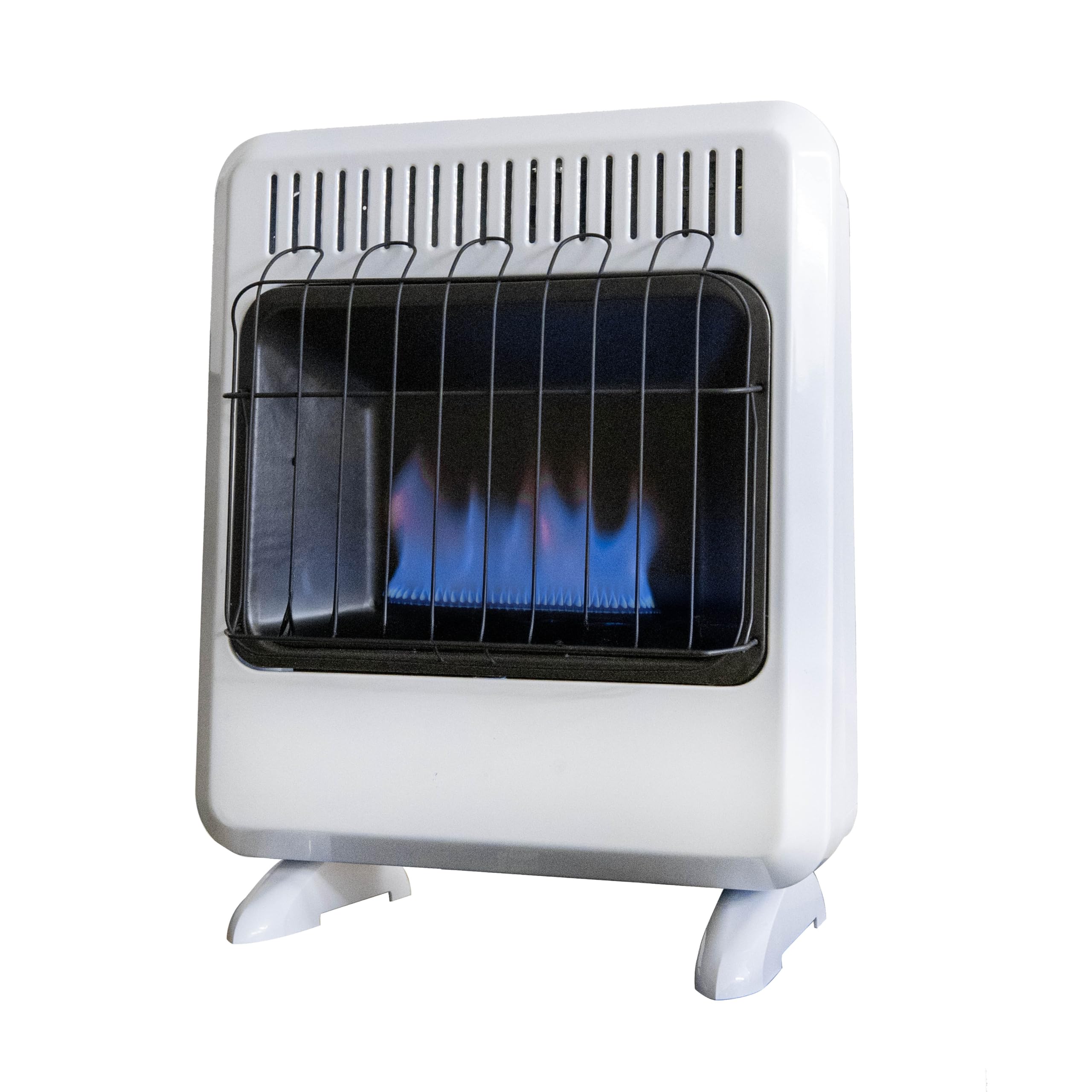
A blue-flame convection heater that moves warm air through a whole floor without a sound.
Twenty thousand BTUs covering up to 700 square feet, and the blue-flame burner warms the air so it drifts through doorways and down hallways. That is the difference between this and the radiant GASLAND — convection heat travels, so it can reach a second bedroom or a long hallway rather than only the spot in front of the unit. It runs off natural gas, needs no electricity, and includes the wall mounting hardware. A battery-operated electronic ignition runs off one AA battery.
Buyers talk about the silence most: owners moving up from a louder 30,000 BTU unit describe it as totally silent. Owners who moved to this from an older 30,000 BTU unit with a loud hiss describe it as totally silent, holding a steady temperature. Performance is the top praise: it heats entire two-bedroom homes and large bedrooms with ease, and One owner reports cutting a heating bill in half compared with an oil-filled radiator.. The adjustable thermostat holds temperature accurately enough that you mostly leave it alone. It also works during power outages, since there is no electric draw.
The fan kit is sold separately, and that is worth knowing: with no blower, the heat vents upward through louvers rather than straight out. A ceiling fan helps push that warm air around. One owner found the optional fan too close to the wall to move much air and not worth buying. Like any blue-flame heater, it does emit some moisture and combustion output into the room, so a room with decent air circulation suits it best. Size your expectation honestly: 20,000 BTU is the right call for a 300-square-foot open area or a two-bedroom floor, not a cavernous workshop.
The quiet-hands verdict: no noise, no electricity, no venting — just a steady blue flame doing its work.
The one thing to plan: without the optional fan, warm air rises rather than reaching across the floor, so a ceiling fan earns its keep in a tall room.
Reach for it when: you have natural gas in the house and want silent, whole-floor backup heat that survives a blackout.
Look elsewhere if: you only have propane available — this model runs on natural gas, so check the fuel line before you buy.
5. PAULINN 3-Mode Propane Heater, 6,000 to 18,000 BTU
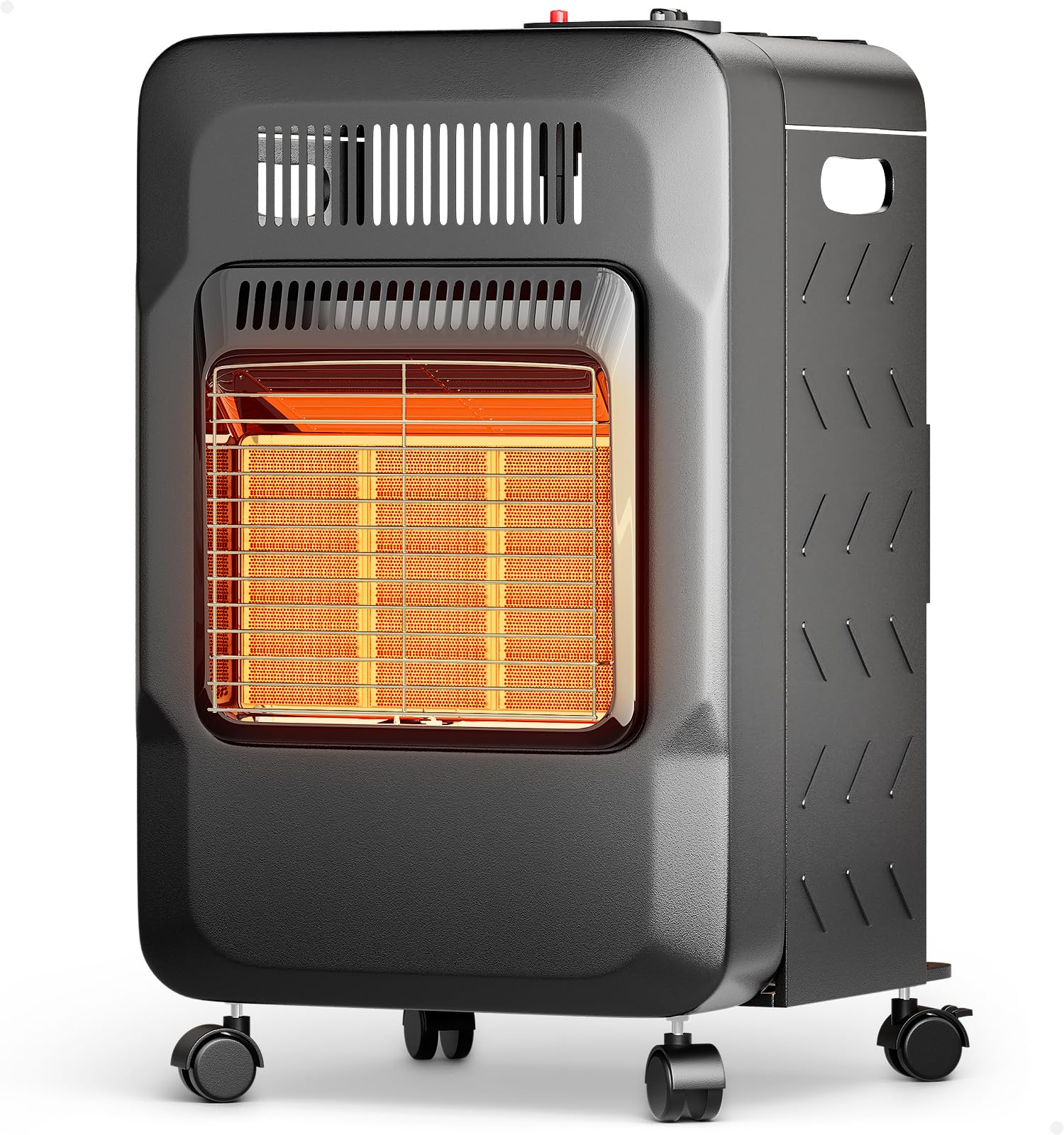
Runs up to 69 hours on low, folds flat, and rolls on braked casters.
Three heat modes at 6,000, 12,000, and 18,000 BTU give you a wide dial to work with, and it warms up to 450 square feet. The low setting is the standout number: at 6,000 BTU it can run for up to 69 hours on a tank, which makes it far friendlier to a full-size propane cylinder than a small camping unit. Four casters with brakes let it roll between rooms and then stop where you want it. It folds to sit in a corner or against a wall.
Setup is the thing most owners talk about — assembly is quick with only a few steps needed to get it running. It heats up a screened-in breezeway nicely, and owners note the low, medium, and high options make it adaptable. The low-oxygen and tip-over protections cut the gas automatically if oxygen drops or the unit tips. It runs on a regular grill-size propane tank, so no special cylinder needed. Noise stays at no more than 32 dB, which is quieter than a normal conversation.
The catch is build quality. Several owners find the metal a little thin, and on carpet the base can twist when you move it — a hard floor suits it better. The igniter is a known wear item, and a rechargeable candle lighter is a smart backup to keep on hand. One unit showed up with a control knob that did not adjust properly between modes. None of that breaks the value, but this is an entry-level cabinet heater rather than a cast-iron fixture. For a patio, garage, or breezeway where you want flexible heat and long burn time on low, it makes a convincing case.
The case for it
- Three BTU levels: 6,000, 12,000, and 18,000.
- Up to 69 hours of run time on low at 6,000 BTU.
- Folds flat and rolls on four braked casters.
- Low-oxygen and tip-over shut-offs built in.
What you give up
- Thin steel, with a base that twists on carpet.
- The igniter wears out, so keep a lighter as backup.
- Assembly quality varies from unit to unit.
Best match for: a breezeway, patio, or well-ventilated garage where long run time and fold-away storage beat heavy cast iron.
Pass on it if: you want a heirloom-quality metal cabinet — this one trades beefy steel for light weight and a low price.
6. THE BOSS Portable Propane Heater, 12,000 BTU

The 9.3-pound heater you carry one-handed to a deer blind or a cold porch.
At 9.3 pounds and 8 inches deep, this is the most carry-friendly unit on the list — a comfortable handle makes it a one-hand job to move from truck to tent to deck. It delivers 12,000 BTU across three heat levels covering up to 400 square feet, and the radiant burner warms whatever is in front of it within moments. A simple twist ignition gets it going. It also has built-in LED lighting, which you press a button to switch on once batteries are fitted — a nice touch for a garden dinner or a tent at night.
This heater shines at what it was built for: cold swim meet mornings, all-day sporting events, and four-person hunting blinds in 20-degree weather. Owners describe the heat as serious on low, and it is not loud. It carries CSA certification with automatic tip-over shut-off and low-oxygen detection, so you get real safety features on a portable unit. On a 1-pound canister it lasts a few hours, and with a converter hose to a 20-pound tank it heats for days.
Two honest notes. The 1-pound propane canisters run out fast if you use it heavily, so budget for an adapter hose to a grill tank. Durability is the split verdict — the housing is solid, but the unit is not built for rough handling, and one buyer received a unit that would not work with no easy fix from support. Its coverage at 400 square feet is the smallest here, and it is rated for outdoor use, so it is not the one for a finished living room.
The portability play: 9.3 pounds, one handle, 12,000 BTU, and a built-in light — this is camp furniture, not household heating.
The limit to respect: small canisters drain quickly, so a converter hose to a 20-pound tank turns a few hours of heat into days.
Made for: campers, hunters, and porch sitters who need heat that travels light.
Not the one for: a permanently cold living room — at 400 square feet and rated for outdoor use, it is a companion heater, not a house heater.
7. Remington LP Forced Air Heater, 60,000 BTU
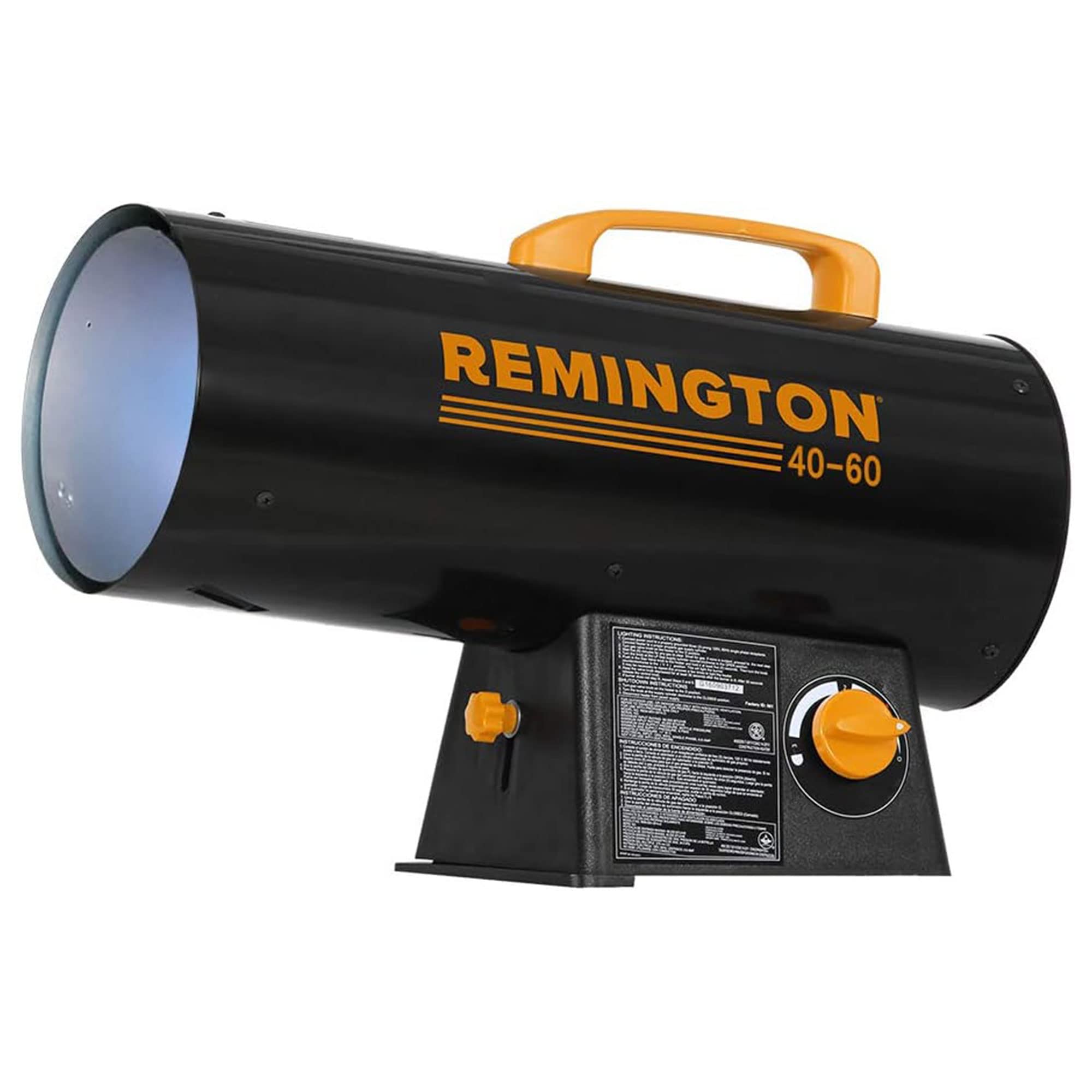
A 60,000 BTU blower that turns a cold garage warm in the time it takes to make coffee.
No other pick here throws heat like this: 60,000 BTUs of forced air across up to 1,500 square feet. Forced air means a blower drives the warm air across the room rather than letting it rise and pool near the ceiling. That is why it heats a garage to comfort in 10 to 20 minutes even with a window open. It weighs just 11 pounds and runs on a 20-pound propane tank, with a 10-foot hose and regulator included. Variable heat settings and an adjustable height let you point it where the cold is worst.
The tough steel housing is built for job sites and barns, and the electronic ignition starts it quickly. Safety features include a thermocouple, a high-temperature limit shut-off, and a flame-out fuel cut-off that stops the gas if the flame goes out. On performance and heat output, owners consistently find it a serious heater, and it beats electric heaters on warming speed. It is the pick for a large open space where you want quick, high-volume heat rather than a warm glow.
Be honest about the noise: forced-air heaters are loud, and the blower here is no exception — buyers who want a quiet room should look at the Mr. Heater. The power cord is also very short, so you need an outlet near the unit. The piezo igniter runs continuously while it operates, which some owners watch for wear. It is rated for outdoor use, so a garage with good ventilation suits it — this is not a sealed living-space unit.
What makes it the powerhouse
- 60,000 BTU forced air warms up to 1,500 square feet.
- Only 11 pounds, with a handle for moving around a job site.
- 10-foot hose and regulator included.
- Thermocouple, high-temp limit, and flame-out shut-off.
What you live with
- Loud blower, not suited to a quiet room.
- The power cord is very short, so plan your outlet.
- Rated for outdoor use, so it needs ventilated space.
Pick it for: a large garage, workshop, or barn where you need the cold gone in minutes and noise does not matter.
Skip the idea of: using it in a finished room — forced air this loud and this big belongs in a work zone.
8. ProCom ML100TBA-B Ventless Blue Flame Heater, 10,000 BTU

A slim blue-flame heater you can hang on the wall or stand in a corner.
At 10,000 BTU the output is the lowest here, covering up to 500 square feet, so set your expectations before you buy. This is the unit for a bedroom, office, or small living room rather than the whole open floor. The slim profile lets it mount on a wall with the included hardware or stand on the included base feet, so it fits where a cabinet heater cannot. Three thermostat settings — high, medium, low — let you hold a set temperature. It needs no electricity, which makes it a backup-heat option during outages.
Fast heat-up and accurate temperature control are what make this heater work: it holds a room warm on the low settings once it is running. Compact size is the other consistent praise — it does not eat floor space. In a 34-foot RV, it heats the whole living area on the pilot setting overnight. A push-button ignition handles startup, and a built-in oxygen depletion sensor shuts it down immediately if carbon monoxide or low oxygen is detected. It carries ANSI certification for safety.
The honest drawbacks are real but manageable. The pilot flame is a bit noisy on this model, and some owners find the gas valve needs cleaning from time to time — a dirty sensor can trip the shut-off until you clear it. The bigger concern is durability: a share of units stop turning on after a short time. That is a fit note for a buyer who wants a low-cost backup heater rather than a primary whole-house unit. In a small bedroom or camper where 10,000 BTU is plenty, it does the job on very little fuel.
The small-space answer: 10,000 BTU, wall-or-floor mounting, and a slim body that fits where nothing else will.
The thing to weigh: at 500 square feet of coverage this is a bedroom and camper heater, not a large-room solution, and a short service life is the risk to factor in.
Made for: a bedroom, office, or RV where you want a low-BTU blue-flame heater that mounts anywhere.
Not a fit for: a large open room or a buyer who wants one heater to last many seasons.
Know the Specs
BTU Output
A BTU is a measure of heat energy, and the BTU rating tells you how much heat the heater produces per hour. Higher BTUs mean more heat, but they also mean more propane used. A 10,000 BTU unit suits a bedroom and sips fuel; a 60,000 BTU forced-air heater will warm a large garage but drink from a 20-pound tank. Match the BTU number to your room size and how fast you want the space warm.
Heating Method
Radiant heaters warm objects and people directly, so they feel warm fast and work well from one spot. Convection and blue-flame heaters warm the air, which then drifts through a room. Forced-air heaters use a blower to push warm air across a large space quickly, at the cost of noise. The method decides whether heat stays near the unit or reaches the far wall.
Ventless vs Direct Vent
A ventless heater releases its combustion exhaust, including moisture, into the room, so it needs ventilation and suits well-circulated spaces. A direct-vent heater pulls air from outside and sends exhaust out through a wall, keeping indoor air cleaner but requiring a vent hole. Neither is better in every case — the venting method should match your room’s airflow.
Safety Shut-Offs
An oxygen depletion sensor, often called ODS or low-oxygen protection, shuts the heater down if oxygen in the room drops too low. Tip-over protection cuts the gas if the heater gets knocked over. Look for CSA or ANSI certification, which means the unit was tested against published safety standards. These features matter most when the heater runs during a power outage with no fan moving the air.
Common Questions
How many BTUs do I need to heat a large room with a propane heater?
Can I use a ventless propane heater indoors safely?
How long will a 20-pound propane tank last with a space heater?
Is a radiant or a blue-flame heater better for a big room?
Do these propane heaters work during a power outage?
How do I light a piezo-ignition propane heater?
Will a ventless propane heater add moisture to my room?
Can a large-room propane heater work with natural gas instead?
What safety certifications should a propane heater have?
How much ventilation does an indoor propane heater need?
The Bottom Line
For most large rooms, the indoor propane heaters for large rooms winner is the GASLAND MHA18B. It delivers 18,000 BTU of radiant heat from a rolling cabinet that hides its 20-pound tank and runs with no electricity. That makes it a roll-around workhorse for garages and workshops, backed by 4.5+ stars across 1,500+ ratings. If your room is genuinely wide and open, grab the ProCom Ventless QNSD250T, which covers 1,100 square feet at 25,000 BTU. And for silent, whole-floor backup heat that runs through a blackout with no venting, the Mr. Heater 20,000 BTU is the one to reach for.
How we choose
We do not accept paid placement. Every pick is matched to a real buyer and a real use-case; we do not hands-on test units.
Sources
Specifications: manufacturer listings and product documentation. Review insights: verified customer reviews, as of October 2026. Pricing: not shown on this page (it changes often); check the current price via the retailer link.
As an Amazon Associate, Aappliancez earns from qualifying purchases. This does not affect which products we feature.