Disclosure: Some links in this post are affiliate links. As an Amazon Associate I earn from qualifying purchases, at no extra cost to you. Learn more
Specs are compiled from manufacturer listings and verified buyer reviews and can change over time — please confirm the key details on the product page before buying.
If your dryer sits in a basement, apartment, condo, or an interior laundry room with no outside wall to vent through, you do not have to accept damp air and lint dust drifting through the house. An indoor dryer vent system catches the lint and moisture at the machine and sends warm, filtered air back into the room instead of pushing it through a duct that goes nowhere. The one you should buy first is the HG Power Metal Indoor Dryer Vent Kit — a sturdy metal box with a safety flap that pops open when it needs cleaning. Below you will find every pick that actually works for electric dryers, what each one does well, and the honest catch to plan around.
This guide is built by comparing the manufacturers’ published specifications and the patterns across verified customer reviews, so you get each pick’s real strengths and trade-offs instead of marketing spin.
Ductless drying means moisture and heat have to go somewhere, and knowing how each kit handles both is the whole decision. That single question is what shapes every pick in this indoor dryer vent system comparison.
Top Picks


How To Choose The Best Indoor Dryer Vent System
An indoor dryer vent has one job: catch the lint before it settles on your shelves, and release the warm air without turning your laundry room into a swamp. That sounds simple, but doing it well is harder. Each model here handles that job differently, and those differences are what you are really choosing between.
Water trap or dry screen — pick your cleaning routine
Water-bucket designs like the Dundas Jafine and Deflecto kits use a reservoir of water to catch lint as the air passes through, which pulls out fine dust but means draining and refilling a bucket. Metal box designs like the HG Power and HOOMESUN units use stainless steel and polyester screens instead, so you pull a tray or open a latch and tip the fuzz into the bin. Neither is wrong. Water traps tend to hold more of the fine dust; dry screens are quicker to service between loads.
The safety flap is not a gimmick
A clogged filter chokes airflow, and a choked dryer runs hot. Several kits here carry a spring-loaded flap near the duct connection that swings open once the screen loads up, dumping air sideways as a visible warning. If you are the kind of person who forgets maintenance until something smells hot, that flap is worth prioritizing over a slightly lower sticker.
Moisture has to go somewhere
Every machine on this list releases the water from your wet clothes into the room as humidity. In winter that is a bonus — free warmth and added moisture in dry air. In summer, or in a small sealed closet, it fogs windows and fights your air conditioning. Plan for a cracked window, a dehumidifier, or a room with a door you can leave open.
Electric only, every time
Every kit in this guide works with electric clothes dryers. A gas dryer produces combustion gases that must go outside, so you cannot recirculate that exhaust indoors. If your dryer burns gas, skip all of these.
Side-by-Side Comparison
| Model | Best For | Trap Type | Duct Supplied | Housing | Amazon |
|---|---|---|---|---|---|
| HG Power Metal Indoor Dryer Vent Kit★ Best Overall | Best overall | Stainless + polyester screen | 4-inch x 8 ft | Metal | Amazon |
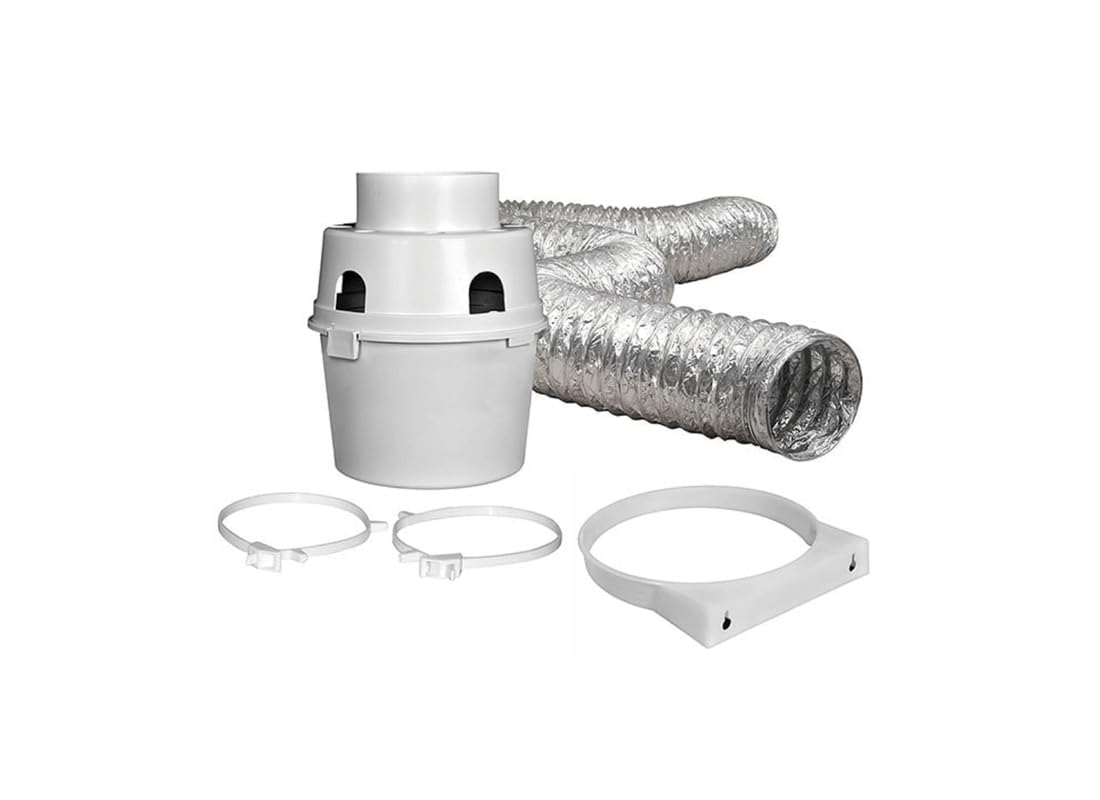
| Dundas Jafine TDIDVKZWBudget Champion | Budget apartments | Plastic water reservoir | 4-inch x 5 ft | Plastic | Amazon |
| Deflecto Lint Trap KitSimple Fix | Simple low-cost fix | Water reservoir + screen | 4-inch x 5 ft | Plastic | Amazon |
| AMI PARTS TDIDVKZW | Portable dryers | Cotton + iron mesh + water | 4-inch x 5 ft | Plastic | Amazon |
| NOORNY 3 in 1 | Small-space setup | Water + steel mesh + high-density filter | 4-inch x 5 ft | Stainless steel | Amazon |
| HOOMESUN Metal Vent Kit | Wall-mounted simplicity | Stainless + polyester screen | 4-inch x 8 ft | Metal | Amazon |
| HG Power Metal Duct Lint Trap | Long duct runs | Dual stainless screen | 4-inch x 8 ft | Metal | Amazon |
| HOOMESUN Lint Trap (Vertical) | Booster fan setups | Dual metal screen | 4-inch x 8 ft | Metal | Amazon |
| FUNMAS 3-in-1 | Calibrated safety | Steel screen + polyester + water drawer | Aluminum duct recommended | Plastic | Amazon |
| HomeDryer 3 in 1 | Larger layout coverage | Stainless + polyester + extractor | Expandable to 88 in | Plastic | Amazon |
| BetterVent by ADR | No water, no mess | Patented dry filter pad | — | ABS plastic | Amazon |
Detailed Reviews
1. HG Power Metal Indoor Dryer Vent Kit
Our pick — 4.5+★ from 750+ verified ratings; the strongest balance of quality and price.
A metal box with a flap that tells you when it is full.
The single spec that defines this kit is its metal housing — a sturdy shell that resists high temperatures, which matters because lint is the fuel in most dryer vent fires. Inside sits a stainless steel filter plus a polyester filter, and together they grab lint, dust, and pet hair before any of it reaches the room. You get a 4-inch diameter, 8-foot long hose in the box, along with 4 polyester filters, 2 clamps, and installation screws. More hose means you can set the box further from the machine and route it around obstacles.
The safety flap is the feature you will come to rely on. When the filter loads up or you forget a cleaning, that flap swings open automatically and stops the dryer from overheating. Treat it as a built-in reminder rather than a warning light. Cleaning runs on a two-to-three-load rhythm, and the stainless steel screen only needs washing — the polyester filters can be hand washed and reused. Warm air recirculates into the house in cold months, which owners tend to notice as a genuine bonus in winter. What wins people over most is the build: the metal construction draws far more praise than the plastic rivals, and the installation is short and uneventful.
Here is the honest catch. Recirculated air carries moisture, and this unit does put a fair amount of it into the room. Plan on a cracked window or a dehumidifier if your laundry space is small or sealed. A few buyers also mention the humidity stacking up on back-to-back loads. As owners put it: “Easy 10-min install with included hose, clamps, lint trap/reservoir.” That sums up the experience for most people — quick to hang, straightforward to live with.
What earns the top spot
- Metal housing resists high heat, unlike the plastic-bucket kits below
- Safety flap opens on its own when the filter clogs, guarding against overheating
- 8 ft of 4-inch hose gives you room to route around obstacles
- Stainless screen never needs replacing; polyester filters wash and reuse
What to plan around
- Adds noticeable humidity — needs a window or dehumidifier in tight rooms
- Filters want cleaning every two to three loads
- Electric dryers only, like every kit here
Reach for this if: you want a heat-resistant metal box with a real clog warning and enough hose to work in an awkward corner.
Look elsewhere if: your laundry closet has no way to vent humidity — a water-based kit will not fix that either, but the moisture load here is the main thing to manage.
2. Dundas Jafine TDIDVKZW Indoor Dryer Vent Kit
The simple plastic bucket that turns a drafty apartment warmer.
This is the entry-level pick, and it does the job with a plastic lint reservoir and a 4-inch by 5-foot ProFlex transition duct. The duct is UL approved for safe dryer venting — a rating that matters when hot air is moving through a flexible hose. It suits apartments, condominiums, and RVs where an outside vent is not available. Set it up and the warm, damp air blows into the room, which people in small cold apartments tend to appreciate. Buyers report the warmth is the standout: it genuinely takes the chill off a drafty space.
Installation is quick and the assembly is straightforward — most people have it wall-mounted in minutes. The trade-offs are the ones that come with any water-bucket design. The lid takes a firm press to snap shut at first, and the bucket catches some but not all of the lint, so expect a bit of extra dusting. Venting moisture indoors is a cooler-weather move; running it in summer adds heat and humidity you may not want. The build is plastic, so treat the lid and bucket gently and it will last. What draws the most praise here is just how easy it is to get running.
what separates it from the HG Power above is the material: a plastic bucket versus a metal box, and 5 feet of duct versus 8 feet. It is also the more popular kit by review volume, though the HG Power holds the higher score. As owners mention: “Feared lint and heat issues but none occurred: 5+ loads, lint only in cup water, no closet lint, no added room heat even in July with AC/windows closed.” For the price of a takeaway meal, you get a lot of function.
Value read: If you want the lowest-cost way to stop a dryer from dumping lint into a closet, this is the one to try first. It is also the easiest to justify as a temporary fix while a proper outdoor vent gets sorted.
The moisture math: Plan for cooler-weather use and a way to move the humid air — a furnace fan or a clip fan does the trick. In summer, this kit fights your AC.
Best fit: renters and apartment dwellers who want warm air recirculated on a tight budget and do not mind a bucket to empty.
Think twice if: you want a set-and-forget metal unit, or you run the dryer in a sealed room during hot months.
3. Deflecto Dryer Lint Trap Kit
A low-cost diverter that keeps free heat in the room.
Fits standard 4-inch dryer exhaust outlets — that is the headline, and it means this kit clips onto the same duct connections almost every electric dryer uses. The included 4-inch by 5-foot Supurr-Flex metallic hose is fire-resistant aluminum and bends to fit tight layouts. The lint trap itself uses a removable screen plus a water reservoir: lint gets caught on the screen, and the water catches what slips past. Two plastic clamps hold the hose tight. The whole assembly is UL certified.
The room still gets warm, which is the point if you are trying to keep heat indoors. The lint performance is decent but not perfect — some fine dust makes it through, so plan to wipe down surfaces now and then. The plastic housing is on the thin side, and the box tabs that hold the lid on are the part to handle carefully, because they see a lot of opening and closing over the years. Set it on a shelf or mount it, and it stays out of the way.
Compared with the Dundas Jafine, this one adds a screen to the water trap, and it carries the same 5-foot duct length. If you want more reach, the metal HG Power box gives you 8 feet. As customers note: “This indoor lint trap is great for catching lint.” For a small house or apartment, it is a sensible, low-cost answer to an indoor venting problem.
Go with this if: you want a compact diverter at the low end and can live with occasional dusting around the machine.
Skip the plastic if: you want a housing that shrugs off years of opening and closing — a metal unit will age better.
4. [Upgraded]AMI PARTS TDIDVKZW Indoor Dryer Vent Kit

A thick-walled bucket built with portable dryers in mind.
Buyers running compact and portable electric dryers tend to land here, and the setup reflects it. The kit ships with a thickened plastic lint reservoir, a 4-inch by 5-foot ProFlex duct, 2 metal adjustable clamps, 2 spare black cotton filters, a wall mount ring, and expansion screws. Filtration happens in three stages: a high-temperature-resistant cotton filter, an iron mesh filter, and a water filter at the bottom. That triple-layered approach catches lint at more than one point, which is why it holds up well against the fluff from small machines.
The metal clamps are a real upgrade over the all-plastic clamps on the budget buckets, and the wall mount ring makes it easy to lift the unit off for cleaning and hang it back. One owner noted the bucket works fine when the top is removed and the unit is allowed to breathe, because a fully sealed bucket can trip a dryer’s vent sensor. Running the hose with a little water in the tank keeps the exhaust cooler, which extends the life of the machine. A year in, the verdict from long-term users is that it holds up.
What gives it less reach than the HG Power is the duct: 5 feet here versus 8 feet on the metal kit, so tight corners need a different mounting plan. The trade-off on moisture is the usual one — a small utility room gets humid and needs air movement. Stainless steel buckets on the premium picks resist rust better; this one is thick plastic, which is durable but a touch heavier than expected. The clamps can take a bit of fiddling to seat the first time.
Where it shines: the wall mount ring and metal clamps make servicing quick, and the triple filter handles portable dryer output well.
Keep an eye on: the bucket seal — a fully closed lid can make the dryer throw vent codes, so let the top breathe.
Made for: portable and compact electric dryer owners who want better hardware and a hang-up-wall cleaning routine.
Not the pick if: you need long duct runs — the HG Power kit reaches 8 feet where this stops at 5.
5. NOORNY 3 in 1 Indoor Dryer Vent Kit

Three filter layers stacked in a stainless bucket.
Three layers, one bucket. Water filtration catches large lint particles and dust first. A rust-resistant steel mesh then grabs medium lint, pet hair, and debris. A high-density filter at the end goes after the finest dust. That stacked approach is what makes this a strong fit for apartments, condos, RVs, and any home without outdoor vent access. The housing is stainless steel, which resists rust far better than the plastic kits on the cheaper end of this list. The supplied hose is a 4-inch double-layer ProFlex, and the unit takes 4-inch ducting.
The unit is compact and sits neatly on top of or beside a small dryer. Filters pop out for cleaning, and the surfaces wipe down in minutes. Airflow is strong enough to clear a vent-sensor error on a standard full load in some cases — one owner solved a long roof-vent problem that kept shutting the dryer down, leaving clothes damp. That said, the number of components means the first setup takes some reading and patience; the front of the bucket is not the most intuitive without a quick scan of the instructions.
The catch is value perception. A handful of owners find it pricier than the simpler plastic buckets, since it does the same general job. So it appeals mostly to people who want the stainless frame and three-layer filtration and are willing to pay for them. The hose in the box is on the shorter side, so very long runs may need a replacement duct bought separately.
Pick this if: you want a rust-resistant stainless housing and a triple-layer filter for a small apartment setup.
Weigh it against: the metal box kits above if you want more duct length right in the box and prefer a dry-screen cleaning routine.
6. HOOMESUN Metal Indoor Dryer Vent Kit
The lint-catching metal box that warms a laundry room fast.
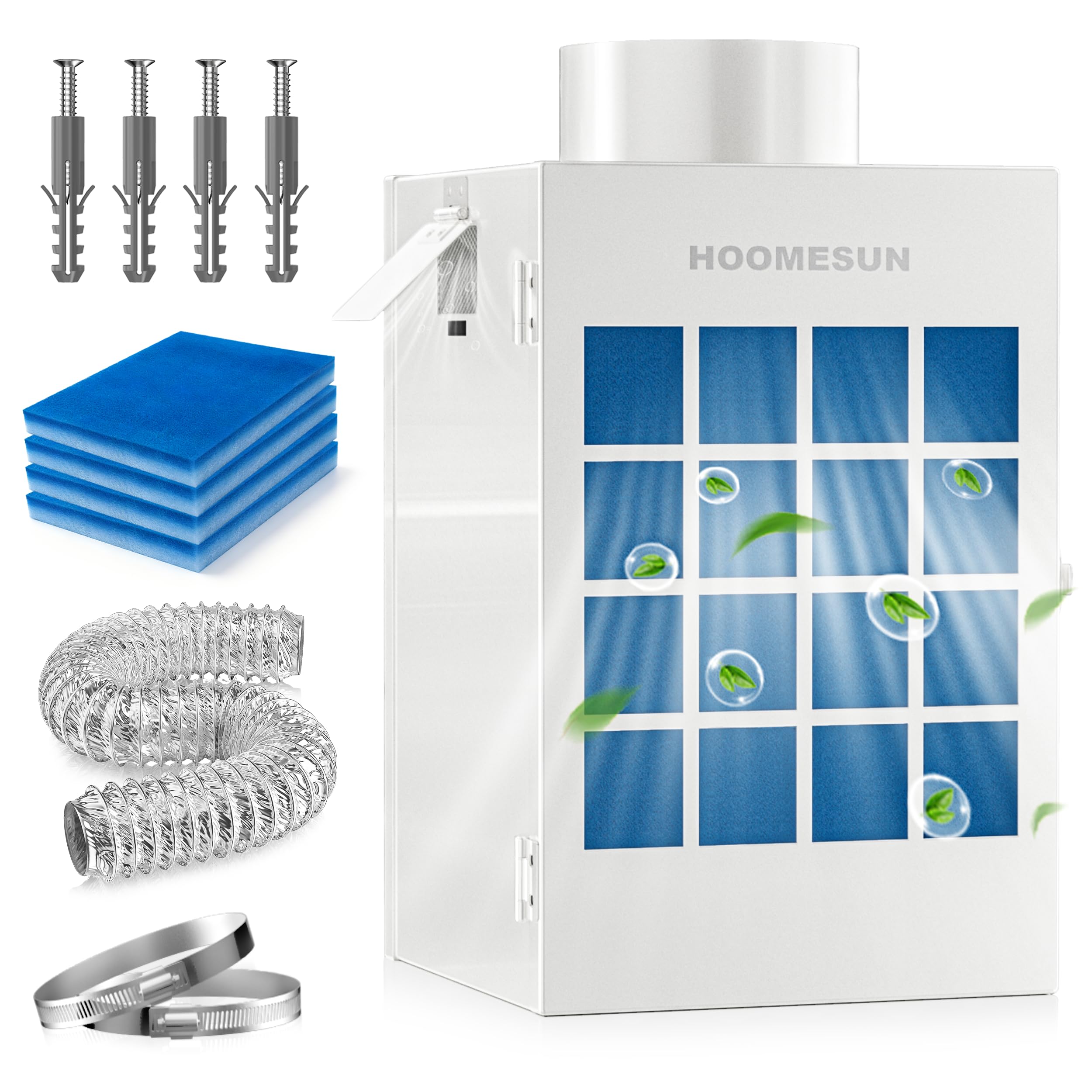
A fine stainless steel pre-filter and a polyester filter do the lint-catching, and the box ships with a 4-inch diameter, 8-foot long hose, 4 polyester filters, 2 clamps, installation screws, and an instruction manual. Mount it flat to a wall or to the side of the dryer; either works. The safety flap opens when the filters load up, dumping air and giving you a clear sign that cleaning is due. In cold weather, the warm air comes right back into the room, so the room warms faster and the dryer holds its temperature.
People appreciate how solid this feels and how straightforward servicing is: opening the filter door takes seconds, the stainless mesh only needs washing, and the polyester filters are washable. The room-warming effect is the standout for many users — it takes the chill off a basement laundry corner and even makes the house smell good depending on your detergent. It is compact enough to fit tight wall space.
The trade-off is straightforward: a small sealed room gets humid fast, and this unit benefits from a window cracked or a dehumidifier running. The metal housing is more forgiving than plastic, but the price still sits higher than the cheapest buckets. The 8-foot hose puts it even with the HG Power kit on reach and ahead of the 5-foot kits. Owners put the biggest value on how reliably it functions.
Why it earns a place
- 8 ft of 4-inch hose matches the top pick for reach
- Stainless pre-filter plus polyester filters catch lint, dust, and pet hair
- Safety flap opens automatically on clog to prevent overheating
- Mounts flat to a wall or to the side of the dryer
Before you buy
- Small sealed rooms get humid — plan a window or dehumidifier
- Pricier than plastic buckets doing a similar job
- Filters need cleaning every few loads
Suits you if: you want a metal wall-mount box with 8 feet of hose and a spare set of filters in the box.
Move on if: budget is your main constraint — the plastic bucket kits do the core lint job for less.
7. HG Power Metal Dryer Duct Lint Trap

An inline trap that lives in the duct, not on a shelf.
Two stainless steel filters go to work in sequence: one catches large and heavy debris, the other traps the smallest dust. The trap installs directly in the duct run instead of sitting as a bucket, which makes it the right pick if your machine already vents outdoors and you just want a lint guard along the way. One end connects to the dryer, the other connects to the outdoor duct, so on hot summer days you can route the humid air outside instead of into the room. That dual-end design is what separates it from the recirculating kits.
The box ships with a 4-inch diameter, 8-foot hose, 2 stainless steel filters, an instruction manual, 2 clamps, and installation screws. It weighs 3.34 pounds and is made of metal, so it stays put once mounted. On longer outdoor runs, it is the kind of add-on that catches lint the dryer’s own filter misses and keeps the main duct clear. Clothes dry faster when the line is not clogged, one owner confirmed, dropping from several cycles to one. Service is simple: open the front door with a latch and vacuum out the screens.
What you give up versus the wall-mounted boxes is that this one still needs a duct to somewhere. The intake and outlet measure slightly smaller than standard pipes, so plan on a roll of aluminum tape for a good seal. And it needs cleaning every two to three uses, like the rest. It is the fix for long duct runs and clogs, not the full-bore recirculating alternative.
Best use case: long or problematic outdoor duct runs where lint keeps clogging the pipe. It catches what the dryer misses before it reaches the wall.
Fit note: the inlet and outlet sit a touch small for standard duct work; aluminum tape makes the seal reliable.
Choose it if: you have an outdoor vent already but want an inline lint guard that also lets you dump hot air outside in summer.
Rethink it if: you have no duct at all — this is a duct component, not a standalone indoor vent.
8. HOOMESUN Dryer Lint Trap

The clear-door trap that shows you exactly how much lint is inside.
Designed for standard 4-inch ducts, this metal box catches lint before it ever reaches the duct system, keeping the line clean and the machine breathing. The kit includes the trap, a 4-inch by 8-foot dryer vent hose, 2 metal lint screens, 2 hose clamps, and an installation manual. The transparent door is the standout spec: you can see the lint collecting without opening anything, so you know exactly when it needs a clean. The body is high-quality metal built to resist rust and corrosion.
Where this unit really shines is on laundry setups with a dryer booster fan — you can install it between the fan and the dryer to keep the fan clear of lint. That keeps the booster working at full strength and extends its life. The build feels solid, the powder-coated finish holds up, and cleaning is quick: open the latch and vacuum the screens out. Owners describe it as a genuine improvement to how the dryer runs, and a few install two in series to trap lint at more than one point. For basements with long runs it cuts down on fire risk from lint accumulating in the pipe.
The honest caveat: this box catches the larger lint particles, but by design it will not grab every last bit of fine dust, so a small amount passes through into the exhaust. The door seal is the weak point on some units — a strip of foam weather stripping or a fireproof gasket closes it up tight. When you open the door, lint drops into the exhaust pipe below, so a quick workaround is to start the dryer for a few seconds first. It is a lot of box for the money, and it handles long runs well.
The reason to buy: the transparent door and the ability to mount downstream of a booster fan make this the most practical inline choice for longer, powered duct runs.
Know before you install: add a gasket to the door to stop lint leaks, and trim carefully — this is not a flush-mount box.
It is for you if: you want to see your lint level at a glance and you run a booster fan or a long duct that benefits from an inline filter.
Consider a bucket kit instead if: you want a complete recirculating indoor vent with no duct run to maintain.
9. FUNMAS 3-in-1 Indoor Dryer Vent

The only kit here that tunes the safety flap to your dryer’s power.
Three filtration choices in one unit: a fine stainless steel screen, a polyester filter, and a water drawer system. You decide which combination to run based on what your dryer throws at it. The stainless screen and water drawer handle the large, heavy lint, while the polyester filter goes after the finest dust. The screen never needs replacing, and the kit includes 4 polyester filters. The outlet is designed to face upward, so lint and dust do not fall back into the duct and clog it.
The standout engineering here is the calibration. This kit comes with 5 calibration weights, and you install the number that matches your dryer’s power — most people use 2 to 3. That level of fine-tuning means the safety flap opens at the right threshold for your machine, so it warns you accurately rather than tripping too early or too late. Cleaning is quick: press the door open, scrape the lint off the back of the filter, and empty the water drawer. That is a real improvement over kits where you have to disassemble the whole unit every few loads.
Reviewers point out strong airflow — enough to clear a dryer that kept throwing a flow-sense error and cutting off mid-load. The warmth in winter is a nice bonus, though the usual humidity management applies. The main thing to watch: if the calibration weights go missing in transit, the safety flap stays open and lint leaks until you sort it out with the seller. That is rare, and the seller tends to fix it quickly. In exchange for the extra tuning, you get the most accurate clog warning on this list.
Where the value sits
- 5 calibration weights let you tune the safety flap to your exact dryer
- Three filter choices let you run the setup your laundry needs
- Front door opens with a press for fast lint removal
- Upward outlet keeps lint from choking the duct
What to keep in mind
- Missing weights can leave the flap open — check the box on arrival
- Plastic housing is a step below the stainless and metal boxes
- Moisture recirculates, so plan ventilation
Worth it for: anyone who wants a safety flap dialed precisely to their machine and prefers being able to choose their filter stack.
Look past it if: you would rather have a metal housing and a fixed factory filter setup — the metal boxes are simpler.
10. 3 in 1 Indoor Dryer Vent Kit

When your dryer and the nearest wall are far apart.
The number that matters here is 88 inches. The included flexible aluminum hose expands to 88 inches, so you do not need to buy a separate duct to reach the vent box from a dryer parked in the corner. The filtration is another multi-layer design: a sturdy stainless steel filter, a high-efficiency polyester filter, and a convenient extractor work together to catch lint, dust, and pet hair. You get 6 polyester filters in the box plus 4 expansion screws, and the 3-in-1 system lets you run the combination you need. A safety alarm alerts you when cleaning is due and prevents the box from overheating.
The 88-inch hose makes installation flexible, and the box can be mounted upside down on any flat wall or hung on the side of the dryer. Five calibration weights let you match the safety flap to your dryer’s output. The unit also lets you add essential oil to the water, which several buyers appreciate for a fresh-smelling laundry room. It is a strong choice for awkward layouts where the machine and the vent point are far apart.
The caveat is the moisture load. In an enclosed closet, the humidity builds fast — one reviewer noted wet doors and walls after 20 minutes with the door shut. Running it with the door cracked or a dehumidifier going solves it. The filter door on the safety flap only flips open with strong backflow, and getting the calibration weights exactly right takes a little fiddling. In short: excellent for coverage, but you need to plan the humidity.
Long-reach winner: 88 inches of hose beats the 8-foot kits above if your dryer sits far from the wall, and the six spare filters mean less reordering.
The humidity catch: an enclosed closet gets wet fast, so a door cracked open or a dehumidifier is not optional — it is part of the setup.
Go this way if: your setup has distance to cover and you want the hose and a generous filter supply included.
Wait if: your laundry space is a sealed closet with no way to move humid air — plan the ventilation first.
11. BetterVent Indoor Dryer Vent

No bucket to empty, no water to refill, no mess to mop.
It is the only major kit on this list that runs without water. BetterVent’s patented filtration and housing system uses a dry filter pad instead, and it is designed to reduce lint buildup and support safer indoor venting where no outdoor exhaust is available. It is built for electric dryers only. The ABS plastic housing is 2 pounds and mounts easily to a wall with a few fasteners. The safety exhaust flap is calibrated at install so the unit knows when it needs attention.
For anyone who keeps pets — the design is a common reason buyers pick it over water kits, since dogs and cats can get into a bucket. It suits apartments, condos, basements, and interior laundry rooms where a vent is out of reach. Installation takes minutes, the filter pad vacuums off easily, and the recirculated heat saves on heating costs in cold months. Owners describe the build as clean and the routine as simpler than anything involving water.
The one adjustment: the stock filters are the weak spot. The indicator flap can pop after about three loads because the pad loads up quickly, and the pad itself is not the easiest to clean. Many owners swap to a 1/8-inch fiberglass or foam filter pad cut to fit, which gets them roughly 10 loads, or a 1/4-inch washable AC filter that can be rinsed and reused. The magnet weight in the flap can also come unglued over time — a dab of fresh glue fixes it. Plan that filter swap and the unit is a low-maintenance, no-water option.
The no-mess advantage
- Dry filter pad means no water bucket to empty or refill
- Patented housing engineered for safer indoor venting in electric-only setups
- Easy wall mount with a quick calibration for the safety flap
- Great choice for pet households where a bucket would be a hazard
What you should know
- Stock filters load up after about three loads — plan to swap in fiberglass or washable pads
- Recirculated heat and humidity still need management in summer
- Higher price than the water-bucket kits
Best for: pet owners and anyone who does not want to deal with a water bucket, and who is happy to source their own filter pads.
Weigh it against: the metal screen boxes if you prefer a washable stainless filter that never needs replacing.
Know the Specs
Water trap versus dry screen
A water trap passes the exhaust through a reservoir so fine dust gets caught in the water. That means a bucket to drain and refill, but better fine-dust capture. A dry screen box uses metal or polyester filters you tip out and wash. It is quicker to service and never needs a refill. Both work. Choose water if fine dust is your problem; choose dry if you want the quicker routine. Kits like the BetterVent run entirely dry with a filter pad — no water, no mess, but the pad loads up faster than a screen.
The safety flap
A spring-loaded flap near the duct connection swings open when the filter clogs, dumping air sideways so you see the problem and the dryer doesnot overheat. Some kits let you calibrate the flap — the FUNMAS and HomeDryer kits ship with 5 calibration weights, and most people install 2 to 3 of them to match the dryer’s power. That tuning gives you a more accurate warning. Always check that the weights arrived in the box before mounting, because a missing weight leaves the flap open and lint leaks.
Duct diameter and hose length
Every kit here connects to standard 4-inch dryer ducting, so the parts are interchangeable with your existing hose. Hose length is where kits differ. The short kits supply 5 feet of duct; the metal HG Power, HOOMESUN, and HOOMESUN vertical kits supply 8 feet. The HomeDryer kit supplies an aluminum hose that expands to 88 inches. Longer hose means more reach for a corner, but every extra foot of duct adds a little restriction. Keep the run as short and straight as the space allows and keep the duct clean.
Lint containment and humidity
Lint containment is what you are buying, and it varies by design. Water-based kits catch more of the fine dust in the reservoir; dry screen kits catch the larger lint so you can empty the tray. Either way, the moisture from your clothes has to go into the room. In winter that warm, damp air is welcome. In summer it fogs windows and fights the AC. Plan on a cracked window, a box fan, or a dehumidifier in a small or sealed laundry space, and clean the filter every two to three loads.
Common Questions
Can I use an indoor dryer vent with a gas dryer?
Will this fit my standard 4-inch dryer hose?
How often do I need to clean the lint filter?
Why is my laundry room so humid after installing one?
Is a water trap better than a dry lint screen?
What does the safety flap actually do?
Can I install an indoor dryer vent in an apartment?
How long does an indoor dryer vent kit last?
Do I need a booster fan with an indoor vent system?
What is the difference between an inline lint trap and a full indoor vent kit?
The Bottom Line
For most people living with an electric dryer and no outdoor vent, the indoor dryer vent system that gets the job done best is the HG Power Metal Indoor Dryer Vent Kit. Its metal housing, safety flap, and 8 feet of hose give you a heat-resistant setup with a built-in clog warning and room to route around obstacles. If you want the lowest-cost way to stop a dryer from dumping lint into a closet, grab the Dundas Jafine TDIDVKZW. And for a setup with a long distance to cover, the HomeDryer 3 in 1 with its 88-inch hose is the one to reach for.
Whichever you pick, plan for the humidity and clean the filter every two to three loads. The stainless steel screens on the HG Power and HOOMESUN kits never need replacing — you just wash them.
How we choose
We do not accept paid placement. Every pick is matched to a real buyer and a real use-case; we do not hands-on test units.
Sources
Specifications: manufacturer listings and product documentation. Review insights: verified customer reviews, as of October 2026. Pricing: not shown on this page (it changes often); check the current price via the retailer link.
As an Amazon Associate, Aappliancez earns from qualifying purchases. This does not affect which products we feature.