Disclosure: Some links in this post are affiliate links. As an Amazon Associate I earn from qualifying purchases, at no extra cost to you. Learn more
Specs are compiled from manufacturer listings and verified buyer reviews and can change over time — please confirm the key details on the product page before buying.
If a spider just disappeared behind the baseboard and you want it dead by morning, the short answer is this: a residual spray you apply in cracks and corners keeps working for weeks, while a contact spray only kills what you hit. That single difference decides which bottle belongs in your cupboard. This guide sorts five real indoor options by what they do, how long they keep doing it, and where they fall short.
This guide is built by comparing the manufacturers’ published specifications and the patterns across verified customer reviews, so you get each pick’s real strengths and trade-offs instead of marketing spin.
You will see which formulas leave a lasting barrier, which ones need a repeat pass every few days, and which are built for households with pets. Below are the sprays that actually earn a spot for indoor spider control in a normal home.
Top Picks

How To Choose The Best Indoor Bug Spray for Spiders
A spider indoors is usually a hunting spider, not a bug that sits still. It moves along baseboards, under sinks, behind appliances, and through door frames. So the spray you buy needs to reach those paths and keep working there, not just knock down whatever you happen to see.
Residual versus contact: the decision that matters most
A residual spray leaves a dried film that keeps killing insects that walk over it later. That is why a bottle sold as a crack-and-crevice treatment can wipe out spiders you never spotted. A contact spray kills fast on the hit, then does nothing once it dries. If you want a spider gone by morning without hunting it, pick a residual.
Look at the active ingredient and its percentage
The active ingredient is the chemical that does the killing. The percentage tells you how concentrated it is. A low percentage like cyhalothrin 0.05% is common in ready-to-use aerosols and still works on crawling insects. Plant-oil sprays list essential oils instead of a chemical, which changes both the smell and how often you reapply.
Match the formula to who lives in your home
If you have pets or small children, the label wording matters more than the marketing. Read how the maker tells you to apply it and whether it names pets in its directions. Sprays made with essential oils are often chosen for this reason, though the scent and residue can be stronger. Registered chemical sprays are typically applied in cracks and voids where no one touches.
Plan for reapplication
Indoor air, wiping down baseboards, and foot traffic all wear a spray down over time. A residual film fades, and oil-based sprays need refreshing more often. Know the reality before you buy so you are not surprised when spiders return a few weeks later.
Side-by-Side Comparison
| Model | Best For | Form / Size | Active Ingredient | Indoor Use | Amazon |
|---|---|---|---|---|---|
| BASF PT 221L★ Best Overall | Crack and crevice control | Pressurized aerosol, 14 fl oz | Cyhalothrin 0.05% | Crack and crevice, spot, perimeter | Amazon |
| Zevo Ant, Roach, Spider Insect KillerTop Performer | Fast knockdown on sight | Spray, aerosol | — | Around pantry, fridge, sink | Amazon |
| BugMD Pet Safe Multi-Insect Killer | Homes with pets | Spray, 1.21 lb | Essential oils (peppermint, rosemary, citronella) | Baseboards, windowsills, kitchens | Amazon |
| Harris Spider Killer | Spider-specific residual | Liquid spray, 64 fl oz | Deltamethrin | Indoor residential (EPA No. 3-11) | Amazon |
| Wondercide Ant & Roach Aerosol | Plant-powered indoor control | Aerosol, 10 oz 2-pack | Lemongrass and geraniol | Kitchen, bathroom, baseboards | Amazon |
Detailed Reviews
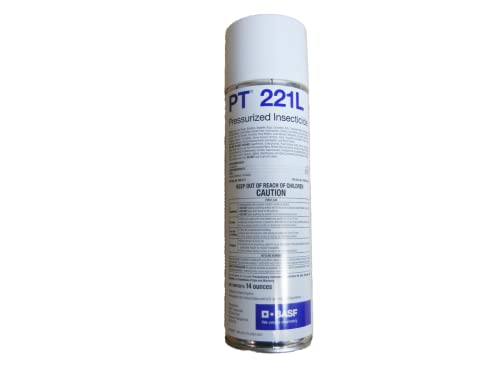
1. BASF PT 221L Pressurized Insecticide Aerosol Spray
Our pick — 4.5+★ from 400+ verified ratings; the strongest balance of quality and price.
The professional-grade can that treats the cracks a spider hides in, not the floor you see.
This is the spray to reach for when you want a spider dead after it walks away, not just dead on the hit. It is built as a crack-and-crevice treatment, meaning you inject it into the narrow gaps under sinks, behind appliances, and inside wall voids where spiders travel. The active ingredient is cyhalothrin at 0.05%, a ready-to-use concentration that does the work after it dries.
What makes it the top pick is how far one can stretches. It is a pressurized insecticide in a 14 fluid ounce aerosol that is labeled for indoor use and outdoor perimeter work alike. The label also lists reapplication at 21-day intervals for food handling settings, so you know the film is not meant to last forever — plan a refresh if spiders keep turning up.
The weak point is the nozzle. A few owners found the spray head limiting and wanted better coverage, and the residual around door frames fades within a couple of weeks in their experience. The fix is easy: apply it in the crevices rather than open surfaces, and you get far more useful life out of each can.
Where it wins
- Residual film keeps killing spiders after it dries, not just on contact
- 0.05% cyhalothrin is strong on crawling insects including spiders, ants, and roaches
- 14 fluid ounce can covers cracks, voids, and perimeter spots in one treatment
- Same type of product pest control technicians use in crevices
What to watch
- Nozzle quality limits how well you can direct the spray
- Residual around doorways fades in roughly two weeks for some owners
- Not a fast knock-down on the visible spider itself
My call: the pick for treating hidden spider paths in cracks, voids, and under appliances — it keeps working after you walk away.
Think twice if: you want to watch a spider die on contact, since this one works best as a film, not a direct hit.
2. Zevo Ant, Roach, Spider Insect Killer
The one you grab when the spider is already on the wall and you want it down now.
If you have spotted the spider and want it dead this second, this is the fast-handed option. It kills on contact, and buyers report knockdown in 3 to 5 seconds — quicker than the big-name cans they used before.
Where this one differs from the BASF is the job it is built for. BASF is a film you leave behind; Zevo is a direct hit you aim and fire. That makes it the better choice for that moment of panic in the pantry or by the fridge, and it stays useful for flying insects that wander in as well.
Know that it leaves an oily residue and a lingering scent. The odor fades, but the oil stays on floors and surfaces until you wipe them, so spray where people walk rather than across a whole floor. The spray is also fairly wide, which can catch your fingers — aim at the spider, not along the surface.
Right tool, right moment: contact kill is its whole reason to exist, and it is fast enough that you can spray a visible spider and get on with your day.
What it costs you: the oily film and the smell are the price of that speed. Spray narrow and wipe after, and neither becomes a problem.
Suits you if: spiders show themselves and you want the fastest kill on contact.
Skip if: you want a barrier that keeps killing quietly for weeks — that is the BASF can’s job.
3. BugMD Pet Safe Multi-Insect Killer and Repellent Spray
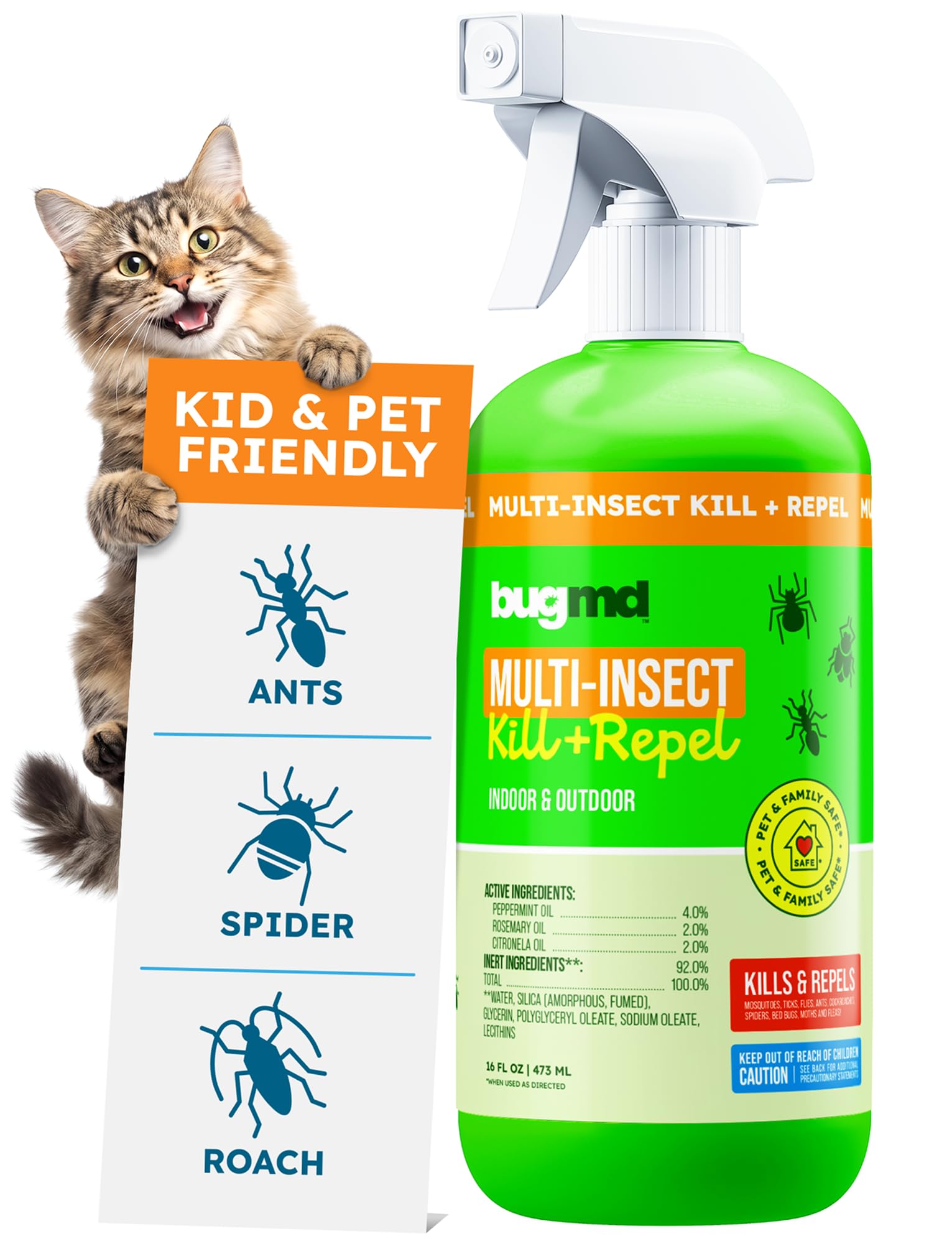
The plant-oil spray homeowners reach for when pets share the floor with the spiders.
This one is made from essential oils — peppermint, rosemary, and citronella — rather than a chemical active ingredient. It kills on contact and lays down a repellent barrier you refresh every three to five days, and that mint scent does double duty by pushing rodents away from garages and storage spaces too. At 1.21 pounds it is a light bottle to keep on a shelf.
Compare it to the Harris by weight and the difference is obvious. Harris runs 2 pounds against this bottle’s 1.21 pounds, so the BugMD is the easier one to lift and move room to room. Where it falls behind is staying power: five days at most before the barrier needs a fresh coat, against a residual spray that keeps killing for weeks.
The catch: essential-oil formulas need care around cats. Peppermint oil is not something to spray freely in a room a cat lives in, so move pets out before you spray and let the room air before they return. Cats are a real reason to pause; dogs and the rest of the household generally fare fine when the label directions are followed.
The green-hand approach: the formula avoids harsh chemicals and the mint scent is genuinely pleasant to most noses, which is why it suits a home trying to cut back on strong sprays.
Freshness cost: you are signing up to reapply every three to five days to hold the line, and the scent is stronger than a sealed aerosol when you first spray.
Reach for it if: you keep pets, want a plant-based bottle, and do not mind a quick refresh every few days.
Leave it if: you have cats, or you want a set-and-walk-away barrier — the oils are milder but need more frequent work.
4. Harris Spider Killer
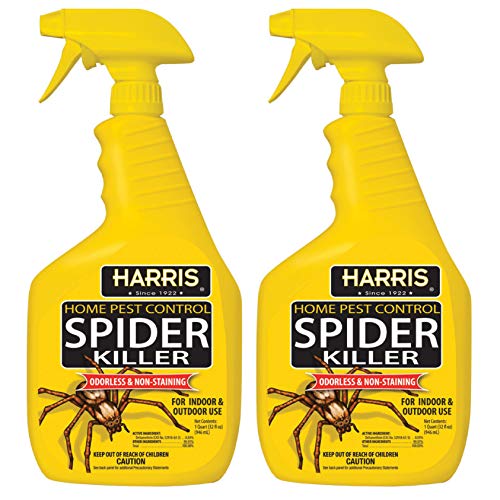
A spider-named, odorless formula that kills after it dries and leaves no mark on fabric.
Harris built this one specifically for spiders, and it works on the spray-dries principle: a spider walks through the treated film and dies later, whether or not you hit it directly. Its active ingredient is deltamethrin, and the odorless, non-staining formula will not mark fabrics when used as the label directs.
For anyone with a real spider problem, this is the one that keeps spiders out for weeks rather than seconds. That durability is the whole pitch, and the formula is EPA-registered for indoor residential use (No. 3-11). It reaches ants, roaches, crickets, silverfish, and Asian lady beetles too.
Two things to plan around. First, it kills spiders over time, not instantly — give it until the next morning for a hit spider to drop. Second, you get a pump sprayer rather than a fine aerosol, and the pump mechanism is the part owners grumble about. Treat the sprayer gently, keep the nozzle clean, and it holds up.
Spread the film wide: 64 fluid ounces across a two-pack means you can treat a lot of baseboards, door frames, and garage corners without running dry.
The slow kill: expect to find the spider dead on the floor later, not watch it curl up on the spot.
Best matched to: a spider-heavy home, especially near wooded ground, where you want a lasting film that kills after it dries.
Know before you buy: the pump sprayer is the weak link — a fragile pump means careful handling, and it will not kill on contact.
5. Wondercide Ant & Roach Aerosol Spray

A plant-powered aerosol that kills on contact, if you can live with the oily trail.
Wondercide packages ant and roach control around a plant-powered formula with lemongrass and geraniol, and it makes a point of killing over 20 common household bugs including spiders. It kills by contact and knocks down fast, with no artificial colors or fragrances and a cruelty-free build. The two-pack gives you a can for the kitchen and a spare for the bathroom.
Where it sits against the other plant-oil bottle is a question of use. BugMD relies on peppermint and needs a refresh every few days; Wondercide also asks for frequent spraying but kills across a wider bug list, which matters if spiders arrive alongside ants and roaches. Spray it around cracks, crevices, baseboards, door and window frames, and around water pipes.
The honest problem here is the residue. The spray is oily, and in an owners’ experience it makes floors and surfaces slippery where it lands. Spray narrow, in the corners and behind appliances, and keep the can off open walkways. The propellant also tends to run out before the liquid is gone, so expect a little unused product in the bottom of the can.
Plant-powered and quick: lemongrass and geraniol handle ants and roaches on contact, and spiders are on the labeled list too.
The oily floor problem: keep it where feet do not travel — behind baseboards and appliances, not across a tile path.
A fit for: households that want a plant-based aerosol over the sink and can accept an oily film and a repeat spray now and then.
Better to pass if: you have a hard floor where the trail can turn slippery, or you want a single treatment to last for weeks.
Know the Specs
Active ingredient and its percentage
The active ingredient is the chemical or oil that does the killing. The percentage tells you how concentrated it is — cyhalothrin at 0.05% is a common ready-to-use strength in a crawling-insect aerosol. A higher percentage is not automatically better for a home, because concentration and how the label says to apply it go together. Read the name and the number together, then match them to where you will spray.
Residual versus contact action
A residual spray leaves a dried film that keeps killing insects that cross it. A contact spray kills the bug you hit, then fades. Spiders hunt on the move, so residual action in cracks and corners kills more of them. Contact action is for the spider you can see right now. Neither is wrong — they answer different questions.
Fluid ounces and how far one can goes
The fluid ounces on the label tell you how much spray you get. A 14 ounce aerosol and a 64 fluid ounce two-pack live in different worlds for a full-home treatment. For a spot job near the door, a smaller can is plenty. For weeks of baseboard and perimeter work, the larger count keeps you from re-buying mid-job.
EPA registration and pet-safe wording
An EPA registration number means a spray is registered with the Environmental Protection Agency for its stated use — Harris lists No. 3-11 for indoor residential use. Pet-safe wording is a separate claim and depends on following the label, and essential-oil sprays need extra care around cats. Always read the directions on the can for pets and children before you spray a room.
Common Questions
Will an indoor spider spray also kill the spider that lives in the wall void?
How long does an indoor spider spray keep working after it dries?
Is a plant-based spray strong enough for spiders?
Which of these is safest to use around pets and cats?
Will the spray stain my floors, walls, or curtains?
Can I use an indoor spider spray outdoors too?
Why did the spider survive the spray and crawl away?
Do I need to spray every day to keep spiders out?
Where should I actually spray for spiders indoors?
Does an oily spray leave a slippery floor?
The Bottom Line
For most homes, the best indoor bug spray for spiders is the BASF PT 221L, because it leaves a residual film in the cracks and voids where spiders hide and keeps killing after you walk away. If you want the fastest kill on a spider you can see, the Zevo is the contact spray to keep on hand. And for a plant-oil option you can spray around pets, the BugMD earns its place as long as cats are kept clear and you are willing to refresh every few days.
How we choose
We do not accept paid placement. Every pick is matched to a real buyer and a real use-case; we do not hands-on test units.
Sources
Specifications: manufacturer listings and product documentation. Review insights: verified customer reviews, as of October 2026. Pricing: not shown on this page (it changes often); check the current price via the retailer link.
As an Amazon Associate, Aappliancez earns from qualifying purchases. This does not affect which products we feature.