Disclosure: Some links in this post are affiliate links. As an Amazon Associate I earn from qualifying purchases, at no extra cost to you. Learn more
Specs are compiled from manufacturer listings and verified buyer reviews and can change over time — please confirm the key details on the product page before buying.
In Valorant, the round is often lost before the enemy appears on your screen — you hear a shuffle on B Main, a reload behind the box, and you either swing the right way or you die guessing. The pair you put in your ears does more for that than almost any other gear in your setup, because it decides how clearly footsteps, ability cues and spike plants cut through gunfire. Below you get seven wired in-ear monitors that all share one thing: a 3.5mm jack and zero wireless delay.
This guide is built by comparing the manufacturers’ published specifications and the patterns across verified customer reviews, so you get each pick’s real strengths and trade-offs instead of marketing spin.
You do not need a studio budget to hear an enemy crouch-walk. What you need is an in-ear monitor with a clean midrange, a wide enough soundstage to place that sound, and a shell that survives a long session. This breakdown covers driver types, tuning nozzles and cable quirks so you can choose the right IEMs for Valorant without guessing.
Top Picks

How To Choose The Best IEMs for Valorant
Competitive shooters ask something different from an in-ear monitor than music does. You are not chasing warmth or bass slam — you want the midrange and lower treble clear enough that a footstep at 20 meters sits apart from a Vandal burst two meters away. Everything below is about that one job.
Start with the driver setup, not the driver count
A balanced armature driver (a tiny sealed driver that moves a small diaphragm) tends to be fast and detailed in the mids. A dynamic driver (a moving coil with a diaphragm, like a tiny speaker) usually brings more weight and slam. Hybrid sets combine them, and that lets a designer tune footsteps and gunfire to sit in different frequency bands. More drivers is not automatically better — tuning is what separates a competitive set from a muddy one.
Soundstage and imaging decide who hears first
Soundstage is how wide the virtual space feels; imaging is how precisely you can point to a sound inside it. In Valorant you want imaging first. A pair with narrow width but sharp directional cues will tell you “Ascent Mid, left of the box” faster than a wide, vague set. Look for reviews and descriptions that mention directional shifts or instrument separation rather than pure bass.
Tuning nozzles and target curves, explained
Some monitors ship with swappable nozzles — the metal tube the ear tip fits onto — each cut to a different tuning curve. A neutral or reference curve keeps gunfire and footsteps honest, while a warmer curve adds body that can blur small cues. If a set offers two nozzles, treat that as two monitors in one box and test both in a deathmatch before you commit.
Fit, isolation and cable length are competitive stats too
A shell that will not sit still turns every footstep into a guess, because a broken seal kills the low and mid detail you need. Detachable cables (a plug-in wire instead of a soldered one) matter because a snagged cable on a desk is a real failure point. Check cable length as well — a short cable is fine at a controller but often needs an extension at a PC tower.
Side-by-Side Comparison
| Model | Best For | Driver Setup | Connection | Cable | Amazon |
|---|---|---|---|---|---|
| KZ AS10★ Best Overall | Footstep detail on a tight budget | 5 balanced armature | 3.5mm wired | Detachable 2-pin | Amazon |
| Audiovance Vibes 202MLBest for iPhone | iPhone players using an LTN port | 1 dynamic (1-Tesla) | Lightning (LTN) | Detachable MMCX | Amazon |
| Kiwi Ears Cadenza II | Neutral, fatigue-free long sessions | 1 titanium-coated dynamic | 3.5mm wired | Detachable 0.78mm 2-pin | Amazon |
| Elgin Discord Gen 3 | Wireless play in loud rooms | 8mm dynamic | Bluetooth 5.3 | None (neckband) | Amazon |
| TRUTHEAR x Crinacle Zero:BLUE2 | Balanced competitive and music tuning | Dual dynamic (10mm + 7.8mm) | 3.5mm wired | Detachable 0.78mm 2-pin | Amazon |
| SIMGOT EW300 | Swappable tuning for games and music | 1 dynamic + 1 planar + 1 piezoelectric | 3.5mm wired | Detachable 0.78mm 2-pin | Amazon |
| Sennheiser IE 100 PRO | Road-tough build and long comfort | 10mm dynamic | 3.5mm wired | Detachable | Amazon |
Detailed Reviews
1. KZ AS10 in Ear Monitor Earbuds
Our pick — 4.5+★ from 800+ verified ratings; the strongest balance of quality and price.
Five balanced armatures in each ear, for players who want every cue split apart.
Five balanced armature drivers sit in each earpiece here — one large low-frequency driver, one mid, two high and a mid/high hybrid — and that split is exactly what makes an AS10 useful in a tac shooter. Each driver handles a slice of the frequency range instead of one cone doing everything, so the sound of a spike plant and the sound of a Vandal burst are reproduced by different drivers rather than smeared together.
The clarity is what wins people over, and it is the note that comes up again and again in owner feedback: clean separation, detail you can pick apart, and a set that behaves like a proper monitor despite the low entry point. Buyers describe it holding up across live gigs and long drumming sessions, which is a harder life than a ranked queue. For Valorant that translates to footsteps, reloads and ability audio that land as distinct events.
The bass end is fuller than you would expect from an all-armature design, and the highs are described as soft rather than sharp, so a long session does not turn into a treble headache. What separates the AS10 from the Cadenza II below is character: this one leans U-shaped and punchy where the Kiwi Ears set stays neutral, so pick the KZ if you want energy and the Cadenza if you want flat honesty. The detachable 2-pin cable is the practical bonus — a snagged wire at your desk costs you a cable, not a monitor.
What earns its place
- Five balanced armature drivers per earpiece split lows, mids and highs, so cues stay separated.
- Detachable 2-pin cable means a broken wire is a cheap swap, not a dead set.
- Compatible with anything carrying a 3.5mm audio input, from a PC to a console controller.
- Full bass and soft, non-sharp highs keep long ranked sessions comfortable to listen to.
Where it asks you to compromise
- Comfort is the mixed note — the plastic housing can press on the outer ear after a few hours of full insertion.
- The preformed silicone ear hooks hold their shape, so some ear shapes need a cable swap to sit right.
- No carry pouch in the box, and the cable runs long for desk use.
Reach for this if: you want maximum cue separation at the entry end and you are happy to test-fit tips until the seal locks in.
Look elsewhere if: you have small ear canals that dislike a bulkier plastic shell for multi-hour sessions.
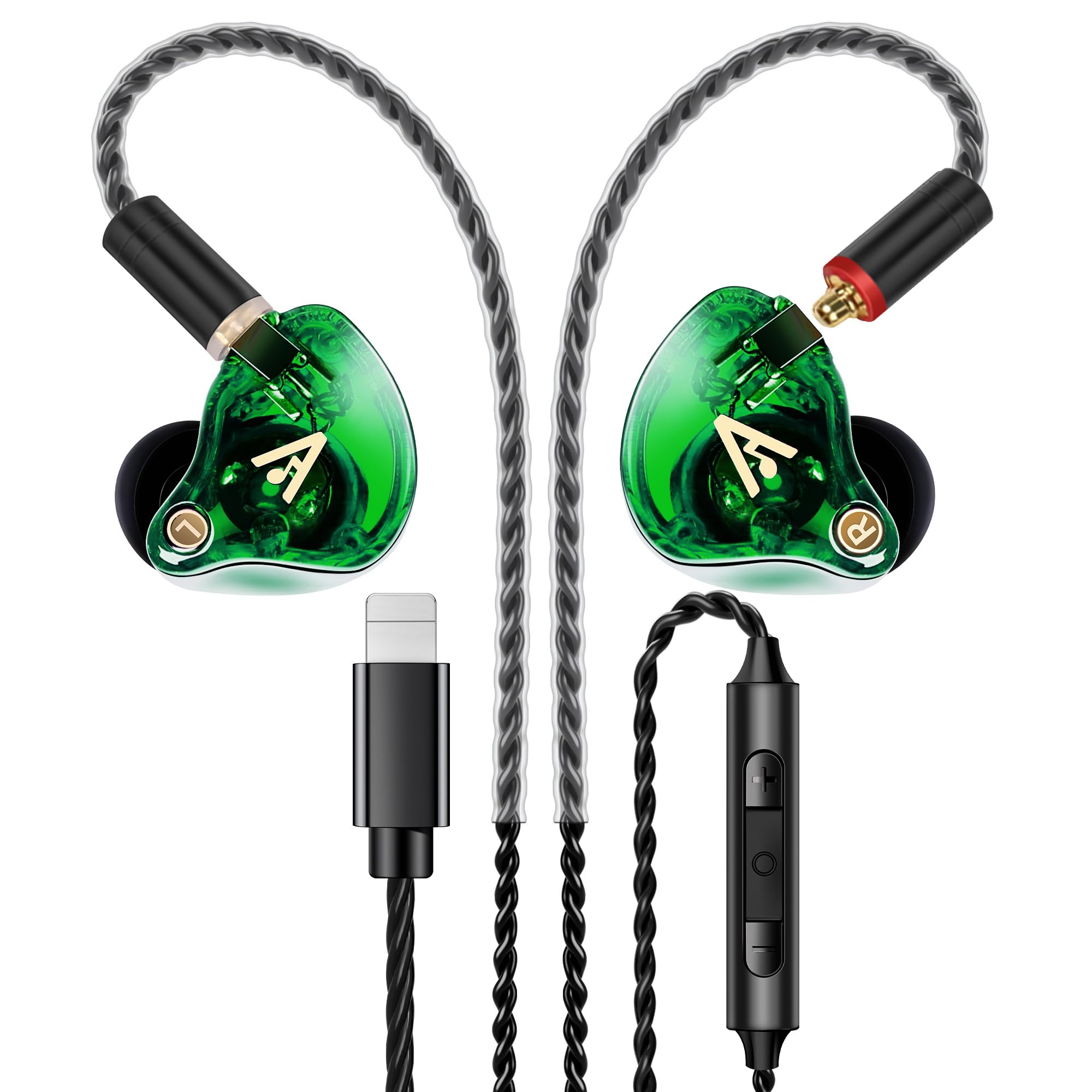
2. Audiovance Vibes 202ML HiFi Wired Earbuds
The only pick here that plugs straight into an older iPhone with no adapter in between.
Most monitors on this list need a 3.5mm jack. The Vibes 202ML ships with an LTN plug — the Lightning connector older iPhones use — so it drops into an iPhone 14, 13, 12, 11 or X with no dongle dangling off your phone. That is the whole pitch if you play on a phone or an iPad and have no headphone port. Note the fit list clearly: this is not for iPhone 17, 16 or 15, so check your model before you buy.
Inside sits a 1-Tesla dynamic driver (a magnet strength figure that tells you the motor is pulling hard) tuned across a stated 8 to 23k Hz range, with a silver-plated Litz-braided cable meant to keep the signal clean. In practice the lows and mids feel punchy and the highs crisp, and a couple of owners describe zero lag when gaming or editing video — which is the reason you would choose wired at all. A 55-inch cord gives you room to move, and preformed over-ear hooks keep the wire off your cheek.
The honest caveat is durability at the plug end. The braided cable is the part that gets stressed, and owners describe weak strain relief right where the wire enters the jack. It is a replaceable MMCX cable, which softens the blow, but a little care when you pull it out of a controller is worth the habit. Six pairs of eartips in three sizes help you find a seal, and a hard carrying case keeps the set alive in a bag.
Why phone players gravitate here: no adapter, no battery, no pairing — plug into the Lightning port and play.
The trade to accept: the Lightning plug limits this to older iPhones and iPads, and the jack end rewards gentle handling.
Matches your setup if: you play on an iPhone with a Lightning port and want a real monitor instead of stock buds.
Wrong turn for: anyone on iPhone 15 or newer, or on a PC, where the LTN plug simply will not fit.
3. Linsoul Kiwi Ears Cadenza II
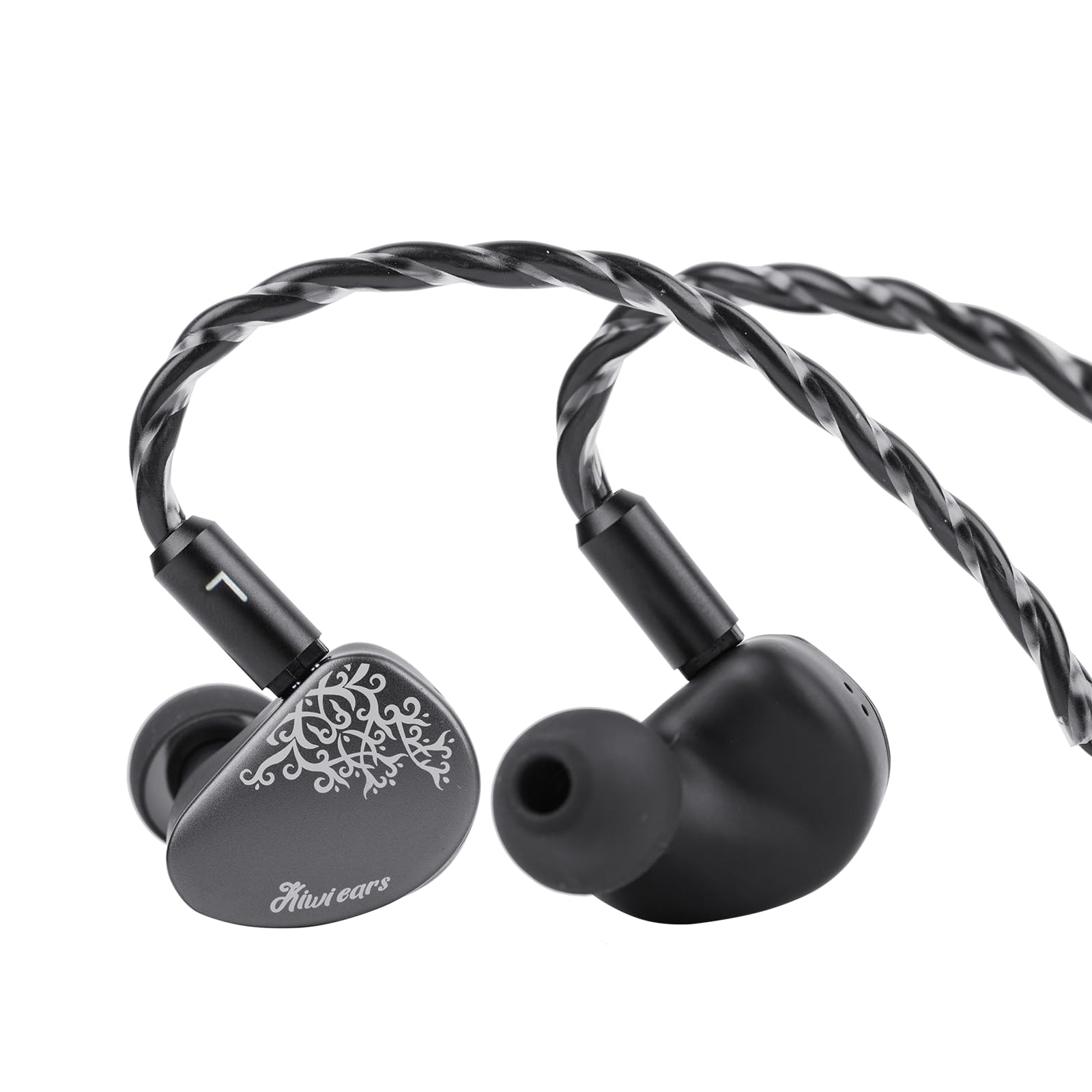
A single titanium-coated driver tuned flat enough to trust in a clutch round.
One 10mm titanium-coated dynamic driver does the whole job here, and the tuning behind it is the story. Kiwi Ears calls it KARS 2.0 — an acoustic resonance system they say lifts the sub-bass by design while cutting off cleanly at 200Hz, with a small lift in the 300–400Hz region for vocal warmth. Translated: the low end has presence without bleeding upward into the mids where footstep detail lives. That is the balance you want in a shooter, and it is why this set holds up for both ranked and long music listening.
Owners describe the soundstage as wider than the price suggests, with smooth treble that does not fatigue over a session and precise directional shifts that make sound placement feel three-dimensional. The shell is a polycarbonate composite with a CNC-machined aluminium faceplate, and the practical upshot is a lighter, comfier fit than the KZ AS10 above — several players note they barely feel it seated. Detail is strong for a single driver, though it does not reach what a multi-driver set like the SIMGOT EW300 offers.
Here is the setup tax: the earpieces are not marked left and right — the cable is — and the tips are not pre-installed, so the first ten minutes involve a bit of fiddling. Isolation is also the weaker point: a couple of players mention outside noise creeping in and a short cord, and if you want to hear quiet crouch-walks, foam tips are worth the small extra spend. Get past the assembly and this is one of the cleanest neutral signatures in the list.
Tuning-first verdict: a flat, uncolored profile that keeps gunfire and footsteps in separate lanes instead of blending them.
Fit note: isolation is modest, so tips do real work here — plan on upgrading them.
Built for: players who want an honest, non-boomy signature and a shell light enough for hours of play.
Think twice if: you want the box to work out of the gate with no tip-swapping or left/right guesswork.
4. Elgin Discord Gen 3 Bluetooth Earplug Earbuds
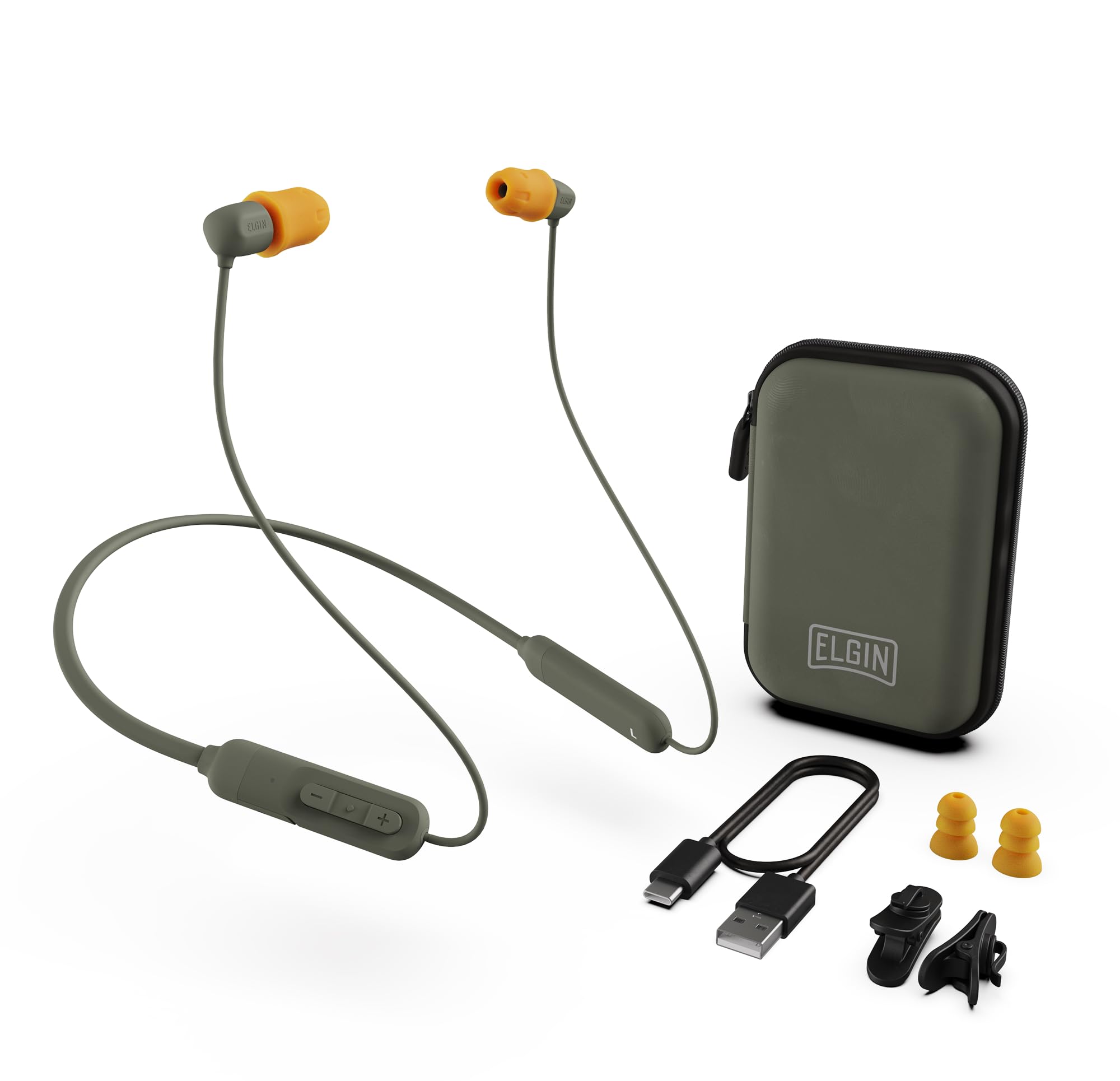
A hearing-protection earplug first, a gaming headset second — and that order matters.
This is the one wireless pick in the list, and it earns a spot for a specific player: someone gaming in a loud room who cannot stand a cable. The headline number is a 31dB NRR (Noise Reduction Rating), a certified measure of passive sound blocking. In a shared house, a dorm or a workshop, that block is what lets quiet cues reach you instead of being buried under the room. Bluetooth 5.3 handles the connection, and the stated 14-hour battery life covers a full session without a charge.
Fit is the reason so many owners stick with it. The memory foam and silicone tips are replaceable, the buds are small enough that ear defenders can sit over them, and the magnetic ends snap together around your neck so they don’t vanish off a desk. The trade you accept is sound tuning: the 8mm dynamic driver covers 20–20,000Hz and the lows come through with surprising weight, but the recurring honest note is that the highs are slightly muffled and some players want more volume than the earbud delivers. For footsteps, that’s a real compromise against a wired monitor.
The other catch is Bluetooth itself — 5.3 is good, but wireless is a step behind the zero-delay wired picks for tight audio cues. And the foam tips wear out faster in humid conditions, so replacements are a running cost. For a noisy room and a wireless seat, it is a fair trade; for competitive ranked, the wired picks win on cue clarity.
Room-noise solution: 31dB NRR passive blocking certified to ANSI standards, so a loud room drops away before it reaches your ears.
Timing trade: Bluetooth 5.3 introduces latency the wired sets do not have, which is the honest reason to skip wireless for serious play.
Listen up if: you play in a loud space and need sound blocked rather than delivered.
Not for: a twitch-response player who needs zero-latency wired audio.
5. TRUTHEAR x Crinacle Zero:BLUE2

Two dynamic drivers and a 294-core cable — the smoothest balance of game and music here.
Two dynamic drivers share the load: a 10mm unit with an N52 magnet and a 7.8mm unit with an N55 magnet, the smaller one focused on the mid and high range. The practical result is bass that never crowds the treble, because separate drivers are handling the two ends. Owners put the detail and separation on par with gaming and music alike, and the reference is to the Red 2 below that model in the sequence — the BLUE2 is the step up with more driver surface.
The cable is the quiet winner: a two-strand 294-core copper and silver-plated coaxial run, with the internal wire count increased over the previous model for a signal that holds up better. It arrives tangle-resistant and feels premium to the touch, and the 0.78mm 2-pin detachable mount means the cable is replaceable. A microphone option is available in the two-strand coaxial build, though note the detachable cable itself is not Bluetooth.
Now the trade: fit and comfort are the mixed notes on this set. The shells are bulky enough that a small percentage of owners describe ear pain or a poor seal, and the stated 48-inch cable is short enough that a PC player at a tower will want an extension. The tuning also leans slightly warm, so a bass-light reference fan might trim it with EQ. None of that breaks the monitor — it just tells you to plan for tips and a longer run.
Where it leads the field
- Dual dynamic drivers split lows and mids/highs, so bass stays out of the footstep band.
- The 294-core silver-plated cable is genuinely premium at this price tier.
- 0.78mm detachable mount means a worn cable is a cheap, not fatal, problem.
What sneaks up on you
- The shells are bulky, and a poor seal is a real risk on smaller ear shapes.
- A 48-inch cable is short at a desktop tower and may need an extension.
- A slight bass-leaning tuning means some players will want EQ to flatten it.
Good fit if: you want one pair for ranked and for music and value a premium stock cable.
Hold off if: you have small ear canals and value a slim shell over the extra driver.
6. Linsoul SIMGOT EW300

Three driver types plus two nozzles — this one hands you the tuning choice.
This set stacks a 10mm dynamic driver, a planar driver and a piezoelectric ceramic driver on each side, three different ways of making sound bolted into one chassis. SIMGOT calls the arrangement a tri-matrix acoustic architecture, and the payoff is a spread of strengths: slam from the dynamic, speed and detail from the planar, and high-end sparkle from the piezo. One look at the driver count next to the Cadenza II’s single driver tells you where the extra detail on busy tracks comes from.
What makes the EW300 the most tunable pick is the threaded nozzle system. You get two sets — one tuned toward the SIMGOT-Golden2023 curve and one toward H-2019 — and the gold-copper nozzle with a purple silicone ring is specifically set for gaming, with the manufacturer saying it keeps gunfire and footsteps clearly distinguishable. Owners describe the silver nozzle as brighter and more detailed, the gold as warmer with good clarity, which is exactly how you’d use them: silver for shooters, gold when you just want to listen.
The honest limits: the upper treble can turn a bit sharp with crowded high-pitched mixes, and a few units arrived with a rumbling defect in one earbud — the model itself is sound, but test both sides on day one. Some players found the treble smoothed out after a 50-hour break-in, so give it time before you judge. Comfort and build are praised, the cable is 0.78mm 2-pin detachable, and for a triple-driver hybrid at this price it earns its place.
The tunable edge: two nozzles and both curves let you reshape the monitor rather than buy a second one.
Careful on: treble sharpness on busy mixes, and a first-day check that both earbuds are clean.
The pick for: tinkerers who want a gaming nozzle and a music nozzle in one box.
Skip the fiddling if: you’d rather the tuning be decided before you open the box.
7. SENNHEISER Professional IE 100 PRO
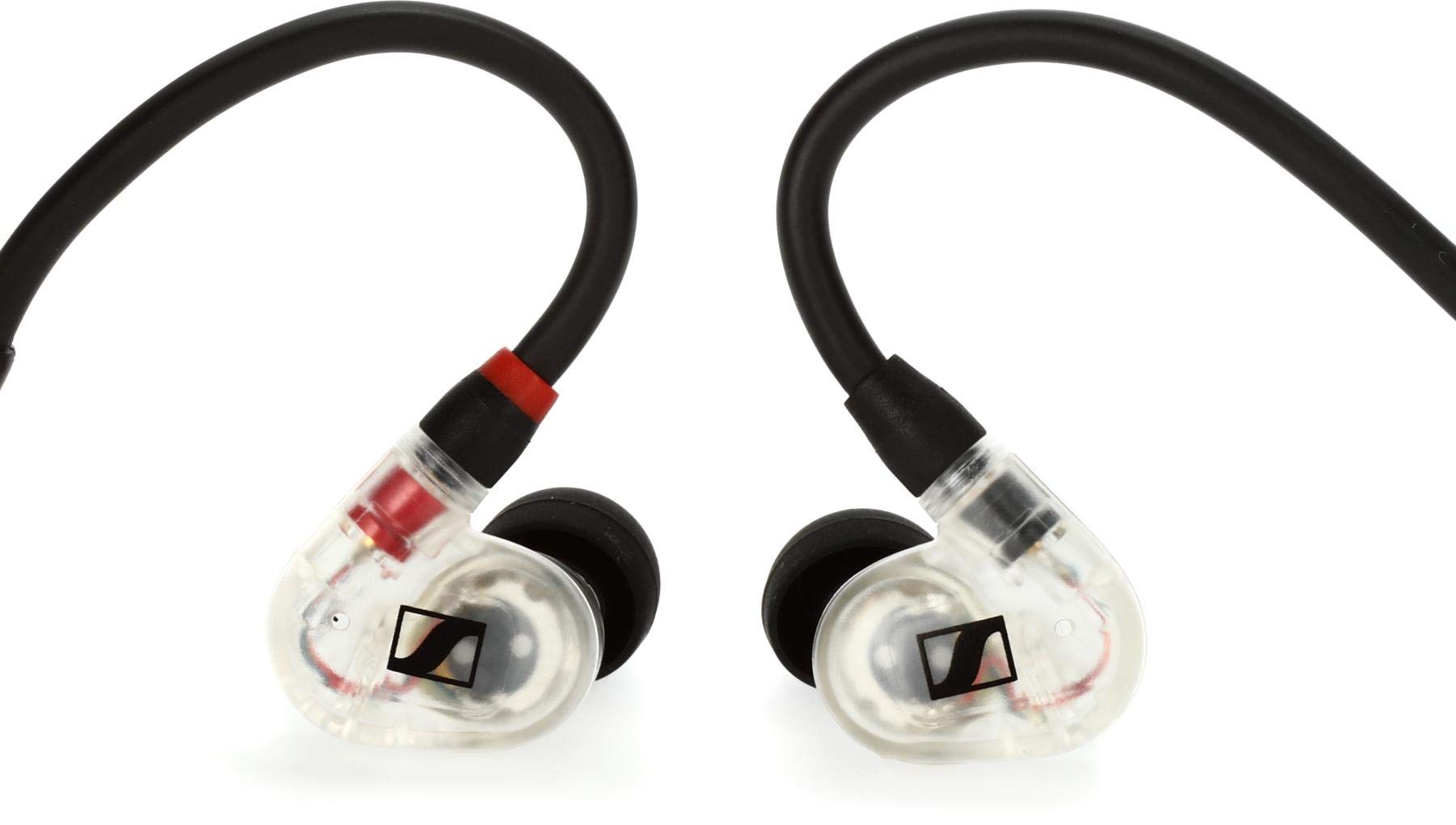
Built to survive a road, worn by players who want a set for years.
A single 10mm broadband transducer does the work, and the emphasis in this set is build rather than tuning fireworks. The cable runs through an internal duct so the join between plug and housing is protected, the silicone and foam tips are tune for a secure seal, and the whole thing is designed to sit tamely in the ear for hours. These are the details that keep a set alive through a long career, and it shows in owners using them for professional road work as well as daily abuse.
The comfort note is where this set punches above its price. Owners describe wearing them for hours without ear fatigue, and one owner reported three years of heavy daily use with the set still looking and sounding new. That durability matters for a gamer who doesn’t want to re-buy a monitor every few months. Ignore any battery or Bluetooth figures you see on the datasheet — this is a wired monitor with a 3.5mm jack.
Where it asks something of you: sound is the mixed verdict on this one. Some hear crisp, balanced detail, and others hear muddy, boomy, overhyped bass. A careful tip fit is the fix, and the box includes foam and silicone adapters plus a cleaning tool. If you want a set you can trust for years and you’re willing to tune the tips, this is a great pick. If you need out-of-box tune perfection and footstep pinpointing, look at the KZ AS10 or TRUTHEAR Zero:BLUE2.
Durability verdict: the internal cable duct and replaceable-cable design make this the set least likely to die on you.
The fit-first caveat: the sound swings with how well you seal the tip, so a bit of adapter swapping is part of the job.
Worth owning if: you want one monitor that outlives several cheap pairs and you’re happy to dial in the tip.
Not for you if: you want the tuning delivered with no effort on your part.
Know the Specs
Driver Type and Count
A balanced armature driver uses a tiny sealed reed to move a small diaphragm, which is fast and detailed in the mids. A dynamic driver uses a moving coil and diaphragm, bringing more weight and slam in the low end. A planar driver uses a flat membrane for speed and low distortion. A hybrid set combines these to let each range be handled by a specialist. More drivers do not automatically mean better — tuning decides whether the separation actually helps you hear a footstep.
Soundstage and Imaging
Soundstage is how wide the virtual space feels; imaging is the accuracy of placement inside it. For tactical shooters, imaging matters more: you want to know that the shuffle came from left of the box, not just that a sound played. Descriptions of “directional shifts” or “instrument separation” in owner feedback are the useful signals; pure bass numbers tell you almost nothing about competitive clarity.
Nozzles, Curves and Tuning
A tuning nozzle is the metal tube your ear tip seats onto, and some IEMs ship more than one, each cut to a different target curve. A nozzle tuned for H-2019, for example, aims at a neutral, reference sound that keeps gunfire and footsteps honest, while the warmer curve adds body. Swappable nozzles mean one pair can serve two listening moods, but they also mean the first setup takes a few minutes of threading.
Cable, Jack and Connection
Detachable cables add lifespan — a worn wire is a cheap replacement rather than a dead monitor. Cable length is worth checking: a short run is fine at a controller but tight at a desktop tower, where an extension helps. Jack type decides compatibility too: most of these use a 3.5mm jack, while a Lightning (LTN) plug only fits older iPhones. Wired means zero wireless latency, which is why competitive players keep coming back to it.
Common Questions
Will these IEMs remove the need for a gaming headset with surround sound?
Do I need a DAC or amp to run these with a PC?
Which is better for footsteps: dynamic, balanced armature or hybrid drivers?
Can I use an IEM with an iPhone that has no headphone jack?
How long should a pair of IEMs last for daily gaming?
Will a detachable cable actually help, or is it marketing?
Can I use a wired IEM with a console controller?
How do I get a secure seal without hurting my ears?
The Bottom Line
For most Valorant players, the iems for valorant winner is the KZ AS10, because five balanced armature drivers split footsteps and gunfire into separate lanes at a budget-friendly entry point. If you want a flatter, more neutral signature, the Sennheiser IE 100 PRO or an Audiovance set is the alternative depending on your connector, and if you want to tune the monitor to the game, the SIMGOT EW300 is the one to reach for. Wired, 3.5mm, and a clean midrange — that combination is what gives you the footstep advantage before the round even starts.
How we choose
We do not accept paid placement. Every pick is matched to a real buyer and a real use-case; we do not hands-on test units.
Sources
Specifications: manufacturer listings and product documentation. Review insights: verified customer reviews, as of October 2026. Pricing: not shown on this page (it changes often); check the current price via the retailer link.
As an Amazon Associate, Aappliancez earns from qualifying purchases. This does not affect which products we feature.