Disclosure: Some links in this post are affiliate links. As an Amazon Associate I earn from qualifying purchases, at no extra cost to you. Learn more
Specs are compiled from manufacturer listings and verified buyer reviews and can change over time — please confirm the key details on the product page before buying.
Two things separate an ice pack you keep from one that ends up at the back of the freezer. It has to stay cold long enough to be useful, and it has to stay bendy enough to actually sit on a knee, a shoulder, or a lunch bag corner. Most buyers get this wrong by chasing “extra large” or “hospital grade” and end up with a rock-hard block that slides off the joint it was meant to wrap. The picks below fix that — each one is chosen for a different job.
This guide is built by comparing the manufacturers’ published specifications and the patterns across verified customer reviews, so you get each pick’s real strengths and trade-offs instead of marketing spin.
Some packs are built for skin-side therapy and others for cool-box duty, so the right choice depends on which job you’re buying for. This breakdown of the Best Ice Packs separates the two so you don’t end up with a lunchbox slab on a bruised knee.
Top Picks


How To Choose The Best Ice Packs
The first question is not “which pack is coldest.” It’s “what am I putting this against?” A pack that wraps a knee needs to bend; a pack that keeps yogurt cold needs to be thin and flat. Get that wrong and no amount of gel quality saves you. Here are the four things worth checking before you buy.
Decide between skin therapy and food cooling first
Therapy packs are built to sit against a body part — larger surface area, a thicker gel fill, and often a fabric shell. Food packs are built to slip into a lunch bag — thin, flat, and usually sold in multi-packs so you can rotate them. Trying to use one for the other is where most disappointment starts. A soft gel pack will keep sandwiches cold, but a slim food pack won’t wrap a shoulder.
Check whether the pack stays pliable when frozen
This is the single most useful thing to know. Gel inside a flexible shell stays bendy when frozen, so it molds to the shape of a joint instead of perching on it. A pack that freezes stiff has to be softened or wrapped before use. Look for wording about staying pliable or flexible when frozen, and remember that more gel generally means a longer usable cold window.
Match the size to the body part
A pack that’s too small leaves you chasing the sore spot; a pack that’s too big drapes off and feels heavy. There is no universal “large” — read the actual measurements and picture them against your knee, lower back, or shoulder. Large face dimensions help coverage on a back or hip, while a slim profile matters more for a cooler or a child’s lunchbox.
Look at how it seals and what it’s wrapped in
Leaks end a pack’s life fast, so double-sealed seams and a tough outer shell matter. Nylon shells also cut down on condensation, which is the reason a pack can leave the inside of a lunchbox damp even when it never leaks. BPA-free construction is worth checking on anything that touches unwrapped food.
Side-by-Side Comparison
| Model | Best For | Pack Format | Stated Size | Fill / Shell | Amazon |
|---|---|---|---|---|---|
| FlexiKold Gel Soft Flexible Ice Packs★ Best Overall | Wrapping a joint or back | Single medium pack | 7.5” x 11” | Proprietary gel, thick nylon exterior | Amazon |
| Cool Coolers XL Slim 4 PackBest for Lunchboxes | Packed lunches and small coolers | 4 slim packs | 4.75” x 0.5” x 7” | BPA-free plastic, break-resistant | Amazon |
| JJ CARE Reusable Gel Ice Packs (2 XL + Wrap) | Hot and cold therapy with a wrap | 2 XL packs with wrap | 5.79” x 11.3” | Leak-proof PE plastic, gel fill | Amazon |
| Cool Coolers XL Soft Ice Packs, 2pk | Big coolers and direct food contact | 2 soft packs | 8.5” x 5.25” x 0.5” | Eco-friendly gel, tear-resistant nylon | Amazon |
| Red Light Nasal Therapy Device | Nose and sinus comfort | Single rechargeable device | — | 660nm red light, drug-free | Amazon |
Detailed Reviews
1. FlexiKold Gel Soft Flexible Ice Packs for Injuries
Our pick — 4.5+★ from 69,000+ verified ratings; the strongest balance of quality and price.
The therapy pack that bends around a knee instead of sitting on it like a brick.
If you’re icing a joint every night, this is the one to start with. That’s a 7.5” x 11” gel pack with a proprietary gel interior designed to stay pliable in the freezer — so it curls around a knee, a hip, or a shoulder instead of fighting the shape of it. The extra-thick nylon exterior is there to take the wear that nightly icing puts on a pack. It’s been on sale since 2012, which tells you the design hasn’t needed a reinvention.
Where it earns its keep is the cold window. As buyers report, it “Stays very cold ~30 min, then cold another ~20 min.” That’s roughly fifty minutes of usable cooling from one freeze, and the gel stays thumb-pressable the whole time. People who’ve iced a back after lumbar surgery describe it as large enough to drape across the spine and over a hip when lying on your side. The double-sealed seams are the reason it survives that kind of routine rather than springing a leak in month two.
Your main catch is skin contact. This pack gets genuinely cold, so put a towel or a sleeve between it and bare skin for the first stretch of a session. It also needs about an hour in the freezer to come back fully cold. And it’s a cold-only pack — there’s no hot-therapy side here. If you want one pack that does both, the JJ CARE below is the better fit.
What it does better than most
- Stays flexible when frozen, so it follows the curve of a knee, hip, or shoulder
- Roughly fifty minutes of usable cold from one freeze — about 30 minutes very cold, then another 20 cold
- Double-sealed seams and thick nylon shell hold up to nightly use
- Large enough to cover a back or drape over a hip
What to plan around
- Cold-only design — no microwave heat option
- Needs about an hour to re-freeze and wants a towel barrier on bare skin
- Single pack, so a long session means waiting or buying two
Reach for this if: you’re icing a joint or a back on a regular routine and want one pack that molds instead of perching.
Look elsewhere if: you want one pack that flips between cold and hot therapy.
2. Cool Coolers by Fit & Fresh 4 Pack XL Slim Ice Packs
Four slim slabs that slide in beside the sandwiches instead of crushing them.
Half an inch thick. That’s the number that makes this set work — each pack measures 4.75” x 0.5” x 7”, so it tucks along the wall of a lunch bag or between containers rather than hogging the middle. You get four in the box, which is the real advantage: two can be freezing while two are in the bag. The BPA-free plastic shell is described as break-resistant and leakproof, and it wipes clean with a rinse.
What wins people over is the trade of thinness for capacity — you lose almost no room for food and still get all-day chill. In a hot van across an 11-hour shift, the packs kept drinks and lunch cold the whole time. A lightly insulated lunchbox holds cold for roughly 4–5 hours, and they’ll freeze solid in about 6–8 hours, so overnight in the freezer is the right routine. One buyer sums up the appeal: they “don’t alot touch weight to the lunch box.”
The honest limitation: these are food packs, not therapy packs. They freeze firm and they’re thin, so they won’t wrap a knee or drape a shoulder. A few buyers also note slight swelling when the plastic is overfilled — a cosmetic quirk, not a leak. Buy them for lunches, coolers, and beach totes and they do exactly what the label promises.
The thinness payoff: at half an inch thick these slot into gaps a chunky gel pack can’t, and the four-pack means you always have a frozen spare ready.
Cold window to expect: about 4–5 hours in a lightly insulated bag and roughly 6–8 hours to freeze solid again — so refreeze overnight, not on your lunch break.
The right buy for: packed lunches, small coolers, and beach totes where you need cold without bulk.
Not the one for: icing an injury — these are built to chill food, not to bend around a joint.
3. JJ CARE Ice Packs for Injuries Reusable (Pack of 2, XL)

Two oversized gel packs with a wrap — and the only pick here that goes hot as well as cold.
Most ice packs do one thing. These do two, with a cold side for swelling and a heat side for stiffness. Each pack covers 5.79” x 11.3” of skin, which is big enough to span a lower back or wrap an arm and shoulder. You get two per pack, plus a wrap with a secure Velcro closure that holds the pack where you put it instead of letting it slide down your leg.
You get a usable cold pack in fifteen to thirty minutes in the freezer. At least thirty seconds up to a minute in the microwave flips it to heat — that’s the practical difference from the FlexiKold above, which is cold-only. The PE plastic shell (polyethylene, a tough, leak-proof plastic) is built leak-proof, so it won’t drip on you. The fabric side of the wrap stays comfortable against skin. Size is the thing buyers talk about most; it’s the reason these work on a back as well as a knee.
Where it falls short is consistency of cold. Some owners mention it stays cold a long time and re-freezes fast. Others say it doesn’t hold temperature for very long. A few find it freezes stiff rather than staying soft, so you have to work it before it molds to your body. That’s the trade for a pack this large and this affordable — you get coverage and dual hot/cold function. For a longer session, you may want to rotate between the two packs.
Coverage and versatility: a 5.79” x 11.3” surface on each of two packs, a wrap with Velcro to keep it in place, and a microwave-heat option the others can’t match.
Sized honestly: the temperature retention is a mixed bag — expect to swap packs for longer sessions and let a stiff pack soften before it wraps a joint.
Worth grabbing if: you want both cold and heat from one set and a wrap that keeps it on a back or shoulder.
Consider another if: you need a pack that stays deeply cold for the whole session without rotating.
4. Cool Coolers by Fit & Fresh XL Soft Ice Packs 2pk

A soft gel slab that wraps around the food instead of sitting beside it.
Here’s a lunch pack built differently from the slim four-pack. Each of these two measures 8.5” x 5.25” x 0.5”, and instead of a rigid plastic shell they use a tear-resistant nylon cover over eco-friendly gel that stays flexible when frozen. That flexibility is the point: the thin nylon lets you bend the pack around bottles and containers for direct cooling, which is a different job from the flexible frozen slab a therapy pack gives you.
The nylon also earns its keep in a practical way — it’s what stops condensation, so your lunchbox stays dry rather than damp by noon. It’s rated to hold 64 cubic inches of gel, it’s BPA-free, and it rinses and wipes clean. Frozen overnight, the packs keep food cold for hours through a school day, and the size suits picnic coolers big enough for sandwiches and drinks without feeling heavy. For a bigger grocery run or a day at the beach, these are simple to throw in and reuse.
The honest trade: they don’t hold all day in every setup. In a cooler that fights against summer heat they’ll warm up before the day ends, and the thin gel profile is happiest for food duty. They can be pressed into light injury use, but if your main job is icing a joint, the FlexiKold is the better-made choice for that.
Why the soft shell wins
- Stays flexible when frozen, so it can bend around bottles and containers
- Nylon cover holds back condensation, keeping the lunchbox dry
- 64 cubic inch gel fill per pack with a tear-resistant cover
- BPA-free and easy to rinse and wipe clean
Where it stops short
- Best frozen overnight, otherwise food stays cold for shorter stretches
- Only two packs, so a long day means rotating them
- Direct food cooling is the real strength — not a deep, long cold for a joint
Ideal when: you want a soft, flexible pack that hugs your food in a picnic cooler or school lunchbox.
Pass on it if: a frozen, molded fit against an injured knee is the priority.
5. Red Light Nasal Therapy Device, 660nm
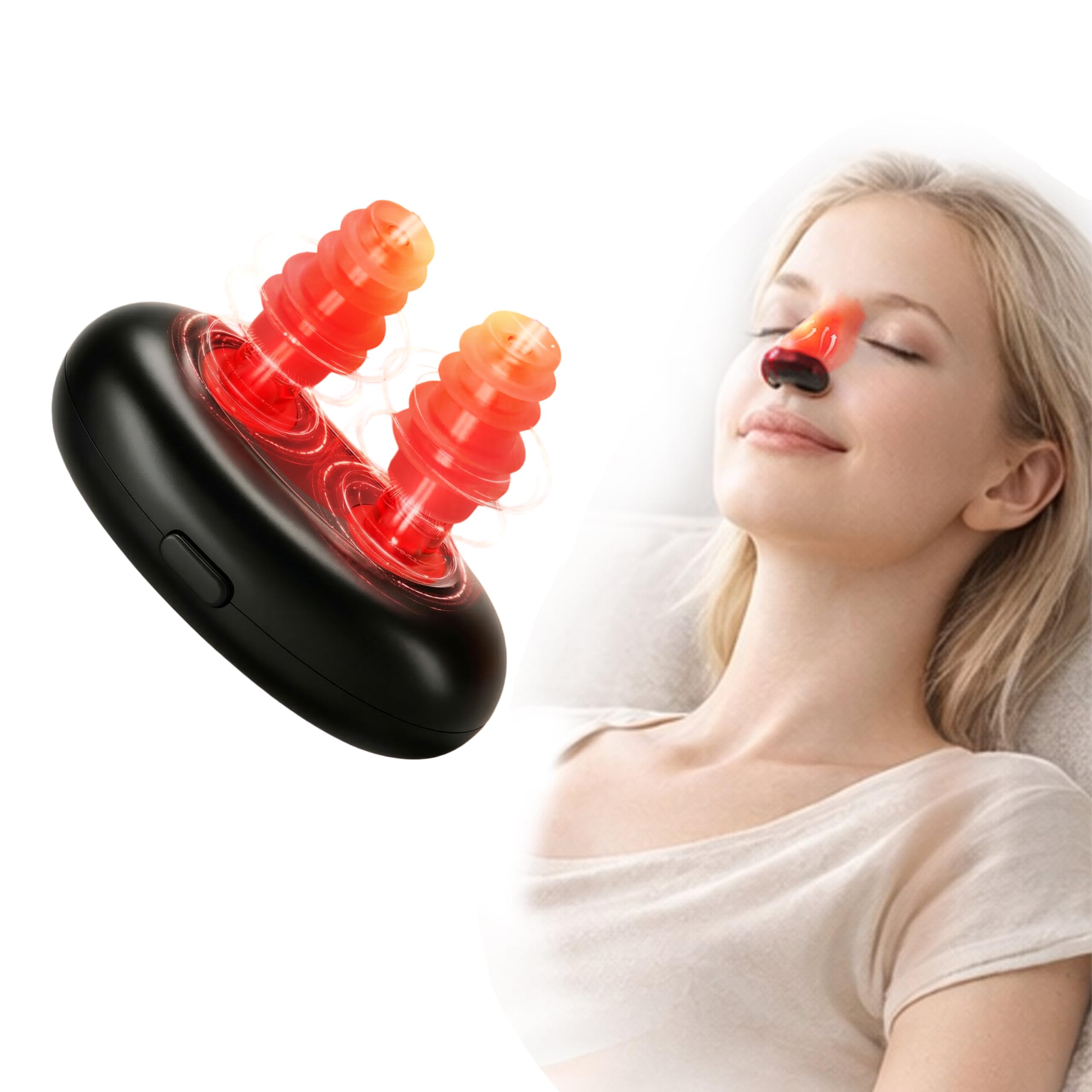
Not an ice pack at all — a small light device for the nose, kept separate for a reason.
This one is in a different lane, and the label says so. It’s a compact handheld unit that shines gentle 660nm red light into the nose for a drug-free, non-invasive routine. There’s no gel, no freezer, no chill. A full charge is rated for up to 10 uses, so you can leave the charger at home on a short trip. The sleeve is sized for a light fit at 4.16 ounces. Each session is recommended at 10 minutes, one to two times a day, with auto shut-off so you don’t have to watch a clock.
What makes it easy to live with is that there’s no cold blast against the skin. Buyers use it for congestion and dryness, and allergy sufferers find the slight warmth keeps the nostrils moist. One buyer who’d used nasal spray for close to 40 years reported being off it after three weeks, with congestion “so much less.” It’s small enough to drop in a travel bag and comfortable enough to use at home or in a hotel room.
The fair caveat: this is not a replacement for a cold pack, and it won’t help a sprained ankle or a lunch. It also won’t feel like anything dramatic — a few weeks of routine use is the frame, not one session. If you mainly need a cold compress for an injury, skip to the FlexiKold above. If your issue is your nose, this does its one job simply.
The routine: 10 minutes a session, once or twice a day, with auto shut-off and up to 10 uses per charge — a low-effort daily habit.
Read the fit: it’s a nose device, not a cold pack. Buy it for congestion and dryness, not for icing a muscle.
Pick it for: a portable, drug-free daily routine aimed at a stuffy or dry nose at home or on the road.
Leave it if: what you actually need is a cold pack for an injury or a lunch bag.
Know the Specs
Gel fill and frozen flexibility
Gel packs hold their shape better than a solid block of ice because the fill doesn’t lock up hard when frozen. A pack described as pliable or flexible when frozen can bend around a knee or a shoulder, which means it actually touches the sore spot instead of perching on top of it. Thicker gel generally means a longer usable cold window, so a pack that’s generous with gel tends to stay useful for longer per freeze.
Cold retention and freeze time
These are two different numbers and both matter. Freeze time is how long the pack needs in the freezer before it’s ready — often several hours for a large therapy pack, overnight for soft lunch packs. Cold retention is how long it stays useful once out. A pack that holds about 4–5 hours suits a lunchbag; a therapy pack used for roughly 30 minutes at a time can be re-frozen between sessions. Match the number to how you’ll use it.
Shell material and condensation
The outer shell does two jobs: it stops leaks and it manages moisture. A thick nylon or tough plastic shell resists tearing and keeps condensation from soaking a lunchbox. Look for double-sealed seams on therapy packs, since that’s where leaks usually start. BPA-free construction matters on anything that may touch unwrapped food or bare skin during a session.
Size and coverage
The face dimensions tell you what body part or container the pack suits. A wide pack wraps a back or a hip; a thin, small pack tucks into a lunch bag without displacing food. Read the actual measurements rather than trusting a label like “XL” — a large face on a therapy pack and a slim profile on a lunch pack serve completely different jobs. Picking the wrong one for your use is the most common buying mistake.
Common Questions
How long do ice packs stay cold in a lunchbox?
Do gel ice packs stay soft when frozen?
Can I use an ice pack for a lunchbox on an injury?
How long does it take to freeze an ice pack again?
What does BPA-free mean and does it matter for ice packs?
Are ice packs safe to put straight on skin?
Can you heat an ice pack in the microwave?
How do I stop an ice pack sweating inside my lunchbox?
What size ice pack fits a shoulder or a back?
Are reusable ice packs better than a bag of frozen peas?
The Bottom Line
For most people, the ice packs winner is the FlexiKold Gel Soft Flexible Ice Packs. It’s the one that solves the core problem: it stays bendable when frozen and holds a useful cold window of about 50 minutes per session, so it actually molds to a joint or a back. If what you need is lunch cooling, the Cool Coolers XL Slim 4 Pack gives you four thin packs you can rotate through a lunch bag without displacing food. For a set that handles both cold and heat with a wrap that keeps it in place, the JJ CARE 2 XL pack is the one to reach for. The best advice: buy for the job you actually have — a therapy pack for a joint, a slim set for lunches — and you’ll reach for it far more often.
How we choose
We do not accept paid placement. Every pick is matched to a real buyer and a real use-case; we do not hands-on test units.
Sources
Specifications: manufacturer listings and product documentation. Review insights: verified customer reviews, as of October 2026. Pricing: not shown on this page (it changes often); check the current price via the retailer link.
As an Amazon Associate, Aappliancez earns from qualifying purchases. This does not affect which products we feature.