Disclosure: Some links in this post are affiliate links. As an Amazon Associate I earn from qualifying purchases, at no extra cost to you. Learn more
Specs are compiled from manufacturer listings and verified buyer reviews and can change over time — please confirm the key details on the product page before buying.
On a hot ultra, the fabric around your neck has one job: soak it, wring it, tie it, and feel it cool you through the first stretch of the run. That is what an ice bandana does. The stretch and the tie knot either help that job or get in the way of it. Below are five pieces of neck wear that people really do run with, sorted by what each one is best at, so you can stop reading specs and start packing your drop bag.
This guide is built by comparing the manufacturers’ published specifications and the patterns across verified customer reviews, so you get each pick’s real strengths and trade-offs instead of marketing spin.
Cooling fabric only works while it is wet, so the practical question is how long a soak lasts and how easy the thing is to re-wet at an aid station. This breakdown of the best ice bandana for ultra running focuses on exactly those two things.
Top Picks

How To Choose The Best Ice Bandana for Ultra Running
An ice bandana is not a magic cold pack. It is a piece of fabric that holds water against your neck, and the evaporation of that water is what pulls heat off you. Pick one that holds the water long enough to matter, ties tight enough to stay put, and covers the skin your race kit leaves exposed.
Wet cooling versus sun blocking
These are two different jobs and a good bandana does both. A UPF 50 rating means the fabric blocks most of the sun’s UV rays, so your neck and chest do not burn over a long day. Cooling starts only once the fabric is wet — soak it, wring the excess, and the evaporation does the work. A bandana that is dry blocks sun but does not cool you.
The knot is the real test
You will re-tie this thing dozens of times over a long race, often with tired hands. A square of fabric with some stretch ties more securely than a stiff cotton bandana, and a larger cut leaves enough tail to make a real knot instead of a pinch. If the fabric is too small or has no stretch, it slides and you spend the day fiddling with it.
How long a soak really lasts
Expect the cooling to fade faster in direct sun and dry heat than in shade or humidity. Most soaked fabric neck wear gives its strongest cooling for the first stretch and then needs a top-up. That is normal, not a fault. Plan your aid-station stops around re-wetting, and carry a small bottle for a quick refresh between stations.
Fabric, weight, and drying
Polyester and nylon blends dry fast, which is good between soaks but means they also stop cooling fast. Microfiber mesh holds water well and breathes. A thin fabric packs smaller in a vest pocket. Weigh how much bulk you are willing to carry against how much water the fabric will hold.
Side-by-Side Comparison
| Model | Best For | Sun Rating | Fabric | Size / Format | Amazon |
|---|---|---|---|---|---|
| UPF 50+ Cooling Bandana★ Best Overall | All-round neck and head cover | UPF 50+ | 89% polyester, 11% spandex | 60 x 60 cm square | Amazon |
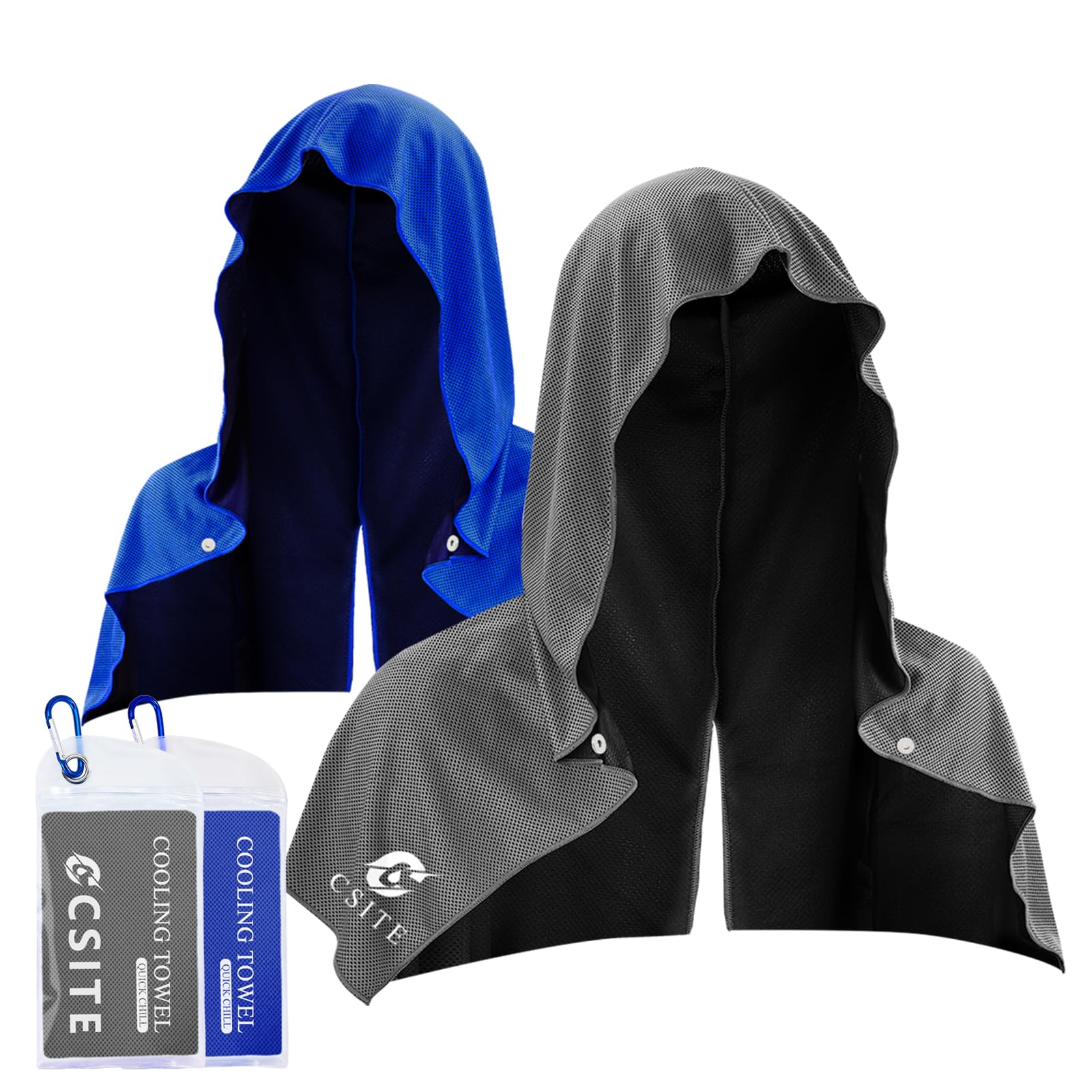
| CSITE 2 Pack Cooling Hoodie TowelsBest Coverage | Hooded coverage for head and neck | UPF 50 | 45% polyester, 55% nylon mesh | 29″L x 12″W, 2-pack | Amazon |
| Buff CoolNet UV Half Neck Gaiter | Light, packable everyday coverage | UPF 50 | 95% recycled REPREVE microfiber | Half-length gaiter, 0.6 oz | Amazon |
| Honoson Cooling Towel Bulk | Race-crew and club stash | — | Microfiber polyester | 11.8″L x 31.5″W, 30-pack | Amazon |
| 2PCS Neck Cooling Tube | Freezer-based cooling | — | Phase change gel, TPU shell | 2-pack, ~5.3 oz each | Amazon |
Detailed Reviews
1. UPF 50+ Cooling Bandana for Men & Women
Our pick — 4.5+★ from 600+ verified ratings; the strongest balance of quality and price.
A big square of stretch fabric that ties tight, soaks fast, and blocks the sun while it cools.
You get a knot that actually holds, even on a slim neck, because this square measures 60 x 60 cm (about 23.6 inches on each side). That leaves a generous tail to tie and enough fabric left over to drape over your shoulders or tuck under a cap. Most bandanas in this class are smaller and leave you pinching off a corner. The fabric is 89% polyester and 11% spandex, so it stretches and lays flat against your skin instead of bunching. For an ultra runner, that means fewer readjustments and less fabric flapping in your face.
What wins people over on the review pages is how it looks and how it cools — the two things owners bring up most — and the practical reports back that up. Worn wet and tied over the head in intense heat, it held its cooling for an hour or two at a stretch and revived with a small splash of water. The knot stayed put. Owners also keep finding uses beyond the neck: as a head cover, over the chest, even dried and wrapped for warmth at a cold morning start. Because it is a square rather than a tube, you can wear it five different ways without a second piece of gear in your pack.
The catch is honest and simple: the cooling fades in direct sun, and this fabric notably traps moisture if you are sweating hard rather than pulling it away. That is a minor annoyance rather than a deal for a bandana you will be re-wetting anyway, but do not expect it to dry out mid-race. Get it wet, wring it, knot it, and refresh at every aid station. That routine is exactly what this piece of fabric is built for, and the crowd agrees — 4.5+ stars across 600+ ratings.
What runners get out of it
- UPF 50+ blocks sun on neck and chest so you are not racing a sunburn as well as the clock
- 60 x 60 cm square ties a secure knot and leaves fabric to drape over your shoulders
- 89% polyester, 11% spandex lays flat and stretches without pinching
- Ties as a head cover, neck scarf, or chest drape — one piece, several setups
Where it falls short
- Cooling fades in direct sun and needs re-wetting mid-race
- Holds sweat against the skin instead of pulling it away
- Needs a splash to re-activate — no freezer pack built in
Reach for this if: you want one square of fabric that blocks sun, ties securely, and cools once soaked — the simplest setup for a hot long race.
Look elsewhere if: you want cooling that does not depend on water, in which case a freezer tube is a better match.
2. CSITE 2 Pack Cooling Hoodie Towels
A cooling towel shaped like a hood, so your ears and forehead get the cold along with your neck.
You skip the knot entirely: this one pulls over your head and covers the back of your neck, your ears, and your forehead in one move. That is a bigger footprint of cooled skin for the same soak than a square bandana tied at the neck. It measures 29 inches long by 12 inches wide and is cut from a 45% polyester, 55% nylon mesh, so it breathes while it holds water. The hoodie shape is the reason to pick it: less fiddling when your hands are tired, and the fabric stays where you put it.
The instant hit of cold is what the review pages rave about. Soaked in cold water, wrung, and pulled on in 90-degree heat, the hoodie cools within seconds — the kind of shock you want at a sun-baked aid station. The magnetic button is a quiet favorite among outdoor workers because you can fasten it one-handed instead of fighting a knot. You also get two in the pack, plus a waterproof pouch and a carabiner clip, so one can be soaking in a drop bag while the other is on your neck.
The trade-off is the magnet placement. The button is strong, but it sits a few inches lower than some owners would like, so the front can hang a little loose until you adjust it. The fabric also reads heavier than a thin gaiter — closer to a dry-weave shirt than cling film. Neither is a deal for a race where you want maximum skin covered and cooled; it just means you are trading a bit of bulk for a lot of coverage.
Why the hood shape earns its place: covering the neck, ears, and forehead at once gives you more cooled skin per soak than a neck-only wrap, which is exactly what you want under a hot midday sun.
The honest gripes: the magnetic button sits a few inches low on the front, and the fabric is heavier than a thin gaiter — both manageable, neither a reason to pass it up.
Pick this one when: you want head-and-neck coverage without tying a knot, and you like having a spare in the pack.
Think twice if: you want the lightest possible piece of fabric and no hardware at all.
3. Buff CoolNet UV Half Neck Gaiter

Weighs 0.6 ounces, so it disappears in a vest pocket until the sun comes out.
You can clip this to your pack and forget about it until the climb gets exposed, because it weighs 0.6 ounces and is half the length of a full gaiter. It is a smooth tube of 95% recycled REPREVE microfiber (a fabric made from recycled plastic bottles) with a UPF 50 rating (blocks most of the sun’s UV rays), so it stretches around your neck without a seam to rub. The shorter cut means less fabric hanging loose, so it sits comfortably and pulls up over your ears when the wind picks up. For a race where every gram gets counted, that tiny weight is the whole argument.
One piece of fabric covers a long day that changes weather. Owners wear it as a sweat band to keep stinging sweat out of their eyes, as a sun guard for the neck, and dunked in a stream and wrung out before wrapping it wet around the neck. Buyers report it holding up for years without falling apart, and doubling as a light mask or hair cover between stages. One owner wore it daily on a multi-day alpine trek, switching between all of those jobs on the same gaiter.
Be clear about what it is not: this is thin sun-and-sweat protection, not a heavy cooler. It will not hold ice-cold water against your neck the way a wide towel does. A few runners also find the half-length cut too short to cover much, and the fabric feels slippery around the throat. If you want a big sopping ice bandana, go wider. If you want to always have something in your pocket that blocks the sun and takes the edge off, this is it.
The call: a sub-ounce UPF 50 tube that earns its space in any race vest — sun cover you will never notice you packed.
Know before you buy: it is thin and short, so it shades your neck rather than delivering a deep, water-loaded chill.
4. Honoson Cooling Towel Bulk
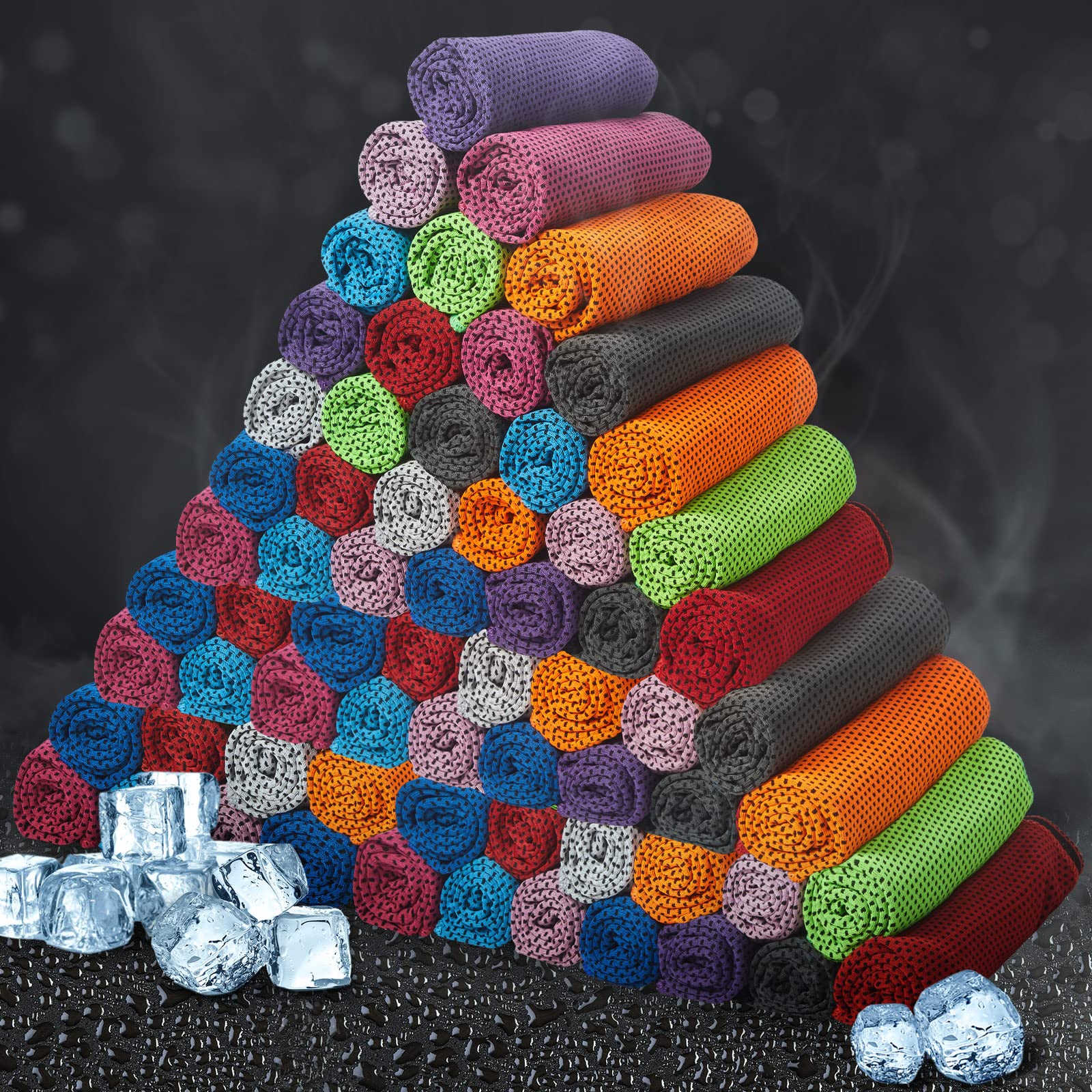
Thirty cooling towels in one box — buy once, hand them out to your whole crew.
Nobody buys a 30-pack of cooling towels for one neck. This is the box you split with your running club, your pacer team, or the aid station volunteers who will be standing in the sun all day. Each towel measures roughly 11.8 inches by 31.5 inches of microfiber polyester — long enough to wrap your neck and tie off, thin enough to breathe. The routine is simple: soak in cold water for about a minute, wring it out, give it a few shakes, and wear it. Colder water cools better, so ice-cold soak water is the move.
What owners praise most is simply that it cools — the whole bag of them works, cheaply. Long, thin, and breathable, they drape over the chest without feeling heavy and hold cooling for a stretch before you re-soak. The colors run bright and varied, which makes them easy to hand out and hard to lose in a pile of gear.
Set your expectations on the fabric. It is thin, and a fair share of owners find the towels get soaked fast and stay dripping rather than drying on the go. Some also find the cut short for a tall adult. Those are the honest knocks on a very cheap towel — for a crew stash or a giveaway, they matter far less than they would on the neck of a race leader. There are no instructions in the box, so show your volunteers the soak-wring-shake routine yourself.
Where the volume wins: thirty microfiber towels make a practical kit for pacers, crew, and volunteers — everyone in the shade of the same box.
The compromises: thin fabric that stays wet and a shorter cut than some tall runners want, so treat these as stash towels rather than a personal race piece.
Best suited to: race crews, clubs, and hot-weather events that need to cool a lot of people at once.
Not the one for: a single runner who wants one carefully chosen bandana for their own neck.
5. 2PCS Neck Cooling Tube with Insulated Bag
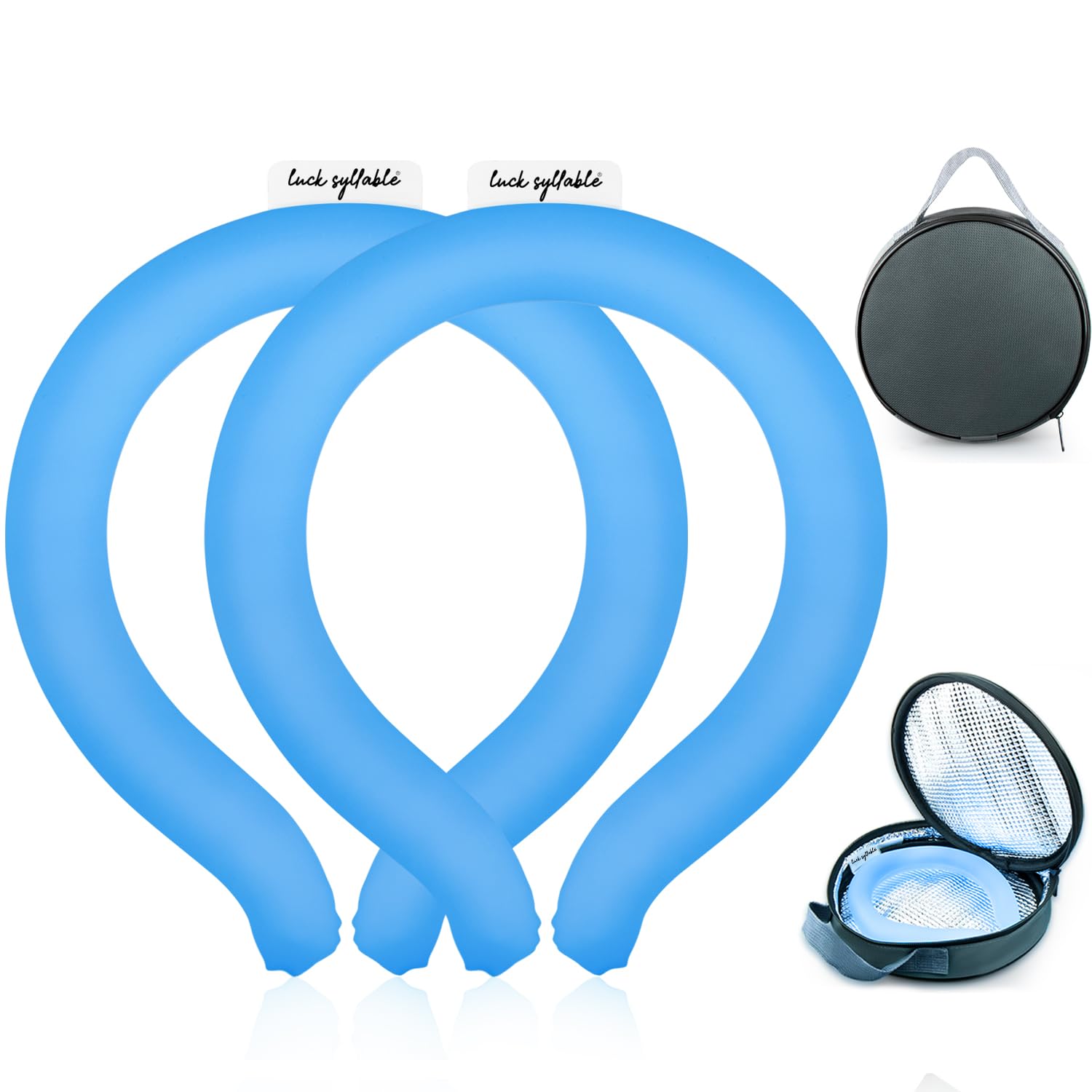
No water, no wringing — freeze the gel tube, hang it on your neck, swap it when it thaws.
Everything above needs water. This one needs a freezer. The tube is filled with a liquid plant-based phase change material that starts to freeze below 18°C (64°F), so it solidifies in a fridge or freezer and then cools your neck as it thaws. The outer layer is TPU (a flexible rubbery plastic), molded in one piece with no seam, so there is nothing to split or leak. Each tube weighs about 5.3 ounces and sits on the curve of the neck with enough elasticity to fit different sizes. It is the pick for a runner who wants cold that does not depend on an aid-station tap.
The two-pack is the smart part. Keep one tube frozen and one on your neck, then rotate — owners running long sessions report getting 2+ hours of cold this way, with no dripping as the gel warms. The included insulated bag keeps a spare cold in your drop bag between swaps. In humid heat that makes a wet towel feel useless, a fully frozen tube gives you a reliable first hour of real cold before it softens.
The catch is how long the cold lasts. This tube does not stay cold as long as you would hope, and how quickly it freezes and thaws swings a lot with the conditions — a tube pulled from a short freeze thaws sooner than one left in overnight. Plan on rotating through both tubes and keeping the spare bagged and cold. It works well for a race where you have a cooler or a freezer at crew points. On a self-supported stretch with no cold source, the soak-and-wring crowd has the edge.
Choose it if: your crew has a cooler and you want cold that does not rely on water stops — freeze it, wear it, swap it.
Pass if: you race self-supported with no freezer access, because once these thaw the cooling is gone.
Know the Specs
UPF 50 sun protection
UPF stands for Ultraviolet Protection Factor — it is to fabric what SPF is to sunscreen. A UPF 50 rating means the fabric blocks most of the sun’s UV rays that would otherwise reach your skin. For an ultra runner, that translates to a neck and chest that do not burn over a long exposed day. It says nothing about cooling; it is purely a sun-blocking measure.
Fabric blend and stretch
The blend tells you how the bandana behaves. Polyester and nylon are the fast-drying, water-holding workhorses. A little spandex (elastane) adds stretch so the fabric lays flat and ties without pinching. Microfiber mesh breathes and holds water. A pure cotton bandana feels soft but dries slowly and sags when soaked, which is why the better cooling pieces lean on synthetics.
Phase change material
Phase change material is a gel or liquid engineered to freeze at a set temperature — here, below 18°C (64°F). Instead of soaking up water and cooling by evaporation, it stores cold and releases it slowly as it thaws. That gives a steady chill with no dripping, but a fixed window of cold rather than the endless top-ups a wet towel gets from a tap.
Size and weight in a race vest
A 60 x 60 cm square ties a real knot and drapes the shoulders. A 12-inch-wide towel wraps the neck and chest. A half gaiter at 0.6 ounces vanishes in a pocket. Your cut-off is simple: bigger fabric holds more water and covers more skin, smaller fabric is easier to carry. Match the size to how much coverage and water capacity you are willing to haul.
Common Questions
Will an ice bandana stay cold for a whole ultra?
Should I wear it wet or dry on the run?
Is a neck gaiter better than a bandana for running?
How do I keep the knot from coming loose while I run?
Can I put an ice bandana in a drop bag or crew cooler?
Does UPF 50 still work when the fabric is wet?
How do I re-activate a cooling towel at an aid station?
Will a cooling towel fit under a running cap or beanie?
What is the difference between a cooling towel and a freezer neck tube?
Can I machine wash these cooling pieces?
The Bottom Line
For most runners heading into a hot ultra, the ice bandana for ultra running to start with is the UPF 50+ Cooling Bandana — a big stretchy square that blocks sun, ties a knot that holds, and cools as soon as it is soaked. If you want head-and-neck coverage in one go, the CSITE hoodie towels pull over in one move and give you a spare for the drop bag. For pure low weight and packability, the Buff half gaiter at 0.6 ounces barely registers in a vest. And if your crew can keep a cooler stocked, the neck cooling tube delivers drip-free cold without a single aid-station stop. Whichever you pick, plan the routine: soak, wring, tie, and refresh at every chance.
How we choose
We do not accept paid placement. Every pick is matched to a real buyer and a real use-case; we do not hands-on test units.
Sources
Specifications: manufacturer listings and product documentation. Review insights: verified customer reviews, as of October 2026. Pricing: not shown on this page (it changes often); check the current price via the retailer link.
As an Amazon Associate, Aappliancez earns from qualifying purchases. This does not affect which products we feature.