Disclosure: Some links in this post are affiliate links. As an Amazon Associate I earn from qualifying purchases, at no extra cost to you. Learn more
Specs are compiled from manufacturer listings and verified buyer reviews and can change over time — please confirm the key details on the product page before buying.
You don’t need a dozen ice packs — you need one that bends around your knee while it’s still frozen and stays cold past the twenty-minute mark. That is the whole game here: a pack that stays pliable at freezer temperature, holds its chill through a full icing session, and doesn’t soak your clothes as it thaws. The five picks below cover the range from a soft, body-hugging gel pack to a classic screw-top ice bag, so you can match the shape and the surface to the injury you’re actually treating.
This guide is built by comparing the manufacturers’ published specifications and the patterns across verified customer reviews, so you get each pick’s real strengths and trade-offs instead of marketing spin.
Icing is simple in theory and fiddly in practice, and the details are where these packs separate. Everything below comes straight from each listing’s published specs and the owners who live with them. Here is the plain-English breakdown of the best ice bag for injuries.
Top Picks


How To Choose The Best Ice Bag for Injuries
Your choice depends on one question: a sealed gel pack, or a bag you fill with ice yourself? Both cool an injury, but in opposite ways. Which one fits depends on where the sore spot sits and how much prep you’ll put up with.
Gel pack or fill-your-own bag
A gel pack goes straight from freezer to skin with no setup. You pull it out, wrap or press it on, and it’s already conforming to the shape of your knee or shoulder. A screw-top ice bag needs ice and a splash of water each time, but it tends to run colder and you can empty it for storage. If you ice a joint several times a day, the no-prep gel route usually wins on convenience. If you want deep cold on a big flat area and don’t mind filling, the bag has the edge.
Why flexibility at freezer temperature matters
A stiff pack will not wrap a knee or ankle, so it ends up resting on top of the swelling instead of hugging it. Look for wording that the gel stays pliable or bendable when frozen. That trait is what lets one pack cover a shoulder, then a calf, then a wrist.
The soft-face question
Fabric that touches your skin directly saves you hunting for a towel every session. A brushed fleece or soft nylon face holds the cold a step back from bare skin, so it’s less of a shock on contact. Bare plastic gel packs often want a cloth barrier for the first few minutes. If you ice often, a soft-faced pack removes one annoying step.
Sizing to the body part
A long, narrow pack drapes over a neck or runs down a spine, while a squarer pack covers a back or a hip. Match the footprint to the area you’re treating and don’t buy one size expecting it to wrap every joint equally well.
Side-by-Side Comparison
| Model | Best For | Type | Size | Weight | Amazon |
|---|---|---|---|---|---|
| TheraICE PROpack★ Best Overall | All-round everyday icing | Sealed gel pack | 5″ x 8″ | 15.2 ounces | Amazon |
| Accurate Manufacturing Ice PackLongest Reach | Long neck and spine coverage | Sealed gel pack | 5″ x 18″ | 1.6 pounds | Amazon |
| Fythao 2-Pack Ice Bags | Fill-your-own cold or hot | Screw-top bag | 11 inches | 9.52 ounces | Amazon |
| BodyMed Gel Cold Pack | Back and post-surgery coverage | Sealed gel pack | 12 in. x 7 in. | 1.48 pounds | Amazon |
| AllSett Health Soft Ice Pack 2-Pack | Bare-skin comfort and travel | Fleece-faced gel pack | 10″ x 6″ | 1.68 pounds | Amazon |
Detailed Reviews
1. TheraICE PROpack Ice Pack 5×8
Our pick — 4.5+★ from 700+ verified ratings; the strongest balance of quality and price.
The soft gel pack that bends to your knee straight out of the freezer instead of fighting it.
This pick earns the top slot because it stays soft and bendable even when fully frozen. It’s a sealed gel pack with a 5″ x 8″ surface — small enough to target a knee, calf, or neck without slopping over the edges. Press it on and it flattens into whatever shape the injury needs, instead of sitting proud like a plank.
Buyers report this one becomes the household go-to. The most-praised quality by a wide margin is that it simply works — a compact 5″ x 8″ pack that delivers real cold where you point it. Holding cold runs a close second: as buyers put it, “Stays cold well past the 20-minute icing session most doctors recommend.” That’s the difference between icing through a full session and going lukewarm halfway. The gel stays pliable, so it never turns into the rock-hard block that makes you flinch against a sore spot.
Where it asks something of you: the 15.2 ounces of gel make it heavier than the lightest fill-your-own bags, and it has no strap or holder. You hold it in place or brace it against a cushion. It also wants a plastic bag in the freezer if you don’t want it picking up food smells — an easy habit, but a habit. For repeated icing on knees and shoulders, none of that gets in the way of the job.
What earns it the top spot
- Stays soft and bendable while frozen, so it wraps joints instead of perching on them
- Holds cold through a full 20-minute icing session and beyond
- Compact 5″ x 8″ face targets knees, shoulders, and necks without excess bulk
- Soft gel presses comfortably against sore muscles and minor aches
Small things to plan around
- No strap or holder, so it needs a hand or a cushion to stay put
- Heavier gel fill than the fill-your-own bags at 15.2 ounces
- Store it bagged in the freezer to keep it away from food odors
Grab this one if: you ice a knee, shoulder, or back regularly and want zero prep between freezer and skin.
Think twice if: you need hands-free hold — there’s no strap here, so reach for a long wrap or a bag you can tie.
2. Ice Pack (5″x18″ Size)
The long, skinny gel pack built to drape a neck, spine, or shoulder that the short packs can’t reach.
Most gel packs are square-ish and stop at the edge of the joint. This one runs a full 18 inches long at 5 inches wide, so it lays down a neck and over a shoulder in one strip. That extra length is why it gets the long-reach nod; the compact TheraICE covers a knee nicely but won’t run the length of a spine the way this does.
It stays flexible when frozen, so that 18-inch strip curves to the body rather than jutting out in a straight bar. It also pulls double duty as a hot pack — you can warm it and use it for joint stiffness or muscle tightness, and owners use it both ways. It runs seriously cold, cold enough that the first stretch wants a thin cloth between it and your skin. After that, it settles into steady, deep chill that holds for a good while.
The honest catch is the material: it’s a latex-based gel pack, and it works best as a cold pack. Using it hot is possible, but the sides of the pouch are the part to watch over time. Treat it kindly, keep it cold-leaning, and it earns its place. If you want a thoroughly heat-safe pack, a grain or bead bag is a cleaner tool for the warm side.
Where it shines: a genuine 5″ x 18″ reach lets you lay cold down a neck or spine that shorter packs leave exposed, and it flexes to the curve of the body instead of hanging stiff.
The trade-off to know: the latex-based construction and the way the pouch holds up argue for keeping this one on cold duty and reaching for a different pack when you want sustained heat.
Reach for it when: the sore spot is a neck, spine, or shoulder that needs a long curved strip of cold.
Look elsewhere if: you want one pack for hot therapy above all — this one is happiest cold.
3. Ice Bags 2Packs 11″
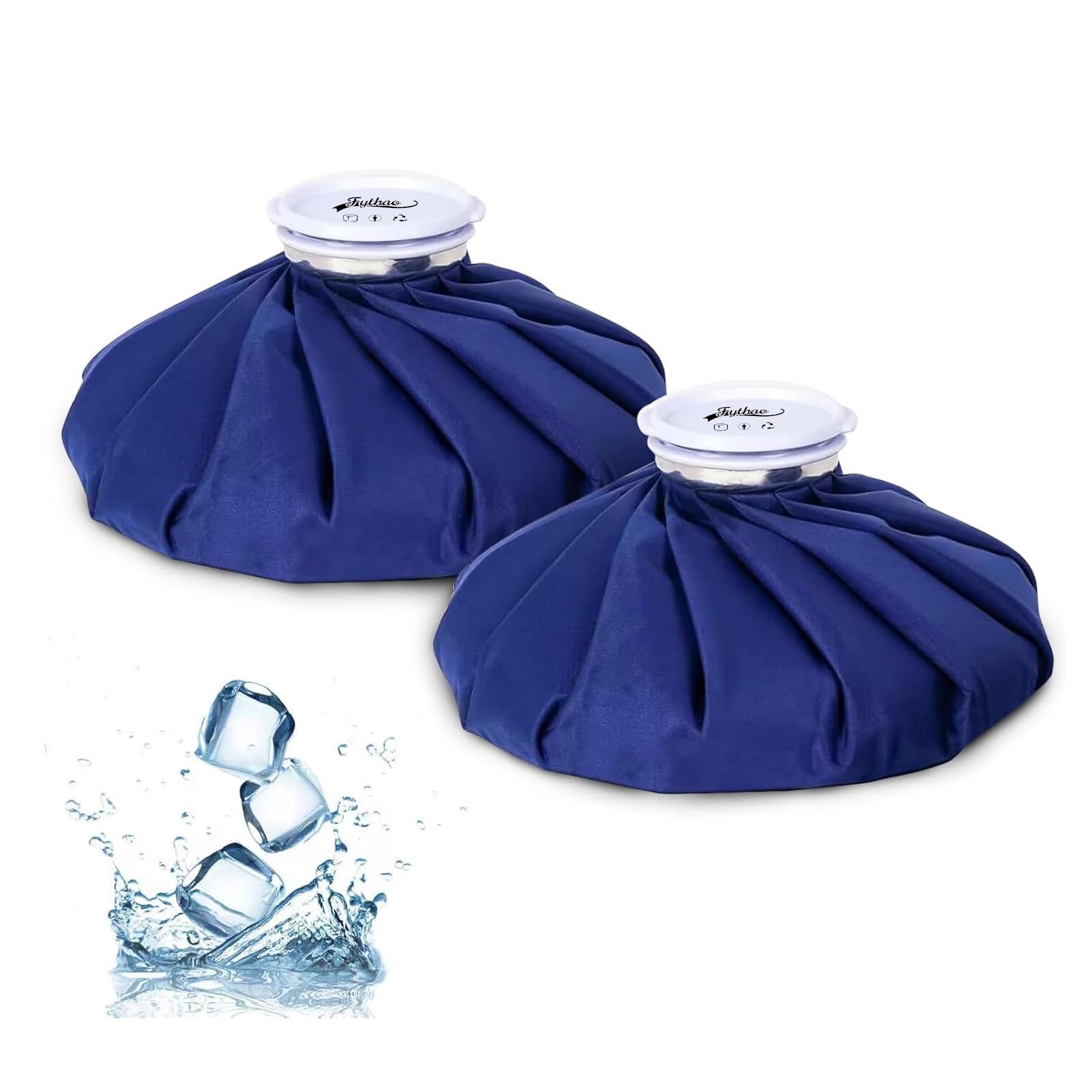
The old-school screw-top ice bag, redone with a leak-proof seal and a soft waterproof skin — for people who want real ice, not gel.
Some people just trust actual ice cubes over a gel pack. This is that camp, done right: a wide screw-top opening fills easily from a cup or a bowl, and a rubber sealed ring under the lid holds the water in. You get two bags in the 11-inch size, so one can be icing a knee while the other is refilling. The soft waterproof fabric carries the cold, and the leak-proof seal is the reason it’s the fill-your-own pick.
The surface of this one is where it earns its following — owners value the simple fact that it doesn’t sweat. Fabric that keeps condensation in means you can lay it on a lap or a sore knee without soaking a shirt. Once filled, it holds a deep chill for a long stretch. Big enough and steady enough for a post-surgery ankle or a swollen knee, and the two-pack means less downtime between fills.
This is an old-school bag, so the trick is fresh ice with a little water, and the liner wants a gentle hand if you’re breaking up ice to fit. A rare bag can develop a weak spot at the seam, but the maker stands behind them and most users ice for years without trouble. Want set-and-forget gel? This isn’t it. Want the deep, honest chill of real ice? It is.
- Two 11-inch bags per pack, so you can rotate while one refills
- Screw-top lid with a rubber sealed ring holds water in and stays leak-proof
- Soft waterproof fabric doesn’t sweat through to your clothes or lap
- Doubles as a hot-water bag when you want warmth instead of cold
The right call for: anyone who prefers genuine ice cubes and wants a big, no-sweat cold surface for knees, ankles, or hips.
The honest limitation: it takes a fresh fill each session and wants gentle handling of the inner liner.
4. BodyMed Reusable Gel Ice Pack 12 in. x 7 in.
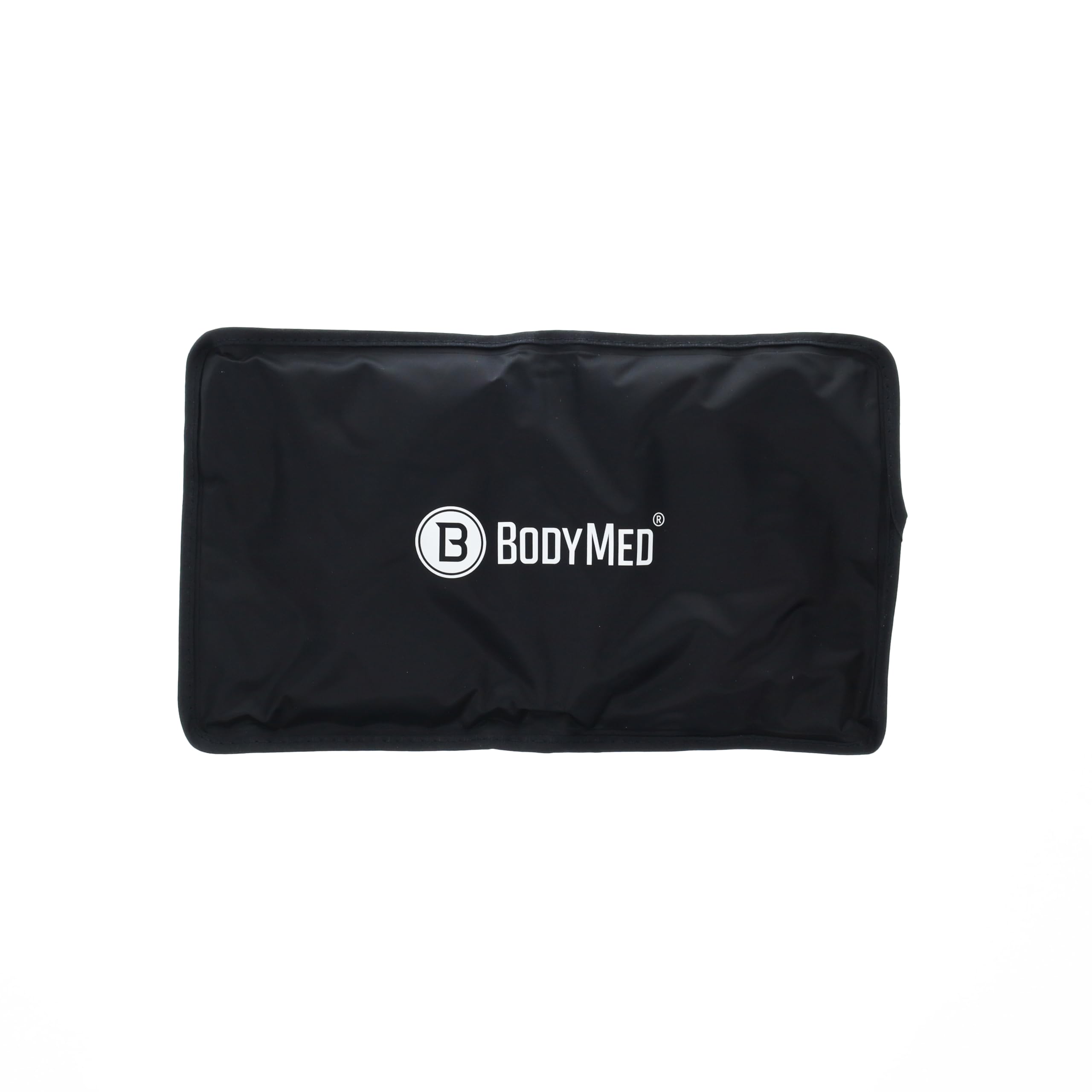
A big, thin gel pad that wraps most of the way around a swollen knee and covers a whole back — the one for serious coverage.
When the injury is broad — a post-op knee, a lower back, a hip — you want a pad that lays a wide flat sheet of cold across the area. The 12-inch by 7-inch face on this BodyMed does exactly that. It’s built with a thin gel layer between a PVC interior and a smooth nylon cover, so it sits flatter against the body than a bulky block. For anyone icing a surgical recovery area, that flatter profile is the draw.
The gel stays flexible when frozen, so it molds around the joint instead of leaving gaps. It’s made with a double-seam design meant to prevent leaks through repeated use, which matters when you’ll be pulling it in and out of the freezer for weeks. What wins people over is the build quality — the double-seam nylon-and-PVC construction feels like a proper piece of equipment, not a throwaway. The smooth nylon face is gentle on skin and stays dry as it thaws, and the 12″ x 7″ pad covers a wide swath so you’re not chasing the cold around the edges.
The one thing to plan around: the pack can arrive folded and the gel may settle unevenly where the creases were, so you might want to knead it flat before the first freeze. It’s not a problem for occasional icing, but if you’re using it hard and often, work it flat first. Otherwise it’s a tough, wide pad that covers the areas smaller packs can’t.
Why it earns its keep: a 12-inch by 7-inch gel pad that wraps a knee or covers a back far better than a compact square, with a nylon-and-PVC build that holds up to frequent use.
One prep step: knead the gel flat if it comes from the start with a crease, so the cold distributes evenly.
Worth it for: back, hip, and post-surgery icing where you need wide, even coverage from one pad.
Pass if: you only ever ice a small spot like a wrist — the big pad is more surface than you need.
5. Reusable Ice Packs 10″x 6″ Pack of 2

Two soft-faced packs with a brushed fleece side, so you can skip the towel and press it straight onto bare skin.
Here’s the pitch: one side of each 10-inch by 6-inch pack is brushed fleece, and the other is nylon. The fleece face touches your skin without the shock of bare plastic, and it holds the cold one comfortable step back so it never feels like it’s biting. That’s why it takes the soft-touch slot. You grab a frozen pack, press the fleece side on, and you’re done. No hunting for a cloth.
The two-pack is the practical bit. You keep one chilling while the other works, so a sore back or a pulled muscle never waits. The size covers most of a lower back from side to side, and it works just as well on a knee, a neck, or a hand injury. It stays cold for roughly the length of a proper icing session before it needs a rotation — which is exactly why having the second one frozen is handy. It’s also a comfortable pack on bare skin, which matters when you’re icing several times a day.
The thing to know is that this is a thin, moldable pack rather than a heavy gel slab. That’s a plus for conforming to small areas like a wrist, but for long, hard icing sessions the second pack does the real work of keeping cold going. Think of it as a pair that takes turns.
- Thin gel layer warms faster on its own, so rotate the two packs to keep cold going
- Best suited to short, frequent sessions rather than one long deep freeze
What it gets right is the part you feel most: the soft fleece face, the comfortable fit, and the ability to press a frozen pack on without a barrier. For a busy household nursing an injury, that pair beats one stubborn slab.
Pick this if: you want soft, bare-skin-friendly packs you can rotate, and comfort matters as much as raw cold.
Better elsewhere if: you need one pack to hold deep cold for a single long session — a heavier gel pad holds longer.
Know the Specs
Pliable When Frozen
This is the trait that decides whether a pack can wrap a joint or only sit on top of it. A gel that stays soft at freezer temperature flattens into the curve of a knee or shoulder, so cold reaches the whole swollen area. A pack that freezes rock-hard leaves gaps and feels unkind on contact. When you’re comparing, look for “stays flexible” or “pliable when frozen” in the listing — it’s the difference between a wrap and a brick.
Cold Retention in Minutes
Retention is how long the pack keeps working before it needs to go back in the freezer. A proper icing session runs a set stretch of minutes, so you want a pack that stays cold across it rather than fading partway. Heavier gel fills and larger surfaces tend to hold longer; thin packs warm sooner and suit rotating two instead. If you ice often, owning a pair that take turns is more reliable than one pack that quits early.
Surface Material
The material you press against skin drives comfort. A soft fleece or brushed face can go on bare skin and spares you a cloth barrier; a bare plastic or latex side often wants a thin layer first. Nylon covers feel smooth and clean, while waterproof fabric on a fill-your-own bag keeps condensation off your clothes. Match the surface to how often you’ll ice and how sensitive your skin is.
Size and Shape
The footprint should follow the body part. Long, narrow packs drape a neck or spine; wider square pads cover a back or hip; small squares target a knee or wrist. A single size rarely wraps everything well, so pick the shape that matches your main injury and treat a second pack as the one that covers the rest.
Common Questions
Should I choose a gel pack or a fill-your-own ice bag?
How long should I leave an ice pack on an injury?
Why does my gel pack freeze rock-hard and not wrap my knee?
Do I need a towel between the ice pack and my skin?
Can a gel ice pack be used as a hot pack too?
Why would I want two packs instead of one?
Will a soft ice pack sweat and soak my clothes?
What size ice pack covers a back or a knee?
How do I keep my ice pack from picking up freezer smells?
Are these ice packs reusable over the long term?
The Bottom Line
Icing a knee, shoulder, or back at home? The no-fuss ice bag for injuries to grab is the TheraICE PROpack — its soft gel stays bendable at freezer temperature and holds cold past a full session. For a long neck or spine, the 5″x18″ Ice Pack drapes where short packs can’t reach. And for the deep, honest cold of real ice cubes, the Fythao 2-Pack Ice Bags fill easily and don’t sweat through. One nudge: the TheraICE is the crowd favorite here, so if you ice often, it’s the safe first pick — then grab a second pack of whichever style you choose, because the one still in the freezer is what keeps your session going.
How we choose
We do not accept paid placement. Every pick is matched to a real buyer and a real use-case; we do not hands-on test units.
Sources
Specifications: manufacturer listings and product documentation. Review insights: verified customer reviews, as of October 2026. Pricing: not shown on this page (it changes often); check the current price via the retailer link.
As an Amazon Associate, Aappliancez earns from qualifying purchases. This does not affect which products we feature.