Disclosure: Some links in this post are affiliate links. As an Amazon Associate I earn from qualifying purchases, at no extra cost to you. Learn more
Specs are compiled from manufacturer listings and verified buyer reviews and can change over time — please confirm the key details on the product page before buying.
If you are buying honey to take the edge off seasonal sniffling, the jar that matters is the one that still has pollen in it. Raw, unfiltered honey keeps the bee pollen and enzymes that heavy heating and fine filtering strip out. The five jars below all keep that natural pollen load, and they are ranked by how well they taste, how much pollen they carry, and how much you get per jar for a daily spoonful habit.
This guide is built by comparing the manufacturers’ published specifications and the patterns across verified customer reviews, so you get each pick’s real strengths and trade-offs instead of marketing spin.
You will see which jars carry boosted pollen, which stay creamy instead of crystallizing, and which taste boldest on a spoon. Read on for a plain-English breakdown of the best Honey for Allergies.
Top Picks

How To Choose The Best Honey for Allergies
Start by asking what you want the jar to do. If you want a sweetener for tea and toast that also carries pollen, a plain raw unfiltered jar is enough. If you specifically want a higher pollen dose, look for a jar labeled as an allergy blend with boosted pollen. The label language and the processing method do more to separate these jars than any single number.
Raw and unfiltered versus heated and pasteurized
Heating and fine-filtering honey makes it smoother and clears it faster, but it also removes the pollen and enzymes that draw allergy-focused buyers in the first place. Raw and unfiltered jars keep those particles, which is often why they taste more complex and crystalize more readily.
What an enhanced pollen blend means
An allergy blend is honey that has been formulated with more pollen content than a standard jar, often drawn from beekeepers across a wide area. Read the label plainly: if it states a boosted pollen figure or a specific source region, that is your clue. If it just says raw, treat it as a clean daily sweetener rather than a targeted pollen jar.
Flavor, texture, and how you will use it
Thick raw jars spoon out like soft butter, while creamy varieties spread easily on bread and melt into tea. Darker honey like buckwheat tastes bold with caramel notes, and lighter honey tastes milder. Pick a flavor and texture you will actually spoon out daily, because a jar you avoid will not help your habit.
Bottle shape and everyday handling
A wide lid and a generous opening save you a sticky countertop when a raw jar gets thick. Bulk plastic bottles often create more mess on the pour, so pay attention to the bottle design as well as the honey inside.
Side-by-Side Comparison
The three spec columns below are the same dimensions across every jar, so you can scan jar size, handling, and pollen focus side by side.
| Model | Best For | Jar Size | Pollen Focus | Texture | Amazon |
|---|---|---|---|---|---|
| Y.S. Eco Bee Farms Raw Honey★ Best Overall | Daily sweetener in tea | 22 oz, pack of 3 | Raw, unfiltered, unpasteurized | Thick, slightly gritty | Amazon |
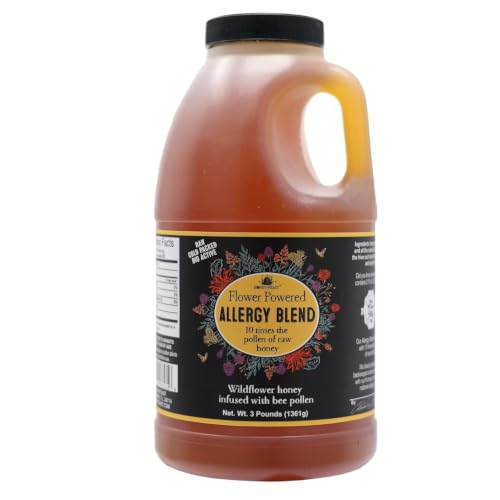
| HONEY FEAST 3 Pounds Allergy BlendHighest Pollen Boost | Targeted pollen boost | 48 Ounce | Tenfold pollen blend | Rich, medium | Amazon |
| Sandt’s Buckwheat Honey | Bold flavor and tea | 32 Ounce | Raw, unfiltered, unheated | Dark, smooth | Amazon |
| HONEY FEAST 6 Pounds Bulk | Bulk pollen habit | 96 Ounce | 10x pollen, bulk jar | Medium viscosity | Amazon |
| Mellona 100% Raw Honey | Creamy spoonful and gifting | 1kg (35.27 Ounce) | Raw, unfiltered, unheated | Creamy, smooth | Amazon |
Detailed Reviews
1. Y.S. Eco Bee Farms Raw Honey – 22 oz Pack of 3
Our pick — 4.5+★ from 850+ verified ratings; the strongest balance of quality and price.
The thick, spoonable jar that makes a daily raw-honey habit easy to keep.
This is a three-pack of 22-ounce jars, so you get a steady supply of raw, unfiltered, unpasteurized honey without restocking every few weeks. That matters if you plan to take a spoonful a day, because buying in a pack keeps the habit simple. The brand has been an organic pioneer since 1995, and the honey is a product of the USA and Canada.
Taste is where this jar wins people over. The flavor is described by buyers as sweet beyond belief, and the texture is smooth with a slightly gritty, peanut-butter feel that signals the pollen and particles are still in it. Expect it to be genuinely thick — buyers report it does not pour, and that you need to spoon it out. For coffee or tea that is fine, and several note it works as a sweetener that way. The proof is in the crowd: 4.5+ stars across 800+ ratings, a strong tally for a raw jar this thick.
The other side of that thickness is spreadability, which lands as mixed. The honey spreads like butter for some and resists the knife for others, so plan on warming the spoon rather than the bread. It is sold as a three-pack, so if you have never tried it before and want to taste a single jar first, this format puts a lot on your shelf at once.
What earns its place
- Raw, unfiltered, unpasteurized honey that keeps pollen and enzymes in the jar
- Three 22-ounce jars, so the daily spoonful habit lasts
- Bold, candy-like sweetness that buyers rate highly
- Thick texture that holds up in hot coffee and tea
Where it tests your patience
- Thick enough that it will not pour — spooning is the only way
- Spreadability is a mixed call; some find it hard on toast
- A three-pack commits you before you have tasted it
Reach for this if: you want an everyday raw spoonful that flavors coffee and tea and keeps pollen in the jar.
Think twice if: you want a thin pourable honey for cold drinks and drizzle.
2. HONEY FEAST 3 Pounds Allergy Blend Honey
A jar built for pollen dose first and sweetener duty second.
The headline here is the pollen. This jar is formulated with a tenfold increase in pollen content, drawing resources from apiarists nationwide, and it comes from a 15-acre Central Florida apiary. If you want more pollen per spoonful than a standard raw jar gives you, this is the one that states it plainly on the label. The 48-ounce jar also gives you more honey per jar than the Sandt’s 32-ounce bottle.
You get honey handled raw and unheated, so its nutrients, enzymes, and antioxidants (natural compounds in honey) stay intact, with no artificial additives or preservatives. Owners mention the taste is sturdy enough for beverages and baking without overpowering a recipe. A beekeeper of four years compared it to real honey taste and found it stood up alongside the other brands tried. Customers note it is easy to keep buying too: one user who has been a devout customer for about five years still loves all the varieties.
The recurring gripe is the plastic 3-pound bottle, which buyers find messy to pour. The narrow opening means the last few inches are hard to get out without heating the plastic, and several would rather it came in glass. It is a handling annoyance rather than a flavor problem — treat the bottle gently and keep a spoon handy.
Why the pollen crowd picks it: the tenfold pollen blend is stated on the label, and the raw, unheated processing keeps the natural enzymes in the jar.
The bottle honesty: plastic and narrow-mouthed, so plan for a sticky pour and a spoon to finish the jar.
Suits you if: a higher pollen dose in a raw honey is exactly what you are shopping for.
Look elsewhere if: a clean, mess-free pour from the bottle is a deal you want to keep.
3. Sandt’s Buckwheat Honey 32 oz
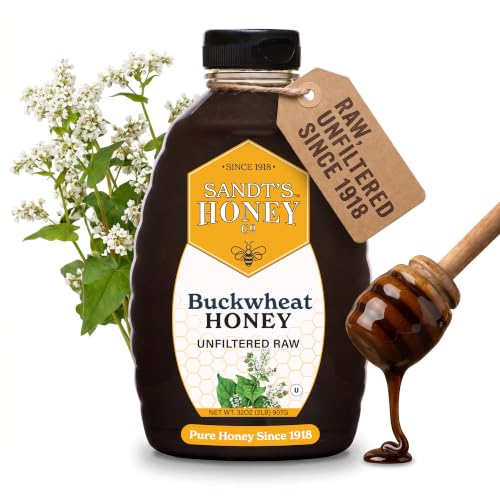
Dark, molasses-deep honey that turns a plain mug of tea into something worth slowing down for.
This is buckwheat honey, gathered from blooming buckwheat flowers, and it pours dark and rich in a way lighter honey never does. The flavor carries deep caramel notes, which is why it works so well on toast, oatmeal, baking, and marinades. Sandt’s has been handling honey since 1918 using traditional methods, and this 32-ounce bottle keeps that unheated, un-micro-filtered character.
Quality is the thing owners rave about, and it shows in how the jar behaves. Because it is never heavily heated or micro-filtered, natural crystallization can occur over time — that is a sign of authentic, minimally processed honey, not a defect. Smooth texture and a rich, deep color are part of the package. Owner after owner says the same kinds of things: it is the best they have tried, it is good value, and the flavor is why they keep buying.
The honest limit is the bottle. Buyers wish it came in glass rather than plastic, and the pour cap has been known to break within a week on some jars. Treat the cap carefully and this is an easy jar to love.
Taste-first verdict: if you drink tea daily and want a honey that stands up to the strongest brew, this dark buckwheat delivers the boldest flavor of the group.
The container caveat: the plastic bottle and the pour cap are the weak link, so handle the cap gently and keep the bottle from tipping.
Pick it when: you want a deep, caramel-rich honey for tea and toast that is unmistakably real.
Pass on it if: you prefer a mild, light honey you can barely taste over your breakfast.
4. HONEY FEAST 6 Pounds Bulk Allergy Blend Honey
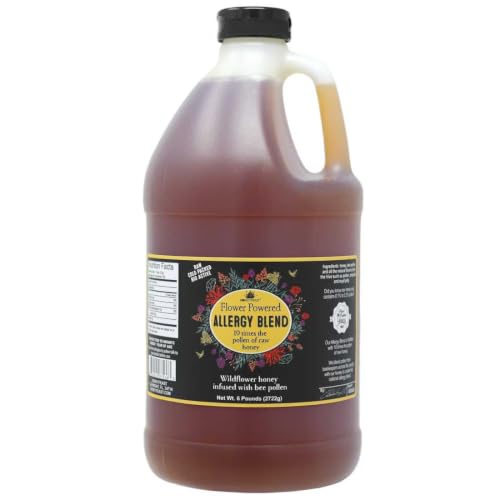
The same boosted-pollen blend, scaled up for a household that goes through it fast.
Here is the size story in numbers: this bulk jar is 6 pounds versus 1.38 pounds for the Y.S. Eco Bee Farms three-pack, which means far fewer repeat orders if you are taking a daily spoonful. It carries the same kind of tenfold pollen boost, drawing from select beekeepers nationwide, and it comes from Honey Feast’s 15-acre Florida apiary. The jar holds 96 ounces, and it is raw, unfiltered, and free of artificial additives.
People who use this jar are loyal because of the taste and the quality. It tastes great in everything — baking, coffee, straight off a spoon — and the bulk format makes the value hard to argue with. The viscosity is medium, so it is a bit easier to work with than the thicker jars above. If you want one purchase that covers the whole household through allergy season, this 96-ounce jar makes the cost per spoonful work.
What it asks of you is storage and discipline. Six pounds takes up real shelf or pantry space, and a jar that size is only a good buy if you actually consume it. It also comes in a plastic bottle, so expect the same pouring care the smaller Honey Feast jar asks for.
Reasons it wins the pantry
- 96-ounce bulk jar cuts down how often you restock
- Tenfold pollen blend from a named Florida apiary
- Medium viscosity that is easier to spoon than a thick raw jar
- Raw, unfiltered, preservative-free
What you give up
- Six pounds needs serious pantry space
- Only worth it if you will actually finish the jar
- Plastic bottle again, with the pour care that implies
Good call for: a family or a heavy daily user who wants a pollen blend in a bulk size.
Wrong call for: a solo buyer testing whether raw honey is for them.
5. Mellona 100% Raw Honey Unfiltered 1kg

Cyprus wild-flora honey with the texture of soft frosting and a glass jar to match.
This is a full kilogram jar — 35.27 ounces — of raw, unfiltered honey from the island of Cyprus, and it comes unheated and unpasteurized. It keeps bee pollen, honeycomb, and propolis particles, which is what makes it a genuinely raw jar rather than a filtered one. The texture is the defining trait: smooth and creamy, more like a spread than a syrup, in a rich golden color.
The sweetness lands as a spoonful that melts perfectly on sourdough bread, and it works well in place of sugar in tea, coffee, or oatmeal. It is harvested in small batches with the bees’ own share left in the hive, and it comes in a glass jar that many people call gift-worthy. The glass jar and golden color make it gift-worthy. If you want a raw honey thick enough to eat straight off the spoon, this creamy Cyprus jar is the one in the group for that.
One caveat stays honest: the jar is a single kilo at a premium price, and a family going through it every few weeks will feel the cost. It is a small-batch, glass-jar honey rather than a bulk value jar, so pair it with the Honey Feast bulk option if cost per spoonful is your priority.
The texture case: creamy, smooth, and golden — a raw honey that behaves like a spread and looks the part in a glass jar.
Worth knowing: a single kilo of small-batch Cyprus honey is a premium purchase; budget-minded buyers should look at the bulk Honey Feast jar instead.
Choose it for: a creamy raw spoonful and a glass jar you would be proud to give as a gift.
Skip it for: a large household that needs volume over presentation.
Know the Specs
Three things on a honey label do most of the work in picking a jar for allergy season: the processing method, the pollen content, and the origin. Here is how to read them without a glossary.
Raw vs. pasteurized
Raw honey has not been heated above hive temperature, so the natural enzymes and pollen stay in the jar. Pasteurized honey has been heated to smooth it out and slow crystallization, but that heat also removes much of the pollen allergy-focused buyers are looking for. If you are shopping for a spoonful a day, raw is the one to look for.
Unfiltered vs. filtered
Filtering strains out wax, pollen, and fine particles to make a clear, uniform product. Unfiltered honey skips that step, which is why it often looks cloudy and can crystalize. Cloudiness and grit are not flaws; they are the sign that the pollen was left in on purpose.
Enhanced pollen content
A jar marked as an allergy blend with boosted pollen has more pollen per spoonful than a standard honey. The Honey Feast jars describe a tenfold increase. If the label names a figure and a source region, that is a specific, checkable claim worth paying attention to.
Origin and small-batch claims
A named apiary or region — Central Florida, Cyprus wild flora — tells you where the bees worked and gives you something concrete to compare. Small batches suggest more hands-on handling, while a larger operation moves more volume. Neither is automatically better; they suit different buyers.
Common Questions
Does raw honey actually help with seasonal allergies?
What does “enhanced pollen” mean on an allergy blend jar?
Is crystalized honey still safe to eat?
Why does my honey not pour out of the jar?
How much honey should I take each day?
Can children eat raw honey?
Does dark buckwheat honey taste different from regular honey?
What is the difference between the 3-pound and 6-pound Honey Feast jars?
Does a glass jar keep honey fresher than plastic?
Should I get a creamy honey or a liquid honey for allergies?
The Bottom Line
For most people shopping for honey for allergies, the Y.S. Eco Bee Farms Raw Honey is the jar to start with. It is raw, unfiltered, and unpasteurized, it comes as a three-pack of 22-ounce jars, and its thick, spoonable texture keeps the pollen in the jar. The crowd favorite holds at 4.5+ stars across 800+ ratings, and the taste is what keeps those owners coming back. If you specifically want a higher pollen dose, the HONEY FEAST 3 Pounds Allergy Blend states a tenfold pollen increase and comes from a named Florida apiary. For a household that goes through honey fast, the HONEY FEAST 6 Pounds Bulk gives you 96 ounces on one order. And for a creamy spoonful in a gift-worthy glass jar, reach for the Mellona. Whichever jar you pick, take a spoonful daily and store it away from direct heat to keep the pollen and enzymes intact.
How we choose
We do not accept paid placement. Every pick is matched to a real buyer and a real use-case; we do not hands-on test units.
Sources
Specifications: manufacturer listings and product documentation. Review insights: verified customer reviews, as of October 2026. Pricing: not shown on this page (it changes often); check the current price via the retailer link.
As an Amazon Associate, Aappliancez earns from qualifying purchases. This does not affect which products we feature.