Disclosure: Some links in this post are affiliate links. As an Amazon Associate I earn from qualifying purchases, at no extra cost to you. Learn more
Specs are compiled from manufacturer listings and verified buyer reviews and can change over time — please confirm the key details on the product page before buying.
Here is the thing almost every new holly buyer learns the hard way: a single berry-loaded holly on the tag does not guarantee berries in your yard. Most hollies need a male pollinator nearby before the female sets that red fruit, so the shrub you pick has to fit your zone, your sunlight, and your patience for a plant that ships small. This guide sorts the seven shrubs worth your money into what each one actually does well, from a compact dwarf that fits a small bed to a tall evergreen that screens a property line.
This guide is built by comparing the manufacturers’ published specifications and the patterns across verified customer reviews, so you get each pick’s real strengths and trade-offs instead of marketing spin.
You will see mature heights, USDA zones, and berry timing side by side, plus the honest catch on each plant. By the end you will know which of these holly shrubs with red berries fits your bed, your zone, and how much room you actually have.
Top Picks
How To Choose The Best Holly Shrubs With Red Berries
The berry show is the whole point, but the berry show is the last thing you should shop on. Match the zone, sunlight, and pollinator first, and the red berries follow. Get them wrong and you own a lovely green shrub that never colors up.
Start with your USDA zone, not the photo
The USDA zone is a winter-hardiness band that tells you the coldest weather a plant tolerates. Each holly here lists its own range, and that range is the first filter. A holly rated for zones 7-9 will not thank you for a zone 6 winter, no matter how good the listing photo looks.
Plan for a male pollinator
Most hollies are dioecious, meaning a plant is either male or female, and only the female carries berries. A male planted nearby is what triggers the fruit set on several of these picks. If your space is tight, look for a shrub that combines both sexes in one plant so you are not buying two.
Match mature size to the space you actually have
Mature height and spread are the numbers that decide whether a shrub screens a fence line or swallows a front bed. A holly that tops out around 6 to 8 feet suits a compact yard; one headed for 15 to 20 feet needs room to become the hedge you wanted.
Side-by-Side Comparison
| Model | Best For | Mature Height | USDA Zones | Berry Timing | Amazon |
|---|---|---|---|---|---|
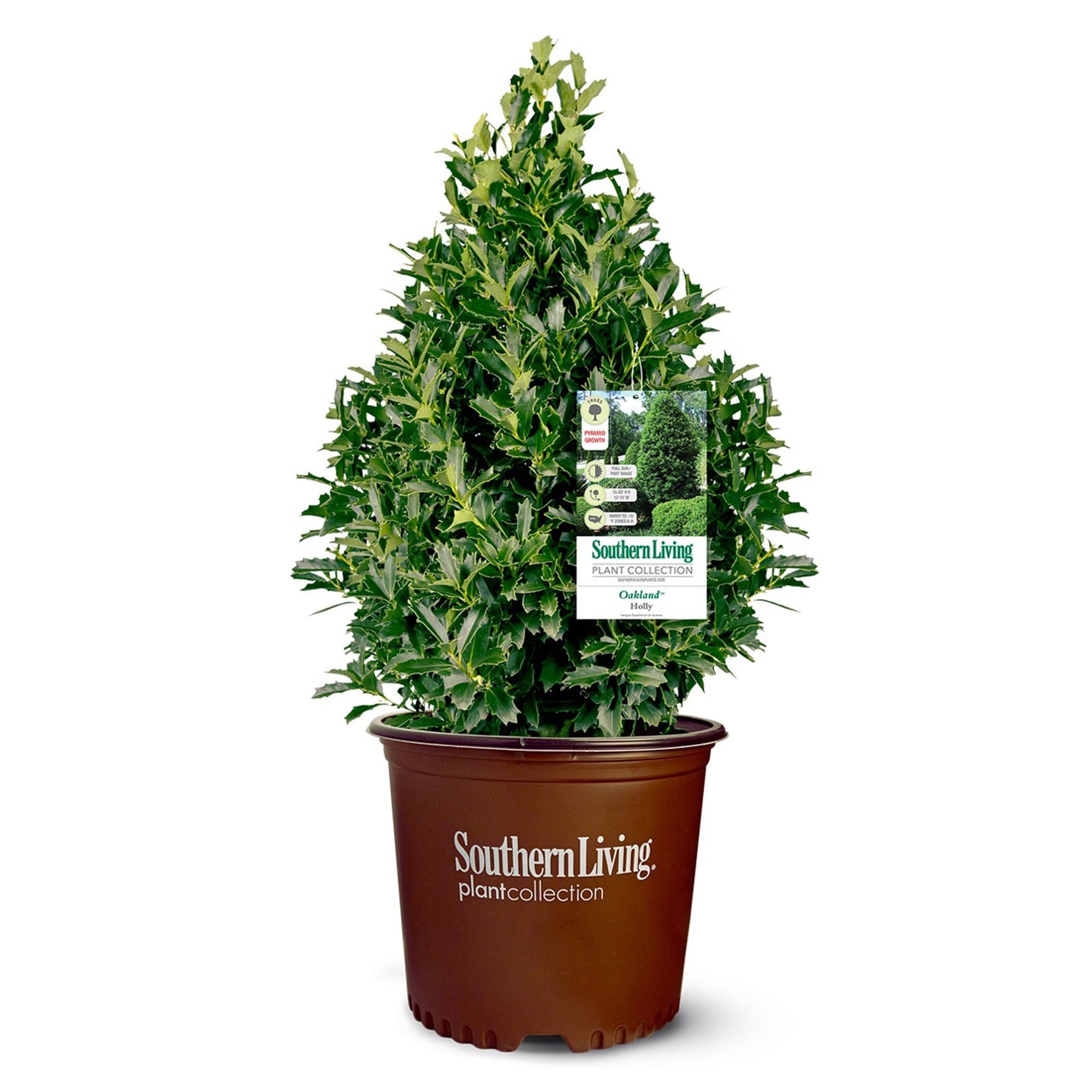
| Southern Living 3 Gal. Oakland Holly Shrub★ Best Overall | Big evergreen screen | 15-20 ft | — | Late winter | Amazon |
| Dwarf Burford Holly (2.5 Gallon)Compact Pick | Compact beds and borders | 6-8 ft | 7-9 | Fall/winter | Amazon |
| Nellie R. Stevens Holly – 3 Live Trees | Budget privacy hedge | — | — | Fall and winter | Amazon |
| Ilex X rutzan ‘Red Beauty’ Holly | Small-space color | 6-8 ft | 6-8 | Late fall/early winter | Amazon |
| Green Promise Farms ‘Berryific’ Holly | Berries without a second plant | 10-12 ft | 5-8 | Each season | Amazon |
| First Editions Ilex verticillata Wildfire Winterberry | Bold late-season fruit | 6-7 ft | 4-8 | Late fall/early winter | Amazon |
| Ilex X meserveae ‘Blue Maid’ Holly | Tall blue-green hedge | 15-18 ft | 5-8 | Late fall/early winter | Amazon |
Detailed Reviews
1. Southern Living 3 Gal. Oakland Holly Shrub
Our pick — 4.0+★ from 80+ verified ratings; the strongest balance of quality and price.
A 15-to-20-foot evergreen that carries red berries into late winter
If you want one holly that does the heavy lifting of a privacy screen and still brings color, the Oakland is the pick. It grows to 15 to 20 feet tall and 12 to 15 feet wide, so it becomes a dense wall of green rather than a specimen you fuss over. The red berries arrive in late winter, which is exactly when the rest of the yard looks bare. It takes full sun to part shade, so you have some slack if your fence line is partly shaded.
The habit is compact and upright, meaning it grows more like a column than a wide blob — handy when you want a hedge line without a shrub spilling over the walkway. Plants ship trimmed to keep them healthy in the box, so expect a shaped plant rather than an untamed one. Give it moderate watering and it settles in without drama. Buyers describe the foliage as glossy and the plants as genuinely well-packed, and the big root balls are what make the transition to soil smooth.
The catch is honest and simple: the shape you unbox will not match the idealized catalog photo, because mail-order plants are pruned for shipping. Growth is the other thing to watch — most plants thrive, but a couple of buyers lost theirs, which is why you want to get it in the ground promptly and water it through the first season. That is one downside inside a strong overall record, not a reason to pass on the shrub. It screens first and berries second, and it does both well.
What Earns Its Place
- Reaches 15 to 20 feet tall with a 12 to 15 foot spread, so it screens a property line fast.
- Red berries hold into late winter when little else is showing color.
- Handles full sun to part shade, giving you placement freedom.
- Compact upright habit keeps the hedge tidy instead of sprawling.
Where It Demands Care
- Ships trimmed, so the plant in your hand is shaped, not photo-perfect.
- Growth is uneven for some buyers — plant promptly and water through the first season.
Go for it if: you are building a tall evergreen screen and want berries as a bonus.
Think twice if: your bed is tight — this shrub wants 12 to 15 feet of width at maturity.
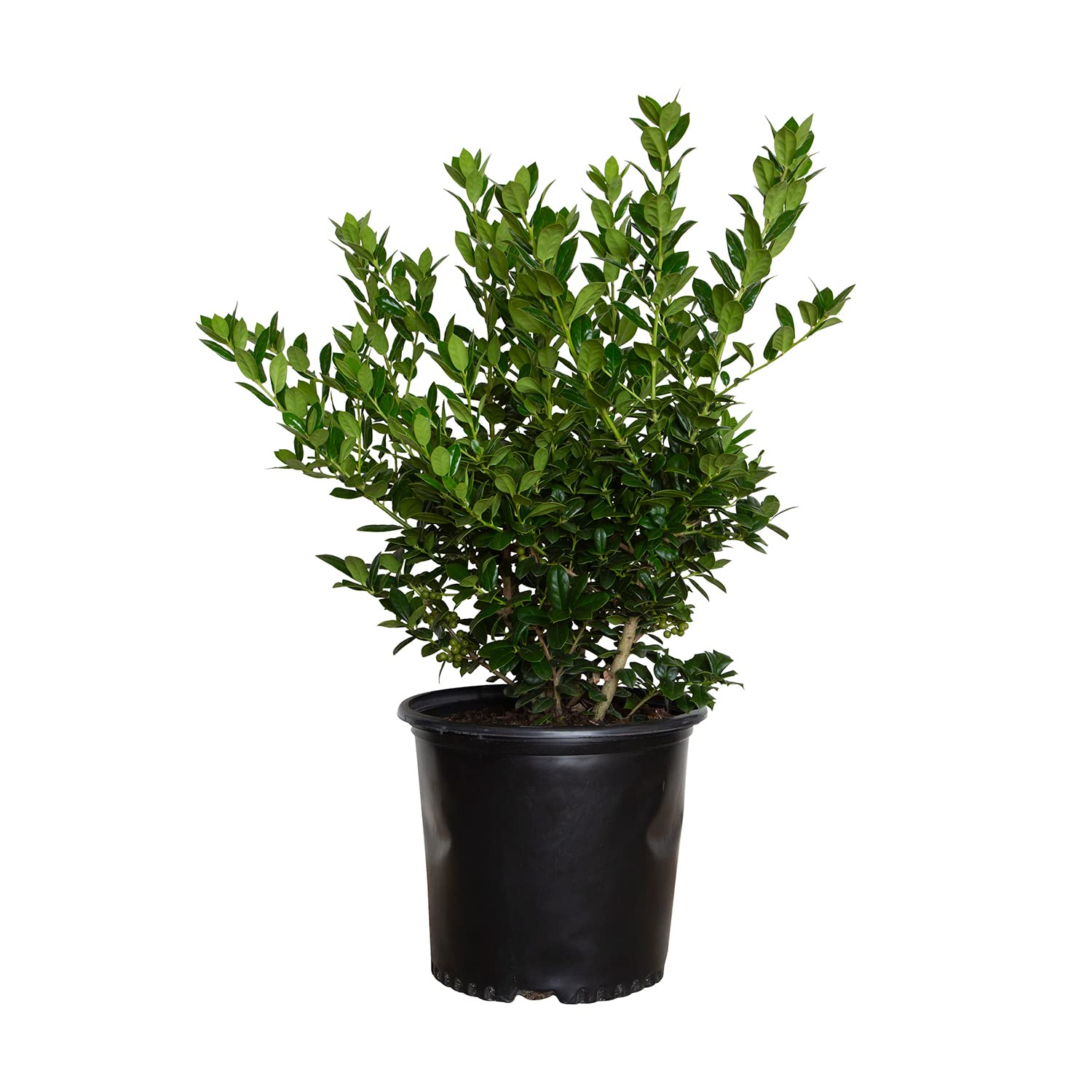
2. Dwarf Burford Holly (2.5 Gallon) Compact Evergreen Shrub
The compact holly that holds a small bed without crowding it
This is the one for a front bed, a low border, or a spot where a full-size holly would bully the neighbors. The Dwarf Burford tops out at 6 to 8 feet tall and 8 to 10 feet wide, which keeps it manageable in a modest yard. It carries deep glossy green foliage that looks good even when no berries are showing. It sits in USDA zones 7 to 9, so it wants a milder climate than some of the others here.
Here is the part most listings bury: the shipped plant may be male or female, and only the female produces red berries in fall and winter. That is the honest trade-off on this pick. If berries are the entire reason you are shopping, you cannot count on this exact plant to deliver them. What arrives instead is a healthy shrub that earns its keep on foliage and form, and buyers describe the plant quality and health in strongly positive terms.
Weigh it against the 3-gallon Oakland above: the Dwarf Burford is the smaller, tamer plant by a wide margin, but the Oakland brings berries as a written feature. So pick the Burford for shape and foliage in a compact spot, and pick the Oakland if fruit is non-negotiable. It also ships in a pot with soil, so the root ball has a head start over barer shipments. One note: the listing states it is not available in Hawaii or Alaska.
What it does well: compact 6-to-8-foot habit, glossy foliage, and a potted root ball that transplants readily. Moderate watering keeps it content in zones 7 to 9.
Choose this one when: your priority is a neat, low holly in a small bed and berries are a bonus at best.
Look elsewhere if: a guaranteed red-berry display is what you came for — this plant can ship male.
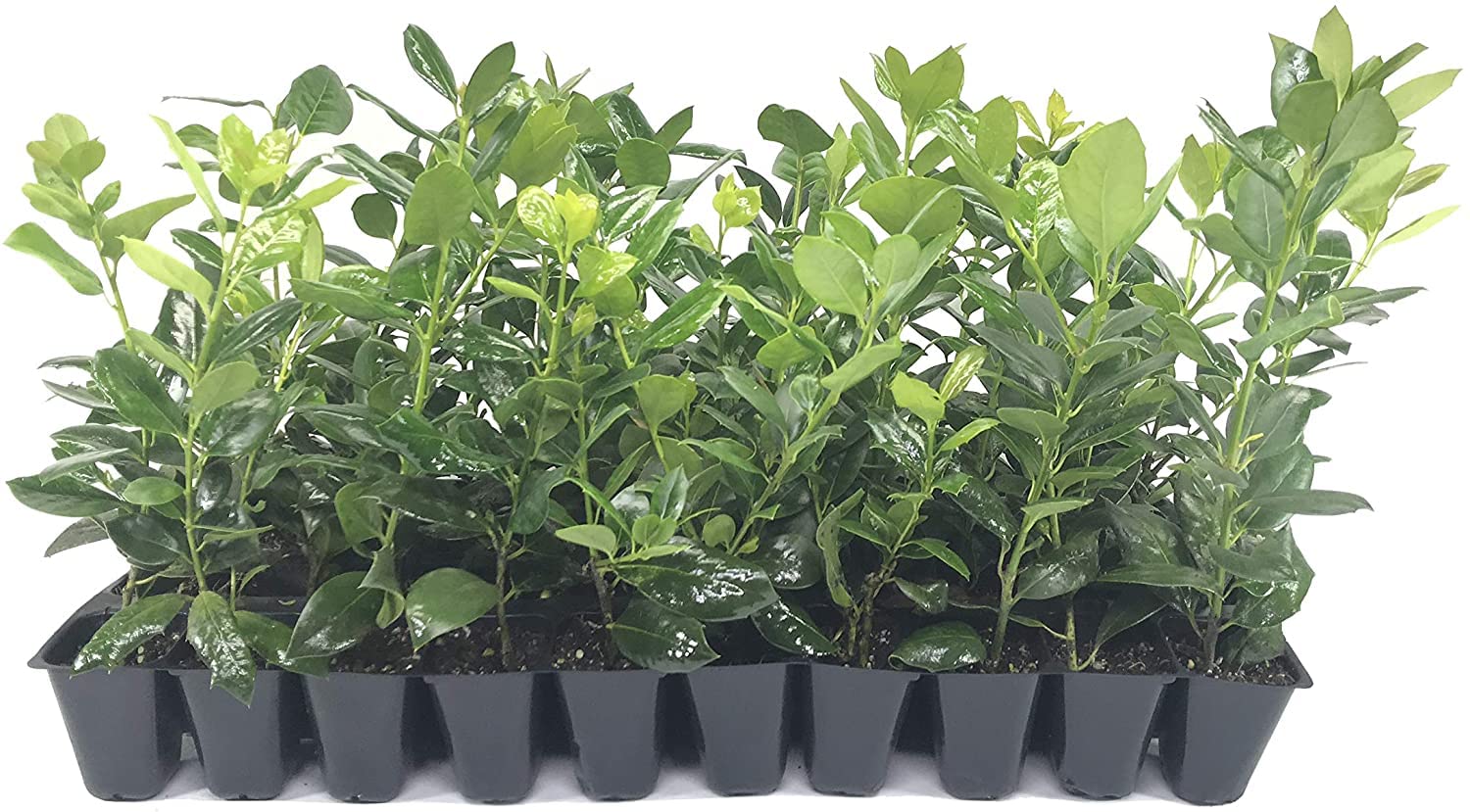
3. Nellie R. Stevens Holly
Three vigorous hollies for one order — the start of a real privacy line
Three plants in a single order is the draw here, and the listing says it plainly: the item count is 3. Nellie R. Stevens is a vigorous grower with dense branches, which is why it earns its keep as a tall screen. It produces large bright orange-red berries without a male pollenizer, so it makes fruit on its own. Plant a male Chinese holly (Ilex cornuta) nearby and you get an even heavier berry set. That is a meaningful difference from the Oakland and the Burford, both of which lean on a pollinator.
Compare that to the Southern Living Oakland above and the counts tell the story: three live plants here versus one in the Oakland box. The Burford ships at 15 pounds, the heaviest of the three hedge options, while the Nellie R. Stevens ships at 5 pounds. Weight is not glamorous, but a lighter plant means a smaller root ball, which is why buyers describe these as very small on arrival.
And that is the real gate on this pick. The plants are young and tiny, some just a few inches tall, and you are buying a start, not an instant hedge. They root well and grow on, and buyers report an overwhelming survival rate — one reviewer noted 39 of 40 plants alive after two weeks. But the size hits some buyers hard, and the value question splits both ways depending on whether you enjoy growing things on. If you want a screen this season, order more plants or look at the taller options.
The honest read: the strongest reason to buy is density of branches plus berries that set without a second plant, and three plants an order is real value. The catch is that everything ships small and you do the growing.
A good fit for: patient gardeners who want several plants for a screen and know how to pot young stock on before it goes in the ground.
Not your pick if: you need visible height in the bed this month.
4. Ilex X rutzan ‘Red Beauty’ (Holly) Evergreen, #3 Container

Pyramidal, pointy, and built to fit a terrace in zones 6 to 8
If your planting space is a balcony, a terrace, or a narrow strip beside a door, this is the holly to look at. It holds a pyramidal shape, grows to 6 to 8 feet tall and 4 to 6 feet wide, and brings red berries in late fall into early winter. The pointy evergreen foliage sets off those berries nicely. It arrives in a #3 container, fully rooted, so it can go in the ground or a large pot the moment it lands, weather permitting.
The berry rule applies here too: a male pollinator is necessary before fruit appears. One plan that works is to pair it with a ‘Blue Prince’ Blue Holly as the pollinator, which is exactly what a terrace grower did before finding both shrubs suited the space.
What you unbox is smaller than the catalog shot. Buyers who ordered a dozen report 24-inch containers with root balls around 11 inches and 15 to 18 inches of plant above the soil. One owner was disappointed by the height, saying the shrub looked taller in the picture than in person. Treat that as the fair warning: the Red Beauty is a real plant with real roots, but it is a young one. It also prefers zones 6 to 8, so if your winters run colder than that, look elsewhere in this list.
The Case For It
- Pyramidal form and pointy foliage give a sharper silhouette than a rounded holly.
- Mature size of 6 to 8 feet tall and 4 to 6 feet wide suits a terrace or small bed.
- Ships fully rooted in a #3 container with a care card tucked in the box.
What to Expect
- Arrives younger and shorter than the listing photo suggests.
- No berries without a male pollinator planted close by.
Pick it if: you have a contained space in zones 6 to 8 and want a shaped, upright holly.
Pass it if: you are in a colder zone or need a shrub at mature height on day one.
5. Ilex X meserveae ‘Berryific’ Holly

A holly that pairs its own male and female so you plant just once
Berryific solves the pollinator headache in one purchase. Its ‘Blue Prince’ and ‘Blue Princess’ sit combined in close proximity, which the maker says creates a pyramidal evergreen loaded with red berries each season. That means no second plant, no hunting for a male, and no berryless shrub after all your work. It is built for exactly this: space too limited to accommodate separate male and female plants. It grows to 10 to 12 feet tall and 6 to 8 feet wide and handles zones 5 to 8.
Weigh that against the Red Beauty above, which needs a pollinator planted nearby, and the Berryific starts to look like the smarter buy for a small yard. It is also cold hardy down to zone 5, which is a wider range than the Red Beauty’s 6 to 8. Low moisture needs make it forgiving once established, and it prefers well-drained soil. It takes full sun but tolerates light shade.
What buyers single out is the look of the thing — a healthy green shrub with red berries and budding blossoms on arrival. It earns the most praise for how it presents, with healthy plants landing well-packaged. The trade-off is real but modest: this is a mail-order plant, so give it a spot to acclimate before you judge it. It ships in a #2 container, and the #3 container version is also offered if you want a bigger plant to start.
Why it earns a spot: one plant gives you berries, because the male and female share the same shrub. Zones 5 to 8 covers a wide slice of the country.
Reach for this if: your yard has room for one holly, not two, and you still want the fruit.
skip it if: you specifically need a tight 6-foot shrub — this one is headed for 12 feet.
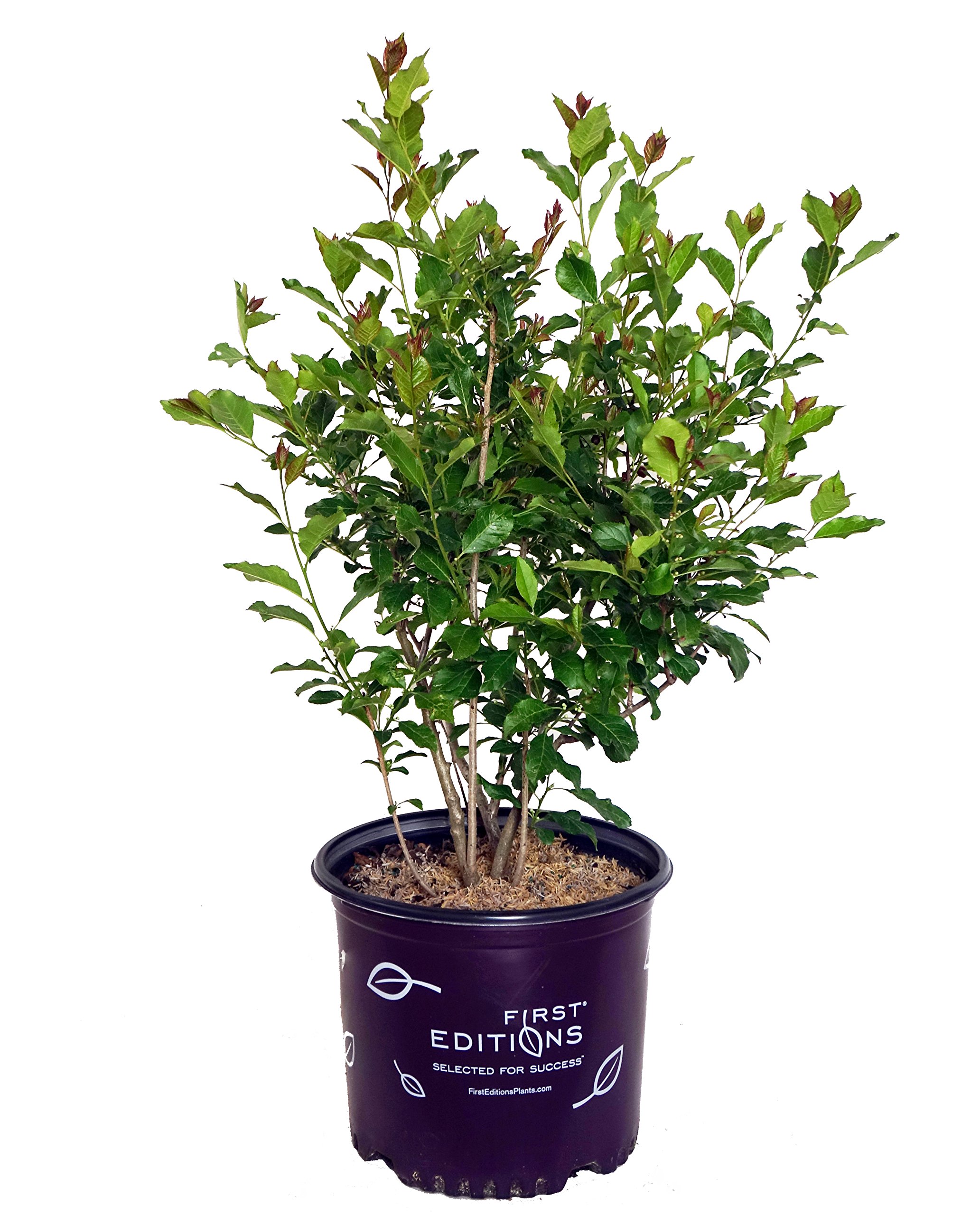
6. Ilex verticillata Wildfire Winterberry
Winterberry bred for fruit first, and it shows
Winterberry is the holly you buy for the berries and forgive for the leaves. Wildfire is a deciduous holly, which means it drops its leaves and lets that bright red fruit stand completely alone in late fall and early winter. It grows to 6 to 7 feet tall and 7 to 8 feet wide and takes zones 4 to 8, the broadest cold range of any plant on this list. The maker also notes it is dormant and leafless through winter, which is normal, and it leafs out again in spring.
The berry rule bites harder here than anywhere: a male pollinator is necessary, and winterberry is notoriously specific about which male it wants. Plan for that before you buy, or plan on no fruit. The plant arrives fully rooted in a #3 container, ready to plant when weather allows, with care instructions in the box.
Buyers describe well-sized, healthy plants and packaging that protects them in transit. The listing carries a single verdict from a small pool, so read this one as an early signal rather than a track record. If you want the loudest berry display in the row and you are willing to sort out the male plant, Wildfire is the one that delivers it. If you want an evergreen screen that also berries, the Blue Maid below is closer to your need.
The fruit-first case: deciduous habit strips the leaves away so the red berries own the shrub through winter, and zones 4 to 8 makes it the widest-range pick here.
Best suited to: a gardener chasing maximum winter color who will plant the right male alongside it.
Second thoughts if: you want a leafy evergreen through the cold months.
7. Ilex X meserveae ‘Blue Maid’

The 18-foot wall of blue-green — but read the care note first
Blue Maid is the big one. It reaches 15 to 18 feet tall with an 8 to 10 foot spread and carries deep blue-green evergreen foliage that sets off its red berries beautifully. Those berries come in late fall and early winter. It grows well in full sun and sits in zones 5 to 8, so a wide band of the country can grow it. It ships in a 3-gallon trade pot, fully rooted, straight from the nursery, with care instructions in the box.
Two planting notes matter here. The maker advises against putting it in the ground during frigid winter months or under drought conditions, so hold the plant and pick your window. And a male pollinator is necessary for berry production, which is the same rule the Red Beauty and Winterberry live under. Where this one wins is the foliage color — that blue-green sets the red fruit off differently than the glossy green of the Dwarf Burford or the Oakland.
What comes through most about the plants is how healthy they arrive. One buyer ranked it the healthiest of ten shrubs bought that year, and another reported it rooted and grew well after shipping. It is the tallest evergreen here, so give it the room that implies, and it will reward you with a dense, colorful screen. The honest limit is the one printed on the listing: wait out the deep cold before you plant.
What It Brings to the Yard
- 15 to 18 feet tall with an 8 to 10 foot spread for a serious hedge.
- Blue-green evergreen foliage is a distinct contrast to the red berries.
- Zones 5 to 8 and full sun suit a broad stretch of the map.
- Arrives fully rooted in a 3-gallon pot with care instructions.
Plan Around This
- Needs a male pollinator before it sets berries.
- Do not plant during frigid winter months or drought conditions.
- Its 8 to 10 foot spread needs real space at maturity.
Well matched to: a property line that needs a tall, colorful evergreen wall in zones 5 to 8.
Poor match if: you plant in the dead of winter — the maker says wait for better conditions.
Know the Specs
USDA Zone Range
The USDA zone is a winter-hardiness band that tells you how cold a plant can go. A holly listed for zones 7 to 9, like the Dwarf Burford, will not thank you for a zone 6 winter. Read the zone on the listing before you fall for the photo, because the wrong band means a plant that never settles in. Zones 4 to 8, the Winterberry’s range, lets you grow it across a wider slice of the country.
Male and Female Plants
Hollies are often separate-sex plants, and only the female carries berries. That is why listings keep saying a male pollinator is necessary — it is the trigger for fruit set. A single-female planting can grow beautifully for years with no berries at all. If you have no room for two shrubs, look for a combined plant, like the Berryific, which puts a male and a female together in one.
Mature Height and Spread
Mature height is where the plant ends up after years in the ground, not the height of the plant in the box. Spread is how wide it goes, and it is the number people forget. A shrub heading for 15 to 20 feet tall needs the space that implies. Measure your bed first, then match it to a listed mature size, and you will not be digging the plant back out in three seasons.
Container Size
The #2 or #3 on a listing refers to the pot size the plant ships in. A #3 container plant usually arrives fully rooted and ready to plant when weather allows. Bigger pots mean an older, more established plant and a heavier box, which is why the Dwarf Burford’s 15 pounds reads differently from the Nellie R. Stevens’ 5 pounds. A bigger root mass settles in faster.
Common Questions
Why has my holly shrub never grown red berries?
How do I know if my holly will survive my winter?
Will red-berry holly shrubs stay green through the winter?
How tall will these holly shrubs actually get?
Is it normal for a mail-order holly to arrive trimmed?
How soon can I plant a holly after it arrives?
Does a winterberry holly need a specific male plant?
Are these holly shrubs safe around pets and children?
Should I buy several plants or just one holly shrub?
The Bottom Line
For a tall evergreen that carries red berries into late winter with some shade tolerance, the Southern Living 3 Gal. Oakland Holly is the one to start with. If berries without a second plant matter most, the Green Promise Farms ‘Berryific’ puts both sexes in one shrub. And if you are starting a hedge on a budget and can grow the plants on, the Nellie R. Stevens three-pack gives you more plants to work with.
How we choose
We do not accept paid placement. Every pick is matched to a real buyer and a real use-case; we do not hands-on test units.
Sources
Specifications: manufacturer listings and product documentation. Review insights: verified customer reviews, as of October 2026. Pricing: not shown on this page (it changes often); check the current price via the retailer link.
As an Amazon Associate, Aappliancez earns from qualifying purchases. This does not affect which products we feature.