Disclosure: Some links in this post are affiliate links. As an Amazon Associate I earn from qualifying purchases, at no extra cost to you. Learn more
Specs are compiled from manufacturer listings and verified buyer reviews and can change over time — please confirm the key details on the product page before buying.
Here is the thing most hikers get wrong: the shoe that keeps water out is not the shoe that handles a creek crossing. A waterproof membrane that blocks rain also traps the water that comes in over the top, and then you are squelching for miles. This guide splits the two jobs apart and points you to the right tool for each — shoes built to drain and dry fast for wet wading, and shoes built to stay sealed for everything shy of a full submersion.
This guide is built by comparing the manufacturers’ published specifications and the patterns across verified customer reviews, so you get each pick’s real strengths and trade-offs instead of marketing spin.
You will see a few things repeated in the picks below: drainage ports, siped rubber, and how quickly the upper sheds water. The best hiking shoes for water crossings are the ones whose design matches how wet you actually plan to get.
Top Picks
How To Choose The Best Hiking Shoes for Water Crossings
The first decision is not brand or budget — it is if you want water kept out or let through. Answer that honestly and three-quarters of these nine shoes eliminate themselves. Get it wrong and you will either soak your feet in a shallow creek or cook them on a dry climb.
Drainage shoes versus waterproof shoes
A drainage shoe uses a perforated midsole or vented upper to let water flow straight through and out. Those holes mean the shoe can never be sealed, so it will not keep a puddle out either. A waterproof shoe runs a membrane — Gore-Tex in the La Sportiva Spire GTX, RAIN.RDY in the adidas Terrex Anylander — that blocks water from entering through the fabric. For a knee-deep ford, the drainage shoe wins because the membrane shoe fills up anyway and then cannot empty. For rain, dew, mud and splash, the waterproof shoe wins because nothing gets in at all.
What to check on the sole before you buy
Wet rock punishes flat rubber. Siped soles — cut with thin slits that open as you weight the foot — push water out from under each lug, which is why the Astral Loyak’s siped rubber shows up repeatedly as the reason people trust it on mossy river stone. Look at tread depth too, because shallow lugs pack with mud and stop gripping. A deep lug on a hard compound is worse on slick rock than a moderate lug on soft, siped rubber.
Dry time and upper material
Once you are wet, what matters is how fast the shoe sheds that water. Hemp and open mesh breathe and dry in hours; dense leather and sealed membranes hold moisture for the rest of the hike. Astral’s hemp build is repeatedly noted for staying odor-resistant after soak-and-dry cycles, while a tongueless slip-on design is quick to kick off at camp. If your route crosses water more than twice, pick for dry time over everything else.
Side-by-Side Comparison
| Model | Best For | Water Strategy | Reported Grip | Weight / Build Note | Amazon |
|---|---|---|---|---|---|
| Salomon Women’s Speedcross★ Best Overall | Muddy, creek-crossing trail days | Fast-drying, water-resistant mesh | Deep lug, mud and creek traction | Light, breathable mesh upper | Amazon |
| La Sportiva Spire GTXBest Waterproofing | Rain and splash, not full fords | Gore-Tex membrane | Vibram FriXion XF 2.0 | 15.5 oz per boot | Amazon |
| Columbia Drainmaker XTRBest for Wading | Wading rivers and rocky bottoms | Vented midsole drains underfoot | Grips wet non-mossy rock | Ultra-light, stays light when wet | Amazon |
| Salomon Speedcross Peak | All-day trail support | Quick-dry fabric upper | Grippy trail sole | Roomy toe box, pull-string laces | Amazon |
| ON Cloudrock | Wet trails with packed loads | Water resistant upper | Missiongrip cleats on soft trail | 1 lb, FlexLock lacing | Amazon |
| adidas Terrex Anylander | Wet grass, rain, cold mornings | RAIN.RDY | Traxion outsole | 2.43 lb, EVA cushioned midsole | Amazon |
| Columbia Transverse Hike | Muddy festivals and wet trails | Waterproof-breathable build | Slip resistance on wet rock | Light leather, step-in entry | Amazon |
| Astral Men’s Loyak | Wet wading and paddleboard decks | Draining upper, siped sole | Holds on mossy rock | Light, hemp build | Amazon |
| Astral Women’s Loyak | Kayak launches and stream trails | Draining upper, fast dry | Grippy on wet tile and rock | Light, washable, wide toe box | Amazon |
Detailed Reviews
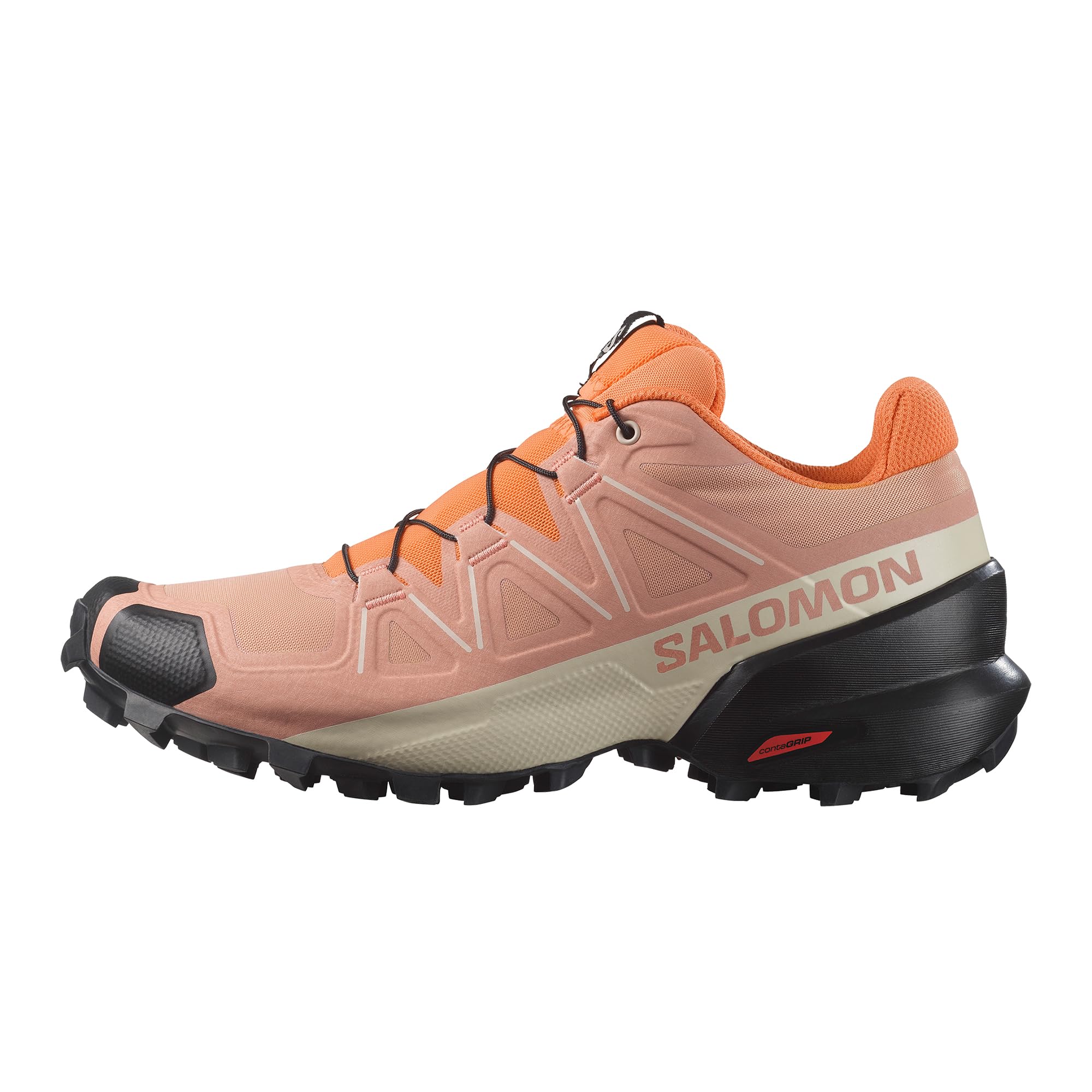
1. Salomon Women’s Speedcross Trail Running Shoes
Our pick — 4.5+★ from 550+ verified ratings; the strongest balance of quality and price.
The trail shoe that shrugs off mud, crosses a creek, and dries out before lunch.
This is the pick for the hiker whose route includes a real water crossing and keeps going for another ten miles. The upper is water-resistant rather than sealed, which is exactly the point — water that comes in over the collar drains out instead of pooling. As buyers put it, they ordered four days before a 20-mile hike and finished with “no blisters, minimal fatigue, excellent traction on mud/creeks,” plus enough toe room for swelling feet.
Grip is where the Speedcross earns its place at the top of this list. The deep lug pattern bites into soft mud and wet creek bed, and the review pages keep returning to the same story — confident traction on slick rock climbs, no slipping, and a shoe that handles gravel and asphalt without complaint on the way home. Breathable mesh means it is light and cool on the climb, and easy to wash when the day is done.
The honest catch is fit and longevity. This one is built for narrow feet, and the toe box runs slightly narrow even then. The lacing system also works loose after a while and needs retightening on long days. A few owners note the durability is good rather than exceptional. None of that changes the core verdict — the crowd favorite here, sitting at 4.5+ stars across 500+ ratings, is the most balanced water-crossing trail shoe on this page.
What earns it the top spot
- Drains and dries fast after a creek crossing instead of holding water like a sealed boot
- Deep lug traction that holds on mud, wet rock, and steep loose gravel
- Breathable mesh upper washes clean and stays odor-free
- Roomy enough at the toe for feet that swell on long days
What to weigh before buying
- Cut for narrow feet — a wide forefoot will feel cramped
- Laces work loose and need periodic retightening
- Not waterproof, so deep standing water will soak through
Reach for this if: your hike mixes creek fords with mud and rock, and you want a shoe that dries on the move.
Think twice if: you need a sealed barrier against standing water or have a wide forefoot.
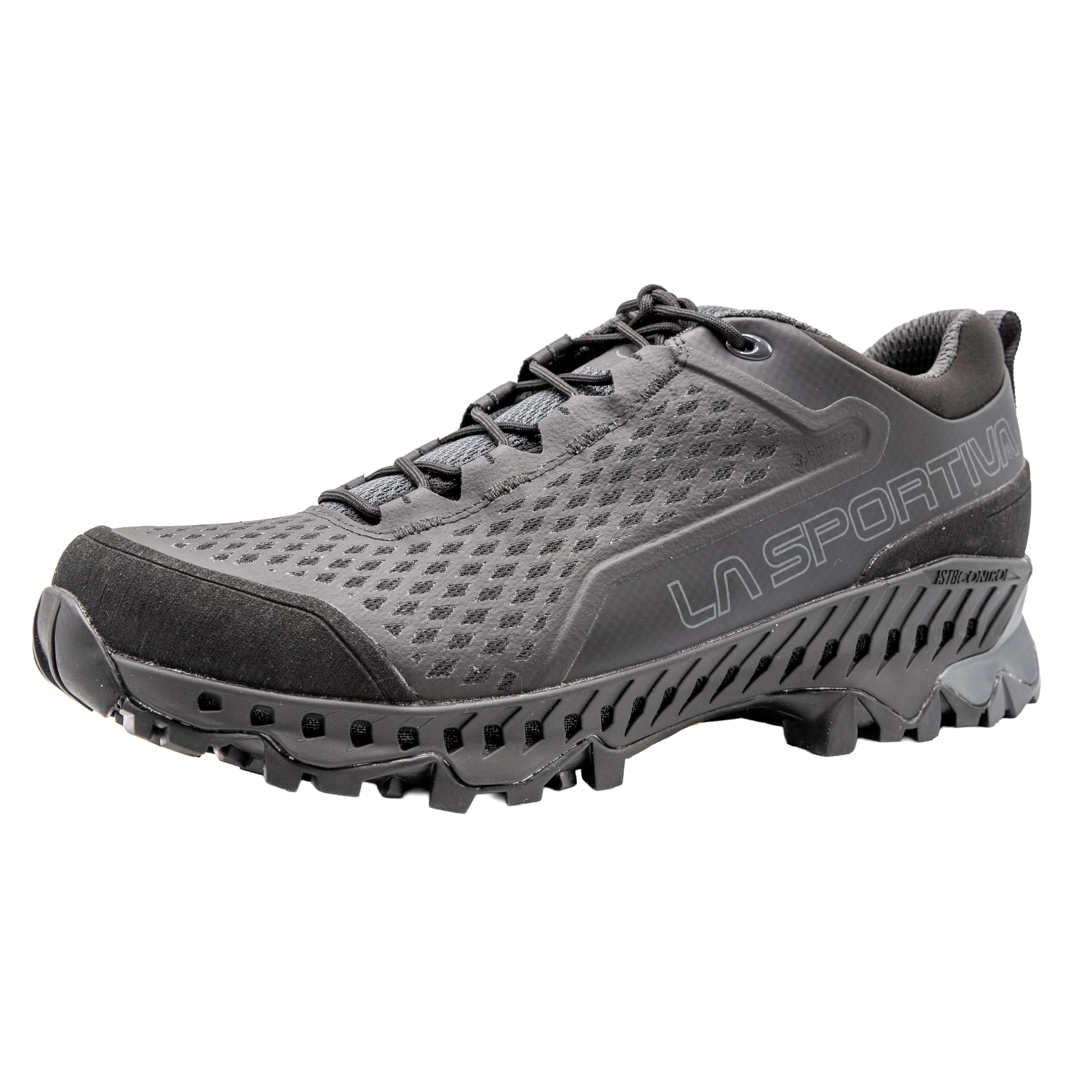
2. La Sportiva Mens Spire GTX Waterproof Hiking Shoes
A stiff, boot-like hiker that seals out rain and mud and is built to last years.
If your water problem is rain, mud, and splash rather than a knee-deep ford, the Spire GTX is the sealed answer. The Gore-Tex membrane blocks water at the fabric, and one owner put a decade behind it: “One owner’s first pair lasted about 10 years across 3 continents.” That same durability shows up in reviews describing 15 months of two-to-three-times-a-week wear with the soles only slightly worn and the waterproofing still intact.
Underneath is Vibram FriXion XF 2.0 rubber — the compound and tread that account for the “good grip on the soles” line in the longevity review above. At 15.5 oz per boot it wears heavier and stiffer than a trail runner like the Speedcross, with a more rigid sole, toe box and heel. Think backpacking support rather than nimble creek-hopping. Owners who want the load-bearing feel of a boot without the ankle collar call it the best low-top they have owned.
The trade-off is real and it splits two ways. The fit runs mixed — some narrow-footed hikers call it perfect, others find it a touch big — and value is the most debated point in the reviews, because it asks top-tier money. More importantly, it is a poor choice for deep water: the membrane keeps water out only if it stays below the collar. One low rating describes a high, stiff ride that led to ankle trouble on uneven ground. If you have ankle concerns, go softer.
Where it earns its keep: A 15.5 oz boot-weight silhouette with Gore-Tex sealing and Vibram rubber underfoot is built for wet-weather backpacking and hunts where staying dry matters more than quick dry time.
The honest limit: Treat it as rain armor, not a wading shoe. Water over the collar gets in, and once a membrane shoe is wet it stays wet far longer than the mesh picks here.
Best for: Rain-soaked multi-day hikes and anyone who wants one pair to last years of abuse.
Look elsewhere for: creek fords deeper than the collar, or a foot that needs a soft, flexible sole.
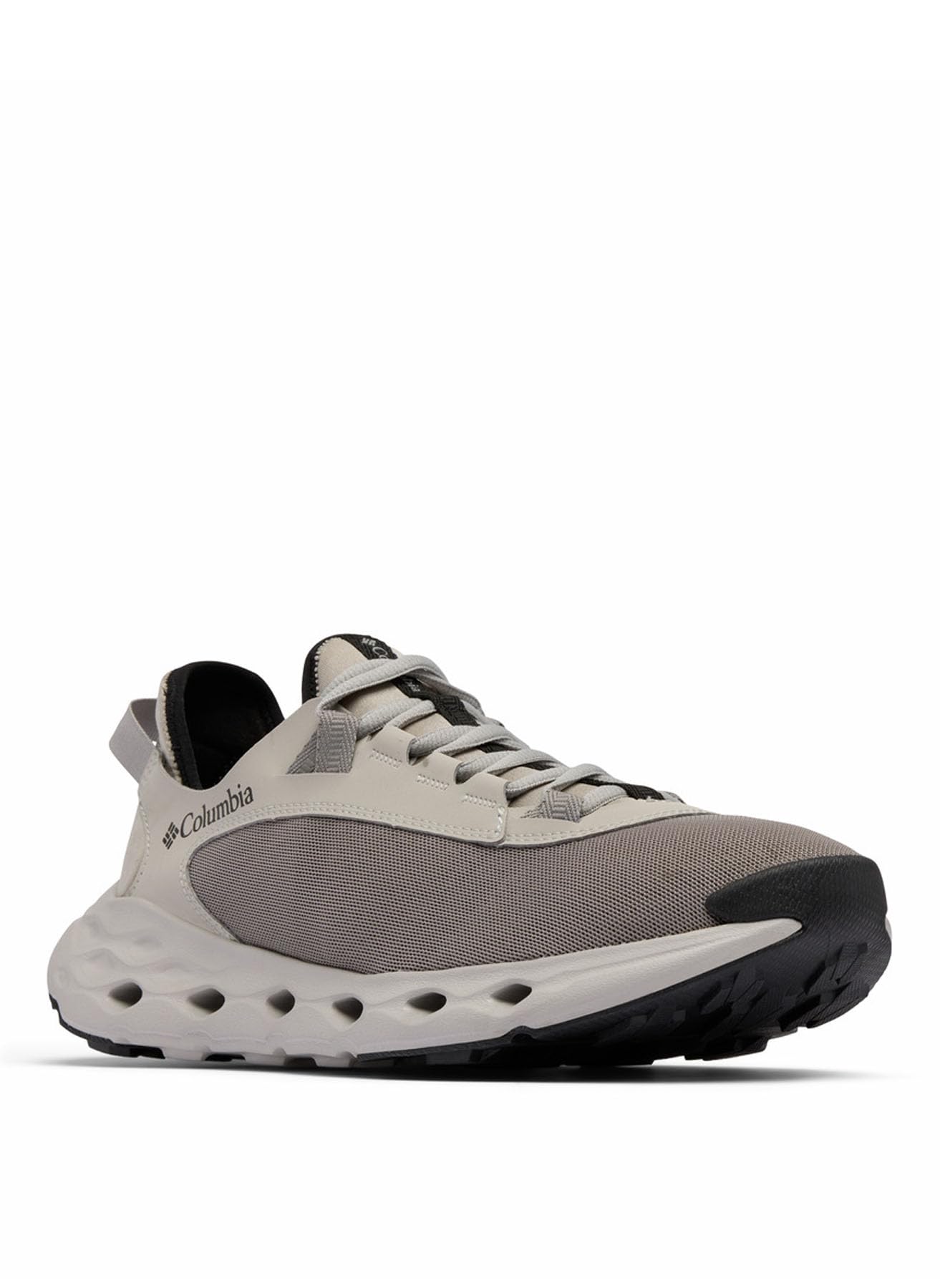
3. Columbia Men’s Drainmaker XTR
The shoe that lets the river straight through and still protects your soles from rock.
This is the pure drainage pick — designed for exactly the crossing that defeats every waterproof shoe on this list. A vented midsole moves air and water underfoot, so you walk into the creek wearing them, and the water leaves as you step. Buyers describe years of rock hunting on Lake Superior with these shoes beating every other water shoe they tried, with one line summing up the appeal: “Lightweight water shoes drain fast, protect against sharp rocks/sticks.”
What makes that work is the mesh-and-perforated-foam combination, which keeps the shoe light even when saturated — a real advantage over heavier designs that turn into buckets. Grip holds on wet, non-mossy rock, even in moving current, and a fly fisherman’s review backs up the wet-wading comfort: “Sturdy and firm, stable footing.” A yacht captain wears them daily on deck and reports several pairs in rotation.
Size around the fit rather than trusting it blind. Several owners find it runs about half a size big, and sand gets in through the mesh easily and does not drain out quickly, so shake them before you walk on. The mesh can snag and tear, though minor rips reportedly do not affect how the shoe works. As a dedicated wading shoe with 4.5+ stars across 500+ reviews, it does its one job extremely well.
The right call for: river wading, wet fly fishing, and any crossing where you plan to be in the water rather than avoiding it.
Pass on it if: you want one shoe for dry mountain trails too — this is a specialist, not an all-rounder.
4. Salomon Women’s Speedcross Peak Trail Running Shoes
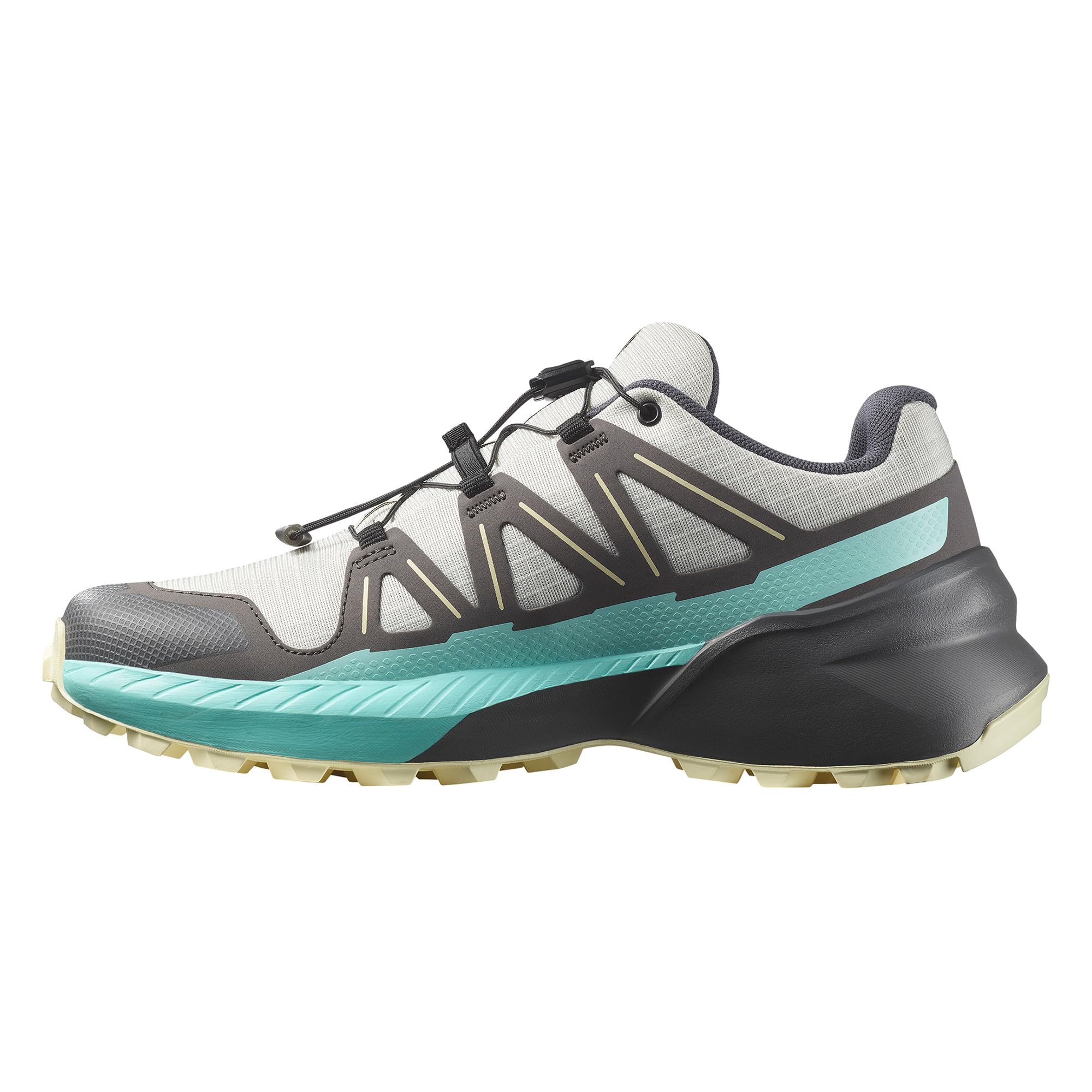
The one that holds your foot still across wet rock and fifteen-hour days.
Where the standard Speedcross chases speed, the Peak chases steadiness on a wet day. The grippy trail sole bites into rocky, steep and muddy ground, and the fit locks the foot down so it does not slide inside the shoe on a slick descent. Trail runners keep coming back to that lockdown — the shoe holding the foot firmly without sliding is the single most repeated praise, and one owner walked over 13 hours straight with no issues.
The dry-fabric upper and pull-string lacing make short work of a wet crossing. Kick them off, dump the water, cinch the laces, walk on. The roomy toe box is generous enough to keep toes from jamming on descents, and the build quality holds up over years rather than seasons — buyers report third pairs still going strong, and a devoted repeat buyer with 20-plus years in the brand says they tend to last a long time.
Sizing is the one genuine snag, and it is worth reading twice. Multiple women find these run large — a women’s 9 fitting more like a 10.5 — and the size guide has been called unreliable. Order down a size or try before committing. It is not waterproof, so treat it as the fast-drying option for creek crossings rather than a sealed barrier.
Why hikers stay loyal
- Foot stays locked with no sliding on wet, steep descents
- Quick-dry fabric upper and pull-string laces for fast creek resets
- Roomy toe box that will not pinch on long descents
- Long service life — owners mention their third pair still going
Where it bites
- Runs large for many women; the size guide is not reliable
- Stiffer ride than the lighter Speedcross line
- No waterproof membrane — deep water gets in
Pick this if: you want a trail shoe that will hold a firm grip on slippery rock and last many seasons.
Second-guess it if: you cannot try before buying, given how far the sizing drifts.
5. ON Men’s Cloudrock Waterproof Slippers
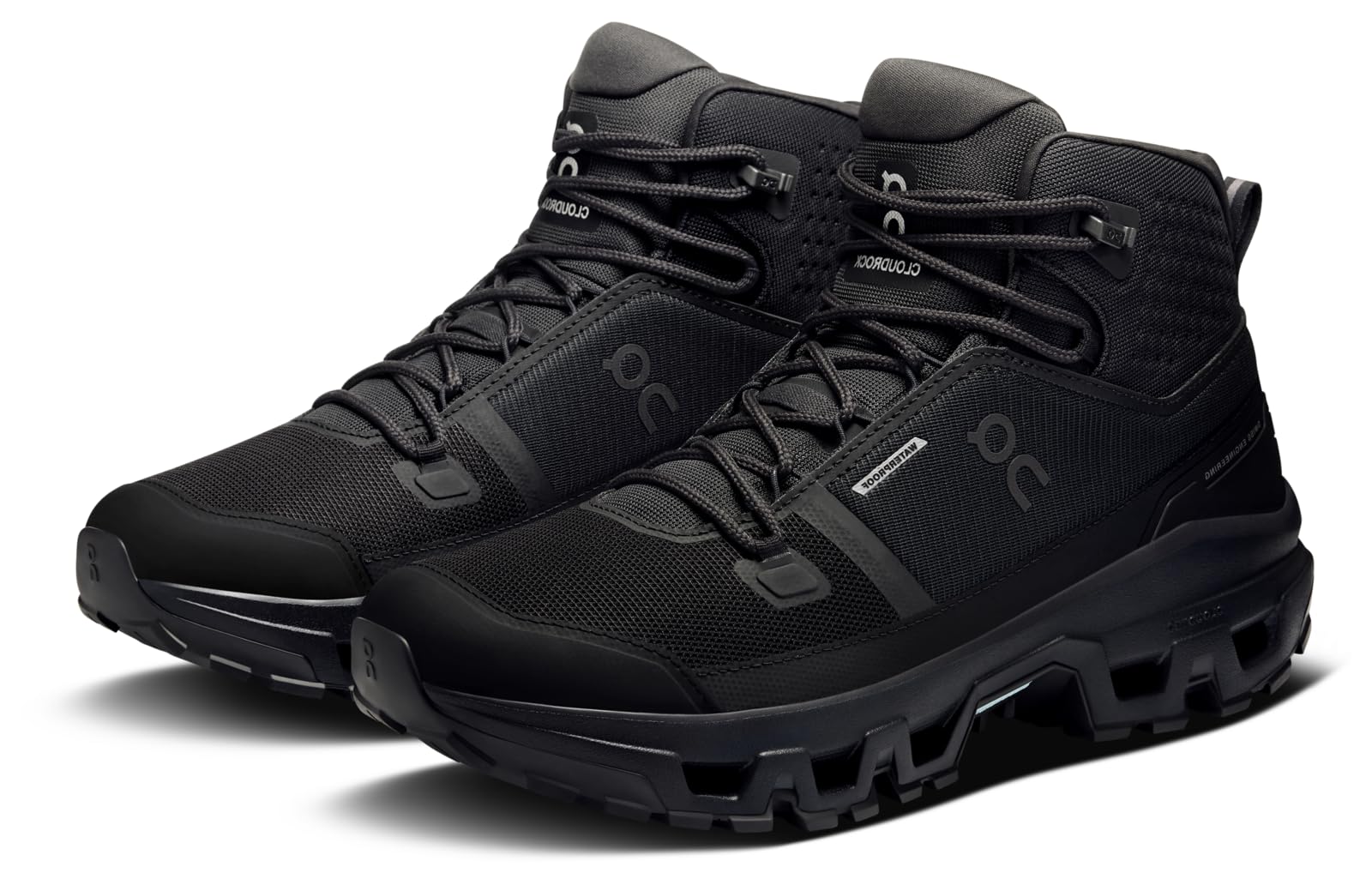
Water resistance plus all-day cushioning for people who stand on their feet from morning to night.
This is the comfort-first pick, and the reviews are dominated by people who live in them rather than hike in them. A 360° mudguard protects the upper and the Speedboard adds stability, while Zero-Gravity CloudTec cushioning softens each landing. Owners who stand 10 to 15 hours a day call them ridiculously comfortable, and the boots still look new after six months of hard wear.
For water crossings, the FlexLock lacing is a clever practical detail: you can tie it traditionally or single-pull it tight. The Missiongrip rubber and its cleats are described as biting into soft trails, and the water resistance is the second most praised quality behind the overall build. The full package weighs in at roughly a pound per the listed product weight, which keeps a long day light on the legs.
The catch worth knowing before you buy is fit. One owner found the shoe snug enough to need breaking in, and a low review describes the side stitching digging into the ankle sharply enough to cause blisters. This is a boot that wants a correct fit rather than a size guessed online. It is also water resistant, not fully waterproof — do not plan a deep crossing around it.
The real-world read: If your wet day is a muddy trail followed by hours on your feet, this is the most forgiving cushioning on the list — a pound of boot that people wear daily for work and still call comfortable.
The caveat to plan for: The ankle collar and stitching are the weak point for some feet. If you have a sensitive ankle, try before you commit.
Suits you if: you want a water-resistant shoe whose comfort you can trust for a long working day.
Choose another if: you need a true sealed waterproof barrier, or have a history of ankle rubbing.
6. adidas Men’s Terrex Anylander Rain.rdy Hiking Shoes
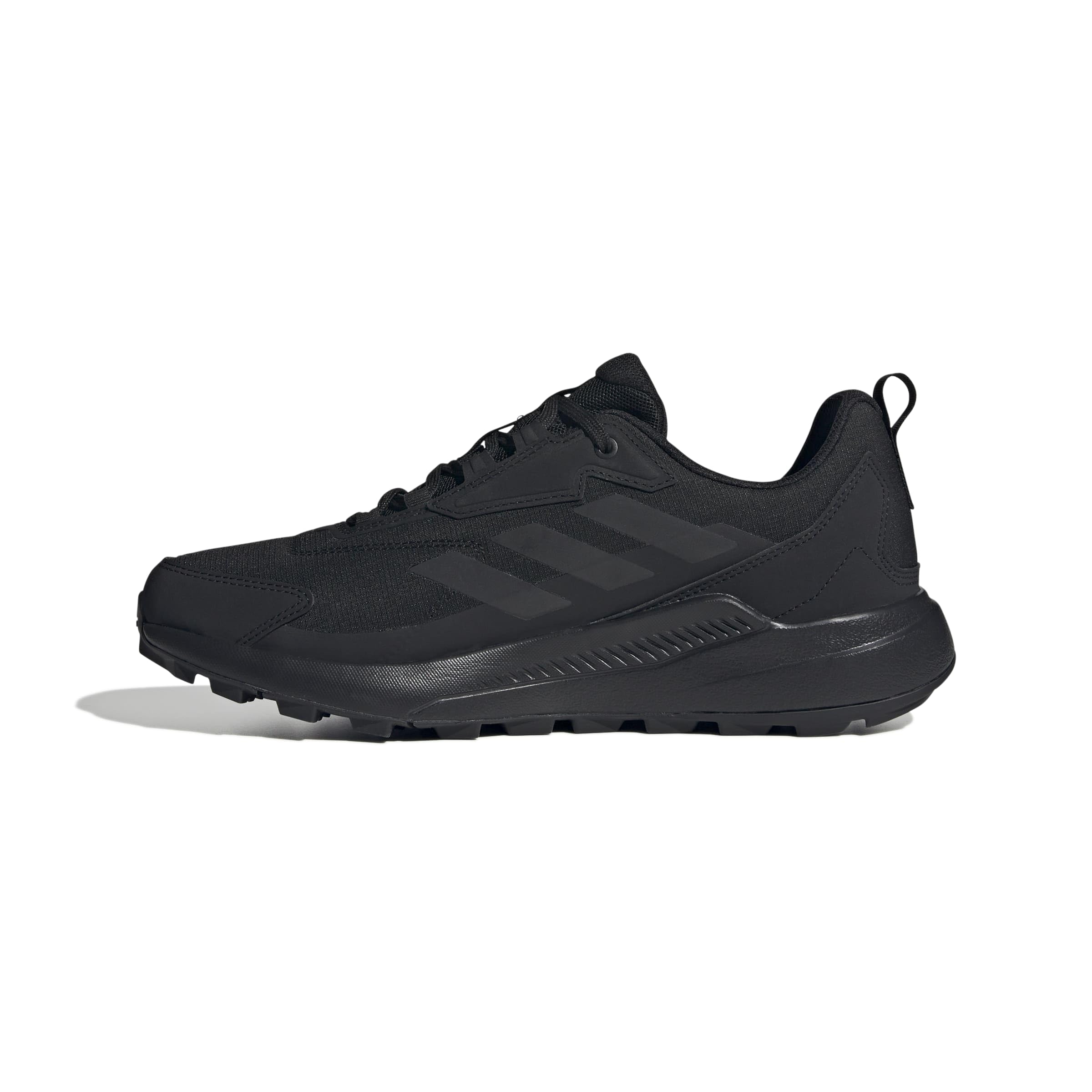
Rain and dew stay outside the door, with a light foam midsole to soften the trail beneath.
Here is a shoe built around a simple promise: your feet stay dry on wet ground without carrying a heavy boot’s weight. RAIN.RDY keeps the water sealed out, the Traxion outsole digs in for grip, and an EVA midsole gives you light cushioning. The travel evidence is there — one pair held up through Ireland and Scotland weather, true to size and low-maintenance, and another owner golfed a wet, cold morning with dry feet and good traction.
This is a waterproof shoe, so it follows the rules of one. Buyers repeatedly point out that waterproof and non-waterproof versions of this shoe exist, so make sure you pick the sealed one. The membrane also runs warmer than a plain running shoe’s mesh, which is an honest cost of staying dry. Wet-grass hills are its balance, and the tread handles slick dirt and grass well.
The caveat is the toe box. It runs narrow in front, and some long-time Terrex wearers have had to return theirs because the width pressed too hard on the toes. Those with an average or narrow forefoot will be fine. At 4.0+ stars across a large pool of 1,300+ ratings, the Anylander is the sealed-rain answer if a full wade is not on your route.
Worth it when: the threat is rain and wet grass, and you want a light waterproof shoe rather than a heavy boot.
Try a size up if: you have a wide forefoot — the toe box is the tight spot.
7. Columbia Women’s Transverse Hike Waterproof Boot
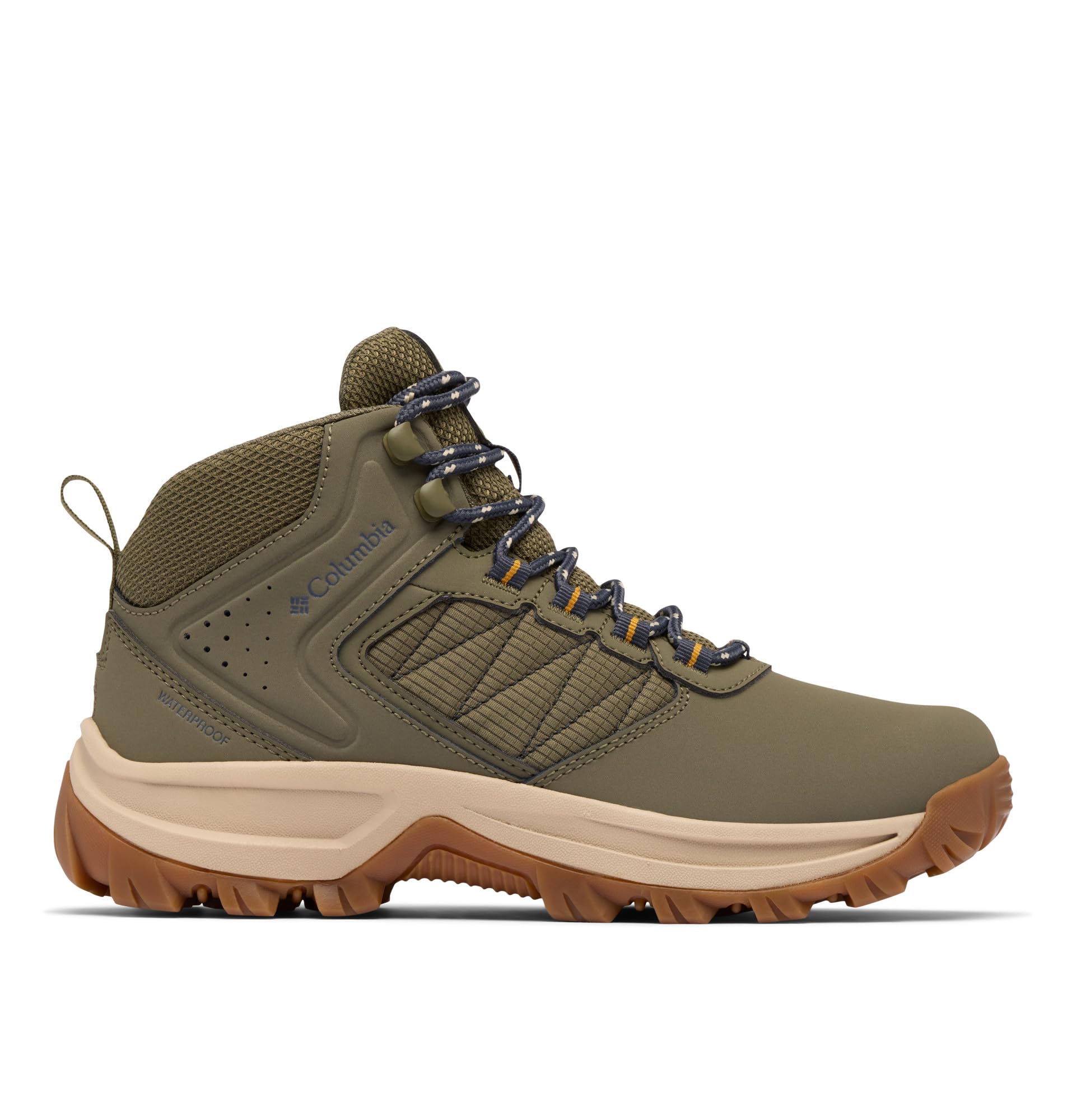
The waterproof boot that walked a muddy festival dry and did not need breaking in.
If you want a boot that handles mud and shallow water without flooding your socks, this is the one with the deepest real-world proof on the list. One owner spent three rainy days at a muddy festival and reported feet completely dry despite mud and water. Another took them through Glacier National Park in the rain and called them the most comfortable boot tried, with no blisters and solid slip resistance on wet rock.
Comfort is the runaway reason people rate it so highly — a full two-thirds of the review discussion is about how easy it is on the feet, and the boots are true to size with no break-in required for many wearers. The lightweight leather build floats well below a heavy leather boot, ankle support is reassuring on rugged paths, and the step-in entry means no wrestling with laces. The slip-on design works well for wide feet too, and the tread handles everything from Moab to the NC mountains.
The fit is the honest variable. It runs narrow for some women and wide for others, so it is a try-on shoe rather than a blind order. A few find the sole bed stiff at first, and the sole can split with hard use while the waterproofing holds. None of that sinks it — a 4.5+ star score from 1,700+ ratings backs up that most owners are very happy.
Where it shines
- Keeps feet dry through mud, festival puddles and rainy-park hikes
- Comfortable from the start — no break-in for most wearers
- Step-in entry and ankle support for rugged, uneven ground
Where it needs care
- Fit runs narrow for some women, wide for others
- Sole can split with heavy, prolonged use
- Not built for submerged crossings — splash and mud only
Go for this if: you want a waterproof, step-in boot for wet trails, mud and rain that feels broken-in from day one.
Skip if: you need to wade through deep water — this boot keeps water at the collar.
8. Astral Men’s Loyak Shoes
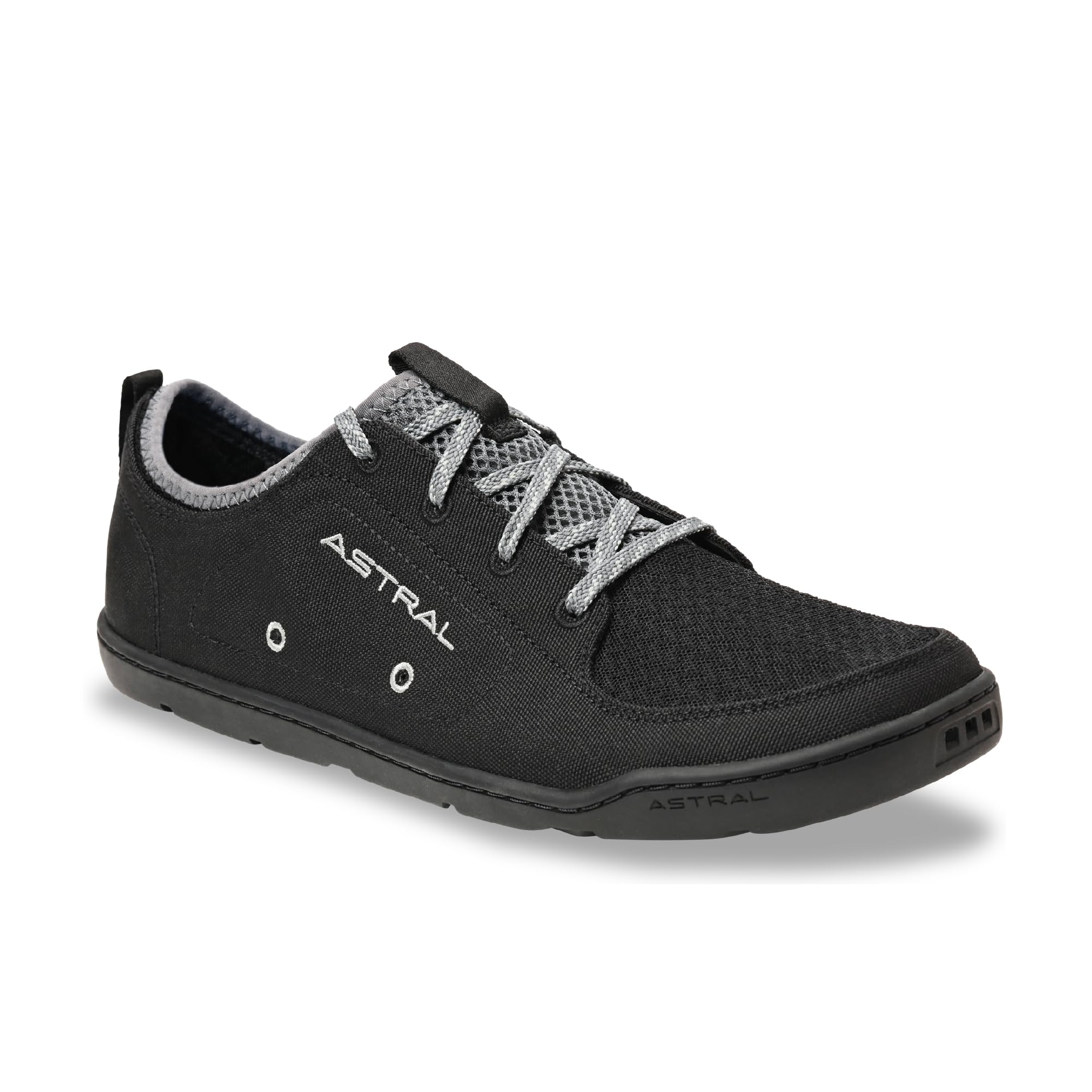
A minimalist wading shoe whose siped rubber holds where everything else slips.
Here is the pick for the paddler, the wet wader, and the hiker whose water crossings are the whole point of the day. The secret is the siped sole — cut with slits that grip even on mossy rock. A whitewater paddleboarder credits the grip with opening up harder rapids, and a fly fisherman who wet-waded 11 hours over two days called the shoe grippy, light, quick-drying, and easy to clean — pull the insoles to flush out pebbles.
Drainage is the other half of the design. The upper empties fast and the hemp construction is durable, breathable and odor-resistant. It is also a minimalist shoe, meaning a wide, near foot-shaped toe box and a flat-feeling ride. Anyone used to a cushioned boot should expect an adjustment period — that is the point of a shoe like this, connecting your foot to the ground so you feel the wet rock under you.
Do not guess your size. The Loyak runs small and several buyers size up a half or full size. The tongueless opening is tight to pull on at first and eases as it breaks in. Air-drying takes longer than a day, so plan for a second pair at camp if that matters. A few owners also find the upper digs into the top of the foot. At 4.0+ stars across roughly a thousand ratings, it is a specialist shoe for people who spend real time in the water.
Why it beats a trail shoe in the water: Siped rubber on a minimalist hemp upper is purpose-built for wet rock and fast drainage — you walk out of the creek and the shoe does not hold water.
What it asks of you: Size up and give the tongue area a break-in period, or the fit can bite your instep on the first few outings.
Ideal for: paddlers, wet waders, and hikers who cross moving water and want grip over cushioning.
Not the one if: you want soft padding underfoot all day — this is a bare-foot-feel shoe.
9. Astral Women’s Loyak Shoes
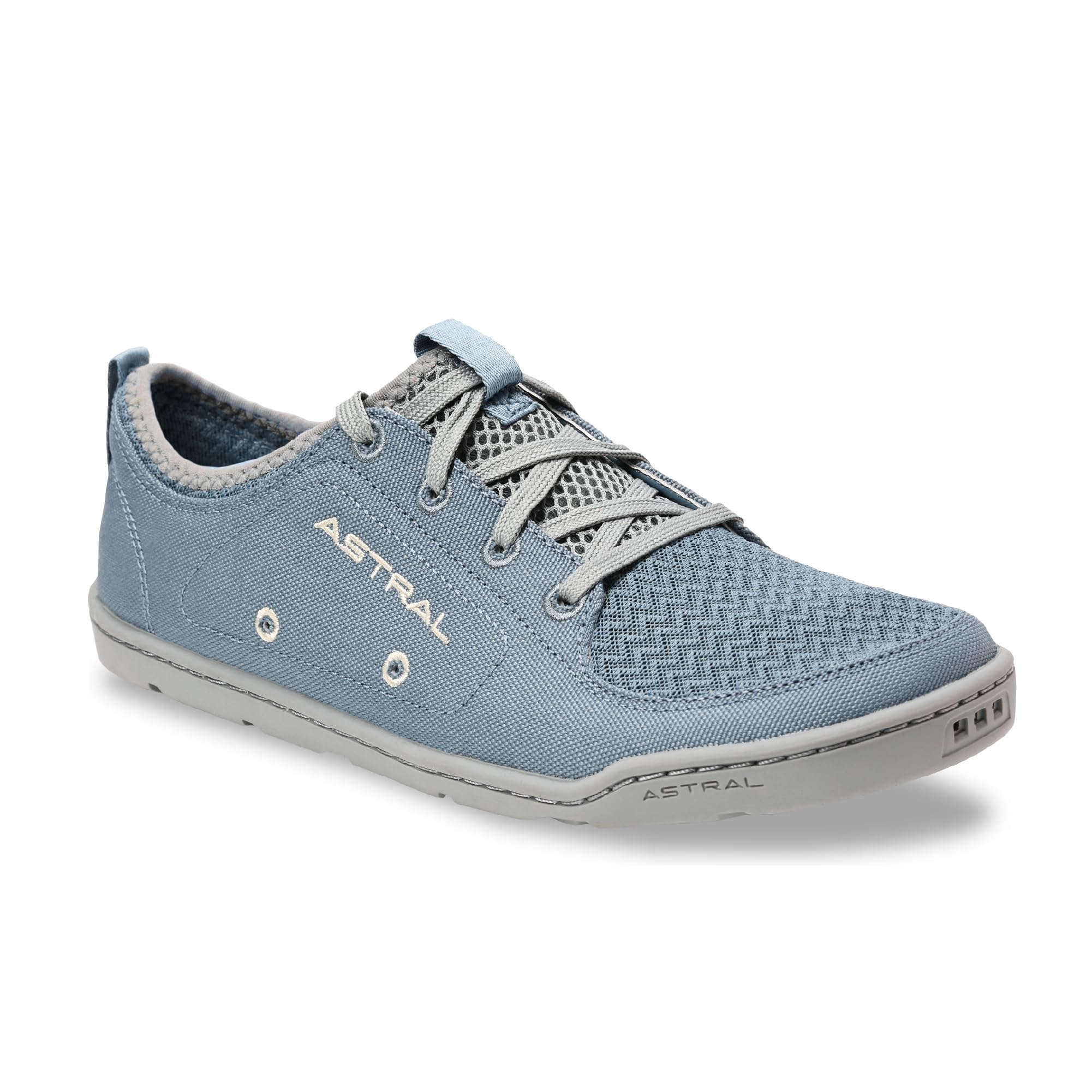
The drainable, washable sneaker that goes from kayak launch to trailhead without a slip.
This is the women’s version of the same wet-grip family, and it carries the same job description: get wet, drain, stay grippy. The draw here is all-around flexibility — reviewers walk on slipperier surfaces without slipping, then wear the same shoes for errands and camping. The washable build and attached tongue let you rinse the grit out fast, and the wide toe box keeps toes from pinching through a wet day.
For a woman who paddles, boats, or hiked a stream trail with a pack, this shoe is comfortably at home. Owners describe it as a flexible, draining upper with stable traction and a comfortable fit — and one shopper fresh off a trails-and-streams hike in Arkansas put it plainly: “Very comfortable, drain easily, and dry quickly.” That is the crossover appeal: it is a water shoe that looks and behaves like a sneaker.
Two real cautions come up often enough to plan around. Sizing runs small for many women — going up half or a full size is common — and the break-in period matters, because a tight first fit can rub the toes or lift the heel. Dry time is also slower than you might expect: reviews mention 24 to 48 hours of air-drying and a smell that lingers if not rinsed well. Neither is a deal-breaker, just part of the deal.
Made for: women who kayak, paddleboard or run stream trails and want one shoe for the water and the walk back.
Plan around: the sizing — go up half a size and give them a break-in before a long walk.
Know the Specs
Drainage versus waterproofing
A drainage shoe uses vents — perforated foam, mesh panels — so water entering the shoe leaves through the sole as you walk. It stays light when saturated and dries fast, but it can never keep a puddle out. A waterproof shoe uses a sealed membrane such as Gore-Tex or RAIN.RDY that stops water entering the fabric, but once water comes in over the collar, that same membrane keeps it in. Match the shoe to your wettest moment: a creek you ford versus rain you walk through.
Siped soles and wet-rock grip
Siped rubber is cut with thin slits across the lugs. When you weight the foot, those slits open and squeeze water out from between the rubber and the rock, so the sole stays in contact instead of skating on a film of water. That is why the Astral Loyak’s sole is repeatedly trusted on mossy rock. Tread depth matters too, but only for mud — shallow lugs fill and stop gripping, while a deep lug on a hard compound can be worse on slick stone than a moderate, softer siped lug.
Upper material and dry time
Mesh and hemp breathe and dry in hours; leather and sealed membranes hold water for a long time. Hemp in particular tends to stay odor-resistant after a soak. If your route has multiple crossings, dry time matters more than nearly any other spec, because you will be walking in wet shoes for miles. A shoe that stays light when saturated — like the Columbia Drainmaker — keeps your legs fresher than a heavier design that soaks up water.
Fit around the toe box and heel
Sizing is the most common source of returns on this list. Some shoes run large (the Speedcross Peak), some narrow in the toe box (the adidas Anylander), and some run small (the Astral Loyak). A wet foot still swells as you hike, so a snug toe box can turn painful over a long day. Check the fit reviews on the exact shoe you buy, and lean toward a roomier toe box if your hikes last hours rather than minutes.
Common Questions
Can I wear waterproof hiking shoes for a deep creek crossing?
What is a siped sole and why does it matter on wet rock?
How long does a water shoe take to dry after a crossing?
Do I size up or down for trail shoes that get wet?
Are water drainage shoes comfortable enough for a long hike?
Will a waterproof hiking shoe make my feet sweat more on a dry climb?
Which is better for mud — a drainage shoe or a sealed boot?
How do I stop sand and grit from getting into a drainage shoe?
Can a trail runner replace a hiking boot for backpacking?
The Bottom Line
For the classic wet hike — mud, a creek crossing, and miles still to go — the Salomon Women’s Speedcross is the most balanced answer on this page, with deep mud-and-rock grip and a water-resistant mesh upper that dries on the move. If the threat is rain rather than a ford, the La Sportiva Spire GTX stays sealed for years. And if the crossing itself is the point, the Columbia Drainmaker XTR is built to let the water run straight through.
One honest truth to carry with you: only a drainage shoe can handle a full wade, so if that is your route, treat a waterproof or water-resistant shoe as the wrong tool rather than a lesser one. Match the shoe to the depth of your crossing, and your feet will thank you on the far bank.
How we choose
We do not accept paid placement. Every pick is matched to a real buyer and a real use-case; we do not hands-on test units.
Sources
Specifications: manufacturer listings and product documentation. Review insights: verified customer reviews, as of October 2026. Pricing: not shown on this page (it changes often); check the current price via the retailer link.
As an Amazon Associate, Aappliancez earns from qualifying purchases. This does not affect which products we feature.