Disclosure: Some links in this post are affiliate links. As an Amazon Associate I earn from qualifying purchases, at no extra cost to you. Learn more
Specs are compiled from manufacturer listings and verified buyer reviews and can change over time — please confirm the key details on the product page before buying.
If every step feels like you are walking on a pebble that isn’t there, the shoe is usually the problem, not your foot. A Morton’s neuroma flares when the toe bones get squeezed together, so the winning shoe has a wide toe box that lets your toes spread and cushioning under the ball of your foot. Everything below is judged on those two things first. Plenty of hiking shoes look tough but pinch across the forefoot, and those are not on this list.
This guide is built by comparing the manufacturers’ published specifications and the patterns across verified customer reviews, so you get each pick’s real strengths and trade-offs instead of marketing spin.
The picks that follow split into two camps: soft, wide trail runners for long comfort, and sturdy boots that protect your feet on rough ground. Both can work, and the right answer depends on how much cushioning and toe room you want underfoot. Here is how the hiking shoes for morton’s neuroma options actually compare on fit and forefoot space.
Top Picks


How To Choose The Best Hiking Shoes for Morton’s Neuroma
Start with the shape of the front of the shoe, because that is where your problem lives. A neuroma is an irritated nerve between the toe bones, and a shoe that presses those bones together will undo every other good feature it has. The three things that matter most are toe box shape, forefoot cushioning, and how much the shoe bends where your foot bends.
Toe box: let the toes spread, not splay
You want width at the toe joints and across the metatarsals (the long bones behind your toes), not a shoe that is simply wide all over and lets your heel swim. Several trail runners here use a FootShape or roomy anatomical toe box built for exactly that. A wider forefoot with a secure midfoot is the combination that stops pressure on the nerve.
Forefoot cushioning and rock plates
Cushioning under the ball of your foot spreads the load that would otherwise press the nerve against the ground. A rock plate (a thin stiff layer built into the midsole) does the same job on sharp stone. The trade-off is weight and ground feel: a thicker, plated platform protects more, while a thinner, flexible one lets your foot work naturally and reads the trail under you.
Drop and how it shifts pressure
Drop is the height difference between heel and toe. A zero-drop shoe puts heel and forefoot at the same height, and a 5mm or 6mm drop tilts you slightly forward. Zero drop takes some adjustment if you are used to a raised heel, but it changes how your weight loads the ball of your foot. Neither is wrong; match it to what your feet already tolerate.
Waterproof versus breathable
A waterproof membrane like Danner Dry or KEEN.DRY keeps streams and rain out but traps heat. A breathable mesh shoe dries fast and runs cooler but soaks through. If you hike in wet country, buy the membrane. If your feet swell and overheat, a quick-drying mesh may leave you more comfortable.
Support level: stability versus flexibility
Stiffer shoes with a rock plate and deep lugs protect on technical, rocky ground. Softer trail runners with minimal structure suit long, rolling hikes and anyone who wants a natural feel. Ask how rough your usual trail is, then pick the support to match.
Side-by-Side Comparison
| Model | Best For | Toe Box / Fit | Drop | Weight | Amazon |
|---|---|---|---|---|---|
| Danner Mountain 600 Women’s★ Best Overall | Ankle support in a leather boot | Roomy, true to size | — | — | Amazon |
| ALTRA Men’s Lone Peak 9Top Toe Room | Widest toe box in a men’s trail shoe | Roomiest FootShape toe box | 0 mm | 11.15 oz | Amazon |
| Brooks Women’s Cascadia 19Trail Stability | Stability on rocky, uneven trails | Plenty of forefoot room | — | — | Amazon |
| ALTRA Women’s Lone Peak 8 | Wide-toe comfort at a lower tier | Roomiest FootShape toe box | 0 mm | 10.7 oz | Amazon |
| Topo Athletic Women’s Ultraventure 4 | Cushion for long days | Roomy anatomical toe box | 5 mm | — | Amazon |
| ALTRA Women’s Lone Peak 9 | Wide-toe trail shoe for women | Roomiest FootShape toe box | 0 mm | 11.15 oz | Amazon |
| KEEN Men’s Targhee 4 Low | Waterproof wide fit for big days | Original Fit (wider) | — | 530 g | Amazon |
| New Balance Women’s Fresh Foam X Hierro V9 | Cushion plus aggressive traction | Roomy, secure toe box | — | — | Amazon |
| Danner Trail 2650 | Lightweight suede protection | Runs small, size up | — | — | Amazon |
Detailed Reviews
1. Danner Mountain 600 Women’s Hiking Boots
Our pick — 4.5+★ from 650+ verified ratings; the strongest balance of quality and price.
A leather boot whose wide toe box is the whole point for a sensitive forefoot.
The one number that decides this pick is simple: fit is what owners single out more than any other quality, and it lands for tricky feet. This reviewer, a 71-year-old woman with narrow heels, high arches, Morton’s neuroma, bone spurs and a rigid toe, found the toe box wide enough and the heels stayed put with no slip. That is the exact set of conditions a neuroma buyer is trying to solve, and the boot cleared all of them on a 1.39-mile walk in medium crew socks. The upper is a smooth suede or full grain leather with Danner Dry waterproof protection, so rain beads off and splash crossings stay outside.
Underfoot, Danner paired a Vibram SPE midsole with a Fuga outsole for grip on wet and dry ground. An owner wore them straight from the box on a six-hour White Mountains hike with no blisters, and another took them up a 20-mile Yosemite day to Half Dome across granite slab and wet rock with feet dry and comfortable. The stiffer build also limits how far your toe flexes at the bend point, which matters if pushing off through a sensitive ball of foot hurts. As buyers report, the footwear “lasted 3 years and thousands of miles” on a second pair.
What wins people over is the room-to-support balance: supportive at the ankle without pinching up front. The honest catch is break-in and warmth. A few owners want more ankle cushioning at the cuff top, and the leather runs warm enough that feet overheat in summer.
What earns its place
- Wide toe box clears a rigid, spur-marked toe without squashing it
- Danner Dry waterproof leather shrugs off rain and stream splash
- Vibram Fuga outsole held grip on wet granite and rocky descents
- Ankle support firm enough for previously injured joints
Where it asks something back
- Leather runs warm — feet can overheat on hot summer hikes
- Stiffer forefoot limits toe flex more than a soft mesh runner
- A little more cushioning at the cuff top would help some ankles
Buy this when: you want real ankle stability and an all-leather waterproof boot with a genuinely roomy toe box.
Think twice if: you hike in heat and hate warm feet, or you prefer a soft, flexible forefoot.
2. ALTRA Men’s Lone Peak 9 Trail Running Shoe
The roomiest toe box in the lineup, paired with zero drop for a natural stride.
If you have ever cut the side out of a shoe to stop the squeeze, start here. ALTRA builds the Lone Peak 9 around its FootShape toe box, which it describes as its roomiest, with space through the midfoot and a 0 mm drop so heel and forefoot sit level. That zero-drop platform changes how your weight loads the ball of your foot. Owners with wide feet say the box outpaces even a Merrell 12 Wide, which is a serious statement for anyone whose forefoot has been crushed for years.
The grip comes from a MaxTrac outsole with a Stoneguard insert underfoot that shields you from rocks and debris. That matters on a neuroma because a sharp stone pushing up through a thin sole sends pain straight to the forefoot. Build quality is the thing buyers praise most about this shoe, and the outdoor use backs it up: the reviewer logged “no break-in, no blisters over 60+ miles, minimal wear past 100 miles.” Traction held across mud, gravel and rock, and the mesh dries fast rather than soaking through.
Now the part you need to hear. Durability is split — some owners put in serious mileage without trouble, while others see seams let go early. The upper is only borderline waterproof, and zero drop takes a few walks to get used to if your current shoes have a raised heel. Neither is a dealbreaker, but both tell you this is a warm-weather, flexible-forefoot choice.
Best for swollen forefeet: the wide box and level platform take pressure off the toes on long days.
Know before you commit: zero drop is an adjustment period, not a same-day switch.
Made for: wide-foot men who want maximum toe spread on warm, dry trails.
Pass on it if: you need a waterproof shoe or a raised heel for comfort.
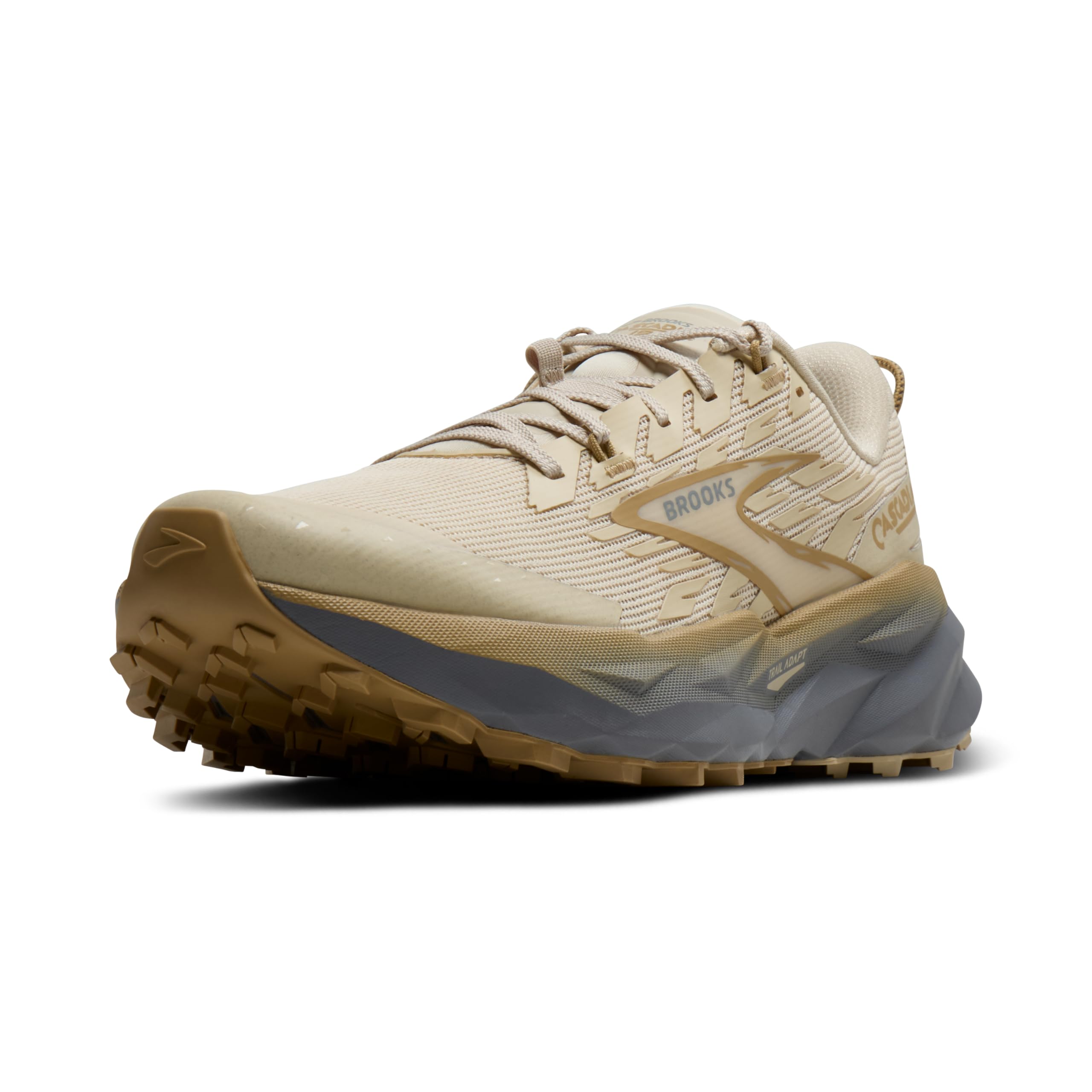
3. Brooks Women’s Cascadia 19 Mountain Trail Running Shoe
A stable, protective trail shoe that shields a sensitive forefoot from sharp rock.
Where the Lone Peak prioritizes flexibility, the Cascadia 19 prioritizes protection. It carries a rock plate and a thick midsole that owners say keeps sharp rocks from poking through, plus a wide base for stability on uneven ground. The toe box got praise for being genuinely roomy, with room for the toes to spread and a natural roll as you walk. For a neuroma buyer who hikes gravel and rutted trails, that combination of toe room and a shielded forefoot is exactly the ask.
This is a heavier, sturdier shoe than the soft trail runners here, and the honest flip side is that a deep lug tread like this is best on dirt, gravel and moderate terrain; in deep mud and loose dirt the grip is less certain. The shoe is also sturdy enough that it suits steady hiking days more than racing pace. A few owners note the upper mesh lets grit in, so you may find yourself shaking out sand mid-trail.
On rocky, wet ground it holds a line. A buyer broke hers in on Angels Landing in Zion and said she “felt like a mountain goat,” and another wore a fresh pair for a nine-mile Montana hike with no blisters and no break-in. Comfort with room to spare is the through-line here, and the shoe caters to narrow feet too, fitting securely without sliding. It runs a bit small for some long-time buyers, so try your size first if you can.
Pick it for: rocky, technical trails where you want a rock plate and a stable base under a sensitive forefoot.
Look elsewhere if: you need a very light, racing-fast shoe or you walk in loose mud often.
4. ALTRA Women’s Lone Peak 8 Trail Running Shoe
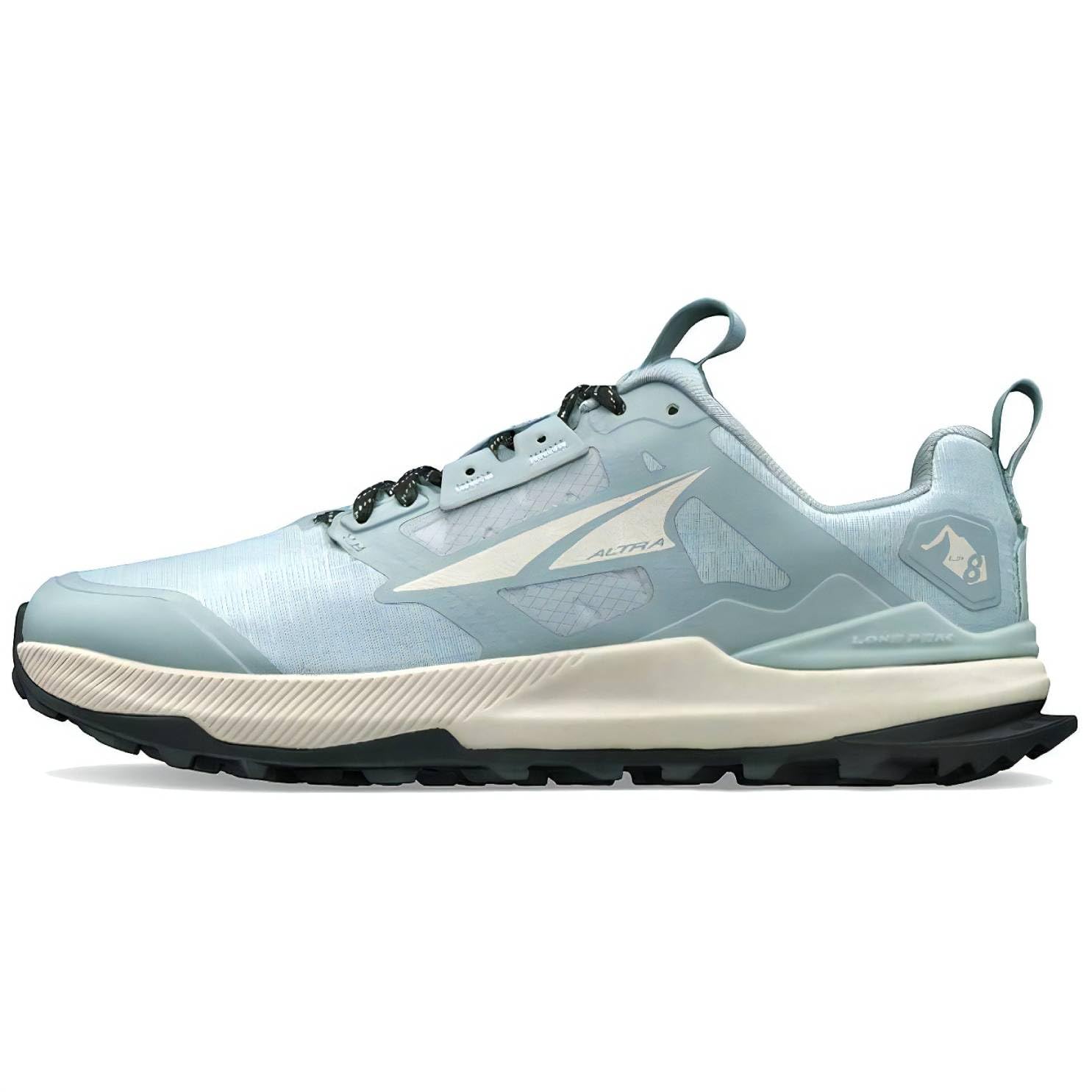
The previous-gen legend, still the widest-toed woman’s trail shoe at a lower tier.
The Lone Peak 8 keeps the FootShape toe box and the 0 mm zero-drop platform that made the line famous, with a refined ripstop mesh upper and a MaxTrac outsole. Where the men’s Lone Peak 9 leads on freshness, this one leads on value: it packs the same roomiest-in-class toe box for a lower spend. Canted lugs sit beneath the metatarsals for extra grip under the forefoot, which is precisely where you want traction when your toes need room to spread.
A hiker who moved over from Merrells says the wide toe box finally stopped a hiker’s toe and the pain that came after four to five steep, rocky miles. Quality is the thing that wins people over here, and trail owners echo it back: shoes worn multiple times a week for two months still look new, with zero break-in on the first Tahoe and Yosemite hikes. Cushioning is the recurring split, though. Some find the platform soft enough for long days, while others want a little more padding underfoot.
The one caution worth knowing: a heavy-use owner saw the side blow out at the upper after the mileage add up, so treat these as a comfortable everyday trail shoe rather than an indestructible one. If you want the newer refinements and are willing to move up a tier, the Lone Peak 9 for women is the step up.
The value read: you get the same signature roomy toe box as the flagship for less.
The trade to accept: cushioning is modest, and a hard-mileage user should expect eventual wear at the upper.
Choose it if: you want the widest toe box and natural feel without paying flagship tier.
skip it if: you want plush cushioning or expect ultra-long mileage before the upper gives.
5. Topo Athletic Women’s Ultraventure 4 Trail Running Shoes
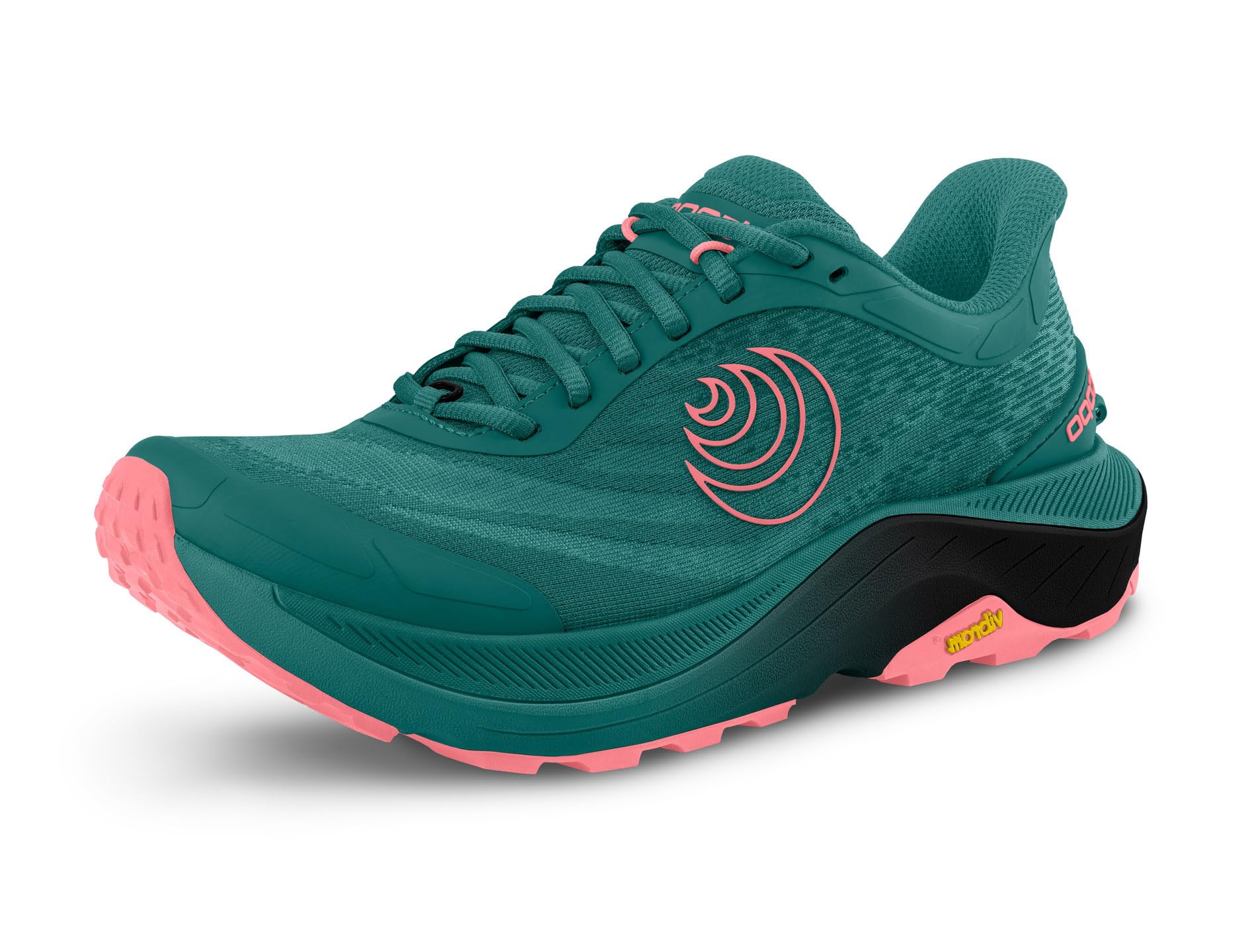
High cushioning on a roomy platform, with a little heel lift to ease the forefoot.
The Ultraventure 4 rides on a 35 x 30 mm platform with a 5mm drop, which tilts you slightly forward compared to the flat Lone Peak. That slight lift can take load off the ball of your foot on climbs, and the ZipFoam midsole runs springier than basic EVA for a bit more rebound over its life. The upper is recycled mesh with PU print in the high-abrasion zones, and the Vibram XS Trek EVO outsole moves from trail to road without a stumble. A roomy anatomical toe box rounds out the forefoot story.
Owners point to comfort and stability in the same breath, and a couple of details stand out for a sensitive foot. One woman using hers for walking for roughly two years found the large toe box helped both a neuroma and plantar fasciitis. Another, a size 11 wide, found them perfect from the start and wearable all day with her own insoles helping a bunion and arthritis. The heel locks in and does not slip, which keeps the forefoot from sliding forward into the front of the shoe on descents.
Here is the honest part to weigh. Durability is the real soft spot with this model, and it comes up more than once — some owners see the inner edges tear or the sides give out within months of steady wear. If you want a shoe to survive years of hard miles, that is the risk you take. If cushioning and a roomy fit are your priority, this delivers on both. The 5mm drop also suits anyone who finds pure zero drop a touch awkward.
Why it earns the cushioning crown
- 35 x 30 mm platform cushions long days under the forefoot
- Roomy anatomical toe box with room for toes to spread
- Vibram XS Trek EVO grips wet rock and moves onto road cleanly
- 5mm drop suits feet that find zero drop awkward
The honest caveats
- Durability is the recurring weak point on heavy use
- Higher cushioning means less ground feel than a minimal shoe
- No waterproof version in this model
Land on this one if: you want softness under a roomy toe box and prefer a slight heel lift to flat.
Reconsider if: you need a shoe that survives years of hard mileage.
6. ALTRA Women’s Lone Peak 9 Trail Running Shoe
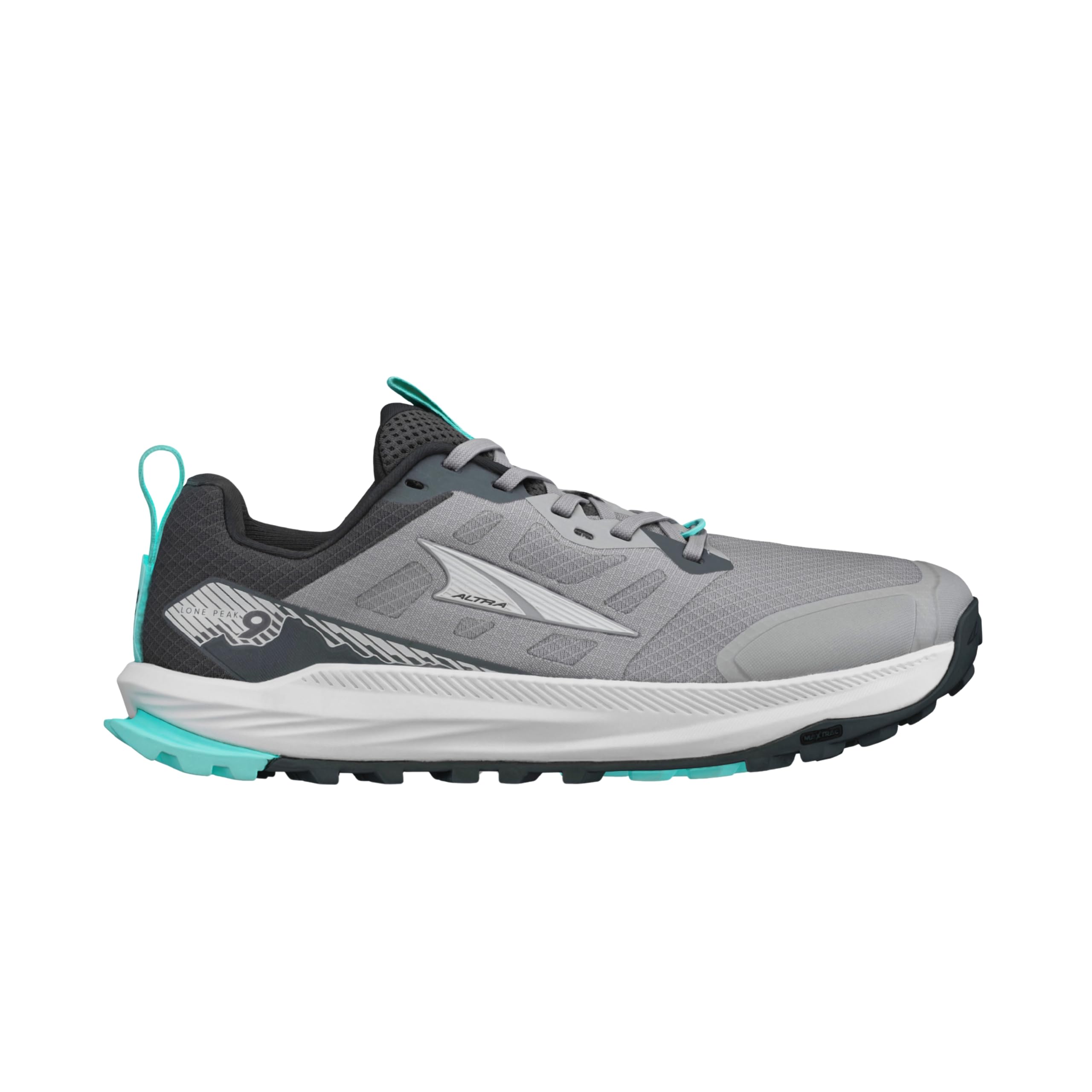
The women’s version of the widest-toed flagship, with zero drop and strong grip.
The women’s Lone Peak 9 carries the same recipe as the men’s: the roomiest FootShape toe box, a 0 mm drop, and a MaxTrac outsole with a Stoneguard insert to shield the sole from rocks. The ripstop mesh upper gets no-sew overlays for durability in high-mileage use, and the midsole foam is tuned lighter than the previous version. What makes it click for a neuroma buyer is the wide forefoot paired with a grippy sole — the description that shows up in owners’ own words is that it lets you feel the trail and move your foot around what you are stepping on.
One owner who had stopped running and hiking for a decade because of neuroma pain came back to it with these, crediting the wide toe box and strong tread as the fix. Another calls the arch support ideal and the stability reassuring for balance and steady walking. Comfort and fit carry this shoe — that is what owners return to again and again.
The catch is sizing and cushioning. This one is not a plush shoe; it runs low and fairly flat, so if you want a soft ride, look to the Topo above instead. Sizing also takes a dial-in — some wide-foot and high-arch owners find a half size fuller works better, and the thin insole may not suit high arches without your own insert. Or if you prefer a more structured feel, the Cascadia is the stronger support pick.
Reach for it if: you want the widest toe box in a women’s trail shoe and are comfortable sizing to fit.
Not the one if: you want plush cushioning or a firm, high-arch insole straight from the start.
7. KEEN Men’s Targhee 4 Low Height Waterproof Hiking Shoes

A genuinely wider waterproof shoe for men, built to take wet weather and big bodies.
KEEN’s Original Fit is the wider of its two lasts, which is exactly what a forefoot under nerve pressure wants. Add a KEEN.DRY waterproof membrane inside and a water-repellent leather exterior, and you get a shoe that shrugs off wet days without giving up room up front. At 530 g it is no light trail runner, so read it as a sturdy walking and hiking shoe rather than a fast one. The adjustable laces let you dial in snugness while keeping the toe box open, which is the balance a neuroma buyer is chasing.
Owners love the durability. One long-time buyer’s similar pair held up for 12+ years and relieved foot and ankle aches. Another wore these through rainy Alaska across 30 to 40 miles with dry, comfortable feet. The outsoles are described as designed to be twice as abrasion-resistant as rubber, and the glue-free KEEN.FUSION bond is built not to delaminate, so this is a shoe meant to last.
Two things to size your expectations to. The laces are the recurring small annoyance — round ones that slip and need double-tying — and a couple of owners find the tongue and ankle seam rub unless broken in or worn with the right socks. It also runs warm thanks to the waterproofing, so if you hike in hot, dry conditions a breathable mesh shoe will leave you more comfortable.
The draw for wide feet: Original Fit plus adjustable lacing keeps the forefoot open while the heel stays put.
One routine upgrade: swap or double-tie the laces, and break in the ankle cuff on short walks first.
Built for: men with wider feet who hike wet trails and want a durable waterproof shoe.
pass on it if: you need a light, fast trail runner or hike in hot, dry climates.
8. New Balance Women’s Fresh Foam X Hierro V9

Soft Fresh Foam cushioning over aggressive 6mm lugs, with a shielded toe.
The Hierro V9 pairs a dual-density Fresh Foam X midsole for plush, stable cushioning with a Vibram Megagrip outsole and deeper 6mm lugs for grip in wet and dry conditions. For a neuroma buyer, the soft dual-density foam underfoot spreads pressure that a firmer shoe would concentrate on the ball of the foot, and Toe Protect shielding stone and root stubs from the front of the shoe. A breathable knit upper with a gusseted tongue keeps trail grit out while letting air flow.
Owners describe the ride as running on clouds, and it holds up over real distance — one hiker took hers on a 20-mile first wear with no issues, praising a great heel fit and a roomy yet secure toe box. The grippy sole and reinforced toe add confidence on rocky and muddy ground. New Balance did the one thing that matters most here too: the cushioning is the star of this shoe, and it shows on the trail.
Sizing is the real note to plan around. Plenty of owners find these run small and size up, with some going a half size or even a full to 1.5 sizes to get comfortable. A couple also find the underfoot support a little soft for running pronated, though it still wears well for walking and hiking. If you usually wear a snug fit, order up and give your toes the room.
Best suited to: women who want cloud-soft cushioning and 6mm lug grip on mixed and muddy terrain.
Order with care if: you have a wide or pronated foot — size up and consider a stability-focused shoe for fast running.
9. Danner Trail 2650 Hiking Shoes for Men

A light suede hiker with a stable footbed and a glove-like fit.
The Trail 2650 is built from durable suede and textile with a breathable mesh lining, set on an Ortholite footbed and a Vibram traction outsole. It is one of the lighter options on this list, and lightweight matters when a heavy boot starts to drag on your forefoot by mile ten. The stable footbed keeps the shoe from twisting under you, which is the part that makes it feel confident on uneven park trails as well as on the street.
Owners rate the quality and durability here highly, and the shoe’s ability to look new after a clean-up says a lot. The sub-point to notice: the tread has lost some life compared to the first pair that lasted three seasons.
Now the fitting reality, which is the biggest thing to get right. This shoe runs small for a lot of owners, and it may need a half size to a full size up, especially with wide feet or a high instep. It is not waterproof and the breathability is only moderate, so it suits dry-weather casual use and light trails more than wet, rugged country. Nail the right size and this is a comfortable, sharp-looking shoe; get it wrong and fit becomes the problem, not the shoe.
Where it shines: a light, stable, good-looking hiker you can wear all day from park path to work.
The sizing caveat: try half a size to a full size up, and don’t expect waterproofing or deep-tread traction.
Worth it for: men who want a light suede hiker for dry trails and long days on their feet.
Pass if: you hike wet country or have a wide, high-instep foot that needs a roomier last.
Know the Specs
Toe Box and FootShape
The toe box is the room inside the front of the shoe. For a neuroma, a roomier toe box (like ALTRA’s FootShape or Topo’s anatomical shape) lets your toes spread without pressing the nerve. Width at the toe joints is what counts, not overall shoe width.
Drop
Drop is the height difference between heel and toe in millimeters. Zero drop (0 mm) sits heel and forefoot level, a 5mm tilt tips you forward, and a higher drop relieves the calf but can load the forefoot differently. Pick your drop based on how your own foot already tolerates load.
Rock Plate and Stoneguard
A rock plate or stoneguard insert is a thin stiff layer under the midsole that stops sharp stones from pressing up into the foot. It adds protection at the cost of some ground feel and a little weight.
Waterproofing and Breathability
A waterproof membrane (Danner Dry, KEEN.DRY) keeps water out but can trap heat. A breathable mesh upper dries fast and runs cooler but soaks through quickly. Choose based on the weather you actually hike in, not the label.
Common Questions
Do wide hiking shoes actually help with Morton’s neuroma?
Is zero drop better than a raised heel for a painful forefoot?
Should I size up when I have a neuroma?
Do I need a rock plate for rocky trails?
Will a waterproof shoe make my feet too hot?
Can I wear trail running shoes on pavement too?
How long should hiking shoes last for someone with a neuroma?
Can I add my own insole to these shoes?
The Bottom Line
For most women who want an all-leather waterproof boot with real ankle support and a roomy toe box, the Danner Mountain 600 is the one to beat — it cleared a rigid, spur-marked toe and stays dry in the rain. If you want the widest toe box in a men’s trail runner, the ALTRA Lone Peak 9 gives you the roomiest FootShape toe box on a zero-drop platform. And for women who want soft cushioning over the forefoot, the Topo Ultraventure 4 puts the most foam under a sensitive ball of foot. Whichever you pick, start with the toe box and let the rest follow.
How we choose
We do not accept paid placement. Every pick is matched to a real buyer and a real use-case; we do not hands-on test units.
Sources
Specifications: manufacturer listings and product documentation. Review insights: verified customer reviews, as of October 2026. Pricing: not shown on this page (it changes often); check the current price via the retailer link.
As an Amazon Associate, Aappliancez earns from qualifying purchases. This does not affect which products we feature.