Disclosure: Some links in this post are affiliate links. As an Amazon Associate I earn from qualifying purchases, at no extra cost to you. Learn more
Specs are compiled from manufacturer listings and verified buyer reviews and can change over time — please confirm the key details on the product page before buying.
The quick answer: for metatarsalgia — that sharp, bruised ache across the ball of your foot — you want a hiking shoe with a roomy toe box, a stiff rocker sole that stops your toes from bending, and cushioning thick enough to spread the pressure. Everything else is a distant second. This list only covers shoes that actually put those three things first, and it tells you exactly which buyer each one fits.
This guide is built by comparing the manufacturers’ published specifications and the patterns across verified customer reviews, so you get each pick’s real strengths and trade-offs instead of marketing spin.
Before you read the picks, know what the table below is doing: it lines up every shoe by toe-box width, sole stiffness, and carry weight so you can compare them at a glance. By the end you’ll know exactly which hiking shoes for metatarsalgia will keep that ball-of-foot burn away on a long trail day.
Top Picks


How To Choose The Best Hiking Shoes for Metatarsalgia
Metatarsalgia is pain in the ball of your foot — the spot that takes the load every time you push off. A hiking shoe helps when it changes where that load lands, not just when it adds foam. Three specs do most of the work, and you can check all three on any product listing.
Toe box width is the first thing to check
A roomy toe box lets your forefoot bones spread instead of stacking tightly on each other. That is the single most-repeated fix in the trail shoes on this list. Look for language like “roomiest toe box” or “wide toe box” and read the sizing notes carefully, because several of these run small or large.
A rocker or stiff sole stops the toe bend
Every time your toes flex to push off, the ball of your foot compresses. A curved rocker sole rolls your foot forward instead, and a stiff forefoot limits the bend. That is why the KEEN WK400 and the Gravity Defyer Sierra both use a pronounced rocker shape — it changes how you roll through the step.
Drop, cushioning, and carry weight
Drop is the height difference between heel and forefoot, measured in millimetres. A 0 mm drop (zero drop) sits your heel and forefoot level, which many ball-of-foot sufferers prefer. Cushioning depth and shoe weight then decide how far you can hike before your legs tire. Lighter shoes tire you less; more cushioning spares your feet more. You rarely get both at once.
Side-by-Side Comparison
| Model | Best For | Toe Box | Sole / Drop | Weight | Amazon |
|---|---|---|---|---|---|
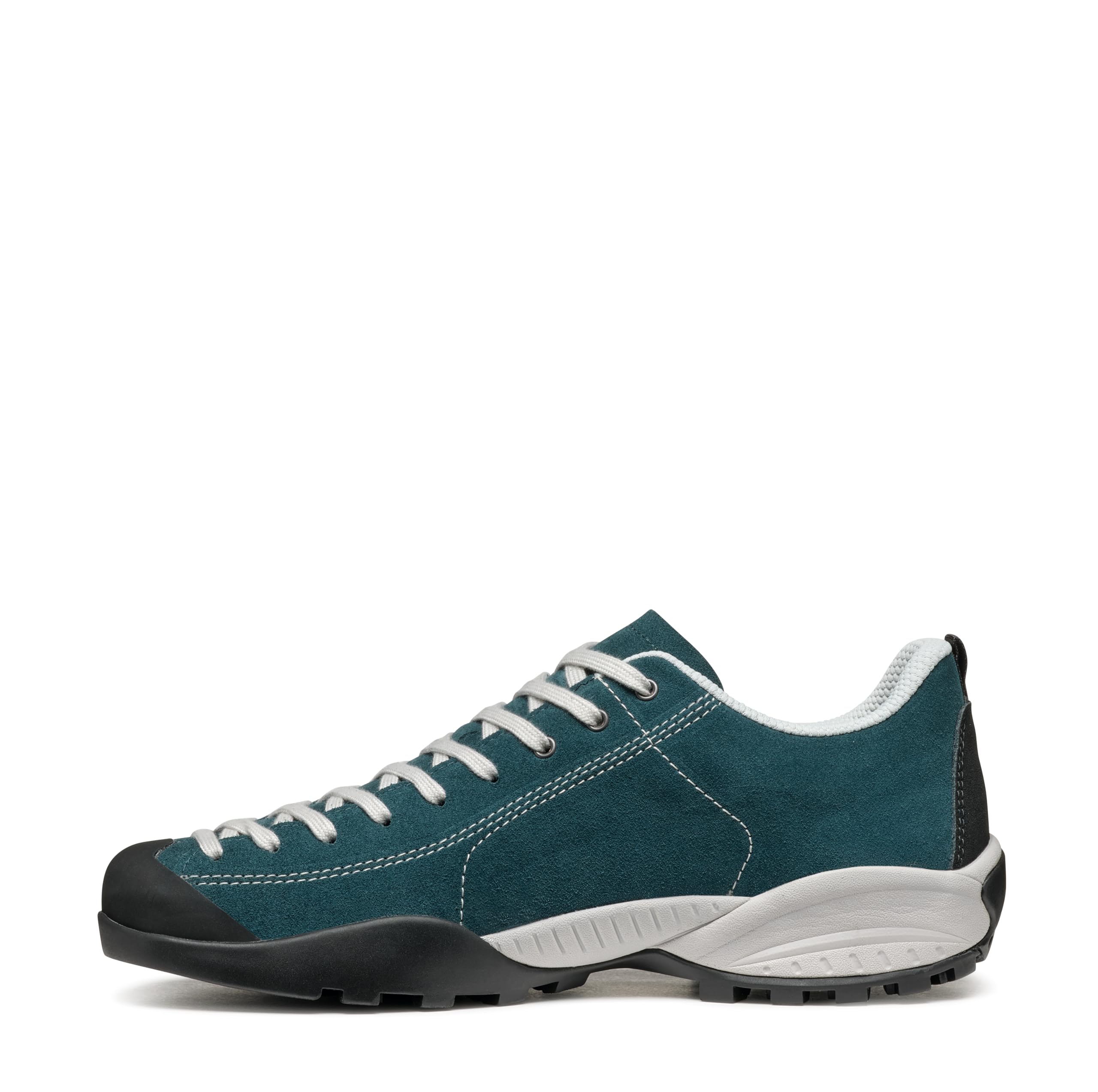
| SCARPA Mojito★ Best Overall | Light trail and town days | Snug, approach-style | Flexible, low-profile | 2.03 lb | Amazon |
| KEEN Performance BreathableRocker Sole | Less toe flex on pavement and trail | Contoured Fit | Full rocker | 3 lb | Amazon |
| ALTRA Lone Peak 9Widest Toe Box | Long hikes with wide forefeet | Roomiest, FootShape | MaxTrac, 0 mm drop | 11.15 oz | Amazon |
| ALTRA Women’s Lone Peak 8 | Women needing forefoot room | FootShape, wide | MaxTrac, 0 mm drop | 10.7 oz | Amazon |
| THE NORTH FACE Altamesa 300 | Light, fast trail days | Roomy | Surface Control rubber, rock plate | — | Amazon |
| Gravity Defyer Sierra | Prolonged standing and heel-to-toe roll | Standard boot | VersoShock, rocker bottom | 5 lb | Amazon |
| Orthofeet Hunter | Wide widths with custom insoles | Wide width option | Rubber outsole, anatomical arch | — | Amazon |
| KEEN Targhee 4 Low | Wet-weather hiking | Original Fit (wider) | KEEN.RUGGED rubber | 530 g | Amazon |
| Mammut Nova IV Mid GTX | Dry rocky terrain | Standard | Vibram sole, 3D Memo Foam | 2.8 lb | Amazon |
Detailed Reviews
1. SCARPA Men’s Mojito Walking Shoes
Our pick — 4.5+★ from 550+ verified ratings; the strongest balance of quality and price.
The dressy leather walker that looks sharp in town and still handles a light trail.
The Mojito wins this list because it is the shoe you will actually wear — office days, errands, a five-mile loop — without looking like you just stepped off a mountain. It sits at 2.03 pounds, and that low weight is the point: less shoe swinging off your forefoot means less work for the ball of your foot on every step. The wider, thicker tongue wraps the top of your foot for a closer fit.
That toe-adjacent lacing is the clever bit. The laces run toward the front of the shoe, so you can micro-adjust the fit over your forefoot for the sock you picked that day. Owners take them from the start onto a five-mile hike and report no blisters or hot spots with no break-in. One buyer with bad knees logged 75+ miles of daily walking in them and called them comfortable across varied terrain, even in hot, humid conditions.
Here is the honest catch, and it matters for your condition: this is a flexible shoe with light padding, and the fit runs small — several buyers size up a half or full size. One wearer with a related forefoot goal found the toe box too tight for long hikes once their feet swelled. In other words, the Mojito is the pick for lighter days and mixed pavement-and-trail walks, not for big-mile days where your forefoot needs maximum room. It pairs best with a pair of padded socks on the days your toes need extra room.
What it gets right
- 2.03 pounds keeps swing weight low for the ball of your foot
- Leather build draws compliments and holds up over years of city use
- Toe-adjust lacing dials in forefoot fit for different sock thicknesses
- Zero break-in — ready for a five-mile walk from the start
Where it asks more of you
- Flexible forefoot offers little support for long, swelling hikes
- Runs small — most buyers size up a half to full size
- Light padding means less underfoot cushion for big-mile days
Pick this if: you want one shoe for office days, errands, and light trails, and you want the forefoot lacing to tune the fit yourself.
Look at the Altra instead if: you need a wide, stable toe box for a full day of rocky hiking.
2. KEEN Performance Breathable Walking
A curved sole that rolls your foot forward so your toes never have to bend.
The WK400 is built around one idea: a full rocker bottom that keeps your toes from flexing on every step. That is exactly the motion a metatarsalgia sufferer wants to avoid, because toe flex is what pinches the ball of the foot. One walker with big-toe joint pain said the rocker eliminated it because the toes never flex through the stride. On paper the shoe comes in at 3 pounds — heavier than the SCARPA Mojito’s 2.03 pounds — and that extra heft is the price of the curved sole slab underfoot.
The comfort really does carry the day; the shoe is built off KEEN’s Contoured Fit, a shape that curves with the natural arc of the foot for a more secure hold. Buyers who walk 10 miles a week for 10 months say the toe-to-heel curve takes about a week to feel natural, then it just clicks. What wins people over is that cushioning — the chair-under-your-foot feeling rather than a slab of foam.
Two things to weigh before you commit. First, the arch support and durability feedback is mixed — some buyers get years out of them, and others see the sole peeling at the toe after several months of moderate wear. Second, sizing is the loudest complaint, with multiple buyers saying they run a full size small. Treat the size chart as a suggestion and order with that in mind.
The rocker argument: if your pain spikes when your toes bend, this is the most direct fix on the list — the curve removes the bend, not just the pressure on it.
The honest counterweight: at 3 pounds with a thick curved slab, it feels heavy on long climbs, and quality control on the outsole bond is inconsistent.
Fits you if: your ball-of-foot pain is worst on flat pavement and you want the shoe to do the rolling instead of your toes.
Better elsewhere if: you want a light, flexible shoe for big technical climbing days.
3. ALTRA Men’s Lone Peak 9 Trail Running Shoe
The trail shoe people buy when every other pair pinches the ball of their foot.
Altra’s whole claim to fame is FootShape — a toe box built to let your toes splay and sit naturally instead of stacking in a taper. The Lone Peak 9 pushes that further with a roomy, zero-drop platform: 0 mm drop means heel and forefoot sit level, and the foot stays in a more natural stance all day. The reworked EGO midsole foam is lighter than the previous version, and the MaxTrac outsole is designed for grip, traction, and durability across terrain types.
The trail record backs the marketing. Buyers backpack with these straight from the start and log 60 miles blister-free; others report minimal wear after 100+ miles. One owner of the men’s model wrote that after 100+ miles in them, the shoes still had minimal wear; another hiker who used them across mud, rock, and dirt roads called them the perfect trail shoes. The light weight — 11.15 oz — keeps your legs fresh on long days, and the breathable ripstop upper dries fast when you splash through a stream.
What you must plan around is the zero drop itself. If you have never worn a level-heel shoe, your calves and feet adjust over the first few hikes, so don’t break in a new pair on your biggest trip. A few heavy hikers also found the forefoot took a while to feel supported on long descents, so pair them with your best hiking socks on steep days.
Why hikers stay loyal
- Roomiest toe box on this list lets the forefoot spread
- 0 mm zero drop keeps the foot in a natural, flat stance
- MaxTrac outsole grips mud, gravel, and rock
- 11.15 oz keeps long days light on the legs
The honest fine print
- Zero drop demands a short adjustment period
- Traction is decent, not outstanding, on wet rock and heel descents
- Cushion is mid-level — road running will feel firm
Reach for these: if the ball of your foot aches in every tapered shoe and you want trail-ready grip with a level heel.
Not the one: if you want plush padding underfoot for pavement miles.
4. ALTRA Women’s Lone Peak 8 Trail Running Shoe
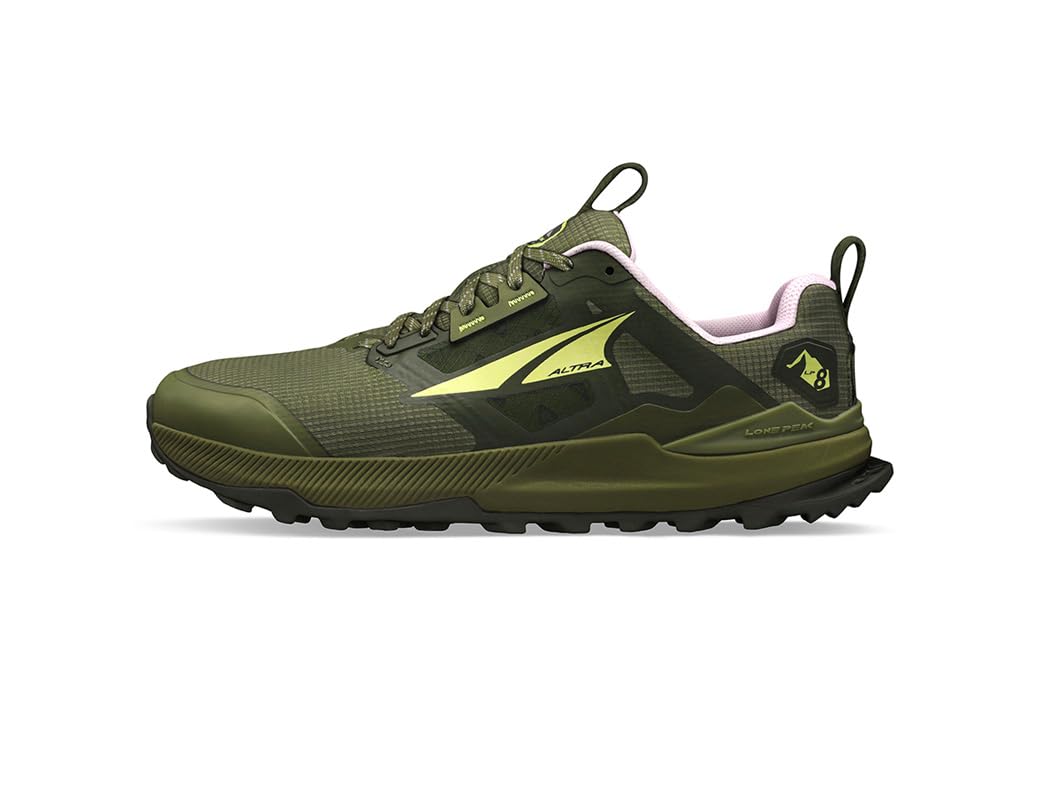
A women’s trail shoe with Forefoot-shaped room and no break-in period at all.
This is the women’s version of the same FootShape design that made the Lone Peak line famous, and it brings a slightly lighter build than the men’s shoe — 10.7 oz versus the men’s 11.15 oz. The TrailClaw lugs under the outsole are specifically placed beneath the metatarsals to add traction exactly where the ball of your foot pushes off. That is a rare bit of engineering aimed right at your pain point.
What wins people over time and again is the toe box. Hikers who switched from tapered trail shoes to this pair call it the thing that finally let them hike pain-free past four to five miles. The zero-drop platform, meanwhile, keeps the shoe level from heel to toe so your forefoot does not get shoved forward downhill. Water resistance is enough for rain and creek splashes, and buyers report there is no break-in at all — they go straight onto Tahoe and Yosemite hikes from the box.
The honest catch is sizing and long-term wear. Several owners say you need to size up about half a size, since the shoe runs differently from your regular sneakers; one buyer returned multiple pairs to find the right fit. And after months of heavy use, a small number of users have seen the upper separate from the outsole, so treat this as a shoe for regular trail duty rather than a multi-season marathon.
The fit case: a level platform plus a metatarsal-aligned lug pattern is a genuinely focused spec for forefoot pain — not just a wider shoe for the sake of it.
The sizing caution: buy your usual size once you have your width sorted, but expect a half-size adjustment and plan to exchange if the toe feels cramped.
Ideal for: women hikers who need room at the ball of the foot and no break-in on a weekend trip.
Skip if: you want maximum durability for daily, year-round trail abuse.
5. THE NORTH FACE Men’s Altamesa 300 Trail Running Shoe

A rocker-ready trail runner with a rock plate to keep rocks from stabbing your forefoot.
The Altamesa 300 hides its strongest pain-fighting feature in the midsole: a rock plate, which is a stiff insert that spreads point loads from rocks and roots under your forefoot. That broadens the pressure across the whole ball of your foot instead of letting one stone dig in. The DREAM foam midsole offers responsive cushioning so the landing is soft but the push-off is lively, and the Surface Control rubber outsole grips everything from asphalt to dirt.
The shoe earns its comfort in real use: trail walkers who wear it all day say the fit is true to size and the lightweight build still feels sturdy on rocky paths. The breathable upper keeps your feet from overheating on long summer hikes. In a category where too many “light” shoes feel flimsy, the quality and comfort here are consistently well received.
Two things to know: some owners feel the shoe has less durability than they hoped, so treat it as a light-trail and travel shoe rather than a rough-terrain workhorse. And the tongue edges are sharp on a few pairs, so longer socks solve the irritation. Fit the shoe with your hiking socks, not thin liners.
Where it shines
- Rock plate absorbs point pressure under the forefoot
- DREAM foam landing feels cushioned but not mushy
- Surface Control rubber transitions smoothly from asphalt to trail
- True-to-size fit with no break-in needed
What to expect
- Not built for the roughest, longest trails
- Sharp tongue edges catch thin socks on some pairs
- Less stylish than some leather picks on this list
Choose this: for fast day hikes where you want forefoot protection without a heavy boot.
Look at the Targhee instead: if you plan to hike wet, rugged terrain season after season.
6. Gravity Defyer G-DEFY Sierra Waterproof Men’s Hiking Boot

A waterproof hiking boot with a rocker bottom built for all-day standing, not just trail miles.
The Sierra is the boot you reach for when your foot pain is worst on hard floors and long shifts, not steep switchbacks. It wraps the foot in a microfiber and leather upper with a waterproof membrane, and the VersoShock technology is designed to soften the load under the foot with every step. The rocker-shaped bottom rolls you forward, taking pressure off the ball of the foot in the same way the KEEN WK400 does — just inside a taller, waterproof boot.
Comfort and fit are the two most heavily praised qualities here, and the audience is telling: Owners mention real relief after long shifts on hard floors, and one five-year repeat customer calls them the only boot they will buy. The waterproof and insulated build is welcome when the trail turns wet and cold, and the included insoles let you fine-tune the fit foot by foot.
The honest trade-off is weight and stiffness. At 5 pounds (2.27 kg), these are heavy boots — that is the price for a thick rocker sole and a waterproof upper. They also need a break-in period; a few wearers report heel rubbing or blisters in the first week, so wear them around the house before your first hike. If you want a featherweight day hiker, this is the wrong boot.
The core strength: the combination of signature rocker sole plus waterproof membrane is rare in a boot, and it holds up to cold, wet conditions without losing its supportive feel.
The real cost: at 5 pounds and stiff from the start, it needs patience — and a couple of longer walks — before it feels like a partner.
Meant for: anyone whose ball-of-foot and heel pain spikes during long standing shifts or wet, cold hikes.
Not for you if: you want a light, flexible shoe for fast summer day hikes.
7. Orthofeet Hunter Orthopedic Men’s Hiking Boots

A waterproof leather boot with anatomical arch support and a wide width for feet that need room.
It has a waterproof leather upper with a padded interior and a rubber outsole, and the anatomical arch support is built into the footbed with a heel cushion. Buyers with bunions and plantar fasciitis call them comfortable straight from the start, and several wide-fit owners bought them specifically for the roomy width.
The shoe also includes its own insoles, so it works with or without a custom orthotic. That is genuinely useful if you already wear one: one buyer with custom insoles said the boots were perfect for them. Another owner with severe foot and lower back trouble said the boots let them stand and cook again.
What you need to know is fit and long-term wear. The fit is mixed: several owners find the length runs about a half size large, so try a full size down if you are between sizes. And the leather will wear; a few heavy users report the lace loops and leather giving out after around a year of hard work. This is a support-first boot, not a decade-long investment.
What buyers are drawn to
- Anatomical arch support with an added heel cushion
- Waterproof leather upper and rubber outsole for wet trails
- Wide width option and included insoles for custom fit
- Works over long standing shifts and daily walking
Where it falls short
- Fit is mixed — length runs about a half size large
- Durability is the most common complaint on long-term hard use
- Leather upper can be warm for hot-weather hikes
Worth your money if: you need real arch support with a wide fit and want a boot that arrives comfortable from day one.
Look elsewhere if: you want a light summer trail shoe or a boot built for a decade of hard use.
8. KEEN Men’s Targhee 4 Waterproof Hiking Shoes

The waterproof hiking shoe that keeps feet dry when the trail turns into a stream.
For anyone whose hikes turn wet — Alaska drizzle, Scottish rain, a boggy trail — the Targhee 4 is the low-cut answer. The KEEN.DRY membrane inside and water repellency outside keep the foot dry, and the KEEN.RUGGED outsole is built to be twice as abrasion-resistant as regular rubber so the lugs stay sharp through a full season of wet hiking. The KEEN.FUSION bond is glue-free, which helps it stay attached to the sole. The original fit is wider than KEEN’s Contoured Fit, so there is more room through the midfoot and toes.
Several owners have walked 30 to 40 miles through rainy Alaska with dry, comfortable feet — that is a real field test, not a bench spec. Customers note a similar Targhee lasting more than 12 years before replacement. One user describes them as true to size, holding up well for a big guy, and another appreciates the adjustable laces for customizing tightness.
The recurring gripe is the laces: the round lace style can slip and come undone, so plan on double-tying them. A few hikers also find the ankle collar and tongue edges can bite after a long day on rocky ground. Neither makes it a bad shoe — it is a waterproof workhorse with a minor finish issue.
The waterproof case: for wet conditions, the KEEN.DRY membrane plus KEEN.RUGGED outsole is a rare combination at this weight — 530 g, light enough to walk all day but built to shrug off rain.
The honest catch: the round laces slip, so a double knot becomes part of the routine until you swap them for flatter ones.
A match if: you hike wet trails in cold or shoulder seasons and need a shoe that stays dry mile after mile.
Pass on it if: you want a soft, light summer trail runner with no lacing fuss.
9. Mammut Women’s Nova IV Mid GTX Hiking Shoes
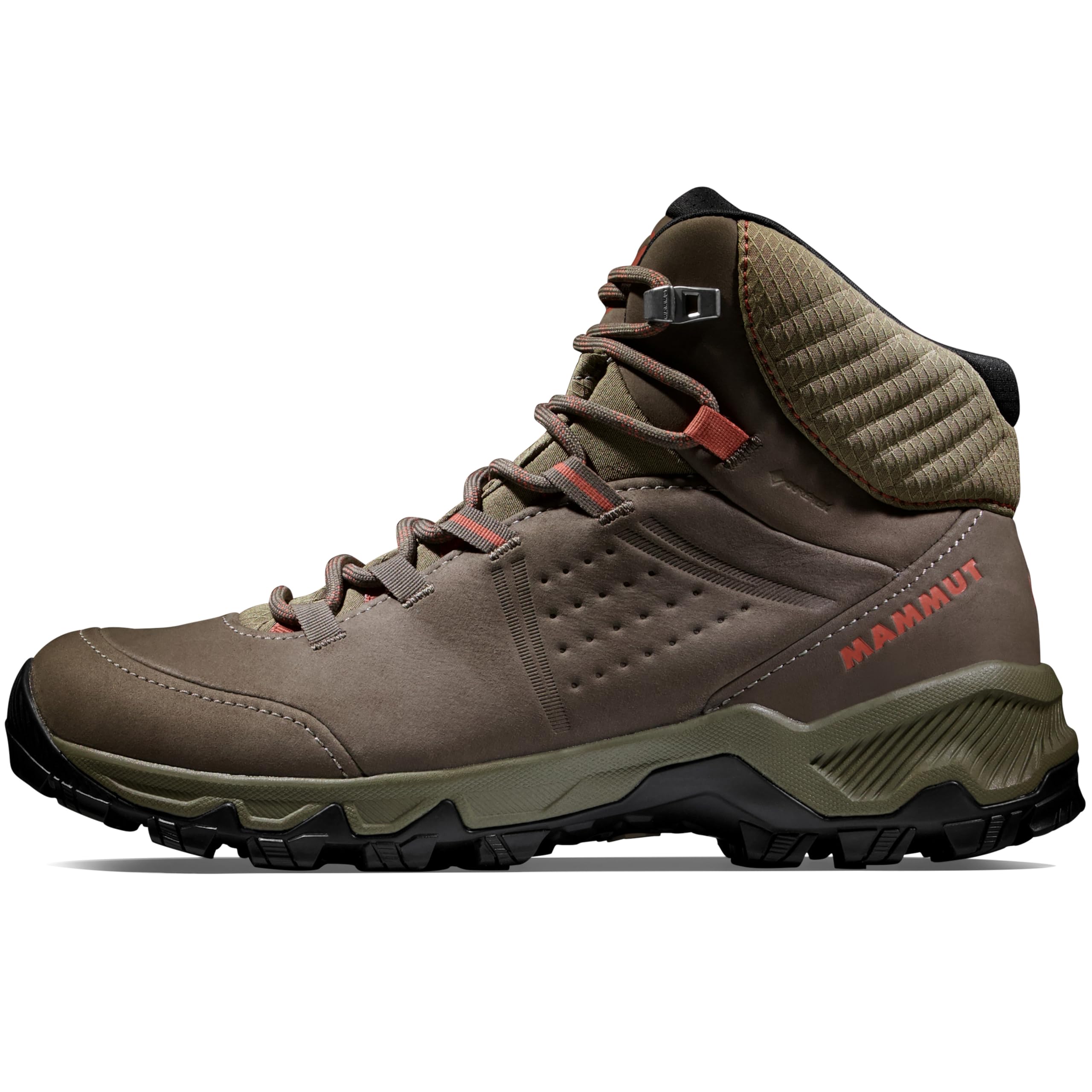
A women’s mid-cut hiker with genuine Vibram grip and a memory-foam midsole underfoot.
The Nova IV Mid GTX targets the confident, dry-trail hiker: a women’s mid-cut approach shoe with a Vibram sole and 3D Memo Foam in the midsole. The Vibram outsole is the real headline — it is the grippy rubber compound hikers trust on rock and gravel. The 3D Memo Foam, meanwhile, is a dense foam that takes the shape of the foot for support across the whole sole. At 2.8 pounds and a mid cut that rises above the ankle, it offers more support than a low shoe without the bulk of a full boot.
Owners praise the dry stability on rocky trails, the comfortable fit with no hot spots, and the mid-cut support for longer days. As a women’s-specific shoe, the fit is shaped around a woman’s foot rather than a reduced men’s last, which matters for anyone who has struggled with a loose heel. The mid-height collar also gives ankle stability on uneven ground.
Here is the trade-off, and it is specific: on wet conditions the Vibram sole loses grip, sliding on wet rock, granite, and even slick pavement. One buyer returned theirs after the sole slipped on a descent and aggravated an old injury. So for dry, rocky, well-drained trails, this is a confident women’s pick; for wet, mossy, or steep-wet conditions, choose the KEEN Targhee 4 instead.
Reasons to choose it
- Vibram rubber sole grips rock, gravel, and dry ground
- 3D Memo Foam adapts under the whole sole for support
- Mid-cut collar adds ankle stability on uneven terrain
- Women-specific fit reduces heel slip
Where you must be careful
- Grip drops sharply on wet rock and slick surfaces
- Heavier than a low-cut trail runner at 2.8 pounds
- Not the boot for wet-weather hikes or rainy climates
Best for: women hiking dry, rocky, well-drained trails where grip on rock matters more than waterproofing.
Rule it out if: your trails are wet, mossy, or rainy — pick the Targhee 4 for that.
Know the Specs
Toe box width and FootShape design
Toe box width is how much room your forefoot bones have to spread inside the shoe. A tapered box stacks your toes together, which increases pressure on the ball of the foot. ALTRA’s FootShape design is built wide through the toe and midfoot to let your toes sit naturally. On the other hand, a snug, approach-style fit like the SCARPA Mojito limits room for swelling feet. Read the fit language and sizing reviews closely before you commit.
Rocker soles and zero drop
A rocker sole is a curved bottom that rolls your foot forward so your toes do not have to bend on every step. The KEEN WK400 and Gravity Defyer Sierra both use this shape to reduce toe flex. Drop is the height difference between heel and forefoot; zero drop (0 mm) keeps them level. ALTRA’s Lone Peak pairs zero drop with a wide toe box, which is a common combination for forefoot pain. Neither spec is a cure — they are tools to reduce the pressure your foot feels during a hike.
Common Questions
Will a wide toe box actually help metatarsalgia?
Is a zero-drop shoe better for ball-of-foot pain?
Do I need a rocker sole or a stiff sole for metatarsalgia?
How much does shoe weight matter for forefoot comfort?
Should I size up or down in hiking shoes for metatarsalgia?
Will a waterproof hiking shoe make my feet hotter?
Can I use my custom orthotics in these hiking shoes?
How long should a hiking shoe for metatarsalgia last?
Is a trail running shoe suitable for hiking?
Do hiking shoes for metatarsalgia need a break-in period?
The Bottom Line
The best starting point for most people is the SCARPA Mojito, because its 2.03-pound leather build handles office days and light trails without looking like a hiking shoe. If your pain is on hard pavement and you want the shoe to roll your foot forward, the KEEN WK400 is the direct fix. And when the ball of your foot truly needs maximum splay and a level platform, reach for the ALTRA Lone Peak 9 — its roomiest-in-class toe box is the closest thing this list has to a purpose-built metatarsalgia shape.
How we choose
We do not accept paid placement. Every pick is matched to a real buyer and a real use-case; we do not hands-on test units.
Sources
Specifications: manufacturer listings and product documentation. Review insights: verified customer reviews, as of October 2026. Pricing: not shown on this page (it changes often); check the current price via the retailer link.
As an Amazon Associate, Aappliancez earns from qualifying purchases. This does not affect which products we feature.