Disclosure: Some links in this post are affiliate links. As an Amazon Associate I earn from qualifying purchases, at no extra cost to you. Learn more
Specs are compiled from manufacturer listings and verified buyer reviews and can change over time — please confirm the key details on the product page before buying.
If your feet hurt by mid-afternoon, the fix is rarely more padding — it is a shoe that holds your ankle steady and puts support under your arch. High-top orthopedic shoes do exactly that: the tall collar grips your ankle, and the built-in insole takes pressure off your heel and arch as you walk. Below are seven pairs that actually deliver that combination, ranked by how well they do it, from a boot that keeps a wide, flat foot stable to a leather sneaker a woman wears after three toe surgeries.
This guide is built by comparing the manufacturers’ published specifications and the patterns across verified customer reviews, so you get each pick’s real strengths and trade-offs instead of marketing spin.
You will see which pairs let you slip your foot in without unlacing, which ones run narrow or short, and where each shoe puts its support. The list below covers the high top orthopedic shoes worth your money.
Top Picks

How To Choose The Best High Top Orthopedic Shoes
A high-top orthopedic shoe has two jobs, and they are separate. The tall collar wraps your ankle to keep it from rolling, while the insole underneath supports your arch and cushions your heel. A shoe with a great collar and a flat insole will still leave your arch aching. A shoe with a great insole but a loose collar will let your heel slide all day.
Check the insole first, not the height
The insole is what does the orthopedic work. Look for a removable insole so you can slide in your own custom orthotic when you have one. A built-in insole you cannot pull out locks you into one shape. The Orthofeet pair adds extra depth plus fitting spacers and an Arch Booster, so you get more control over the support level.
Decide if you want a zipper or laces
Getting a high-top on is the daily chore. A side zipper lets you open the shoe wide and step in without redoing every eyelet. That matters most for anyone whose feet swell or who cannot bend far — the Taos Union’s zipper is exactly why one woman with a titanium toe implant keeps buying it. Laces give you more control over tightness, so many pairs now carry both: laces to dial in the fit and a zipper for quick entry.
Match the width and toe box to your foot
High-tops squeeze easier than low sneakers because the collar locks your whole foot in place. If you have wide feet or bunions, the toe box width matters more than the listed size. Fit is also the most-split issue in this category — some wearers say true to size, others say run small or narrow. Where possible, try your usual size first and size up only if the toe feels pinched.
Side-by-Side Comparison
| Model | Best For | Weight | Coverage | Support Feature | Amazon |
|---|---|---|---|---|---|
| Orthofeet Highline Ankle Boots★ Best Overall | Wide, flat feet needing built-in orthotics | 4 pounds | Ankle boot | Removable orthotic insole + Arch Booster | Amazon |
| Taos Union SneakerEasiest On and Off | Sensitive feet that need easy entry | 1.5 pounds | High-top sneaker | Firm footbed with arch support + side zipper | Amazon |
| Vionic Momentum Whitley | Water-repellent everyday style | — | High-top sneaker | Three-Zone Comfort orthotic insole | Amazon |
| Taos Winner Sneaker | Long walking days in a leather high-top | 3 pounds | High-top sneaker | Active Curves & Pods removable footbed | Amazon |
| FitVille Rebound Core High-Top | Extra-wide feet and thick orthotic inserts | — | High-top sneaker | PropelCore sole + wide/extra-wide widths | Amazon |
| Vans Ashwood Hi Vansguard | Rainy commutes in a skate-style high-top | — | High-top sneaker | Padded collar + reverse waffle outsole | Amazon |
| Propet Cliff Walker Tall | Swollen feet that need strapless ease-in | 4 pounds | Ankle boot | Hook-and-loop straps + EVA midsole | Amazon |
Detailed Reviews
1. Orthofeet Highline Orthopedic Men’s Ankle Boots
Our pick — 4.0+★ from 600+ verified ratings; the strongest balance of quality and price.
A wide, flat foot gets a real orthotic under it and an ankle collar that holds it steady.
Orthofeet builds this boot around a removable insole plus extra depth in the shoe. That extra room is the part that matters: you can pull the stock insole and drop in your own custom orthotic without your foot riding high in the collar. The brand also includes fitting spacers and an Arch Booster, so you can tune how much support sits under your arch rather than accepting one fixed shape. For a man with a wide, flat foot, this is the closest thing in the list to wearing a shoe that was built around an insert.
Comfort is what wins people over — it is the single most-praised thing about these boots. One retail worker averaging 18,000 steps a day said the pain was gone after two days. The boots felt comfortable straight from the start, though his feet were still tired by the end of the shift. Another buyer with flat feet came back for a second pair. That is the pattern with these: the arch support and the wide toe box (extra room across the front of the foot) do the heavy lifting, and the look holds up too.
Here is the catch. At 4 pounds for the pair, these are the heaviest boots here; the Taos Union sneaker weighs 1.5 pounds, so the difference is 2.5 pounds on your feet. Fit is the most-split point in the reviews — some men find them true, others say they run a half size small. A few note that soles wear out faster than the leather does, and one rider flagged that the left boot has no extra padding over the shifter. The bottom line: if your priority is a genuine orthotic inside a durable ankle boot, this is the pair to start with.
What earns its place
- Removable insole plus extra depth gives room for a custom orthotic
- Fitting spacers and an Arch Booster let you dial in support level
- Wide base with a firm heel counter for steadier steps
- Comfort is what most buyers write about, with arch support close behind
What to weigh first
- At 4 pounds per pair, the heaviest boot in this guide
- Fit is mixed — several wearers say size up a half size
- Sole wear comes up more than leather wear
Buy it for: a wide, flat foot that needs a real orthotic seated inside an ankle-height boot for long standing shifts.
Think twice if: you want a light shoe to walk miles in — you will feel the 4 pounds by the end of the day.
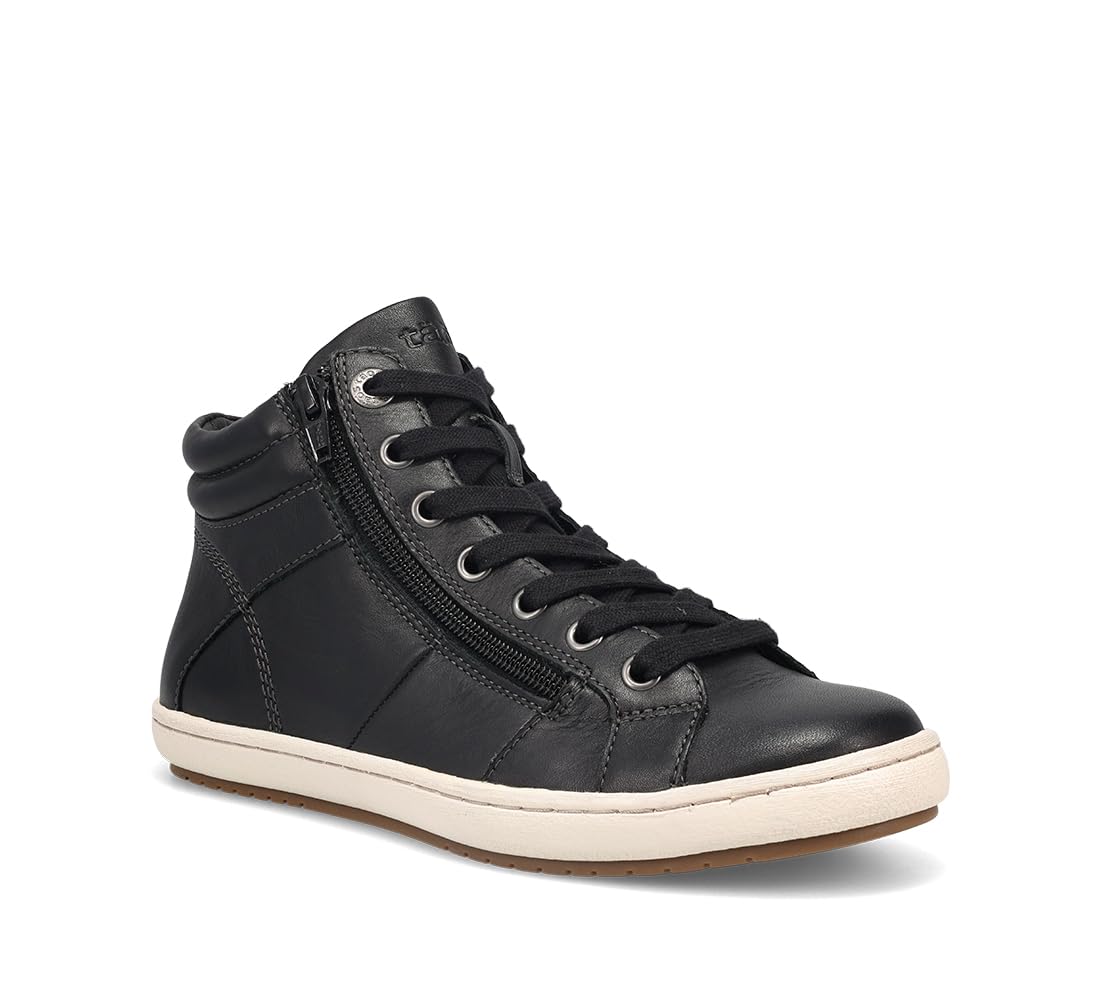
2. Taos Footwear Women’s Union Sneaker
The high-top a woman with a titanium toe implant can step into without scrunching her foot.
This is the shoe for anyone whose feet are sore to the touch. The Union packs a firm footbed with strong arch support and a soft leather lining at the ankle, so the collar cushions rather than pinches. Then comes the side zipper — it lets you open the whole shoe and slide your foot straight in, which is the point for feet that cannot take being pushed into a tight high-top. One buyer who had three toe surgeries with a titanium implant said the zipper makes it quick and comfortable to get on and off without scrunching her foot, and she owns seven pairs in every color.
The looks are the most-praised thing here, with quality right behind — the leather draws compliments and the shoe passes for a slightly dressy sneaker. A woman with plantar fasciitis said the firm footbed and arch support worked for her through a long rally, and the shoes broke in well. Weigh it from the other side and it is still a light shoe: 1.5 pounds, versus 4 pounds for the Orthofeet boot above.
Two things to know before you buy. The insole is stiff and hard — fine for arch support, less giving under your heel — and you may want a cushioning insert. And the zipper itself divides people: it works easily for some and fights others, especially if you try to zip up with your foot flat. The fit also runs small, with several buyers saying size up. Buy this if easy entry and firm arch support are your two priorities.
Best for travel: the zipper and the light 1.5-pound build make it an easy shoe to pack and slip on at a security line or hotel room.
The pick if: swelling, sore toes, or a healing foot makes lacing a chore — the zip-in entry is the whole reason to choose it.
Not for you if: you want a soft, cushioned insole — this footbed is firm and stiff by design.
3. Vionic Women’s Momentum Whitley High Top Sneakers
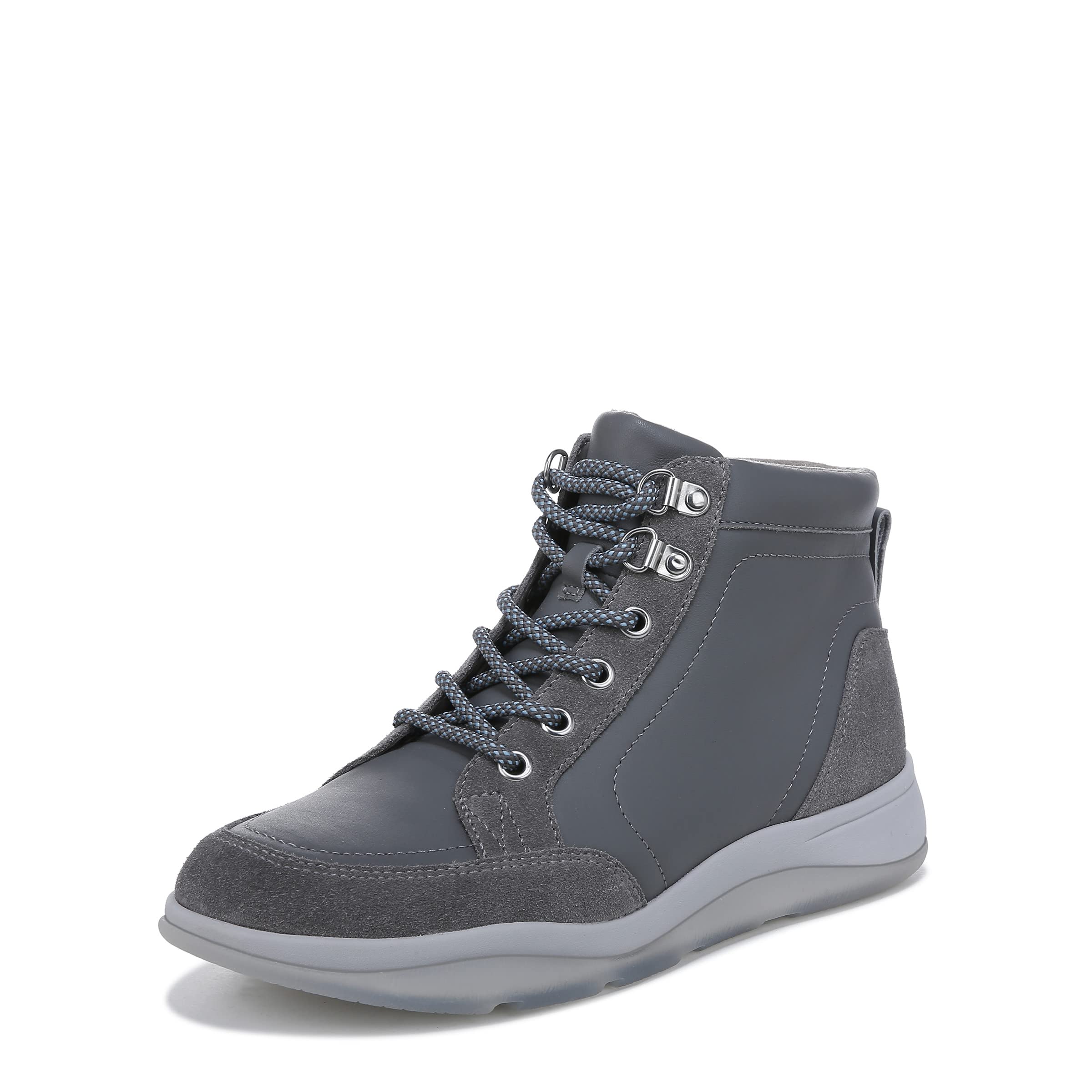
A boot-sneaker hybrid with a side zip, a water-repellent finish, and support built in.
Vionic builds this high-top with what it calls Three-Zone Comfort — support through the arch, a cushioned footbed, and a sole that flexes as you walk. Add a side zipper and a water-repellent upper, and you have a shoe meant for wet commutes and long days on your feet. The design is a hybrid: high-top sneaker up top, boot around the ankle, comfortable and convenient to get into, with adjustable laces to tune the fit.
Quality and style are the standout notes here — the leather and construction read as well-made, and the look gets compliments. One buyer swapped in her own comfort insert and wore them around the house to break them in. Others found the fit better with thicker socks. The noticeable arch and heel feel fades once the shoe softens, as is common with support-forward shoes; a wide-toe wearer found them comfortable after a week.
The honest trade-off is comfort and fit, the two most-discussed points, and both are mixed. Some wearers get blisters during break-in, others say the shoe runs small, and the prominent stitching near the toes can press on the inside of the shoe. Sizing is tricky — a woman who normally wears 8.5 found that too narrow and short, and had trouble landing a size that worked. Pick it if a bit of break-in is fine and you want the water-repellent leather finish.
What makes it different: the water-repellent leather upper (the leather outer that shrugs off light rain), which the other high-tops in this guide simply do not have — so a damp commute does not soak straight through.
Named caution: the stitched square near the toes sits proud on the inside and can rub — wear a thicker sock during the first weeks.
Right for: damp weather and a step-in entry, in a high-top that looks like a shoe rather than a support boot.
Wrong for: a wide, high-volume foot — the sizing runs narrow and short, so check the length carefully.
4. Taos Footwear Women’s Winner Sneaker

A leather high-top built to walk all day in — with a removable footbed and an outside zip.
The Winner pairs a removable Active Curves & Pods footbed with flexible rubber outsoles and a higher sidewall for a youthful shape. The outside zipper gives you the same quick step-in as the Union above, but this shoe is built for more serious mileage. One buyer logged 60+ miles a day on a trip with no foot or back pain.
Comfort is what buyers rave about most, with quality close behind, and both show in the details: leather that looks fantastic, solid arch support, and a grippy sole. A wearer with a damaged ankle found the high-tops gave real ankle stability through the adjustable laces and full zip closure, and the shoe hid her swelling. The listed package weight is 3 pounds, versus 1.5 for the Union — noticeably heavier, but it buys you a sturdier build underfoot.
The recurring gripe is the heel: it can be loose and floppy, which risks blisters on a long walk. One buyer who had the same issue with a second Taos pair suspected the shape leans toward a male foot form. Fit is the other split — some say true to size, others find the regular width runs differently. The shoe does cost a premium, and a few wearers felt it should feel a little more special for the money, but most come back for another color. This is the pick when you plan to spend the day walking and want leather looks to match.
The case it builds
- Removable Active Curves & Pods footbed lets you swap in your own insert
- Outside zipper plus laces for two ways to get the fit right
- Flexible rubber outsole with grippy traction
- Comfort and quality top the review notes by a wide margin
Where it wobbles
- The heel can sit loose and flop
- 3 pounds per pair is noticeably heavier than the Union
- Size and width run differently for different wearers
Choose it when: travel and long walking days are on the calendar and you want a leather high-top that takes them in stride.
The caveat: a narrow heel may slide — test the fit with the laces locked up top before committing.
5. FitVille Wide Basketball Shoes for Men with Flat Feet

An extra-wide high-top that swallows a thick orthotic insert without pinching.
FitVille sells this high-top in both Wide and X-Wide, which is the whole story for a foot that regular shoes squeeze. The PropelCore sole cushions each step and the tall collar supports the ankle, so you get the ankle protection of a basketball shoe with the width a flat, broad foot needs. One buyer who wears a TMA prosthetic orthotic said the wide fit took the insert without feeling oversized, with excellent heel security and little slippage. For anyone who has struggled to fit a thick orthotic into a sneaker, that is the detail to focus on.
Quality and fit are the two things buyers praise most, and they show up in the small stuff: well-made materials, no glue or stitching flaws, and an ample toe box that needs no break-in. A 250-pound man in a size 9 X-Wide walked 2 miles pain-free on the first outing, praising the ankle support and heel cushioning. An experienced basketball player found them true to size and comfortable with good ankle support. Grip is solid on wet surfaces as well as dry.
Where it slips: durability is the most-split point, with some wearers reporting the toe material wearing through and one saying the shoe gave out in under a year. The suede exterior is also harder to clean, the laces run short, and there is no pull loop. Size up for swelling, as one buyer did from a 10 to a 10.5, and this becomes a strong everyday walking sneaker.
Why it stands out: it is the only pick here offered in both Wide and X-Wide, and it fits the widest range of thick orthotic inserts.
The reason to hesitate: the toe area can wear through under hard use — expect the upper, not the sole, to be the limiting part.
For you if: your feet run wide or extra-wide and standard high-tops leave your toes numb.
skip it if: you want a shoe that survives years of hard outdoor wear — the upper material is the weak point.
6. Vans Men’s Ashwood Hi Vansguard Shoe
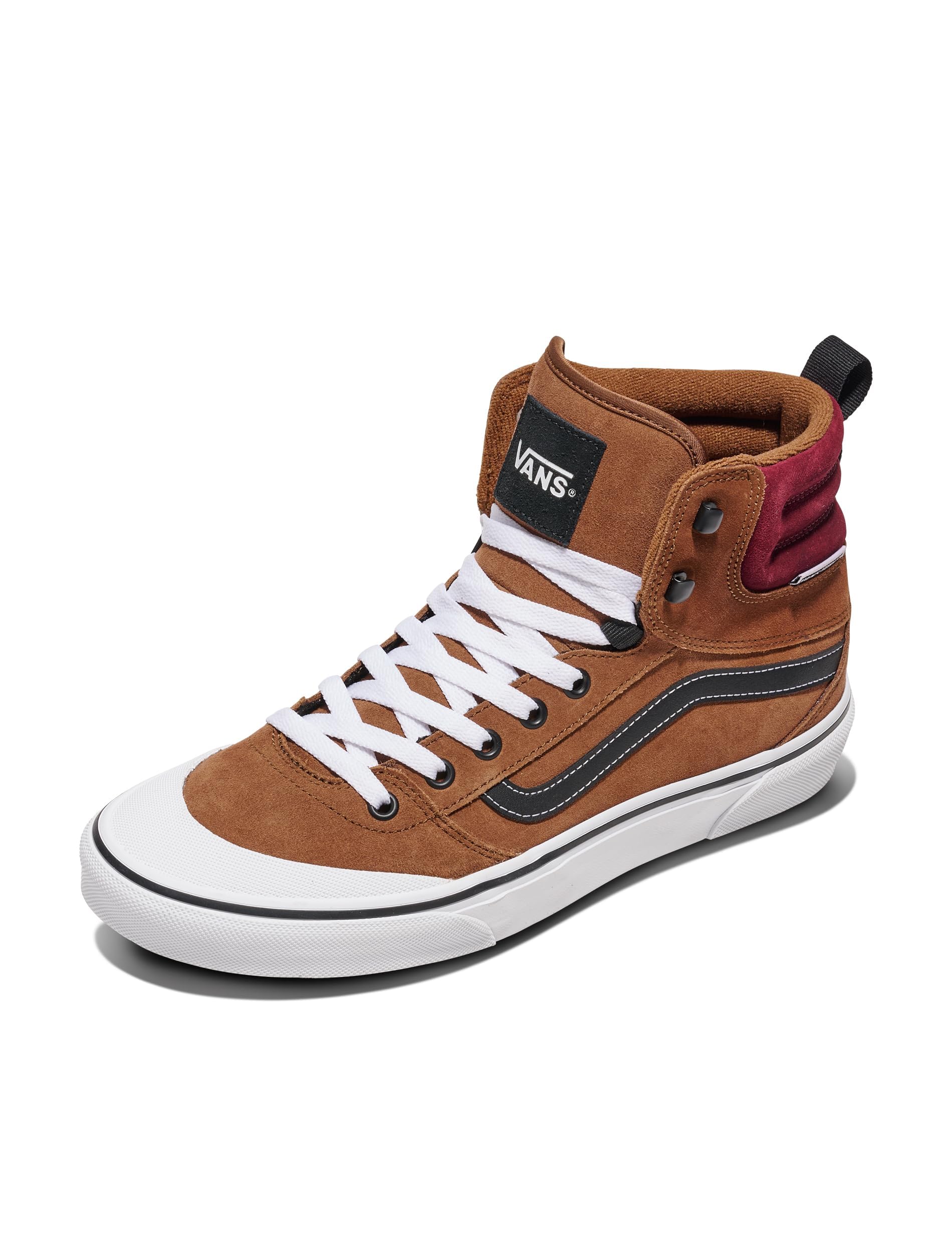
A skate-style high-top that beads light rain and grips wet pavement.
The Ashwood Hi takes the Vans look and adds a non-PFC Durable Water Repellent finish to weatherized suede and mesh uppers. That means light showers bead up and the shoe dries fast — an uncommon thing in a high-top with this much style. Rubber toe and heel caps guard against scuffs, and the treaded reverse waffle outsole keeps its grip on wet ground. For an EMS worker who wore these in place of boots, the nonslip traction was the headline, and the fit matched expectation after sizing up a half size, as many do with Vans high-tops.
Quality is the thing owners praise most, and comfort comes second, so the shoe wears well beyond the coat. Padded tongue and collar prevent rubbing on long walks, and the sturdy vulcanized build holds its shape. One buyer who took it to South America found it comfortable despite minimal underfoot cushioning — a near-barefoot feel that carried through miles of city walking. It looks sharp enough for casual work with khakis, and its regular arch support fits a wide foot without fuss.
Two fair warnings. The cushioning underfoot is thin — several wearers note the sole feels flat on hard surfaces, so if you need real padding, look elsewhere. Second, the flat cloth laces are style over function and can be hard to secure through the top hooks; swapping in rope laces fixes it. Buy it for the water resistance, the look, and the grip — not for deep cushioning across long days.
Standout feature: the water-repellent suede upper — rain rolls off instead of soaking in, which is rare at this level of style.
The trade: almost no cushioning in the sole, so treat it as a supported leather shoe, not a cushioned walking shoe.
Go for it when: you want a skate-style high-top that shrugs off rain and looks sharp off the bike or on the commute.
Look elsewhere if: your feet need soft cushioning under every step — this sole is firm to the point of barefoot.
7. Propet Mens Cliff Walker Tall Hiking Casual Boots

Three hook-and-loop straps replace laces on a tall boot built for swollen, sensitive feet.
The Cliff Walker skips laces entirely — three hook-and-loop straps do the work instead. The tall collar with a padded, mesh-lined top wraps the ankle, and the weather-resistant full-grain leather upper plus a cushioned EVA midsole give you a boot that cleans up with a hose. That combination is what draws people whose feet swell through the day. One buyer on a wooded property wanted waterproof footing, ankle support, and no laces; the straps delivered, and after six months the boots still looked new. A diabetic wearer found them tall enough for swelling and cited a large toe box as the reason they worked.
Quality is the most-praised trait, with ankle support and ease of use right behind. The straps push fit up or down where a lace would only pull tight, and the 4-pound build is solid underfoot. A buyer who wears a wide 3E or 5E found room for thick socks without blisters, and the high boot guards the ankle on uneven ground. For a wide, hard-to-fit foot, that strap adjustment gives you a level of control a laced boot cannot.
The honest limit: fit is the most-disagreed point, with some finding the boots roomy and others too wide, and the upper is stiff — one wearer found it gave no give and did not soften. Durability is mixed too, so treat the velcro as the wear point; some have reglued the backing. Size and width matter most: if the boot feels loose, the straps save the fit, but the break-in is real.
The reason it works: the three straps let you open the whole boot wide — no foot has to push through a narrowed collar.
The one thing to accept: the leather starts firm, so plan a break-in period before all-day wear.
Buy it for: feet that swell and fingers that cannot manage laces — the hook-and-loop straps are the point.
Not the first pick if: you want a break-in-free boot on day one; this leather starts stiff.
Know the Specs
Ankle Support and Collar Height
The tall collar is what makes a high-top an orthopedic shoe and not a low sneaker — it wraps above the ankle bone to limit rolling. A firm heel counter and a wide base add stability. The Orthofeet boot reinforces this with a firm heel counter and slip-resistant sole, while the Vans Ashwood Hi cushions the collar with padding to stop rubbing. Height alone does not fix a foot, but it gives you a stable base when paired with a supportive insole.
Removable Orthotic Insole
The insole does the orthopedic work. A removable one lets you swap in a custom insert; a built-in one locks you to a single shape. Depth matters too — extra room above the stock insole means your custom orthotic seats properly instead of lifting your heel out of the collar. The Taos Winner and the Orthofeet boot both use a removable footbed, while the Vionic Whitley builds its Three-Zone Comfort support right in.
Weight and Walkability
Weight decides how far you can walk without tiring. A light high-top (the Taos Union at 1.5 pounds) is easy to travel with; a heavy boot (the Orthofeet and Propet at 4 pounds each) is sturdier but tiring on long walks. For commuting or everyday city walking, lighter wins. For yard work or rough ground, the heavier build earns its weight in protection.
Width and Toe Box
High-tops squeeze more than low shoes because the collar locks your foot in place. For wide feet or bunions, the toe box width matters more than the listed size. FitVille offers both Wide and X-Wide, and the Propet straps adjust over a swollen foot. Wherever a shoe has no wide option, the fit reports tend to split between true-to-size and run-small wearers.
Common Questions
Do high top orthopedic shoes actually support the ankle?
Can I put my custom orthotics inside these shoes?
Do high top orthopedic shoes run true to size or small?
What is the difference between a side zipper and laces on a high top?
How long do high top orthopedic shoes last?
Are high top orthopedic shoes good for plantar fasciitis?
Will high top orthopedic shoes fit wide feet?
Can I wear high top orthopedic shoes for all-day standing and walking?
Are high top orthopedic shoes good for travel?
What should I check first when buying high top orthopedic shoes?
The Bottom Line
For most buyers, the winner in high top orthopedic shoes is the Orthofeet Highline Ankle Boot. It takes a custom orthotic (a molded insole you have made for your foot) inside extra depth, while its collar and firm heel counter (the stiff cup around the back of the heel) hold a wide, flat foot steady. If you want easy entry for sore or swelling feet, go with the Taos Union Sneaker and its side zipper — the pair a buyer with a titanium toe implant keeps coming back to. And for extra-wide feet that need a thick orthotic seated just right, the FitVille Rebound Core High-Top is the pair to start with, offered in both Wide and X-Wide. Whichever fits your foot, choose the one whose insole you can live with for a full day, since that support is what turns a high-top into an orthopedic shoe.
How we choose
We do not accept paid placement. Every pick is matched to a real buyer and a real use-case; we do not hands-on test units.
Sources
Specifications: manufacturer listings and product documentation. Review insights: verified customer reviews, as of October 2026. Pricing: not shown on this page (it changes often); check the current price via the retailer link.
As an Amazon Associate, Aappliancez earns from qualifying purchases. This does not affect which products we feature.