Disclosure: Some links in this post are affiliate links. As an Amazon Associate I earn from qualifying purchases, at no extra cost to you. Learn more
Specs are compiled from manufacturer listings and verified buyer reviews and can change over time — please confirm the key details on the product page before buying.
For most people, the best high protein ramen is Mike’s Mighty Good Chicken Ramen. It gives you 12 grams of protein per pack with an organic steamed noodle that tastes like real ramen, not a science experiment. If you want the biggest protein hit per bowl, the VOLO VERO and HealSpot packs push 32 grams of plant protein into each serving. Grab those after a workout or when lunch needs to hold you until dinner. Below are seven real options, each with the actual protein count, noodle style, and portion size that decide whether a bowl earns a spot in your cabinet.
This guide is built by comparing the manufacturers’ published specifications and the patterns across verified customer reviews, so you get each pick’s real strengths and trade-offs instead of marketing spin.
A high-protein noodle can taste like cardboard or like comfort food, and the difference lives in the noodle style and the broth. This guide breaks down the trade-off between protein count, portion size, and texture, so you can find your next best high protein ramen pick without wasting money on a flavor you will toss.
Top Picks
How To Choose The Best High Protein Ramen
Protein ramen is not one product category. It is four different things in the same noodle shape: bone-broth wheat ramen with a modest protein bump, egg-white noodles with almost no carbs, air-dried plant-protein noodles at 32 grams per serving, and instant cups built for convenience over flavor. Pick the wrong one and you will hate the texture. Pick the right one and it becomes a weekly staple.
Start with the protein number, then check the serving size
A 32-gram protein bowl sounds great until you learn the package is small. Protein is listed per serving, and the serving is whatever the maker says it is — so a tiny pack can carry a big number and still leave you hunting the fridge an hour later. Read the protein count and the actual package weight together, and weigh whether one bowl is a full meal or a snack.
Understand what the noodle is made of
Wheat-based ramen gets its chew from gluten. Egg-white noodles skip the gluten and land softer, which some people love and others find slithery. Pea-protein and plant-protein noodles tend to run firm, and a few need an extra minute of cooking before they stop feeling rubbery. The label tells you which family you are buying, and the noodle family predicts the texture more than any other factor.
Watch the sodium, not just the protein
Ramen broth is traditionally salty. Some cups in this category ship the seasoning separately so you control how much goes in — a real advantage if you eat ramen several times a week. If you are tracking sodium, look for that separate packet or a low-sodium formulation, and consider using half the seasoning.
Decide how you will actually cook it
Some of these are ready-to-eat and only need draining. Others want a stove pot for a few minutes. Cups need only hot water, but the cup method often leaves the noodle firmer than the pot method. Be honest about your patience at 9 p.m. on a work night, because the cooking style you will actually use is the one that matters.
Side-by-Side Comparison
| Model | Best For | Protein Per Serving | Noodle Style | Pack Size | Amazon |
|---|---|---|---|---|---|
| Mike’s Mighty Good Chicken Ramen★ Best Overall | Best overall taste | 12 g | Organic steamed wheat | 7 count | Amazon |
| Noodle Revolution Keto NoodlesBest Low-Carb Swap | Low-carb swap | 17 g | Egg white, ready to eat | 6 pack | Amazon |
| Ramen Beef Protein Ramen Soup | Budget protein boost | 32 g | Air-dried, vegan | 10 packs | Amazon |
| VOLO VERO High Protein Ramen | Best variety | 32 g | Air-dried plant protein | 8 pack | Amazon |
| HealSpot High Protein Instant Ramen | Post-workout cups | 32 g | Non-fried plant protein | 6 cups | Amazon |
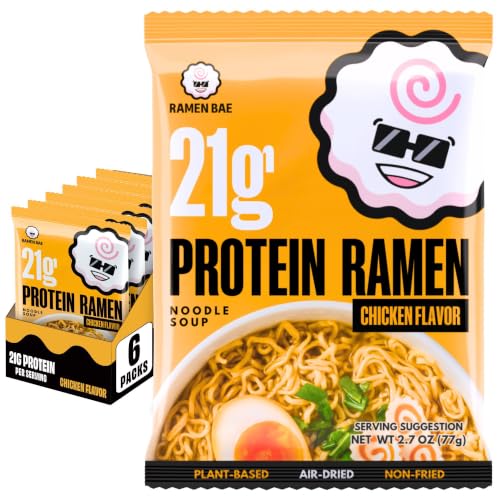
| Ramen Bae Chicken Protein Ramen | Light chicken broth | 21 g | Air-dried plant protein | 6 packs | Amazon |
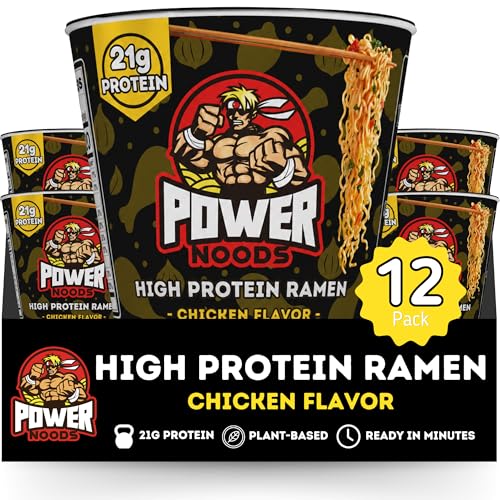
| Power Noods High Protein Ramen | Pantry stock-up | 21 g | Steamed pea protein | 12 cups | Amazon |
Detailed Reviews
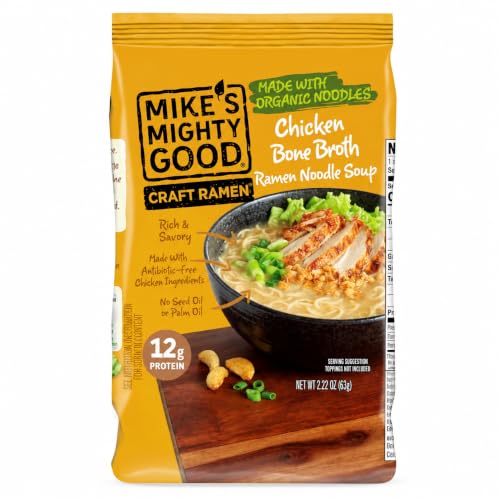
1. Mike’s Mighty Good Chicken Ramen Noodles Pack of 7
Our pick — 4.5+★ from 550+ verified ratings; the strongest balance of quality and price.
The bowl that proves protein ramen can taste like ramen, not a supplement.
This is the one to start with if you want real ramen flavor alongside the protein. Each pack carries 12 grams of protein from chicken bone broth and chicken, and the noodle is organic wheat flour steamed rather than fried — a cooking method that keeps it springy instead of greasy. You boil 1 3/4 cups of water, cook the noodle 3-4 minutes, pull it off the heat, and stir the seasoning in. The whole bag weighs 14.7 ounces, and the broth is the part people talk about most.
What wins buyers over is flavor and taste, and it earns those two top spots by a wide margin over every other trait. The broth reads rich and garlicky rather than flat and salty, and the noodles hold their shape without turning to mush. One buyer described them plainly: “Very good flavor- noodles are firm and don’t get mushy.” The ingredient list stays clean too — non-GMO, no seed oils, TBHQ-free — and the packaging paper comes from sustainably managed forests.
The catch is portion and cost. A single pack is a light bowl, and the value conversation is the loudest complaint on the listing. As buyers report, “Portion size is shockingly very small, so the value just isn’t there.” Many families stretch one pack by adding a second cheap noodle or an egg. Think of it as a flavor-first base rather than a full dinner, and the price makes more sense. It also holds a 4.5+ rating, which tells you most people accept the trade.
What earns the top spot
- Rich chicken bone broth with real garlic depth and no seed oils
- Organic steamed wheat noodles that stay firm instead of turning mushy
- 12g of protein per pack from actual chicken and bone broth
What to expect going in
- Small portion per pack — many buyers add extra noodles or an egg
- Premium cost for a single-serving bowl
- Texture is mixed among buyers; some want a thicker noodle
Go for it when: you want a genuinely good-tasting ramen with a protein lift and you are willing to bulk up the bowl yourself.
Pass if: you need one pack to be a complete meal with no additions — the 12g protein and small portion will leave you wanting more.
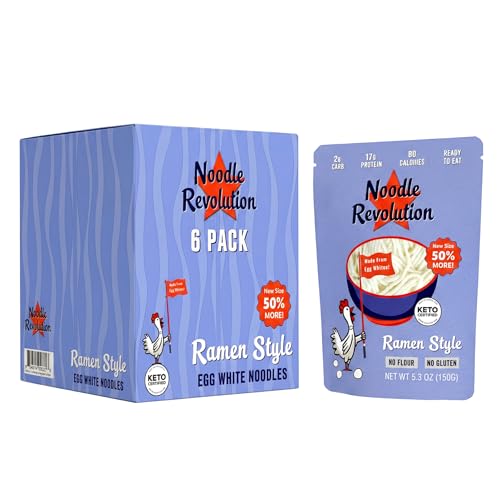
2. Noodle Revolution Keto Noodles
Two carbs, seventeen grams of protein, and zero cooking required.
If carb count is the number you watch, this is the pick. Each serving carries just 2 grams of carbs and 17 grams of protein from egg whites, with only three ingredients in the pack. You do not boil anything — you drain the pouch and fold the noodle into your soup, sauce, or stir fry. It is keto certified and Paleo certified, shelf stable, and it sidesteps the smell problem that ruins konjac and shirataki noodles. The 3.5-ounce package makes a snack-sized portion, not a full bowl on its own.
Taste is what people rave about here, well ahead of any other trait, and that is the whole point of an egg-white noodle. It absorbs sauce flavors instead of fighting them, and it carries no off-taste. The catch: texture and fragility split opinion. Some buyers love the soft bite; others find it too soft to feel like pasta. As owners mention, “Cons: tiny 3.5 oz packages (not a real portion), 45 calories partly due to small size, made in Thailand, and lacks gluten “chew factor”—soft, slithery texture, not close to real pasta.” Overcooking makes them fall apart, so drain and serve rather than simmer.
The real math is on weight and cost. At 3.5 ounces against a 14.7-ounce wheat pack, this is a far smaller bag of food, and the price per serving is the second-biggest gripe on the listing. So treat it as a low-carb upgrade for a soup you are already making rather than a standalone ramen. If you want carbs low and protein reasonably high, nothing here beats it on that combo.
Texture honesty: firm enough to hold together, soft enough that it never feels like wheat pasta — the “chew factor” is the missing piece, and every buyer notices it.
Portion reality: a 3.5-ounce pouch is roughly a side dish, so plan to build a meal around it rather than hope one pouch fills you.
Built for: keto and Paleo eaters who want noodles they can drain and eat with no stovetop commitment.
Wrong fit for: anyone expecting a thick, chewy wheat noodle — the soft egg-white bite is a different food entirely.
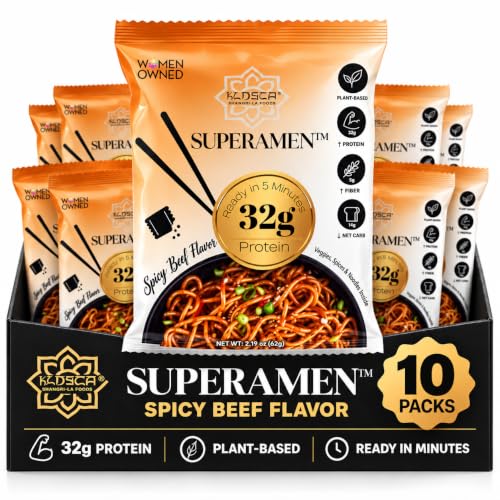
3. Ramen Beef Protein Ramen Soup
The protein monster of the group, with 32 grams in every bowl.
This is the highest protein count you will find on this list, and it comes with a vegan formula and a roasted-beef-style broth. Each pack delivers 32 grams of protein and 5 grams of fiber at 300 calories, and the maker claims 30 percent fewer carbs and sodium than regular ramen. The noodles are air-dried rather than fried, which keeps the bowl from feeling oily. The order ships as 10 packs, and it pairs cleanly with dried topping mixes like spicy garlic, veggie, or kimchi.
Against the Mike’s Mighty Good pack above, this one nearly triples the protein — 32 grams against 12 — but it takes a genuine hit on texture. The noodle runs rubbery and the flavor leans bland on its own. One buyer’s fix is worth copying: microwave 2 minutes, stir, then go 90 seconds more, and load in chili flakes or cayenne if you want heat — the broth is the part that carries the bowl. It is also the cheapest per-pack option of the 10-count bundles here, which is why it stays on this list despite the texture gamble.
The honest limit is the noodle itself. The broth is savory and satisfying, but the chew needs help — that is the trade you accept for the protein number. If you treat it as a base to doctor up with an egg, extra seasoning, or a protein topping, it does its job. If you want a bowl that needs zero adjustments, look at the Mike’s Mighty Good pick instead.
Reach for this: if you want the biggest protein hit for the fewest carbs and you are happy to season the bowl to taste.
Look elsewhere: if bland-plus-rubbery noodles would stop you from finishing the pack — this one rewards a cook, not a purist.
4. VOLO VERO High Protein Ramen Variety 8 Pack

Four flavors, 32 grams of plant protein, and a noodle that holds a bite.
The variety is the draw here. An 8-pack splits across Chicken, Spicy Beef, Spicy Kimchi, and Spicy Curry — all plant-based, all egg-free and dairy-free, all built on an air-dried noodle. Each serving carries 32 grams of plant protein, and the bowl is ready in about 5 minutes. Cook it a little longer if you like your noodles softer. Air-drying instead of frying keeps the fat content down while the noodle stays firm and springy rather than mushy.
Texture is the dividing line with these plant-protein noodles, and it lands mixed. Buyers who want a meaty, firm noodle rate it highly; those expecting a soft instant-ramen chew find it too firm. The flavor packs are decent but modest on their own, and several buyers add their own sauces or extras. The good news is the macro math holds up — a seasoned macro-counter in the reviews reported 200 calories, 32g protein, 16g carbs, 580mg sodium, and under 2g fat, and said it beats immi on both macros and taste.
What you are paying for is the variety and the protein-per-calorie ratio, not the flavor alone. One buyer found it an acquired taste and stuck with it anyway: “It kind of grows on you. First time I tried it, I didn’t like it at all.” The cost per serving is the recurring gripe, which is typical for the plant-protein tier. Give it two bowls before you judge it.
Taste curve warning: the first bowl may not win you over — the flavor is mild and the noodle is firm, so the second pack is where most people decide they actually like it.
Where it shines: 32 grams of plant protein in a bowl that is lighter than a burger on calories and fat, with four flavors so you never get bored.
Suit yourself to: a macro-tracker who wants variety and a firm noodle and does not mind adding a little sauce.
Skip if: you want a soft, classic instant-ramen chew straight from the seasoning packet — this one is firm by design.
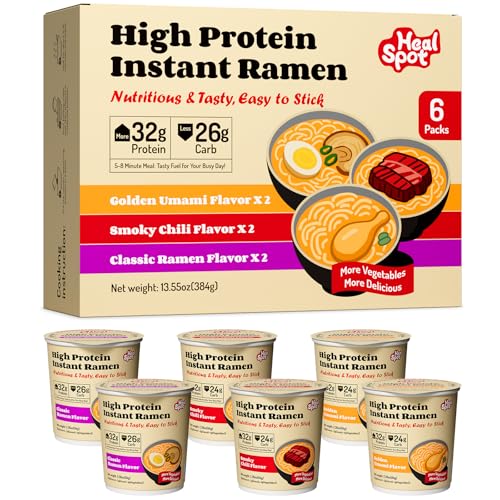
5. HealSpot High Protein Instant Ramen Variety Pack (6 Cups)
Six cups, three broths, and 32 grams of plant protein per cup.
This is the convenience play. You get 6 cups split across Golden-Chicken, Smoky-Beef, and Classic-Pork flavors — two cups each — and every cup packs 32 grams of plant-based protein, which the maker compares to about four whole eggs. Prep is a kettle job: add hot water, wait 5-8 minutes, eat. The noodle is non-fried, the formula is free of artificial additives and preservatives, and it is Non-GMO Project Verified and keto friendly. No pot, no stove, no extra ingredients.
What buyers appreciate is the protein-to-effort ratio — one reviewer stopped short of an unqualified rave, noting “the broth was actually pretty good for instant ramen” before calling the noodle “awful. Bad texture, bad chew.” That sums up the split: the broth lands well, the noodle texture is the fight. The 32 grams of plant protein also keeps you full far longer than a standard instant cup, which is the whole reason to pay the premium tier price. Kids in some households request it repeatedly.
There is a spice note worth flagging before you buy. Customers note the flavors run spicier than expected, even the ones named after mild meats. If you want plain chicken-and-beef comfort, that surprise will disappoint you. But if you want a fast, filling, high-protein lunch at your desk or in a gym bag, this cup delivers with zero cleanup.
Why it earns its place
- 32g of plant protein per cup, more than most competitor cups
- Three flavors across 6 cups so you can rotate
- Just add hot water — no pot or stove needed
Where it asks patience
- Noodle texture is the weak point — soft chew divides buyers
- Flavors run spicier than the names suggest
- Premium-tier cost per cup
Ideal for: a desk lunch or gym-bag meal where hot water is the only tool you have.
Think twice if: you want a mild, meaty broth or a chewy noodle — the spice and the soft texture are the honest trade-offs.
6. Ramen Bae Chicken Protein Ramen Soup
A clean chicken broth for people who find most protein ramen too heavy.
Six packs per order, 21 grams of protein per pack, and a chicken-style broth described as light and clean rather than rich and salty. The noodles are air-dried, made with Japanese ramen chef input, and built to be bouncy and chewy. Each serving runs 290 calories with 5 grams of fiber, and the maker claims 30 percent fewer carbs and sodium than regular ramen. There is no topping packet inside, so you customize with dried toppings or a soft-boiled egg if you want a complete meal.
Flavor is the thing buyers love, and it shows. The broth reads savory without being overwhelming, and a buyer who rates it mentions cooking it in bone broth for extra protein. On texture, the reviews split — some call it good, others find it doughy. The consistent fix from the review pages is to boil it longer than the box says. Skip the 3-minute suggestion, cook the full 6, and the chew improves noticeably. Add a little extra water if you like a soupier bowl.
The main honest catch is cost. At 6 packs, this is one of the pricier options per bowl here, and the value is a mixed note in the reviews. It also carries a fairly high sodium level, so use half the seasoning packet if you are watching salt. But if you want a lighter, less salty chicken ramen with a protein boost, this fills a gap the beefier picks do not.
Pick it for: a clean, less-salty chicken bowl you can customize with your own toppings.
Reconsider if: you want chewy noodles straight from the packet without a longer boil — the doughy note is the risk.
7. Power Noods High Protein Ramen Noodles – 12 Pack
Twelve cups of chicken-flavored ramen, 21 grams of pea protein each.
This is the bulk buy. Twelve cups per box, each with 21 grams of plant-based pea protein and a classic chicken flavor that comes entirely from plants, herbs, and dehydrated veggies. You add hot water or microwave, and there is no artificial preservative in the formula. It is built for dorm rooms, office drawers, and post-gym meals where speed matters more than ceremony. At 12 cups, it is also the best per-cup value on this list.
The trick with these is the cook method. The cup instructions leave the noodle too firm for some buyers, so simmer them in a pot with a splash of soy sauce if you have the extra minute. The seasoning packet ships separately from the noodle, which means you control how much of the sodium actually goes in. That is a genuinely useful feature if you eat ramen several times a week and want to keep salt reasonable without losing the flavor.
Flavor splits the reviews, and texture does too. Some buyers call it close to Maruchan with a firm bite; others find it slightly rubbery or a little starchy. The honest read is that it is a solid everyday cup, not a gourmet bowl — and at this pack size, that is exactly the point. If you want the lowest cost per protein gram in a convenient cup, this is your pick.
Best use case: stocking the pantry for quick lunches where one cup plus a hit of extra protein makes a full meal.
The trade-off to know: the noodle can run firm or rubbery straight from the cup — a 30-second longer microwave or a quick pot simmer fixes most of it.
The right buy for: high-volume shoppers who want a cheap, plant-based protein cup they can doctor up day after day.
Not your pick if: you want restaurant-style depth from a cup — the flavor is solid but not special.
Know the Specs
Protein per serving
This is the headline number, and it is always stated per serving — not per package. Read it alongside the actual weight of the pack. A 32g bowl in a small pouch is a very different meal from a 12g bowl in a bigger wheat pack. Higher is not automatically better if the flavor and texture make you stop eating it.
Noodle style
Steamed wheat, air-dried plant protein, and egg-white noodles each behave differently in the bowl. Wheat gives you classic chew, plant protein runs firm, and egg white lands soft. The style you choose determines if you need a longer boil, a shorter one, or no cooking at all.
Carbs and sodium
Protein ramen often trades carbs for protein. Some picks cut carbs sharply, and some cut sodium too. Watch whether the seasoning ships separately — that lets you halve the salt without losing the broth flavor.
Pack count and portion
The number of servings in the box tells you how far the product stretches and what each bowl really costs you. A 12-pack of cups is a pantry staple; a 6-pack of premium packs is a treat. Match the pack size to how often you actually eat ramen.
Common Questions
Is high protein ramen actually healthy?
How much protein should a ramen bowl have?
Do high protein noodles taste different from regular ramen?
Can I eat high protein ramen after a workout?
Are these ramen noodles keto friendly?
How do I keep the noodles from turning rubbery?
Do I have to use the whole seasoning packet?
Which high protein ramen has the lowest carbs?
Is it cheaper to buy protein ramen in bulk?
Can I add toppings to make it a full meal?
The Bottom Line
For most people, the best high protein ramen is the Mike’s Mighty Good Chicken Ramen, because it tastes like real ramen and delivers 12 grams of protein from actual chicken bone broth. If you want the highest protein count with the lowest carbs, grab the Ramen Beef Protein Ramen Soup with 32 grams per pack. And if you want a fast, filling cup with four flavors to rotate, the VOLO VERO High Protein Ramen is the one to reach for.
How we choose
We do not accept paid placement. Every pick is matched to a real buyer and a real use-case; we do not hands-on test units.
Sources
Specifications: manufacturer listings and product documentation. Review insights: verified customer reviews, as of October 2026. Pricing: not shown on this page (it changes often); check the current price via the retailer link.
As an Amazon Associate, Aappliancez earns from qualifying purchases. This does not affect which products we feature.