Disclosure: Some links in this post are affiliate links. As an Amazon Associate I earn from qualifying purchases, at no extra cost to you. Learn more
Specs are compiled from manufacturer listings and verified buyer reviews and can change over time — please confirm the key details on the product page before buying.
Bamboo does not die when you cut it down. It dies when you reach the root system, and that is the whole reason you are here. The canes you knock back this weekend will push new shoots from a rhizome network that keeps feeding them underground, so a mower and a hedge trimmer only make the problem shorter. What actually works is a systemic herbicide that the leaf takes in and moves down into the roots, plus the patience to let it work before you cut anything. This guide sorts the real options by how they kill, how long they keep the ground clear, and which one fits the size of the patch you are fighting.
This guide is built by comparing the manufacturers’ published specifications and the patterns across verified customer reviews, so you get each pick’s real strengths and trade-offs instead of marketing spin.
You will see concentrates that mix with water, ready-to-use bottles, and granular packets, and each one behaves differently on established bamboo. The trick is matching the active ingredient to if you need a fast top-kill or a long root-and-regrowth shutdown, which is exactly what a solid herbicide for bamboo needs to do.
Top Picks
How To Choose The Best Herbicide for Bamboo
Bamboo is a grass, not a tree, and that single fact changes what you should buy. A broadleaf weed killer that wipes out dandelions can leave bamboo untouched, because bamboo needs a non-selective product that goes after the whole plant. The right pick depends on how much ground you are covering, how fast you want visible results, and how long you want the soil to stay bare afterward.
Start with the active ingredient, not the label color
Glyphosate is the backbone of most bamboo control, because it moves through the plant after the leaf absorbs it. The real difference between products is how they are built around that: a straight glyphosate concentrate, a glyphosate-plus-imazapyr blend for longer ground control, or a glyphosate-plus-diquat packet that browns the top fast while the root killer works slower underneath. Read the active ingredient percentage on the front before you read anything else. A higher glyphosate percentage means more of the active chemical per ounce, which is what lets you use less per gallon.
Concentrate or ready-to-use
Concentrates are the better fit for bamboo patches, because you control the strength of the mix and you can go heavier on mature canes. A ready-to-use spray bottle is convenient but locks you into one dilution. If your bamboo is anything more than a small clump, a concentrated jug you dilute into a pump sprayer will cover far more ground per container and let you burn down a whole stand.
Timing and rainfast window
Spray when the bamboo is actively growing and the leaves are fully out, because the chemical has to enter through green tissue. A rainfast window tells you how long the product needs on the leaf before rain will not wash it off, and that window can be as short as a few hours or as long as a day. If you spray right before a storm, you waste the application. Do not cut or mow the canes for at least a couple of weeks after you spray, because the herbicide is still traveling down to the roots during that window.
Side-by-Side Comparison
| Model | Best For | Active Ingredient | Form | Coverage | Amazon |
|---|---|---|---|---|---|
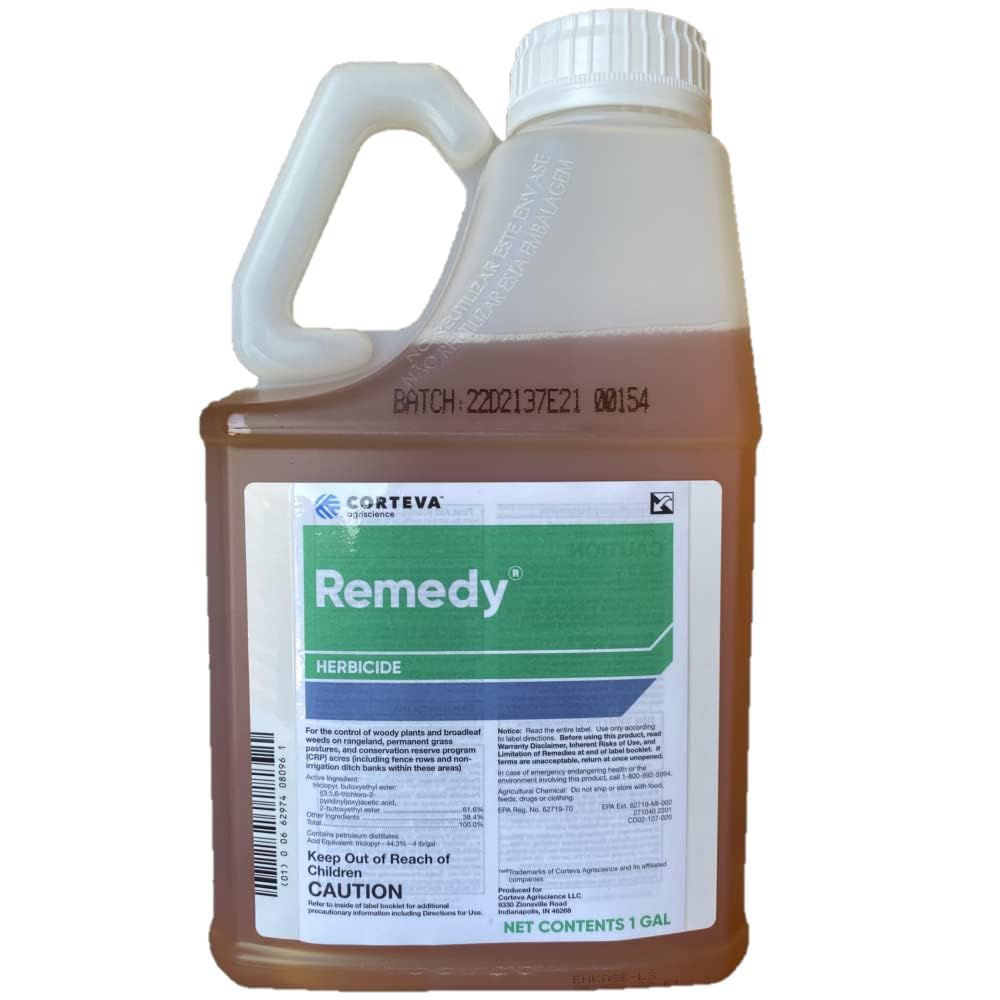
| Remedy Specialty Herbicide★ Best Overall | Fence lines and pasture edge control | Triclopyr concentrate | Liquid, 1 gallon | Selective brush and mid-size trees | Amazon |
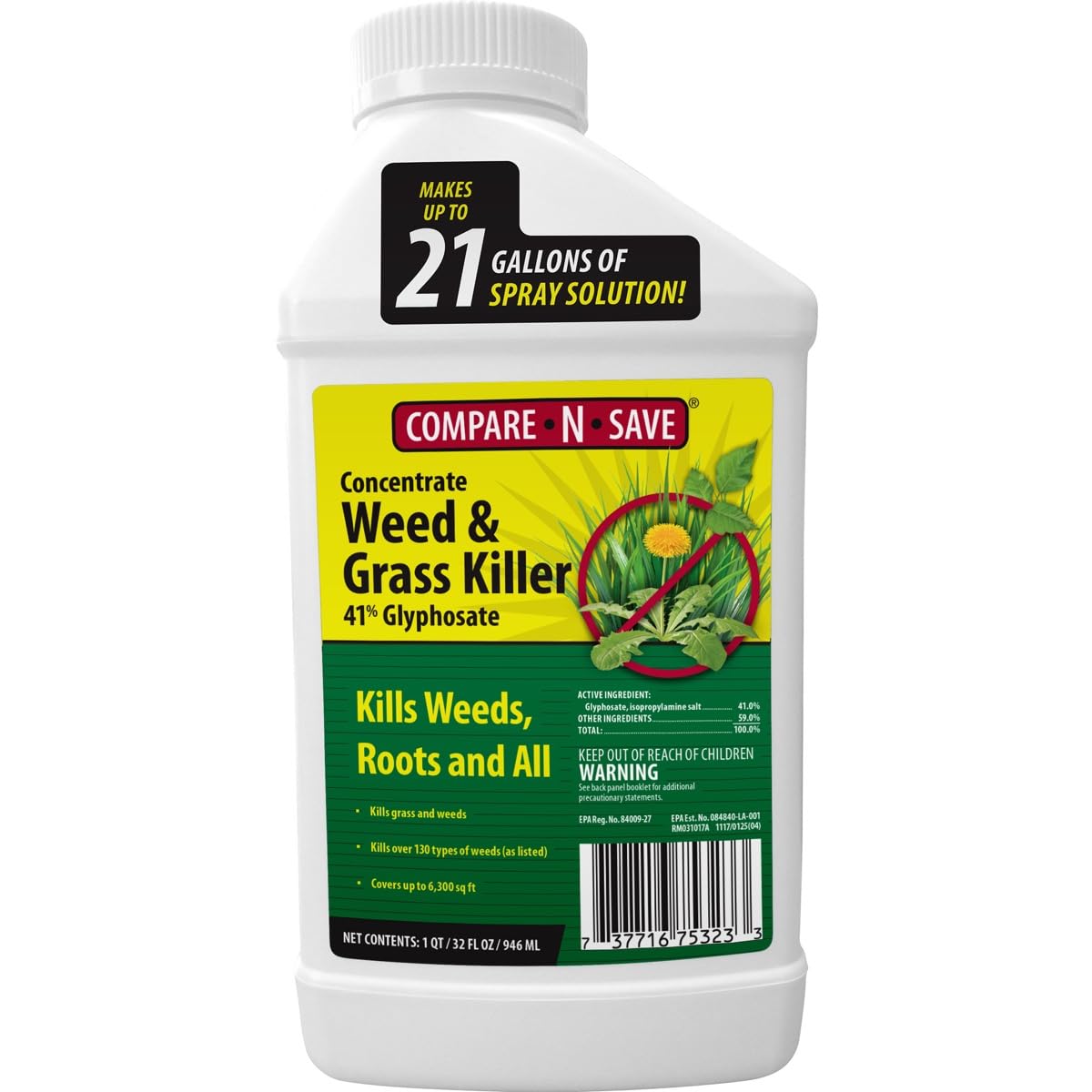
| Compare-N-Save Glyphosate ConcentrateBest Value | Big jobs on a tight budget | Glyphosate | Liquid, 32 oz | 25,000 square feet | Amazon |
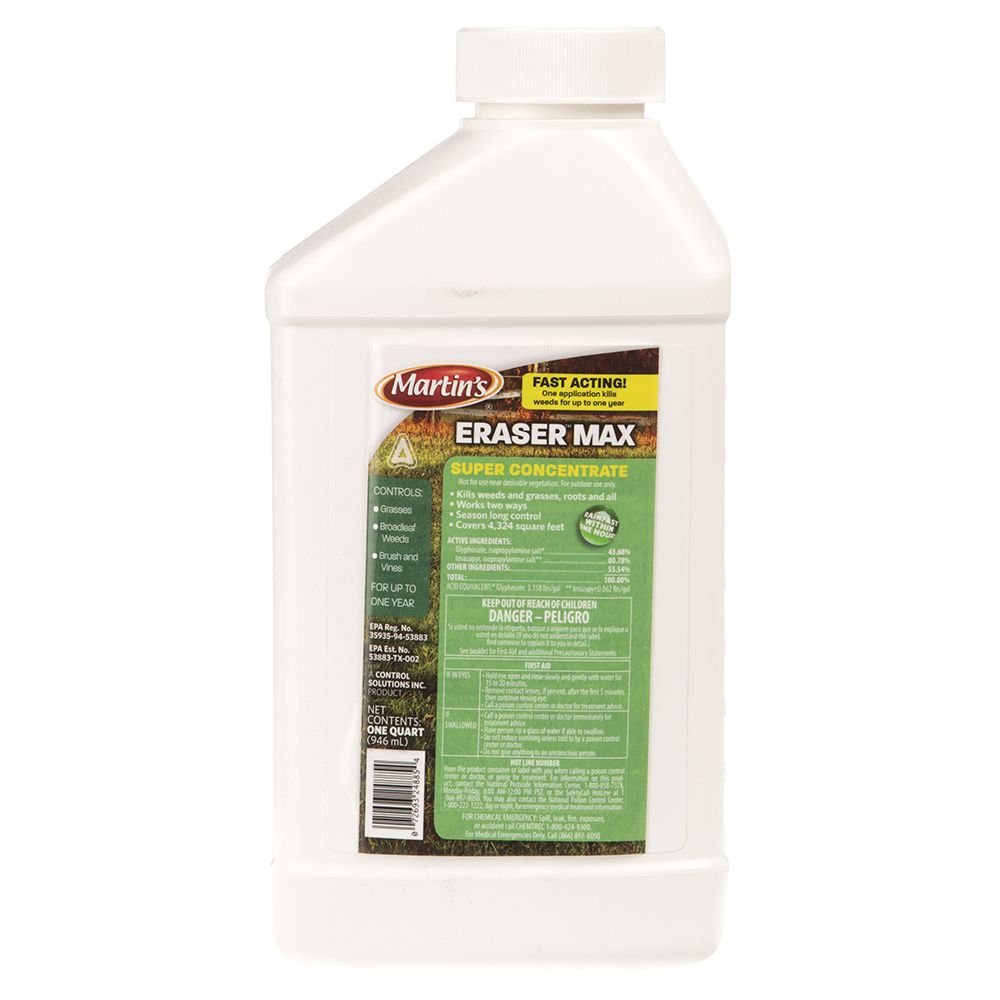
| Martin’s Eraser Max Super Concentrate | Stubborn stands that keep coming back | 43.6% Glyphosate + 0.78% Imazapyr | Liquid, 32 oz | Concentrated, mixes with water | Amazon |
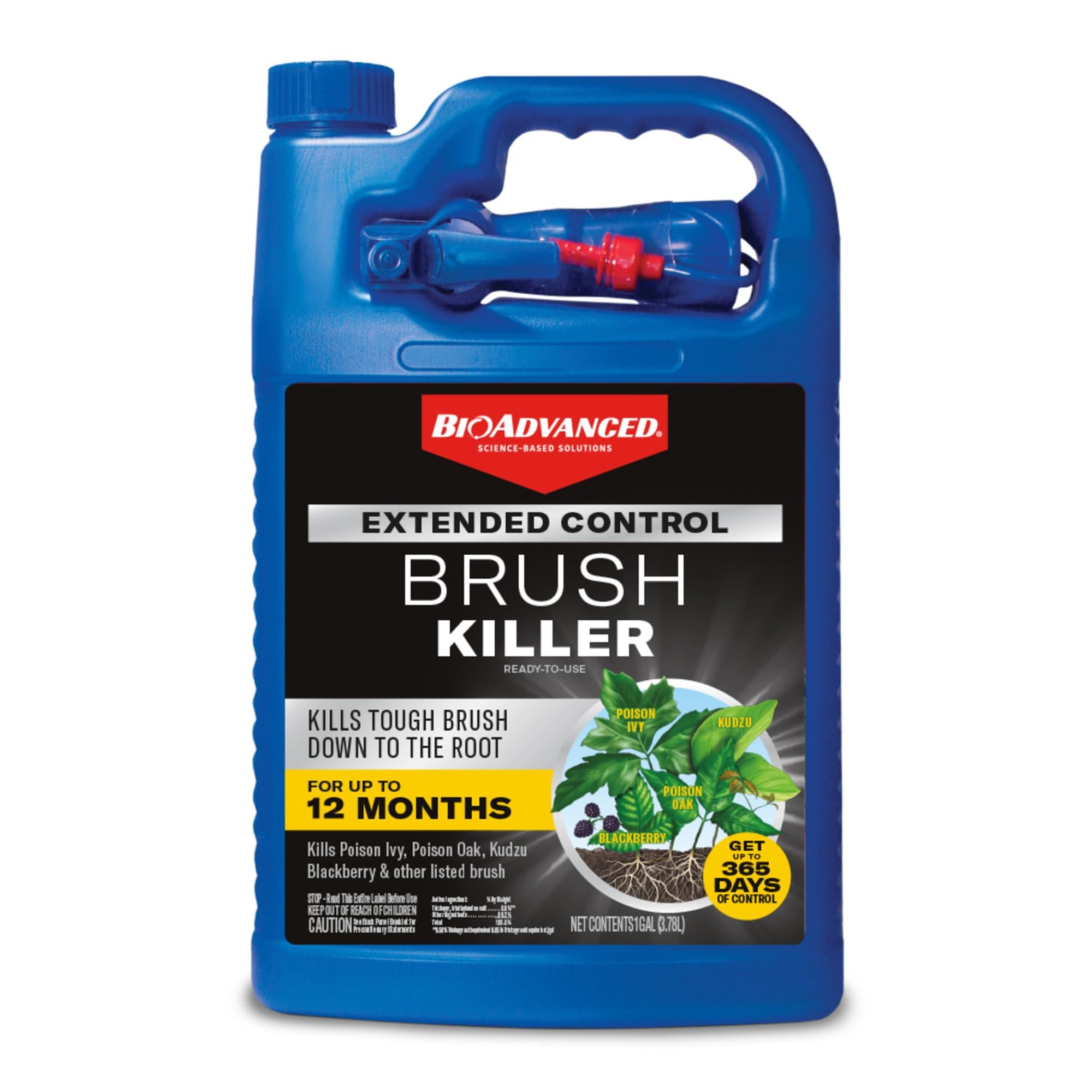
| BioAdvanced Extended Control Brush Killer | Convenience spraying on listed brush | Ready-to-use brush formula | Liquid, 1 gallon | 500 square feet | Amazon |
| Hi-Yield (32170) Killzall 365 | Whole-property bare-ground control | Glyphosate + imazapic | Liquid, 32 oz | 4,300 square feet | Amazon |
| Roundup QuikPro | Fast visible top-kill | Glyphosate, diquat, surfactant | Powder packets, 5 pack | 1 gallon mixed per packet | Amazon |
| RM43 Concentrated Extended Control | Driveways and long-term ground clearing | 43% Glyphosate plus weed preventer | Liquid, 1 gallon | 17,297 square feet | Amazon |
Detailed Reviews
1. Remedy Specialty Herbicide 1 Gallon
Our pick — 4.5+★ from 850+ verified ratings; the strongest balance of quality and price.
The pasture-grade triclopyr that works the whole plant, roots included, and stays flexible for fence-line brush duty.
If your bamboo is creeping along a fence, a pasture edge, or a treeline you actually want to keep, this is the pick to start with. It is a triclopyr concentrate — triclopyr is an active ingredient that targets woody and broadleaf plants while leaving most grasses alone — sold as a 1-gallon liquid you dilute yourself. That selective behavior is the reason it sits on top here for brush control: it reaches mid-size trees and woody stems without sterilizing the ground the way a full non-selective treatment can. Owners describe it as working on the entire plant, both the top growth and the roots underneath, which is exactly what bamboo demands.
The label calls it a long-lasting option built for pasture restoration, encroaching brush, and general fence-row maintenance, and it is listed as safe to use around children and pets when you apply it according to the product label. It is a 16-ounce item weight with 1 gallon of liquid volume. If you are tank-mixing, the label names GrazonNext and ForeFront HL as compatible partners, so you can stack it for harder targets rather than buying a second standalone jug.
The catch is that selective means selective. Triclopyr is aimed at brush and broadleaf plants, so heavy grass cover or a bamboo stand that behaves more like grass may need a different active ingredient or a tank-mix partner to finish the job. This is the pick for the home or landowner dealing with woody brush and encroachment, not the person who wants a blanket scorched-earth strip along a driveway. The crowd here backs it strongly — 4.5+ stars across 850+ ratings — and what wins people over is plain effectiveness at killing grass and weeds, close to total per owner descriptions. The one honest wrinkle: value for money lands mixed, which the label’s premium triclopyr positioning explains.
Where this concentrate pulls ahead
- Triclopyr formula targets woody brush and mid-size trees while sparing most grass — the right tool for fencelines and pasture edges.
- Works on top growth and the root system, per owner experience, so regrowth pressure drops.
- 1-gallon liquid volume and a flexible label that allows tank-mixing with GrazonNext or ForeFront HL for harder targets.
Reasons to choose a different jug
- Selective by design — dense grass or grass-like stands may outrun it without a mix partner.
- Value for money reads mixed, which tracks a premium triclopyr price.
The right buyer: You have bamboo pushing through a fenceline, pasture edge, or brushy treeline and you want a pasture-grade concentrate that hits roots and top growth.
Skip if: your ground is mostly grass-type cover and you need a pure burn-down, because a selective triclopyr wants a tank-mix partner for that job.
2. Compare-N-Save Concentrate 32-Ounce
The 32-ounce jug that stretches to thousands of square feet of mixed spray, built for the buyer covering real acreage on a tight budget.
Here is the number that matters when you are staring down a stand of bamboo: this 32-ounce glyphosate concentrate is listed as covering 25,000 square feet. Owners confirm the math in practice — one buyer reports the size they order makes 21 gallons of mixed spray, so if you are treating a long property line or a big patch instead of a clump behind the shed, that ratio is the entire reason to buy this one. It is a straight glyphosate concentrate, meaning glyphosate is the systemic active that travels down into the roots after the leaf absorbs it, and you mix it yourself at whatever strength your sprayer and label call for.
What you trade for the low cost is speed. Glyphosate is a slow-acting non-selective herbicide, and owners describe it taking up to a week to show any activity compared with a few days for other non-selective products. The upside, per the review pattern, is that when it does work, the vegetation is dead. The most common note is to spot-spray carefully with proper protective gear, avoid wind and fine mist so you do not drift onto plants you want to keep, and expect to reapply every few months because new seeds blow in from neighboring ground.
So the honest question is whether you can wait. If your bamboo is actively growing and you spray the leaves and leave it alone, this is one of the cheapest ways to put glyphosate on a lot of ground. If you need it gone in a weekend, this is not the bottle for that job. At 2.3 pounds the jug is easy to store on a shelf between treatments, and the value story is the defining trait here.
Why the math wins: 25,000 square feet of coverage from a 32-ounce bottle is the coverage headroom that buries almost every competitor on a per-application basis, and owners who mix it report it makes 21 gallons of ready-to-spray solution.
The slow-cure reality: glyphosate is systemic and slow, and the consistent feedback is that it takes about a week to show activity — so plan the application around the weather, not around a fast turnaround.
Reach for this if: you are treating real acreage, you will mix your own spray, and you can give the chemical a week or more to move through the plant.
Look elsewhere if: you need a visible top-kill within a day or two, or you are only fighting a single small clump.
3. Martin’s Eraser Max Super Concentrate – 32oz
A two-active super concentrate built for the bamboo that shrugged off a straight glyphosate spray last season.
This is the pick for the stubborn stand. Eraser Max is a post-emergent concentrate — post-emergent means you spray it on plants that are already up and growing, not as a soil barrier beforehand — and it carries two actives instead of one: 43.6% glyphosate and 0.78% imazapyr. Glyphosate delivers the systemic kill, and imazapyr is a second active that adds staying power in the soil. A little goes a long way, which the concentration backs up.
What people keep coming back to — many as repeat purchases — is that even the hardest weeds and vegetation wither and die within a few days, and that the value holds through the season. Mix it with water per the directions and it goes far, which is the appeal of a super concentrate versus a ready-to-use jug. The supplier calls it a 1-quart liquid concentrate weighing 2.6 pounds, easy to store and easy to measure.
The one thing to respect is that this formula is non-selective and the imazapyr keeps working in the soil, so overspray and fine mist are the enemy. As one buyer summed it up: “Works very well. Takes a few days to notice, but it eliminates most any vegation. Careful with overspray/ mist on plants you want to keep.” That is the whole trade-off in a sentence — potent, patient, and unforgiving if you drift it onto the wrong greenery.
What makes it hit harder
- 43.6% glyphosate plus 0.78% imazapyr — two actives, so stubborn regrowth has less room to escape.
- Concentrated quart format means a little goes a long way, and it lasts through the season.
- Post-emergent and mixes with water for sprayer work, with the effectiveness to clear an area in under a week.
What to watch
- Non-selective and imazapyr residue lingers, so overspray on wanted plants will set them back — spray on a still day.
- Not instant; expect a few days before the vegetation visibly collapses.
The buyer it fits: you tried a single-active glyphosate product and the bamboo came back, and you want a concentrate with a second active to shut it down long-term.
The catch to plan around: this is a non-selective formula with residual soil activity, so every wanted plant near the spray zone needs a shield.
4. BioAdvanced Extended Control 1 Gal
The grab-and-spray gallon for small listed-brush jobs where you would rather not mix a batch.
If you want zero mixing and a bottle you can carry to the problem spot yourself, this is the convenience pick — a ready-to-use 1-gallon brush killer that begins working on contact, with the label calling for noticeable results in as little as 1 week and rainproof protection 4 hours after application. It covers up to 500 square feet of listed weeds. The manufacturer lists kudzu, poison ivy, poison oak, blackberry, and over 90 other listed weeds and brush on the label.
That 500-square-foot coverage figure is the number to weigh honestly before you buy. A gallon is genuinely a small-area format, so this is a spot-treatment product, not a tool for clearing a large stand. It is also a heavy jug at 8.5 pounds — the label-specified size of the bottle — compared with the 2-pound Hi-Yield Killzall 365 concentrate here, which is a 4.2x gap in carry weight. That difference is simply the trade for a pre-mixed bottle you do not have to dilute.
The real question with this one is how it behaves on bamboo specifically, because it is not marketed as bamboo-specific. Buyers report the widest spread of outcomes of anything on this list: some get good results from the first session on stump regrowth, while others find it did almost nothing after repeated applications. The manufacturer’s own listed weeds do not name bamboo as a headline target, so treat this as a solution for the listed brush and vines it is labeled for, and expect a mixed bag if your target is a fresh bamboo stand. Ease of use is what this bottle does best, and that is exactly what you are paying the ready-to-use premium for.
Best used as labeled: a ready-mixed gallon for listed brush and vines on small patches, with rainproof protection 4 hours after spraying.
Match it to the job: 500 square feet of coverage and an 8.5-pound jug make this a spot-treatment tool, not a whole-stand clearing option.
Pick this when: you want a spray-and-go gallon for a small, labeled brush or vine problem and you value skipping the mixing step.
Not your bottle if: you are clearing a large bamboo stand or you need a bamboo-labeled formula rather than a general brush killer.
5. Hi-Yield (32170) Killzall 365, 32 oz

The bare-ground specialist with a year of regrowth prevention built in, for driveways and gravel rather than garden borders.
Two numbers define this bottle: it treats up to 4,300 square feet, and the manufacturer states it prevents regrowth for up to 1 year. It pairs glyphosate with imazapic — imazapic is the second active that keeps new growth from sprouting in the treated area, which is what turns a one-time spray into a season-long bare strip. If your bamboo is coming through a gravel drive, a walkway, or the base of a fence you want permanently clear of vegetation, that extended control is the whole reason to pay more for this bottle than a plain glyphosate concentrate.
It is a 32-ounce liquid concentrate weighing 2 pounds, and it is a non-selective formula, so read the label carefully: it can kill trees and brush along with weeds, and the guidance is clear about keeping it away from grass and wanted plants. Owners mention real staying power in the right soil — grass sprayed on an empty lot has stayed gone for months — and also a fair caveat that in very sandy soil the control runs shorter than in heavy clay. That sandy-soil limit is disclosed by the maker, so it is a planning note, not a fault.
Here is how it stacks against the other concentrate options in this lineup. It covers 4,300 square feet, where the Martin’s Eraser Max is a quart-size super concentrate without a published coverage figure and the BioAdvanced is capped at 500 square feet of ready-to-use spray. If you want the widest bare-ground footprint with a full year of regrowth prevention, the labels say this is the one to reach for. Just keep it away from the grass you mean to keep, because “prevents regrowth” does not check which plant you were rooting for.
What it does better than most
- Up to 1 year of regrowth prevention from the glyphosate-plus-imazapic pair, turning one spray into a long bare-ground result.
- 4,300 square feet covered by a single 32-ounce bottle, so it reaches across a driveway or paddock area.
- Easy to mix at 6 ounces per gallon for spot control, or 7.4 ounces across 1 to 10 gallons for broad bare-ground work.
The trade-offs
- Fully non-selective — it can take trees and brush, and the label tells you to keep it off grass and wanted plants.
- In very sandy soil the control window runs shorter than the full year, per the maker’s own disclosure.
Choose it for: a gravel drive, walkway, or fence base you want clear for a full season, where bare ground for months is the goal.
Leave it on the shelf for: garden borders and anywhere the spray could drift onto grass or plants you intend to keep.
6. Roundup QuikPro Weed Killer Herbicide 73.3%, 5 Packets
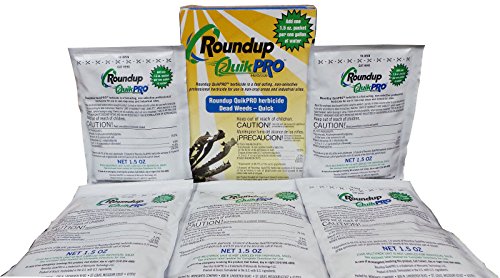
A no-mix powder that browns the top fast while the root killer works its slower shift, sold in a five-packet box.
The one-second version: this is the pick for the buyer who wants visible results within about a day and does not want to measure concentrate into a sprayer. QuikPro is sold as five 1.5-ounce powder packets, and you drop one packet into one gallon of water — no fiddling with a measuring cup or a jug of liquid. The manufacturer lists visible results within 24 hours. That speed comes from a two-part design: glyphosate does the root-level kill over days, while diquat browns the foliage fast so you can see progress immediately. A surfactant is built into the powder, which is the wetting agent that helps the spray spread and stick to the leaf.
What you give up for that convenience is cost per gallon — a ready-mix packet system runs higher than mixing your own concentrate, and owners acknowledge the trade is worth it for the convenience alone. Owners also report it mixes quickly with water, with no liquid jug to store or measure. The flip side noted in the feedback is that some users saw weeds stay healthy and green after a spray, and results varied on how long the effect lasted, so this is a formula to apply well and at the right dosage rather than a guarantee.
If you are treating bamboo, use the fast browning as a confirmation only — the real work is still the glyphosate traveling down. This is best for a smaller, defined patch where you want to see the top die back quickly and you would rather not handle liquid concentrate at all. With five packets, you get five gallons of mixed spray, which suits a spot job rather than a whole-stand treatment.
Where the speed shows up: the glyphosate-plus-diquat pair delivers visible browning within a day while the root-active glyphosate keeps working, and the built-in surfactant is why the spray clings and spreads.
Where it asks a trade: five packets make five gallons, and the packet price runs above a DIY concentrate — plus some users still saw green weeds after application, so dosing and coverage matter.
Best suited to: a smaller, defined patch where fast visible browning matters and you would rather use a no-mix powder.
Plan for something else if: you are covering a large area on a per-gallon budget, since a concentrate will stretch further for less.
7. RM43 Concentrated Extended Control Weed Killer, 1 Gallon

Driveway cleanup in a jug: a gallon of 43-percent glyphosate that keeps bare ground bare for the mowing season and beyond.
For the person fighting bamboo and weeds across a gravel drive, a parking pad, or a long utility strip, this is the volume pick. RM43 is a 1-gallon concentrate at 43-percent glyphosate with a weed preventer built in, and it is listed as covering 17,297 square feet with up to 1 year of control. That coverage figure is the point: one gallon reaches a driveway-scale job where a 32-ounce bottle would run dry partway through. It is a non-selective total-vegetation treatment, so expect bare ground after you spray, not a selective tidy-up.
What owners describe is a slow, thorough kill. The feedback pattern is that results take a few days to show and that the weeds stay dead for months once they go — longer than the quick-browning products, by owner accounts, and one buyer notes it killed a decade-old nutsedge. There is a color indicator built into the liquid that shows when you have mixed it evenly, which is a small helper when you are filling a sprayer. Owners also report it is rainfast after about 2 hours in heat and dry conditions.
The honest caveat runs through the feedback: this kills everything, including plants you meant to keep, so keep the sprayer away from trees and anything you are growing on purpose. And the year-long control claim does not always pan out — some customers note three or four months of results in their conditions rather than a full twelve, which is normal for a label that promises a ceiling. Used at 6 ounces per gallon on a driveway twice a year, it still saves the work of repeat spraying, which is where the value lands.
The driveway argument
- 17,297 square feet of coverage and up to one year of control from a single gallon — driveway-scale reach.
- A color indicator shows even mixing, so you can see when the jug is fully blended into the sprayer.
- Rainfast after about two hours in heat and dry conditions, per owner reports, with no bad smell.
Before you commit
- Non-selective — it kills everything, so keep it clear of trees and plants you want to keep.
- The full-year control does not hold everywhere; some owners see results for a matter of months instead.
Right for this job: driveway, parking pad, and utility-strip weed killing where you want bare ground and one spray to last most of the season.
Wrong tool for: beds, borders, and turf edges, because it does not spare anything you spray it on.
Know the Specs
Active ingredient and concentration
The active ingredient is the chemical doing the killing, and the percentage on the label tells you how much of it is packed into each ounce. Glyphosate is the systemic workhorse that enters through the leaf and travels down to the roots. Imazapyr and imazapic are partners that linger in the soil and set back regrowth, while diquat is a fast-browning contact that shows you results sooner. A higher glyphosate percentage means you mix less per gallon, which is why a 43-percent concentrate covers far more ground than a weaker formula.
Concentrate vs ready-to-use
A concentrate is a bottle of active ingredient you dilute yourself, usually measured in ounces per gallon of water. It costs less per treated square foot and lets you choose a heavier mix for tough, established canes. A ready-to-use bottle comes already mixed, so you skip the measuring but pay more per square foot and cannot adjust the strength. For a bamboo stand bigger than a small clump, the concentrate wins on both coverage and flexibility.
Coverage and square footage
Coverage is the area one container treats, measured in square feet. It is the number that tells you whether a single bottle will finish your job or run dry halfway. A small ready-to-use gallon may cap at a few hundred square feet, while a 32-ounce concentrate can spread across thousands. Match coverage to the size of the patch before you buy, and read the mix ratio so you know how far your sprayer tank will go.
Rainfast window and timing
Rainfast time is how long a spray needs on the leaf before rain stops washing it off, and it can be anywhere from a few hours to a day. Spray when bamboo is actively growing and the leaves are fully open, since the chemical needs green tissue to absorb. Then leave the canes standing for a couple of weeks so the herbicide can finish traveling down to the rhizome before you cut.
Common Questions
Will glyphosate actually kill bamboo roots?
Should I use a selective or non-selective herbicide on bamboo?
How long before I see results after spraying bamboo?
How much concentrate do I mix per gallon of water?
Is it safe to spray near children and pets?
Why did my bamboo come back after I sprayed it?
Can I spray bamboo when rain is in the forecast?
What is the difference between a straight glyphosate concentrate and an extended-control blend?
Do I need to cut the bamboo before or after spraying?
Will a single bottle cover a full bamboo stand?
The Bottom Line
If you want the strongest all-around starting point for brush and encroaching bamboo, the Remedy Specialty Herbicide is the pick — a pasture-grade triclopyr concentrate built to work the top growth and the roots, flexible enough to tank-mix with GrazonNext or ForeFront HL, and backed by 4.5+ stars across 850+ ratings. If a stubborn stand keeps shrugging off a single active, grab the Martin’s Eraser Max Super Concentrate for its glyphosate-plus-imazapyr pairing. And for a driveway or bare-ground strip you want clear for a whole season, the RM43 Concentrated Extended Control is the one to reach for, with 17,297 square feet of coverage and up to a year of control. Whichever you choose, spray actively growing bamboo, follow the mix ratio, then leave the canes standing so the herbicide finishes the trip down to the rhizome.
How we choose
We do not accept paid placement. Every pick is matched to a real buyer and a real use-case; we do not hands-on test units.
Sources
Specifications: manufacturer listings and product documentation. Review insights: verified customer reviews, as of October 2026. Pricing: not shown on this page (it changes often); check the current price via the retailer link.
As an Amazon Associate, Aappliancez earns from qualifying purchases. This does not affect which products we feature.