Disclosure: Some links in this post are affiliate links. As an Amazon Associate I earn from qualifying purchases, at no extra cost to you. Learn more
Specs are compiled from manufacturer listings and verified buyer reviews and can change over time — please confirm the key details on the product page before buying.
If you are shopping for heel protection boots, the short answer is simple: you want one that lifts the heel off every surface so pressure never builds up on that bony spot again. The boot is not a shoe you walk in. It is a cushion-and-movement control device that holds the heel in the air while you rest, sleep, or recover. This guide breaks down the seven strongest options so you can match one to the recovery you are actually managing.
This guide is built by comparing the manufacturers’ published specifications and the patterns across verified customer reviews, so you get each pick’s real strengths and trade-offs instead of marketing spin.
The differences that matter come down to how the heel floats, how the boot stays in place, and how it handles washing. Whether you are managing a bedsore risk or recovering from surgery, these seven picks cover both bed-bound and walking recovery.
Top Picks

How To Choose The Best Heel Protection Boots
A heel protection boot has one job above all others: keep the heel off the mattress, the wheelchair footrest, or the floor. Everything else — the straps, the fabric, the gel pack — exists to support that single function. Get that one thing right and the rest of the boot is just comfort tuning.
Start with the open-heel design
The most important feature is an open heel, which means there is a physical gap or air cavity behind your heel so nothing presses on it. A closed-back pillow-style boot can still trap sweat and friction. Look for a cutout, a suspension cavity, or a “heel floating” design, because that gap is what offloads pressure from the bony part of the heel.
Match the closure to the sleeper
Hook-and-loop straps are the reusable closures you press shut and peel apart. Double straps across the top of the foot hold better than a single strap on a restless sleeper. If the boot is for someone who moves a lot at night, double-strap designs keep the foot from sliding out.
Check the fabric and wash routine
Cotton and peachskin-style fabrics breathe, which matters because trapped heat softens skin and makes it more vulnerable to breakdown. Machine-washable covers are the practical choice for long recoveries. Vacuum-packed styles fluff back up after a few minutes of unpacking, so do not be alarmed by a flat-looking boot on arrival.
Side-by-Side Comparison
| Model | Best For | Closure | Key Features | Washable | Amazon |
|---|---|---|---|---|---|
| McKesson Foam Heel Protectors★ Best Overall | All-night support for bed-bound recovery | Hook-and-loop, multi-position | 3-hole DVT, open heel/toe | Cover washable | Amazon |
| EZ Assistive Heel ProtectorsBest for Swelling | Post-op foot swelling during healing | Double Velcro straps | Dual-density filling, open heel | Cover washable | Amazon |
| Darco Ortho Wedge Healing Shoe | Forefoot pressure offload for X-Large feet | Buckle | Wedge heel, rubber sole | — | Amazon |
| Vive Wedge Post-Op Shoe | Toe-offloading walks after heel surgery | Fastener straps | Rocker base, square toe box | Hand wash only | Amazon |
| H&S Health Heel Protectors | Elderly bed-ridden comfort, pair value | Adjustable hook-and-loop | Opens to 9 inches, PP cotton fill | Machine washable | Amazon |
| Skil-Care Heel Protector Boot | Heel wounds needing gel cooling | Hook-and-loop | Gel cushion, cozy cloth fabric | Cover washable | Amazon |
| NYOrtho ZERO-G Heel Cloud | Wound care that needs direct access | Hook-and-loop | 3 DVT holes, peachskin fabric | Water-resistant | Amazon |
Detailed Reviews
1. McKesson Black/Blue Foam Heel Protectors for Bed Sores, 1 ct
Our pick — 4.0+★ from 350+ verified ratings; the strongest balance of quality and price.
The well-made cotton boot that lifts the heel over an air cavity and holds it there
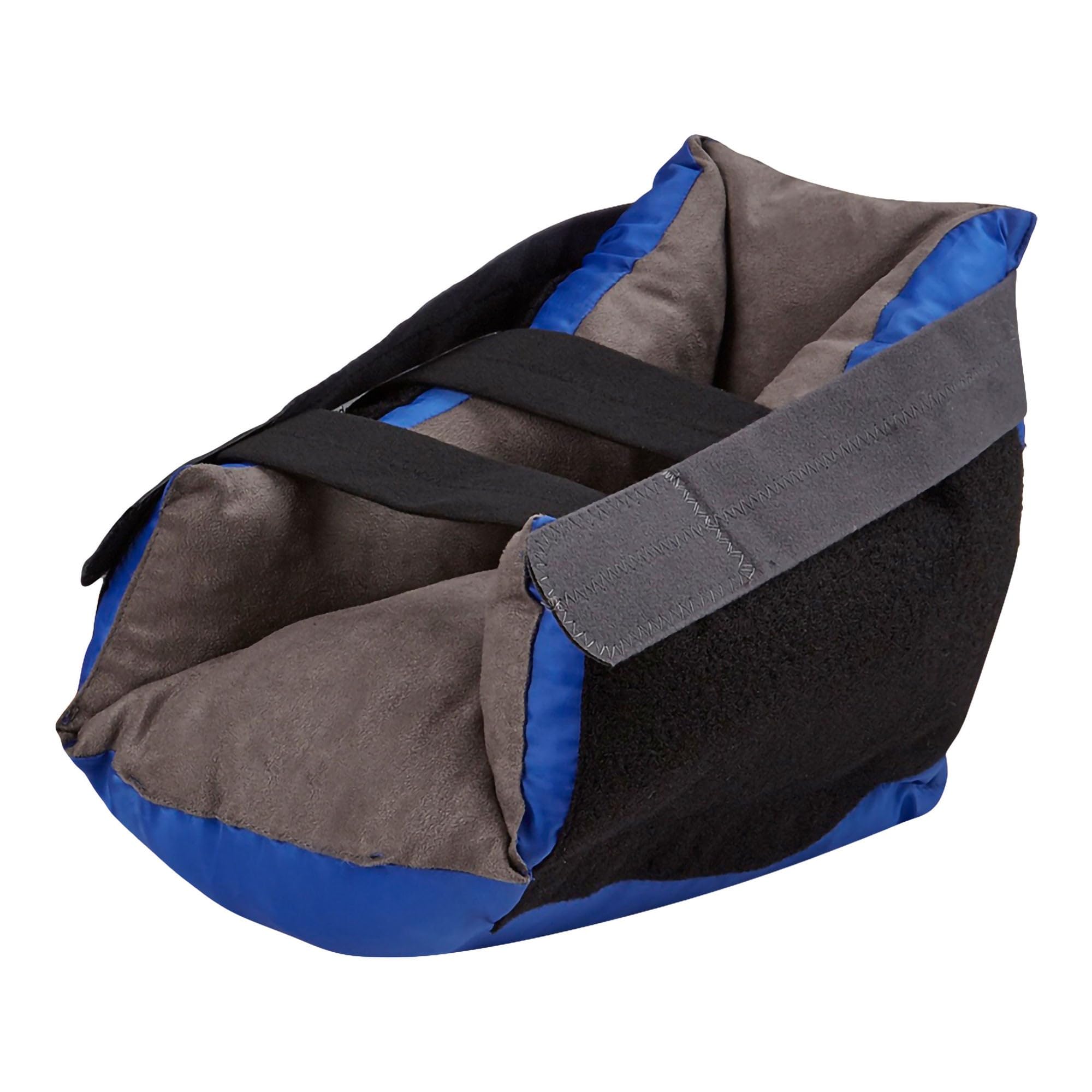
This is the pick for anyone managing a bed-bound recovery where the heel never touches the mattress. It offloads pressure by positioning the heel over an air cavity, so the bony point of your foot hangs suspended instead of pressing into fabric all night. The material is latex-free, which matters for sensitive skin, and the cotton cushion surrounds the foot to cut down on friction.
What wins people over is the cotton build — buyers rate its quality above every other feature, and the stitching and padding show why. The hook-and-loop closure gives you a choice of ways to secure the boot, and the printed open-heel and open-toe design shows you the correct orientation at a glance. Three-hole options on each side accept DVT cuffs and massagers, so a compression device can stay on without removing the boot. Buyers report it stays comfortable for hours of nightly wear — as one put it, “It maintains excellent support of my lower leg and foot.”
The honest catch is roll control. The padding is generous and the straps are wide, but there are no side stops to keep the foot from rolling side to side while you sleep. If the wearer moves a lot in bed, that is the trade-off to plan for. The boot is also one size fits most, so unusually wide or narrow feet have less room to fine-tune.
What holds up under a full night
- Latex-free for sensitive skin
- Air-cavity heel offload keeps pressure off the bony point
- Three-hole DVT mounting on each side
- Printed open-heel and open-toe guide for correct fit
- Washable and reusable cotton
Where it gives ground
- No side stops against foot roll
- One size fits most, little fine-tuning
- Anti-foot-drop construction controls dorsal flexion, but positioning still takes a minute
Reach for this if: you need a durable, latex-free boot for a bed-bound patient and want a DVT cuff to stay attached.
Think twice if: the wearer rolls their feet side to side at night — this one has no lateral stops to prevent it.
2. EZ Assistive Heel Protectors for Pressure Sores in Bed
Two foam densities, one boot — soft where it touches, firm where it supports
If swelling or a bandaged foot is part of your recovery, the EZ Assistive pair earns its place by giving you two ways to fill the boot. One density of the cotton filling is softer for comfort against the skin, and the other has more rebound for firm support under the foot. You choose which serves the day. The open-heel design suspends the heel in the air so nothing presses on the sore spot, and the polyester fiber core keeps the whole thing soft against the leg.
Foot protection is what buyers point to most after overall quality, with the open heel and dual-density fill named again and again. This boot sits notably more compact than the McKesson above — 14.5 x 14.5 inches against 15 x 8 inches. The double Velcro straps cross the top of the foot to stop it slipping off, and the open design makes the boot easy to put on and take off. Cushioning and pressure control both draw steady praise, and it holds up to nightly wear for months of post-surgical recovery.
The trade-off is fit consistency. Fit and ease of use are the two aspects buyers are most divided on, so what works for one foot size may sit differently on another. The filling is also what gives the boot its shape, so it will not stay as firm as a rigid shell. A laundry bag is included for cleaning.
Sizing reality check: the appeal here is comfort first, structure second, so treat it as a soft support rather than a firm brace.
Best for: post-op foot and ankle recovery where a bandaged or swollen foot needs room to shift.
Look elsewhere if: you need a rigid, locked-in shape — the soft dual-density fill flexes rather than holds.
3. Darco Ortho Wedge Healing Shoe, X-Large

A wedge-sole healing shoe built for big feet that measures 1.1 pounds
This is the walking option on the list, and it works differently from the bed boots above. Instead of suspending the heel in air, the wedge sole shifts your weight forward onto the toes so the heel never takes the load. It is made in the United States with a rubber sole, and the X-Large XL fits men’s size 14 well. The buckle closure holds the foot securely, and the front strap accommodates a bandage or cast without trouble.
Buyers find it functional for offloading, but comfort divides sharply. The wedge forces an altered gait, so you settle into heel-walking to avoid forefoot pressure rather than strolling normally. That is the design working as intended, not a defect. It measures 1.1 pounds, which keeps it manageable on the foot for a while, though it is not something you forget you are wearing.
Durability is the real sticking point. A few owners mention the outer shell breaking down quickly under everyday wear, and the rear strap runs short for some feet, needing a homemade Velcro extension. The Velcro configuration is also tricky to snug across the arch. If your recovery is short and your feet are extra-large, it does the job; if you need months of hard walking, look carefully.
Milestone note: this is a legitimate wedge shoe for forefoot offload, but it is not built like a long-haul recovery boot.
For a forefoot offload on a size-14 foot, the Darco does the job at the lightest carry weight of the walking shoes here, but the shell durability is the honest gamble.
Suited to: extra-large feet needing a wedge forefoot offload who want the lightest walking option.
Not for: months of all-day wear — the outer shell and short rear strap wear down under continuous use.
4. Vive Wedge Post-Op Shoe

The front-loading wedge that shifts each step onto the toes and away from the heel
Built to move body weight forward off a tender heel, the Vive wedge uses a modified rocker base to smooth your stride and a rigid, textured sole for grip. The open, square toe box gives bandages room so nothing rubs. Two extender tabs let you size the straps up for a swollen foot, and it fits either foot. Made with polyester mesh, EVA foam, and synthetic rubber, it is a medical walking boot at a very manageable 0.29 kg.
What stands out is heel offloading in motion: the wedge points every step onto the toes and midfoot. Regardless of what size you measure, the wedge points your steps onto the toes and midfoot, which is exactly what you want after soft tissue or bony heel surgery. What stood out for some buyers is the comfort against a cam boot during the first non-weight-bearing days — the Vive’s relief was enough that one owner no longer needed pain medication for a lateral Achilles tenotomy.
The honest limit is durability over the long haul. A few report the seams splitting within about two weeks of heavy use, and the boot is hand wash only, so it is not a toss-in-the-machine piece. For a few weeks of recovery, it holds up. For months on end, expect wear. The 3.5+ star record reflects that mixed picture — mostly fans, with the vocal minority on the seam failure.
The walking-boot advantages
- Front-loading wedge offloads the heel with every step
- Rocker sole for a smoother gait
- Square open toe box fits bandages
- Two extender tabs for swollen feet
- Lighter than a traditional cam boot
The trade-offs to weigh
- Hand wash only — not machine safe
- Seams can split with heavy, prolonged use
- Sizing runs small; the sizing chart is essential
For most people managing a short heel-recovery window, the Vive is the strongest walking boot on this list — the wedge does the pain relief and the square toe box handles the bandage.
Grab this one if: a surgeon or podiatrist has you walking again but the heel still cannot take weight.
Pass if: you need a boot to survive months of daily steps — the seams and hand-wash rule will cost you.
5. Heel Protectors Cushion (1 Pair)

A breathable pair that opens to 9 inches and slips on or off in seconds
For elderly users who need nighttime relief without wrestling a boot, the H&S Health pair keeps things easy. The outer fabric breathes, and the inside is filled with fluffy PP cotton (a soft synthetic fill) so nothing presses hard against the skin. The boot opens to 9 inches wide, which means you can slip it on and off without forcing a stiff ankle through a narrow opening — crucial for bathroom trips overnight.
What people appreciate most is the pain-free comfort against the skin, with the PP cotton fill and heel relief drawing repeated mentions. Adjustable hook-and-loop straps let you tune the tightness so the boot stays put under covers. Some buyers highlight the warmth as a bonus during the colder months, and the material handles machine washing as long as you use a mild cycle and a laundry bag.
The one drawback is retention for high-movement sleepers. If the wearer has spasms or shifts their legs, occasionally the pillow slips off. For a calmer sleeper, it holds well. Do not let the patient walk in these — they are a resting cushion, not a shoe. The padding is thick enough that a good fit strikes a balance between pressure relief and not moving around.
The value read: two boots for the price of one, which is the strongest selling point if you need protection on both feet.
Worth it for: elderly bed-bound users who need soft nighttime relief and hate stiff outdoor-style boots.
Consider a firmer boot if: the wearer moves constantly in bed — this pair can slip off during heavy leg movement.
6. Skil-Care Heel Protector Boot
The gel-cushion boot that floats the heel and adds cooling on demand
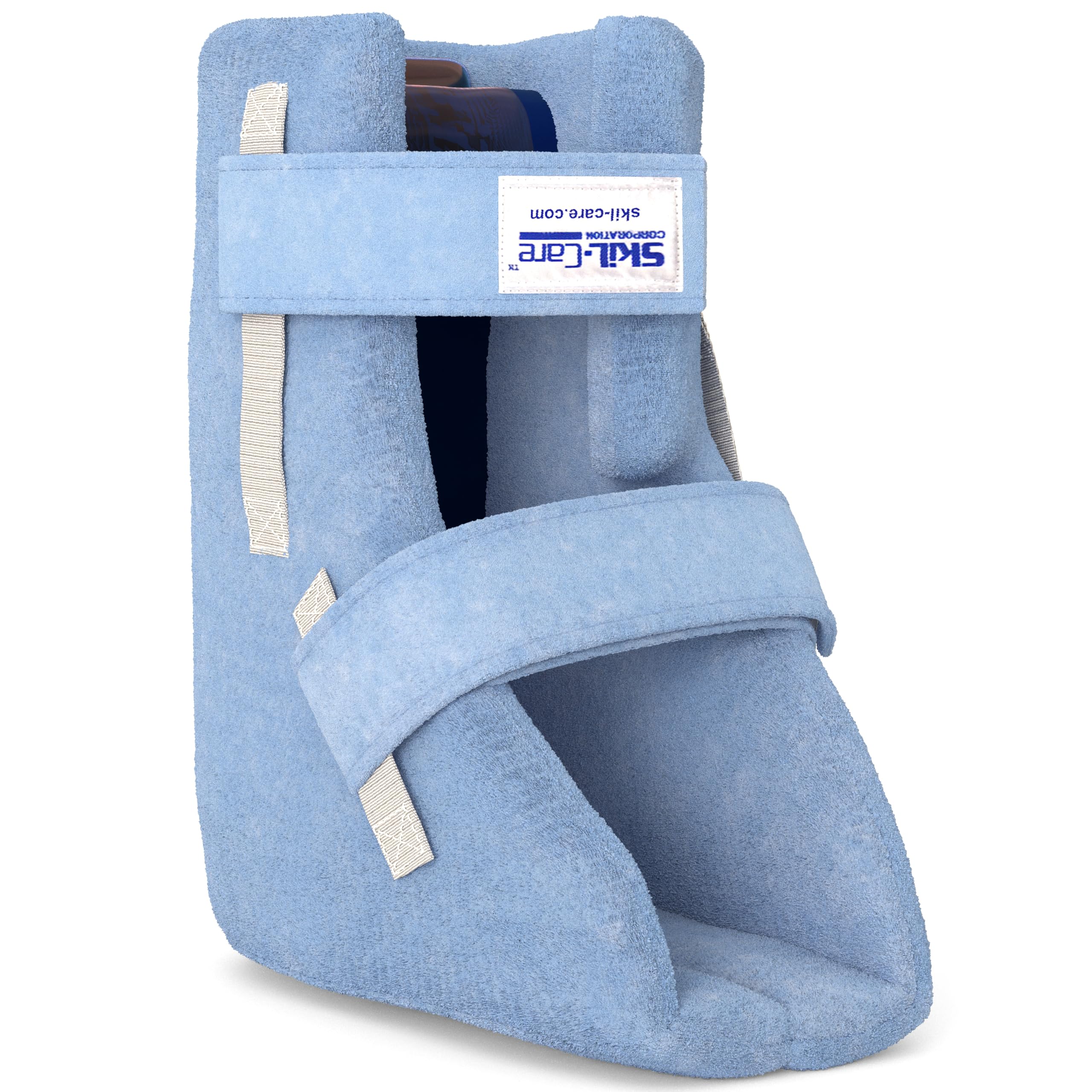
This is the one to pick when a heel wound needs to stay both offloaded and cool. A gel pack tucks above the ankle to hold the heel up and off the surface, and it can be chilled or warmed depending on what the wound needs. The boot is built from a soft, cozy cloth fabric with hook-and-loop straps, and it comes in three sizes so you can match the foot rather than settle for universal.
Construction is the standout: the cozy cloth cover and gel pack hold up to repeat wear. The boot is well made and holds up to repeat wear, and customers note it is a godsend when a heel sore needs to float free of everything. The heel cutout means the wound area has air around it, which is where the relief comes from. For preventing sores before they start, it also makes sense as a nightly preventive measure — one nurse with 38 years of experience called it the best heel protector she had seen.
The honest caveat is function for foot drop. It holds the foot securely, but it does not flex the toes back, so it will not protect a dropped foot from bumping obstacles. One buyer notes a competing device with extra perpendicular straps handles foot drop better. There are also complaints that the cold pack behind the Achilles feels odd on some ankles. If you need foot-drop control, look elsewhere.
The caretaker’s pick: a comfortable, well-constructed boot with a cooling gel — the strength is the soothing cushion for painful heels.
For a painful heel wound that needs both suspension and cooling, the Skil-Care stands above the simpler pairs on this list — the gel pack is what separates it.
Go with this: if a heel wound is active and you want the option to cool or warm the site while it floats.
Look past it: if foot drop control is the priority — the straps do not pull the toes back.
7. NYOrtho ZERO-G Heel Cloud Boot

A patent-pending sides-down door that opens the boot right at the wound
Nobody else on this list lets you open the boot from the side. The ZERO-G Heel Cloud uses a patent-pending sides-down, open-door design, so you can apply medication, check the wound, or adjust the fit without lifting the whole leg. It is made in the USA with a hypoallergenic microfiber filling and a soft peachskin interior that is water-resistant for easy cleaning.
The build is the strength: the dense foam holds its shape and keeps the heel suspended. The density of the foam keeps its shape, and the boot keeps the heel suspended and pressure-free. One buyer described it as the most comfortable and secure option they had tried, praising the ventilated, plush interior for a heel that finally floated. Three DVT holes accept compression device attachments, and an adjustable positioner helps stop plantar flexion (the foot pointing downward) that can lead to foot drop. It fits either foot, left or right.
The honest issue is fit. It can be tricky to position correctly on your own, and a few reviewers point out it did not work for their specific need — for example as a drop-foot night brace, where it failed to hold the foot at 90 degrees. It also runs large and wide, which is fine for a bed but awkward to travel with. Universal sizing means you get an approximate fit rather than a tailored one.
Why caretakers like it
- Sides-down door gives direct wound access
- Water-resistant, hygienic peachskin fabric
- Three DVT mounting holes
- Positioner controls plantar flexion
- Fits left or right foot
Watch-outs
- Hard to self-fit correctly — usually needs a helper
- Not effective as a drop-foot brace
- Large and wide — a chore to travel with
If monitoring and medicating a heel wound is the daily job, the NYOrtho is the most practical boot here — the open door turns a two-person chore into a one-person task.
Ideal for: caretakers who need to apply medication and check a heel wound several times a day.
Skip if: you want a drop-foot night brace or need something compact — this is bulky and built for the bed.
Know the Specs
Open Heel Design
An open heel is a physical gap or air cavity behind the foot so the heel hangs suspended instead of resting on a surface. This is the whole point of the category, because sustained pressure on the bony heel is what causes breakdown. Suspension also lets air move around the skin, which helps an existing sore dry and heal rather than staying damp. If a boot has no cutout behind the heel, it is a cushion, not an offloading device.
Hook-and-Loop Closure
Hook-and-loop is the reusable strap system you press shut and peel apart. Double straps across the top of the foot hold better than one, especially for a restless sleeper, and they let you loosen the boot over a bandage or a swollen foot. A wider strap spreads pressure so it does not dig into the top of the foot. Adjustability matters because the boot has to stay put for hours without being so tight it cuts off circulation.
DVT Holes
DVT stands for deep vein thrombosis, a clot risk that compression devices help manage. These boots often include small grommet-style holes, usually three on each side, that let a compression cuff or massager tube pass through while the boot stays on. That means you do not have to remove protection to run the device. If circulation support is part of the care plan, check for these holes before you buy.
Fabric and Wash Routine
Breathable fabrics like cotton and peachskin help keep skin cooler, because heat and moisture soften skin and make it more prone to breakdown. Washability decides how long a boot lasts in real use — machine-washable covers simplify a daily or weekly cleaning cycle. Vacuum-packed boots look flat on arrival, then fluff back to shape within a few minutes of opening. Always use a laundry bag and a gentle cycle to protect the fill.
Common Questions
Can I walk in heel protection boots?
How do DVT holes on a heel boot work?
What is the difference between a wedge shoe and a heel protector boot?
Are these boots washable?
Will one size fit most feet?
Can I wear a heel protector boot while sleeping?
What does latex-free mean for a heel boot?
How long does a heel protection boot last?
Can a heel protector boot prevent foot drop?
What is the density difference in EZ Assistive boots?
The Bottom Line
For most people, the heel protection boots winner is the McKesson Black/Blue Foam Heel Protectors because the air-cavity suspension, DVT mounting holes, and latex-free cotton handle both prevention and active-wound care. If you want a walking option that shifts weight onto the toes, grab the Vive Wedge Post-Op Shoe. And for direct wound access with a water-resistant, open-door design, the NYOrtho ZERO-G Heel Cloud is the one to reach for.
How we choose
We do not accept paid placement. Every pick is matched to a real buyer and a real use-case; we do not hands-on test units.
Sources
Specifications: manufacturer listings and product documentation. Review insights: verified customer reviews, as of October 2026. Pricing: not shown on this page (it changes often); check the current price via the retailer link.
As an Amazon Associate, Aappliancez earns from qualifying purchases. This does not affect which products we feature.