Disclosure: Some links in this post are affiliate links. As an Amazon Associate I earn from qualifying purchases, at no extra cost to you. Learn more
Specs are compiled from manufacturer listings and verified buyer reviews and can change over time — please confirm the key details on the product page before buying.
If you have ever scrubbed the same blackened engine block twice and still watched grease smear back across it, the problem is usually the cleaner, not your brush. A heavy-duty industrial degreaser breaks down oil, carbon, and baked-on fat at the chemical level, so the grime lifts with a rinse instead of a workout. This guide sorts the real contenders by what actually matters on the shop floor: how far a jug stretches once you dilute it, which surfaces it is safe on, and how much protective gear you need to wear while using it.
This guide is built by comparing the manufacturers’ published specifications and the patterns across verified customer reviews, so you get each pick’s real strengths and trade-offs instead of marketing spin.
Some of these are ready-to-use sprays for ovens and grills, others are concentrates you mix yourself for parts washers and fleet bays, and one is built specifically for a bioremediating washer system. Below you will find the full breakdown of the strongest heavy duty industrial degreaser options for shops, garages, and deep kitchen cleaning.
Top Picks


How To Choose The Best Heavy Duty Industrial Degreaser
Buying a degreaser depends on three decisions: what kind of mess you are fighting, what surface the mess sits on, and how much protective gear you are willing to put on before you start. Get those three right and the jug works. Get one wrong and you either ruin a part or burn an afternoon.
Ready-to-use or concentrate
A ready-to-use bottle is already mixed, so you spray it, wait, and rinse. That is the fastest path for ovens, grills, and hoods. A concentrate is thick and meant to be cut with water, which stretches one jug across many refills. The trade-off is honesty about ratios — a concentrate mixed too strong wastes product and eats skin, while one mixed too weak just smears the grease around.
What surface are you cleaning
Caustic alkaline cleaners chew through baked-on carbon faster than anything else, but they will tarnish bare aluminum and dull some paints. If your parts are aluminum or your engine bay has delicate under-hood rubber and plastic, check the label’s surface list before you commit. This is the single most common way a shop ruins a part while trying to save time.
Ventilation and protective gear
Strong degreasers are strong for a reason, and that reason is usually caustic or solvent chemistry that does not belong on skin. Thick rubber gloves, eye protection, and open airflow are the baseline for any full-strength job. If you would rather not deal with harsh chemistry at all, a pH-neutral, non-flammable formula is the safer daily driver, just with less bite on carbon.
Side-by-Side Comparison
| Model | Best For | Volume | Form | Key Limitation | Amazon |
|---|---|---|---|---|---|
| Oil Eater AOD5G35438 Original 5 Gallon★ Best Overall | Parts cleaners and ultrasonic tanks | 640 fl oz (5 gal) | Concentrate | Can leave a soapy film undiluted | Amazon |
| Auto Magic Heavy-Duty Concentrated Engine DegreaserMost Versatile | Wheels, carpets, multi-surface jobs | 128 fl oz (1 gal) | Concentrate | Strong cinnamon scent | Amazon |
| Quality Chemical Eliminator Oven & Grill Cleaner | Ovens, grills, fryers, hoods | 128 fl oz (1 gal) | Ready-to-use | Not for aluminum, copper, or painted surfaces | Amazon |
| Malco Red Thunder Automotive Degreaser | Engines, tires, wheels, interiors | 128 fl oz (1 gal) | Concentrate | Slight red haze on shop concrete | Amazon |
| GUNK EBGEL-12PK Engine Brite Degreaser Gel | Coating a greasy engine before rinsing | 15 oz per can, case of 12 | Gel spray | Some find it weaker than the original | Amazon |
| Zep Morado Purple Concentrated Super Cleaner | Fleet bays and heavy industrial soil | 640 fl oz (5 gal) | Concentrate | Severe skin hazard at full strength | Amazon |
| CRC Industries 14148 Ozzy Juice | CRC SmartWasher parts washing systems | 640 fl oz (5 gal) | Aqueous solution | Engineered for a specific washer system | Amazon |
Detailed Reviews
1. Oil Eater AOD5G35438 5 Gallon Cleaner/Degreaser
Our pick — 4.5+★ from 600+ verified ratings; the strongest balance of quality and price.
The five-gallon water-based workhorse that lets a parts washer run for months.
If you own a parts cleaner or an ultrasonic tank, this is the jug you refill it with. It arrives as a concentrate in a 640 fl oz (5 gallon) container, and it is water-based rather than solvent-based, so it does not carry the fume load of a petroleum parts cleaner. That matters in a closed garage where you are standing over the tank for an hour. The concentrate design also means one bucket covers a long stretch of jobs instead of one afternoon.
The realistic strength is where this one earns its keep. Buyers clean cylinder heads in a 40-gallon ultrasonic machine and report the heads come out spotless at 140 degrees after an hour, and the same chemistry works as a straight soak that lifts grime without scrubbing. It handles light grease well but sometimes needs a second coat, so think of it as an industrial soap rather than a carbon-melting caustic. It is also genuinely pleasant to use by degreaser standards, with a mild scent and no harsh fumes — a real difference if the tank sits indoors.
Two honest notes. First, if you run it undiluted in a parts washer it can leave a slight soapy film on the parts, so many owners cut it with a solvent or just dilute it. Second, water-based chemistry trades some raw bite for safety, so the most stubborn baked-on carbon may still want a heavier alkaline product. For a high-volume shop that lives out of a parts cleaner, the trade is worth it.
What keeps shops coming back
- Five-gallon concentrate stretches across many tank refills
- Water-based formula keeps solvent fumes out of the room
- Soak-and-rinse cleaning works without heavy scrubbing
- Mild scent, unlike most aggressive parts cleaners
- Handles oil, grease, and light carbon on engine parts
Where it asks for patience
- Light grease can take two coats
- Undiluted use may leave a soapy film
- Water-based chemistry is gentler than caustic cleaners
- Thick rubber gloves still recommended for soaking jobs
Built for: anyone running a parts washer, ultrasonic tank, or a steady stream of greasy engine components who wants volume without solvent fumes.
Think twice if: your main job is blackened, carbon-baked barbecue grates — that is alkaline-cleaner territory, not water-based soap.
2. Auto Magic Heavy-Duty Concentrated Engine Degreaser
One gallon that changes strength with the job, from wheels to carpets.
Most degreasers have one setting. This one has four. The dilution ratios let you dial the mix to the mess: 1:1 for heavy-duty wheel and tire work, 1:3 for general degreasing, 1:10 for carpets, and 1:20 for light cleaning. One 128 fl oz (1 gallon) jug therefore behaves like several products, which is exactly why it earns a spot for anyone juggling an engine bay, a set of wheels, and a set of dirty floor mats in the same week.
For a comparison point, this is the most flexible formula in the group — the Quality Chemical Eliminator is a ready-to-use oven and grill spray with a fixed strength, while this one lets you build the strength you need. Active ingredients are disodium metasilicate and 2-butoxyethanol (compounds that break grease and stubborn dirt), and the formula is phosphate-free and VOC compliant (meets air-quality rules) so it meets air-quality rules in regulated shops. It cleans engines, wheel wells, door jambs, tires, carpets, vinyl, plastic, and upholstery.
The catch is handling. This is a real concentrate, so it arrives with a strong cinnamon scent, and one buyer warns it must not be left on car paint for more than five minutes because it can damage the finish. Mix it for the surface you are cleaning, rinse promptly, and keep it away from unprotected paint. Used that way it is excellent value; used carelessly it is a lesson in why you read labels.
Why it earns its place: four dilution ratios mean one gallon covers wheel work, carpet extraction, and general degreasing without buying separate bottles. The effectiveness is the standout, and the phosphate-free, VOC-compliant formula keeps it legal in shops that watch air quality.
The thing to respect: strong cinnamon scent and a short window on car paint. Mix to the job and rinse quickly.
Reach for this if: you want one jug that works on engines, wheels, carpets, and interiors by simply changing how much water you add.
Look elsewhere if: you would rather grab a spray bottle and go — a ready-to-use formula removes the mixing guesswork.
3. Quality Chemical Eliminator Oven & Grill Cleaner
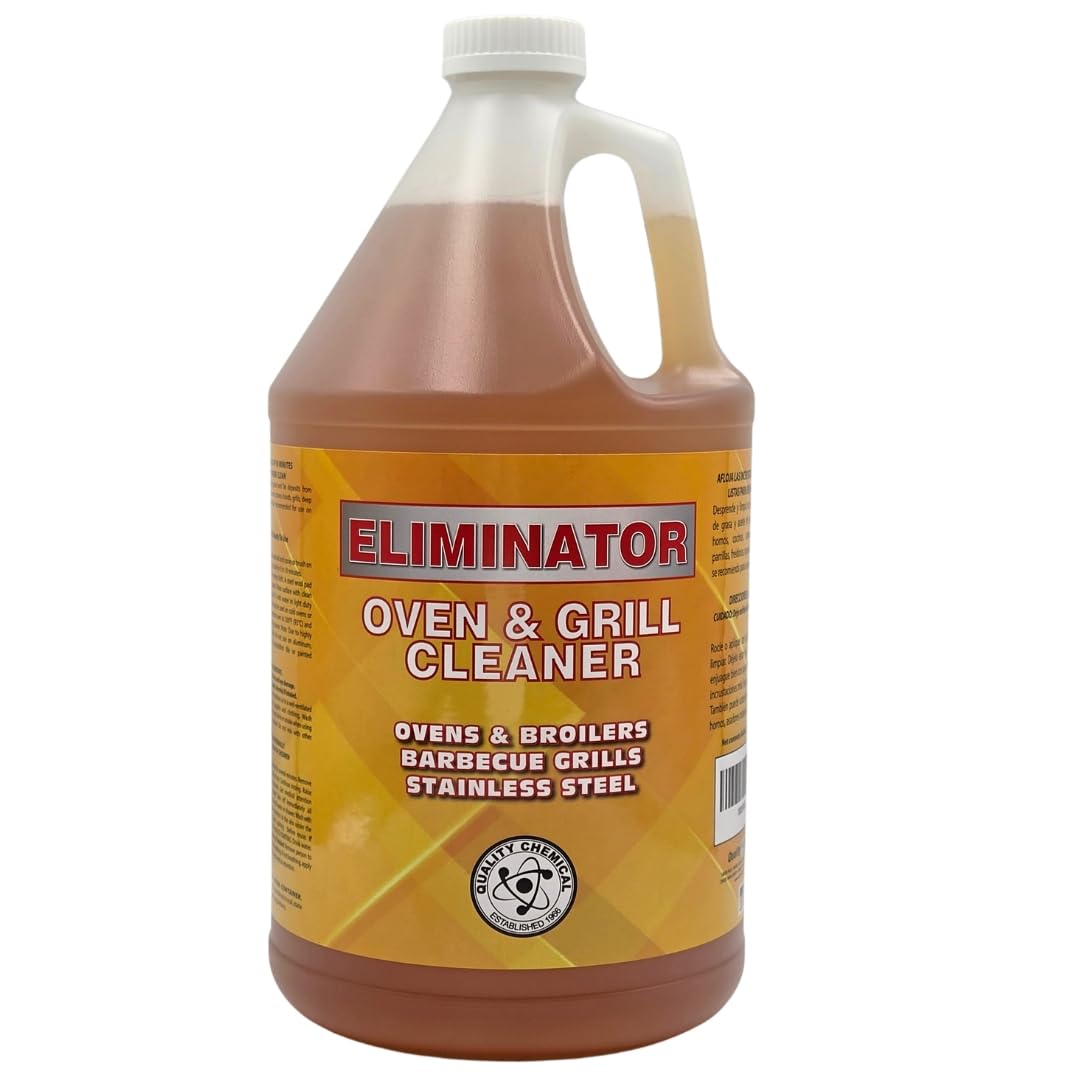
A ready-to-spray gallon aimed squarely at ovens, grills, and hoods.
This one is not a shop-floor degreaser — it is a kitchen and commercial-oven specialist. The 128 fl oz (1 gallon) bottle is ready to use: spray or brush it on undiluted, let it soak five to ten minutes, then wipe and rinse. It targets baked-on grease on ovens, broilers, barbecue grills, hoods, stoves, deep fryers, burners, and grates, and it works just as well for light jobs diluted 1:1 with water. On the greasiest grates, full strength is the way.
Size is note if you are comparing jugs. This bottle measures 6 x 6 x 12 inches, which is compact next to the Oil Eater five-gallon pail at 12 x 12 x 12 inches — so it tucks onto a shelf instead of owning floor space. The gel-like cling is what makes it work on vertical oven walls where a thin spray would run off before the grease loosens. For restaurants and heavy home cooks, it is the difference between a scrub session and a simple wipe-down.
Now the honest part. This is a strong chemical, and the label is blunt about it: it can cause skin burns, so thick rubber gloves are non-negotiable, and it is not for aluminum, copper, galvanized metal, tile, or painted surfaces. Aluminum pans come out dingy gray. It also calls for preheating the oven to 200 F, switching it off, and applying once it has cooled, plus a good rinse to avoid a white residue. Treat it with respect and it delivers.
The standout: a ready-to-use gallon built for baked-on fat, with a five-to-ten-minute soak that loosens carbon crust off grates and oven walls.
Know before you spray: strong caustic chemistry that wants gloves and careful surface checks — skip it on aluminum and painted steel.
This is the one for: commercial kitchens, restaurant hoods, and home cooks facing a blackened grill or oven.
Steer clear if: most of what you clean is aluminum cookware or painted appliances — the chemistry will tarnish them.
4. Malco Red Thunder Automotive Degreaser
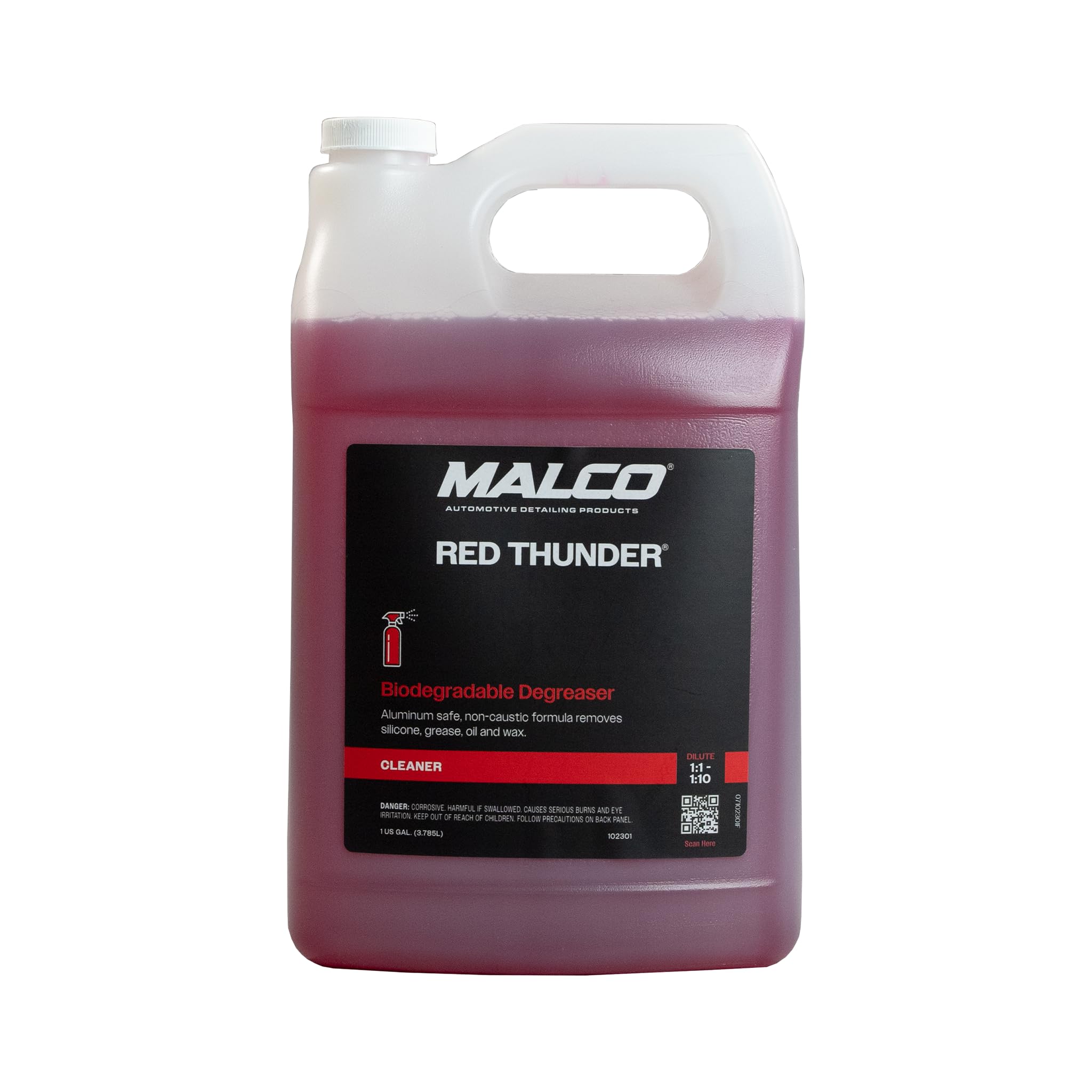
A diluted one-gallon concentrate that turns road grime into a rinse.
For anyone maintaining a daily driver or a fleet, this is a solid middle ground: a 128 fl oz (1 gallon) concentrate that cuts through engine buildup, dirty wheels, and grime-covered tires, and is also safe to dilute for interior surfaces like carpets, upholstery, vinyl, and plastic. That range means one bottle does exterior and interior work. The formula is phosphate-free and biodegradable, with a residue-free finish that is friendly to aluminum parts, so you are not chasing a film after the rinse.
Against the group, the chemistry is dialed to be strong without being reckless. Buyers dilute it 1:1 and report it cleaned months of grime off truck inner fender wells, wheels, and tires with light scrubbing and a rinse, and it doubles as a genuinely effective bug remover — a small detail that saves a lot of elbow work after a long highway drive. It also stands up to big-picture comparisons: where the Zep Morado five-gallon jug is blended for heavy fleet soil and industrial floors, this one is aimed at the car in front of you, inside and out.
The one quirk is purely cosmetic. Several owners notice it can leave a faint red haze on shop concrete where it drips and dries, so keep a towel under the pans if your floor matters. It does not affect the cleaning result, and the formula rinses completely clean off the vehicle itself. Minor blemish, real performance.
Why detailers keep a jug around
- Multi-purpose on engines, wheels, tires, carpets, and vinyl
- Dilutes 1:1 for lighter jobs without losing bite
- Residue-free and aluminum-safe finish
- Biodegradable and phosphate-free
- Doubles as an effective bug remover
Small things to plan for
- Slight red haze can linger on shop concrete
- Gallon jug needs a mixing container for dilution
- Full-strength use still warrants gloves
Best for: car owners, detailers, and small fleets who want one bottle for engine bays, wheels, tires, and interiors.
skip it if: you want a single ready-to-use spray with no mixing — this is a dilute-it-yourself concentrate.
5. GUNK EBGEL-12PK Engine Degreaser Gel
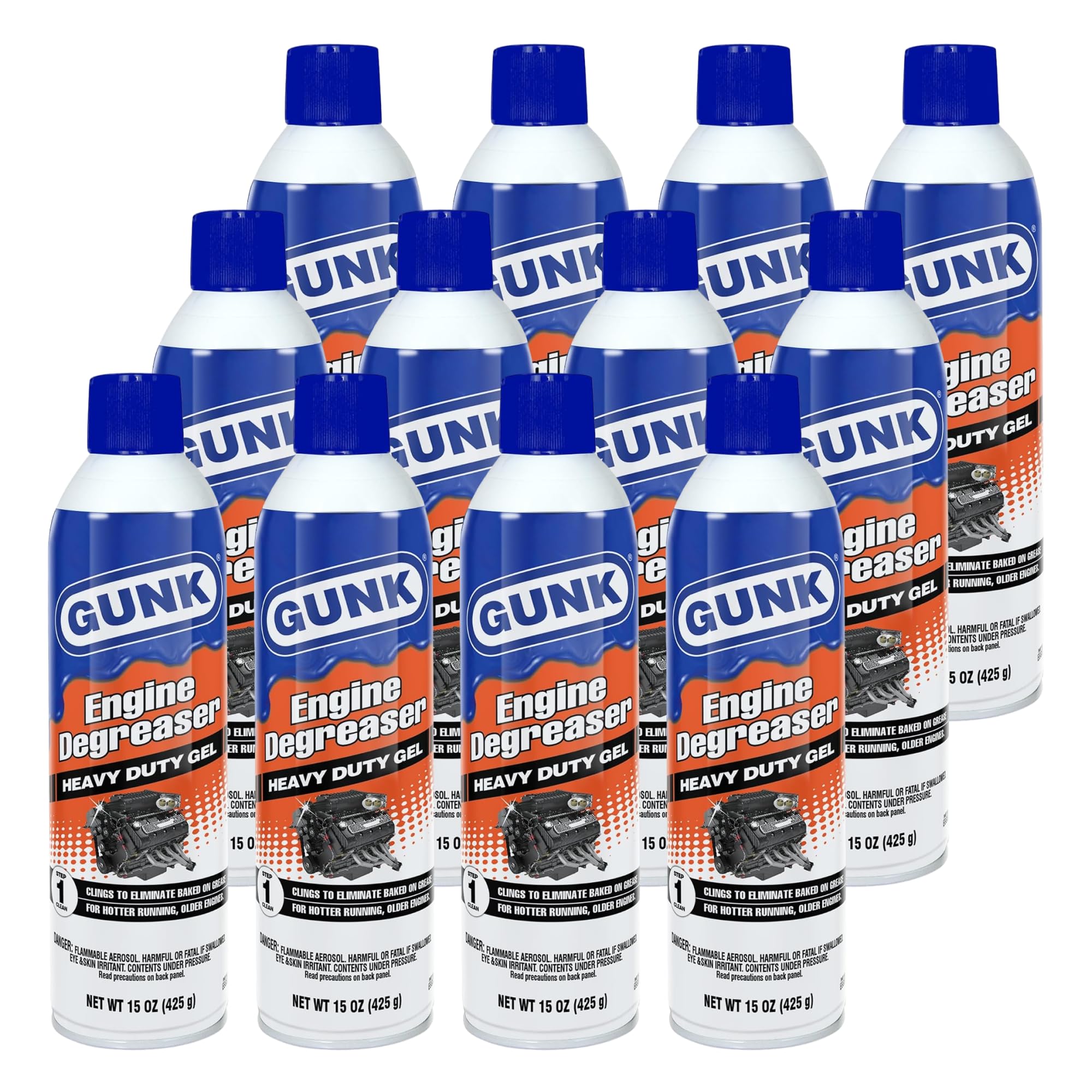
A clingy gel spray that stays put on greasy engine surfaces instead of running off.
Gel degreasers solve one specific problem that thin sprays cannot: staying where you put them. This formula clings to the engine surface while it works instead of dripping off onto the driveway, which is what makes it useful for greasy vertical surfaces and tight under-hood work. It is designed for dirty, greasy engines, and it is safe on most under-hood rubber, plastic, and paint. It ships as a case of twelve 15 oz cans rather than a jug, so you get a supply of aerosol-style gel that is ready whenever a job rolls in.
GUNK has been in this category for a long time — the brand is a family-owned company out of Charlotte, NC, and its products have been on the market for more than 75 years. Buyers confirm it works, though the practical steps are firm: it requires a water hose rinse to finish the job, and you must protect electrical components and spark plug tubes before you spray. Cover those, spray, let the gel cling, rinse, done.
Fair warning on the formula. Some owners find this gel weaker than the original GUNK and the foaming version, and one notes it can leave a white residue behind after rinsing. If you are used to the classic liquid GUNK, manage that expectation before ordering a full case. For a garage that wants a grab-and-go job can, the packaging convenience is the real draw.
The clever bit: a thick gel texture that clings to engine surfaces instead of running off, which keeps the cleaner working on the grime rather than the driveway.
The honest caveat: this gel formula isn’t the strongest GUNK option for heavily baked-on buildup, and it needs a hose rinse and protected electrical parts to finish a job.
Pick this if: you want ready-to-spray cans for engine bays, vertical panels, and anyone who prefers a job-ready aerosol over mixing a jug.
Not your can if: you expect a fine mist — this clings thick, so it takes a hose rinse and careful prep around wiring.
6. Zep Morado Purple Concentrated Super Cleaner

A five-gallon alkaline concentrate built for fleets, floors, and filthy industrial soil.
When the job is a shop floor, a parts washer, or a soot-covered wall at scale, this is the jug that matches it. It is a concentrated alkaline cleaner and degreaser in a 640 fl oz (5 gallon) container, and the point of buying concentrated is that you cut it yourself: 1 part product to 8 to 100 parts water for general industrial work, or 1 part to 8 parts hot water for smoke and fire damage. That range is why one five-gallon unit covers a lot of surface. The formula is phosphate-free with biodegradable detergents, and it is aimed at airport terminals, bus stations, auto repair shops, car washes, and manufacturing plants.
The reasons owners trust it are practical. It cuts oils and carbonaceous soils that ordinary cleaners leave behind, and shops report it is far more powerful than everyday purple cleaners, which is why it shows up in heat-assisted ultrasonic cleaning of auto parts, gear oil, and engine sludge. It pulls grease off steel, brass, and plastic without complaint. On a serious industrial job, that raw strength is the whole reason to buy it.
Now the serious caveat, and it is a big one: this is a caustic working chemical, and the label and reviewers are clear that it will damage skin at full strength, so full PPE — heavy gloves, eye protection, and ventilation — is mandatory, not optional. It also permanently tarnishes aluminum and can bleach lighter enamels, so verify your surface before spraying. Used with respect, it is one of the hardest-working degreasers here; used casually, it bites back.
The case for it
- Five-gallon concentrate dilutes from 1:8 up to 1:100
- Strong enough for carbon, soot, and gear-oil sludge
- Phosphate-free with biodegradable detergents
- Built for floors, walls, and fleet-scale jobs
- Dilutes up to 1:100, so one five-gallon pail covers a lot of industrial soil
What you must respect
- Caustic — full-strength contact can damage skin
- Aluminum and clear coats must be kept clear of it
- Requires dilution and PPE, not just a squirt and a wipe
Aimed at: fleet garages, industrial facilities, and shops that dilute a concentrate across floors, walls, and parts washers.
Handle with care: full-strength caustic contact is a genuine skin hazard, so this is a gloved, ventilated, aluminum-avoiding product.
7. CRC Industries 14148 Ozzy Juice Degreasing Solution

A water-based, non-flammable solution made for the CRC SmartWasher system.
This is the specialist in the group. Rather than a general-purpose jug, it is an aqueous-based heavy-duty degreasing solution engineered for the CRC SmartWasher, a bioremediating parts washing system that keeps cleaning without constant maintenance. The formula is pH neutral, non-corrosive, non-flammable, and non-toxic, which is the big distinction here: it sidesteps the fumes and fire risk that come with solvent cleaners and removes the need for hazardous waste disposal. If a parts washer is your setup and you want it to run clean and safe, this is the fluid it was built to use.
The environmental credentials back up that pitch. It is biodegradable with minimal VOCs (volatile organic compounds that pollute indoor air), it holds EPA Safer Choice certification, and it is recognized as a Clean Air Solvent by the South Coast Air Quality Management District — the kind of recognition that matters for shops under air-quality rules. It comes in a 640 fl oz (5 gallon) container with an orange scent, and it cleans aluminum well, which is a real advantage since aluminum is the surface most degreasers punish.
Two things to weigh. First, this is engineered for the SmartWasher system, so it belongs in that ecosystem rather than being an all-purpose shop jug you dilute for anything. Second, the recurring theme in the reviews is cost — buyers describe it as a little pricey even while confirming it works, and a 5-gallon pail runs high in this lineup. You are paying for a non-hazardous, disposal-free fluid that keeps a specific machine running honestly; if that is your setup, the value is real.
Where it stands out: a pH-neutral, non-flammable, non-toxic formula that cleans aluminum and eliminates hazardous waste disposal — a different risk profile entirely from solvent degreasers.
The trade-off: it is a premium-priced fluid engineered for the SmartWasher system, not a universal concentrate for every job on the floor.
Right for: any shop running a CRC SmartWasher bioremediating parts washer that wants safe, non-hazardous, disposal-free cleaning fluid.
Overkill if: you just need an all-purpose degreaser jug for the bench — a general concentrate covers that for less.
Know the Specs
Dilution Ratio
A dilution ratio tells you how much water to add to one part of concentrate. A 1:10 mix means one cup of product to ten cups of water; a 1:1 mix means equal parts. Ratios are the lever on your wallet and your skin: strong mixes cut heavy grime but waste product and demand better gloves, while light mixes handle routine dirt safely. Concentrates that span a wide ratio range — the kind that go from 1:1 all the way to 1:20 — stretch further because you only mix as strong as the job needs.
Ready-to-Use vs Concentrate
A ready-to-use product arrives pre-mixed: shake, spray, wait, wipe. It is the fastest and most simple to use choice for ovens, grills, and hoods, since there is no measuring and no risk of mixing it wrong. A concentrate ships thick and needs water added before use, which is more work up front but more product per container. If you are cleaning one grill twice a year, ready-to-use wins. If you are filling a parts washer or a sprayer every week, concentrate is the value play.
Common Questions
Can I use a heavy-duty industrial degreaser on aluminum?
What does dilution ratio mean and how do I mix it right?
Will a strong degreaser damage car paint or clear coat?
Do I need gloves and eye protection with these degreasers?
Which degreaser is best for cleaning oven and grill grates?
Can a degreaser be used in a parts washer or ultrasonic cleaner?
What is the difference between a concentrate and a ready-to-use degreaser?
Are these degreasers biodegradable and safe to dispose of?
How long does a five-gallon degreaser concentrate last?
Is a pH-neutral degreaser weaker than a caustic one?
The Bottom Line
For most people, the heavy duty industrial degreaser winner is the Oil Eater AOD5G35438 Original 5 Gallon because it pairs a five-gallon concentrate with a water-based, low-fume formula that keeps a parts washer running job after job. It has the highest owner satisfaction and the longest track record of shop use in this lineup.
If you want one jug that adapts to wheels, carpets, and engines by changing the mix, grab the Auto Magic Heavy-Duty Concentrated Engine Degreaser. And for cleaning restaurant ovens, grills, and hoods, the Quality Chemical Eliminator Oven & Grill Cleaner is the one to reach for. Keep a full five-gallon concentrate on hand so you never run out mid-job.
How we choose
We do not accept paid placement. Every pick is matched to a real buyer and a real use-case; we do not hands-on test units.
Sources
Specifications: manufacturer listings and product documentation. Review insights: verified customer reviews, as of October 2026. Pricing: not shown on this page (it changes often); check the current price via the retailer link.
As an Amazon Associate, Aappliancez earns from qualifying purchases. This does not affect which products we feature.