Disclosure: Some links in this post are affiliate links. As an Amazon Associate I earn from qualifying purchases, at no extra cost to you. Learn more
Specs are compiled from manufacturer listings and verified buyer reviews and can change over time — please confirm the key details on the product page before buying.
If you want a heart rate number you can actually train by, the chest strap is still the honest answer, and the Garmin HRM 600 is the one worth starting with. Wrist sensors guess at your pulse through skin and motion, while a strap reads the electrical signal your heart produces directly. That difference matters most when you are sprinting, climbing, or doing intervals where your wrist watch lags behind your actual effort. This guide covers eight real options, from straps that pair with the watch you already own to full standalone monitors that run without a phone.
This guide is built by comparing the manufacturers’ published specifications and the patterns across verified customer reviews, so you get each pick’s real strengths and trade-offs instead of marketing spin.
Some options here are strap-only sensors that feed your existing watch. Others are complete units with their own screen. Your choice depends on whether you already own a compatible watch and how much data you want. Here is how to pick the best heart rate watch with chest strap for the way you train.
Top Picks

How To Choose The Best Heart Rate Watch With Chest Strap
The first thing to settle is whether you are buying a strap alone or a complete watch-and-strap kit. A strap-only sensor like the Garmin HRM 600 or the Polar H10 sends your pulse to a watch, phone, or gym machine you already own. A standalone unit like the EZON T007 puts the receiver on your wrist so you can read your heart rate with no phone in sight. Decide that first, because it cuts the list in half.
Strap-only sensor or a full watch unit
A strap-only sensor is the leanest option if you already wear a compatible smartwatch. It adds nothing to your wrist and simply feeds better heart rate data into the device you train with. The catch is that it does nothing on its own — no screen, no numbers, no feedback until it pairs. A full watch unit puts the display right on your arm and often works with zero setup, but you are wearing a second watch alongside whatever else is on your wrist.
Wireless protocols: ANT+ and Bluetooth
These are the two radio languages your strap uses to talk to your gear. ANT+ is the older standard most gym equipment and bike computers speak, while Bluetooth is what phones and most smartwatches use. A strap that carries both — the Polar H10 does — will pair with nearly anything you own. If you only see one protocol listed, check that your watch or treadmill supports it before you buy.
Battery: coin cell versus rechargeable
A coin cell is the small button battery you swap out when it dies, and it typically lasts months between changes. A rechargeable strap needs a cable now and then but never leaves you hunting for a replacement cell. The trade-off is real: rechargeable units need charging discipline, while coin cells are forget-and-go but can be fiddly to swap if the compartment is small.
Comfort and strap fit
You will wear this against bare skin, often sweating, sometimes for hours. A strap that slides, chafes, or needs constant tugging will ruin a long session faster than any spec sheet can fix. Look for a machine-washable band and a closure you can adjust without stopping. Women should note that some units are purpose-built to clip onto a sports bra rather than wrap around the ribcage, which changes the comfort equation entirely.
Side-by-Side Comparison
| Model | Best For | Battery Life | Wireless | Weight | Amazon |
|---|---|---|---|---|---|
| Garmin HRM 600★ Best Overall | Data-hungry runners | Up to 2 months | Bluetooth / ANT+ | 2.2 oz | Amazon |
| Polar H10Most Compatible | Broadest compatibility | 400 hours | Bluetooth / ANT+ / 5 kHz | 2.82 oz | Amazon |
| WHOOP 5.0All-Day Tracker | All-day recovery tracking | 14+ days | Bluetooth | 4 oz | Amazon |
| Garmin HRM-Fit | Women who dislike chest straps | Up to 1 year | Bluetooth / ANT+ | 1.9 oz | Amazon |
| Myzone Switch | Gym class points chasing | 36 hours | Bluetooth 4.0 / ANT+ | 0.19 kg | Amazon |
| EZON T007 | Phone-free simplicity | 12 months | Coded transmission | 3.84 oz | Amazon |
| FITCENT CL813 | Standalone strap-and-bracelet kit | — | Bluetooth / ANT+ / 5.3 kHz | — | Amazon |
| Bestinn H32 Pro | Budget wrist-only option | — | Bluetooth | — | Amazon |
Detailed Reviews
1. Garmin HRM 600
Our pick — 4.5+★ from 1,000+ verified ratings; the strongest balance of quality and price.
The strap that turns every run into a data sheet you can read
If you train with numbers and want to know exactly how your body is moving, this is the strap to build around. The Garmin HRM 600 sends real-time heart rate and HRV (heart rate variability, the tiny timing gaps between beats that show how recovered you are) straight to a compatible Garmin watch or cycling computer. Beyond your pulse, it captures running dynamics — stride length, vertical oscillation, and ground contact time balance — which tell you how much you bounce and how evenly you land. The rechargeable battery runs up to 2 months between charges. What wins people over most is build quality, followed closely by accuracy.
The rechargeable battery is the HRM 600’s quiet advantage over coin-cell straps. It replaces the coin cells you used to dig out of older straps, and the payoff is real: as owners put it, “After ~3 months at 10+ hours/week, battery at 39%.” At 2.2 ounces, the HRM 600 sits unnoticed under a shirt. It even records workouts on its own when you can’t wear a watch — team sports, swim sessions — then syncs heart rate, calories, speed, and distance into the Garmin Connect app afterward. For treadmill and indoor track runs, it feeds pace and distance to your watch so your indoor miles count.
The catch is smaller than you’d think for dedicated athletes, but it’s there. Bluetooth pairing has been finicky for some setups, and disconnecting the module to charge can take a couple of tries. The M–XL strap fits roughly a 33-inch chest, so measure before you pick a size — the sizing guide is not generous. And if you already wear a Garmin watch for every session, you won’t get route tracking from this alone; there’s no GPS inside.
What earns its keep
- Rechargeable battery runs up to 2 months — buyers report 39% left after three months of 10+ hour weeks
- Running dynamics (stride length, vertical oscillation, ground contact balance) feed a compatible Garmin watch in real time
- Stores workouts when you can’t wear a watch, then syncs to Garmin Connect
- Machine-washable strap, 2.2 oz, available in XS–S and M–XL
Where it asks patience
- Bluetooth pairing quirks — some setups need a watch restart to reconnect
- M–XL fits about a 33-inch chest, so sizing needs a tape measure
- No GPS inside, so route tracking still needs your watch
Reach for this if: you already train with a Garmin watch and want the deepest running-form data of any strap here.
Measure first if: you’re between strap sizes on the M–XL — the band runs snug.
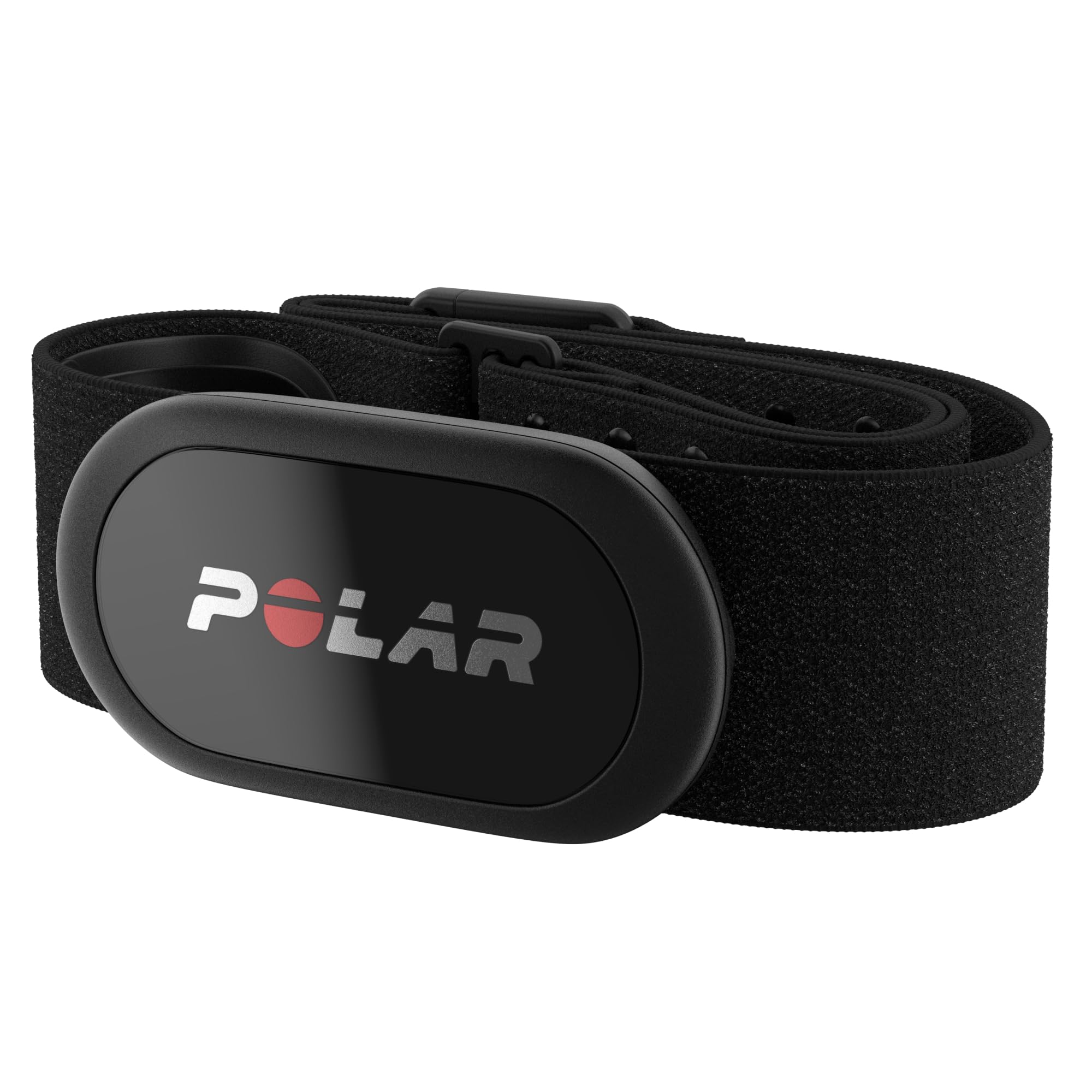
2. Polar H10 Heart Rate Monitor Chest Strap
The strap that talks to nearly everything you already own
The H10’s party piece is how many radio languages it speaks at once. It carries Bluetooth, ANT+, and the older 5 kHz analog signal, and it can run two Bluetooth connections simultaneously alongside ANT+. That means your watch, your phone, and your gym machine can all be listening at the same time without you re-pairing anything. It weighs 2.82 ounces, runs on a CR2025 coin cell rated at 400 hours, and is fully waterproof with internal memory for a session.
Accuracy is where it earns its reputation. The Polar Pro strap uses improved electrodes and silicone dots to stay put and stay interference-free, and the latch is a simple snap. Owners say it works without the water or gel older straps needed, and it shows zero when the signal drops rather than freezing on a stale number the way some Garmin straps do. It beats the Garmin HRM Dual on comfort and reliability in direct comparisons, and it supports third-party HRV and ECG apps that the Garmin doesn’t.
Here is the honest follow-up. The wide-band strap can degrade after months of hard wear, sending erratic readings until you swap to a fresh band — but a cheap replacement restores it, so don’t bin the whole unit. A few cyclists found pairing with specific gym machines unreliable, usually the machine’s fault rather than the strap’s. And when the coin cell finally drains, you’ll be buying a CR2025, not charging a cable.
The compatibility win: three signal types at once means this strap follows you from watch to bike computer to gym rower without a re-pair.
The trade-off: the Pro strap does wear out over months, so budget for a replacement band — the sensor itself keeps going.
Best if you: move between a watch, a phone, and cardio machines and want one strap that speaks to all of them.
Look at the HRM 600 if: you train purely with Garmin gear and want running-form metrics the H10 doesn’t offer.
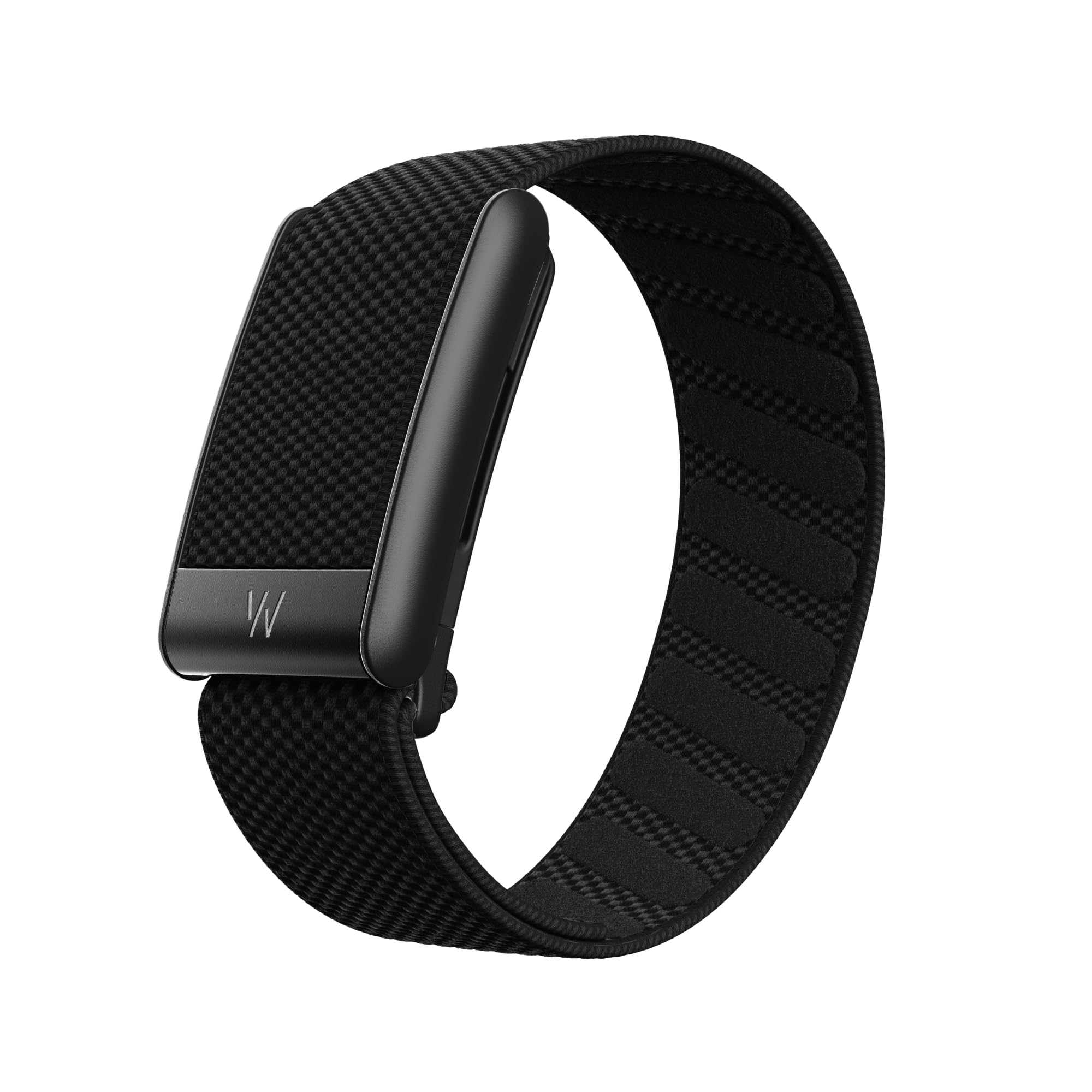
3. WHOOP 5.0 Screenless Fitness Wearable
No screen, no strap, no looking down — just recovery data all day
WHOOP takes a different path from every strap here: it has no display and no chest band, and it lives on your wrist around the clock. What you’re buying is a 12-month WHOOP Peak membership with the 5.0 device, a SuperKnit band, and a Wireless PowerPack included. The device tracks heart rate, resting heart rate, HRV, respiratory rate, blood oxygen, and skin temperature against your personal baseline. WHOOP rates the 5.0 at 99%+ accuracy for heart rate and HRV. Battery life runs 14+ days, and the waterproof PowerPack lets you charge on your wrist without stopping the tracking.
The draw here is the sleep and recovery picture. WHOOP breaks down REM, deep, and light sleep, sleep need, sleep debt, and efficiency, then feeds your training strain and recovery back to you. What owners value most is the overall build quality and the depth of health tracking. One owner sums up the recovery read plainly: the app is dense but learnable in a few days, and the band is comfortable enough to forget during sleep. The IP68 PowerPack survives submersion up to 10 meters for 2 hours, so a sweaty session or a shower won’t interrupt it.
The honest trade-off is the wrist you are buying. Without a chest strap, this is a wrist sensor — and wrist sensors can lag during hard intervals, which is exactly where a chest strap shines. The membership model also matters: you’re paying for a 12-month plan, and the app’s accuracy and ease of use draw mixed reviews. A few owners mention a clasp failure when switching wrists, so treat the band gently.
Who this is for: anyone who wants the recovery-and-sleep picture around the clock, not just heart rate during a workout.
The honest limit: it’s wrist-based, so it isn’t the strap-style sensor you’d pick for max-effort interval accuracy.
Reach for this if: sleep and recovery insight matter as much to you as the heart rate number during a session.
skip it if: you specifically need a chest strap for precise interval training.
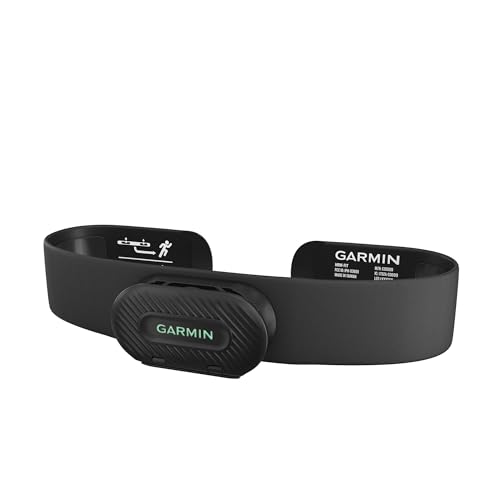
4. Garmin HRM-Fit Heart Rate Monitor Purpose Built for Women
The strap answer for anyone who hates chest straps
Some people never get comfortable with a band circling their ribcage. The HRM-Fit solves that by clipping onto a medium- or high-support sports bra instead, so nothing squeezes your breathing. It weighs 1.9 ounces and runs up to a year on its battery — the longest here by a wide margin. It sends real-time heart rate and HRV to compatible Garmin devices, then adds running dynamics like vertical oscillation, ground contact time, stride length, and vertical ratio when you pair it with a compatible watch. It even computes pace and distance for treadmill or indoor track workouts.
The bra clip is the whole point, and with a snug, high-support bra it works beautifully. Owners describe it as a major improvement over a full chest strap that was hard to tighten without restricting breathing. One long-time Garmin HRM user replaced a unit that had lasted 8+ years and wished they’d switched sooner. It pairs easily with a Forerunner and clips onto bras like an Oiselle Flyout without issue. As one owner puts it about the comfort: “Give yourself the gift of comfort.”
Now the part that decides it for you: the clip placement makes or breaks it. The band clips on, and where it clips onto the bra is exactly where a few customers note rubbing — one runner had raw skin after a long run, another noted chafing within 5 miles. This is a fit-sensitive product, not a universal one. Garmin explicitly advises against longline, front-zip, or light-support bras, so the bra you own determines whether this is brilliant or uncomfortable. Measure your bra fit honestly before committing.
The case for the clip
- Clips onto a sports bra instead of wrapping the ribcage — no breathing restriction
- Up to 1 year of battery on a single cell, the longest in this list
- Delivers real-time heart rate and HRV plus running dynamics to compatible Garmin devices
- Light at 1.9 oz and easy to wash
Where the fit bites
- Chafing at the clip point is the recurring gripe — long runs are where it shows
- Not recommended for longline, front-zip, or light-support bras
- Needs a snug, well-fitting bra to hold the sensor properly
Best for: bra wearers who’ve given up on rib-circling straps and still want Garmin-grade data.
Think twice if: your sports bras are front-zip or light-support — the clip needs a stable bra to sit right.
5. Myzone Switch Heart Rate Monitor

One sensor that moves from chest to wrist to arm without complaint
Myzone built this for gym-class culture, where effort turns into points. The MZ-Switch comes with adjustable straps for your chest, wrist, and arm, and it’s waterproof to 10 meters. Myzone rates the chest strap at 99.4% accuracy and the wrist/arm PPG sensor at 95%. It connects over Bluetooth 4.0 and ANT+ to your phone or cardio machine, and its built-in memory stores up to 36 hours of exercise so you can train phone-free. The Myzone app turns your efforts into MEPs, or Myzone Effort Points, so you can compete with friends.
Owners stay with the MZ-Switch for its chest, wrist, and arm versatility. Reviewers point out lasting six years on the chest-strap setup with one strap replacement along the way, and the workout-monitoring side is what they value most. Wearing it on the wrist during tennis, glancing down to check your zone when you’re out of breath, is exactly the use case it’s built for. When the app isn’t around, it stores the workout and syncs later — no lost sessions.
The honest picture is a battery-and-connectivity split. Battery life of 36 hours means you’ll charge it far more often than the coin-cell straps, and some users find it drains faster than expected. Connectivity draws mixed feedback too — a handful struggle to sync with certain gym machines. On accuracy, most find it reliable, but the reviews split between very accurate and not reading properly. It’s a device that rewards you for staying in its ecosystem and keeping the firmware current.
The Myzone difference: chest, wrist, and arm in one kit, with 36 hours of memory so a phone-free session still counts.
What to plan for: the 36-hour battery wants regular charging, and pairing with some gym machines can need a second attempt.
Pick this if: you chase effort points and want one sensor that follows you from chest to wrist.
Choose the Polar H10 instead if: you want set-and-forget coin-cell battery and the widest pairing record.
6. EZON T007 Heart Rate Monitor and Chest Strap

A watch and strap pair that runs with zero apps and zero phone
If you want your heart rate on your wrist with no Bluetooth, no app, and no pairing dance, the EZON T007 is the most direct route. The chest strap sends a coded heart rate signal to the watch — coded so it won’t pick up another runner’s strap nearby — and the watch shows it in big, readable numbers. It’s 5ATM rated, which the maker describes as 50 meters of water resistance for showers, running, and washing but not diving. It includes a stopwatch, calorie tracking tied to your personal data, and manual target heart rate zones that beep and flash when you’re out of range. A CR2032 button cell is replaceable when it runs out.
The appeal for many is the simplicity. Easy setup is what buyers praise most here, and the large display makes it easy to read mid-climb. You switch between heart rate, calories, stopwatch, and time with simple buttons — no menu diving. For cycling, indoor training, or cross-country skiing, seeing live heart rate to pace your effort is a real upgrade over nothing. The steel bezel gives it a durability that a plasticky fitness band doesn’t have.
Now the honest part: reliability is the split. Some units perform perfectly for months, while others stop after weeks — readings jump from 50 bpm on a climb to 95 on cooldown, or the display goes blank. Functionality and accuracy draw mixed reviews overall, so this is a unit that either works for you or doesn’t. It has no data storage and no max or average heart rate records, so you won’t review a session afterward. Buy it for in-the-moment feedback, not for record keeping.
The frictionless pick: big numbers, a coded strap, and a target-zone alarm — all with no phone or app anywhere in the chain.
The gamble: reliability varies unit to unit, and there’s no data storage to review after a session.
Reach for this if: you want live heart rate on your wrist and refuse to manage an app or a pair of gadgets.
Look elsewhere if: you need to review max or average heart rate after a workout — this doesn’t keep it.
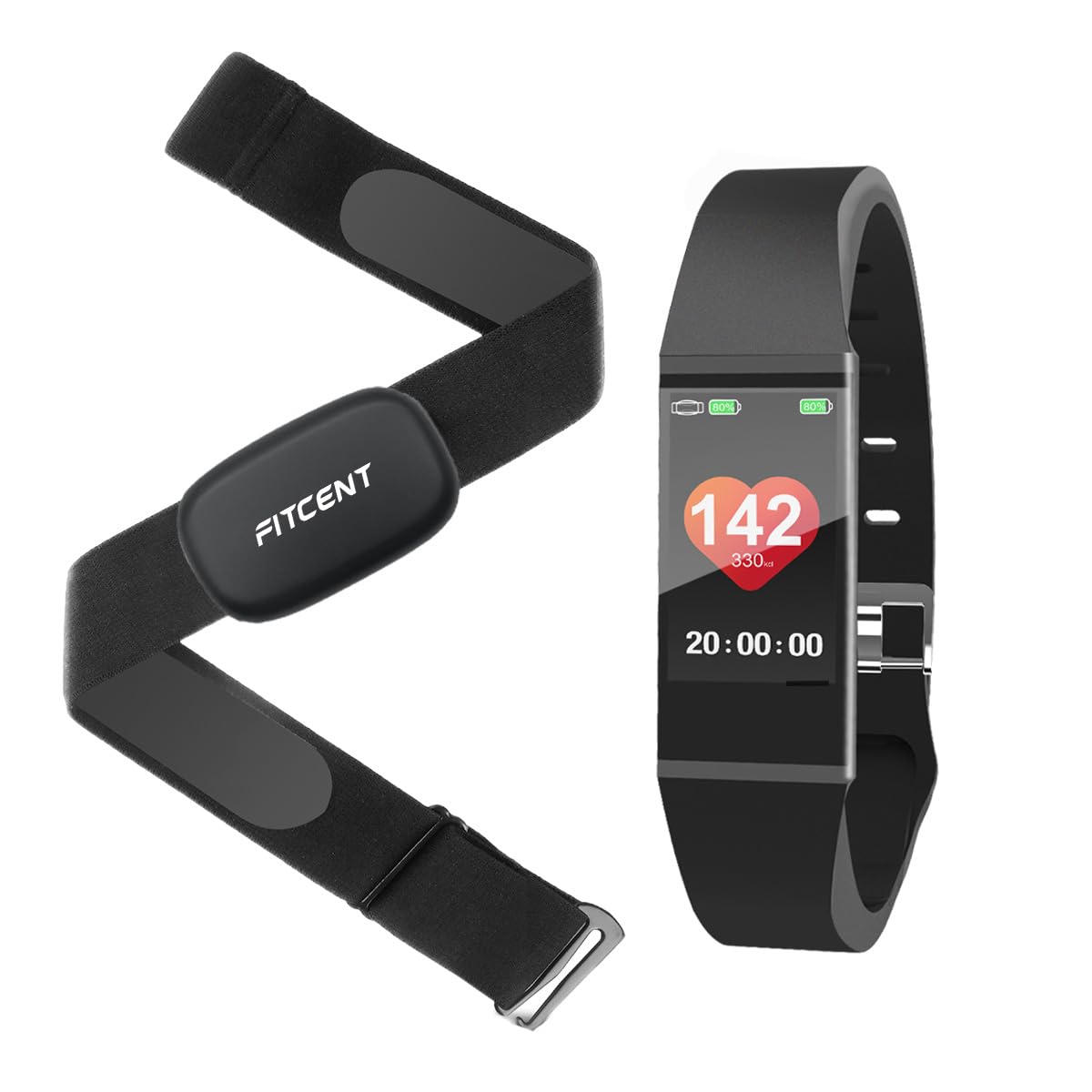
7. FITCENT Heart Rate Monitor Chest Strap Sports Bracelet
A chest strap and its own display, bundled for less
The FITCENT splits the difference between a bare sensor and a full smartwatch. You get a chest strap plus a small sports bracelet with a 1.2-inch display, so you can glance at your heart rate on your wrist or send it out to another device. The strap talks over Bluetooth, ANT+, and 5.3 kHz, which opens up a long list of fitness apps and gym gear — the maker lists Wahoo Fitness, Strava, Polar Beat, CooSporide, Elite HRV, and bike computers among the compatible apps. The silicone strap has a 1-year warranty. What buyers like most is how the whole thing functions, with accuracy a close second.
There’s a real convenience in the included display. You set a heart rate alert value and the bracelet buzzes to warn you when you drift out of range — handy for high-intensity intervals where you don’t want to keep checking a phone. It tracks workout time and calories and shows battery level. You can run it standalone without a phone, or pair with the app for a fuller picture over time. For core cardio machine work with an app like Polar Beat, it does the job.
The compromises are what you’d expect at this tier. Calorie counts can run high, the chest strap has a tendency to slide down until you tighten it, and the single power button is sensitive enough to kick menus around mid-exercise. Charging uses a two-prong system that needs exact alignment — no USB-C here. If you want a fuss-free accurate monitor and nothing more, it delivers; if you want refinement, expect to work around it.
Why it makes sense
- Strap plus a 1.2-inch bracelet display in one kit
- Bluetooth, ANT+, and 5.3 kHz open up 200+ apps and gym equipment
- Vibration alert when you leave your heart rate zone
- Silicone strap with a 1-year warranty
Where it cuts corners
- Two-prong charging needs exact alignment, no USB-C
- Single sensitive button can interrupt menus mid-workout
- Chest strap may slide down until you tighten the band
Best for: budget-conscious buyers who want a strap and a wrist display without a big-brand price.
Look at the Polar H10 if: you’d trade the bracelet for flawless pairing and a coin cell that lasts 400 hours.
8. Bestinn H32 Pro Smart Watch Fitness Tracker

A wrist-only tracker for daily steps, not strapped accuracy
Let’s be clear about what this is: the Bestinn H32 Pro is a wrist fitness tracker, not a chest-strap grade sensor. It has a 1.58-inch touchscreen, tracks 24/7 heart rate, blood oxygen, sleep, and 120+ sports modes, and it’s IP68 waterproof. It handles calls, messages, weather, drinking-water and sedentary reminders, and more than 150 watch faces you can customize. It works with both iOS and Android phones. For someone who wants a small daily-use watch on a small wrist, it fits — shoppers say it isn’t too big. Its screen is easy to read and the whole thing is easy to understand.
Functionality is what owners praise most, and it’s genuinely capable for a budget wrist tracker. You get steps, calories, and sleep overviews in a package that sits on your arm all day. For step-count and general movement goals, it does the job. The large screen makes notifications readable at a glance, and the customizable faces let you set it up to your taste.
Here’s the honest caveat, and it’s a real one for this category. This is a wrist optical sensor, and its blood pressure and heart rate readings are not something you’d trust for training. One buyer compared it side by side with a blood pressure cuff that read 132/70 while the watch reported 107/70 — a gap that speaks for itself. Step tracking has accuracy complaints, and durability is a genuine concern, with breakage reported after a few months. Sleep tracking has failed for some. If precise heart rate for training matters, this isn’t the tool.
What it does well: a 1.58-inch touchscreen, 120+ sports modes, IP68, and all-day basics in a compact wrist package.
The real limit: its heart rate and blood pressure accuracy isn’t reliable for training, and durability is the weakest link.
Best as: a casual step-and-notification wrist tracker for someone who wants small and cheap.
Not for: anyone who needs trustworthy heart rate numbers during workouts — get a strap for that.
Know the Specs
Accuracy: why a strap beats a wrist
A wrist sensor shines light through your skin and watches for changes in blood flow, which is easily thrown off by arm movement and sweat. A chest strap reads the electrical signal your heart produces directly, so it holds steady during sprints and climbs where a wrist reading lags. That is why serious interval training leans on the strap. If you only need a general daily number, a wrist tracker is fine — but for zone training, trust the strap.
ANT+ and Bluetooth: the pairing languages
ANT+ is a low-power wireless protocol most gym cardio machines and bike computers use. Bluetooth is the common language of phones and most smartwatches. A strap that offers both can reach nearly every device you own, and some here run both at once. Check your watch’s or treadmill’s supported protocol before buying a strap that only offers one — otherwise you’ll own a sensor nothing can hear.
Battery life: coin cell versus rechargeable
A coin cell is the small button battery that keeps a strap running for months — the Polar H10’s CR2025 is rated at 400 hours. A rechargeable unit like the Garmin HRM 600 runs up to 2 months per charge. Coin cells are forget-and-go but require a replacement purchase; rechargeables need charging discipline. Neither is better — pick the one that matches your temperament.
Water resistance: IP68 and 5ATM explained
IP68 means the device survives dust and being submerged — the WHOOP PowerPack is rated IP68 up to 10 meters for 2 hours. 5ATM on the EZON means 50 meters of water resistance for showers and swimming but not diving. Neither rating means you can dive deep — they’re built for sweat, rain, and the pool, so read the rating before you take it under.
Common Questions
Will a Polar H10 chest strap pair with my Garmin watch?
Why does my chest strap show zero or drop out mid-workout?
Do I need a watch to use a chest strap?
Is a chest strap more accurate than a wrist heart rate watch?
How often do I need to replace the strap on a heart rate monitor?
Can I wear a chest strap in the pool or shower?
Does a heart rate monitor work without a phone or internet?
Is the WHOOP 5.0 the same as a chest strap?
Do women need a different heart rate monitor?
What is HRV and why does it matter?
The Bottom Line
For most people chasing real training data, the best heart rate watch with chest strap is the Garmin HRM 600. Its running dynamics, workspace-friendly 2-month rechargeable battery, and on-board workout recording give you more than a pulse — they show you how your form and effort actually move. If broad compatibility across watches, phones, and gym gear is your priority, grab the Polar H10 — it speaks Bluetooth, ANT+, and 5 kHz at once. And if a rib-circling strap feels restrictive, the bra-clip Garmin HRM-Fit is the one to reach for. Whichever you pick, insist on a strap that reads your heart’s electrical signal directly and a battery that fits your charging habits.
How we choose
We do not accept paid placement. Every pick is matched to a real buyer and a real use-case; we do not hands-on test units.
Sources
Specifications: manufacturer listings and product documentation. Review insights: verified customer reviews, as of October 2026. Pricing: not shown on this page (it changes often); check the current price via the retailer link.
As an Amazon Associate, Aappliancez earns from qualifying purchases. This does not affect which products we feature.