Disclosure: Some links in this post are affiliate links. As an Amazon Associate I earn from qualifying purchases, at no extra cost to you. Learn more
Specs are compiled from manufacturer listings and verified buyer reviews and can change over time — please confirm the key details on the product page before buying.
Restaurants, family gatherings, church halls, a car full of grandchildren — the places where you most want to hear are also the places where everything turns to mush. The fix is rarely more volume. It is a hearing aid fitted to your own audiogram, with a dedicated speech-in-noise program for crowded rooms. This guide separates the aids with real speech-in-noise programs from the amplifiers that just raise the whole room.
This guide is built by comparing the manufacturers’ published specifications and the patterns across verified customer reviews, so you get each pick’s real strengths and trade-offs instead of marketing spin.
You will see where domes, self-fitting apps, and sanitizing cases fit into the picture, and which device to grab first when the room gets loud. Below is a plain-English shortlist of the best hearing aids for noisy environments.
Top Picks


How To Choose The Best Hearing Aids for Noisy Environments
Start with the honest distinction: a hearing aid is set up around your hearing loss, while an amplifier just makes the whole room louder. In a quiet kitchen, either can work. In a busy diner, only the first approach gives you a fighting chance, because you need the background held down while voices stay up.
Look for a noise or environment program, not just a volume wheel
A setting labeled Restaurant, Conversation, or World Volume does the heavy lifting in a crowd. That mode is where the device decides how much of the clatter to tame. Plain volume-only controls tend to raise the dishes and the chatter along with the voice across the table.
Decide how much setup you want to do yourself
Self-fitting models walk you through an in-app hearing test and then shape the sound to your results. That is a big advantage in noise, because the tuning is yours. The catch is that you have to run the test and adjust. A dial or a button is simpler — three volume steps, a frequency wheel — but it cannot tailor itself to you.
Match the dome to your ears — this is where comfort and feedback live
Vented domes let air into the ear and keep feedback and pressure down; closed domes block more of the canal and push more sound in. Both are valid, and most devices ship with several sizes in the box. A dome that is too big presses on the canal. A dome that is too small leaks sound and squeals.
Side-by-Side Comparison
| Model | Best For | Environments / Control | Feedback & Fit | Power | Amazon |
|---|---|---|---|---|---|
| Phonak Vented 4.0 Dome Medium★ Best Overall | Owners already running Phonak Audeo Marvel/Paradise/Lumity | Vented (closed/bass/occluded) domes | Small air holes, 9mm base | — | Amazon |
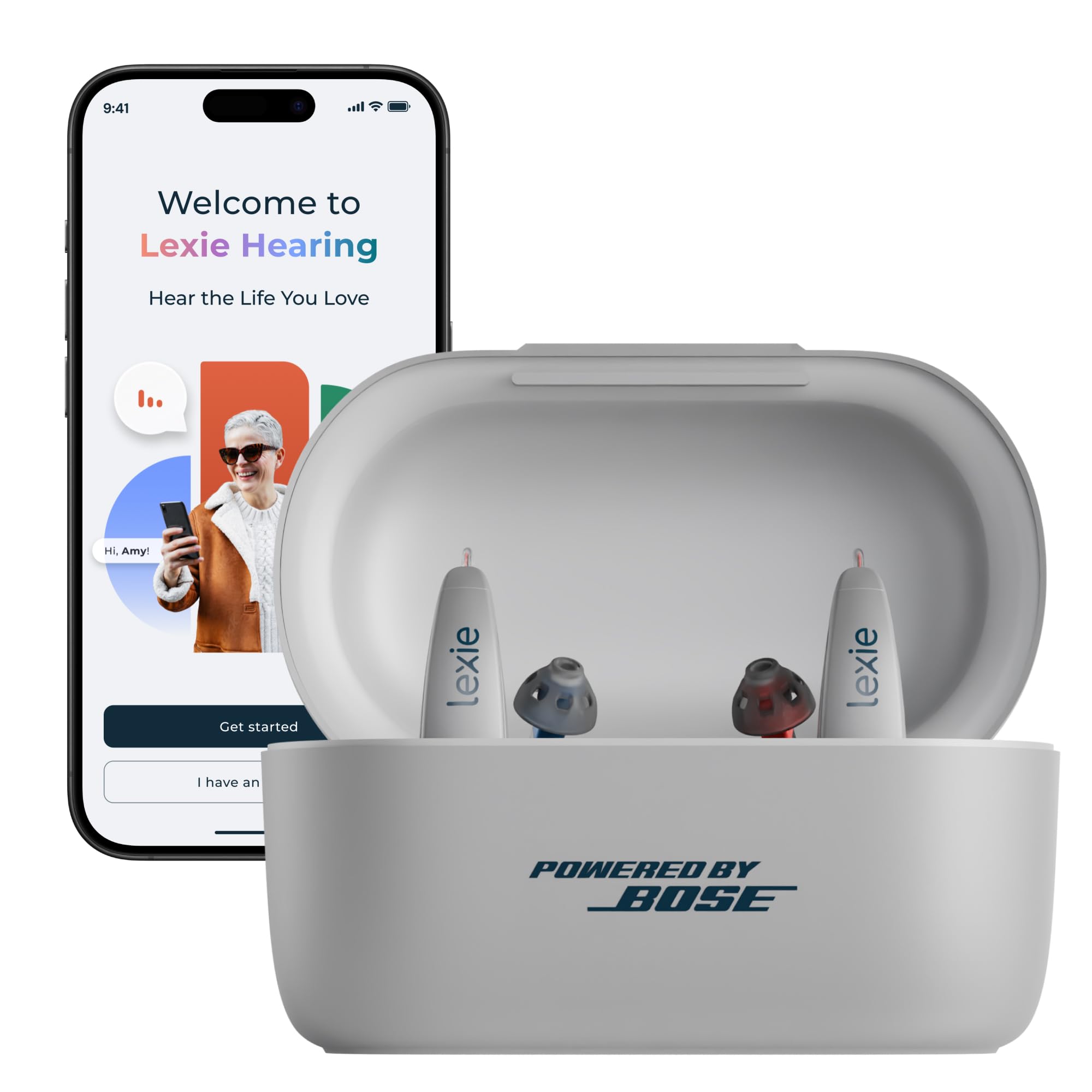
| Lexie B2 Plus Powered by BoseSmartest Tuning | Buyers who want self-fitting with a real noise program | 4 Environment Programs or up to 10 custom | Multiple dome sizes included | Rechargeable, wireless charging case | Amazon |
| MEIMOUSE Rechargeable (Magnetic Case)Longest Runtime | Routine use around the TV, chats, and calls | Three-level volume, dedicated noise reduction chip | Three earmuff sizes (S/M/L) | Up to 50 hours per 2-hour charge; 250 hours backup | Amazon |
| BOCOKO 2-Piece Anti-Lost Clip | Wearers who have lost a device once | — | Stretchy silicone loop fits all BTE/RIC | — | Amazon |
| Tondiamo 30-Piece Domes | Keeping a steady stock of replacement domes | — | Silicone, 3 sizes (8/10/12mm), 2mm hole | — | Amazon |
| MEDca BTE Sound Amplifier | TV and one-on-one use in a quiet room | Button control, on/off + volume | Multiple earbud sizes in box | LR754 batteries (6 included) | Amazon |
| RENNY Loud Phone Ringer | Never missing a call in a noisy home | 5 ringtones, 2 modes (Ring & Music) | — | Wall outlet, no internal battery | Amazon |
| Audien Atom One | First-time users who want dial control | Volume (V) and frequency (F) dials | 3 silicone dome sizes (S/M/L) | 24-hour rechargeable, USB-C dock | Amazon |
| Oricle Standard 2.0 | Social use with easy pocket recharging | 5 sound levels | Completely-in-canal, silicone tips | Up to 60 hours per charge, portable case | Amazon |
| Audien Atom Pro 2 | Restaurant dinners and TV nights | 4 listening modes, 5 volume levels | Comfort+ in-canal, 3 dome sizes | 24-hour battery, case adds 48 hours, UV-C cycle | Amazon |
Detailed Reviews
1. Phonak Vented 4.0 Dome Medium (0.35 inch=9mm) 10 Domes
Our pick — 4.5+★ from 600+ verified ratings; the strongest balance of quality and price.
The unglamorous upgrade that quietly decides how well your Phonak performs in a crowd.
If you already wear a Phonak Audeo in the Marvel, Paradise, or Lumity family, the piece that most affects how speech cuts through a noisy room is the dome on the end of the receiver. This is a 10-pack of genuine Sonova domes in the Vented 4.0 Medium size, with a base diameter of 0.35 inch (9mm), and they fit only the SDS 4.0 receiver.
Here is the part worth understanding. A vented dome has small air holes, and those holes are what release pressure so your own voice does not boom inside your head. They also let some outside sound in, which is precisely what keeps the occlusion effect (that plugged, hollow feeling) down while you are at a table full of people. It is a different job from a closed dome, which blocks more of the canal and pushes more bass and gain toward your eardrum.
The practical rhythm matters as much as the fit. Swap in fresh domes about every two weeks, or once a month at the outside, so wax and debris cannot clog the tiny pores under the silicone hood and dull the sound. They are genuine Sonova parts at a modest price, and they simply do their job swap after swap. A word of sizing honesty, since the medium is what this listing is: buyers report that the product arrived “in perfect shape” but ran “just to large for me,” so confirm your size against the dome you are currently wearing before you commit.
What earns its place
- Genuine Sonova OEM domes, not third-party copies
- Vented design releases pressure and keeps your own voice natural
- Small air holes reduce the closed-in feeling during long conversations
- Ten domes per pack covers roughly a few months of regular swaps
Read this before ordering
- Fits SDS 4.0 receivers only — check the tip of your receiver first
- The medium runs generous for some smaller ear canals
- Two-week replacement schedule is real housekeeping
Built for: Anyone already running a post-2019 Phonak Audeo who wants crisper speech without a new device purchase.
Wrong turn: Older Phonak receivers or other brands will not accept the SDS 4.0 mount, so verify the tip before you buy.
2. Lexie B2 Plus Powered by Bose
Four environment programs and a free app that tests your ears, then tunes to the results.
The B2 Plus is the pick here for someone who wants the device itself to do the heavy lifting in a loud room. You get 4 Environment Programs from the start, or you can build up to 10 of your own, and the Directionality setting is the one aimed at noisy environments. That is a real distinction from a volume wheel: a program is a whole way of listening.
What sits behind those programs is the Powered by Bose audio processing — Noise Management, Wind Noise Management, Impulse Noise Reduction, and Feedback Management — and the free Lexie app runs an in-app hearing test so the sound is shaped around your profile. Owners who stuck with the setup find the noisy-environment defaults do the work: spoken word comes through clear in a busy room, and closed domes are comfortable, if occasionally itchy. There is also a genuinely useful noise-cancelling effect that removes ambient hum, which is not the same as removing all crowd noise but does quiet a rumbling room.
The catch is worth saying plainly. This is a device that rewards patience at the start, and the most skeptical reviews come from people whose expectations outran the tech. Home-setup quirks and app trouble during software updates are the recurring gripes, and it is worth reading the return terms before you buy. The physical side is remarkable: each aid weighs 0.11 ounces — this guide’s lightest by a wide margin — and the whole set is packed into a 6 x 4 x 2 inch box, so nothing about it feels bulky behind your ear.
Where it wins a noisy table: The Directionality setting plus four environment programs, combined with a free app that tests your ears and tunes to your profile, is the closest you get to a fitting appointment without leaving home.
The honest friction: Setup takes patience, and some buyers hit app or connection snags; go in expecting to spend an evening with the instructions rather than five minutes.
Worth it for: The buyer who wants real noise programs and self-fitting, and will invest an hour in the app.
Look elsewhere if: You want zero setup, or you would rather not depend on a phone app for your daily sound.
3. MEIMOUSE Rechargeable Hearing Aids with Magnetic Case
Runs for up to 50 hours a charge, with a case that adds 250 more for travel.
Charging anxiety is a real barrier for first-time wearers, and this pair attacks it directly. You get up to 50 hours of use from a single 2-hour charge, and the portable magnetic charging case holds an additional 250 hours of backup power — a genuine benefit on a long trip or a weekend away from the wall outlet.
The controls are simple by design. There are intuitive buttons for on/off and mode switching, plus three levels of volume adjustment, and the device leans into that simplicity for seniors who do not want an app. The fit comes with three sizes of earmuffs (S, M, L) to reduce whistling during long wear, and the compact design is meant to sit discreetly in the ear. A digital chip and a high-performance microphone handle the noise reduction, with the pitch that it minimizes background noise in restaurants and social settings.
The honest caveat is that this is an amplifier-style device, not a self-fitting OTC hearing aid with an app. Its noise reduction is a chip feature, not a tuning profile matched to your ears — so if your hearing loss is moderate to severe, a program-based model will do more for you in a crowd. For everyday use around the TV, conversations, and video calls, its simple controls and huge runtime are genuinely convenient.
The reason travelers pick it: 50 hours on a 2-hour charge plus 250 hours in the case is the sort of buffer that means you do not think about batteries for days.
Where it stops: Three volume levels and a noise-reduction chip handle background hum, but they are not a replacement for a hearing aid tuned to your audiogram.
Matches up with: A casual wearer who mostly needs conversational amplification and wants battery life that runs for days.
Not the tool for: Severe loss or a person who needs dedicated speech-in-noise programming.
4. BOCOKO 2-Piece Anti-Lost Hearing Aid Clip

The tiny tether that turns a dropped aid into a scare instead of a replacement bill.
Hearing aids come loose. They catch on a mask strap, get bumped on a golf swing, or slip off a gardening shirt, and a device on the ground is a device you may not find. This set is the cheap insurance against that, and it is why a large and growing buyer base keeps it in their short list.
The kit is simple: two firm plastic clips that lock onto the back of your collar, two stretchy silicone lanyards with eye loops, and a small carry case. The loop catches a behind-the-ear or receiver-in-canal aid tightly and will not slide off, while the belt stretches beyond 600mm so you can keep moving. It is a purpose-built tether: a clip on the collar, a silicone loop on the aid, and nothing to configure.
Fit matters here more than anywhere. The loop is sized to catch all sizes of BTE and RIC aids, which is exactly why it works — but a very slim device or a loop that stretches over time needs checking. One caution that owners themselves flag: route the lanyard so the loop does not sit over the aid’s rocker switch, or a yank of the cord can accidentally change your volume. Owners mention that a locking clip swap turns it from good into great, and the low price makes it an easy add-on to any noisy-environment kit.
Why it earns the nudge
- Firm clip locks shut and stays on shirt collars
- Silicone loop fits BTE and RIC aids in all sizes
- Belt stretches beyond 600mm for active wearers
- Carry case keeps a spare protected in a bag
The trade-off to know
- Stock clip lever can be tricky to lift
- A very snug loop may need care to fit over larger aids
- Route it away from switches to avoid accidental adjustments
The pick for: Anyone who has already felt that stomach drop of a missing aid — or wants to avoid it entirely.
Not needed by: Wearers who keep their aids in a case when not on their ears and never wear them active.
5. Tondiamo 30-Piece Hearing Aid Domes

A whole year of fresh silicone tips in one box, in three sizes.
Suppose your main complaint in a noisy room is not your aids at all, but the worn, gunked-up dome sitting on the end of them. Clogged pores under the hood are exactly what dulls the sound. This box gives you 30 domes total across three sizes — small (8mm), medium (10mm), large (12mm), with a 2mm hole diameter — for most behind-the-ear aids.
The material is silicone, soft and comfortable, and it holds its shape through repeated wear instead of going floppy. You will find a size that fits your canal in the pack, and if you are housekeeping for two wearers with different ears, the count stretches a long way. Cleaning and swapping at a regular interval keeps dust and wax from building up and keeps the sound clear.
A fair warning comes from the box itself: sizes can run large. Owners with narrower canals have found that the “small” was a snug fit and needed care to seat onto the tube, so measure against your current dome before ordering. On the plus side, the tip is soft enough to make some wearers’ ears stop itching, which is the sort of comfort win that keeps you wearing them in a noisy room.
What you are really buying: Volume and choice — three sizes and enough count to replace a worn dome without a thought.
Size caution: A dome only works if it seats fully on your aid’s tube; a loose fit invites whistling, so buy the smallest that still seats cleanly.
Reach for it: If you already know your dome size and want a generous stash of soft replacements.
Choose the OEM dome instead if: You need a guaranteed exact fit on a Phonak receiver — the sizes run uneven here.
6. MEDca Behind-the-Ear Sound Amplifier

An amplifier pair that lifts the TV and a close conversation without any programming.
If your goal is hearing the television or a conversation at the kitchen table, this pair does that job without an app or a hearing test. You get two behind-the-ear amplifiers in black, with an on/off button and a volume control, and multiple earbud sizes so you can seat them comfortably. There is nothing to set up beyond picking a dome and turning the volume.
This is where the honest limit lands, and it matters most in a noisy room. These are amplifiers, not programmed aids, so they raise the whole soundscape. The loud dishes come up with the voice across the table. The product’s own controls do not separate speech from background, and the “noise reduction” language is marketing, not a frequency program. In a quiet room, that is fine. In a busy restaurant, it is the wrong tool.
What it does well is straightforward and the low price buys a spare pair. Position it correctly — worn over the ear, with the tube seated — and it works, but the flatter wires and the fact that a sound gate is not part of the design mean it will amplify everything. If you need a device that helps in noise, spend your money on a pick with real environment modes; if you need to hear your TV better, this gets you there affordably.
Straightforward win: Two amplifiers, an on/off button, and volume control, with multiple earbud sizes in the box — no app, no pairing, no fuss.
Why noisy rooms are not its moment: These raise everything at once; background chatter and the voice you want arrive at the same level, so a dedicated speech program will always pull ahead.
Get it for: TV, quiet-room conversation, and a backup pair on a tight budget.
Don’t expect it to: pick a voice out of a crowded diner — that is a program’s job, and this box does not have one.
7. RENNY Loud Cell Phone Ringer & LED Flasher

A separate loud flasher and ringer that fills a house, not an ear canal.
Sometimes the noisy environment is your own home — the TV is on, the grandkids are over, the phone is in another room. Renny solves that specific problem with a 117 dB ringer and a bright white LED flasher that works with any Bluetooth-enabled phone, including cell, VoIP, and some landline models. It reaches into the next room, up to 150 feet from the phone, without Wi-Fi or an app.
At 117 dB it carries through a house with the TV on, which is exactly the point. It stays plugged into a wall outlet, auto-connects to one phone, and rings very loudly with five classic-style ringtones to suit different hearing profiles. There is a Talking Caller ID option that announces the number, which is a quiet-room saver if somebody in the house is confused about who is calling. Pair it once and it stays connected, ringing and flashing until you unplug it.
The trade-off is real and worth stating. You must leave it on a wall outlet — there is no internal battery — and it is one phone per unit; if you want two rooms covered, you pair two Rennys to the same phone. Bluetooth reliability is the mixed spot, so keep it near the phone’s usual spot. And a note on privacy: it has no microphone, so it will ring and announce but never whisper back your conversation.
Why it fills the gap
- 117 dB ringer carries through the house
- Five ringtones spanning different hearing profiles
- Bright white LED flasher for visual alerts
- Works when the phone is on silent or vibrate
Where it asks for something
- Needs a wall outlet — no portable use
- One phone per unit, so two rooms need two units
- Occasional Bluetooth dropouts in some homes
Made for: The hard-of-hearing household or the emergency worker who cannot afford to miss a night call.
skip it if: You need a portable alert — this one lives on a wall outlet.
8. Audien Atom One OTC Hearing Aids
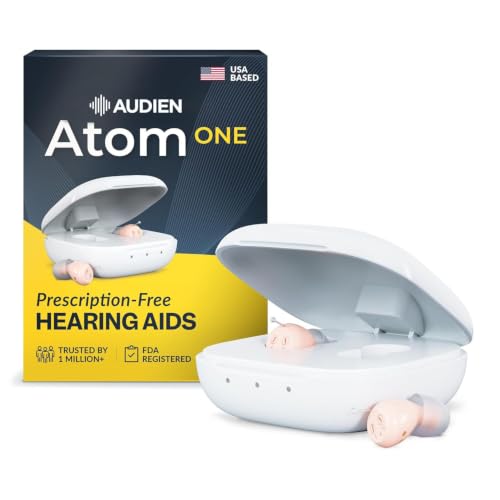
Two physical dials — one for volume, one for frequency — and no screen to fight.
The Atom One is a real FDA-registered OTC hearing aid, and it is built for the wearer who does not want an app. The control set is two analog dials: V for volume and F for frequency. Turn one clockwise to increase, counterclockwise to decrease — start low and work up. It is the sort of no-tech control that suits a first-time wearer or a senior who is tired of hunting through menus.
The wearable side is thoughtful for the price. The nano design sits discreetly in the ear, and because it is not left/right specific, either aid fits either ear — which takes away one of the easy mistakes in hearing care. Three silicone dome sizes come in the box, and there is a pull-wire for safe removal. It powers on when you pull it out of the dock and powers off when you set it back, so there is no switch to fumble at night.
The battery is 24 hours per charge, with a full recharge in about 3 hours on the USB-C dock, and the first-time buyer also gets an Audien Sound Check expert-guided setup session to help dial in settings. The friction sits in the sound itself: this is analog gain rather than per-ear tuning, so in a busy restaurant you will raise both the voices and the clatter. It is a strong fist step into hearing support, not a replacement for a programmed device.
The control story: Two dials and a pull-wire — the entire interface a first-time wearer needs to learn.
Where noisy rooms bite: Without a directional program, the volume that lifts a voice also lifts the room, so a self-fitting aid with a restaurant mode wins in a crowd.
This one is for: A first-time user or an older wearer who wants dials, not an app, and one clean day of runtime.
Consider a step up if: You spend a lot of time at restaurants where separating voice from background is the whole goal.
9. Oricle Hearing Aids for Seniors (Standard 2.0)
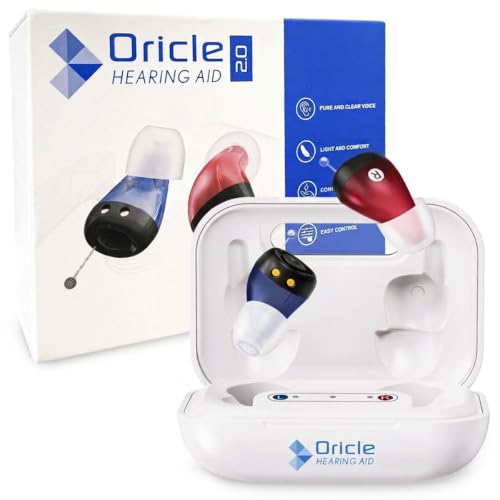
A completely-in-canal pair that runs up to 60 hours and lives in a travel case.
For a sound enhancer you can throw in a bag and not worry about charging, the Oricle makes a persuasive case. It uses a completely-in-canal design with silicone tips, gives you up to 60 hours of use on a single charge, and recharges from a portable case, so a weekend trip does not need a wall outlet.
The fit part is intentionally gentle. The soft ear tips are meant to keep long wear comfortable, and the phone control is a simple long-press for on/off with auto power-off when docked and auto-on when removed, plus five sound levels to match different environments. Long-press to power on, five sound levels, auto-off when docked — no menus, no app.
The catch, as with all preset-level amplifiers, is fine control. Five levels per ear is a coarse instrument in a busy room, and the tips only suit the ear canal they fit. It is a sensible starting point for social use and a backup set — not the fastest route if you need a dedicated program for a loud restaurant.
Where it earns a spot: Up to 60 hours from a single charge plus a portable case makes this pair a natural for travel and long days out.
Its honest limit: Five preset sound levels cannot separate a voice from the plates and chatter that sit beside it the way a tuning program can.
A good match for: A traveler who wants simple, discreet, rechargeable sound in a tiny case.
Not the first pick for: An audiologist-tuned experience — expect preset levels, not tailored hearing correction.
10. Audien Atom Pro 2 OTC Hearing Aids
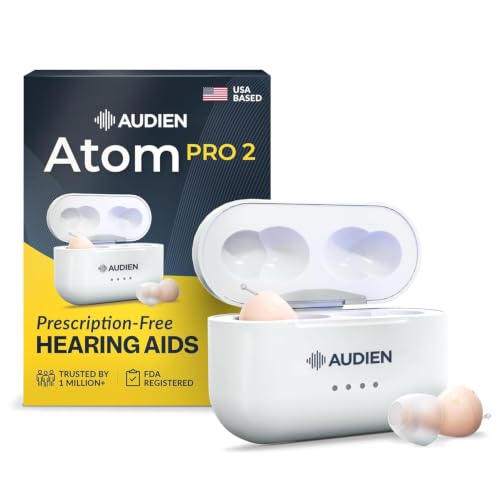
Four modes, and one of them is literally called Restaurant.
When the room turns loud, the Atom Pro 2 has a mode for it. The Restaurant setting is designed for cutting through crowd noise, and it sits alongside Conversation for one-on-one clarity, TV for sharper dialogue, and Outdoor for reducing wind and background noise. You switch modes with a long press on the device body — no app, no phone, no menus.
The hardware backs the concept. It is Audien’s patented Comfort+ in-canal design, 15% smaller than the previous generation, with three silicone dome sizes in the box. The battery runs 24 hours per charge, and the case adds up to 48 hours more, so it can serve as a power bank in a pinch. Five volume levels give you finer steps within each mode, and each ear adjusts independently.
The characteristic detail is the case: every time you dock the aids, a 5-minute UV-C light cycle runs to keep them fresh, which is a hygiene routine most devices do not offer at all. The honest caveat is that sound reads a little tinny on some ears, and the device amplifies the whole room without fully separating background when the volume climbs. For mild to moderate loss, the four modes are a real step up in a noisy setting — just know that it is an on-device system, not an app-tuned fit.
The restaurant case
- Dedicated Restaurant mode for crowd noise
- 5-minute UV-C cycle runs every time you dock
- Case adds up to 48 hours of backup power
- Each ear adjustable independently, five volume levels
Where it balances out
- No app, so no hearing test to tune to your ears
- Sound can read tinny at higher volume
- Volume also raises the room’s background
Best used by: Dinner-out regulars and TV watchers with mild to moderate loss who want a mode for the moment.
Pair it with: A self-fitting app-based device if your hearing loss runs closer to severe — this one is tuned by button, not by test.
Know the Specs
Noise Programs vs. Raw Volume
A volume control makes everything louder, including the dishes and the chatter you are trying to get away from. A noise or environment program changes how the device listens — holding down the background while lifting voices. Look for named modes like Restaurant, Conversation, or World Volume, or an adjustability setting that changes directionality. Those are the specs that matter in a crowded room.
Vented vs. Closed Domes
A vented dome has small air holes that let pressure escape and keep your own voice from booming in your head; a closed dome seals more of the canal to push more sound in. Vented suits mild to moderate loss and a more natural feel; closed suits more gain and better isolation. Most devices ship with several sizes, and the wrong size is the most common cause of a whistling aid.
Self-Fitting Apps
An in-app test measures your hearing and shapes the sound to your profile. The benefit is a tuning that fits you rather than a preset. The cost is time — the setup runs on your phone and takes patience, and a software update can tangle the app. Buyers who want zero admin are better served by dial or button controls.
Runtime and Charging Cases
Rechargeable aids typically give a full day from one charge, and a case can add days of backup for travel. How the aids power on and off matters too — automatic dock-and-go removes the nightly switch hunt. Battery spec is a range, not a promise, and heavy use at high volume shortens it.
Common Questions
Will an over-the-counter hearing aid really help me understand speech in a restaurant?
What is the difference between a hearing aid and a personal sound amplifier?
How often should I replace my hearing aid domes?
Why does my hearing aid whistle, and how do I stop it?
Can I wear a hearing aid in one ear only?
Do I need an app and a smartphone to use a self-fitting hearing aid?
How long does a rechargeable hearing aid last on one charge?
Are Bluetooth ringer amplifiers a substitute for a hearing aid?
How do I keep the earpieces hygienic between uses?
The Bottom Line
For most quiet-to-loud environments, the winner in the best hearing aids for noisy environments list is the Lexie B2 Plus Powered by Bose because its four environment programs and Directionality setting are built around exactly this problem. If you want a dedicated restaurant mode without an app, grab the AudienAtom Pro 2. And for a Phonak wearer who just needs fresher, better-sealed domes, the Phonak Vented 4.0 Dome Medium is the one to reach for.
How we choose
We do not accept paid placement. Every pick is matched to a real buyer and a real use-case; we do not hands-on test units.
Sources
Specifications: manufacturer listings and product documentation. Review insights: verified customer reviews, as of October 2026. Pricing: not shown on this page (it changes often); check the current price via the retailer link.
As an Amazon Associate, Aappliancez earns from qualifying purchases. This does not affect which products we feature.