Disclosure: Some links in this post are affiliate links. As an Amazon Associate I earn from qualifying purchases, at no extra cost to you. Learn more
Specs are compiled from manufacturer listings and verified buyer reviews and can change over time — please confirm the key details on the product page before buying.
If your ears ache, itch, or ring after an hour of earbuds, the fix is not a better tip — it is a different style of bud entirely. This guide separates the open-ear and bone-conduction picks that stay comfortable for a full workday from the deep-sealing in-ears that need a rest break.
This guide is built by comparing the manufacturers’ published specifications and the patterns across verified customer reviews, so you get each pick’s real strengths and trade-offs instead of marketing spin.
Some sit outside your ear canal, some seal deep, and a few sit on bone rather than inside your ear at all — so pick your fit style — open-ear, bone-conduction, ear-hook, or in-ear — before you compare brands. Here is how the leading healthy earbuds compare on real comfort and daily usability.
Top Picks


How To Choose The Healthiest Earbuds For Daily Wear
Most ear discomfort from earbuds comes from one thing: pressure inside the canal. Buds that push deep into the ear create a seal that blocks outside sound — helpful on a plane, miserable over eight hours. Buds that rest outside the canal leave it open and unpressurized, which is why open-ear and bone-conduction styles suit ears that ache after long in-ear sessions.
Fit style decides how your ears feel by hour three
In-ear buds with silicone or foam tips (a soft plug that seals the canal) give the best isolation and the deepest bass. They also create the most pressure. Open-ear clip designs hang over the outer ear and leave the canal clear. Bone-conduction sets, like the Shokz below, sit on the cheekbone and send sound through vibration, so nothing enters the ear at all. Ear-hook designs sit between those extremes — they seal like an in-ear bud but anchor on the ear rather than the canal wall.
IP ratings: what the numbers actually protect
An IP rating has two parts — dust first, then water. An IP55 rating means some dust protection plus resistance to water jets, which covers sweat and light rain. An IP68 rating is the top of the scale: dust-tight and able to survive being submerged. If you sweat heavily or run in the rain, IP55 is the minimum rating to look for before any sound claim on the box.
Side-by-Side Comparison
| Model | Best For | Battery (with case) | Water/Dust Rating | Bluetooth | Amazon |
|---|---|---|---|---|---|
| Beats Powerbeats Pro★ Best Overall | Gym-first ear-hook fit | 9 hrs (24 hrs with case) | Sweat & water resistant | Class 1 | Amazon |
| Soundcore Sport X20Top Performer | Loud gyms and heavy sweat | 12 hrs (48 hrs with case) | IP68 | 5.2 | Amazon |
| Soundcore C50iBest Value | Open-ear awareness for small ears | 7 hrs (28 hrs with case) | IP55 | 6.0 | Amazon |
| JBL Endurance Peak 4 | Long runs and wet weather | 12 hrs (48 hrs with case) | IP68 | 5.4 | Amazon |
| Skullcandy Push Play Active | Budget ear-hook stamina | 10 hrs (34 hrs with case) | IP55 | 5.3 | Amazon |
| SHOKZ OpenRun Pro 2 | Cyclists who need traffic awareness | 12 hrs | Sweatproof | 5.3 | Amazon |
| Beats Powerbeats Fit | Wingtips that never slip | 7 hrs (30 hrs with case) | IPX4 | Class 1 (H1 chip) | Amazon |
| Apple AirPods Pro 3 | iPhone owners wanting heart-rate sensing | 8 hrs ANC (single charge) | — | — | Amazon |
| Sony WF-1000XM6 | Deepest noise cancellation | 8 hrs (24 hrs with case) | Sweatproof | 5.3 | Amazon |
| bmani Noise Isolation | All-day over-ear listening | 120 hrs playtime | — | 6.0 | Amazon |
| GNMN IPX7 Waterproof | Light, cheap backup pair | — | IPX7 | 5.2 | Amazon |
Detailed Reviews
1. Beats Powerbeats Pro Wireless Earbuds
Our pick — 4.0+★ from 82,000+ verified ratings; the strongest balance of quality and price.
The earhook that holds a full lifting session without a single re-seat.
Nine hours of listening on a single charge is the number that carries this pair — enough for a long gym block plus the commute both ways. The charging case stacks that to more than 24 hours, so the case becomes your weekly top-up rather than a daily chore. For comparison, the Skullcandy Push Play Active quotes 34 hours with its case against the Beats’ 24, so the Skullcandy wins on total stamina while the Beats wins on the fit hardware.
That fit hardware is the real argument. The Powerbeats Pro uses adjustable, secure-fit earhooks that hook over the ear rather than wedging into the canal, which is what makes them hold steady through sweat. Volume and track controls sit on each earbud separately, so you can adjust with whichever hand is free. The reinforced body is built for sweat and water resistance during tough workouts, and the Apple H1 chip plus Class 1 Bluetooth (the longer-range class of Bluetooth radio) is there to cut dropouts when you leave the phone on a bench.
What owners praise most is the sound — deep bass and crisp highs that stay loud without distorting, with solid noise isolation from the earhook seal. The honest catch is the charging habit. The charging case is genuinely bulky for a pocket, and the contact points demand attention: earbuds can sit in the case without registering, so you learn to check that they seated. A quick wipe of the buds and case with rubbing alcohol restores contact when one side stops charging. If you want a set you never think about, budget for a quick contact wipe every few charges.
What earns the top spot
- 9 hours per charge and more than 24 with the case covers a full day out
- Adjustable earhooks keep the buds locked in through lifting and HIIT
- Fast Fuel gives 1.5 hours of playback from a 5-minute charge
- Controls on both earbuds, with Auto Play/Pause built in
Where it makes you work
- The charging case is big enough to rule out a jeans pocket
- Seating the buds to register a charge takes a moment of care
- Getting the tip seal right is essential — the wrong size sounds thin until you size up
The pick for: anyone training hard several times a week who wants the buds to stay put without fiddling.
Worth knowing: plan on a quick alcohol wipe of the contacts now and then — that habit keeps the charging reliable long-term.
2. Soundcore Sport X20 by Anker Noise-Cancelling Sports Earbuds
An IP68 seal built for people whose sweat eats lesser earbuds alive.
IP68 is the headline and it earns the spot. That rating means the buds are dust-tight and survive full submersion — the top of the water-and-dust scale. Soundcore calls the internal protection SweatGuard, a submarine-style cavity seal over the components. If you work outside, train in a hot garage, or sweat through two shirts, IP68 is the rating that keeps the internals alive rather than corroding quietly.
The fit hardware is unusually adjustable for the class. The ear hooks extend up to 4mm and rotate up to 30 degrees, so you can dial the hook position to your own ear rather than accepting one shape. Inside, 11mm dynamic drivers push soundcore’s BassUp tuning, and the noise cancelling scales down clanging weights and loud grunts in a commercial gym. Battery is 12 hours from the buds and up to 48 hours with the case.
Sound quality leads the praise here — and the noise cancelling is the feature owners call out as the reason they stay loyal, with a construction worker reporting the buds drowned out an impact drill. The trade-off is longevity at the far end. Some units develop a bud that stops charging or drops connection after several months of heavy use, and the stock ear tips are mediocre — upgrading to better tips is the single easiest sound improvement you can make. Buy it for the seal and the gym performance, and treat the charging contacts with care.
On the water rating: IP68 means submersion-safe, not just sweat-safe, so rain and a dropped bud in a puddle are non-events.
On the fit dial: the 30-degree rotation and 4mm extension are what let this hook fit ears that reject fixed-shape buds.
Reach for this if: you sweat heavily and want noise cancelling that holds up in a loud gym.
Look elsewhere if: you want a set you can forget about for years — expect to baby the charging contacts over time.
3. Soundcore C50i by Anker Open Ear Earbuds
The clip-on that leaves your ear canal completely untouched.
Nothing enters your ear here — that is the whole point. The C50i uses a clip-on design that sits over the ear without blocking the canal, so you hear traffic, a coworker, or a gym announcement without pausing your audio. The memory titanium FlexiClip adapts to ear shape, and for anyone whose canal gets sore from in-ear plugs, that change alone is the reason to buy.
Sound comes from custom 12mm drivers with 86dB max output, which is enough volume for outdoor running. Battery runs 7 hours per charge and 28 hours with the case, and the IP55 rating covers sweat and rain. Bluetooth 6.0 is the newest version in this lineup — for context, the GNMN uses 5.2 and the Skullcandy uses 5.3, so the C50i leads the group on the wireless standard. The soundcore app adds HearID, EQ modes, and Spatial Audio.
Crisp, clear audio and a secure fit during exercise are what win people over, and small-eared buyers in particular report the clip stays comfortable with no pain. The honest limit is battery endurance: 7 hours per bud falls short of the 12-hour buds on this list, so heavy audiobook listeners will swap to the case more often. The case itself looks budget-tier, and an occasional unit needs a firmware update through the app before pairing behaves. For open-ear awareness and canal-free comfort, this is the value play in the category.
Why open-ear buyers like it
- Clip-on design never enters the ear canal
- IP55 handles sweat and rain during outdoor runs
- Bluetooth 6.0 leads every other pick on this list
- Real buttons resist accidental touches better than touch sensors
What you give up
- 7 hours per bud is shorter than the 12-hour sport buds here
- Open design means no noise cancelling at all
- Bass struggles on the lowest notes; midrange can sound slightly muddy
Best matched to: runners, cyclists, and small-eared wearers who want their ears left open all day.
Trade-off accepted: you trade isolation and long single-charge stamina for total ear-canal comfort.
4. JBL Endurance Peak 4 Wireless Earbuds
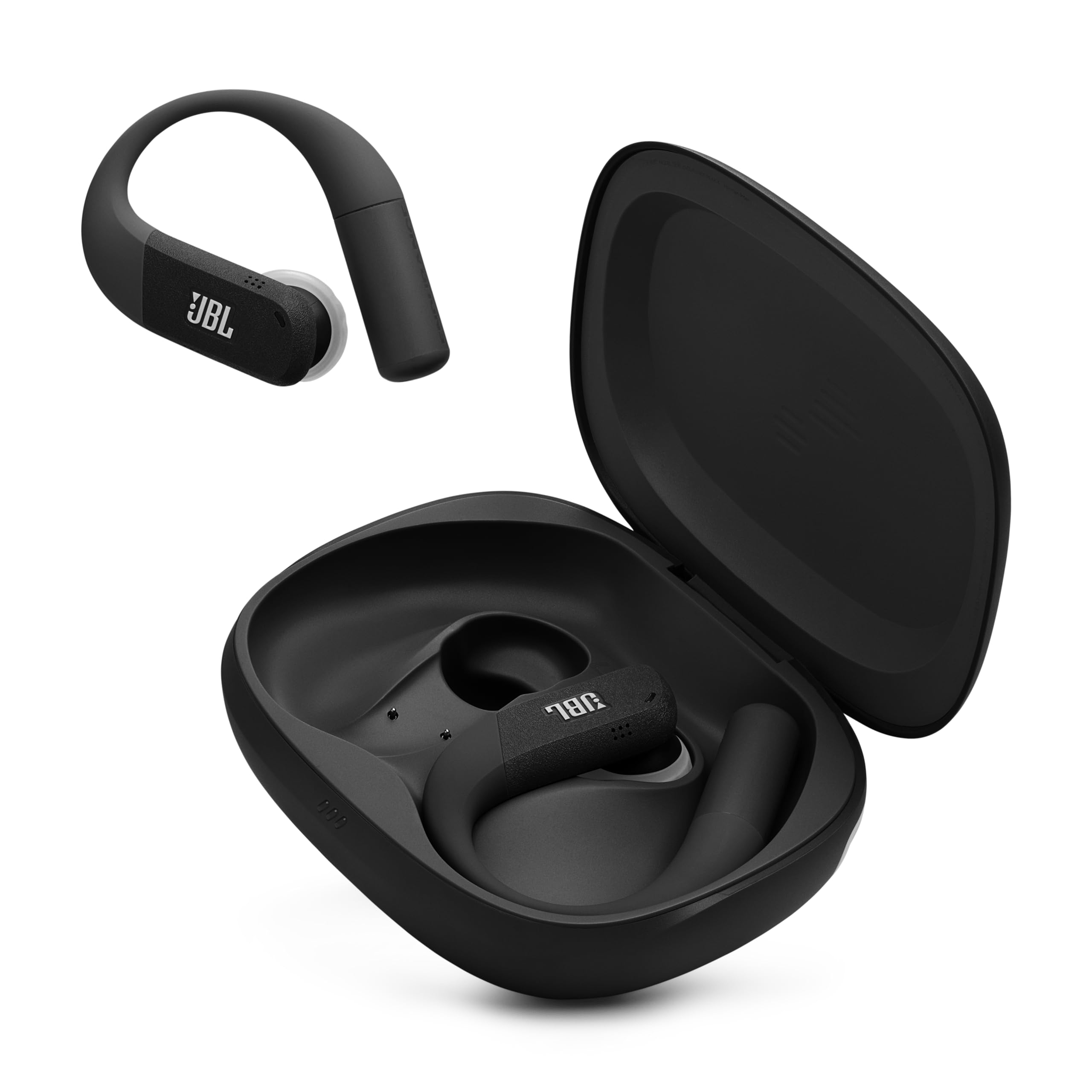
Forty-eight hours of playback with an IP68 shell that shrugs off salt water and sand.
This is the endurance pick. JBL quotes up to 12 hours from the buds and up to 48 hours total with the case, and a 10-minute charge buys four more hours when you are already late. That total beats the Beats Powerbeats Pro’s 24 hours with case, and matches the Soundcore Sport X20’s 48. The IP68 rating covers sweat, rain, salt water, sand, and long-distance drops, so a beach run or a dusty trail is inside its comfort zone.
The fit uses JBL’s TwistLock design with a liquid silicone ear hook and memory wire — you rotate the bud into place and the hook holds it there. Four noise-sensing mics drive adaptive noise cancelling, with Smart Ambient to let the world back in. Sound runs through a 10mm dynamic driver, and Bluetooth 5.4 handles the connection, with multipoint pairing so a tablet workout video and a phone call can coexist.
Owners pick this for the fit and the sound staying planted — one runner logged 13 miles without a shift. The recurring gripe is the charging case: it feels like cheap plastic, the seating can take practice, and the lid feels like it might not last forever. Touch controls are limited to JBL presets with double and triple taps that are not always reliable. None of that undermines the sound or the seal, but if you want an overbuilt case, this is not it.
The seal and the shell: a silicone tip plus the TwistLock rotation creates a real acoustic seal, and the IP68 rating means weather is a non-issue.
The one soft spot: the case plastics are the weakest link — treat the lid gently and check the buds before you zip them into a bag.
Built for: long-distance runners, beach goers, and anyone whose earbuds meet sand and salt.
Think twice if: the case build matters as much to you as the buds themselves.
5. Skullcandy Push Play Active Wireless Earbuds
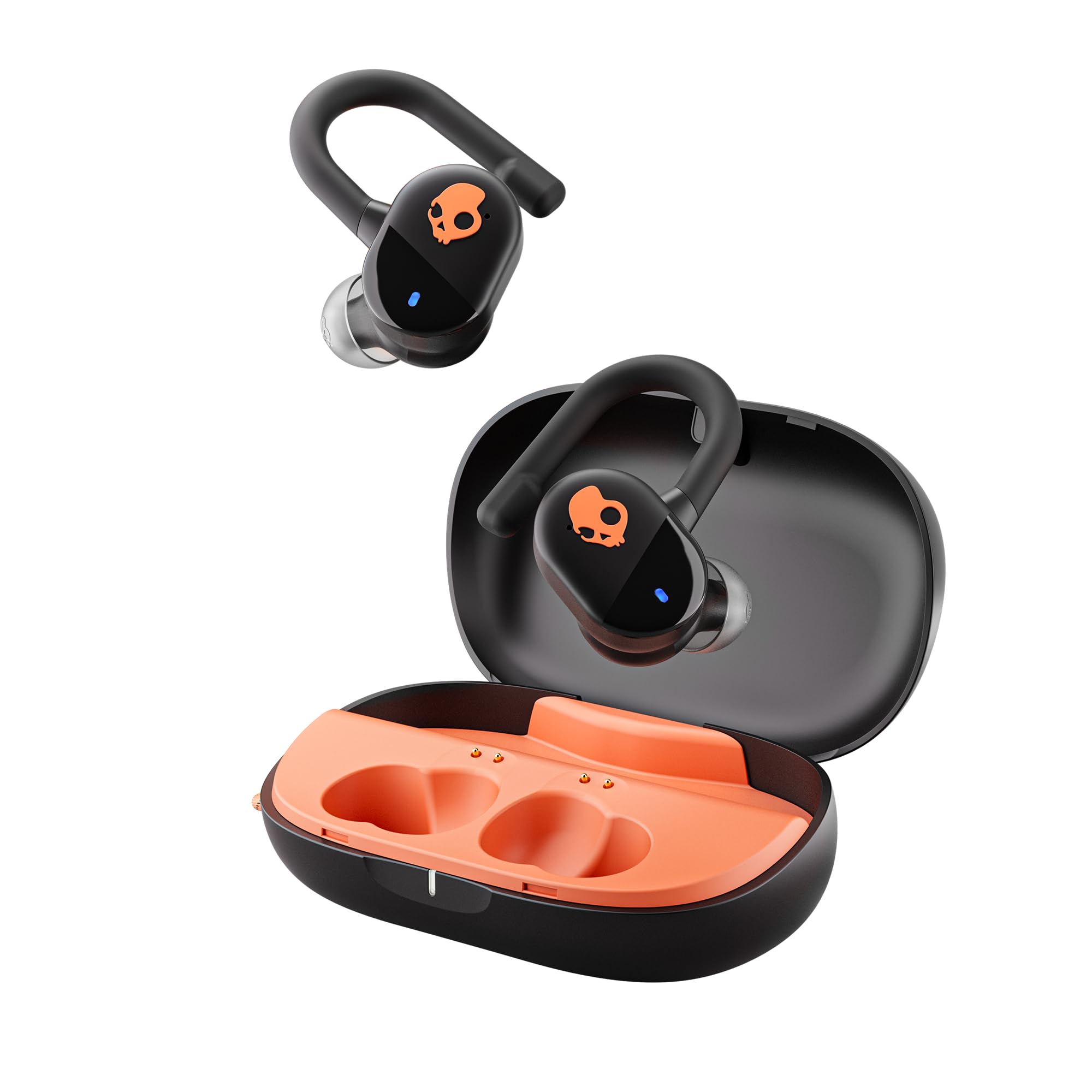
Thirty-four hours of battery from an ear-hook set that costs like a spare.
Battery is the whole pitch: up to 34 hours split between 10 hours in the buds and 24 more in the charging case, and a 10-minute Rapid Charge returns 2 hours of listening. Set that against the Beats Powerbeats Pro’s 24 hours with case and the gap is real. If you are tired of charging nightly, 34 hours with the case is the budget answer.
The ear hooks are the comfortable part of the story — flexible, no ear pain, and they hold during activity. IP55 covers sweat and water, so rain and a hard sweat are fine. You get three preset EQ modes (Music, Bass Boost, Podcast), a Stay-Aware mode to let surroundings in without pulling a bud, and multipoint pairing for two devices at once. Controls are touch-sensitive, which cuts both ways.
Sound is well-liked here, with buyers calling out the equalizer modes and a secure fit that holds through training. The honest caveat is build life at the cheap end: a small number of units develop a bud that stops charging within a couple of months, and the 30-day return window is short for spotting that. The touch sensors also trigger pause and skip when you adjust the fit, and the app has compatibility limits. Keep expectations on durability modest and the value is strong.
Made for: anyone who wants ear hooks and big battery without spending much — a solid first sport pair or backup set.
Set expectations: treat the return window as your test period and check both buds charge before it closes.
6. SHOKZ OpenRun Pro 2 Bone Conduction Sport Headphones

Sound through the cheekbone, with both ear canals left wide open.
Nothing goes in your ear — and that is why cyclists and runners with sensitive ears keep coming back. The OpenRun Pro 2 uses bone conduction drivers (they vibrate against the bone in front of your ear rather than firing sound into the canal), and SHOKZ pairs that with air-conduction drivers for the bass, calling the combination dual drivers. You get 12 hours of playback from a single charge, and a 1-hour charge time tops it back up.
The frame is a single unibody piece with a Ni-Ti alloy memory wire and ergonomic ear hooks, so it holds shape and holds position. Dual wind-resistant mics plus AI noise reduction filter background noise, with SHOKZ stating the system removes 96.5% of background noise including wind at speeds up to 15 miles per hour. EQ modes in the app let you switch to Classic Mode for pure bone conduction or Volume Boost in loud places.
What sets this apart from every in-ear pick here is the safety side: you hear traffic while you cycle, which is a different kind of daily usability. Sound quality runs close to conventional earbuds but with lighter bass. The real catch is that they do not charge in a case — they plug in directly, so you manage the cable, and the Mini fit suits some head sizes better than the regular. Battery life is mixed in reports, with some finding it drains less predictably than expected. Still, for outdoor awareness, nothing in this list competes.
The safety case for bone conduction
- Ear canals stay completely open — no pressure, no plug
- Hear traffic and surroundings while you run or cycle
- 12 hours per charge with a 1-hour recharge time
- Fits over glasses comfortably and stays put through sweat
The honest limits
- No charging case — you plug the headset in directly
- Bass is lighter than in-ear designs
- Wind noise reduction helps but cannot erase a gale
Go with this if: road awareness is non-negotiable and your ears reject plugs.
Reconsider if: you want maximum bass and a charging case you drop the headset into.
7. Beats Powerbeats Fit Wireless Earbuds
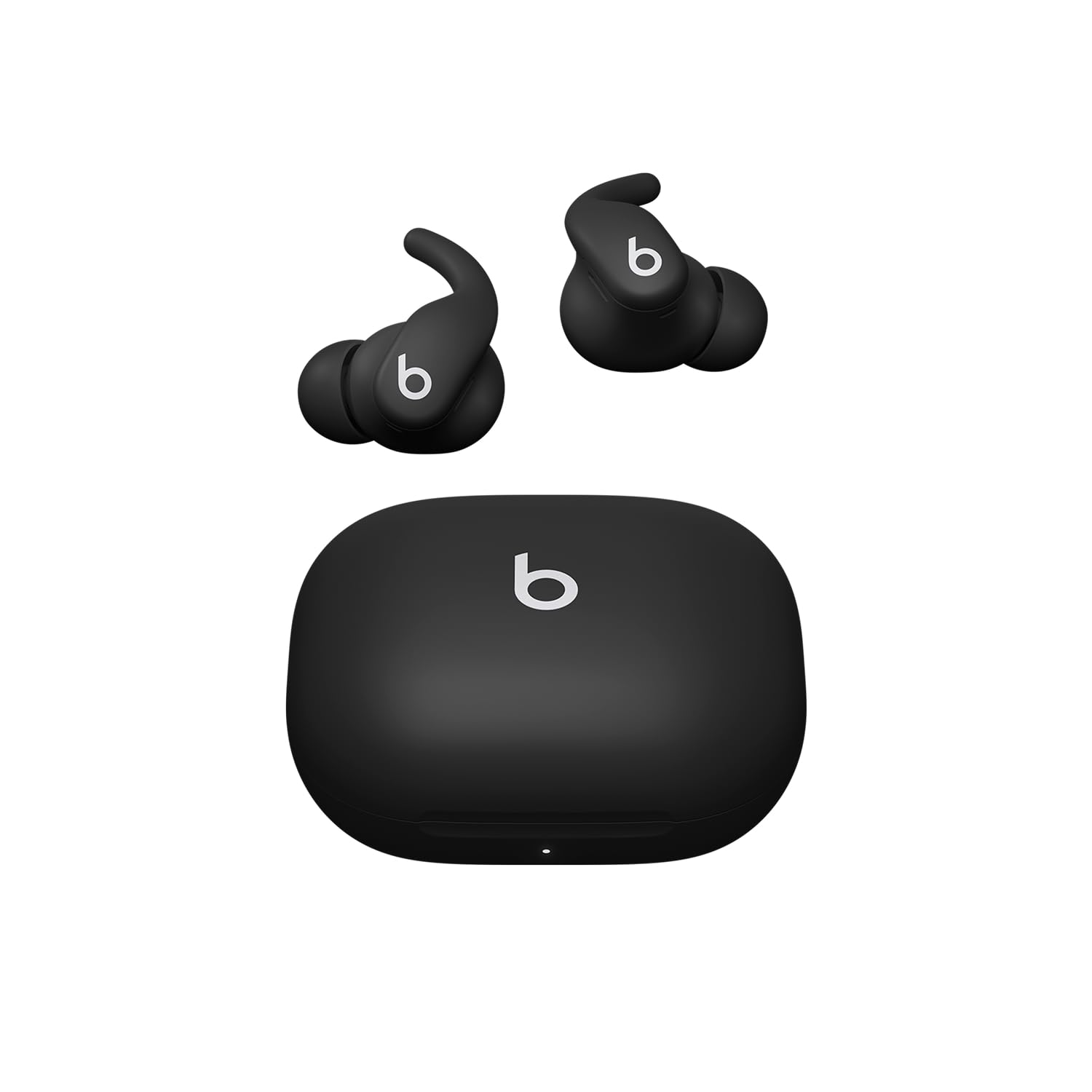
Wingtips that tuck into the ear bowl and hold through a full weight session.
The wingtips do the work here. Rather than a hook over the ear or a plug deep in the canal, the Powerbeats Fit tucks soft wingtips into your ear for stability, and buyers report zero readjustment through lifting and gym sessions. That matters if you have ever had a bud pop out mid-set. Up to 7 hours per bud plus up to 30 hours with the case, and a 5-minute Fast Fuel charge returns up to 1 hour of playback.
Active noise cancelling blocks outside sound, Transparency mode lets it back in, and Adaptive EQ tails the sound to each bud’s fit and seal. Spatial Audio with dynamic head tracking is on board, along with an IPX4 sweat and water resistance rating. The Apple H1 chip delivers Automatic Switching across Apple devices and Hey Siri, and the charging case is 17% smaller than its predecessor, also rated IPX4.
Fans of the fit are loud about it — one wearer who clocked roughly 10 hours a day reported no fatigue from the built-in hooks, far ahead of add-on hooks that dig in. Noise cancelling is effective but not the absolute deepest, and volume needs a nudge higher than some competitors. Comfort is the splitter: some ears take to the wingtips immediately while others find them uncomfortable. Find your tip size from the four in the box and this is the most stable in-ear on the list.
Fit hardware that earns it: four tip sizes plus the wingtips mean stability without a hook hanging off your ear.
Where it runs warm: the wingtips and volume headroom are the two things that split opinion — try both tip options before deciding.
Right for: lifters and gym regulars who want an in-ear seal that never shifts.
Not for: ears that reject wingtip-style seating or heavy Android equalizer tinkering, since Android gets only auto-EQ.
8. Apple AirPods Pro 3 Wireless Earbuds
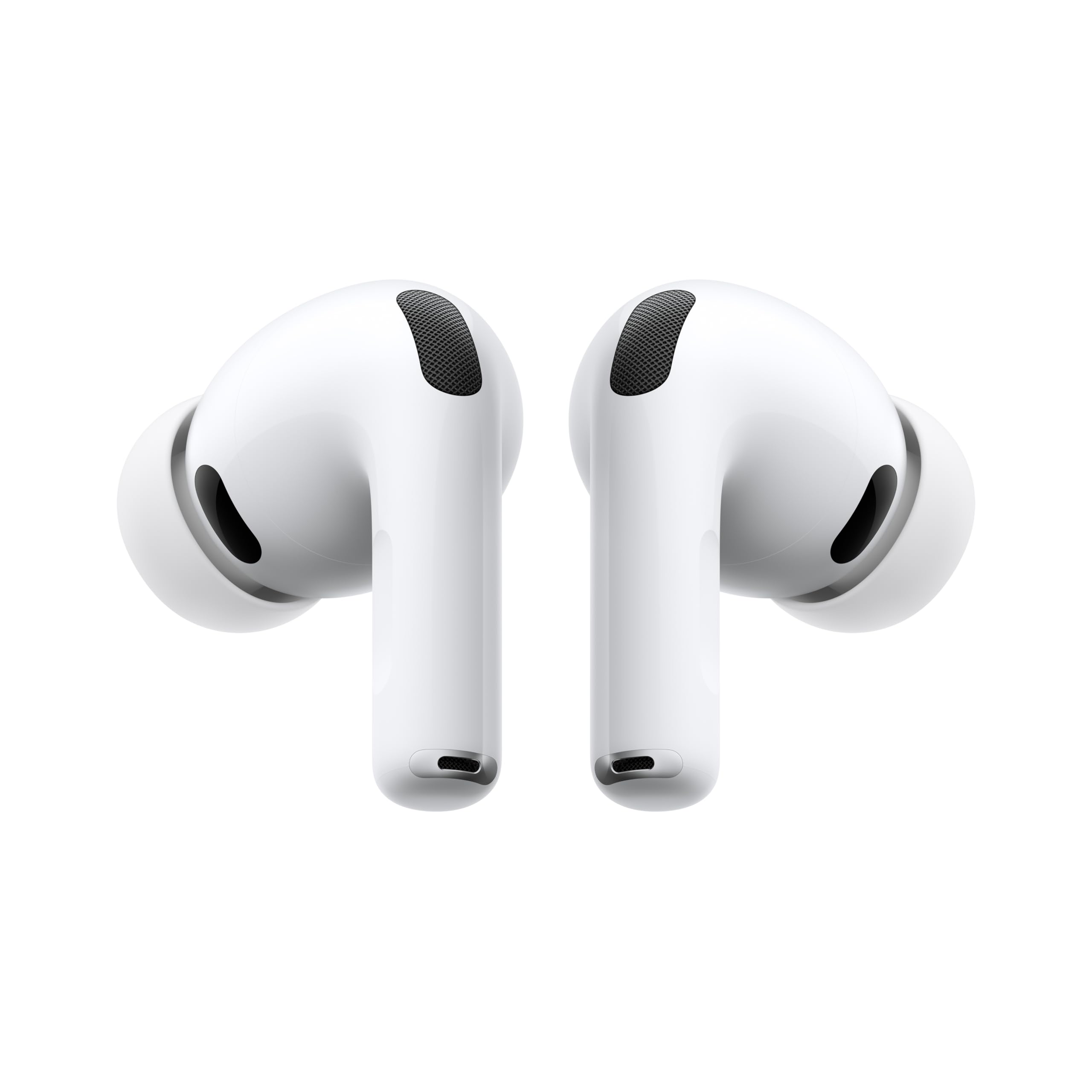
The pair that turns your earbuds into hearing tools, not just speakers.
Apple’s angle here is ears over audio: a built-in hearing test you take at home, a Hearing Aid feature with automatic Conversation Boost, and active Hearing Protection that helps limit exposure to loud environmental noise. Add heart rate sensing across up to 50 workout types, and this is the only pick on the list built around ear welfare rather than only sound quality.
The listening hardware is no slouch. Apple claims up to 2x more noise removed than AirPods Pro 2, and battery runs up to 8 hours of listening with Active Noise Cancellation on a single charge, or up to 10 hours in Transparency with the Hearing Aid feature. Five ear tip sizes now ship in the box for a more personalized seal, and Adaptive EQ adjusts to your ear geometry. Live Translation works through Apple Intelligence, though owners mention it cuts off often and needs a close, loud speaker.
What people praise most is the sound and the silence — a huge leap over earlier generations, with noise cancelling that nearly erases background noise. The mixed part is fit: some ears stay comfortable for hours, others report buds slipping out. Adaptive mode also creeps volume up too high and does not always restore it. If you live on iPhone, the Automatic Switching and shared Audio Sharing keep the whole ecosystem in step.
The match for: iPhone users who want hearing and heart-rate tools plus top-shelf noise cancelling.
Skip the upgrade if: you are on Android or you were hoping Live Translation would be flawless — it still asks for a close, clear speaker.
9. Sony WF-1000XM6 The Best Noise Cancelling Wireless Earbuds
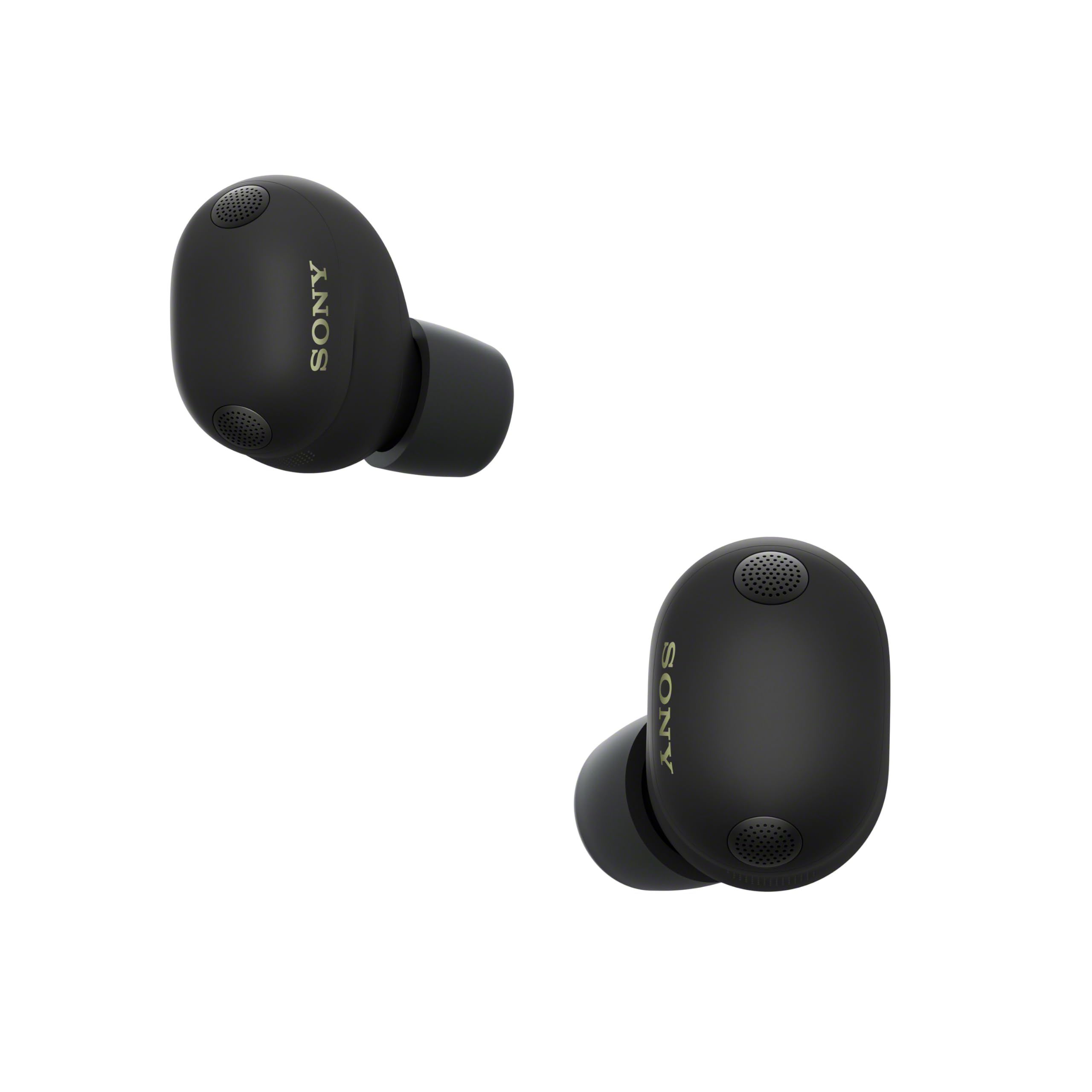
Eight adaptive mics and a processor Sony says is 3x faster than before.
Noise cancelling is the whole reason to buy this pair. Sony’s HD QN3e processor is quoted at 3x faster than the QN2e in the WF-1000XM5, paired with dual processors and eight adaptive microphones that track ambient sound and adjust in real time. Battery runs up to 24 hours total (8 hours in the buds plus 16 in the case), and a 5-minute quick charge returns up to 1 hour of playback.
For calls, dual beamforming mics plus a bone conduction sensor and AI noise reduction isolate your voice from wind and background. The ergonomic shell uses three pressure-relief vents per bud to remove the jaw-movement rumble that plagued earlier generations. Sound is co-tuned with mastering engineers, and the Sound Connect app adds EQ, Battery Care, and Adaptive Sound Control. Foam tips come in four sizes.
Deep, balanced bass and near-silent background are the consensus wins, and owners regularly call the ANC the best they have used. The catches are real. The foam tips are consumables — budget for replacing them regularly, since they need swapping roughly every few months. The charging case has delicate pins that can fail. And the fit splits opinion: comfortable for many, painful for some after long sessions. Sony’s own app also needs a run-through “Test wearing condition” step to tame distortion in ANC mode.
Why silence seekers choose it
- Eight adaptive mics adjust noise cancelling in real time
- QN3e processor quoted 3x faster than the outgoing chip
- Three pressure-relief vents per bud reduce jaw rumble
- Co-tuned with mastering engineers for studio-level detail
The ownership costs
- Foam tips need replacing periodically at extra cost
- Charging case pins are delicate and can break
- Fit is uncomfortable for some ears over long sessions
Choose it for: the deepest silence in the category and studio-grade sound detail.
Accept in exchange: foam tips are a running cost, so factor replacements into ownership.
10. bmani Bluetooth Over-Ear Headsets

A 120-hour over-ear set for people who want the ear canal left alone entirely.
Different shape, different job. This is an over-ear headset with memory foam earcups, not an in-ear bud, so the canal stays free. The headline is 120 hours of playtime, which is far beyond every earbud here, plus a battery display. It uses Bluetooth 6.0, the newest standard in the group alongside the Soundcore C50i, and adds a 3.5mm jack for wired listening when the battery dies.
Inside, 40mm diaphragm drivers push Hi-Fi stereo sound with 360-degree spatial audio. Six mics handle hybrid noise cancellation with ENC clear call, a game mode drops latency to 35ms, and a Transparency mode lets the world back in. The headband folds and adjusts, and the build is charcoal faux leather over memory earcups.
What buyers like is the sound for the outlay, especially the bass, and the comfortable fit with a fast charge. The honest catch is that the feature set looks bigger than it delivers: there is no app to adapt the sound to your taste, the charging meter stops at 99%, and pairing sometimes needs a hard reset (hold volume up and volume down together) before a tablet will recognize it. ANC is also modest, and latency is poor for gaming despite the 35ms claim. As a long-play all-day headset, it works; as a gaming or hi-fi set, do not count on it.
The playtime win: 120 hours between charges makes this the set for long-haul use, and the 3.5mm jack covers you when it finally dies.
The honest gap: there is no EQ app, so the sound is fixed — if you like to tune, this will frustrate you.
For you if: you want over-ear comfort, huge playtime, and your ears left free of plugs.
Pass if: you expect deep noise cancelling, app tuning, or reliable low-latency gaming.
11. GNMN IPX7 Waterproof

A simple hook-style set with touch control and a submersion-safe rating.
It is the lightest set here on features, and that is fine. The GNMN uses a hook-style earpiece with Bluetooth 5.2, touch controls, and an IPX7 waterproof rating — soak-proof in a splash or a dropped-in-the-sink moment. The thermoplastelastomer shell and dynamic driver are basic but adequate for casual listening.
The box includes ear tips, a USB-C cable, a manual, and a wireless charging case. It pairs with phones, tablets, laptops, and smart speakers, and the touch control keeps the interface button-free. The clean-pairing and easy-setup reports read like the experience of a budget set that just works from the start.
The honest caveat is the fit and the sound, which split opinion. Sound quality and noise cancellation land in mixed territory — some find it loud and clear, others report it is not really noise cancelling and needs to sit deep in the ear to sound right, which creates pressure. The hook shape is not for every ear, and the volume is not bass-rich. As a spare pair or a first set for basic listening, it does the job; for daily long-wear comfort, the open-ear and bone-conduction options above are the healthier call for your ears.
Suits: a cheap backup pair or a starter set where touch control and waterproofing matter most.
Don’t expect: genuine noise cancelling — the mixed reports on that are worth taking seriously.
Know the Specs
Battery Life: Bud vs. Case
The number on the box is often the total with the case, not the per-bud figure. A set quoting 34 hours may hold 10 hours in the buds and 24 in the case — meaning you charge the case weekly but the buds daily. Always look for both numbers. For a long commute or a full workday, per-bud hours matter more. For a week of gym trips, the case total is what keeps you from hunting for a cable.
IP Ratings Explained
The first digit covers dust, the second covers water. IPX4 means splash-resistant — fine for sweat and light rain. IP55 adds dust protection plus water jets. IP68 means dust-tight and submersion-safe, the top of the consumer scale. If you sweat hard or run outside, treat the water rating as a priority, not a bonus. It is the spec that determines whether a set survives its first wet season.
Common Questions
Are open-ear earbuds healthier for my ears than in-ear buds?
Do bone conduction headphones actually work if I wear glasses?
What IP rating do I need for heavy sweating and rain?
How do I stop one earbud from failing to charge?
Why do my earbuds sound thin with no bass?
Can I use workout earbuds for calls and video meetings?
Do noise-cancelling earbuds damage hearing more than regular earbuds?
What is the difference between multipoint pairing and standard Bluetooth?
How long do foam ear tips last before I need to replace them?
Is a smaller charging case actually more portable?
Will ear-hook earbuds stay in during weightlifting and running?
The Bottom Line
For most people who want earbuds their ears can live with all day, the Beats Powerbeats Pro is the safe pick — the adjustable earhooks hold through sweat and lifting, and the 9-hour per-bud battery means you are not charging daily. If your ear canal is the problem, not your workouts, step over to the Soundcore C50i for a clip-on that never goes inside. And if road awareness matters more than isolation, the SHOKZ OpenRun Pro 2 keeps both ears open while you hear every car behind you.
There is one honest nudge worth making: the deep-seal designs deliver the best bass and silence, but if comfort is the reason you are shopping, trust the open-ear and bone-conduction picks to fix it. Your ears will tell you within the first hour which camp you belong to.
How we choose
We do not accept paid placement. Every pick is matched to a real buyer and a real use-case; we do not hands-on test units.
Sources
Specifications: manufacturer listings and product documentation. Review insights: verified customer reviews, as of October 2026. Pricing: not shown on this page (it changes often); check the current price via the retailer link.
As an Amazon Associate, Aappliancez earns from qualifying purchases. This does not affect which products we feature.