Disclosure: Some links in this post are affiliate links. As an Amazon Associate I earn from qualifying purchases, at no extra cost to you. Learn more
Specs are compiled from manufacturer listings and verified buyer reviews and can change over time — please confirm the key details on the product page before buying.
If forklifts, mowers, engines or crowd roar keep cutting into your calls, the fix is not a louder earpiece — it is a noise-cancelling microphone that strips the racket out before it reaches the other end. This guide separates the headsets that genuinely quiet a loud room from the ones that only claim to, so you can pick by your job: drive, shoot, mow, race or game.
This guide is built by comparing the manufacturers’ published specifications and the patterns across verified customer reviews, so you get each pick’s real strengths and trade-offs instead of marketing spin.
You do not need the priciest set here — you need the one whose noise handling matches your noise. Below you get plain-English specs, honest trade-offs, and a clear pick for every loud job.
Top Picks


How To Choose The Best Headset for Loud Environments
Buying for a loud room is a two-part job, and most people only solve half of it. You have to stop the noise reaching your ears, and you have to stop the noise reaching the person on the other end of the call. A headset can be brilliant at one and useless at the other, which is why the picks below split into three families: communication headsets, hearing-protection muffs and noise-cancelling listening headphones.
Decide which noise you are fighting
A continuous drone — an engine, a mower, a jet cabin — is the easy kind. Constant sound is exactly what active noise cancelling (ANC — electronics that generate an opposite sound wave to cancel steady hum) is built for. Sudden spikes like hammer blows, gunshots or forklift beeps are harder, and that is where physical muffling and a strong noise-cancelling mic earn their keep.
The microphone is the part people forget
If your callers say you sound like you are standing in a wind tunnel, the earcup is not your problem. Look for a boom mic with noise-cancelling or noise-rejection circuitry. The BlueParrott B450-XT claims to strip out up to 96% of background noise at the mic, and that figure decides whether a dispatcher hears your voice or your engine.
Check the connector before anything else
Radio headsets are not universal. A headset wired for Kenwood-type 2-pin or Motorola-type radios will not transmit through a PELTOR or Z-TAC system, and some units need a separate push-to-talk (PTT) module before radio communication is possible at all. Confirm your radio family and your PTT adapter first — a beautiful headset on the wrong plug is a very expensive pair of earmuffs.
Side-by-Side Comparison
| Model | Best For | Noise Handling | Battery / Power | Connection | Amazon |
|---|---|---|---|---|---|
| BlueParrott B450-XT★ Best Overall | Truckers and call-heavy work | Claims 96% mic noise blocking | 24 hours talk time | Bluetooth 5, up to 100 m | Amazon |
| EARMOR M32 PlusRange Pick | Range days and hunting | 22dB NRR, dual ambient mics | Up to 60 hours (2x AAA) | Wired, needs matching PTT | Amazon |
| ISOtunes LinkAll-Shift Pick | All-shift job site audio | 25 dB NRR, capped at 85 dB | Up to 50 hours + AAA backup | Bluetooth 5.0 | Amazon |
| Rugged Radios H41-CF | Race teams and radio crews | 24 dB NRR, noise-cancelling mic | Wired, no battery | 5-pin radio port + 3.5 mm | Amazon |
| Beats Studio Pro | Travel and commuting | Active Noise Cancelling + Transparency | Up to 40 hours | Bluetooth + USB-C + 3.5 mm | Amazon |
| JBL Quantum 910 Wireless | Gaming in a busy house | Active Noise Cancelling, 3D audio | 39 hours | 2.4 GHz, Bluetooth 5.2 | Amazon |
| Bose QuietComfort | Blocking hum, on or off music | Quiet and Aware modes | Up to 24 hours | Bluetooth 5, 10 m | Amazon |
| SteelSeries Arctis Nova Pro Omni | Multi-device pro gaming | ANC plus AI Noise Rejection mic | Hot-swap dual batteries | 2.4 GHz, Bluetooth 5.3, USB | Amazon |
| Sennheiser HD 660S 2 | Critical listening in a quiet room | Open-back, no isolation | Wired, no battery | Wired 6.3 mm / 4.4 mm | Amazon |
Detailed Reviews
1. BlueParrott B450-XT Bluetooth Headset
Our pick — 4.5+★ from 9,000+ verified ratings; the strongest balance of quality and price.
The one that makes callers ask if you are actually in the truck.
If your job is spent behind a windshield or on a mower, this is the set that solvers the problem most people actually have: sounding terrible on the phone. The maker claims the mic blocks out 96% of noise — meaning roughly 96 parts in every 100 of the racket around you gets filtered before your voice leaves the headset. That is the spec that keeps a dispatcher from hearing your engine instead of your status update.
You can talk for 24 hours on a single charge, so a full shift plus overtime won’t drain it. A 3-hour recharge over USB-C gets you back up fast. Class 1 Bluetooth (a long-range wireless standard) holds the link up to 100 meters (roughly 300 feet) from your phone — far enough to walk into the yard and leave the handset on the dash. The padded headband and large cushioned earcup are built for a full shift, and an IP54 rating (protected against dust and splashing water) means a rainy cab window is not a crisis.
What wins the crowd here is the sheer quality of the thing — it is the praise point owners return to again and again — and the reliability carries right behind it. Field use backs that up: the headset has shrugged off open-window highway driving and a rotary hammer on concrete, with callers unable to hear either. The honest catches are worth knowing. Voice control cannot be switched off, so the set keeps chiming and can refuse to answer on the button. A few long-time users also miss the shaped earcup of the older 300 model, which they found comfier than this flatter pad. And durability is a split verdict across the reviews rather than a slam dunk — one buyer put it bluntly: “Stopped working well after 1 year. Disappointing.”
What it does for your workday
- 96% claimed mic noise blocking keeps engines and tools off the call.
- 24 hours of talk time covers several shifts between charges.
- Up to 100 meters of Class 1 Bluetooth range frees you from the phone.
- IP54 dust and splash protection suits outdoor work.
Where it bites
- Voice controls cannot be disabled and can hijack a call answer.
- The flat earcup pad is less comfortable than the older 300 design.
- Recharging takes 3 hours — no quick top-up figure given.
This one is for: truckers, delivery drivers and machine operators whose callers need to hear them, not their surroundings.
Look elsewhere if: you want to disable voice prompts completely, or you alternate sets and want the old padded-cup feel.
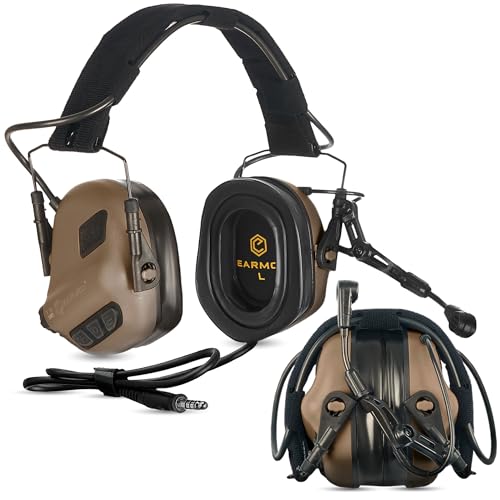
2. EARMOR M32 Plus Tactical Headset
Muffles the bang, keeps the footsteps — if your radio plays nice.
This is a hearing-protection muff first and a comms headset second, and that order matters on a range. The 22dB NRR is a Noise Reduction Rating, which means the muffs physically block about 22 decibels of sound — the loud bang never reaches your ears at full strength. Meanwhile dual ambient microphones do the opposite job, amplifying safe surrounding sound so you can still hear a safety call or a deer moving through brush.
Two things to get right before you buy. The headset needs a matching PTT module to talk to a radio, and it works with Kenwood-type 2-pin and Motorola-type radios — not PELTOR, Z-TAC, TAC-SKY or U-94 civilian setups. The boom mic is detachable and sits on the left side only, so it doubles as plain ear protection when you pull it off. Si gel ear pads and a cushioned headband make long range days bearable, and two AAA batteries give up to 60 hours with a spoken low-battery alert and a 4-hour auto shut-off if you forget it. IPX5 means it shrugs off rain and sweat.
Build and function are the two things this set gets praised for most, which lines up with the field reports of surviving repeated range days without incident. As one shooter summed it up: “Solid headset. Directional sound, good shot muffling without impending situational awareness.” Two caveats keep it honest. The plastic shell is budget-grade, so heavy abuse is a risk rather than a certainty, and the electronic amplification will not carry very loud rifle calibers on its own — plan to double up for those.
Why it earns the tier: Real 22dB physical protection, amplified surroundings and a detachable boom mic for the price of ordinary muffs is a hard combination to argue with on a range day.
Set-up warning: Budget for the PTT and a helmet adapter on top, because neither comes in the box and without them the comms side stays silent.
Pick it for: airsoft, hunting and range sessions where you want to hear your surroundings and take radio traffic.
Think twice if: you run PELTOR wiring or need protection above the loudest rifle calibers on the electronics alone.
3. ISOtunes Link Bluetooth Earmuffs
Job-site ear protection that also plays your shift soundtrack.
Mowing crews and shop floors get the best of both worlds here. The ISOtunes Link carries an ANSI-certified 25 dB NRR (Noise Reduction Rating — the physical muffling figure) and pairs it with Bluetooth 5.0 audio, so the mower roar drops while your playlist keeps going. SafeMax circuitry caps audio output at 85 dB, so the music never becomes a second hazard on top of the mower.
Shift-length power is the practical win: up to 50 hours of audio on a charge, plus an optional AAA backup that adds another 100 hours if you are caught short. Raised buttons mean you can change tracks or answer a call without pulling off your gloves, and an IPX4 rating handles sweat and light rain. The frame folds flat for storage.
What owners rate highest is plain build quality, and second to that the noise reduction — it has been known to cut so much outside sound on a train that one listener missed their stop entirely. Here is the trade-off you should weigh honestly. This is not a quiet-listening headphone, and some users find the clamp firm enough that a headache builds after a few hours. Others discover that the mower deck’s own reverberation bounces around inside the sealed cup, which can be tiring. And the 85 dB cap means music sits under the noise rather than over it on the loudest equipment.
The practical read: If your priority is protecting your ears through a full outdoor shift while keeping a podcast running, nothing else here combines 25 dB of certified muffling with 50 hours of Bluetooth runtime.
The honest limit: Treat it as ear protection with audio, not as headphones — the tight clamp and capped volume suit a workday, not a comfortable music session.
Reach for this if: you mow, trim or work a loud shop floor and want music that never outruns your hearing protection.
Look elsewhere if: you need punchy, loud music — the SafeMax ceiling and firm fit are working against you.
4. Rugged Radios H41-CF Headset & CC-Ken 2-Pin Coil Cord

Turns a screaming race car into a quiet conversation.
For pit crews, spotters and anyone talking into a two-way radio beside a running engine, the H41-CF is a specialist tool. It pairs a 24 decibel NRR (Noise Reduction Rating — the passive muffling figure) with an adjustable dynamic noise-cancelling microphone, and it plugs into the 5-pin universal radio port found on Rugged Radios, Baofeng and Kenwood handsets. There is also a built-in 3.5 mm jack for a phone, race receiver or scanner, so the same earcup can carry your audio feed and your radio.
Volume lives on a knob on the right ear cup — a real dial rather than a menu — which is exactly what you want when your hands are busy. The behind-the-head frame slips under a helmet, and a coiled cord keeps the run tidy in a confined cockpit.
This is the pick that gets described as making a deafening car feel quiet. Drivers and spotters report crisp communication in a loud Mazda Miata cockpit and at a NASCAR-level track, and the muffling is the thing most owners single out for praise. There is one consistent wrinkle. The microphone is the weak link on some units, with a handful of buyers calling it poor — so test your transmit quality before race weekend rather than on the grid.
Worth the money when: your day is spent yelling over an engine and you need eye contact through a helmet to be possible.
Check the plug: the 5-pin port suits Rugged, Baofeng and Kenwood radios, so confirm your handset matches before you rely on it to transmit.
Best suited to: racing teams and radio operators who need helmet-ready muffling plus a live driver channel.
Verify first: your radio’s pin layout and your mic performance, since radio compatibility and mic quality are the two areas owners flag.
5. Beats Studio Pro Premium Wireless Over-Ear Headphones

Forty hours of quiet on a plane, with a fast top-up when you are late.
Airports and open-plan offices are its home turf. Active Noise Cancelling (ANC — electronics that cancel steady background hum) handles the cabin drone, and Transparency mode flips it so you can hear the boarding call without lifting an earcup. Up to 40 hours on a charge is the headline, and Fast Fuel means a 10-minute charge returns up to 4 hours of power — a genuine lifeline when you are sprinting for a gate.
Sound runs through a custom acoustic platform with USB-C lossless audio and a 3.5 mm cable option when you want an analog connection. One-touch pairing handles both Apple and Android, Class 1 Bluetooth aims at fewer dropouts, and voice-targeting mics pull your voice out for calls in the office or on the move. The whole set folds into a woven travel case and weighs 9.2 ounces.
Battery endurance is the most reliable thing about it, and owners regularly get days of heavy use between charges. The less settled area is tone. Some listeners love the fun bass-forward signature for electronic music; others find it too bright or short of the low end they expected. Fit is the other split — plenty wear them for hours, while some find the original ear pads need swapping for long sessions.
Where the value lands: ANC plus 40 hours plus a 10-minute fast charge makes this a genuinely easy travel companion, and the foldable build stows small.
The thing to know: the sound is tuned, not neutral — if you want flat and analytical for studio work, look at the Sennheiser instead.
Made for: commuters and flyers who want long battery, one-touch pairing and a clean fold into a bag.
Pass it over if: you want a reference-flat sound signature or need the clamping fit to be gentle from day one.
6. JBL Quantum 910 Wireless Gaming Headset

Directional game audio that tells you which door the footsteps come from.
A busy house full of noise is not the enemy of a competitive gamer — losing the sound cues is. The Quantum 910 answers with head-tracked JBL QuantumSPHERE 360 on PC and QuantumSPATIAL 360 on consoles, both driven through the USB-C dongle. A built-in head-tracking sensor keeps the sound field fixed around you as you turn, so turning your head does not swing the whole arena with it.
The 50 mm neodymium drivers carry Hi-Res certification and a curve tuned for gaming, from faint footsteps up to the loudest explosion. A 2.4 GHz wireless link targets zero lag, Bluetooth 5.2 handles phone calls on the side, and 39 hours of battery runs across 2.4 GHz use with a 2-hour recharge. Gaming-tuned Active Noise Cancelling keeps the room at arm’s length.
Buyers praise the build quality most, with battery life a close second. The positional accuracy gets its own nods — one player notes QuantumSPHERE 360 (JBL’s spatial audio feature) locating sounds “in all directions (front/back/left/right/up/down).” The trade-off pile is bigger than on most sets here. Settings via the JBL software need the headset plugged into a PC by USB, head-tracking audio has a habit of drifting off its zeroed position, and console compatibility — particularly the Xbox side — is a repeated frustration. Mic quality draws mixed notes too.
The competitive case: Head-tracked spatial audio, a 2.4 GHz low-latency link and 39 hours on a charge is a serious positional-audio package for PC shooters.
Before you commit: confirm your platform inside the JBL software, because setup friction and console support are where this headset loses people.
Choose it for: PC players who want to hear footsteps directionally and run long sessions without a charge break.
Skip the pick if: you game mostly on Xbox or want to tweak settings without a USB tether.
7. Bose QuietComfort Wireless Bluetooth Headphones
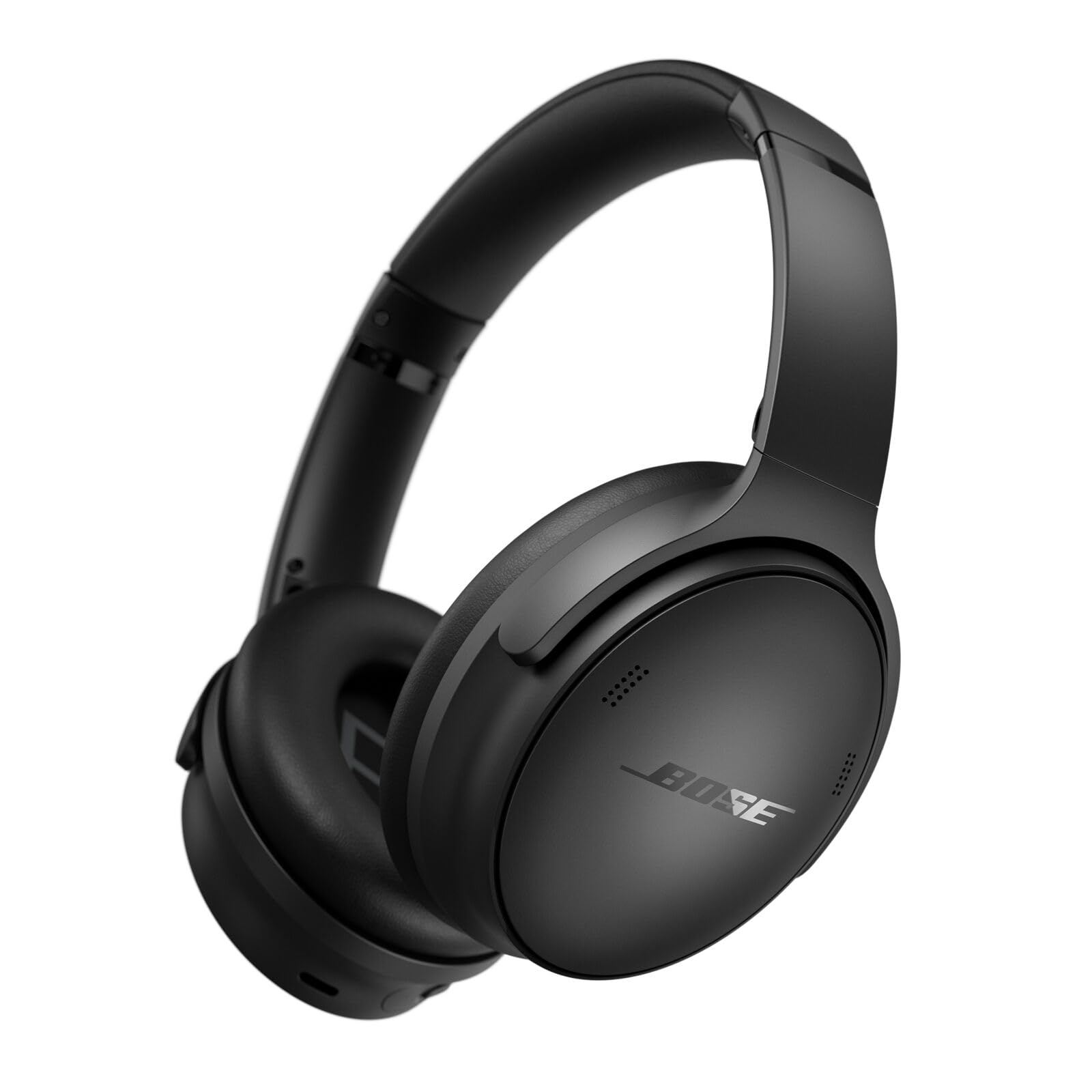
Mutes the air conditioner hum so completely you forget it is running.
Steady background noise — a plane’s engine, an office HVAC, a portable air con — is where this set absolutely excels, and it does it with or without music playing. The over-ear cushions plus the noise-cancelling electronics make a genuinely soothing quiet, which is why people wear them around the house as much as on a flight. Quiet mode seals you in; Aware mode opens the world back up; both live on a button you can feel for in the dark.
Battery is up to 24 hours, with a 15-minute USB-C charge returning up to 2.5 hours of play. Multipoint keeps your phone and laptop live at the same time, so switching a call between them takes a moment, not a repair. The adjustable EQ lets you reshape bass, mids and treble in the Bose app, and the supplied cable with an in-line mic means the headset still works when the battery is flat.
Comfort carries this headset as much as the noise cancelling does — the plush cuffs and padded band vanish on your head, which is what people talk about most after months of ownership. The honest swap is control. Bose gives you Quiet and Aware, not a true ANC-off switch, so purists who want raw passive sound get nothing to toggle into. The very deepest ANC still trails the class leaders by a nose, and if you are sensitive to pressure changes, ease into Quiet mode rather than jumping straight in.
The case for it: Best-in-this-list comfort, a genuinely quiet default mode and true all-day battery — a daily-driver set for silencing the room you cannot leave.
The catch: There is no true no-ANC setting (no way to fully turn off active noise cancellation), so the electronics stay in the loop if you want them to or not.
Perfectly matched to: open-plan workers, travellers and anyone who wears headphones for eight hours at a stretch.
Look elsewhere if: you want the absolute most aggressive ANC available or the option to kill noise cancelling completely.
8. SteelSeries Arctis Nova Pro Omni Gaming Headset
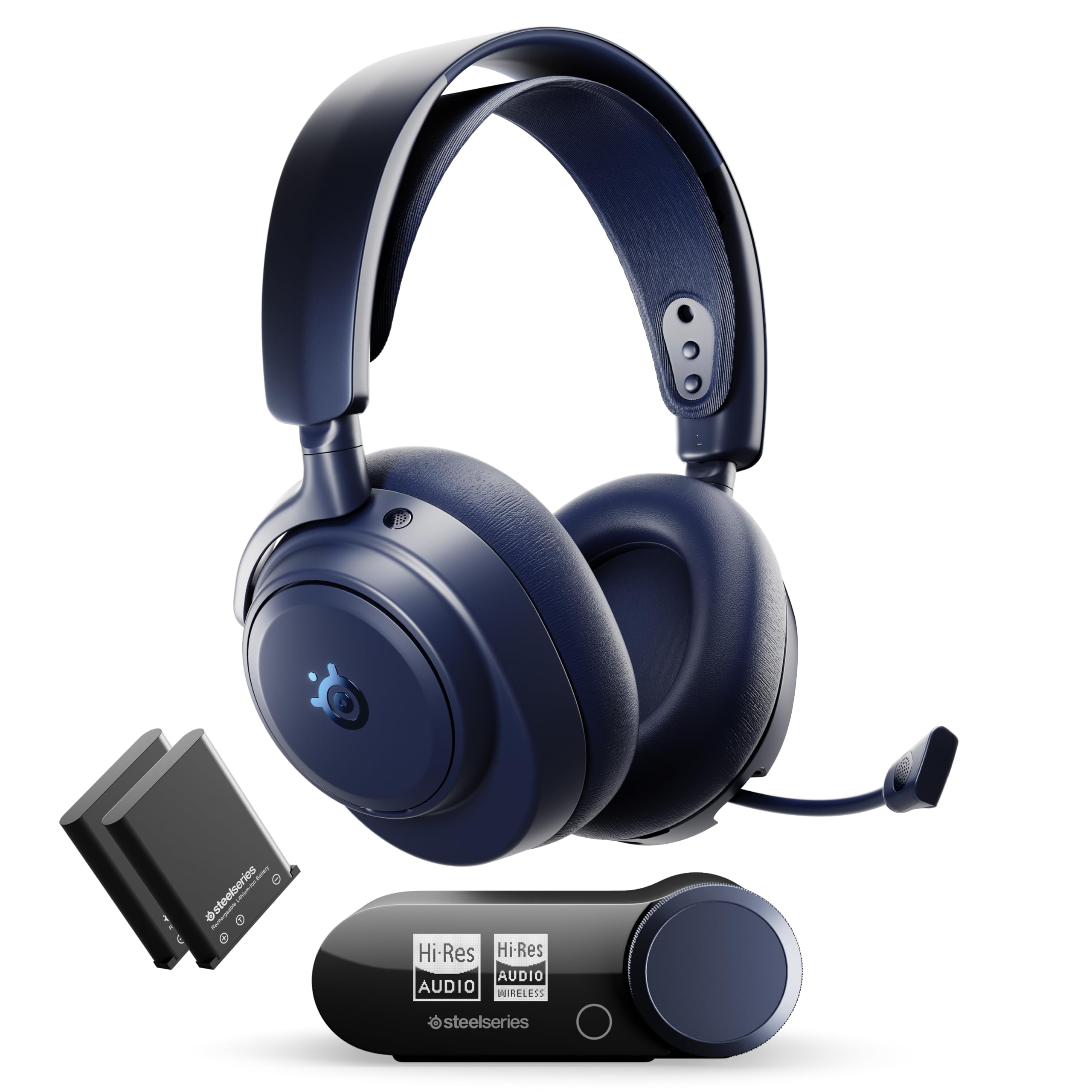
Two batteries and five systems — a headset that is never off duty.
This is the answer for the person whose problem is not just noise but switching between systems all night. OmniPlay lets you connect up to five devices and mix up to four audio sources at once — PC, console and phone together — with 3x USB, line-in and Bluetooth 5.3 all in the same hub. Hi-Res certified 96kHz/24bit wireless audio over a low-latency 2.4 GHz link keeps detail intact, and the 40 mm neodymium drivers are tuned for clarity.
The genuinely clever bit is power. Two rechargeable batteries ship with the set, so you swap the flat one out mid-session and keep playing — you never stop to charge. The ClearCast Pro omnidirectional mic uses AI noise rejection and claims to shield up to 96% of background noise, which matters when a referee is watching your call quality. Its Active Noise Cancelling uses an algorithm the maker says blocks up to 40% more noise than the competition, citing independent lab testing.
Owners reserve their highest praise for the sound — a clean, precise signature that picks out footsteps amid ability noise in the tightest shooters — with the battery system close behind and comfort well regarded for long marathons. The real frustration is value and software. At flagship money, buyers expect the whole package to work, and the recurring complaints are plastic-heavy build for the tier, a demanding setup process, and firmware that can only be updated on Windows, leaving Mac users stranded.
Built for the marathon
- Hot-swap dual batteries mean the set never sits out a charge.
- Mix up to four sources — PC, console and phone at once.
- Hi-Res 96kHz/24bit wireless detail for positional cues.
- ClearCast Pro mic claims up to 96% background rejection.
The friction points
- Windows-only firmware updates leave Mac owners stuck.
- Plastic build feels less than the asking tier.
- ANC trails the specialist competitors on deep isolation.
The bull case: if you juggle a PC, console and phone in one session and hate stopping for a charge, the dual-battery Omni removes both annoyances.
The fine print: budget time for the software setup and make sure every device you rely on lands in the supported ecosystem.
9. Sennheiser HD 660S 2 Open-Back Audiophile Headphones
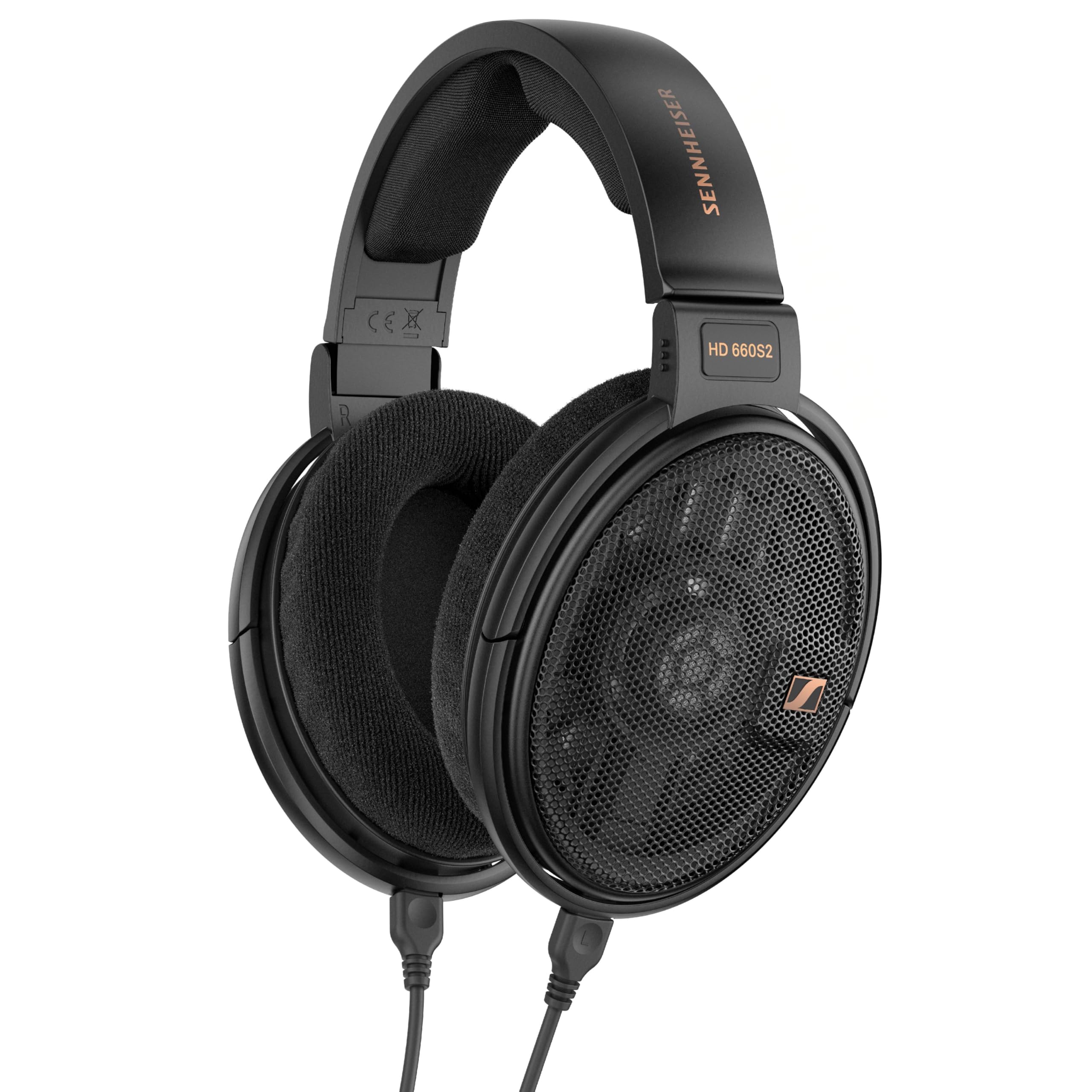
Built for the quietest room you have — the opposite of a noise blocker.
Let us be direct about where this fits. The HD 660S 2 is an open-back headphone, which by design lets sound in and out — so it is not a headset for a loud environment in the blocking sense. It is the pick for the home studio or study where you have already won the noise battle and now want detail. The 42 mm transducers with an ultra-light aluminum voice coil reach down to piano lows at 27.5 Hz and bass drums at 45–60 Hz with control rather than boom.
What you hear is a wide, lifelike stage with textured vocals and a natural treble that never turns harsh. The open-back cups breathe, and the velour pads stay comfortable through long sessions with ears clear of the drivers. Two detachable cables ship in the box — a 6.3 mm and a 4.4 mm balanced option — along with an adapter and a carry pouch.
Sound quality is the runaway praise point, and comfort follows close behind, which shows in how long owners keep them on. The caveats are real and specific. The soundstage is not as expansive as planar designs, so if width is everything to you this is not the endgame. Large heads and ears feel the fit tighten. And the pair rewards a clean amp — the wrong source can make vocals sound thin, so plan on decent desktop gear to hear it at its best.
What you are buying: a reference-grade wired listening instrument — natural, detailed and comfortable enough to wear all evening.
The trade: zero isolation, so use it where you have quiet; it will not help you hear anyone over a running engine.
Reserve this for: home listeners and studio users chasing accuracy and comfort in an already-quiet space.
Do not pick it for: blocking noise on a plane, or driving it from a phone speaker without a decent amp.
Know the Specs
NRR (Noise Reduction Rating)
NRR is the passive figure — how much sound the shell and padding physically block, measured in decibels. A 22dB NRR muff cuts about 22 decibels of noise before it reaches your ear. Higher NRR means more physical protection, but it also means less of the room reaches you, which is why range headsets pair muffling with ambient microphones that let safe sounds back in. This is protection, not music, and it works with the power off.
Active Noise Cancelling (ANC)
ANC uses electronics to generate an opposite sound wave and cancel steady hum — engines, HVAC, jet cabin — so it shines on constant drone and struggles with sudden bangs. It needs power to work, and it is different from NRR: NRR is a physical barrier, ANC is electronic trickery. If you need silence on your ears rather than on your call, ANC is the feature that matters. If you need to protect hearing at a range, look at NRR.
Common Questions
Will a noise-cancelling headphone stop callers from hearing my engine?
What does NRR 22dB actually mean on a range headset?
Why won’t my tactical headset talk to my radio?
Is electronic noise cancelling or a high NRR better for job-site work?
How long will a work headset’s battery actually last through a shift?
Can I wear a race or range headset under a helmet?
Do I need a separate amplifier for open-back audiophile headphones?
Why do some headsets say they are not compatible with Xbox?
Can noise cancelling make you feel dizzy or pressured?
Are Bluetooth headsets usable when the battery runs flat?
The Bottom Line
For most people working a loud job, the best headset for loud environments is the BlueParrott B450-XT, because its noise-cancelling mic claims to strip out 96% of the racket before your voice leaves the headset. If you are on a range and want physical protection with amplified surroundings, grab the EARMOR M32 Plus. For a full shift of mowing with music, the ISOtunes Link is the one to reach for, and race crews should take the Rugged Radios H41-CF to the grid. And if you are simply silencing a plane or an office, the Bose QuietComfort is the quiet you want — one glance across its many thousands of ratings tells you why it has become the daily-driver default. Match the noise handling to your noise — mic rejection for calls, NRR for tools, ANC for engine hum — and the loud room stops being the problem.
How we choose
We do not accept paid placement. Every pick is matched to a real buyer and a real use-case; we do not hands-on test units.
Sources
Specifications: manufacturer listings and product documentation. Review insights: verified customer reviews, as of October 2026. Pricing: not shown on this page (it changes often); check the current price via the retailer link.
As an Amazon Associate, Aappliancez earns from qualifying purchases. This does not affect which products we feature.