Disclosure: Some links in this post are affiliate links. As an Amazon Associate I earn from qualifying purchases, at no extra cost to you. Learn more
Specs are compiled from manufacturer listings and verified buyer reviews and can change over time — please confirm the key details on the product page before buying.
Heavy metal is the hardest test you can hand a pair of headphones. Double-kick patterns, drop-tuned guitars and growling vocals all crowd the same low-mid range, and cheap cans turn that into a muddy wall of noise. The seven picks below each keep the kick drum punchy and the guitars separated, from 45mm wired studio sets to ANC wireless models with 100-hour batteries.
This guide is built by comparing the manufacturers’ published specifications and the patterns across verified customer reviews, so you get each pick’s real strengths and trade-offs instead of marketing spin.
What separates a metal-ready pair from a pretty one is speed: the driver has to stop and start fast enough to track every kick. Below you will find the closed-back workhorses, the bass-forward wireless options and the open-back detail champs that make the best headphones for heavy metal music.
Top Picks


How To Choose The Best Headphones for Heavy Metal Music
Metal punishes two things above all: slow bass and harsh treble. A driver that cannot stop quickly turns a blast-beat into a rumble, and a peaky top end makes cymbals and distorted guitars feel like needles. Get those two right and almost everything else falls into place.
Speed matters more than raw bass
Metal lives in the low-mid range, roughly where kick drums and rhythm guitars overlap. You want a driver that delivers a deep, controlled low end without letting it bleed upward into the guitars. A 45mm driver, like the one in the Audio-Technica ATH-M50X, moves enough air for weight while staying fast — which is why it handles fast double-kick work without turning to mush.
Impedance decides if you need an amp
Impedance, measured in ohms, is how much electrical resistance the headphones put up. A 48-ohm pair like the beyerdynamic DT 770 Pro X plugs straight into a laptop, phone or console and gets loud enough without extra gear. Higher-impedance audiophile models often want a dedicated amp to reach their best, so factor that into your setup.
Closed-back or open-back
Closed-back cups seal around your ears and keep sound in, which suits commuting, tracking and noisy rooms. Open-back designs let air move behind the driver and typically throw a wider, airier stage — great for hearing every layer of a dense mix, less great on a bus. For metal with lots of layered guitars, closed-back keeps the punch tight; open-back rewards careful listening.
Side-by-Side Comparison
| Model | Best For | Driver Size | Connection | Battery / Cable | Amazon |
|---|---|---|---|---|---|
| Audio-Technica ATH-M50X★ Best Overall | All-round metal workhorse | 45mm | Wired | Detachable cable | Amazon |
| Master & Dynamic MH40 Leica EditionStyle Statement | Style-first wired listening | — | Wired | Two cables included | Amazon |
| beyerdynamic DT 770 Pro X | Studio tracking and gaming | 45mm | Wired | Detachable mini-XLR | Amazon |
| Marshall Monitor III ANC | Long-session wireless | 32mm | Wireless + wired | Up to 100 hours | Amazon |
| Nothing Headphone (1) | EQ tinkerers | 40mm | Wireless + wired | Up to 80 hours | Amazon |
| Bowers & Wilkins Px7 S3 | Premium wireless sound | 40mm | Wireless + wired | Up to 30 hours | Amazon |
| Sennheiser HD 660S2 | Open-back detail listening | 42mm | Wired | Two cables included | Amazon |
Detailed Reviews
1. Audio-Technica ATH-M50X Headphones
Our pick — 4.5+★ from 33,500+ verified ratings; the strongest balance of quality and price.
The 45mm driver that keeps a blast-beat from turning into a blur.
The ATH-M50X earns first place on the strength of one number: 45 millimeters. That is the size of each driver, and a large aperture that big moves air with enough authority for a deep, accurate bass response — so kick drums land with real weight instead of a polite tap. Rare-earth magnets and copper-clad aluminum voice coils are the internals that keep that bass quick and controlled rather than boomy.
For metal specifically, that control is the whole game. Guitars stay separated from the kick instead of melting into one low-mid smear, and the extended frequency range keeps cymbals sounding crisp rather than dulled. The circumaural design — cups that sit around your ears rather than pressing on them — seals out a lot of room noise, so you can hear the detail even on a noisy commute. The 90-degree swiveling earcups let you flip one side back for quick one-ear listening, handy if you are tracking or just answering someone mid-song.
Three cables come in the box, including a coiled option and a detachable cable, so you are never stuck with a dead cord. The circumaural pads stay comfortable through multi-hour sessions, though the snug clamp loosens as the pads break in. At its price, the 45mm driver and three-cable bundle undercut most studio rivals. The honest catch: the pads and headband do wear over time and will need replacing eventually, and some buyers find the fit snug at first while the pads break in.
Why it holds the top spot
- 45mm drivers with rare-earth magnets for fast, deep, accurate bass
- Circumaural closed-back design that blocks room noise
- Three cables including a detachable and coiled option
- 90-degree swiveling earcups for one-ear monitoring
Where it asks for care
- Earpads and headband wear and will eventually need replacement
- Fit can feel tight from the start before the pads soften
- No active noise cancellation — isolation comes from the seal alone
Start here if: you want one wired pair that handles fast metal, studio work and long listening without fuss.
Look elsewhere if: you need wireless freedom or active noise cancellation for flights.
2. Mh40 Wired Over Ear Headphones – Silver Leica Edition
Wired looks with a Leica badge and lambskin pads that feel as good as they look.
If your listening is as much about the object in your hands as the music in your ears, the MH40 Leica Edition is the pair to reach for. The oxygen-free copper cables are built for reduced noise and pure signal, so guitars arrive clean and the distortion on a drop-tuned riff stays articulate. Dual audio jacks let two people share a single source, which is a nice touch when you want to play someone a track without handing over your seat.
The noise-isolating fit makes it harder to hear outside conversation and ambient noise, which suits metal well — you want the mix in front and the world behind. Memory foam wrapped in lambskin makes the magnetically-connected ear pads comfortable for long sessions, and they are removable. A canvas headphone case and a leather cable box round out a package that looks as considered as the sound.
The ear pads are the first thing to wear out. On this set, the adhesive behind the ear pads has been known to give out after roughly eight months of use, and replacement pads have been hard to find in stock. That is the one real reason this model is priced as a style-and-sound pick rather than a rough-use workhorse. The aluminum frame and lambskin pads feel solid in the hand, though the pad adhesive is the part that ages first. If you want a wired set that looks distinctly premium on a desk and can live with eventual pad swaps, the trade is fair.
What you are buying: a wired, Leica-badged set with oxygen-free copper internals, dual jacks and lambskin-wrapped memory foam cups.
What to know going in: the ear-pad glue is the weak link, so budget for a replacement set somewhere down the line.
Worth it for: the listener who wants a wired, stylish set for desk and travel with genuinely plush cups.
Think twice if: you want a set you can abuse without ever thinking about spare pads.
3. beyerdynamic DT 770 Pro X Headphones
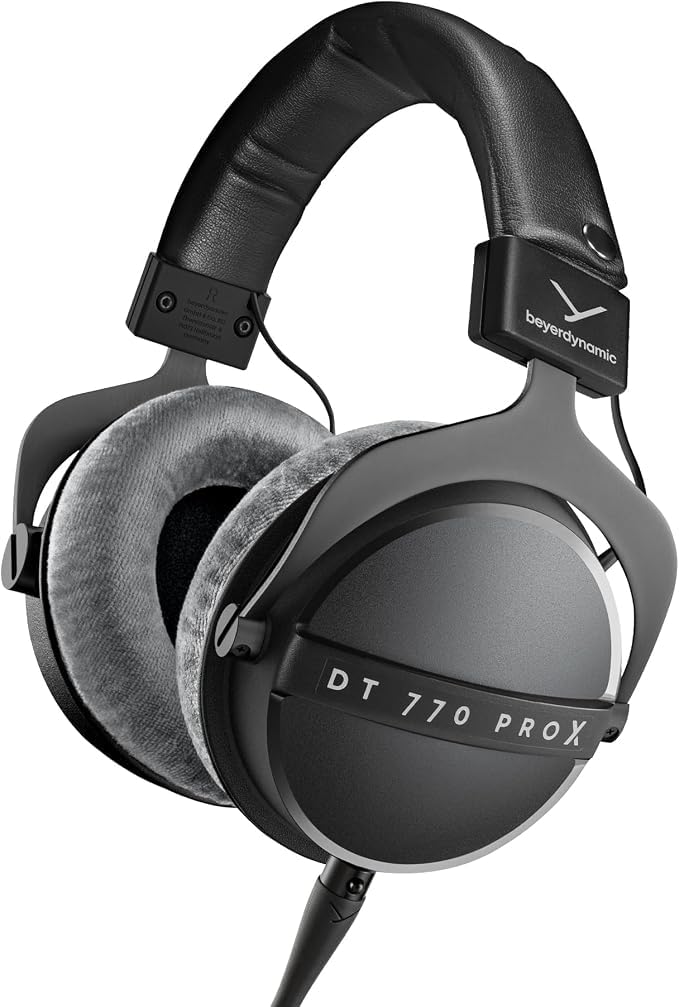
A 48-ohm studio tank that plugs into anything and refuses to flinch.
Most studio headphones need an amp (a separate amplifier) to sound their best. This one does not. The 48-ohm drive (a measure of electrical resistance) means you can plug the DT 770 Pro X straight into a laptop, an interface, a phone or a console and it will play loud and clean without extra gear. That is a real convenience if you listen from a controller or a desk setup. The STELLAR.45 driver (the part that turns electrical signals into sound) is beyerdynamic’s flagship transducer, built for precise, high-resolution sound at any level. The closed-back design (cups that seal around your ears) keeps headphone bleed out of your mic while you record.
For metal, the strengths are separation and build. Instrument separation is excellent for mixing, and the closed-back isolation is strong enough to keep the outside world out. The velour ear pads and replaceable design make it a set that survives daily use — the detachable mini-XLR cable swaps or replaces in seconds. Bass is deep and controlled, and the treble is present and detailed.
The trade-off is honest and worth knowing: the treble (high frequencies) is bright and sharp, which makes it a studio tool rather than a laid-back listener’s set. The stock tuning can sound hollow on some tracks until you apply a bit of EQ (equalization, adjusting frequency balance). Comfort divides opinion — velour cups (soft fabric ear pads) warm up and the fit can feel tight on larger heads. A small EQ cut in the treble tames the brightness; leave it flat and the tuning can sound clinical on thin recordings.
What studio ears get right
- 48-ohm drive runs off a laptop, phone or console with no amp
- STELLAR.45 driver for precise, high-resolution detail
- Detachable mini-XLR cable and replaceable velour pads
- Strong closed-back isolation for tracking and noisy rooms
The honest trade-offs
- Bright, sharp treble that can tire on poorly mixed tracks
- Fit feels tight on larger heads and velour pads warm up
- Stock tuning benefits from a little EQ
Reach for this if: you record, mix or game and want a detail-forward closed-back set that needs no amp.
Not your set if: you want a warm, forgiving, laid-back sound straight from the start.
4. Marshall Monitor III ANC Wireless Over-Ear Headphones

The one you can charge once a month and forget the cable exists.
Battery is where the Monitor III ANC runs away with it: up to 100 hours of wireless playtime without active noise cancellation, or 70 hours with it engaged. For a metal fan who listens in long stretches, that is roughly a monthly charge rather than a nightly one. A 2.5-hour charge tops it up, and Bluetooth 5 reaches up to 33 feet from your source.
Marshall’s signature sound uses Dynamic Loudness to keep treble, mids and bass balanced at every volume, so a quiet late-night session still has the punch the mix needs. Active noise cancellation was upgraded from the previous model and now measures ambient noise continuously across three levels, with a transparency mode when you want the room back. Soundstage spatial audio moves the music out of your head for a wider presence, and the foldable design plus a hard case make it a travel-friendly set.
The 32mm drivers (the speaker units that produce sound) are the smallest here. The recurring gripe is that the noise cancellation (active noise cancellation, or ANC, which uses microphones to block outside sound) is decent but not the absolute class leader. It is enough to silence cafe chatter and road noise, but not quite the deepest hush available. Controls are physical buttons rather than touch, which many people prefer. Comfort is the standout beyond the battery: plush, cloud-like ear cushions that stay easy for four or five-hour sessions.
Why it stands out: up to 100 hours of playtime, three ANC levels, a foldable hard case and physical controls that never misfire.
The honest caveat: 32mm drivers in an ANC (active noise cancellation) set mean bass weight comes from tuning rather than driver size, and the cancellation is good rather than top-tier.
Pick it for: wireless metal listening on the move, where battery life and comfort matter more than a wired signal.
Skip it for: critical wired listening where the last word in bass control matters.
5. Nothing Headphone (1) Headphones
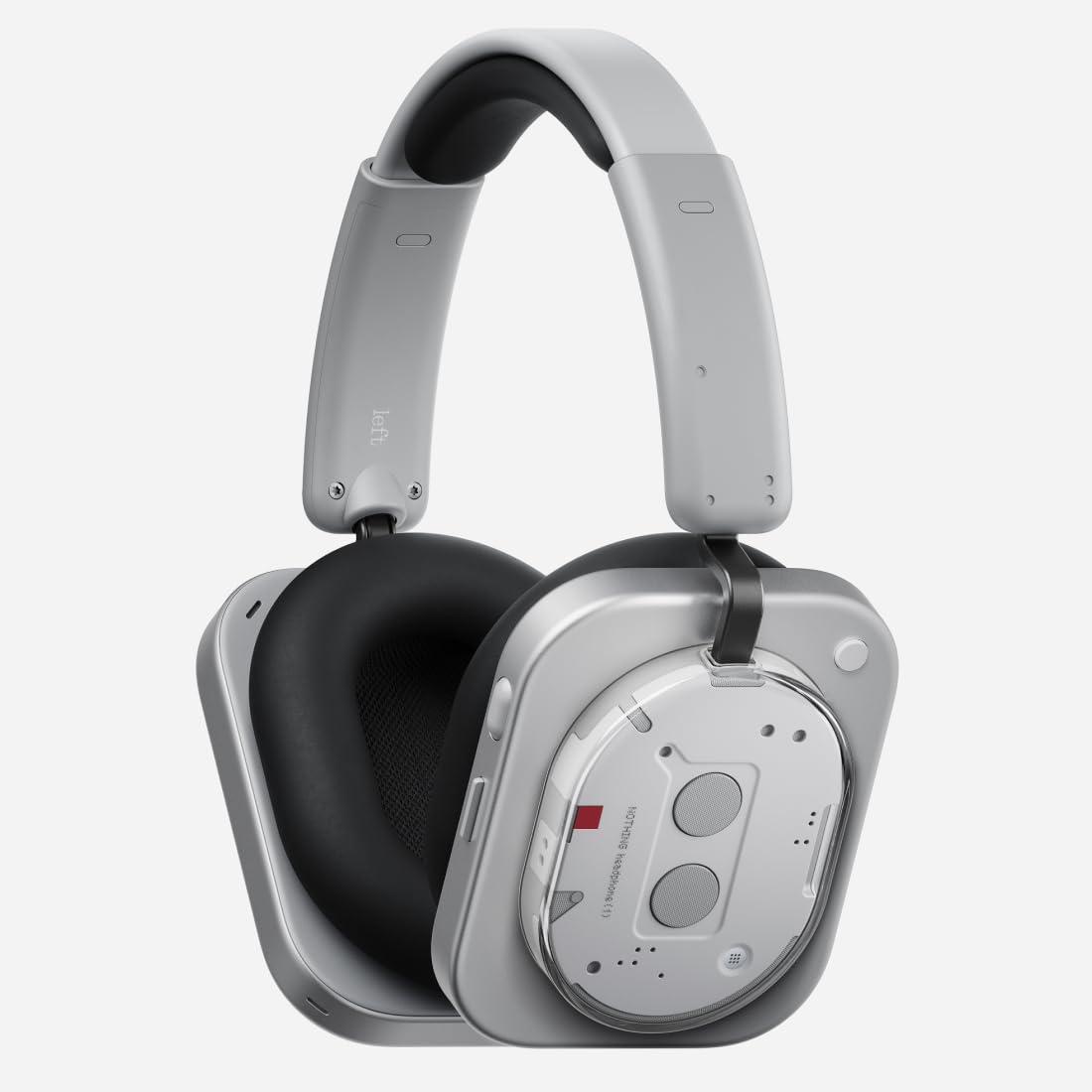
A 40mm KEF-tuned driver with an 8-band EQ that lets you sculpt your own metal mix.
The Nothing Headphone (1) is the tinkerer’s choice. Its 40mm driver was tuned through a partnership with British audio brand KEF, and the Nothing X app throws in an 8-band equalizer — more bands than many rivals offer. That matters for metal, because you can pull down the sharpest highs that make cymbals sting, lift the mid range where rhythm guitars live, and add depth with the Ultra Bass mode. Switch it on and the set becomes whatever your ears want.
The hardware is as flexible as the app. Hi-Res Audio support includes LDAC, USB-C audio and a 3.5mm jack, so you can run it wirelessly or wired to older gear. Battery runs up to 80 hours with the noise cancellation off (35 with it on), and a quick 5-minute charge buys you 5 hours. Hybrid active noise cancellation has four settings — High, Mid, Low and Adaptive — and the convenience of roller and paddle controls plus customizable buttons keeps your most-used commands one touch away.
Two honest points. from the start the sound is warm and relaxed rather than immediately explosive, so this is a set that improves once you spend time in the app. And the fit is a mixed bag — secure for some, a bit tight for others, and the cups are slightly heavy. Still, few wireless sets combine KEF tuning, an 8-band EQ and this much connectivity in one package.
The tuner’s argument: KEF-tuned 40mm drivers, an 8-band EQ, LDAC over Bluetooth, USB-C audio and a 3.5mm jack make it the most adaptable wireless pick here.
The fair warning: from the start the sound leans warm, and some buyers find the cups slightly heavy and the fit a touch tight.
Best for: the listener who wants to shape the sound themselves and switch between wireless and wired sources.
Less ideal if: you want a set that sounds immediately aggressive with no app tuning.
6. Bowers & Wilkins Px7 S3 Wireless Over-Ear Headphones

Custom 40mm bio-cellulose drivers doing the most detailed wireless work in this list.
If sound quality is your only real priority and you can live without a cable, the Px7 S3 is the wireless headliner. Its 40mm bio-cellulose drivers (speaker units made from plant-based material), powered by dedicated discrete amplification (separate amplifier circuits for each driver), pull out rich, natural detail and dynamic range. That is the kind of resolution that lets you hear each guitar overdub rather than a mashed-up blur. Bluetooth 5.3 (a wireless standard) with aptX Lossless and aptX Adaptive (codecs that compress and send audio) keeps that quality as close to the source as wireless allows. A 24-bit DSP (digital signal processor) with a 5-band EQ (equalizer) in the Bowers & Wilkins Music App lets you dial the sound in from studio-flat to bass-forward.
The build backs up the price tag. Aluminum accents, synthetic leather and fabric finishes sit on a design refined from six decades of acoustic research, and slimmer earcups with a lightweight headband and plush memory-foam cushions distribute pressure for long sessions. Adaptive noise cancellation with an 8-microphone array keeps calls clear. Battery runs up to 30 hours, and a 15-minute quick charge adds 7 more.
The trade is straightforward: this is a sound-first wireless set, and the noise cancellation is good rather than the deepest you can buy. The mids can also feel a touch restrained from the start until the 5-band EQ lifts them. Buy the Px7 S3 for the audio and the craftsmanship; a dedicated ANC-first buyer may prefer a rival.
What makes the sound lush
- 40mm bio-cellulose drivers with dedicated amplification for deep detail
- aptX Lossless and aptX Adaptive over Bluetooth 5.3
- 24-bit DSP and 5-band EQ for shaping the sound
- Premium aluminum, leather and fabric build with plush cushions
Where it makes you compromise
- Noise cancellation is capable but not top of its class
- Mids can feel restrained from the start until you EQ
- 30-hour battery is modest next to longer-life rivals
Worth the spend if: the most detailed wireless metal sound and a premium build are what you are after.
Keep looking if: deepest noise cancellation is your first requirement.
7. Sennheiser HD 660S 2 Open-Back Audiophile Headphones
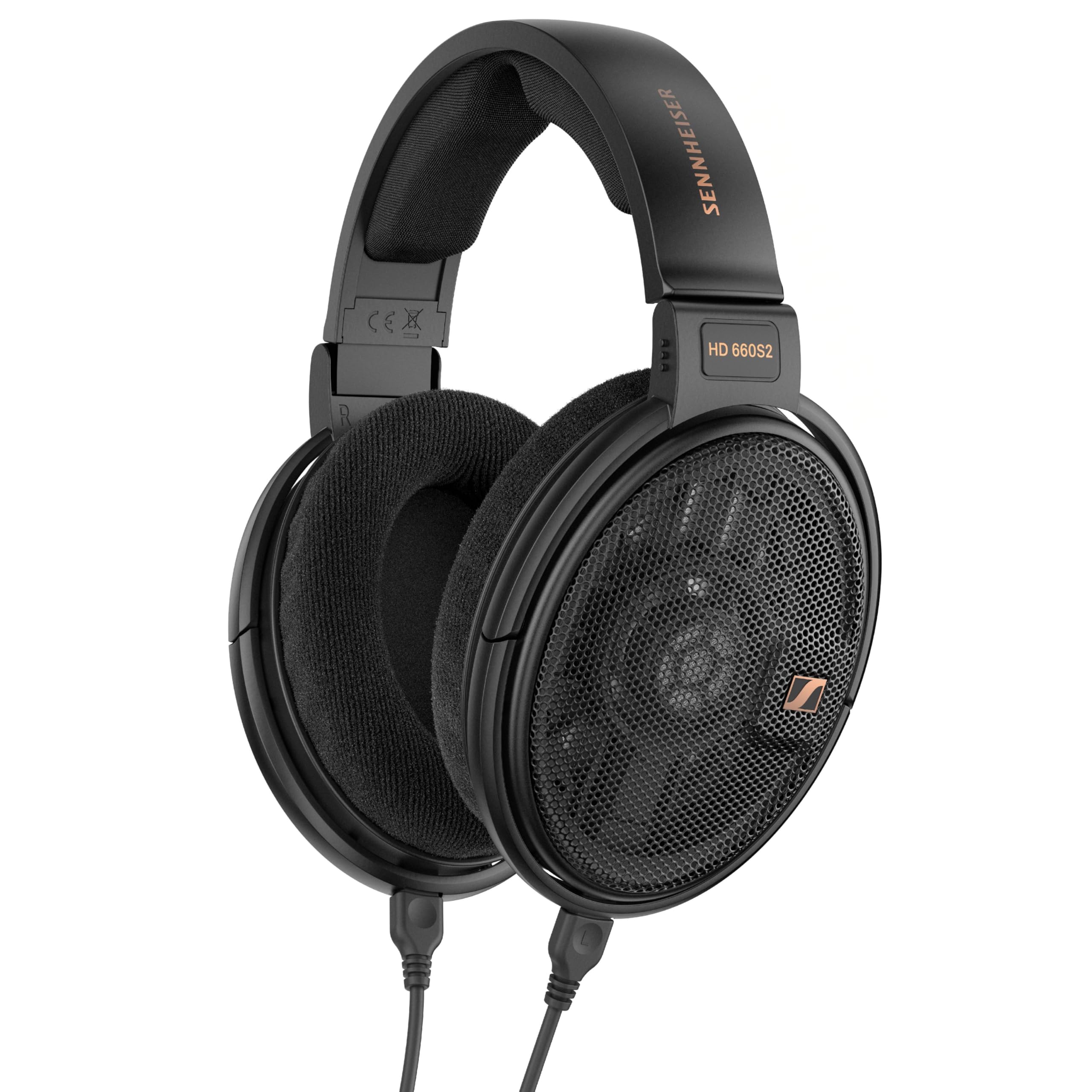
The open-back set that builds the whole concert hall around your head.
The HD 660S2 is for the listener who wants to hear the room, not just the riff. Its 42mm transducers with an ultra-light aluminum voice coil deliver detailed highs, rich mids and deep, controlled bass, and the open-back design throws a wide, spacious soundstage that separates every instrument in a dense metal mix. Sennheiser quotes the low-end reach from piano lows at 27.5 Hz up through bass drums at 45–60 Hz, so the kick has real foundation rather than a thin thump.
Comfort is the other half of the pitch: breathable plush ear cushions and a lightweight frame keep long listening sessions from turning into a chore, and the build is crafted in Germany and Ireland. Two cables come in the box — a 6.3mm and a 4.4mm balanced option — plus a 6.3mm-to-3.5mm adapter, so you can run it from a proper amp or a laptop.
Open-back means open: sound leaks out and the room leaks in, so this is a desk set, not a commute set. The stage is also more intimate than expansive in absolute terms, and on hard rock and metal the tuning is warm and forgiving rather than aggressive — some listeners want more bite and dynamics on the heaviest material. The build feels plasticky next to metal rivals, and the value is best on a sale. Give the 300-ohm load a proper amp and a week of listening, and the open stage opens up.
Where it wins: an open, spacious stage, deep controlled sub-bass and cushions comfortable enough for hours of listening.
Where it asks for more: open-back leakage means it stays at the desk, and the warm tuning trades edge for forgiveness on the heaviest tracks.
For you if: you listen seriously at a desk and want an airy, detailed stage that unmasks every layer.
Not for you if: you need isolation for the commute or a sound that bites hardest on extreme metal.
Know the Specs
Driver Size (mm)
The driver is the speaker inside each cup, and its diameter in millimeters hints at how much air it can move. A bigger driver, like the 45mm units in the ATH-M50X and DT 770 Pro X, tends to deliver deeper, more controlled bass — useful when a kick drum needs weight without smearing into the guitars. Smaller drivers like the 32mm in the Marshall Monitor III can still sound full, but the low end is more a product of tuning than of raw size. For metal, aim for control and speed rather than size alone.
Impedance (Ohms)
Impedance is the electrical resistance of the headphones, measured in ohms, and it decides how much power they need to get loud. Low-impedance sets like the 48-ohm DT 770 Pro X run happily off a phone, laptop or console. Higher-impedance audiophile models often want a dedicated headphone amp to give their best, so if you plan to plug straight into a laptop, check the figure first. Match the impedance to your source and you can skip the amp entirely.
Common Questions
Will closed-back headphones sound better for metal than open-back?
Do I need a headphone amp to drive metal headphones?
Can an EQ app really fix harsh treble on metal?
How much battery life should I expect from wireless metal headphones?
Are wired headphones better than wireless for fast double-kick passages?
What driver size is best for heavy metal?
Can I use gaming headphones for metal instead?
How long do the ear pads last on these headphones?
Does active noise cancellation help or hurt metal listening?
Is an open-back headphone too leaky for office use?
The Bottom Line
For most metal fans, the headphones for heavy metal music winner is the Audio-Technica ATH-M50X. Its 45mm drivers keep fast double-kick passages tight and guitars separated, and it comes with three cables in the box plus a seal that blocks the room. If you want to shape the sound yourself and switch between wireless and wired sources, the Nothing Headphone (1) gives you a KEF-tuned driver and an 8-band EQ (equalizer). For desk listening where an airy, detailed stage matters most, reach for the Sennheiser HD 660S2.
How we choose
We do not accept paid placement. Every pick is matched to a real buyer and a real use-case; we do not hands-on test units.
Sources
Specifications: manufacturer listings and product documentation. Review insights: verified customer reviews, as of October 2026. Pricing: not shown on this page (it changes often); check the current price via the retailer link.
As an Amazon Associate, Aappliancez earns from qualifying purchases. This does not affect which products we feature.