Disclosure: Some links in this post are affiliate links. As an Amazon Associate I earn from qualifying purchases, at no extra cost to you. Learn more
Specs are compiled from manufacturer listings and verified buyer reviews and can change over time — please confirm the key details on the product page before buying.
You move your head, and the game camera follows. That is the whole promise of a head tracker for PC, and it is the difference between peeking at the cockpit with a fiddly hat switch and simply turning to look at your wing. The right pick depends on what you fly or drive: sim pilots want a monitor-mounted camera that reads tiny head movements, while VR users chasing full-body avatars need beacons that talk to their headset. Below you get nine options, sorted by what they actually do well and where each one asks you to compromise.
This guide is built by comparing the manufacturers’ published specifications and the patterns across verified customer reviews, so you get each pick’s real strengths and trade-offs instead of marketing spin.
Some units are cameras that sit on your monitor, others are beacons you strap to your chest, and a few are headsets with the sensor built in. Knowing which of those three types you are buying is the entire game. The picks below match each type of hardware to a specific setup, so you can choose without guessing.
Top Picks


How To Choose The Best Head Tracker for PC
Start with one question: are you chasing a camera that moves your view, or a set of beacons that puts your actual body into a virtual world? Those are two different products with two different buyers, and the rest of your research follows from which camp you are in.
Camera-on-monitor trackers for sim pilots
These are small optical units you mount along the top or bottom of your screen. They read a clip or reflectors and translate your head’s position into camera movement, so looking up in a flight sim actually looks up. The thing to check is whether the unit needs you to wear anything — a hat brim clip is the classic method, and it is also the most common source of annoyance when the clip slips off mid-flight.
Beacon trackers for full-body VR
If your goal is seeing your own legs in VRChat, you want beacons you strap to your feet and waist, not a screen camera. These rely on base stations or on the tracker’s own cameras and need a clean line of sight to stay accurate. A blanket over the sensor, a reflective window, or a bright lamp in the wrong spot can knock tracking out even on a good unit.
Headsets with tracking built in
Some gaming headsets ship with an integrated head-tracking sensor that moves the soundstage as you turn, and a few go further and read eye position. This is audio-first tracking, useful for positional awareness, but it will not look around a cockpit the way a dedicated tracker does. Check whether the tracking features need PC software, because on consoles those extras often go dark.
Side-by-Side Comparison
| Model | Best For | Tracking Type | Weight | Battery | Amazon |
|---|---|---|---|---|---|
| HTC VIVE Tracker (3.0)★ Best Overall | Full-body VR in VRChat | SteamVR base station beacon | 8 ounces | Up to 7.5 hours | Amazon |
| HyperX Cloud Orbit SSound-First Pick | Head-tracking audio on PC | Waves Nx head tracking (headset) | — | — | Amazon |
| TrackIR 5Sim Standard | Flight and racing sims | 6DOF USB optical camera | 2.4 ounces | — | Amazon |
| JBL Quantum One | Competitive PC audio with head tracking | Integrated head-tracking sensor (headset) | — | — | Amazon |
| TrackIR 5 Pro & TrackClip Pro | Sim pilots who want the powered clip | 6DOF infrared camera plus active LED clip | — | — | Amazon |
| Natural Point TrackIR 5 Bundle | Complete TrackIR starter kit | 6DOF optical camera plus TrackClip Pro | — | — | Amazon |
| VIVE Tracker (3.0) — Go Beyond Controllers | Expanding an existing SteamVR kit | SteamVR base station beacon | 75 g | 7.5 hours | Amazon |
| Tobii Eye Tracker 5 | Hands-free sim flying, no wearables | Head and eye tracking (USB) | 97 g | — | Amazon |
| HTC Vive Ultimate Tracker 3 Pack | Base-station-free full-body VR | 6DOF inside-out self-tracking | 1.76 pounds (set) | — | Amazon |
Detailed Reviews
1. HTC VIVE Tracker (3.0)
Our pick — 4.5+★ from 2,000+ verified ratings; the strongest balance of quality and price.
Three of these strapped to your hips and feet put your whole body in VRChat.
You can see your own legs move in a virtual room with as few as 3 trackers, because that is the minimum for full-body tracking inside SteamVR (Valve’s virtual reality platform). That makes it the cheapest honest path to body tracking. Each unit weighs 8 ounces, so it hangs off a strap without dragging you down. The 240° field of view (the arc the base stations can see it from) means tracking works across a wide sweep, not one narrow balance. For comparison, the TrackIR 5 camera weighs 2.4 ounces — the VIVE is 8 ounces, the cost of carrying a battery and emitter on your body instead of a passive reflector.
Battery is where the 3.0 earns its keep. It runs up to 7.5 hours, which is up to 75% longer than the older VIVE Tracker 2018, and it is also 15% lighter than that model. In practice that means a long VRChat evening or a motion-capture session fits in one charge. Owners who came from earlier trackers describe the drift as basically gone, and the calibration routine dropping to roughly once every hour or two instead of constant babysitting. What wins people over most is build quality, and the tracking that follows from it, so the thing feels like a tool rather than a toy.
The catch is the ecosystem. You need base stations and software sold separately, and each tracker needs a free USB connector on your PC through its dongle, so a four-tracker rig eats ports fast. Reflective surfaces and anything blocking the base stations’ view will still throw it off. It is also a passive beacon, not a camera, so it does nothing for flight sims on a flat screen.
Why it earns the top slot
- Full-body tracking from as few as 3 units, on SteamVR BS1.0 and BS2.0
- Up to 7.5 hours per charge and 15% lighter than the 2018 model
- 240° field of view keeps it visible to base stations across a wide arc
- Long-term durability holds up over years of use
What to plan around
- Base stations and software are sold separately
- Each tracker occupies a USB port through its dongle
- Needs clear line of sight and no reflective surfaces
Buy this if: you want your real body in VRChat or motion capture and you already have or will buy base stations.
Keep shopping if: you fly flat-screen sims — you want a camera on your monitor, not a beacon on your foot.
2. HyperX Cloud Orbit S-Gaming Headset with Head Tracking
The tracking here moves the soundstage, not the camera — and the drivers are the real story.
Audeze planar magnetic drivers inside a gaming headset is an unusual pairing, and they are why this one earns a place on a head-tracking list at all. The Waves Nx system tracks your head and repositions the audio around you, so turning your head shifts where a sound seems to come from. Sound pressure level is rated above 120 dB. Owners who compare it to pricier headphones say it sits in the same league for music and games, which is high praise for a headset with a microphone attached.
Compatibility is broad by design: PC, Xbox One, PS4, Mac, mobile, and Nintendo Switch, all over a wired connection. The detachable noise-cancelling mic with a pop filter handles voice chat, and there is touch control on the earcup. If your reason for wanting head tracking is positional audio in a shooter or a movie, this is the shape that makes sense — it just does not move your in-game view.
Be honest about the build. The comfort gets split verdicts, the earcups and head cushion have peeling reports, and the recurring gripe is the right-ear connector cracking over time. Renewed units specifically can arrive with driver issues, so a warranty matters here. Buy it for the planar sound and the head-tracked audio; treat the shell as something to handle carefully.
Worth it for: a PC player who wants head-tracked 3D audio and does not want to strap beacons to their feet.
The honest limit: a renewed unit carries real risk — check the return window before you commit.
Pick it for the drivers: planar magnetic audio with head-tracked positioning, wired to whatever you play on.
Pass if: you need your camera to follow your head in a cockpit — this only moves the sound.
3. TrackIR 5 Head Tracking System
The camera that made leaning out of a virtual canopy feel normal.
Six degrees of freedom (6DOF) is the phrase to understand here: the sensor reads yaw, pitch, and roll (turning left-right, tilting up-down, and leaning side to side), plus movement along the X, Y, and Z axes. So it tracks your head in full three-dimensional space, not just side to side. The USB optical sensor is built for smooth, low-latency response (little delay between your move and the screen) even in low light. A magnetic base clamps to most monitors and lets you pull the unit off without tools. The software ships with motion curves, sensitivity sliders, dead zones (areas where small moves are ignored), and ready-made game profiles.
For flight and racing sims this is the reference point everyone else gets measured against — it turns a fixed viewpoint into a head that can lean toward the panel. MSFS and War Thunder run on it without drama, according to the sim crowd, and the immersion jump over a hat switch is the reason people keep buying it years after launch. What the reviews circle back to most is sheer functionality: it does the job, consistently, across a long list of supported titles.
Then comes the tuning. Default sensitivity runs hot for many buyers, the hat clip can slip off, and a bright backlight or snowy reflection can throw the camera off mid-session. Racing drivers report recentering once a lap at first, and most sim pilots describe spending roughly ten hours dialing it in. Check the compatibility list before you buy, because support is wide but not universal. If you wear glasses, expect to experiment with angles.
The measured truth: at 2.4 ounces it is one of the lightest units on this list, and it is a passive camera, so there is nothing to charge.
Set aside a weekend: the software rewards patience, and the hat clip is the weak link in the chain.
Best fit: the sim pilot flying DCS, MSFS, or iRacing who wants the most widely supported head camera on the market.
Think twice if: you refuse to tune sensitivity curves — this one asks for setup time before it sings.
4. JBL Quantum One Gaming Headset with Head Tracking

A headset that tracks your head so the sound field stays anchored to the room.
The integrated head-tracking sensor here feeds JBL QuantumSPHERE 360, which calibrates the audio algorithm so the soundscape stays fixed in space while you turn — the opposite of audio that swings around with your ears. Add DTS Headphone X v2.0, Hi-Res certified 50mm neodymium drivers, and active noise cancelling tuned for gaming, and you get one of the denser feature sets on this page. The leather-wrapped memory foam cushions and lightweight headband are built for long sessions.
Owners with deep audio backgrounds call it near-perfect once you spend time in the QuantumENGINE software, and it holds its own against well-known studio headphones in direct A/B listening. The detachable boom mic is clear in-game and on Discord, and side-tone through the app works as a reminder that you are live. If you want spatial audio competition-grade and head tracking in one cable, this delivers.
The catch is that the clever parts live in software. QuantumSPHERE 360 and the EQ work only over USB on PC, so console and mobile players lose most of the good stuff. There is also a real pattern of software trouble where Windows stops detecting the headset until you replug it, and the ANC notifications fire off loudly at startup. Wired-only, and the plastic shell is a question mark over years of use.
Where it shines
- Head-tracking anchor keeps QuantumSPHERE 360 audio fixed in space
- Hi-Res certified 50mm neodymium drivers tuned for gaming
- Active noise cancelling that works over USB on PC, PlayStation, and Mac
- Detachable boom mic plus 3.5mm fallback for other platforms
Where it asks for patience
- Most tracking and EQ features require PC software over USB
- Some units need a replug when Windows loses the device
- ANC startup chime is loud with no obvious volume trim
Choose this if: you play on PC over USB and want head-tracked spatial audio plus noise cancelling in one headset.
Look elsewhere if: you split time between console and PC — the best features stay locked to the PC side.
5. TrackIR 5 Pro & TrackClip Pro Optical Track System
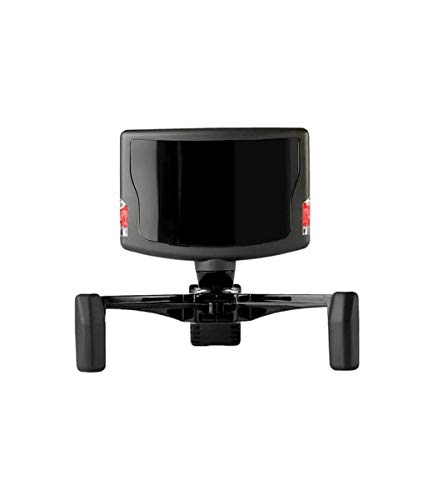
The bundle that swaps the floppy hat clip for a powered clip on your headset.
TrackIR is an infrared camera that reads your head’s position and orientation and feeds it to over 100 enhanced games and simulations. Every version includes the standard TrackClip, which attaches to a hat brim and uses three retro-reflective markers to bounce infrared light back at the camera. This bundle adds the TrackClip Pro, which mounts on almost any headset and, crucially, uses active LEDs instead of passive reflectors. That makes the reading more accurate and extends reach to 1.5 metres (5 feet).
For someone already wearing a gaming headset, the Pro clip solves the most common complaint about TrackIR — that the hat clip moves or falls. It ships as a genuine TrackIR set, and buyers who replaced a failing older unit report it dropping straight into their existing setup. In MSFS 2020 paired with a Honeycomb Alpha, the head tracking simply beats reaching for the hat switch.
The recurring wrinkle: glasses. Reflections off lenses can make the tracking jump, and that tends to happen at the worst moment — a night carrier landing or a tight dogfight — even on forgiving sensitivity settings. Wired headset users also pick up an extra cable from the powered clip. Neither is a dealbreaker; both are things to know going in.
For the sim veteran: accurate tracking with the powered clip on your headset, no hat required.
The glasses caveat: lens reflections can cause jumps — test with your own frames before you commit.
Worth it for: the pilot who already wears a headset and wants the more accurate LED clip instead of a hat brim.
Not for you if: you have no headset to mount it on and would rather keep things simple with the standard version.
6. Natural Point TrackIR 5 Bundle with TrackClip Pro

Camera and powered clip in one box, for the sim pilot who wants the whole kit.
Everything the standalone camera gives you, plus the TrackClip Pro in the same purchase. It is the easiest way to start from zero: USB connection, works on a desktop or laptop, and it installs on Windows 11 without a fight according to flight-sim owners. DCS World works from the start, which frees your joystick’s hat switch for other jobs. X-Plane takes a little profile tweaking before it feels right.
The powered clip mounts easily to a headset, and that is the practical upgrade over the hat version. Flight simmers describe the immersion as natural look-around — you glance toward a gauge and the view follows. Expect about an hour of setup and fine-tuning, and lean on the available video guides; the software is not intuitive on first launch.
Two honest notes. Some listings have shipped a knock-off that still functions, so buy from a source you trust. And the clip adds a wire to your headset, which is a small annoyance when you are already tethered. Speed and smoothing need adjustment too — the default is too responsive for something like a landing.
The practical read: a complete starter kit for combat and flight sims, with the clip matched to the camera from day one.
Check the seller: authenticity has varied, and a knock-off still “works fine” but is not the same product.
Reach for this if: you are new to head tracking and want camera plus clip in one order.
Hold off if: you already own a TrackIR camera — you only need the clip, not the whole bundle.
7. VIVE Tracker (3.0) — Go Beyond Controllers
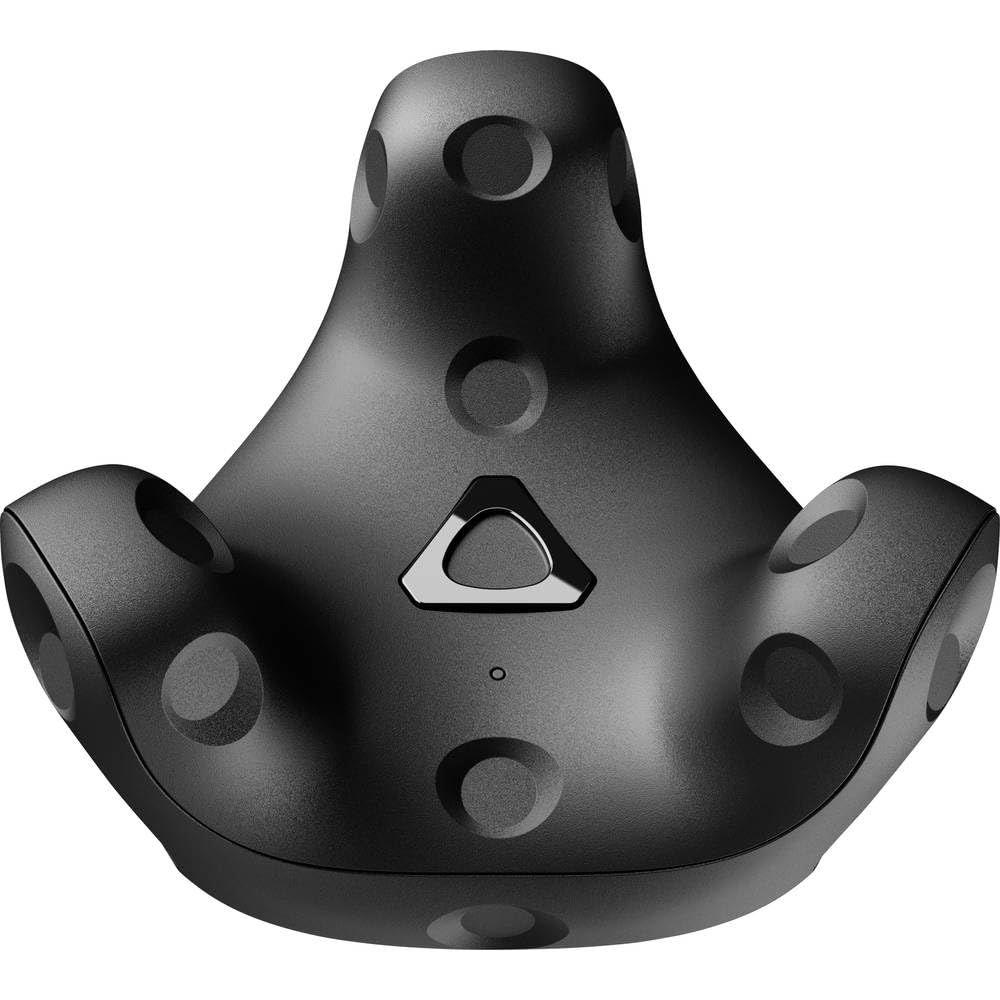
Same tracking brain as the top pick, sold as a single unit for people expanding a rig.
At 75 g it is the number that matters here — 15% lighter than the 2018 VIVE Tracker, and 33% smaller in its 70.9 x 79.0 x 44.1 mm body. On a foot strap that translates directly to less swing and less fatigue. The 240° field of view and support for both SteamVR BS1.0 and BS2.0 mean it slots into an existing base-station setup without new hardware. Battery runs 7.5 hours, which is up to 75% longer than the older model.
This listing is the individual tracker, so it makes sense for someone who already has base stations and dongles and wants one more point — a fourth foot, a prop, a camera, a tool. Pairing is quick, integration into an existing VR setup is straightforward, and the tracking is accurate and stable. Owners running four of them describe the quality as justifying the cost.
The honest trade-off is the ecosystem again: base stations and software are separate, and it needs a free USB port through its dongle. Supplies have been tight enough that buyers have paid a premium to skip the wait. It is also, like the top pick, a flat-screen non-starter — this is body tracking, not sim camera tracking.
What you gain
- 75 g and 33% smaller than the 2018 body, easier on a strap
- 7.5-hour battery keeps a session going
- Works with SteamVR BS1.0 and BS2.0 base stations
- Quick pairing into an existing VIVE setup
What you supply
- Base stations and software sold separately
- One USB port per tracker via dongle
- Availability has pushed buyers to pay above list
Suits you if: you already run SteamVR base stations and want one more tracked point without buying a whole set.
Keep walking if: you are starting from nothing — you will pay more buying the pieces separately.
8. Tobii Eye Tracker 5 – Head & Eye Tracking Gaming Peripheral
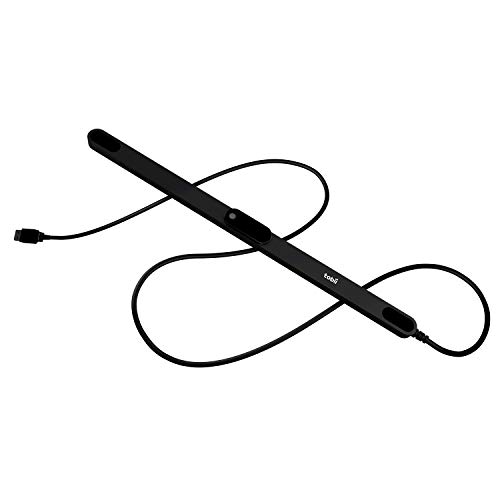
No hat, no clip, no headset beacon — it reads your face from a bar under the screen.
The pitch is simple: mount this 97 g bar below your monitor, and it tracks both head and eye movement with nothing to wear. It works in all light conditions, from a pitch-black room to bright daylight, which is the exact weakness that plagues hat-clip cameras. Over 170 games support it, including Star Citizen, Microsoft Flight Simulator, War Thunder, and Euro Truck Simulator. It is also compatible with Windows Hello for biometric sign-in.
Truck and flight sim pilots who moved over from a hat-clip camera describe the difference as instant and sunlight-proof — no headgear, no reflective markers, and a magnetic mount that sits on a curved ultrawide without complaint. Combine head and eye motion and the screen scrolls even more smoothly than head-only tracking. On Win11 and the big sims, setup is easy once you enable TrackIR in the app.
Now the reality check. Game support is the big variable — a lot of titles simply do not use it, and the tracking itself lands as hit-or-miss depending on the sim. It is slower to respond than a dedicated camera, and it can conflict with other USB peripherals: one setup lost its rudder pedals the moment the Tobii was connected. You also need a clear line of sight to your eyes, so a large yoke can block it.
Why it stands out: true hands-free tracking with zero wearables, immune to room lighting.
Before you buy: check the supported-game list and your peripheral stack — compatibility, not accuracy, is the risk here.
Good match for: the sim pilot who hates hats and clips and wants hands-free looking with a clean desk setup.
skip it if: you play titles outside the 170+ supported list — you will get almost nothing from it.
9. HTC Vive Ultimate Tracker 3 Pack + Dongle

Three self-tracking beacons and a dongle, with no base stations in the shopping cart.
Two wide-field-of-view cameras and computer vision on each tracker handle the positioning, so there is no separate base-station kit to buy. It is 6DOF inside-out tracking that works with HTC VIVE XR Elite and VIVE Focus headsets, plus all SteamVR PC VR headsets including Meta Quest, Valve Index, and PS VR 2. One VIVE Wireless Dongle connects up to 5 trackers, and the quick-release mechanism clicks on in seconds.
The concept is strong for anyone with limited space: no tripods, no mounted emitters, just beacons and a dongle. Battery life earns genuine praise, with owners reporting roughly 5 to 6 hours and up to 8 while dancing. Setup, when it cooperates, is quick. The set weighs 1.76 pounds all in, and the straps are comfortable and easy to keep clean.
Then comes the room. These cameras need a lot of light — a bright warm ceiling lamp that stays on, lenses kept clean and uncovered. Bare white walls confuse them, so posters or decor help them find reference points, and reflective surfaces like windows and mirrors will break tracking. Room scans get forgotten between sessions, forcing a fresh 2-3 minute scan, and waist trackers can drift. That lighting demand is the fit note, not a flaw in the idea.
The case for it
- No base stations — two wide-FOV cameras per tracker do the work
- One dongle pairs up to 5 trackers
- Works across VIVE XR Elite, Focus, and SteamVR headsets like Quest and Index
- Quick-release mounts click on and off in seconds
The room tax
- Needs strong, consistent lighting to hold tracking
- Rescans the room most sessions
- Reflective or bare white surroundings cause dropouts
Made for: a VR user with a well-lit room and a Quest or Index who wants full-body tracking without base stations.
Not a match if: you play in a dark basement — the cameras will lose your legs.
Know the Specs
Degrees of freedom (6DOF vs 3DOF)
Degrees of freedom describes how many ways a tracker can sense motion. Three covers rotation — looking left, up, and tilting. Six adds movement along the X, Y, and Z axes, so it knows you leaned forward, not just turned. For sim cockpit peeking, 6DOF is what lets leaning toward the panel feel like leaning. For full-body VR, 6DOF is what keeps a foot tracker from confusing a step with a turn.
Line of sight and lighting
Optical trackers work by seeing. A camera-on-monitor setup needs the clip or reflectors in view, which is why a hat that slips or a lens reflection breaks tracking. Beacon trackers need their base stations or their own cameras to see the room, which is why a blanket, a bright lamp, or a mirror can cause dropouts. Whatever you buy, position your monitor, lamps, and seating around the sensor’s line of sight, not the other way around.
Latency and smoothness
Latency is the delay between your head moving and the view following. Low latency feels like looking around; high latency feels like the camera is dragging behind you. Software sensitivity and smoothing curves control how aggressively the view responds, and most units ship too hot. Expect to spend real time in the sensitivity and smoothing software before it feels natural — that is normal, not a defect.
Game and software support
A tracker is only as good as the games that use it. TrackIR lists over 100 enhanced titles and Tobii lists 170+, but neither covers everything. Headset-based tracking usually needs PC software and often goes dark on consoles.
Common Questions
Will a head tracker work with Microsoft Flight Simulator?
Do I need base stations to use VIVE trackers?
What does 6DOF actually mean for sim flying?
Will my glasses interfere with a TrackIR camera?
Can I use a head tracker on console or mobile?
Is a head tracker better than VR for flight sims?
How long does a VIVE tracker battery last?
Why does my eye tracker lose tracking in a dark room?
Can head tracking replace my mouse in menus?
Do I need three VIVE trackers or will two work?
The Bottom Line
For the biggest share of buyers, the head tracker for pc winner is the HTC VIVE Tracker (3.0). It turns three beacons into full-body tracking, and its 7.5-hour battery plus 240° field of view keep a long session going. If you fly flat-screen sims and want a camera on your monitor, grab the TrackIR 5. And for hands-free flying with nothing to wear, the Tobii Eye Tracker 5 is the one to reach for. One honest nudge: decide whether you are tracking your view or your body before you spend a cent. A camera tracker and a body beacon are not interchangeable, and buying the wrong type wastes the money.
How we choose
We do not accept paid placement. Every pick is matched to a real buyer and a real use-case; we do not hands-on test units.
Sources
Specifications: manufacturer listings and product documentation. Review insights: verified customer reviews, as of October 2026. Pricing: not shown on this page (it changes often); check the current price via the retailer link.
As an Amazon Associate, Aappliancez earns from qualifying purchases. This does not affect which products we feature.