Disclosure: Some links in this post are affiliate links. As an Amazon Associate I earn from qualifying purchases, at no extra cost to you. Learn more
Specs are compiled from manufacturer listings and verified buyer reviews and can change over time — please confirm the key details on the product page before buying.
If you want free over-the-air TV on the set you already own, buy a network tuner — not a converter box. That one distinction decides whether you get modern apps, whole-home streaming, and DVR recording, or whether you are stuck with a single old television and a remote you cannot read. Most buyers assume an HDMI TV tuner is a universal plug-in fix; in reality there are two very different families, and picking the wrong one is the single most common way people waste an afternoon.
This guide is built by comparing the manufacturers’ published specifications and the patterns across verified customer reviews, so you get each pick’s real strengths and trade-offs instead of marketing spin.
Some boxes tune NextGen 3.0 broadcasts and upconvert to 4K, while others exist purely to feed an old tube set through a coaxial cable. Here is the honest shortlist for the best hdmi tv tuner, split by the job you actually need it to do.
Top Picks


How To Choose The Best HDMI TV Tuner
The first question is not which box is best — it is which box matches your television. An HDMI tuner feeds a modern flat panel through an HDMI port. A converter box feeds an old analog set through a coaxial cable on channel 3. Get that backwards and nothing works, no matter how much you spend.
Decide if you need a network tuner or a single-TV box
A network tuner (a box that plugs into your router rather than your TV) takes one antenna signal and shares it across every screen in the house. Your phone, tablet, streaming stick, and smart TV each pull their own stream through an app. That is what makes it an HDMI TV tuner in the practical sense — the HDMI output happens on the device you already own.
A direct-connect box is the simpler animal. The antenna goes in one side, an HDMI cable comes out the other, and the box does the tuning itself. Fewer moving parts, no router required, but one box serves one screen.
Count your tuners before you count your TVs
Tuners are the physical radio receivers inside the box. One tuner equals one channel at a time. If two people want to watch different networks on different screens simultaneously, you need two tuners. Four tuners let four separate streams run at once, which matters in a household where someone wants sports and someone else wants the news.
Check ATSC 3.0 before you commit
ATSC 1.0 is the older broadcast standard and the one nearly every station still transmits. ATSC 3.0, marketed as NextGen TV, is the newer standard that can carry 4K picture and richer audio. A 3.0-capable box is a bet on the future; availability varies widely by city, so confirm your local stations actually broadcast it before paying extra for the feature.
Know where your recordings will live
Some tuners ship with no storage at all and expect you to attach a USB hard drive. Others include onboard storage from the start. A few charge a yearly fee for the program guide that makes scheduled recording practical. Read that line carefully — it is the difference between a one-time purchase and a recurring cost.
Side-by-Side Comparison
| Model | Best For | Tuners | Broadcast Standard | DVR Storage | Amazon |
|---|---|---|---|---|---|
| SiliconDust HDHomeRun Flex Quatro★ Best Overall | Whole-home viewing on many screens | 4 | ATSC 1.0 | USB drive (not included) | Amazon |
| SiliconDust HDHomeRun Flex DuoEasiest DVR Start | Reliable two-screen streaming | 2 | ATSC 1.0 | USB drive (not included) | Amazon |
| Tablo TV 4th Gen 2-Tuner | No-subscription DVR for a small setup | 2 | ATSC 1.0 | 50+ hours onboard | Amazon |
| NextGen TV Box (Zinwell ZAT-600B) | Watching NextGen 3.0 channels now | — | ATSC 1.0 and 3.0 | — | Amazon |
| ADTH NextGen TV Box Gen 2 | Recording NextGen TV without extras | — | ATSC 1.0 and 3.0 | 64GB built-in | Amazon |
| Zenith DTT901 | Feeding an old tube TV cheaply | — | Analog and digital | — | Amazon |
| Insignia NS-DXA1 | Keeping a vintage set alive | — | Analog to digital | — | Amazon |
Detailed Reviews
1. SiliconDust HDHomeRun Flex Quatro 4 x ATSC Tuners – HDFX-4US
Our pick — 4.0+★ from 400+ verified ratings; the strongest balance of quality and price.
Four tuners in a box the size of a paperback, sharing one antenna with the whole house.
The number that wins here is four. This network tuner packs 4 ATSC tuners (ATSC 1.0 being the standard broadcast format most stations still transmit), which means four people can watch four different channels at once. Compare that to the Tablo 4th Gen below, which runs 2 tuners — a 2.0x gap in how many simultaneous streams the household gets. For a family where the living room wants football while a bedroom wants the news, that headroom is the entire purchase decision.
What wins people over is raw performance: this box pulls in local stations a digital-ready television with its own built-in tuner cannot grab. You plug it into your router with the included network cable, attach your antenna, and it streams to Android, FireTV, AppleTV, Roku, Sony, XBox, iPhone, iPad, and Windows machines. No new cabling to each TV, no per-set hardware. Recording to a USB hard drive you supply costs nothing extra, and a paid TV guide is optional if you want auto-record by program name.
The honest catch is polish. The on-screen interface works but isn’t slick, and formatting that USB drive (preparing it so the box can record) is the one step that trips people up — set aside a few minutes for it. Buyers report that reliability, not glamour, is the story: “One owner replaced a Tablo that died after 22 months and reports the Flex Quatro has run reliably since.” It also stops working during an internet outage, unlike a self-contained converter box, so if you need an offline-only setup, look at other options on this list.
Where the Flex Quatro pulls ahead
- 4 tuners let four screens watch different networks at the same time
- No subscription needed to record to your own USB hard drive
- Works across Android, FireTV, AppleTV, Roku, XBox, iPhone, iPad, and Windows
- Backed by a 2-year warranty
What to plan around
- You must format a USB drive yourself before recording works
- The interface is plain and takes a moment to learn
- Needs your router and an internet connection to run its guide
Buy this one if: you have more than two screens and hate the idea of a monthly fee.
Think twice if: the box will sit on a single television in a home with no router nearby.
2. SiliconDust HDHomeRun Flex Duo 2 x ATSC Tuners – HDFX-2US
Two tuners, a tiny footprint, and the steadiest signal lock of the network boxes.
If the Flex Quatro feels like more tuners than your house will ever use, this is the same family with 2 tuners instead of 4. Two simultaneous streams still covers the common case — one live channel in the living room, one recording in the background. It also accepts power over Ethernet, meaning one cable can carry both the data and the electricity if your router supports it.
Reliability is the thing everyone raves about here, and it shows in the everyday behavior: it comes up in under 10 minutes and then largely stays out of your way. One buyer swapped out an aging Amazon ReCast in about 3 minutes and streamed to five televisions at once. Another pulled all 40 channels crisp on a cheap antenna after a year and a half of failed tuners. A web interface shows live signal strength and signal-to-noise so you can aim the antenna properly instead of guessing.
Two limits worth knowing. The DVR guide (the on-screen program list) is a paid yearly add-on if you want full listings and scheduled recording, and the box needs a working internet connection — it won’t act as a simple LAN-only tuner (using just your home network) when the line drops. It also crashes on a badly noisy channel, so a clean antenna feed matters more here than on a self-contained box.
Why it earns second place: near-identical software to the top pick, half the tuners, and a smaller chassis that tucks behind a router without complaint.
The trade you make: the yearly guide fee and the internet dependency are the price of admission, and a marginal antenna will expose both.
Reach for this if: two screens and one recording at a time is your realistic ceiling.
Look elsewhere if: you want zero recurring costs and no router in the loop.
3. Tablo TV 4th Gen 2‑Tuner Over‑The‑Air DVR – No Subscriptions

The one box that records without a fee, a hard drive, or a subscription attached.
Storage you do not have to buy or format is the headline. This DVR carries 50+ hours of onboard recording space and no recurring fee, so a single purchase gets you pause, rewind, replay, and scheduled captures. Two tuners record one channel while you watch another. It pairs with any antenna over the included 6′ coaxial cable and reaches Roku, Fire TV, Android TV, Google TV, Apple TV, Samsung TV, and LG TV over Wi-Fi or the included Ethernet cable.
The signal booster (a built-in amplifier that strengthens weak signals) is real, and buyers see it work: “One owner set it up on a roof antenna, scanned 133 channels, and credits the built-in signal booster for strong, clear signals.” Many owners run it for weeks with a clean picture and no service bill. The box is compact at 5″L x 5″W x 1.38″H, so it disappears next to a router.
Where this one asks patience is performance under load. Menu navigation is reported as slow, sometimes freezing, with the guide scrolling a row at a time, and the app experience varies by device — best on a Firestick, shakier on some smart TVs. It is also not compatible with non-smart TVs, certain models like Vizio, or computers. Nobody should expect the smoothness of a paid streaming app here; expect a working tool that occasionally needs a reconnect.
Smart-buyer read: the fee-free 50+ hours of storage alone justifies the purchase for anyone who refuses another monthly bill.
Go in knowing: the interface is the weak link, and that slowness is the trade-off for zero ongoing cost.
Suits you if: you want to record local TV and never see a subscription prompt.
Pick something else if: your television is a Vizio, a non-smart set, or you need desktop browser access.
4. Zinwell ZAT-600B TV Box

The only box here that decodes both broadcast standards and feeds a TV straight through HDMI.
This is a true HDMI tuner in the old sense: antenna in, HDMI 2.0 out to your television, and the box does all the tuning itself. It handles ATSC 1.0 and ATSC 3.0 broadcasts and upconverts standard HD broadcasts to 4K, plus HDR where the source carries it. Dolby AC-4 decoding brings the broadcaster audio extras — Voice + Dialogue Enhancement, consistent volume across channel changes, and personalized audio tracks.
A universal learning remote is included and can be programmed to run your TV or sound bar, so one clicker replaces two. Setup is straightforward with any standard digital antenna, and an on-screen guide handles browsing. Owners who get a clean signal describe NextGen channels as impressive and worth the price of entry.
The caveat is that this generation of 3.0 hardware is still finicky. Reports describe weaker signal lock than budget tuners on some stations, a 4K display that simply refused to work, and upconversion that softened 1080i rather than sharpening it. One owner hit an error code on two NextGen stations that traced back to broadcaster-side changes and was fixed within days; another could not tune an encrypted 3.0 channel at all. If your local market has not deployed 3.0 yet, you are paying for a feature you cannot use.
Where it shines: one box, both standards, HDMI straight into the TV, and a single remote for the whole shelf.
Where it wobbles: signal lock is not the strongest, and 3.0 station support depends on your broadcasters cooperating.
Worth grabbing if: your city already broadcasts NextGen channels and you want them on the big screen.
Pass if: ATSC 3.0 has not launched locally — the extra capability buys you nothing today.
5. ADTH NextGen TV Box Gen 2
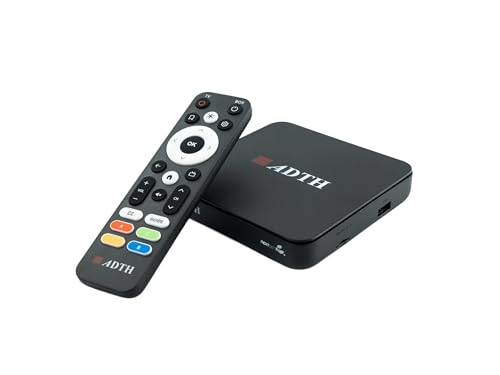
NextGen tuning plus a recording drive already inside, so there is nothing extra to buy.
The 64GB of onboard storage is what separates this from every other NextGen box in the round-up. You can record live over-the-air TV with pause, rewind, and replay on day one — no USB drive, no subscription, no accessory run. It decodes both ATSC 3.0 and legacy ATSC 1.0 and outputs up to 4K HDR on broadcasts and televisions that support it.
Audio gets real attention: Dolby Digital Plus and AC-4 support means clearer dialogue and fuller sound when your TV or sound bar can handle those formats. Dual-band Wi-Fi and Bluetooth let it pull firmware updates and pick up future NextGen features. The HDMI cable and remote come in the box, and the compact chassis fits wall-mounted setups, bedrooms, RVs, and secondary TVs.
Tuning stability is the honest worry. Buyers describe strong results with a good antenna — “One owner pulls in signals from 60 miles away and watches them without issues.” — but the channel list is uneven, with reports of frozen frames and brief dropouts on 3.0 stations (next-gen TV channels). Channel switching can take time. The internal storage handles the basics; heavy use will push you toward external storage eventually.
Reasons this earns a spot
- 64GB of built-in storage means recording works straight away
- Handles ATSC 3.0 and ATSC 1.0 in the same box
- Dolby Digital Plus and AC-4 audio support for clearer dialogue
- Wi-Fi and Bluetooth let firmware updates bring future features
Set your expectations here
- 3.0 channel reception is inconsistent across stations
- Switching channels can take several seconds
- Heavy recording will eventually outgrow the built-in storage
Your match if: you want NextGen TV and recording without buying anything else.
Skip the upgrade if: 3.0 broadcasts are thin on the ground where you live.
6. Zenith DTT901 Converter Box

For the old set in the den that still has a picture worth saving.
This is the other kind of tuner entirely — a converter box that takes a digital broadcast and feeds it into an analog television through the supplied RF cable on the F-type coaxial connector. It runs NTSC output, which is what a CRT set expects. Analog pass-through keeps low-power local stations visible, so you are not locked out of the small broadcasters in your area.
Sensitivity is this box’s quiet strength. Owners mention it locking onto weak channels that other tuners drop, and staying stable once it does. The remote runs closed captioning, parental control, and on-screen program information, and setup is genuinely simple — easy enough that it became a favorite among people keeping tube televisions in service.
Two realities to weigh. There is no HDMI, no USB, and no Wi-Fi here — this is coaxial only, so it will not help a modern flat panel. And it is an older design, so the small labels on the remote are dim and hard to read in low light. On weak signals, expect the occasional scratchy picture that digital television either shows clean or not at all.
The case for it: superb sensitivity, simple setup, and analog pass-through in a tiny black box.
The limitation: coaxial only, no HDMI anywhere, which limits it to the analog sets it was built for.
Worth it for: a vintage television with a strong antenna and no interest in modern streaming.
Not for: anyone connecting a flat panel through HDMI.
7. Insignia NS-DXA1 Digital to Analog TV Tuner Converter Box
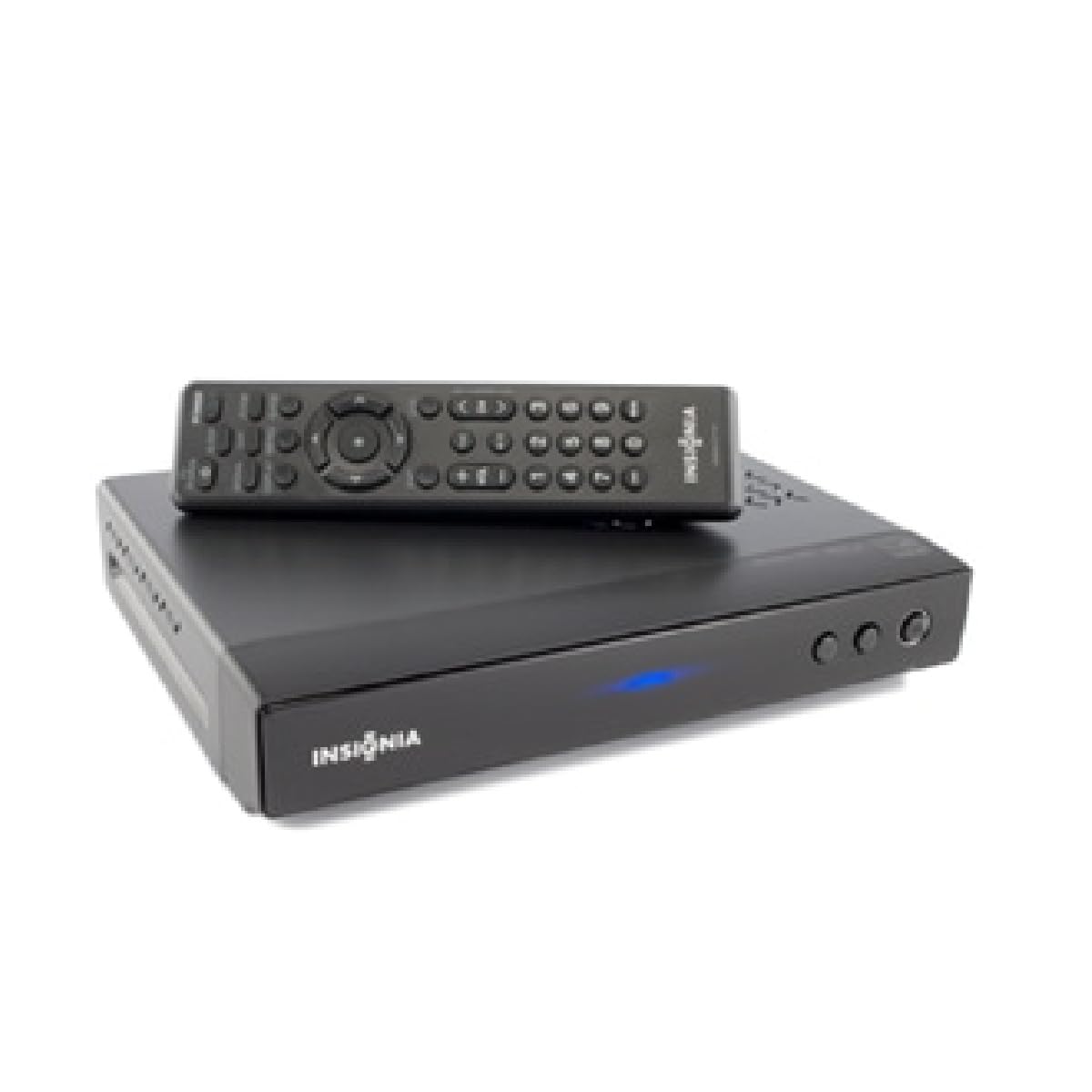
A small, light converter that wakes up fifteen-year-old TVs with free channels.
At 1.7 pounds, this box is lighter than it looks and small enough to tuck behind a set. It takes an antenna-fed digital broadcast and converts it for an analog television, with 2-channel stereo audio and RCA as well as coaxial connectors. There is an electronic programming guide, auto tuning, auto time setup, closed captioning, and TV power on/off from the remote.
For a vintage television, the results can feel dramatic. The parental lock is a nice extra for families, and the navigation works — you get an on-screen guide at the channel level rather than a blank grid.
Practical snags do exist. The printed install steps aren’t always right — you may need to set the TV to channel 3 using its own controls before the remote menu takes over — and the remote is required for adjustment, so keep a battery on hand. Reception is only as good as the signal reaching it, and an antenna per TV is the hidden cost most first-timers don’t see coming.
Best fit for the job: reviving an analog set with an antenna and no wish to buy a new TV.
Keep in mind: you need the remote for every adjustment, and each TV wants its own antenna.
Reach for this if: you have an old set and a spare antenna and want free channels today.
Otherwise: a network tuner serves a modern home far better.
Know the Specs
Tuner Count
A tuner is the physical radio receiver inside a box that grabs one broadcast channel at a time. One tuner feeds one stream; two tuners feed two people watching different channels at once. Four tuners, as on the Flex Quatro, give four independent streams. Buy the count that matches how many screens in your house actually run different networks at the same moment.
ATSC 1.0 versus ATSC 3.0
ATSC 1.0 is the legacy broadcast standard nearly every station still transmits. ATSC 3.0, sold as NextGen TV, adds capacity for 4K picture and richer audio. A 3.0-capable box is a future bet, so check whether your local market broadcasts 3.0 before paying more for it. If your stations are all 1.0, a 1.0 box does the same job for less.
HDMI Output versus Coaxial Output
HDMI carries a digital picture into a modern flat panel with one cable. Coaxial carries an analog signal into an old television on channel 3. These are not interchangeable — matching the output to your set is step one. A converter box with only coaxial output cannot feed an HDMI-only television.
DVR Storage and Guide Fees
Some tuners include onboard storage (the Tablo carries 50+ hours, the ADTH box 64GB). Others ship with none and expect you to attach a USB hard drive you format yourself. Separately, some programs charge a yearly fee for the TV guide that makes scheduled recording practical. Read both lines before buying so you know your true ongoing cost.
Common Questions
Will an HDMI TV tuner work with my existing antenna?
Do I need a subscription to record over-the-air TV?
What is the difference between 2 tuners and 4 tuners?
Can a converter box work with a modern HDMI-only TV?
Do these tuners improve my channel reception?
Is ATSC 3.0 worth paying extra for right now?
Does a network tuner need an internet connection to work?
How much recording space do I need for a week of TV?
Which streaming devices work with these tuners?
Can I split one antenna across multiple televisions?
The Bottom Line
For most households, the hdmi tv tuner winner is the SiliconDust HDHomeRun Flex Quatro because its 4 tuners share one antenna across every screen and record to a USB drive with no subscription. If you want recording that works the moment the box leaves the carton, the ADTH NextGen TV Box Gen 2 carries 64GB of storage and tunes ATSC 3.0 broadcasts. And for the analog television still doing duty in the den, the Zenith DTT901 is the quiet workhorse.
The one honest nudge: if free local channels are the goal and you have never tried an antenna-based tuner, start with the highest-rated box in the round-up rather than the cheapest box on the shelf. The Flex Quatro’s 4.0+ star average across 400+ ratings reflects four tuners and no recording subscription.
How we choose
We do not accept paid placement. Every pick is matched to a real buyer and a real use-case; we do not hands-on test units.
Sources
Specifications: manufacturer listings and product documentation. Review insights: verified customer reviews, as of October 2026. Pricing: not shown on this page (it changes often); check the current price via the retailer link.
As an Amazon Associate, Aappliancez earns from qualifying purchases. This does not affect which products we feature.