Disclosure: Some links in this post are affiliate links. As an Amazon Associate I earn from qualifying purchases, at no extra cost to you. Learn more
Specs are compiled from manufacturer listings and verified buyer reviews and can change over time — please confirm the key details on the product page before buying.
If your favorite hat slides down over your eyebrows every time you look down, you have two honest routes: pad the band from the inside, or stretch the crown outward. The first fixes a hat that is a little too big; the second fixes one that is a little too tight. This guide covers the five most useful tools for each job, so you can pick the one that matches your actual problem instead of buying both.
This guide is built by comparing the manufacturers’ published specifications and the patterns across verified customer reviews, so you get each pick’s real strengths and trade-offs instead of marketing spin.
You will see how a foam strip, a plastic crown insert, and a wooden stretcher each solve a different fit problem, and which one suits the hats you actually own and wear. That is the core of a sensible hat size reducer purchase.
Top Picks


How To Choose The Best Hat Size Reducer
The first thing to settle is direction. A hat size reducer adds material inside the band to take up slack in a hat that is too loose. A hat stretcher pushes the crown outward to add room in a hat that is too snug. They are not interchangeable, and buying the wrong one is the most common mistake in this category.
Decide whether your hat is too big or too tight
Put the hat on and shake your head gently. If it shifts or turns on its own, you need padding. If it presses hard against your forehead and leaves a red line, you need a stretcher. If the crown collapses forward but the band fits, you need a crown insert, which holds the front panel upright and does not change band size at all.
Match the material to your hat band
Foam strips sit behind a fabric sweatband and stay hidden. Self-adhesive backing grips a clean, dry band; a leather or straw band may need a smooth surface for the strip to hold. On a leather band, test placement before you peel the backing, because the adhesive grabs firmly once pressed.
How much slack you can realistically take up
Foam padding is a fine-tuning tool. It handles a hat that is slightly oversized — a small adjustment, not several full sizes. Stacking a second layer of 5mm foam adds thickness, but past a certain point you feel the ridge against your forehead and the hat sits higher.
Wooden stretchers need patience, not force
A four-way stretcher expands front-to-back and side-to-side at once, applying pressure evenly. The crank gets harder as the wood pushes against the sweatband. Turn it in small increments, give the material time to relax, and steam the band first if the felt is stiff. Cranking to the maximum in one sitting is how hats end up with a bulged band.
Side-by-Side Comparison
| Model | Best For | Approach | Hat Sizes / Fit | Material | Amazon |
|---|---|---|---|---|---|
| Hat Stretcher 4 Way★ Best Overall | Adding room to tight fitted hats | 4-way expansion stretcher | 6 7/8 to 8 1/2 | Wood | Amazon |
| (Upgrade) 4pk Black Baseball Caps Inserts StripCrown Fix | Holding up sagging unstructured caps | Crown support insert | Trim-to-fit panels | Plastic lined with felt | Amazon |
| Shapers Image Baseball Crown Shaper Inserts | Restoring shape on worn caps | Crown support insert | Medium and large caps | High-density closed-cell foam | Amazon |
| RadBizz 4-Way Hat Stretcher | Cowboy hats and straw hats | 4-way expansion stretcher | — | Wood | Amazon |
| Hat Size Reducer Inserts, 100PCS | Slightly oversized hats of any style | Self-adhesive band padding | 4.33 in strips, trimmable | Soft EVA foam, 5mm | Amazon |
Detailed Reviews
1. Hat Stretcher 4 Way Size 6 7/8 to 8 1/2
Our pick — 4.5+★ from 950+ verified ratings; the strongest balance of quality and price.
Four-way expansion in solid wood, built to add room to a fitted hat that presses too hard.
This is the pick for anyone whose fitted cap sits a touch too tight and who wants one tool that covers a wide spread of head sizes. It handles hats from 6 7/8 to 8 1/2, so a 7 1/4 and a 7 3/4 can both use the same frame. The four-way mechanism pushes the crown outward front-to-back and side-to-side at once, which spreads the pressure across the sweatband instead of stretching one spot.
What wins people over is the build. The wood is finished and sturdy, the crank moves smoothly, and owners treat it as a tool that keeps working rather than a one-season gadget. A spare giant rubber band comes in the box, which is handy for keeping a hat’s brim in place while it sits on the stretcher. One reviewer noted the whole routine in plain terms: “steam 1 min, insert, crank, sit 2 days,” and the raffia hat came out comfortable.
The honest limit is range at the top end. The listing spans 6 7/8 to 8 1/2, yet some owners note it does not reach as far as a size 7 3/4 in every case, so measure your hat before you buy. And cranking is a slow job by nature — a felt hat can take a few days of gentle turns to reshape. Force it and you get a bulged band. Treat it as a patient tool and it rewards you.
What earns the top spot
- Covers sizes 6 7/8 to 8 1/2, so one frame serves a whole hat collection
- Four-way expansion spreads pressure evenly across the band
- Solid finished wood and a smooth crank that feel built to last
- Includes a spare giant rubber band for holding brims during storage
Where it asks for patience
- Some owners find the top end falls short of a true 7 3/4
- Reshaping a stiff felt hat can take several days of small turns
Reach for this if: your fitted cap, felt hat, or Stetson pinches and you want one wooden tool that will keep working for years.
Measure first if: your hat sits right at the largest end of the stated size spread.
2. 4pk Black Baseball Caps Inserts
Four felt-lined panels that hold a floppy cap crown upright without touching the band size.
If your problem is a cap that sags forward rather than a band that slips, this is the right tool and a stretcher is not. Each insert is a plastic strip — roughly the thickness of a soup container — lined with felt on both sides. The felt gives it a soft face against the cap liner so it does not snag stitching, and it lets the panel grip in place instead of sliding out.
The construction has a clever split personality. It flexes left-to-right so it follows the curve of the cap, but stays rigid top-to-bottom so the front panel stands up. Buyers report the result is crisp, and the panels trim down easily for a low-profile cap. Since the plastic resists moisture, these outlast the cardboard shapers that come stitched into cheap caps and then give up after a few sweaty weeks.
There is one clear caveat worth knowing before you order. These are support panels, not padding, and they are bulky enough that wearing one directly against your skin can irritate — the sensible move is to keep them in caps you display and store, or in unstructured caps where they sit behind the liner. Breathability is limited too, so a hot-weather cap will run warmer.
The display-cap angle: the strongest case for these is collectible caps that live on a shelf and need their crown shape held between wears. Owners mention they restore a sagging crown without stressing the stitching, which is exactly what a display hat needs.
The catch: the panels are not breathable, so a cap you actually sweat in all summer will feel warmer with one installed.
Your best fit: collectors with unstructured 5-panel caps and display-only collectibles that need the front panel held up.
Think twice: if you want padding to tighten a loose band — these change shape, not size.
3. Shapers Image 4 Count Baseball Crown Shaper Inserts
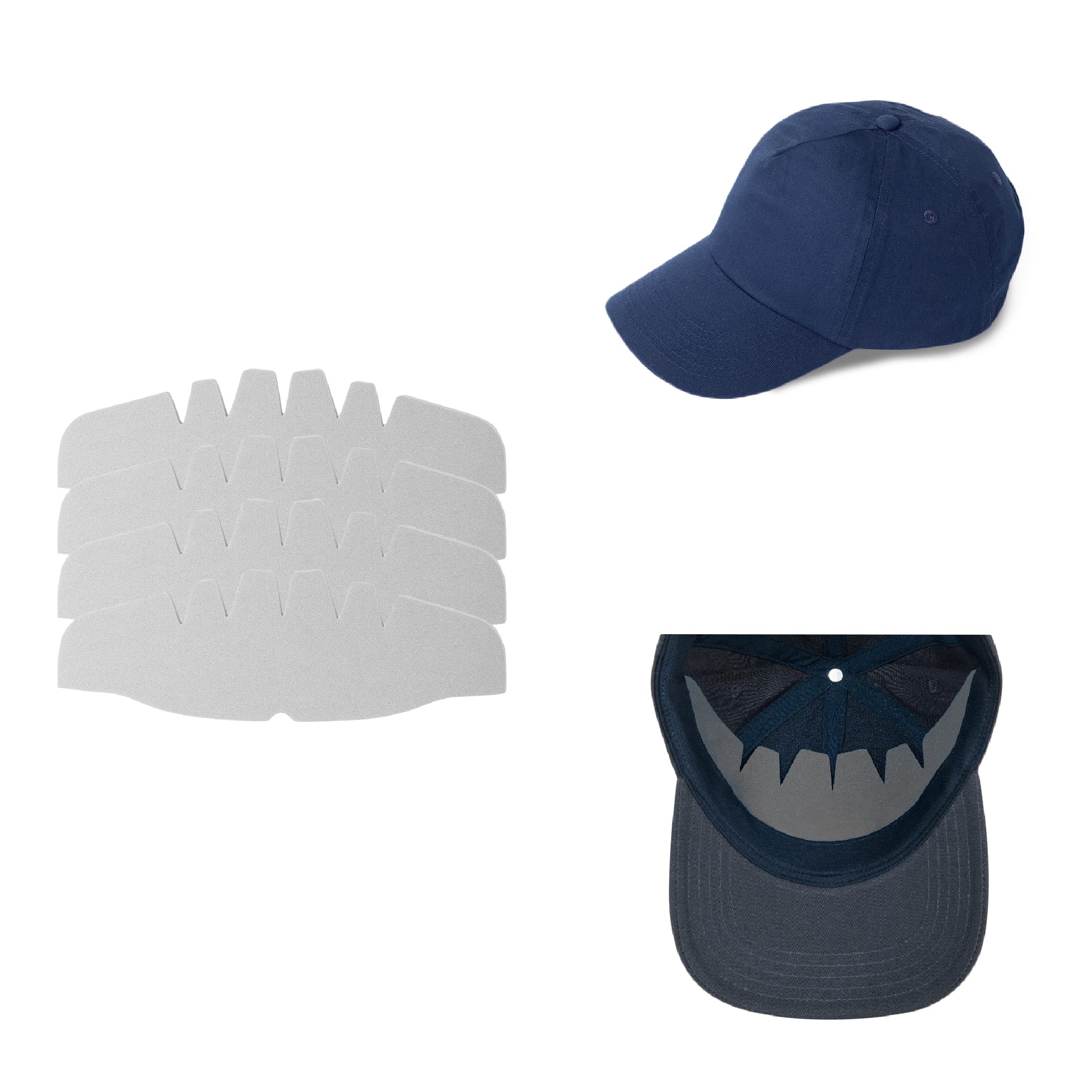
Foam, not plastic, so it soaks up sweat instead of sliding around inside the crown.
The foam is what makes this one different from the plastic panels above. Each insert is cut from specialty high-density closed-cell foam, made in the USA, and it gives the front panel firm structure while staying soft against the liner. The difference you feel is absorbency — the foam takes on moisture rather than letting sweat pool, and it does not clatter or slip the way a hard strip can.
What wins people over is how effectively it revives a cap that has gone flat. A dozen well-worn favorites come back to shape with the insert pushed in, and the fix is simple enough that owners buy a second pack for the rest of the rotation. The inserts are made for medium and large caps, and being foam, you can trim them for a closer fit. One practical tip from the review pages: add a strip of double-sided hobby tape and the insert really holds.
The honest trade-off is that foam absorbs your sweat, and over time that can turn sour. Wash them, and they hold up; let a sweaty insert sit damp in a hot car and the review pages show the downside in blunt terms — one buyer described the smell after sweating on it as turning “like dumpster juice.” It is a minority gripe, and it is fixable with regular washing.
Where it shines: reviving a favorite cap whose front has gone floppy, and keeping sweat off the logos embroidered on the panel.
What to plan for: wash the inserts regularly — the closed-cell foam holds moisture and needs a routine to stay fresh.
Pick this one: cap collectors with a dozen worn favorites that have lost their structure and want a soft, trimmable insert.
Look elsewhere: if you dislike foam against your head or want padding to tighten a band.
4. RadBizz 4-Way Hat Stretcher
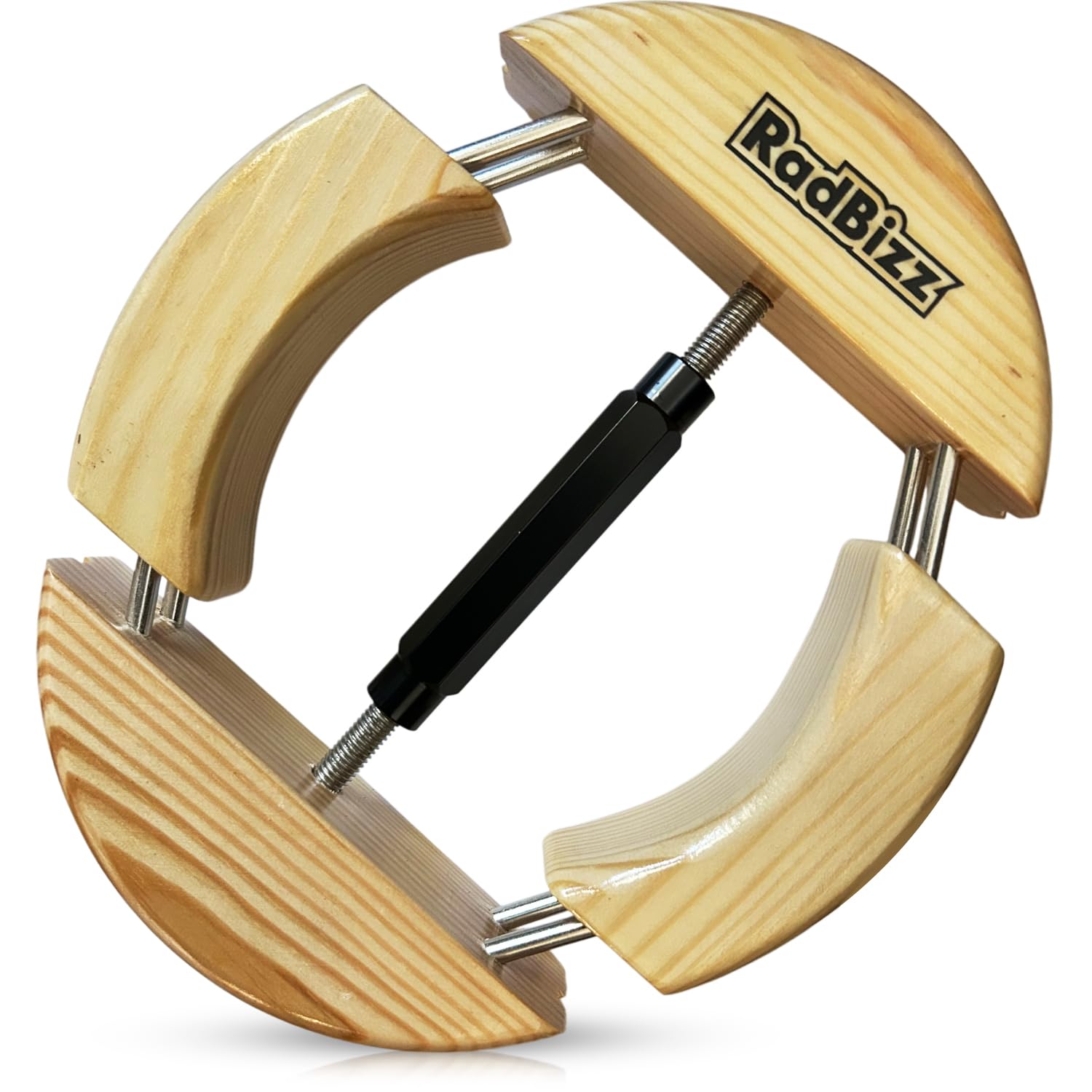
A four-way wooden stretcher aimed at cowboy hats and straw hats, with smooth finished wood under the crank.
Where the best overall is a general-purpose fitted-hat tool, this one leans toward the rugged end of the hat rack. The marketing calls it a cowboy hat stretcher and a straw hat stretcher, and the four-way mechanism expands evenly so the crown keeps its contours while it grows. The wood is well-finished and the adjustment is smooth, and customers note it stretched a tight fitted cap and a straw hat without distorting either.
The expansion is gradual, which is the correct way to do it. A cap measured at about 7.5 on the main seam can be nudged out over repeat sessions, and the crank gets harder as the wood pushes back — the signal to ease off, not to force it. With steam and an overnight sit, reviewers point out it adds roughly half an inch of circumference, which is the difference between a hat you wear and one that sits in the closet.
The real caveat is the instruction sheet. The steps are thin on detail and skip the key part about steaming the band first, so you are partly on your own to learn the technique. Alignment rods can bind if you do not keep the wood pieces properly spaced as the instructions note, and stretching any hat works the material against how it was made — which can leave the band slightly bulged if you overdo it.
Where it delivers
- Four-way expansion applies even pressure to keep the crown’s shape
- Solid, well-finished wood with a smooth adjustment mechanism
- Handles cowboy hats, straw hats, and fitted caps in one tool
- Eases a tight cap out roughly half an inch with steam and an overnight sit
Where it needs care
- Thin instructions skip the steaming step you actually need
- Alignment rods can bind if the wood pieces drift out of spacing
Suits you if: you wear cowboy hats or straw hats and want a wooden four-way stretcher built for the rugged end of the rack.
Look past it if: you need step-by-step guidance — the included sheet is short on technique.
5. Hat Size Reducer Inserts 100PCS
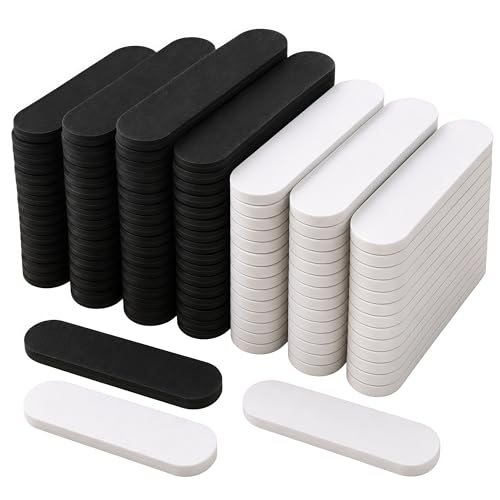
A hundred soft foam strips that shrink a slightly oversized hat in one peel-and-stick move.
The core idea is simple and it works: a 5mm strip of soft EVA foam pressed behind the sweatband takes up the slack in a hat that is just a touch too big. Each strip runs 4.33 x 0.79 x 0.20 inches, so it trims down to fit the curve of a band and hides behind the lining. You get 50 black and 50 white, which covers a whole collection and lets you match the color of each hat’s interior.
What keeps a hat wearable is the adhesive and the way the foam feels. Shoppers say the strips hold through heavy sweat, peel off and re-stick to a new spot without losing grip, and stay unnoticeable once placed. The foam is soft enough that it does not pull hair, and it soaks up moisture instead of sliding. One owner even repurposed a strip in a beekeeping suit veil to tune a mask fit — the same idea, a different hat. Just remember the strip’s reach: it corrects a slightly-too-large hat, not one that is two sizes off.
The honest wrinkle is thickness. Every strip is 5mm, and if you want a finer adjustment you are layering or trimming rather than choosing a thinner pad. Stack two and the band tightens more, but you feel a firmer ridge against your forehead. Pair it with the size listed on your hat and start small.
The value read: a hundred strips in two colors is far more than a single hat needs, so one pack serves the whole closet and leaves plenty for future replacements.
The catch: one 5mm thickness only — precise tweaks come from layering, not from a finer pad.
Take this route: your hat is slightly loose and you want a discreet, peel-and-stick fix you can pull out and re-place.
Skip the stack if: your hat is several sizes too big — foam padding cannot bridge that gap cleanly.
Know the Specs
Foam Thickness and Strip Size
A 5mm thickness is the most common pad on a self-adhesive reducer, and it is a fine-tuning number, not a dramatic one. Each 4.33 x 0.79 inch strip fits behind a sweatband without showing, and 0.20 inches of thickness is enough to take up a little slack while staying soft against your forehead. Stacking a second layer adds thickness, but the band tightens in bigger steps and you start to feel the ridge.
Four-Way Expansion Explained
A four-way stretcher pushes in two directions at once — front-to-back and side-to-side — so the crown grows evenly instead of stretching one spot. That even pressure is what keeps the hat’s shape instead of turning it oval. Wood stretchers take time. Cranking in small turns and letting the material relax, ideally after a quick steam, is how a tight felt hat gains room without a bulged band.
Crown Inserts Versus Band Pads
These solve different problems, and mixing them up is the most common error. A crown insert is a panel that holds the front of the cap upright when the fabric has gone floppy; it changes the shape, not the size. A band pad is a strip that fills space so a loose hat grips your head; it changes the size, not the shape. Choose based on which one your hat actually needs.
Adhesive and Re-Placement
Single-sided peel-and-stick foam is the standard for a reducer insert. The trick is testing the fit before you press, because the adhesive grabs firmly once it meets the band. Buyers report the strips can be pulled up and re-stuck to a new spot without losing grip, so you can fine-tune placement. A clean, dry surface in the hat band is what gives that adhesive its best chance to hold.
Common Questions
Will a foam hat size reducer fit behind my hat’s sweatband?
How many strips do I need to tighten a hat that is one size too big?
Should I buy a hat stretcher or a hat size reducer?
Does a crown insert change how big my cap fits?
Will a wooden hat stretcher work on a straw hat?
How long does a foam reducer strip stay sticky?
Are the 4-panel crown inserts reusable in more than one cap?
Do the foam inserts make a hat feel bulky on your head?
Can I use a hat size reducer to fix a cowboy hat that is too large?
Do the foam crown shapers need to be washed or replaced?
The Bottom Line
The strongest hat size reducer depends on which direction your hat is off, and for the most common problem — a fitted hat that presses too hard — the Hat Stretcher 4 Way is the pick because its four-way wooden frame covers 6 7/8 to 8 1/2 and spreads pressure evenly across the band. If your hat is instead slightly loose, the 100PCS Self Adhesive Foam Reducer solves it with a peel-and-stick 5mm strip in 50 black and 50 white pieces. And if the crown has gone floppy while the band still fits, the Shapers Image foam crown shapers hold the front panel upright without changing the size at all. Match the tool to whether your hat slips or pinches, and one purchase covers it.
How we choose
We do not accept paid placement. Every pick is matched to a real buyer and a real use-case; we do not hands-on test units.
Sources
Specifications: manufacturer listings and product documentation. Review insights: verified customer reviews, as of October 2026. Pricing: not shown on this page (it changes often); check the current price via the retailer link.
As an Amazon Associate, Aappliancez earns from qualifying purchases. This does not affect which products we feature.