Disclosure: Some links in this post are affiliate links. As an Amazon Associate I earn from qualifying purchases, at no extra cost to you. Learn more
Specs are compiled from manufacturer listings and verified buyer reviews and can change over time — please confirm the key details on the product page before buying.
Hairball trouble is really a swallowing problem dressed up as a grooming problem. Your cat grooms, swallows loose fur, and that fur either moves through or comes back up on your rug. So the first thing to sort out is not which formula is strongest — it is which form your cat will actually take. A gel that gets licked off a paw, a soft chew eaten like a snack, and a crunchy bite all move fiber through the gut in different ways, and a cat that refuses the tube wastes every penny you spent on it.
This guide is built by comparing the manufacturers’ published specifications and the patterns across verified customer reviews, so you get each pick’s real strengths and trade-offs instead of marketing spin.
Below you will find five formulas that use genuinely different delivery methods, from a chicken-flavored petrolatum gel to a 300-bite crunchy chew, sorted so the most reliable all-rounder sits first. Every pick here has a real job, and the trick is matching the method to the cat in front of you with the best hairball treats.
Top Picks
How To Choose The Best Hairball Treats
Hairballs form because the barbs on a cat’s tongue push loose fur down the throat, and that fur clumps in the stomach instead of passing through. A hairball product works by adding fiber or a lubricant that helps the clump slide out the other end. Choose the wrong format and the whole thing fails at step one — the cat simply walks away.
Match the form to your cat before anything else
A gel gets smeared on a paw or nose, so the cat grooms it off and swallows it without a fight. A soft chew or crunchy bite has to be eaten willingly, which makes flavor and texture the deciding factor. Liquid drops vanish into wet food, which suits a cat that will not take anything by hand. Pick the method your cat already accepts and the rest of the label matters far less.
Look at what is actually doing the work
Petrolatum and vegetable oil lubricate the gut so hair slides through. Psyllium husk, pumpkin powder and cat grass add bulk fiber that sweeps the tract. Formulas that pair fiber with omega-3 fish oil also support skin and coat, which can mean less shedding to begin with. None of these are laxatives, so results build over days of consistent feeding, not one dose.
Dose by weight, not by guesswork
A treat built for a large long-haired cat is not the right daily amount for a small kitten. Read the serving line, weigh your cat if you are unsure, and stay consistent — most formulas expect regular daily use to keep hair moving. If your cat has a severe or long-standing hairball problem, that is a conversation for your vet rather than a treat jar.
Side-by-Side Comparison
| Model | Best For | Form | Flavor | Supply / Weight | Amazon |
|---|---|---|---|---|---|
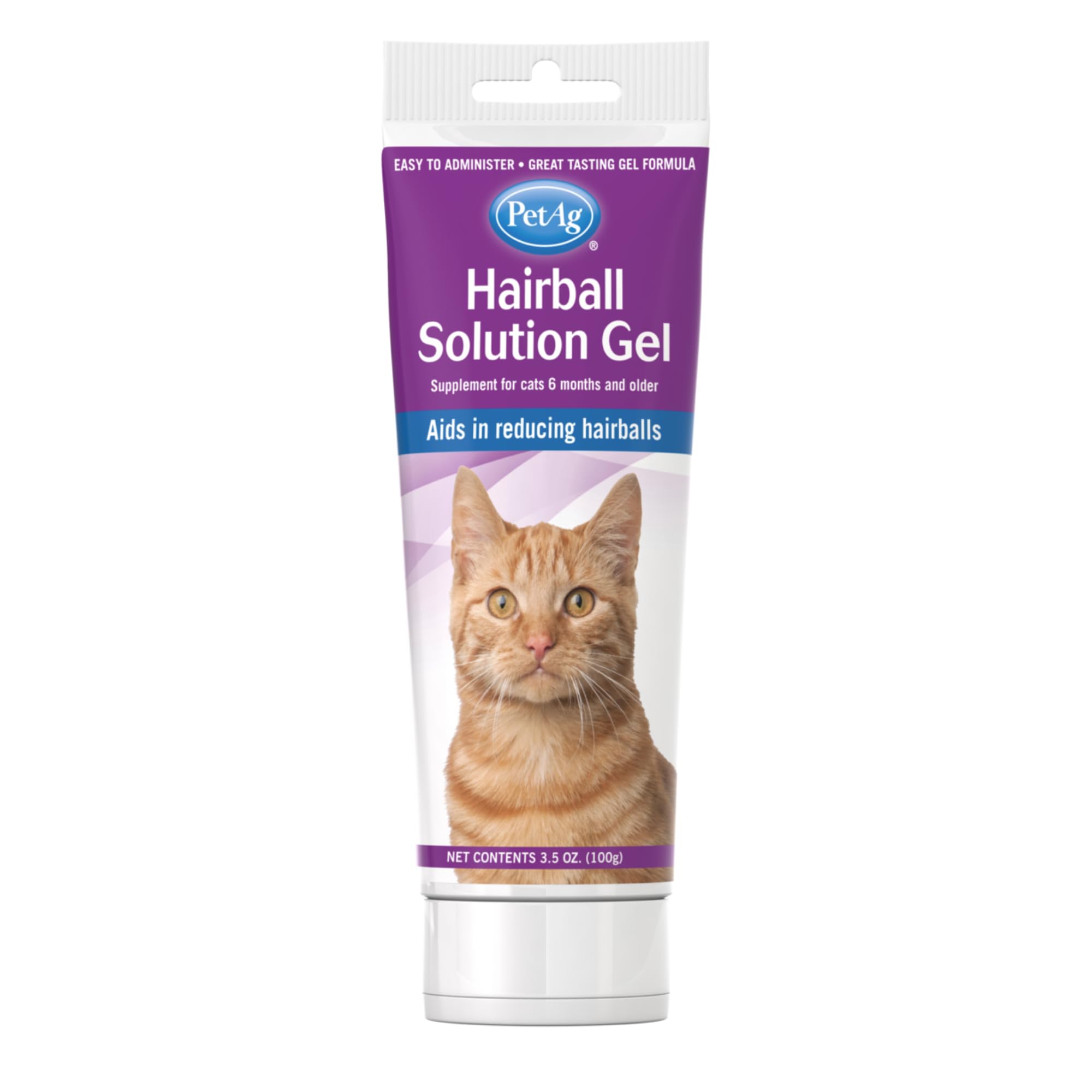
| PetAg Hairball Solution Gel★ Best Overall | Cats that will not take a treat | Gel | Chicken | 3.5 oz tube, 3.36 oz item weight | Amazon |
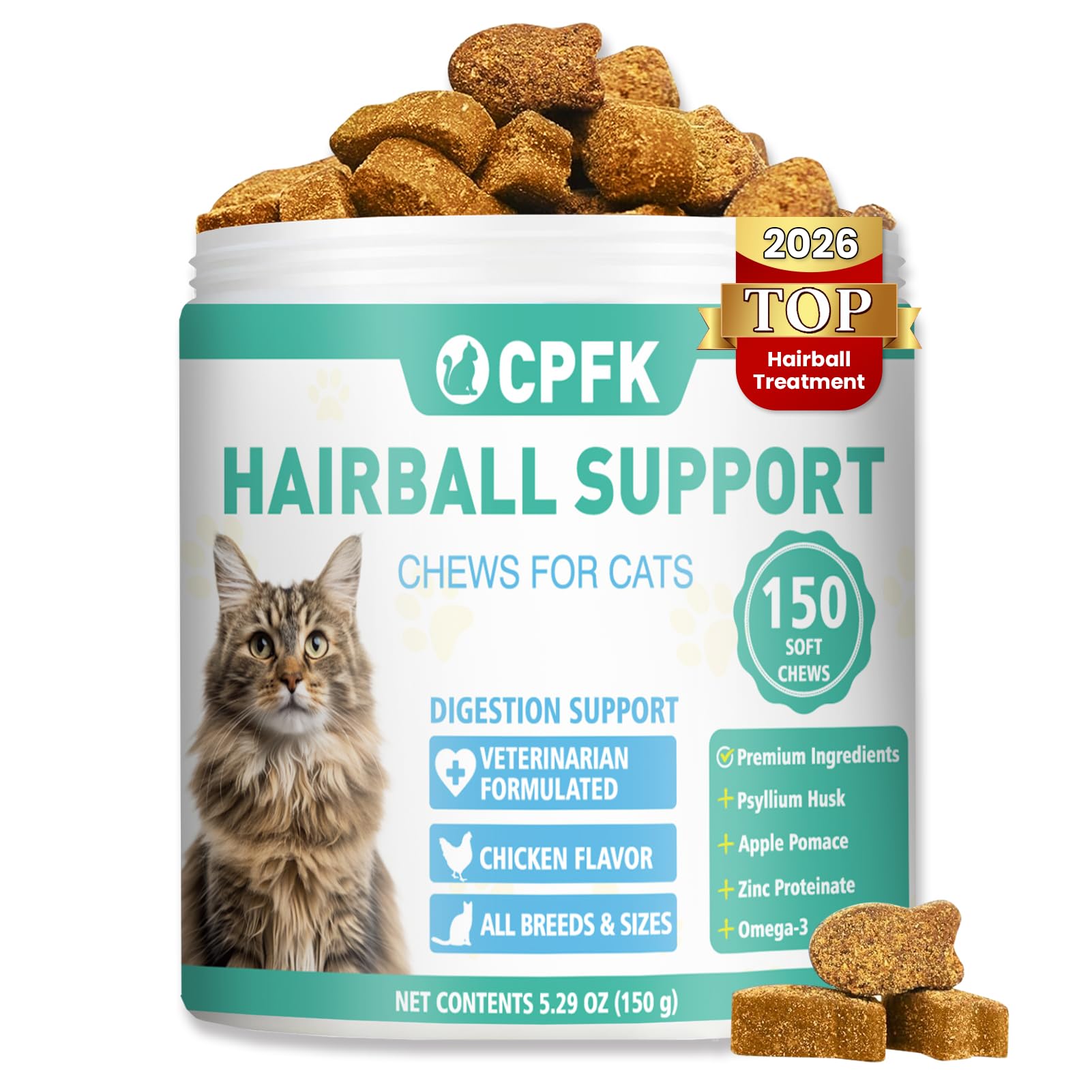
| CPFK Hairball Treatment ChewsBest Bulk Value | Long, budget-friendly daily supply | Soft chew | Chicken | 150 chews, 6.7 oz | Amazon |
| SANTKOL Hairball Remedy Drops | Mixing into wet food | Liquid drops | Cat Grass | 60 ml, 4.48 oz | Amazon |
| Zesty Paws Cat Hairball Bites | Sensitive stomachs and coat support | Soft chew | Bacon | 60 ct, 2.75 oz | Amazon |
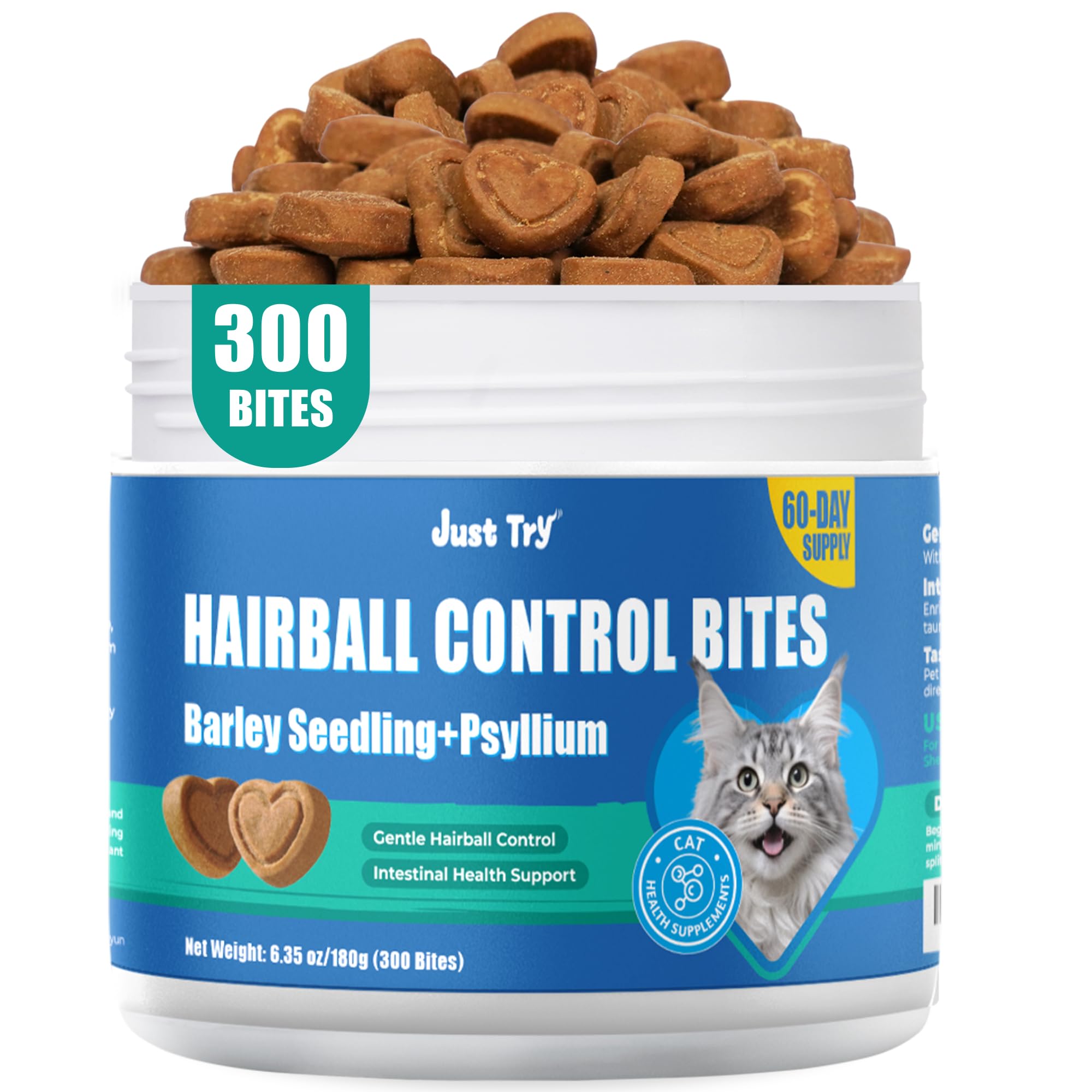
| Just Try Cat Grass Treats | Picky cats that prefer crunch | Crunchy bite | Chicken | 300 bites, 180 g | Amazon |
Detailed Reviews
1. PetAg Hairball Solution Gel Supplement for Cats
Our pick — 4.0+★ from 800+ verified ratings; the strongest balance of quality and price.
The tube that wins over cats who hate being groomed, because you never have to ask permission.
Here is the pick that sidesteps the picky-eater problem entirely. This is a gel made with petrolatum, glycerin and vegetable oil — a lubricating blend that helps hair slide through the digestive tract rather than clump in the stomach. You dab it on a paw and the cat grooms it off. No bowl, no crumbling, no negotiating. For a cat that runs from anything shaped like a treat, that mechanical trick is worth more than any ingredient list.
What wins people over is that it works and it works quickly. The combination of a chicken flavor cats recognize and a 3.36-ounce tube that lasts through repeated use is why this sits at the top of the pile. Owners describe a brushing-averse cat that was dry-heaving every morning, then passing a large hairball within 6 days of every-other-day dosing and stopping the gagging entirely, with a maintenance dab three times a week keeping the stomach settled. The 3.5 oz tube and its 3.36 oz item weight sit right beside that 150-chew bottle in scale, but this one is measured in dabs rather than pieces, so a single tube covers a lot of weeks.
The honest catch is flavor. A minority of cats clock the tube the second the lid opens and bolt, and the chicken taste that sells most cats does not sell all of them. The other trade-off is that it is a supplement you have to remember — miss a few days and the buildup returns. It is designed for cats 6 months and older, so a young kitten needs a different plan. And when you compare it with the big jar of chews, this is the smaller, more targeted purchase: you are buying a delivery method that cannot be refused rather than volume.
Why the tube earns top spot
- Paw application means the cat swallows it while grooming, so refusal is nearly impossible
- Petrolatum, glycerin and vegetable oil lubricate the tract instead of bulking it
- Chicken flavor is the version most cats accept, unlike blander gels
- Works on cats 6 months and older of any breed or size
- Gluten-free formula
What to plan around
- Some cats hate the smell of the tube the moment it opens
- Value splits opinion — the format costs more per use than a chew jar
- You have to keep up a regular schedule or the buildup returns
Reach for this if: your cat hates being brushed and turns its nose up at anything in a bowl — a paw smear removes the argument.
Look elsewhere if: your cat is under 6 months old, or you would rather dole out treats than track a dosing schedule.
2. CPFK Hairball Treatment for Cats, 150 Chews
A 150-chew jar that turns hairball control into part of the daily feeding routine.
If your cat already lines up for a treat, this is the lowest-friction way to dose it. One bottle holds 150 soft chews at 1 g each, and the jar weighs 6.7 ounces — enough that you are restocking rarely rather than weekly. The formula leans on plant extracts: apple pomace, psyllium husk and zinc proteinate, with no corn, wheat or artificial colors. Psyllium is the bulk fiber that sweeps loose fur along, so consistency matters more than any single chew.
The appeal here is how easily it folds into a routine. Cats that take it straight from the hand beg for it, and even cats that snub it as a treat tend to eat it once it is crumbled into dry food — no negative reactions reported from that approach. Owners of cats that groomed obsessively and threw up at night describe far fewer incidents after steady use, with the occasional hairball still showing up but far less often. This is also the volume leader in this lineup: 150 g of chews against the 3.5 oz gel tube from the pick above, so you are buying a supply that stretches across months of daily feeding.
The recurring hitch is that round shape versus the fish-shaped version — some cats accept one and flatly reject the other, so it is worth knowing which you have before a reorder. Flavor tolerance genuinely splits down the middle, and a few cats want nothing to do with the chew in any form. Judged against the alternatives, this is the practical middle ground: more hands-off than a gel, but it only works if your cat eats it.
The routine win: 150 chews at 1 g apiece in one 6.7-ounce jar, dosed by your cat’s weight, is the closest thing here to hairball control you can hand over without thinking about it.
The thing to know: shape and taste decide everything — the round chew gets eaten where the fish-shaped one sometimes does not, and crumbling into dry food rescues a fussy cat.
Best fit: households with a cat that already treats snack time as the highlight of the day, especially where you want one jar to last.
Think twice if: your cat is a confirmed treat refuser — you will be crumbling every chew into wet food forever.
3. SANTKOL Hairball Remedy Liquid Drops

Two fluid ounces of drops you stir into dinner, and the bowl comes back empty.
This is the pick for the cat that eats wet food with enthusiasm and refuses everything else. It is a 60 ml liquid in a cat grass flavor, and the whole serving goes into broth, wet food or milk. The ingredient panel is unusually specific: psyllium husk at 100 mg, inulin at 100 mg, Bacillus Subtilis at 100 mg, lysine at 500 mg, flaxseed and safflower seeds at 50 mg each, Vitamin A at 2000 IU and Vitamin D3 at 200 IU, plus 0.5 mg of cat grass. That is fiber, a probiotic strain and coat-support vitamins in one dropper.
What consistently earns praise is that it disappears into food. Buyers report a cat that hacked up hairballs daily going incident-free after a few drops in wet food, and a senior cat staying hairball-free for months after gels and other foods failed. The lysine and vitamin load matters for coat condition too, which nudges down the shedding that starts the whole cycle. Production is US-based, the formula is free of grains, alcohol and gluten, and it carries no additives — and at 2 fluid ounces the bottle lasts a good stretch when dosed by drops rather than spoonfuls.
Now the flaw, and it is a real one: the texture is thick and sticky. The bottle gets hard to open as residue builds, and one owner found the dropper impossible to measure accurately. The fix that keeps coming up is running the bottle under warm water before and after use to loosen the mixture. A small number of cats also developed loose stools after starting it, and it is unsuitable for a cat that will not touch wet food at all.
Where the drops deliver
- Psyllium husk, inulin and cat grass provide fiber; Bacillus Subtilis adds a probiotic strain
- Lysine at 500 mg plus Vitamins A and D3 support coat and skin
- Mixes invisibly into broth or wet food so picky cats take it
- Gluten-free, grain-free, alcohol-free and additive-free formula made in the USA
- 60 ml lasts through weeks of drop-sized servings
Where it gets awkward
- Thick, sticky texture clogs the bottle opening over time
- Measuring an exact dose from the dropper is difficult as the liquid thickens
- Not usable for a cat that refuses wet food
Worth grabbing if: your cat is a wet-food devotee and you want a fiber-plus-vitamin formula with a named ingredient panel.
Consider the chews instead if: you want zero mess — this one demands a warm-water rinse on the bottle.
4. Zesty Paws Cat Hairball Bites

A bacon-flavored soft chew built around AlaskOmega fish oil rather than a simple fiber dump.
Most hairball formulas do exactly one job. This one does two: psyllium adds the fiber that moves hair through the gut, while AlaskOmega fish oil delivers daily omega-3 fatty acids (EPA and DHA) for skin, and zinc and biotin help the coat hold its moisture. A cat with healthy skin sheds less to begin with, which is the quiet half of hairball control. The chews are bacon-flavored, 2.75 ounces per jar, and 60 to a container.
Where this earns its place is on a delicate gut. Cats with sensitive stomachs that could not handle a lickable version tolerate these soft chews, and the results can come fast — a cat with hairballs and diarrhea settled within 12 hours and passed a large hairball the next day, then stayed normal for months before a recurrence the chews cleared again.. The soft texture is also why a picky cat that rejects most supplements will eat these as a daily routine.
The flip side is palatability, and it belongs here honestly because it decides the purchase. A good share of cats refuse the chew whole, and the bacon flavor is an unusual choice for a cat. Crumbling it into wet food is the workaround, and it dissolves cleanly enough that cats who snub the whole chew will eat the crumble. The other snag is that recent batches have drawn complaints about a stronger smell and a lighter color, with cats that once ate them now turning away — worth opening the jar and offering one before you commit to a subscribe-and-save.
The two-job design: psyllium for hair movement plus AlaskOmega EPA and DHA, zinc and biotin for skin and coat — a fuller formula than a plain fiber chew at 60 chews per 2.75-ounce jar.
The catch worth naming: whole-chew refusal is common enough that you should budget for crumbling into wet food, and the bacon flavor is not every cat’s idea of dinner.
Pick it when: your cat has a touchy stomach and you also want coat and skin support from omega-3s, not just fiber.
Skip the whole-chew approach if: your cat is a hard no on new textures — plan on the crumble method from day one.
5. Just Try Cat Grass Treats Hairball Control
Three hundred crunchy bites that a picky cat will eat before its regular dinner.
The number that matters here is 300. That is how many crunchy chicken-flavored bites sit in one 180 g bottle, and it is why this jar outlasts everything else on the list. The fiber comes from cat grass and pumpkin powder, with psyllium seed, barley seeding and fish oil in the blend — a natural-laxative style of relief rather than a lubricating gel. Omega-3 fish oil rounds it out for coat shine, and chicken meal, egg yolk powder and goat milk powder do the flavor work. It suits cats aged 3 months and up.
Where this shines is cats that treat hairball control as a snack. What owners praise most is simply that their cats want to eat these — one cat polished them off ahead of dental treats despite low food motivation, and a four-cat household reported all four on board. Owners of a 20 lb Maine Coon describe fewer hairballs since starting, crediting the psyllium husk and a serving of up to six bites a day. One cat’s occasional vomiting dropped markedly, and one household reported close to a 90% decrease in vomiting after regular use.
Be clear-eyed about the crunch: the texture divides people, and some find the bites very hard. A few cats also refuse them no matter how they are offered, and in a two-cat home you cannot always tell who actually ate the dose. Compare it with the gel pick and the difference is volume versus certainty — 300 bites stretches months, but the gel cannot be refused. This is the choice for a cat that already loves dry treats.
What stands out
- 300 bites per 180 g bottle — the longest supply in this lineup
- Cat grass and pumpkin powder fiber with psyllium seed and fish oil for coat
- Chicken flavor with chicken meal, egg yolk and goat milk powder earns enthusiastic eaters
- Artificial additive-free formula with beet pulp and brewer’s yeast
- Suitable for cats 3 months and older
What can trip you up
- Bites are hard and the texture is not for every cat
- Some cats turn them down however they are offered
- Multi-cat homes may not know who ate the serving
The right jar for: a cat that crunches dry treats happily and a household that wants a supply stretching months.
Not the first pick if: your cat has trouble with hard textures — the softer chews above will serve you better.
Know the Specs
Form: gel, soft chew, liquid or crunchy bite
This is the spec that decides whether your cat ever takes the dose. A gel like the one at the top gets smeared on a paw and groomed off, so the cat swallows it without being asked. A soft chew or crunchy bite only works if the cat eats it willingly, which makes flavor and texture the real spec. Liquid drops are mixed into wet food, so they suit a cat that ignores anything hand-fed. Read the form first, then everything else.
Fiber source: psyllium, pumpkin, cat grass
Fiber is what actually moves a hairball through. Psyllium husk absorbs water and adds bulk that sweeps the tract, and it shows up in several formulas here. Pumpkin powder and cat grass do a similar job with plant fiber. A formula with none of these usually relies on a lubricating agent like petrolatum instead, which coats and slides rather than bulks. Neither approach is better in the abstract — they suit different cats.
Supply and serving size
The bottle count tells you how long a jar lasts, but only if you match it to the daily serving. A 300-bite jar sounds enormous until you read that a large cat can take up to six bites a day. A 60-chew jar at one chew daily is a shorter run than 150 chews on the same schedule. Weight per jar matters too — 2.75 ounces of soft chews and 180 g of crunchy bites are very different amounts of product.
Coat support: omega-3, zinc and biotin
Hairballs begin with shedding, so a formula that supports skin and coat attacks the source. Omega-3 fatty acids (EPA and DHA from fish oil) help skin stay healthy, and zinc and biotin do similar work. Lysine and Vitamins A and D3 support coat condition in liquid formulas. Less shedding means less fur swallowed, which means fewer clumps forming in the first place. Treat this as a bonus layer on top of the fiber, not a replacement for it.
Common Questions
Will a hairball gel work if my cat refuses to eat treats?
How long does it take to see fewer hairballs?
Is psyllium husk safe for cats every day?
What is the difference between a lubricating gel and a fiber chew?
My cat will not eat the chews whole. What can I do?
Can kittens take hairball treats?
Why does my cat suddenly refuse a brand it used to eat?
How many bites or chews should I give my cat each day?
Do hairball treats also help with shedding and coat condition?
What is cat grass doing in a hairball formula?
The Bottom Line
The reliable way to pick from this list is to start with the method your cat cannot refuse. The PetAg Hairball Solution Gel takes the top spot because a paw-smear of petrolatum gel removes the flavor battle entirely, and it holds the group’s strongest track record at 4.0+ stars across 800+ ratings.. If your cat lines up for treats, the CPFK 150-chew jar turns hairball control into a daily snack with a supply that stretches months. For a wet-food devotee, the SANTKOL liquid drops disappear into dinner — just keep the bottle warm so it keeps dispensing.
One last nudge: whichever route you take, commit to the daily schedule for a couple of weeks before you judge it. Fiber and lubrication work on routine, and a treat given twice and then forgotten will not change what lands on your rug.
How we choose
We do not accept paid placement. Every pick is matched to a real buyer and a real use-case; we do not hands-on test units.
Sources
Specifications: manufacturer listings and product documentation. Review insights: verified customer reviews, as of October 2026. Pricing: not shown on this page (it changes often); check the current price via the retailer link.
As an Amazon Associate, Aappliancez earns from qualifying purchases. This does not affect which products we feature.