Disclosure: Some links in this post are affiliate links. As an Amazon Associate I earn from qualifying purchases, at no extra cost to you. Learn more
Specs are compiled from manufacturer listings and verified buyer reviews and can change over time — please confirm the key details on the product page before buying.
If your lawn is peeling up like loose carpet and the skunks have started digging nightly, you have a grub problem — and fall is the one window when you can actually do something about it. Grub worms (the fat, C-shaped larvae of beetles) feed on grass roots through late summer and fall, killing patches from below where you can’t see the damage until it is already done. This guide sorts the granules and concentrates that actually work in cool soil, so you buy once and stop the cycle rather than chasing it every spring.
This guide is built by comparing the manufacturers’ published specifications and the patterns across verified customer reviews, so you get each pick’s real strengths and trade-offs instead of marketing spin.
You will see which products need watering in, which persist for months, and which ones simply will not work once the ground turns cold. Everything below is aimed at the single job of killing grubs in fall, from the timing of the application to the spreader you will need to get an even coat. The right grub killer for fall kills grubs while they are still shallow, before the soil freezes and they burrow out of reach.
Top Picks

How To Choose The Best Grub Killer for Fall
The product you buy matters less than when you put it down. Grubs are larvae, which means they are soft-bodied and vulnerable in early fall while the soil is still warm. Once that soil cools, they tunnel deeper than your granules can reach and the same bag that would have worked in September does almost nothing in November. So the first question is never “which brand” — it is “is my soil still warm enough for this product to work.”
Granules versus liquid concentrate
Granules are the easier fall choice for most people, because you scatter them with a spreader and let rain or a sprinkler carry the active ingredient down to the root zone where grubs feed. A spreader gives you an even coat; hand-casting is messy and leaves thin spots where grubs survive. Liquid concentrates cover faster and reach into tight spots like garden beds and foundation lines, but they need mixing and a sprayer, and rain can wash them off before they sink in. If you have a big open lawn, granules do the heavy lifting. If your grub damage is concentrated in beds, around ornamentals, or along a foundation, a concentrate lets you target it.
Check how long the active ingredient lasts
Residual describes how many months the product keeps killing after you apply it. Some granules keep working for two to four months; others are built to last a full season. In fall, a longer residual carries you through the grub feeding period without a second trip to the store, which is why it is worth reading that line on the label before you compare anything else. A short-lived product applied in early fall may simply run out before the grubs stop feeding.
Watering in and soil temperature
Most granules need water to activate and carry the chemical into the soil — usually a good soak or a rain event within a day or so. Some are formulated to release without that trigger. Biological products are pickier: they depend on soil temperature to work at all, so check the label for a temperature floor before you spread. Apply when the soil is moist and still warm, and you give the product the best chance to reach grubs while they are shallow.
Coverage area and bag count
Buy the right amount of product or you will under-apply and leave grubs alive. A bag rated for a specific square footage tells you how far one pass stretches; if your lawn is larger, you either buy more bags or accept a thinner coat that leaves surviving grubs. Measure your lawn roughly — length times width — before you buy, so you know whether one bag covers the job or if you need two.
Side-by-Side Comparison
| Model | Best For | Form | Residual / Coverage | Key Target | Amazon |
|---|---|---|---|---|---|
| Talstar PL Granules Insecticide★ Best Overall | All-around fall grub and ant control | Granules | 2 to 4 month residual | Grubs, ants, fleas | Amazon |
| Ortho Bug B Gon Max Insect Killer for LawnsBest Coverage | Large lawns with mixed pests | Granules | Treats up to 10,000 sq. ft., up to 3 months | 100+ listed insects | Amazon |
| Martin’s Cyonara Lawn & Garden Concentrate | Targeting beds, borders, and foundation lines | Liquid concentrate | 32 fluid ounces, dilutes to spray | 130+ pests on contact | Amazon |
| Milky Spore Japanese Beetle Killer | Long-term biological grub control | Spore powder | 3/4 acre per 3/4 bag | Japanese beetle grubs | Amazon |
| Sevin Lawn Insect Granules, 20 Pounds | Big properties, repeat fall coverage | Granules | 20 lb. bag | 30+ listed pests | Amazon |
Detailed Reviews
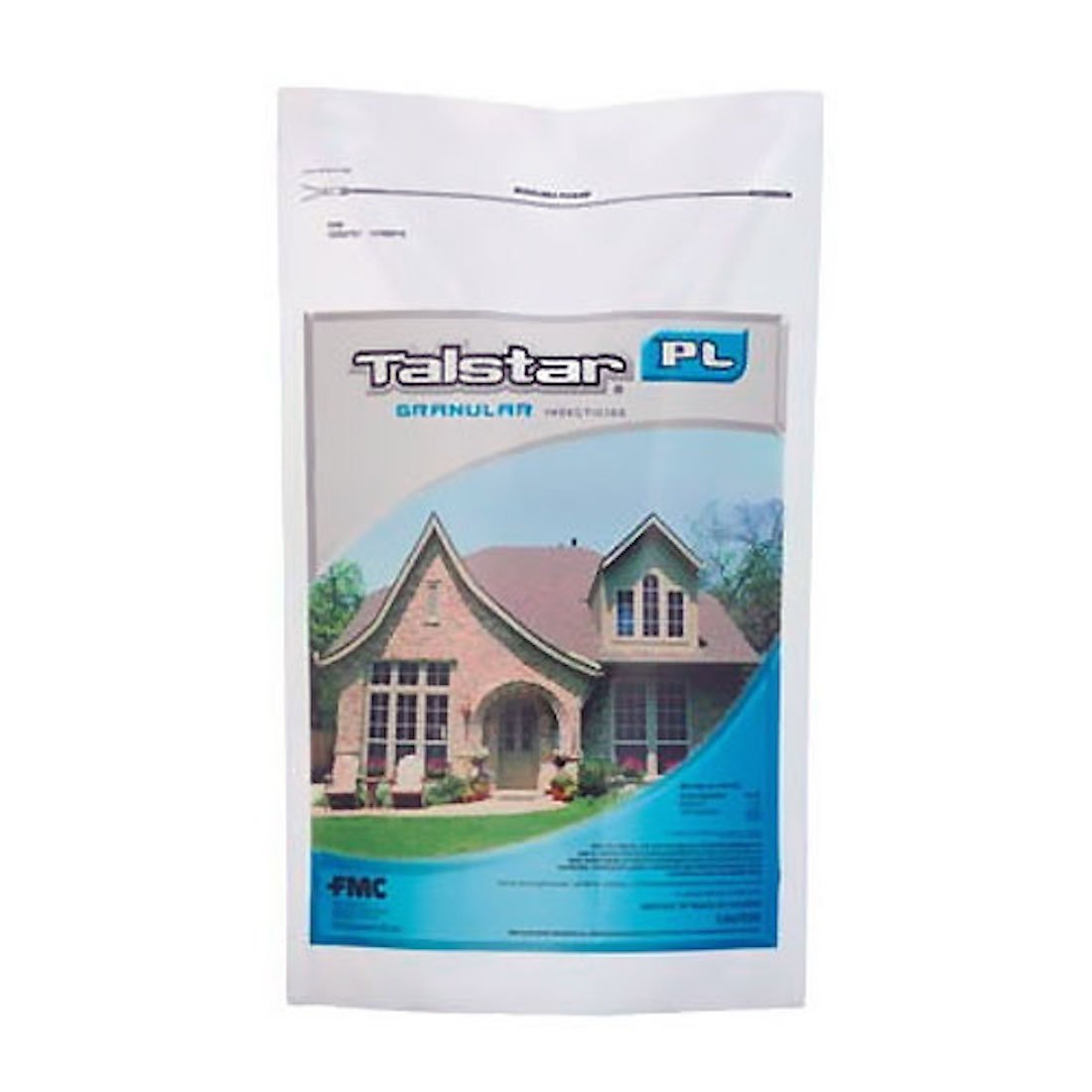
1. Talstar PL Granules Insecticide
Our pick — 4.5+★ from 750+ verified ratings; the strongest balance of quality and price.
The 2 to 4 month residual that outlasts the fall grub feeding window
The number that deserves your attention here is the residual — two to four months on a single application. That is the longest of any granule in this lineup, and it matters in fall because grubs keep feeding for weeks after the first cool snap. Put it down in early fall and the active ingredient is still working when the ground starts to harden. Just as useful: it does not need watering to activate. It penetrates mulch and grass on its own, so an unexpected dry spell will not leave your treatment sitting useless on the surface.
The sand-core granule structure is why it distributes so evenly through a spreader, and it is built for broad application across a whole lawn rather than spot treatment. It comes as one bag of granules, formulated as a synthetic pyrethrum on sand, and it targets grubs alongside ants and fleas. That multi-pest range is the quiet bonus — you are not treating grubs and then buying a second product for the fire ants moving up the walkway. Buyers report it working throughout the season on grubs, fire ants, and spiders alike.
What wins people over is sheer effectiveness across a wide range of pests, not just grubs, so one application handles several problems at once. The honest catch is speed: this is slow-acting by design, spreading through the nest or through the soil over days rather than dropping pests on contact. If you want dead insects visible by evening, this is not that product. And keep it away from ponds or any water feature with fish — it is not safe there, though it is fine around kids, pets, and foliage once applied. At four-point-seven stars, the crowd record backs the label.
Where it pulls ahead
- Two to four month residual — the longest lasting granule in this list
- No watering required to activate; penetrates mulch and grass on its own
- Broad range covers grubs, ants, fleas, and more in one pass
- Sand-core granules spread evenly without clumping
What to plan around
- Slow-acting — expect days, not hours, for visible results
- Not safe for fish or ponds; keep it away from water features
- Skin irritation possible at high concentration, so wear gloves
Made for: the homeowner who wants one fall application that keeps killing for months and covers ants and fleas in the same pass.
Think twice if: your grub damage is in a pond-side bed — the label rules out use near fish.
2. Ortho Bug B Gon Max Insect Killer for Lawns
One 10 lb. bag stretches across 10,000 square feet of mixed lawn and beds
If your grub problem sits inside a bigger pest problem, this is the bag that answers both. One application is rated to kill and prevent 100 listed insects for up to three months, and it works above and below the surface — which is exactly what you want in fall, since grubs are underground while ants and ticks are still active up top. The 10 lb. bag treats up to 10,000 square feet, and the label allows use on lawns, ornamentals, around the home perimeter, and in vegetable gardens and flower beds. That is rare flexibility from a single granule product.
Owners describe real-world coverage that runs close to the label. One buyer covered a 7,600 square-foot lot — grass, two flower beds, a vegetable garden, and the house perimeter — and advises two bags for anything larger. Another applied it around the perimeter for carpenter ants and went roughly two months without ants indoors, though a few still showed up outside near the deck. A ten-year user switched brands one year, watched an ant problem take two weeks to control, and came straight back to this product with no ants along the treated perimeter afterward.
Effectiveness is what carries this pick, with a huge share of buyer feedback focused squarely on how well it works — no flea, tick, or spider trouble reported indoors, and clearly less ant activity outside. The value angle is real too: owners call it a solid buy and say they would purchase it again. Be honest with yourself about what it will not do, though. This one does not kill grubs according to a three-star review that still gave the product credit for helping. If grubs are your entire problem, look at the Talstar PL or the Sevin granules instead — this is the pick when grubs are one item on a longer list.
Spread of coverage: At up to 10,000 square feet per 10 lb. bag, this goes further than the Milky Spore’s 3/4 acre per 3/4 bag and covers ornamentals, perimeter, and vegetable beds that a lawn-only granule ignores.
The spreader requirement: You need a spreader to apply it well. Trying to cast it by hand is messy and leaves gaps in coverage, so factor the equipment into your plan.
Reach for this if: your yard has ants, ticks, and fleas alongside the grubs and you want one bag to address all of it.
Look elsewhere if: grubs are the whole target — this label does not claim grub control the way the top picks do.
3. Martin’s 32 oz Cyonara Lawn & Garden Concentrate

A 32-ounce concentrate that targets 130+ pests wherever the granules cannot reach
Granules handle the open lawn. This handles everywhere else. It is a broad-spectrum concentrate built on 0.5% Lambda-Cyhalothrin (a synthetic insecticide that kills on contact), sold as 32 fluid ounces of liquid you mix with water and spray. That makes it the pick for grub damage in raised beds, along foundation lines, and in the tight spots a spreader cannot cover — and you can aim it precisely instead of blanketing a whole yard. It is labeled for lawns, vegetables, roses, flowers, trees, and shrubs, which is broader plant coverage than any granule here.
The speed is the selling point. This is contact-kill, not the slow soil release you get from the Talstar PL above — owners mention knocking down a backyard mosquito swarm fast, and One owner sprayed garage baseboards and found large cockroaches dead on the floor within a couple of hours. Maggots in an outdoor trash can were gone almost immediately and stayed gone all summer, and customers note it works as expected with easy instructions and good value against hardware-store pricing. Pest range is wide: spider mites, fleas, aphids, fire ants, chinch bugs, beetles, crickets, and water bugs all show up in owner feedback, and the low-odor formula means you are not fumigating the patio while you spray.
Two things to keep in mind. First, you must dilute it — it arrives as a concentrate, not a ready-to-spray bottle, so you need a sprayer and a bit of measuring. Second, it does wash away in rain; one owner noted it needs reapplying after weather, so time your spray for a dry stretch. Most reviewers point out no complaints and consistent results, though one buyer thought a particular batch was a touch less effective than usual while still calling it a great product overall.
Precision over blanket coverage: Where a 10,000-square-foot granule bag is overkill for a bed or a deck skirt, this focuses exactly where the pests are, and its contact-kill works on targeted grubs faster than soil-release granules.
Not a set-and-forget product: It is a tool, not a sprinkle-on routine — mixing, spraying, and respraying after rain are part of owning it.
The fit: gardeners and bed-focused homeowners who want contact-kill precision and coverage across flowers, shrubs, and vegetables.
Not the fit: anyone who wants to open a bag and walk away — this needs a sprayer, water, and reapplying after wet weather.
4. Milky Spore Japanese Beetle Killer
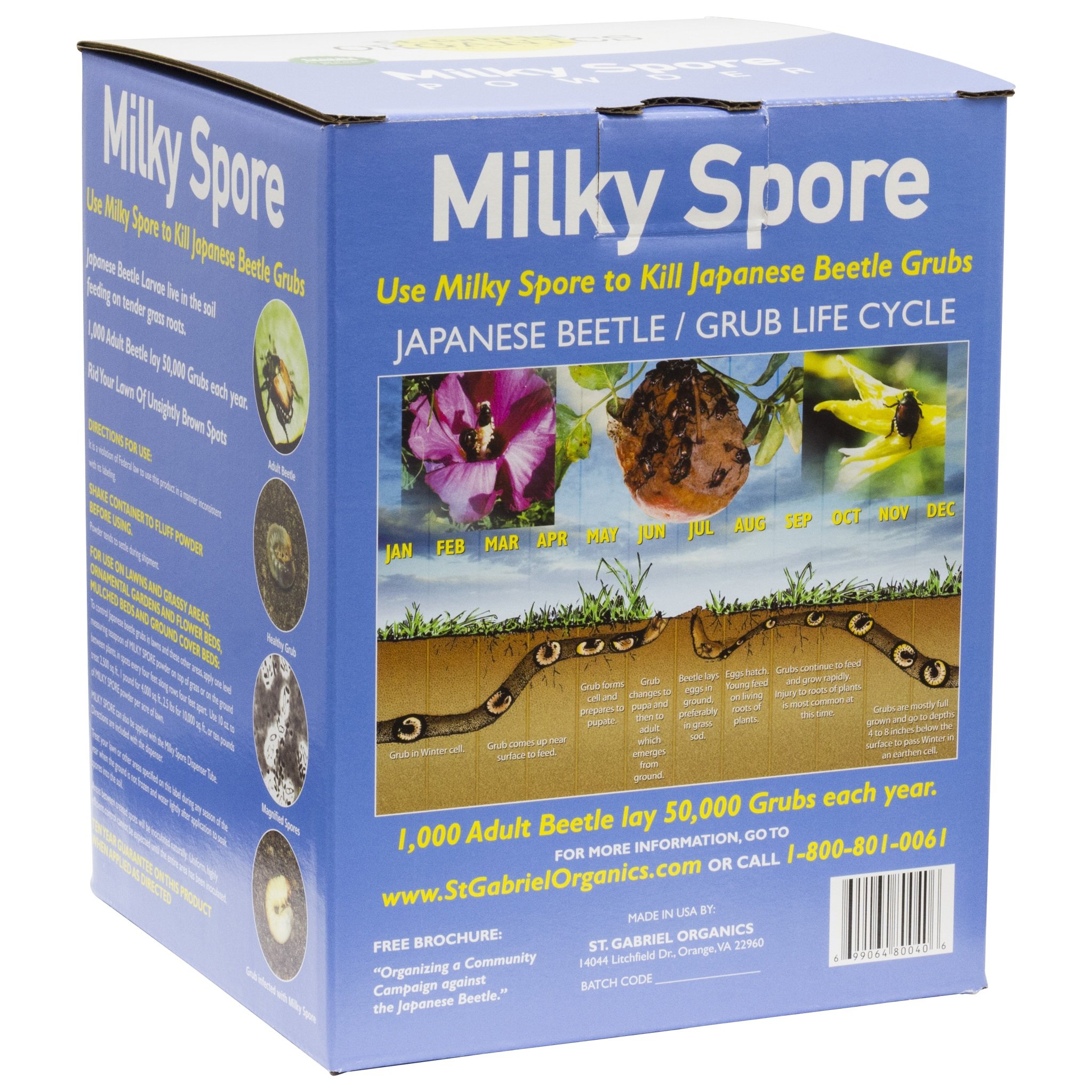
Biological spores that settle into the soil and keep working season after season
This one works differently from everything else on the list. It is not a chemical granule — it is Milky Spore powder, a biological control loaded with spores that infect and kill Japanese beetle grubs, then persist in the soil for seasons so you are not reapplying every fall. One bag covers 3/4 acre per 3/4 bag spread thin, and it works either raked into the soil or scattered on top. For a property with a long-standing Japanese beetle problem, the long-term angle here is the real value.
The soil-temperature rule is the crucial detail. The spore goes inactive below 50°F soil temperature, so you need to apply while the ground is still warm — this is genuinely a fall or early-spring product, not a deep-winter one. Instructions are not included in the bag, and you will need to look them up: the recommended rate is one teaspoon per four square feet, watered in gently. Reddit-grade folklore says to open the bag away from food areas, and the label supports that sensible precaution. A buyer who tracked down the directions cleared garden pests and salvaged their crops, with a test patch of grass recovering in about a week.
The upside is that it keeps giving. One owner reported nine straight years without Japanese beetles across the whole property after spreading it thin. It is all natural with no harsh chemicals, and owners describe healthier lawns and fewer signs of grub damage over time. Understand what you are buying, though: this is a slow-build biological, not a knockdown kill. A garden-bed user found it required multiple applications before it worked, and value feedback is mixed — some say it is worth every cent while others find it pricey for what you get. Give it seasons to establish and it rewards patience.
Why it earns its place
- Biological spores persist in soil for multiple seasons — no annual reapplication
- All natural with no harsh chemicals, safe around food gardens
- 3/4 acre per 3/4 bag covers a large property
- Works raked into soil or scattered on top, following gentle watering in
What it demands of you
- Goes inactive below 50°F soil temperature — timing is not flexible
- No instructions in the bag; you must find the rate online
- Slow to establish and may need multiple applications to work
- Value feedback is split between “worth it” and “overpriced”
Built for: long-haul homeowners chasing Japanese beetle grubs who want a natural soil treatment that keeps working year after year.
Pass it by if: you need grubs dead this season — this one builds its effect over time and shuts down in cold soil.
5. Sevin Lawn Insect Granules, 20 Pounds

A 20-pound bag that spreads a wide pest net at a budget-friendly price
For sheer volume at a low entry cost, a 20-pound bag is hard to argue with. Sevin Lawn Insect Granules kill over 30 listed pests — ticks, fleas, worms, ants, and several others — and the label clears the product for lawns, ornamentals, around the home, and use on vegetables. The 20-pound bag is built for large-scale coverage, which suits a big property where you treat a lot of square footage each fall. If you want to cover a whole yard without spending much, this is the bag to grab.
The verdict from owners lands mostly on one word: it works. The product gets credit for clearing fleas and ticks in particular, and it is praised as strong value for money — a high-performance, durable product at a friendly price. Shoppers say it taking care of the bug problem around garages and outbuildings, with spiders, ants, and caterpillars all gone after treatment. One owner spreads it thickly every single year and treats the task almost as a fall ritual.
Here is the honest part to weigh. The feedback on this one is not unanimous — a few buyers reported it simply did not work for them, which happens with any pest product and often depends on application timing or an under-dose. Treat that as a reminder to spread it evenly and at the right rate rather than as a reason to skip it, because the overwhelming pattern is a product that does its job. One more thing to check: it is a large bag, so if your lawn is small you may have more left over than you can use in a single season.
The volume play: At a full 20 pounds, this bag beats the Talstar PL’s 400-ounce unit and the Ortho’s 10 lb. bag on sheer quantity — the widest single-bag coverage here for the least spend.
The real-world wrinkle: Budget price and giant bag are the whole story, so if you have a small lawn, the leftover volume is wasted rather than saved.
Suits: big-property owners who want maximum coverage for minimum money and do not mind spreading it themselves.
Not ideal for: a compact yard — a 20-pound bag is more than most small lawns can use before it sits unused.
Know the Specs
Residual
Residual is simply how long the product keeps killing after you apply it. A granule lasting two to four months carries you across the fall feeding window without a second application, while a shorter-lived product may run out before the grubs stop eating. For fall specifically, longer is usually better because the damage period is spread across cool weather and you may not get another dry day to reapply. Check this line before you compare anything else.
Soil Temperature
Soil temperature decides whether some products work at all. Chemical granules keep killing as long as they are present and watered in, but biological products like Milky Spore go inactive below 50°F soil temperature — meaning a late-fall application does nothing. Apply biological controls while the ground is still warm and moist, and save the chemical granules for whenever you can get them down and watered in.
Form: Granule, Concentrate, or Spore
Granules are scattered with a spreader for broad lawn coverage and rely on water to carry the active ingredient to the roots. Concentrates are mixed with water and sprayed, which suits beds, foundation lines, and tight spots a spreader misses — but they need a sprayer and can wash off in rain. Spore powders are biological and are broadcast just as thinly, then watered in gently. Match the form to where your grubs actually are before you buy.
Coverage Area
Coverage tells you how far one bag or bottle stretches, and under-covering leaves surviving grubs to restart the cycle. A 10 lb. bag rated for up to 10,000 square feet, a 20 lb. bag, or a spore product covering 3/4 acre per 3/4 bag all point to different property sizes. Measure your lawn roughly before you buy so you know whether one unit is enough or if you need two — an under-dose is the most common reason a treatment seems to fail.
Common Questions
Is fall actually the right time to kill grubs?
Do granule grub killers need to be watered in?
Will Milky Spore work in cold fall soil?
How long does a fall grub treatment keep working?
Can I use these products on my vegetable garden?
What is the difference between granules and a liquid concentrate?
How much area does one bag of grub killer cover?
Why did my grub treatment not work last fall?
Is a natural grub killer as effective as a chemical one?
How long after applying can kids and pets go back on the lawn?
The Bottom Line
For most people facing a fall grub problem, the winner is the Talstar PL Granules Insecticide — its 2 to 4 month residual keeps killing long after the first cold night, and it does not need watering to activate, so an unexpected dry spell will not waste your application. If your grub trouble comes bundled with ants, ticks, and fleas across a big yard, the Ortho Bug B Gon Max stretches up to 10,000 square feet and covers all of them at once. Want a natural treatment that keeps working season after season? The Milky Spore builds into the soil and pays off over years — just apply it while the ground is still warm.
The one nudge worth making: the Talstar PL is the pick with both the longest residual here and a four-point-seven crowd record to back it, so if you only want to buy one bag and be done, that is the bag to put in the cart before the soil turns cold.
How we choose
We do not accept paid placement. Every pick is matched to a real buyer and a real use-case; we do not hands-on test units.
Sources
Specifications: manufacturer listings and product documentation. Review insights: verified customer reviews, as of October 2026. Pricing: not shown on this page (it changes often); check the current price via the retailer link.
As an Amazon Associate, Aappliancez earns from qualifying purchases. This does not affect which products we feature.