Disclosure: Some links in this post are affiliate links. As an Amazon Associate I earn from qualifying purchases, at no extra cost to you. Learn more
Specs are compiled from manufacturer listings and verified buyer reviews and can change over time — please confirm the key details on the product page before buying.
You want coffee ground seconds before it hits the water, not a pod that sat on a shelf for months. The catch is that a machine which grinds and brews in one go has to get two jobs right at once, and plenty of them get one of those jobs wrong. This guide separates the machines that get both jobs right from the ones that don’t.
This guide is built by comparing the manufacturers’ published specifications and the patterns across verified customer reviews, so you get each pick’s real strengths and trade-offs instead of marketing spin.
Below you’ll find nine machines sorted by what they actually do well, plus the specs that matter when you’re choosing. The real skill in buying a grind and brew single serve coffee maker is knowing which trade-off you can live with daily.
Top Picks


How To Choose The Best Grind and Brew Single Serve Coffee Maker
Start with the grinder, because that’s the part that decides whether your beans taste like the bag or like a mistake. A conical burr mill crushes beans between two shaped metal surfaces for an even particle size, which is what gives you a balanced cup. A blade grinder spins a small blade and chops unevenly, so you get fine dust and coarse chunks in the same dose. Both can make good coffee, but the burr is the more forgiving tool when you want consistency from one morning to the next.
Match the brew size to the mug you actually use
Single-serve sizes are usually quoted in ounces, and that number matters more than the word “cup.” A brew range like 6 to 24 ounces covers a small espresso-style pour up to a tall travel mug in one machine. Machines with a pot and carafe work in a completely different way — you fill a big tank, brew a batch, and pour. If two people in the house drink at different times, a single-serve model with a removable reservoir tends to fit better than a carafe you have to reheat.
Decide if you want pods, beans, or both
A machine that accepts K-Cup pods, Nespresso capsules, ground coffee, and whole beans in one body gives you a fallback when you run out of beans. That flexibility costs something in counter footprint and in cleaning, since each path leaves its own residue. Pure bean-to-cup machines skip the pod slot entirely and put all their engineering into the grinder and the brew chamber.
Look hard at the water tank and the cleaning routine
A small reservoir means refilling mid-week, and a tank you cannot lift out means wiping around it. Check whether the tank detaches and whether the brew basket and drip tray come out for washing. Ground coffee left sitting in a brew path turns stale and clogs the spout, so any machine that needs a quick rinse after each use should tell you that up front.
Side-by-Side Comparison
| Model | Best For | Grinder Type | Brew Range | Water Capacity | Amazon |
|---|---|---|---|---|---|
| xBloom Studio★ Best Overall | Pour-over control freaks | Built-in multi-speed grinder | Single cup | 32 fl oz | Amazon |
| avigator Grind and BrewBest for Big Households | Big-household batch brewing | Ceramic burr | Single cup to 10 cups | 1.25 liters | Amazon |
| AIRMSEN CGM511Smallest Footprint | Tight counters and pod fans | 5-setting blade grinder | 6 to 14 oz | 50 fl oz | Amazon |
| AIKAMI 4-in-1 | Milk drinks on a budget | Attachable grinder | 6 to 14 oz | 28 fl oz | Amazon |
| HBN 3-in-1 | Nespresso plus K-Cup switching | None — pods or pre-ground | 15 to 90 sec programmable | 20 fl oz | Amazon |
| Ninja Single Serve Combo | Everyday pods and grounds | None — pod or ground basket | 6 to 24 oz | 56 fl oz | Amazon |
| Cuisinart DGB-30 | Bean-to-cup single servings | Stainless steel conical burr | 8 to 24 oz | 58 fl oz | Amazon |
| Philips Baristina | Real espresso from whole beans | Built-in grinder with auto-tamp | Espresso to lungo | — | Amazon |
| Café Specialty Grind and Brew | Wi-Fi scheduling and thermal carafe | 6-setting adjustable burr | 1 cup to 10 cups | 75 oz | Amazon |
Detailed Reviews
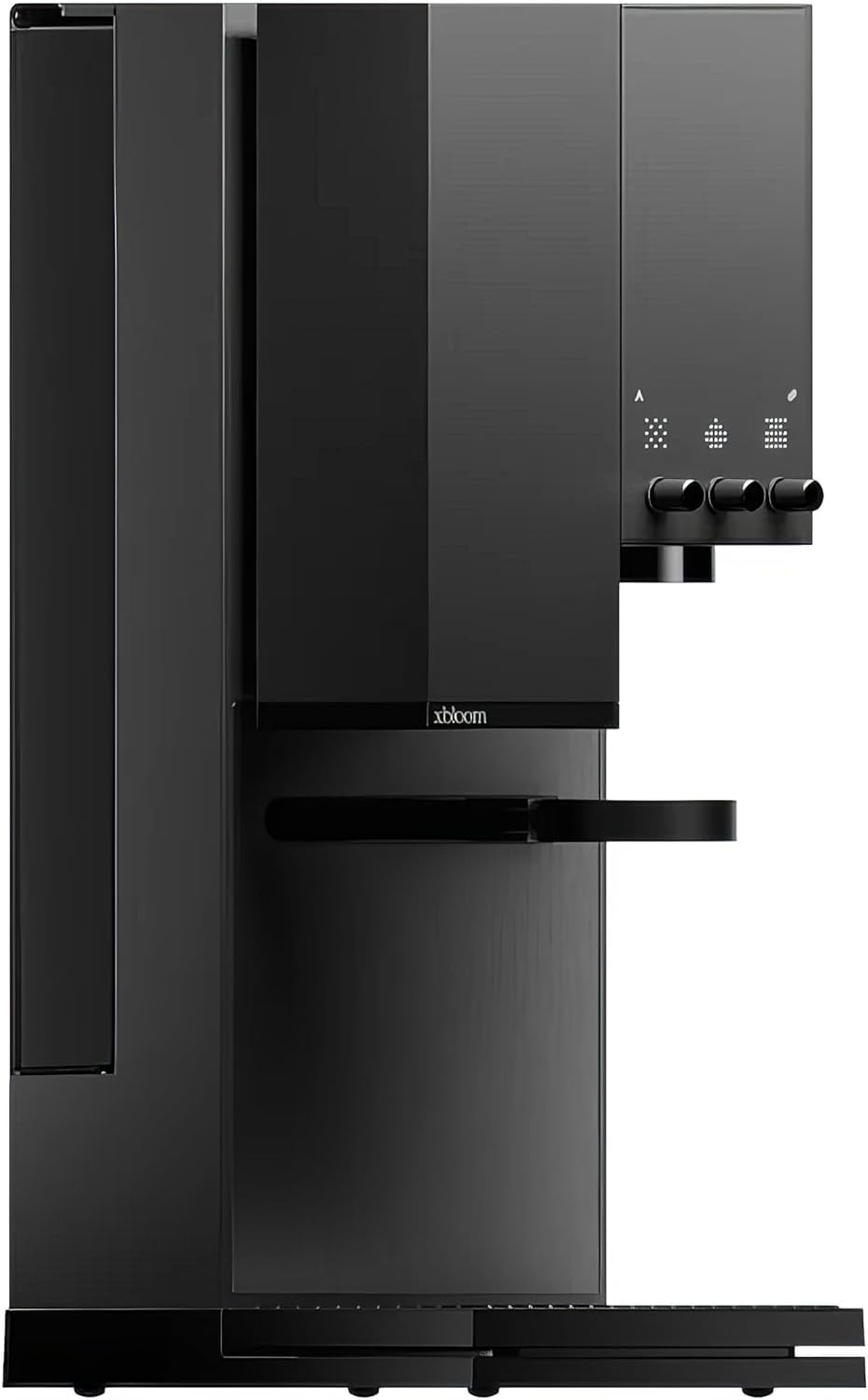
1. xBloom Studio Coffee Machine
Our pick — 4.5+★ from 100+ verified ratings; the strongest balance of quality and price.
A pour-over bar with a grinder, a scale, and a heater stacked in one tall frame.
What makes the xBloom the strongest pick here is that it automates the part most people get wrong: the pour. It grinds whole beans on board, weighs the dose on a built-in scale, heats the water, and runs the pour itself in Autopilot mode. Copilot walks you through steps if you want guidance, and Free Solo hands you full manual control. That three-level ladder is the reason a total beginner and a coffee obsessive can both end up happy with the same machine.
The physical controls are the other half of the appeal. Real knobs and an LED matrix display let you change grind size, water temperature, and flow rate as the brew runs, without digging through touchscreen menus. Capacity is 32 fluid ounces in the reservoir, which keeps the footprint tight — it measures 8 inches deep and 6.7 inches wide. Compared with the avigator drip machine further down, which needs 12 inches of depth, that’s 50% more clearance you keep on the counter. Weight lands at 11.3 pounds, so it stays put when you lean on the handle.
Where it asks something of you is in the learning. Pods via the xPod system are convenient but cost more than loading your own beans, and the reservoir is small enough that it suits one or two cups a day better than a family. The build is matte-finished plastic, and the scale sits low, so filling can feel cramped. What wins people over is the cup itself — the automated pour delivers pour-over quality without a kettle. As far as the automated pour-over crowd goes, the current score sits at 4.5+ stars.
Where the xBloom pulls ahead
- Grinder, scale, and heater in one 8-inch-deep body — no separate gear on the counter
- Three automation levels take you from hands-off to full manual on the same machine
- Knobs and LED matrix let you adjust grind, temp, and flow mid-brew
- xPod dock plus whole-bean path means you can buy beans or pods
What you give up for the control
- 32 fl oz reservoir runs dry fast in a two-drinker household
- Pods cost more per cup than loading your own beans
- The scale sits low and cramped, so dosing takes a steady hand
Worth it if: you want pour-over results without standing over a kettle, and one perfect cup a morning is the goal.
Think twice if: you fill a carafe for the whole family — a batch machine fits that life better.
2. avigator Drip Coffee Maker with Grinder Built In
The batch brewer that grinds the beans right before the water arrives.
If your morning involves a pot and several people, the avigator is the one that thinks in carafes. A ceramic burr grinder sits inside the body and crushes beans evenly before the brew starts, which keeps the coffee tasting like the bag rather than like the shelf. The glass carafe holds 1.25 liters, and a knob lets you dial the cup count anywhere from a single cup up to 10 cups. A self-cleaning powder path runs after every brew so ground residue doesn’t sit in the chute overnight.
The 120-minute warming plate is the feature that separates it from a server-style carafe. Coffee stays warm for two hours, then the machine shuts itself off for safety. It measures 12 inches deep and 16.5 inches high, which is a real footprint — set beside the xBloom’s 8-inch depth, this one pushes further out from the wall. A reusable filter means no paper to buy, and the glass means you can see exactly how much is left without lifting the pot.
Be honest about the size before you buy. Several owners describe the actual yield as closer to six real cups than ten, and full-capacity brews read weak to anyone who likes a strong mug. Some press the 5-cup setting and double-grind as a workaround, with mixed results. The other thing buyers run into is the shape: the tall body means you pull it forward to fill the tank and to read the water level, so plan for the reach. Run it for two people who want a hot pot waiting, and the grind-fresh advantage is fully in your favor.
Value read: a burr grinder and a full drip machine in one body for less than buying them as two pieces of equipment — and the reusable filter means no ongoing paper cost.
The catch: batch capacity is the selling point and also the weak spot. Brew a full pot for a crowd that wants strong coffee and you’ll want to adjust your bean dose upward.
Matches you well: a household that finishes a pot before it cools, especially where someone wants a second cup two hours later.
Reach for something else: if you like one intensely strong mug at a time — a single-serve machine gives you that control.
3. AIRMSEN Grind & Brew CGM511
A compact 3-in-1 that grinds, takes K-Cups, and tucks into a small counter corner.
Small kitchens are the whole reason this machine exists. It measures 10 inches deep, 6.3 inches wide, and 11 inches high, with hidden accessory storage in the base and a cord wrap so the back stays tidy. Inside, a 5-setting blade grinder handles whole beans, a removable adapter takes K-Cup pods, and a third path takes pre-ground coffee. A 50-ounce detachable tank means fewer refills, and a 5-minute auto-shutoff saves energy on mornings when you walk away mid-brew.
The control panel is the part that reads premium for the size. A touchscreen shows live status, brew sizes run from 6 to 14 ounces, and a descaling alert tells you when it’s time to run the self-clean cycle. The brew chamber accepts travel mugs up to 6.3 inches tall, so a commuter cup fits with the drip tray pulled. A 1.5-minute bean-to-cup cycle puts it among the quicker single-serve machines in this group.
The honest side of the story sits with reliability. A cluster of buyers report units failing after roughly two months, with water leaking out and loud popping before the machine goes quiet. That reported pattern is the recurring gripe, and it’s worth knowing before you commit. The other thing to plan for is the spout: it needs a wipe now and then or coffee can overflow out the top during a brew. Owners who keep it single-cup and maintain the spout describe good, fresh coffee from the grinder. Air out your expectations on longevity — this is a pick for the buyer who wants the feature set and a small body, not the longest track record.
Why it earns a slot: the combination of a blade grinder, K-Cup compatibility, and a 10-inch depth is hard to find in a body this small.
What to weigh: reported mid-term failures and water leakage make an extended protection plan a sensible add-on rather than an upsell.
Fits: a studio or small kitchen where counter inches are scarce and you alternate between beans and pods.
Not the pick for: anyone who wants a machine to run for years without a maintenance habit or a backup plan.
4. AIKAMI 4-in-1 Single Serve Coffee Maker
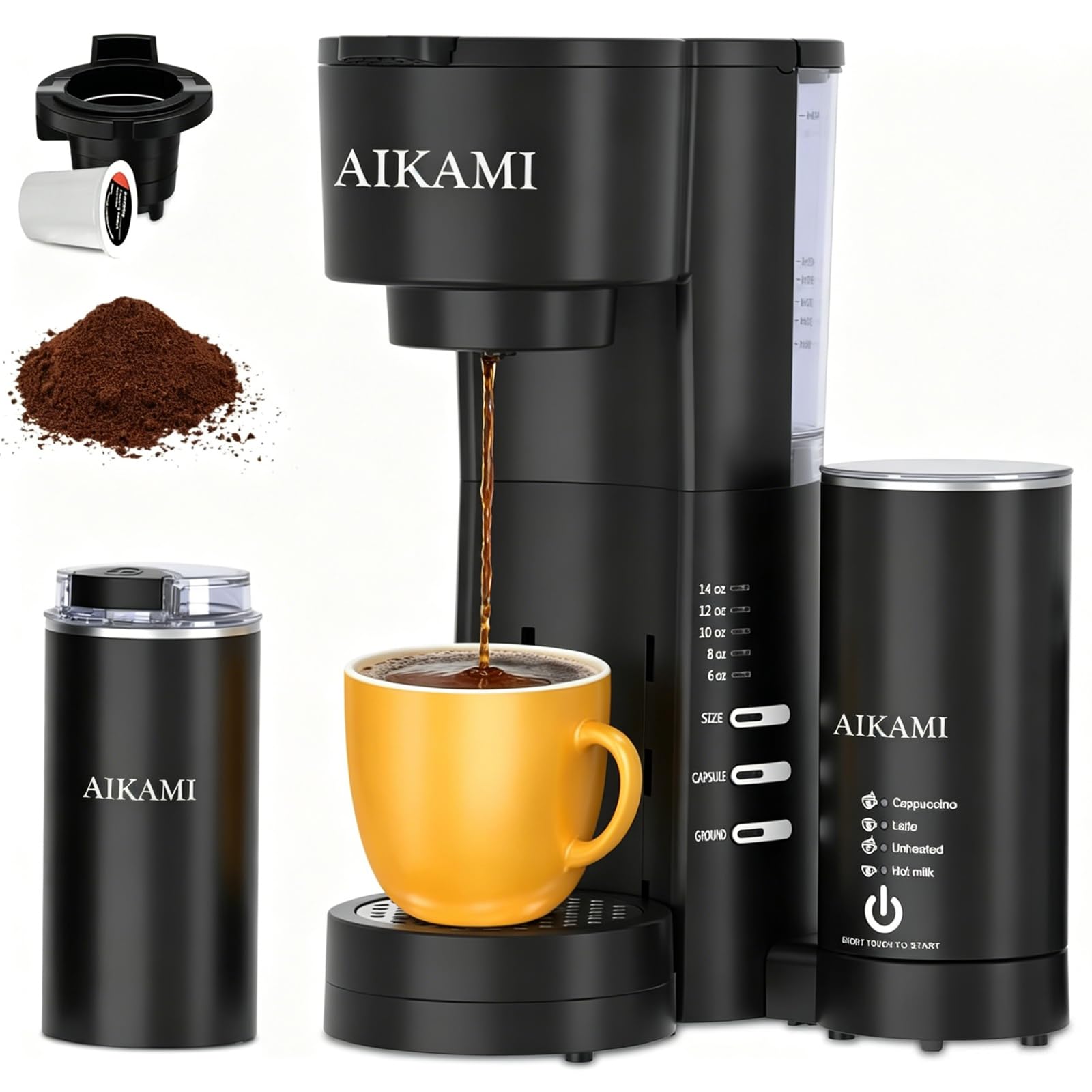
Grinder, brewer, and frother in one small frame — latte foam without a second gadget.
You get four jobs in one body: an attachable grinder crushes beans, the brewer takes either grounds or K-Cup pods, and a separate milk frother whips silky or airy foam in 1 to 2 minutes. Brew sizes run 6 to 14 ounces across five settings, so you can pick a small cup or a large mug. Quick heating puts coffee in your mug in roughly 100 seconds. The drip tray adjusts for a taller travel mug. If you want a cappuccino without buying a standalone frother, that bundle is the reason to look here.
The self-clean cycle is worth calling out because frother-and-grinder combos collect residue. Fill the reservoir with water and descaler to the 14 oz mark at a 4:1 ratio, hold the buttons for 2 seconds, and the machine runs the clean for you. The removable 28-ounce tank lifts off for refilling, and the grinder produces consistent fine grounds in under 30 seconds — loud, but quick. It sits 9.44 inches deep and 5.9 inches wide, which is compact enough to leave out on a busy counter.
What you should expect for the build is plastic, and durability is where the feedback splits. The frother is the part most likely to give out early according to the pattern of complaints, so treat it as a bonus rather than the reason to buy. A few units have leaked near the coffee outlet or pooled water on the reusable filter. Still, day to day it holds up — the frother produces dense foam, and the coffee comes out hot, strong, and rich. Set against the HBN below, this one trades pump pressure for milk capability at a lower tier.
Standout detail: frother temperatures reach 158°F with hot dense, airy, and cold modes, so iced lattes and hot foam both work from the same attachment.
Realistic expectation: plan on the frother being the first part to wear — the plastic build is a value trade, not a long-haul promise.
Good match: a first machine for someone who drinks lattes and cappuccinos and wants the foam made at home.
Look elsewhere if: you mainly drink black coffee — you’re paying for a frother you won’t touch.
5. HBN 3-in-1 Multi Coffee Maker

Three capsule formats in one slim body, with a 19-bar pump behind the espresso.
The HBN earns its place on flexibility. It takes Nespresso OriginalLine capsules, K-Cup pods, and ground coffee through a reusable filter basket, so you can buy whichever format is on offer that week. A 19-bar high-pressure pump and a 1450W boiler do the extraction, which is what gives you a proper crema on a short espresso rather than a watery drip. The Short and Lungo buttons are programmable from 15 to 90 seconds, so you can stretch a shot when you want a longer drink.
It’s a slim machine at 11.36 inches deep and 4.57 inches wide, and it weighs 7.1 pounds — light enough to slide out for refilling. The removable 20-ounce tank lets you see the water level at a glance, and the drip tray comes off to clear space for a cup up to 4.7 inches tall. Auto-off kicks in after 15 minutes, with an energy-saving mode for the rest of the day.
Know what it is before you buy: this is an espresso-first machine, not a bean grinder. There’s no mill inside, so “grind and brew” here means you grind elsewhere and load the basket. Nespresso and espresso from ground both come out rich, and third-party Nespresso pods work without fuss. K-Cup output is the weaker of the three formats, so if pods are your main habit, the Ninja below is the better-tuned choice. The 20-ounce tank also runs dry quickly if you pull several lungo shots back to back, and one recurring gripe is that the machine can slide into a descaling cycle if you leave it on for several minutes.
Where the HBN shines
- 19-bar pump delivers real espresso crema, not a drip approximation
- Three formats — Nespresso, K-Cup, and ground — from one 4.57-inch-wide body
- 1450W boiler heats fast enough for coffee in under a minute
- Programmable 15 to 90 second brew gives you strength control
Where it asks more of you
- No grinder inside — you supply the grounds or pods
- 20 fl oz tank empties fast across several shots
- Drip tray clearance stops at a 4.7-inch cup
Pick this when: you want espresso and Nespresso flexibility from one small station and already own a grinder.
Skip the switch: if whole-bean grinding is the feature you came for — the Cuisinart or xBloom handle that job.
6. Ninja Single Serve Coffee Maker Combo

The one-machine compromise that handles pods, grounds, iced coffee, and lattes.
This is the safest bet in the whole group, and the reason is breadth. It brews K-Cup pods and ground coffee, pours anywhere from 6 to 24 ounces, and adds four brew styles including Over Ice and Specialty for concentrated shots. A built-in milk frother folds away when you don’t need it. The 56-ounce removable reservoir means several days between refills for a single drinker, and the adjustable drip tray fits a tall travel mug.
The brew system is the quiet engineering story: Ninja’s Thermal Flavor Extraction runs calibrated cycles for even saturation and a steady temperature. Owners describe the coffee as genuinely hot, with the Over Ice setting making a proper iced tea or iced coffee without dilution. It’s slim at 13.07 inches deep and 5.51 inches wide, and it weighs 6.2 pounds. Cleanup is simple with the removable brew basket and permanent filter, and the frother twists off to wash.
The trade-offs are small but real. A handful of owners find the brew cycle loud enough to hear from the next room, which is a fair heads-up for an early riser in a small apartment. A rare unit has leaked from the base and needed a return. Those are outliers against a deep, consistent record of owners reporting it replacing a Keurig and never looking back. What wins people over most is consistency — it keeps turning out the same hot, strong cup day after day. If you want froth, pods, and grounds without picking a lane, this is the machine that refuses to choose.
The everyday advantage: four brew styles and a frother mean a plain mug, an iced drink, and a cappuccino all come from one 5.51-inch-wide body.
Fair warning: it’s louder than a standard drip machine, so don’t plan on brewing beside a sleeping baby.
Made for: the household that wants one appliance to cover pods, beans, iced coffee, and foam without a second gadget.
Consider a step up: if fresh-ground flavor is the priority over convenience — the Cuisinart below grinds beans before brewing.
7. Cuisinart Grind and Brew DGB-30
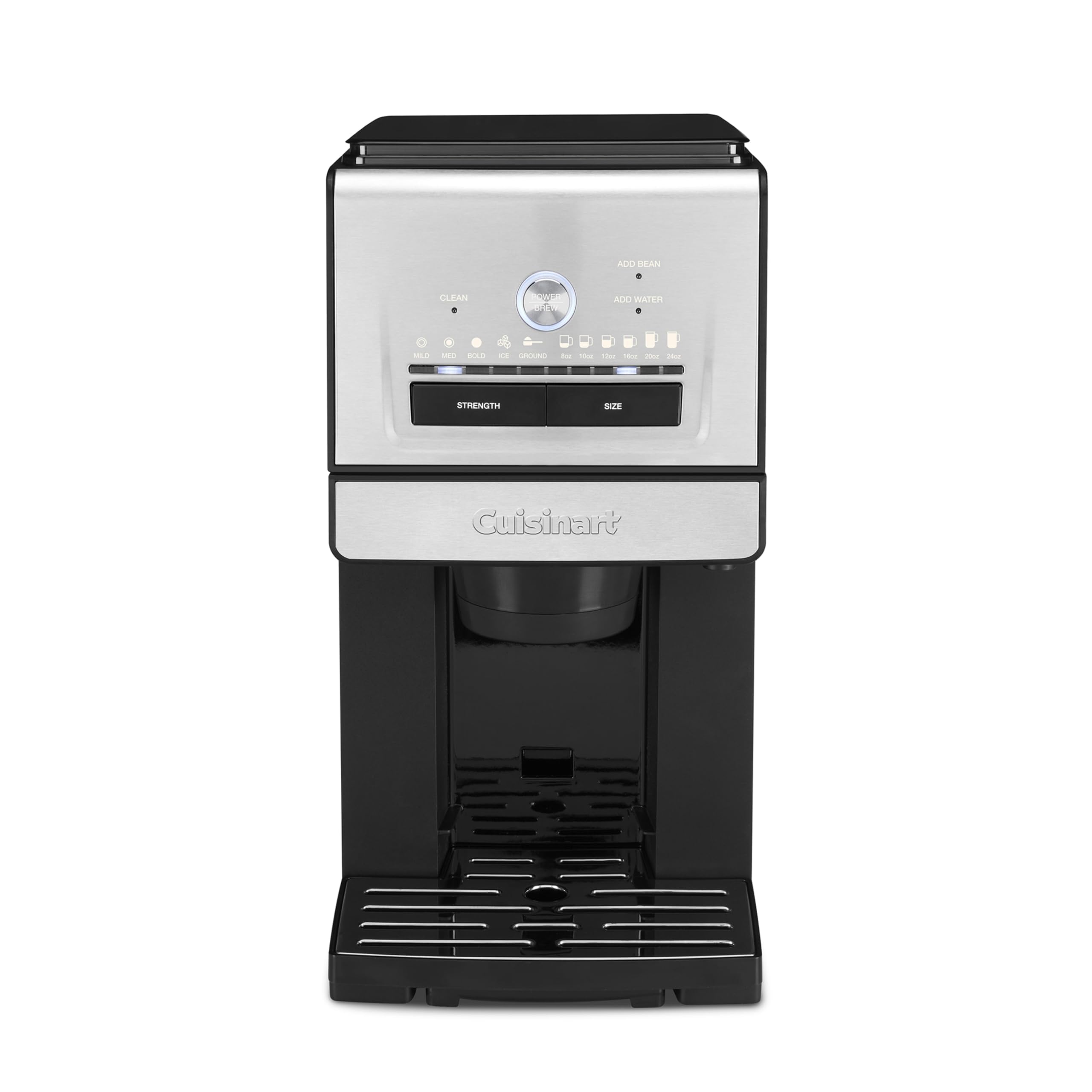
A stainless conical burr that grinds beans right before they meet the water.
Freshness is the whole argument for this machine. A stainless steel conical burr mill grinds whole beans in the body before brewing, and the brew runs hotter than a typical single-serve machine, so you get a consistent hot cup from the first drop. Brew sizes run 8 to 24 ounces, which covers a small mug to a tall travel cup. A grind-off setting lets you use pre-ground coffee when the bag is what you have, and an Over Ice mode produces a stronger brew meant to meet the ice.
Control is straightforward: adjustable strength, a programmable panel, and a removable drip tray that adjusts to fit regular mugs, travel cups, and most taller drinkware. The 58-ounce reservoir is the largest tank in the single-serve portion of this list, so refills are infrequent. Cleaning parts — the hopper, the burr mill, the brewing chamber, and the drip tray — all come out. Nobody finds the cup thin: the burr-fresh flavor is the reason people stay with it.
Two habits decide whether you love it. First, clean the ground coffee out of the chamber after every single use, because stale grounds turn the next cup bitter. Second, understand the grind. It isn’t adjustable beyond medium-to-coarse, so large cups can read weak, and a few owners find the built-in burr produces an inconsistent grind that a separate grinder avoids. Buy it for the 8-to-24-ounce range and you’ll rarely feel boxed in. The burr is quieter than older generations, which sweetens the morning routine.
What earns the premium: 58 fl oz of water and a stainless conical burr in one frame — the largest reservoir among the single-serve machines here and the most serious grinder.
What to accept: medium-to-coarse grind only, plus a required empty-out after each brew. Skip the routine and the flavor drops.
Right for: a single-serve drinker who wants genuine burr-fresh flavor across a wide range of mug sizes.
Reconsider if: you want to fine-tune grind for espresso — this one keeps it coarse to medium by design.
8. PHILIPS Baristina Espresso Machine

Swipe the handle and a whole espresso ritual happens in under a minute.
The Baristina does three jobs that usually need three steps: it grinds the beans, tamps the puck, and brews with a 16-bar pressure pump. Swipe the handle, and bean to cup takes under 60 seconds. You can pull an espresso, a lungo, or an extra intense shot, and the divided grinder means you can run half decaf and half regular in the same dose. There’s no frother to clean, which is the sharper contrast with the AIKAMI above — this machine skips milk entirely.
It’s a small machine built for a compact counter, and the design leans on recycled content: over 50% recycled plastics excluding parts that touch water and coffee, with an A+ energy label under Swiss standards. Cleanup is an eject-and-rinse job, and the puck comes out in one piece because the machine tamps it for you. Freshly ground beans give you the aroma the machine is chasing, and the tamp consistency removes the variable most home baristas fight.
The caution here is durability and build. Reports of water leaks, a stuck portafilter, occasional grounds spills, and units stopping within months show up often enough to take seriously. Ground coffee performs worse than beans — weak, with no crema — so this is a bean-only machine in practice. A cup of espresso on the normal setting runs weak for some palates, and the boost function doubles the beans to fix it. Buy it knowing the plastic body is a value compromise and that a two-year Philips warranty is part of the purchase, not a bonus.
Why espresso drinkers look here
- 16-bar pump with automatic tamping takes the technique out of espresso
- Under 60 seconds from whole bean to cup via the swipe handle
- Divided grinder holds half regular, half decaf in one dose
- Over 50% recycled plastics and an A+ energy label
What to plan around
- Plastic build with reported leaks and portafilter sticking over time
- Ground coffee brews weak with no crema — beans are the real path
- Single shot only, so back-to-back drinks take a rinse between
Best for: the espresso drinker who wants bean-to-cup simplicity and doesn’t need milk steamed.
Wrong turn if: you want a long drip-style cup or a milk drink — this machine does short shots and nothing else.
9. Café Specialty Grind and Brew Coffee Maker

The pot that starts brewing from your phone and keeps coffee hot without a hot plate.
Wake up to coffee already brewed without touching the machine. The Café connects through the SmartHQ app and works with Amazon and Google voice assistants, so you can schedule a pot or a single cup from bed. A 6-setting adjustable burr grinder handles whole beans or pre-ground, and the machine stores your preferred cup count, temperature, and strength. It’s SCA certified — a third-party standard for brewing at the right temperature and ratio.
The 75-ounce removable reservoir brews up to 1.5 carafes before a refill, which is the largest tank on this list. The thermal double-walled vacuum carafe keeps coffee at temperature for up to two hours without a heating element, so it never scorches. A carbon water filter reduces chlorine and odors. Single-serve brewing runs directly into a travel mug without a pod, and the 10-cup carafe covers a crowd on the same machine.
The leaks are the thing to understand before you buy. The screw-on water filter housing has to seat precisely, and the hard-plastic connection between the reservoir and the machine intake has no gasket, so slow drips show up on the counter. Owners who fill the reservoir with a pitcher instead of pulling it out report far fewer problems. Treat that housing as a part you seat carefully every time and the machine rewards you. The build is 17 pounds and 14.5 inches wide, so give it real counter space.
The smart-home payoff: voice-to-brew and app scheduling across a 75 oz tank and a vacuum carafe covers both a single mug and a full pot.
Installation habit: seat the filter housing carefully and fill the reservoir in place — the design has no gasket at the intake, and drips follow from that.
Choose it if: you want scheduled, voice-controlled coffee with a thermal carafe and no burnt bottom.
Different fit needed: if you’d rather not manage a filter housing and want drip-free simplicity — a basic single-serve takes less attention.
Know the Specs
Burr vs. blade grinder
A burr grinder crushes beans between two shaped metal surfaces, which produces an even particle size and a more balanced cup. A blade grinder spins a small blade and chops, leaving fine dust and coarse chunks in the same dose. Blade grinders are cheaper and faster, and they work fine for a casual mug, but a burr gives you repeatable results. Look at the grind setting count too: more settings means more control across bean types. The Cuisinart’s conical burr and the xBloom’s multi-speed grinder sit at the precise end, while the AIRMSEN’s 5-setting blade sits at the fast-and-forgiving end.
Pump pressure in bars
Bar is a unit of pressure, and espresso machines use it to push hot water through a packed puck of coffee. A higher bar count generally extracts more of the oils that create crema. The HBN’s 19-bar pump and the Baristina’s 16-bar pump both aim at espresso with a real crema layer. A standard drip machine brews at atmospheric pressure with no pump at all, which is why it can’t produce a crema — it makes a different drink entirely. If you want latte-style shots, the pump matters. If you want a mug of filter coffee, it doesn’t.
Brew size range in ounces
Ounces tell you what mugs a machine will fill. A 6-ounce setting suits a small cup for a quick sip, and a 24-ounce setting fills a tall travel mug. Machines that quote a range across both ends give you room to brew a concentrated shot or a full commuter cup. Set against the batch machines here, which quote cups instead of ounces, the trade is scale: a carafe machine pours for several people, while a single-serve machine gives you exact control per cup.
Water reservoir capacity
A bigger tank means fewer refills, and a removable tank means you can fill it from the sink. The Café’s 75-ounce reservoir covers up to 1.5 carafes of brewing, and the Cuisinart’s 58-ounce tank is the largest among the single-serve picks. A small 20-ounce tank, like the HBN’s, needs a refill across several shots. Match the tank to how many cups you make before you want to touch the machine.
Common Questions
Do I have to use pods with a grind and brew machine?
How loud is the grinder on a grind and brew coffee maker?
Can a single serve grind and brew machine make a whole pot?
How often do I need to clean a grind and brew machine?
Does pump pressure in bars matter for a drip coffee maker?
Is a thermal carafe better than a warming plate?
Can I use my own beans in a K-Cup machine?
How long should a grind and brew machine last?
What is the difference between a single serve and a batch grind and brew maker?
Can I put a travel mug under a single serve machine?
Do whole beans really taste better than pre-ground in one of these machines?
The Bottom Line
For most people chasing fresh-ground flavor in a single cup, the grind and brew single serve coffee maker to beat is the xBloom Studio — it grinds, weighs, heats, and pours the whole cup for you, so a beginner and a coffee obsessive both end up with a better mug than they’d make by hand. If you want a fresh burr grind across a wide mug range, the Cuisinart DGB-30 pairs a stainless conical burr (a metal grinder that crushes beans evenly) with a 58-ounce tank. And for the household that wants pods, grounds, iced coffee, and foam from one slim body, the Ninja Single Serve Combo is the proven everyday choice.
The xBloom scores higher on cup quality and pour-over control, while the Ninja’s deeper review history makes it the safer everyday bet. Start with the grinder type and the brew size that match your morning, and the rest follows.
How we choose
We do not accept paid placement. Every pick is matched to a real buyer and a real use-case; we do not hands-on test units.
Sources
Specifications: manufacturer listings and product documentation. Review insights: verified customer reviews, as of October 2026. Pricing: not shown on this page (it changes often); check the current price via the retailer link.
As an Amazon Associate, Aappliancez earns from qualifying purchases. This does not affect which products we feature.