Disclosure: Some links in this post are affiliate links. As an Amazon Associate I earn from qualifying purchases, at no extra cost to you. Learn more
Specs are compiled from manufacturer listings and verified buyer reviews and can change over time — please confirm the key details on the product page before buying.
You want the tea that tastes like the good cup you remember, not the dusty bag that turns bitter the moment you look away. The short answer: buy whole or tightly rolled leaves, check the origin and harvest, and match the leaf style to your brewing method.
This guide is built by comparing the manufacturers’ published specifications and the patterns across verified customer reviews, so you get each pick’s real strengths and trade-offs instead of marketing spin.
Below you get five genuinely different leaves, from a smoky rolled bulk bag to a shade-grown Kyoto blend, plus the brewing numbers that decide whether your cup tastes sweet or sharp. If you want the short version, the crowd favorite sits at 4.5+ stars across 700+ ratings — but the right leaf for you depends on how you brew.
The picks below cover every honest option for green tea loose leaf.
Top Picks

How To Choose The Best Green Tea Loose Leaf
With green tea, leaf shape — rolled pellets versus flat sencha — changes the cup more than the brand name does. A tightly rolled leaf unfurls slowly and gives you several steeps. A flat, thin leaf gives up its flavor fast and then goes quiet. Match your steep time and water temperature to the leaf shape you bought.
Leaf shape tells you how to brew it
Gunpowder-style tea is rolled into small pellets, so the leaf stays intact until hot water opens it. That is why a rolled leaf handles longer steeping without turning harsh. Flat sencha and needle-shaped gyokuro release their flavor quickly, so they reward short steeps and cooler water. If your cup tastes bitter, the fix is usually less time or lower heat, not more leaf.
Weight per bag versus cups per bag
A 16-ounce bag and a 3.5-ounce bag are not the same purchase. The bulk bag is built for daily drinking and iced tea pitchers. The small bag is built for careful, measured brewing where a little leaf goes a long way. Check the ounce figure against how many grams you actually scoop per cup before you judge value.
Water temperature is a real setting, not a suggestion
Green leaf is sensitive. Water straight off a rolling boil scalds the leaf and pulls out bitterness. A thermometer or a temperature-controlled kettle lets you hit the range the leaf was grown for. Traditional Japanese brewing often sits near 75C for early steeps and rises toward 90C for the last one, which is exactly how the multi-steep method works.
Side-by-Side Comparison
| Model | Best For | Bag Size | Leaf Style | Origin | Amazon |
|---|---|---|---|---|---|
| Frontier Co-op Organic Gunpowder★ Best Overall | Daily drinking and iced tea | 16 Ounce | Rolled gunpowder pellets | — | Amazon |
| Harney & Sons Japanese SenchaMost Versatile | Everyday sipping and cold brew | 4 Ounce | Flat sencha leaf | Japan | Amazon |
| TOMOSAN Organic Sencha | Multiple infusions, measured brewing | 3.5 Ounce | Steamed sencha leaf | Ujitawara, Kyoto | Amazon |
| Tealyra Gyokuro Kokyu | Shaded-tea sweetness seekers | 3.5 Ounce | Shaded gyokuro and kabuse cha blend | Kyoto Prefecture | Amazon |
| Davidson’s Tea Bulk Decaf Green | Decaf drinkers and iced pitchers | 16 Ounce | Broken leaf decaf | India-grown | Amazon |
Detailed Reviews
1. Frontier Co-op Organic Gunpowder Green Tea Leaves, 1-Pound
Our pick — 4.5+★ from 700+ verified ratings; the strongest balance of quality and price.
One full pound of tightly rolled pellets that open slowly and rarely turn bitter.
This is the bag you buy when green tea is a daily habit rather than an occasion. You get a full pound — 16 ounces — of certified organic, Fair Trade gunpowder leaf, and the pellets are rolled tight so the leaf stays intact until water hits it. That rolling is why the cup holds its flavor longer than a flat leaf. It is the single biggest reason this earns the top spot: you can walk away from the mug and the tea still tastes good.
What wins people over is flavor, and it is the praise that dominates the review pages by a wide gap. The cup reads smoky first, then green and fresh underneath, with enough body that it stands up to honey, lemon, or mint without disappearing. The leaf holds real caffeine, so morning drinkers treat it as their coffee replacement. Deep green color and visible whole leaf — no dust, no filler — is the other thing that keeps coming up.
The catch is storage. A pound of leaf is a lot of tea, and green tea fades once air gets to it, so decant what you will use in a few weeks and keep the rest sealed and dark. Budget one honest scoop at brew time, too. Buyers report: “I use 2 teaspoons per quart, depends how you like your tea.” Work to that ratio and one bag comfortably carries you through months of daily cups.
What earns it the crown
- 16-ounce bag means months of daily cups from one purchase
- Rolled gunpowder pellets brew long without turning harsh or astringent
- Smoky, full-bodied cup that still takes honey, lemon, or mint well
- Organic and Fair Trade, with recyclable packaging
What to plan around
- A pound of leaf needs sealing and a dark shelf so it stays fresh
- Smoky character is a real flavor preference, not a neutral base
Reach for this if: you drink green tea most days and want one bag that lasts.
Think twice if: you want a delicate, grassy Japanese cup — the smoke is the whole point here.
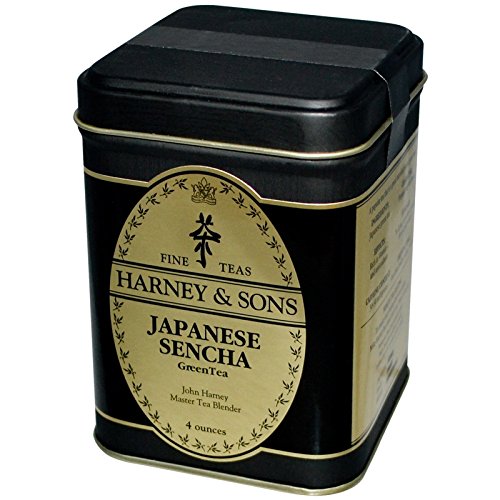
2. Harney & Sons Japanese Sencha Green Tea, Loose Leaf, 4 oz
A forgiving Japanese leaf that stays smooth whether you drink it hot or cold.
Sencha is the everyday Japanese green, and this tin keeps its composure in a way many green teas do not. The brew lands medium-bodied with mild sweetness, a little umami, and gentle bitterness — the kind of balance that tastes wrong only if you deliberately over-steep it. That forgiveness is the feature. Set your kettle near 60C and the cup stays soft, and it keeps working through a second and third steep before it gives out.
Compare the tin size to the Frontier bag and the trade is obvious: this holds 4 ounces against the Frontier’s 16-ounce bulk bag, so you are buying precision rather than volume. What you get in return is a tea that shines cold-brewed. Owners steep 10 grams per quart for hours or overnight and reuse the leaves afterward. The color stays lovely and does not darken, and a little leaf goes further than the tin size suggests.
There is an honest quirk worth naming. This is not organic, and a first-time sencha drinker may read the high chlorophyll as “spinach” — grassy and vegetal rather than sweet. That is the leaf, not a flaw. If you have been drinking bagged green tea your whole life, expect the first cup to taste greener than you imagined. Most people come around by the second.
The cold-brew case: this is the pick that earns its place in summer. Ten grams in a quart of cold water left overnight gives you a clean, sweet glass with none of the bite a hot over-steep produces, and the leaves go another round.
Where it pinches: the tin is small for a daily hot-tea habit, and the lack of organic certification will matter to some buyers.
Buy it for: one tea that works hot in winter and cold in summer.
Skip it for: a bulk supply — a 4-ounce tin empties fast at two cups a day.
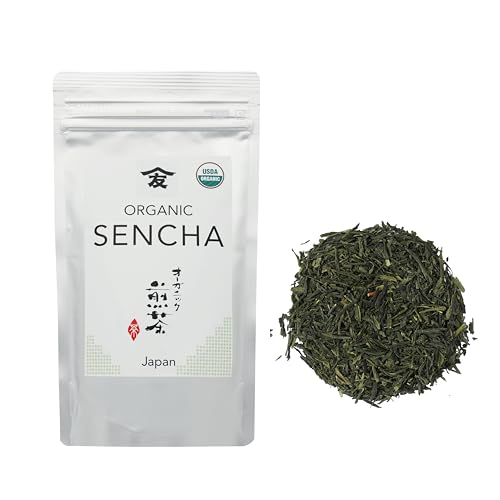
3. TOMOSAN Organic Sencha, 100g
Steamed Kyoto leaf built to be brewed four times from one measured scoop.
The 3.5-ounce bag against the Frontier’s 16 ounces is the trade you are making here — about one fifth the leaf, grown in Ujitawara, Kyoto, and USDA certified organic. What you pay for is cultivar selection: Yabukita and Saemidori first-flush leaves, steamed and rolled the traditional way, grown under full sunlight for that lightly astringent, lingering-sweet profile. If you have been buying whatever green tea was on the shelf, this is the upgrade that teaches you what people mean by sencha.
You get four cups from one small scoop of leaf, and the brewing recipe is where this tea earns it. Owners mention: “Brews 7.6g/170ml, 4 infusions: 90s/75C, 30s/75C, 60s/75C, 60s/90C.” That is a real recipe, not a slogan — the first three cups come out rich, thick and balanced, and the fourth thins out and turns astringent with more caffeine. A clay kyusu pot (a small Japanese side-handle teapot) and a temperature-controlled kettle make it easier to hit those temperatures exactly.
Fair warning on the price side: this is the smallest bag among the five picks, and value divides opinion. Some drinkers call it excellent for what you get and repurchase repeatedly; others find it ordinary and not worth the money. It is a leaf for someone willing to brew it properly. Steep it past three minutes or drown it in boiling water and you will not see what the fuss is about.
The four-steep math: a 3.5-ounce bag sounds small, but brewed at 7.6 grams per 170ml with four infusions from each scoop, the leaf stretches far further than the weight suggests — provided you follow the temperatures.
The honest limit: the bag is small and the price sits high for the volume, so this is not the pick for someone who wants a mug every morning without measuring.
The right buyer: someone with a kyusu pot and a thermometer who wants a genuine Kyoto sencha to brew carefully.
Look elsewhere if: you want the cheapest cup per ounce — the bulk bag beats this on volume every time.
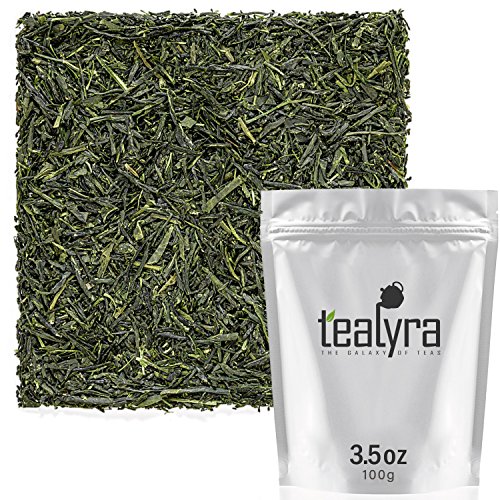
4. Tealyra Gyokuro Kokyu Loose Leaf Green Tea, 100g
Shade-grown Kyoto leaf with the savory sweetness that grassy green teas never reach.
Shading is the trick behind gyokuro, and it changes the cup completely. This 3.5-ounce bag blends Ujitawara gyokuro with Wazuka kabuse cha from Kyoto Prefecture, and the kabuse leaves are covered before harvest. Covering the plant pushes the leaf toward deep green color and soft sweetness instead of sharp grassiness. You end up between sencha and traditional gyokuro — grassy first notes on top, savory depth and a lingering finish underneath.
Steep it gently and the reward is real. Owners use roughly 4 teaspoons per 20 ounces for about 2 minutes and get clean umami with no astringency. The second steep runs longer and comes out weaker but still worth drinking. Where a flat sencha can go sharp if you look away, this one stays smooth and well-rounded. That savory, sweet length is what separates it from every other pick on this list.
The name of the game is strength. Some drinkers want more punch and call it weak; others find the gentle profile exactly right and praise how it is not overpowering. Worth knowing: the water goes bitter at the front if you brew it too hot, and the leaf rewards a cooler, shorter steep. A few buyers have mentioned small pellet-like pieces in the bag. It is a small tin for the premium price, so this is a considered purchase rather than a bulk buy.
Why the umami crowd loves it
- Shade-grown Kyoto blend gives savory sweetness with grassy top notes
- Smooth and well-rounded, with no harsh astringency when brewed at about 2 minutes
- A clean second steep still delivers flavor
- Sits between sencha and gyokuro, so it suits both camps
Its honest boundaries
- Mild strength — drinkers wanting a bold cup will find it light
- Small tin at a premium level; not a volume purchase
Choose this if: you like a savory, sweet green tea and brew at low heat.
Not for you if: you want a strong, sharp cup that punches through milk or sugar.
5. Davidson’s Tea Bulk, Decaf Green, 16-Ounce Bag

A pound of decaf leaf for evening cups and iced pitchers without the jitters.
Evening drinkers and anyone who has had to give up caffeine get a full 16 ounces here, grown by a third-generation organic tea operation and USDA certified. The cup is light and nutty, and the flavor stays genuinely present for a decaf — it does not taste like the weak afterthought decaf often is. It works hot, it works iced with lemonade, and buyers use it in smoothies where the green flavor needs to show up without caffeine riding along.
The leaf inside is broken rather than whole, which is a real compromise at this level. Broken leaf still holds its oils and aroma, so you get a layered cup closer to whole leaf than to processing dust — and it takes a long time to go stale thanks to the pound size. What you trade for that value is finesse. This is not the tea for a slow, meditative straight sip; owners drink it with stevia or cream, or pour it over ice.
There are two things to know before you commit. A few cups turn out bitter if you over-steep, so keep an eye on the clock. The leaf also includes some plant stems, which is normal for bulk broken-leaf tea at this level. Neither is a problem for iced or sweetened use, and neither touches the fact that this is the most tea per bag on this list.
Where it wins: you get the largest bag on the list, in a certified organic decaf, for a price tier that makes daily iced tea realistic. Iced with lemonade is where this tea makes the most sense.
Be honest with yourself: if you want to sip it plain and hot, this is the wrong bottle. The broken leaf and visible stems show up in the cup.
A strong fit for: evening drinkers, iced-tea pitchers, and anyone avoiding caffeine.
Wrong fit for: anyone chasing a delicate, whole-leaf straight cup.
Know the Specs
Leaf shape and grade
Whole or tightly rolled leaf holds its flavor because the leaf surface is intact and the oils stay inside. Broken leaf is cheaper and brews faster but has less of the layered character whole leaf gives you. Dust is what goes into cheap teabags — it turns bitter almost immediately. Whole-leaf tea keeps its oils inside the leaf, so it brews a layered cup that broken leaf and dust cannot match.
Water temperature
Green leaf is delicate. Water near boiling pulls out bitterness and turns a smooth cup sharp. Brewing near 75C for early steeps and closer to 90C for the last one is the traditional way to get multiple good cups from one scoop. A thermometer or a temperature-controlled kettle lets you hold 75C for early steeps and 90C for the last one.
Common Questions
What is the difference between gunpowder green tea and sencha?
How do I brew loose leaf green tea without it going bitter?
How many cups can I get from a 3.5-ounce bag of green tea?
Can I cold brew loose leaf green tea?
Is decaf green tea as healthy as regular green tea?
How should I store a pound of loose leaf green tea?
Why does some green tea taste like spinach?
Does organic certification change how green tea tastes?
What is gyokuro and how is it different from sencha?
Can I use a regular teabag with loose leaf tea?
The Bottom Line
You want one bag that lasts and still tastes like something, so for most people buying green tea loose leaf, the winner is the Frontier Co-op Organic Gunpowder — a full 16 ounces of rolled leaf that brews a smoky, sturdy cup and holds its flavor over a long steep. If you want one tea that works hot and cold and goes further than its tin suggests, the Harney & Sons Japanese Sencha is the natural companion. And for evening cups or a pitcher of iced tea with no caffeine, reach for the Davidson’s Decaf Green.
How we choose
We do not accept paid placement. Every pick is matched to a real buyer and a real use-case; we do not hands-on test units.
Sources
Specifications: manufacturer listings and product documentation. Review insights: verified customer reviews, as of October 2026. Pricing: not shown on this page (it changes often); check the current price via the retailer link.
As an Amazon Associate, Aappliancez earns from qualifying purchases. This does not affect which products we feature.