Disclosure: Some links in this post are affiliate links. As an Amazon Associate I earn from qualifying purchases, at no extra cost to you. Learn more
Specs are compiled from manufacturer listings and verified buyer reviews and can change over time — please confirm the key details on the product page before buying.
Bare dirt under a tree is the hardest lawn problem there is, because grass needs light to wake up and a canopy steals most of it. So the seed you want is a shade-tolerant fine fescue or a shade-heavy blend, not a standard sunny-lawn mix, and the winning bag here is the Mountain View Seeds Nature’s Own Sun & Shade Mix — it sprouts in as little as 6 days and grows back thick where Bermuda and other full-sun grasses quit.
This guide is built by comparing the manufacturers’ published specifications and the patterns across verified customer reviews, so you get each pick’s real strengths and trade-offs instead of marketing spin.
Every bag below gets judged on the same three things: how little sun it tolerates, how many square feet a bag actually covers, and how often it germinates in real yards rather than on a label. If you want to know which grass seed for shady areas under trees actually fills in, the five below are the honest shortlist.
Top Picks

How To Choose The Best Grass Seed for Shady Areas Under Trees
Under a tree you are fighting two problems at once: not enough light, and roots that drink the water before your seedlings get any. A seed that wins in full sun will germinate and then stall out. The seed that survives is one bred for low light — usually a fine fescue or a blend built around it.
Match the grass species to your light level
Fine fescues such as creeping red fescue and hard fescue are the workhorses of shade because they tolerate low light better than most turf grasses. A blend that lists fescue first will usually hold up under a canopy better than a Kentucky bluegrass-heavy mix. If your spot gets a few hours of filtered sun, a sun-and-shade blend widens your options without giving up the shade tolerance.
Do the coverage math before you buy
Check the bag’s stated square-foot coverage and measure your bare patch. A 3-pound bag that states 1,800 square feet will overseed a large area thinly, but a new lawn needs double the seed rate, so the same bag covers far less ground. Buying short means a patchy result you will be reseeding within weeks.
Expect slow germination in cool shade
Shaded, cool soil germinates slower than a hot sunny bed. Some fine fescues take two weeks or more to show green, and that wait is normal rather than a failed bag. The single biggest thing you control is keeping the seed moist the whole time — a light topsoil cover and steady watering matter more than any label claim.
Side-by-Side Comparison
| Model | Best For | Bag Weight | Stated Coverage | Seed Type | Amazon |
|---|---|---|---|---|---|
| Mountain View Seeds Nature’s Own Sun & Shade Mix★ Best Overall | Fast fill-in under partial canopy | 3 lb | — | Ryegrass, Fine Fescue & Kentucky Bluegrass blend | Amazon |
| Jonathan Green 40600 Dense Shade Grass SeedBest Coverage Per Bag | Large shaded yards on a budget | 3 lb | 1,800 sq ft | Shade-resistant grass seed | Amazon |
| Creeping Red Fescue Seed by Eretz | Banks and slopes you rarely mow | 3 lb | — | Creeping Red Fescue, 99.6% pure seed | Amazon |
| X-Seed Ultra Premium Quick and Thick Lawn Seed Mixture | High-traffic shade with dogs | 3 lb | 2,100 sq ft existing / 1,050 sq ft new | Ryegrass, Fine Fescue & Kentucky Bluegrass blend | Amazon |
| Outsidepride Legacy Fine Fescue Grass Seed Mix | Big renovation jobs and acreage | 5 lb | — | Hard, Chewings & Creeping Red Fescue, 0.00% weed seed | Amazon |
Detailed Reviews
1. Mountain View Seeds Natures Own Sun & Shade Mix Grass Seed, 3-pounds
A ryegrass-fescue-bluegrass blend that greens a bare shaded patch in about two weeks.
This is the pick for the homeowner staring at a Bermuda lawn that gave up under a big oak. The mix leans on perennial ryegrass, fine fescue, and Kentucky bluegrass together, so you get quick visible green from the ryegrass while the fescue hangs on in the low light long term. That combination is why it earns the top spot over the lower-rated picks further down this list.
Speed is the headline. Buyers report grass up in 6 days and looking “great at 8 days” after summer planting at 95-102°F, watered 4-5 times a day to keep the seed moist. The WaterGardNP coating (a moisture-holding seed treatment) is what the maker credits for that quicker germination, and it also helps the seed grip bare soil so rain does not wash it away. One thing to plan for: a yard that fills in this fast also needs mowing more often, sometimes several times a week while it is growing.
The main watch-out is water, not the seed. Let these seeds dry out and germination stalls — buyers who kept them constantly damp got thick coverage even on spots where they skipped topsoil. The other honest note is packaging: an occasional bag shows up with a split seam spilling seed. Treat the bag gently when you open it and this one earns its place as the most versatile mix here.
What Owners Rave About
- Visible growth in as little as 6 days after summer planting
- Thick, fine-bladed turf that blends into the surrounding lawn
- Grew on clay and on spots with no topsoil added
- WaterGardNP coating holds moisture and improves seed-to-soil contact
Where It Needs Care
- Drying out stops germination — daily watering is not optional
- Fast growth means frequent mowing while it establishes
- Rare reports of a split bag seam leaking seed in transit
Choose this if: You want the fastest, thickest turnaround on a shaded bare patch and you will water it daily.
Think again if: You can’t commit to consistent watering — this mix rewards moisture and punishes neglect.
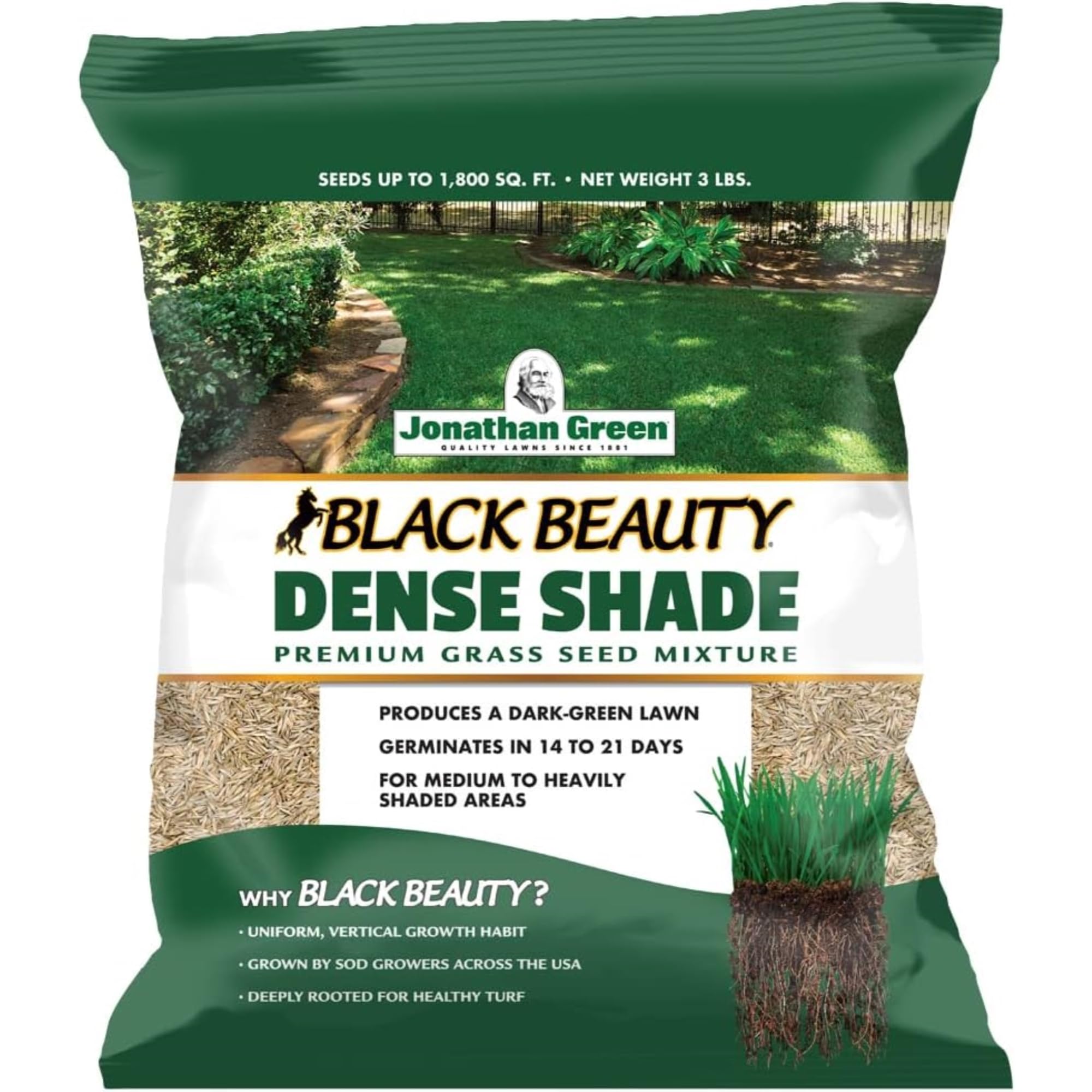
2. Jonathan Green 40600 Dense Shade Grass Seed, 3 lb
A 3-pound bag rated for 1,800 square feet of shaded lawn.
If your bare area is measured in thousands of square feet rather than a small patch, start here. The label states 1,800 square feet of coverage from one 3-pound bag, and that stated number is the whole reason this pick exists — it covers more ground per bag than the Eretz fescue above, which lists no coverage at all. For anyone seeding a broad shaded section under several trees, that math decides the purchase.
In real yards it holds up where full-sun grasses fail. The standout report comes from a buyer who spread it under four large trees plus a neighbor’s canopy, covered more than 6,000 square feet, and paired it with Jonathan Green Vari-Green fertilizer. Others note sprouts at 4 days and a first mow at 3 weeks in mostly-shade lawns that only see about two hours of sun. The one pattern worth knowing: some of it went dormant once temperatures pushed past 95°F, which the maker and buyers both expect it to recover from.
Where it divides people is germination. Coverage is fantastic in shade, but results run mixed — some yards green up beautifully, and a few owners get thin results, often after the seed washed out or dried before it rooted. Prep matters here: rake the soil, keep it damp twice a day, and this dense-shade seed earns its reputation under canopy.
Where it wins: A stated 1,800 square feet per 3-pound bag and shade-resistant breeding make it the efficient choice for a large shaded yard, and owners mention real growth under four-tree canopies where nothing else would take.
What to watch: Germination swings by yard — start it on raked soil and water twice daily, or the coverage number means nothing.
Reach for this if: You have a big shaded lawn to fill and want the most square feet for your money.
Look elsewhere if: You need a near-guaranteed sprout on tough, poorly prepped ground with little watering.
3. Creeping Red Fescue Seed by Eretz (3lb)
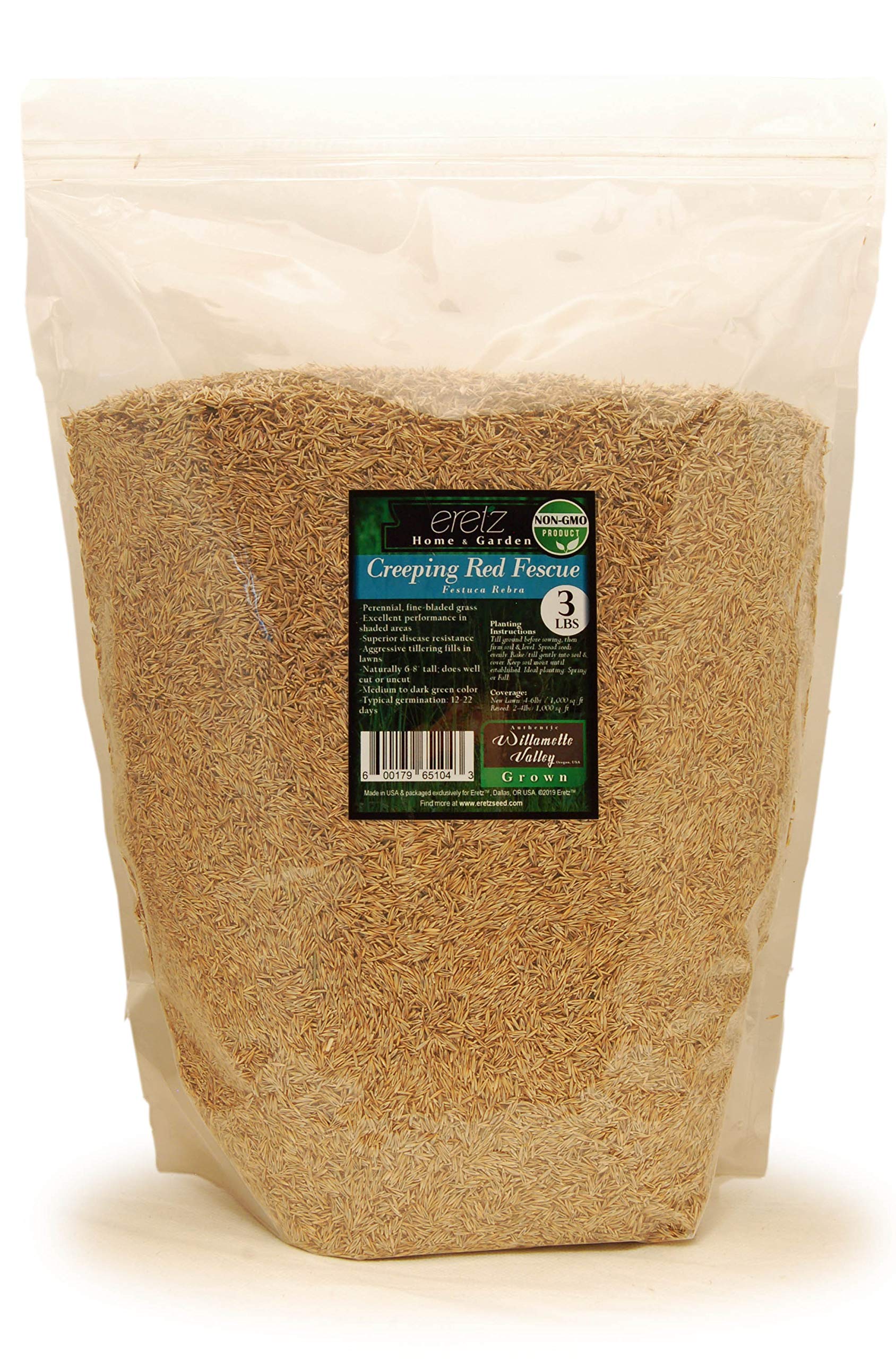
Straight creeping red fescue, 99.6% pure seed, for low-mow banks and slopes.
This is straight creeping red fescue, not a blend, and that purity is the point. The bag is 99.6% pure seed with just 0.4% inert matter (inert matter being dust and chaff rather than seed). If you have a steep slope or a bank you can’t safely run a mower across, creeping red fescue is bred to creep and fill those spots on its own.
It shines in the cold and the shade. Fine fescue stays green through winter and self-repairs bald spots, and it performs best in low light. The defining report here came from a Vermont planting that stayed green right through the winter after a fall seeding, growing only about 1mm a day and taking two weeks or more to sprout — slow, but alive. A Pacific Northwest grower seeded a low-shade lawn after the last freeze and saw sprouts in roughly 21 days at 36-39°F nights.
The recurring frustration is germination speed and consistency, which is honestly where this species lives — creeping red fescue is simply slower and pickier than the blends above. Weed content is the other thing to know: one buyer got a clean first bag and a weed-heavy second, so inspect what you spread. For a low-mow slope in shade, though, nothing here fills in the way the fescue does.
Why It Stands Out
- Single-species creeping red fescue, no filler grasses
- 99.6% pure seed with just 0.4% inert matter
- Stays green through winter and creeps into bald spots
- Fine unmowed on slopes and banks where mowing is unsafe
The Honest Catch
- Slow to germinate — two weeks or more is normal
- Needs a sharp mower blade or it lies flat
- Rare reports of a weed-heavy bag arriving
Go for this if: You want a single-species, cold-hardy fescue for a shaded slope or low-mow bank.
Pass if: You need fast, uniform green across a whole yard — this one is slow by nature.
4. X-Seed Ultra Premium Quick and Thick Lawn Seed Mixture, 3lb Bag
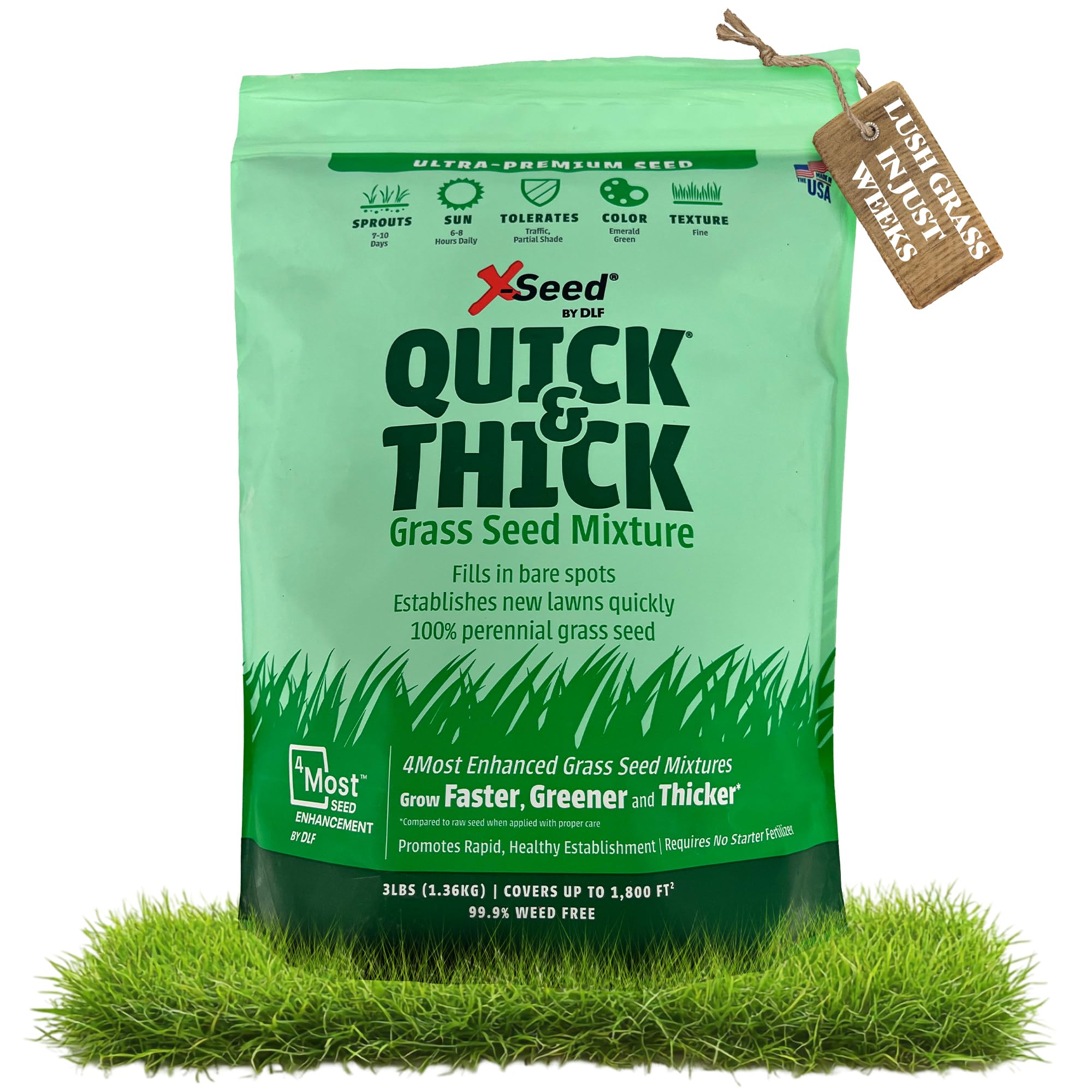
A shade mix rated for 2,100 square feet of overseeding on high-traffic turf.
Shade and heavy foot traffic are a brutal combination, and this mix is one of the few here explicitly aimed at both. The stated coverage is generous: a 3-pound bag covers 2,100 square feet for overseeding an existing lawn, or 1,050 square feet for a brand-new one. The blend of perennial ryegrass, fine fescue, and Kentucky bluegrass is the same trio as the top pick, and the maker’s Moisture Boost Plus coating is designed to soak up water and speed germination.
When it works, it works fast and lush — dense, colorful turf that sprouts quickly with fine blades. The coaching from experienced growers is consistent: water twice a day for the first 8 weeks, cover lightly with topsoil, and mow once it establishes to push the roots down. That first-eight-weeks watering window is longer and more demanding than the other blends here, so plan for it.
The catch is germination consistency. Reports are genuinely split: some yards come up in 5-7 days, others show around 50% germination and need reseeding in the bare spots even after loosening soil and covering the seed. This mix wants cool-season weather, so start it when your region is mild rather than in a heat wave. Where it takes, it holds up to dogs and foot traffic better than most shade blends.
Pick this if: You need shade tolerance plus durability for a lawn the family and dogs actually use.
skip it if: You want a set-and-forget seeding with no eight-week watering schedule.
5. Outsidepride Legacy Fine Fescue Grass Seed Mix – 5 lbs.
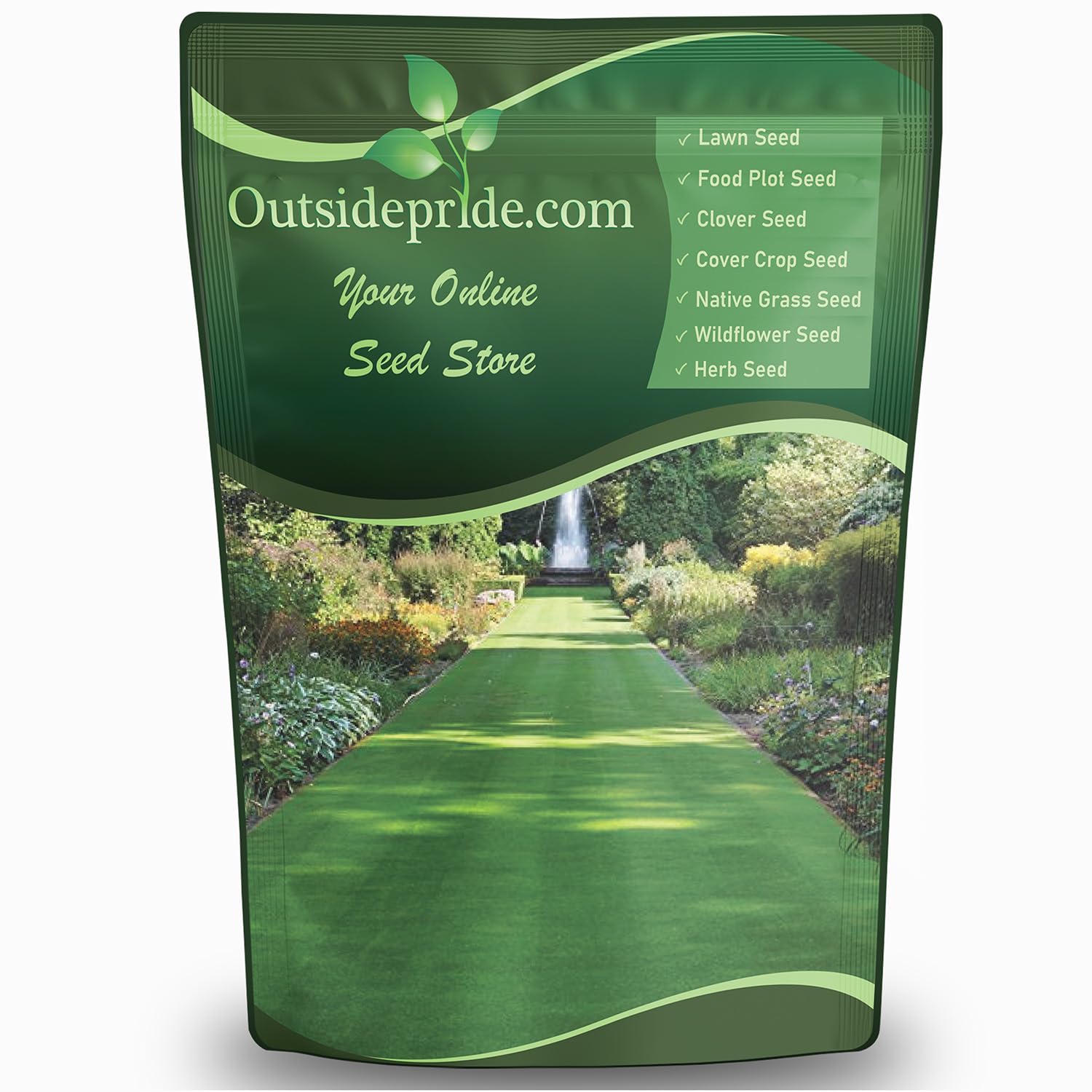
Five pounds of hard, chewings, and creeping red fescue with 0.00% weed seed.
This is the big-job bag. It is 5 pounds, the largest here, and it is a pure fescue blend — 20% hard fescue, 40% chewings fescue, and 40% creeping red fescue — with a stated 0.00% other crop and weed seed. No fillers, no coatings, no filler grains. For a full renovation across a large shaded property or acreage, that purity and volume are what you are paying for.
The end result is exactly what fine fescue should be: uniform, soft-textured turf that keeps its bright emerald-green color and performs well in shade. One grower praised its color holding up even two months into winter, and another noted it comes back vibrant each spring. Fine fescue like this is also what you want if you are after low-mow ground cover on shaded turf or sandy, poor-soil areas.
The honest trade-off is that fine fescue is high-maintenance at the start and slow to establish. It wants constant moisture to germinate well, taking 7-9 days, and it builds a dense mat only in soil rich in organic matter — in lean or clay soil it comes up spotty. It dislikes drought and responds only weakly to fertilizer. A few growers report germination far lower than they hoped, sometimes blamed on their own topsoil, so keep your expectations honest and your hose handy.
The value read: Five pounds of clean, coating-free fescue is the economical route when you are seeding a lot of shaded ground at once — the same 0.00%-weed-seed standard the bag claims.
Set your expectations: This is a slow, moisture-hungry fescue, not a fast ryegrass blend — the dense emerald mat arrives over weeks, and only if the soil is rich and watered.
Best matched to: Large shaded yards, acreage, and renovation projects where a pure fine fescue blend is the goal.
Less ideal for: A quick green-up on tough clay or dry soil with a hands-off watering style.
Know the Specs
Grass Species and Shade Tolerance
Fine fescues — creeping red, chewings, and hard fescue — tolerate low light better than ryegrass or Kentucky bluegrass. A blend puts fescue in the mix for staying power and ryegrass in for fast color. The higher the fescue share, the better it holds under a canopy. When a bag lists its seed components, read them first: that tells you more about shade performance than any marketing word on the front.
Coverage and Seeding Rate
The square-foot coverage on the label assumes overseeding an existing lawn. A brand-new lawn from scratch needs roughly double the seed over the same area, so a bag that states a large coverage number serves far less ground when you are starting fresh. Measure your bare patch and split the difference in your favor. Sowing thin to save seed is the fastest route to a patchy, reseed-the-bare-spots result.
Pure Seed Percentage and Inert Matter
The pure-seed figure tells you how much of the bag is actual grass seed versus inert matter — the dust, chaff, and husk that adds weight but grows nothing. A bag stating 99.6% pure seed with 0.4% inert matter is close to all seed. A bag stating zero other crop and weed seed means no stray species are riding along. These numbers matter most when you are seeding a clean bed and want to know exactly what you are spreading.
Seed Coatings and Moisture
Some seeds carry a coating designed to hold water against the seed and improve how it grips the soil. That can speed germination and help survival on bare dirt, but coated seed means part of the bag’s weight is coating rather than pure seed. Coating is a helping hand, not a substitute for watering. Even the best-coated seed stalls if the surface dries out in the first week or two.
Common Questions
Will shade grass seed grow in full shade with no direct sun?
How long does shade grass seed take to germinate?
Can I mix shade grass seed with my existing lawn seed?
Why did my shade grass seed not come up?
How much shade grass seed do I need for a bare patch under a tree?
Is fine fescue better than ryegrass for shade?
Do I need topsoil for shade grass seed to grow?
How often should I water shade grass seed under trees?
Why does my shade grass go dormant in summer heat?
The Bottom Line
For the hardest spot on the property — the bare ground under a canopy — the grass seed for shady areas under trees that earns the top spot is the Mountain View Seeds Nature’s Own Sun & Shade Mix, because it sprouts fast, stays thick in low light, and grew back on clay and no-topsoil spots where bare dirt used to be. If square footage is your concern and you are seeding a wide shaded section, the Jonathan Green 40600 Dense Shade Grass Seed stretches a stated 1,800 square feet per bag. And for a slope you would rather not mow, or a large renovation needing clean fescue, reach for the Eretz Creeping Red Fescue or the Outsidepride Legacy Fine Fescue Mix. Whatever you pick, keep the seed damp every day for the first two weeks — that single habit decides whether any of these ever comes up.
How we choose
We do not accept paid placement. Every pick is matched to a real buyer and a real use-case; we do not hands-on test units.
Sources
Specifications: manufacturer listings and product documentation. Review insights: verified customer reviews, as of October 2026. Pricing: not shown on this page (it changes often); check the current price via the retailer link.
As an Amazon Associate, Aappliancez earns from qualifying purchases. This does not affect which products we feature.