Disclosure: Some links in this post are affiliate links. As an Amazon Associate I earn from qualifying purchases, at no extra cost to you. Learn more
Specs are compiled from manufacturer listings and verified buyer reviews and can change over time — please confirm the key details on the product page before buying.
Florida lawns fail for one boring reason: the wrong grass for the heat. A seed bred for cool northern summers will sprout, look fine for a few weeks, then cook in July humidity and leave you with bare dirt again. The fix is to match the seed to your zone — Bermuda and Bahia for full-sun heat, Centipede for acidic sandy soil and light shade, ryegrass for a green winter overseed. Below you’ll find the picks that actually hold up in southern conditions, sorted by what each one does best.
This guide is built by comparing the manufacturers’ published specifications and the patterns across verified customer reviews, so you get each pick’s real strengths and trade-offs instead of marketing spin.
Start with your sun exposure and soil type, then match the seed to them rather than the other way around. That single step decides more of your result than any brand name, and it is the fastest route to the grass seed for florida that actually fills in.
Top Picks


How To Choose The Best Grass Seed for Florida
The biggest mistake Florida homeowners make is buying whatever bag looks greenest at the hardware store. That bag was probably blended for a northern lawn. In Florida heat and humidity, a cool-season grass like tall fescue or Kentucky bluegrass tends to struggle through summer and thin out, while warm-season grasses are built for exactly this climate. Match the grass type to your zone first, and everything else gets easier.
Warm-Season Versus Cool-Season Grass
Warm-season grasses — Bermuda, Bahia, Centipede, Zoysia — grow actively in heat and go dormant (turn brown and stop growing) when temperatures drop. That dormancy is normal, not death. Cool-season grasses like ryegrass and fescue grow best in mild weather. In Florida they are usually used as a winter overseed to keep color when the permanent lawn goes dormant, rather than as the permanent lawn itself.
Match The Seed To Your Sun And Soil
Full-sun lawns baked all day want Bermuda, Bahia, or Centipede. A yard with tree cover needs a variety labeled shade tolerant — Centipede is described as more shade tolerant than Bermuda. Soil matters too: Centipede tolerates acidic, sandy soil with a lower pH, which describes a lot of Florida ground. If your soil is heavy clay, look for a mix described as adaptable to a wide range of soil types.
Decode The Coverage Number Before You Buy
Every bag lists a coverage figure — the square feet it is rated to seed. A bag rated for 10,865 sq. ft. at new-lawn rate covers roughly double that when you are only overseeding an existing lawn. Measure your lawn first, then compare bags on coverage per pound. Buying a small bag for a big yard is the most common way people end up with a thin, patchy result.
Watering Discipline Beats Brand Choice
Seed needs consistent moisture to germinate, and that means short, frequent waterings until sprouts appear. Most failures trace back to a dry week, not bad seed. Plan to water two or three times a day for the first couple of weeks, and keep the surface from drying out completely. Once the grass is established, you can back off to a normal schedule.
Side-by-Side Comparison
| Model | Best For | Bag Weight | Grass Type | Sun Exposure | Amazon |
|---|---|---|---|---|---|
| Scotts Professional Turfgrass Seed Sun & Shade Mix★ Best Overall | Big lawns needing sun and shade coverage | 50 pounds | Sun and shade mix | Full sun, shade | Amazon |
| Pennington Bermudagrass Southern Grass SeedsBest Spread | Full-sun southern lawns that spread and fill in | 5 pounds | Bermudagrass | Warm-season | Amazon |
| Canada Green Grass Lawn Seed | Patching bare spots across climate extremes | 4 pounds | Lawn seed mix | Shade tolerant | Amazon |
| Gulf Kist Centipede Grass Seed | Acidic sandy soil and low-maintenance lawns | 1 pound (16 oz) | Centipede | Full sun, partial shade | Amazon |
| SeedRanch Pensacola Bahia Grass Seed | Hot, dry, high-traffic pastures | 10 pounds | Bahia | Full sun, partial shade | Amazon |
| Barenbrug Winter Wonderlawn | Winter overseeding for year-round color | 25 pounds | Perennial and Italian ryegrass | Full shade | Amazon |
| Pennington Signature Series Tall Fescue Blend | Large partial-sun properties and spot seeding | 50 pounds | Tall fescue blend | Full sun, partial shade | Amazon |
Detailed Reviews
1. Scotts Professional Turfgrass Seed Sun & Shade Mix, 50 lbs.
Our pick — 4.0+★ from 34,500+ verified ratings; the strongest balance of quality and price.
One bag that treats a whole Florida lot as a single job.
Fifty pounds is the number that decides this pick. That is a full-scale bag — heavy enough that you will want a spreader rather than a hand toss, and large enough that a serious lawn renewal does not need three trips to the store. At new-lawn rate of 4.6 lbs. per 1,000 sq. ft., it is rated for 10,865 sq. ft. of fresh establishment. Drop to the 2.3 lbs. per 1,000 sq. ft. overseeding rate and the same bag is rated for 21,735 sq. ft.
For a Florida yard that sees sun most of the day and shade under trees, the sun-and-shade labeling matters. It is the mix for the awkward lot where one corner bakes and another sits under oak canopy. The seed is uncoated and listed as pesticide-free and 99.9% weed free, so you are not paying for filler or coating weight. Apply it in spring or fall.
Here is the honest part: germination is the mixed variable. Some lawns come up fast and fill dead spots within a week to two weeks with proper prep — till the soil, work the seed in, tamp it down, water twice a day. Other buyers report sparse results, and a percent of the bag simply never sprouts. Across the reviews, the lawns that filled in had loose seed-to-soil contact and steady moisture; the sparse ones had neither. Compare that 50-pound bulk to the 4-pound Canada Green bag later on this list and the scale difference is obvious.
Where This Bag Wins
- Rated for 10,865 sq. ft. at new-lawn rate and 21,735 sq. ft. overseeding from one 50-pound bag
- Labeled 99.9% weed free, so you are not seeding weeds along with grass
- Sun-and-shade mix handles a lot with both full sun and tree cover
- Uncoated and pesticide-free — no coating weight to pay for
What To Plan Around
- Germination is genuinely mixed — some lawns fill in fast, others stay sparse
- Heavy 50-pound bag needs a spreader for even coverage
- Demands real prep and twice-daily watering for the first stretch
Right call for: a homeowner reseeding a large lot in one go who will do the tilling and watering properly.
Pass if: you want a low-effort patch kit for a few bare spots — a small bag is the better fit.
2. Pennington Bermudagrass Southern Grass Seeds for Lawn, 5 lb
Bermuda that creeps into the gaps and cuts your mowing load.
If your Florida lawn is full sun and you want grass that fills its own holes, Bermuda is the workhorse. This blend is described as aggressively self-spreading, which means runners creep sideways into thin patches instead of leaving you to reseed them by hand. It is also a low-growing blend formulated to produce fewer clippings, so the mower bag fills slower. Expected plant height is 3 inches — short turf, suited to a manicured look.
The other half of the pitch is toughness. The seed is described as extremely wear-resistant with a deep root system, and it contains improved cold-tolerant varieties for a southern grass. Where it needs you is water. It is a warm-season grass that goes dormant and turns brown in winter months, so do not panic when the color fades in cool weather — that is the plant resting, not dying.
Buyers in the hot dry corners of the South report solid results when they do the groundwork: a soil test, loose seed-to-soil contact, starter fertilizer, correct planting time, and watering for roughly three weeks. One reviewer noted 3 lbs. covering about 500 feet for really full coverage, well above the stated spread. The other side of the ledger is that some plantings simply never come up, and a few bags arrive powder-like and dead. At 3 inches mature height, it also needs more frequent mowing than taller grasses.
Best for sun-baked yards: self-spreading growth plus 3-inch mature height gives a tight, low turf that knits itself together over a season.
The honest catch: germination lives or dies on the prep and the first three weeks of water — do that part right and this delivers, skip it and the bag can disappoint.
Pick this when: your lawn gets full sun and you want a grass that repairs its own bare patches.
Not for: deep-shade yards or anyone who wants green through winter without overseeding.
3. Canada Green Grass Lawn Seed 4 Pound Bag
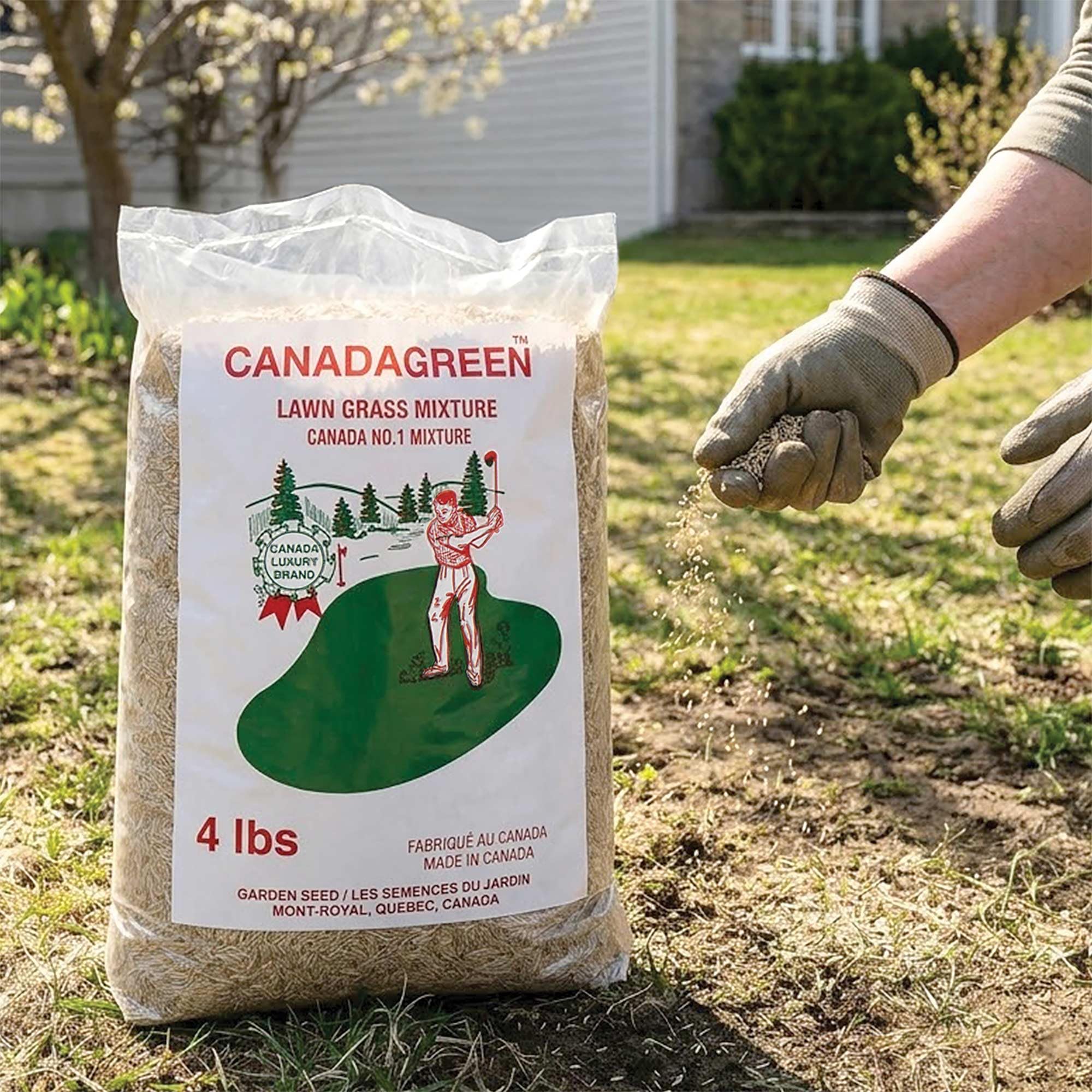
Five days to first green, four pounds in the bag.
Speed is the headline here — the maker lists growth starting in just five days, and buyers who rake the yard and water twice a day report sprouts in 6 to 9 days. That makes this a strong choice for patching bare spots and thinning turf rather than seeding a whole lot. It is rated to carpet up to 3,000 sq. ft. per bag.
The climate claim is unusually broad: the label says it stays green all year in virtually any climate, from 40 below zero to 120F. For Florida that translates to a seed that will not fold in summer heat. It also lists tolerance for heavy traffic and shady areas, and adaptability to soil types from light and sandy to heavy clay — useful on Florida’s sandy ground.
Expected plant height is 10 inches, so expect a taller lawn than the 3-inch Bermuda above. Two quirks show up in the field reports. Some lawns come up a chartreuse green rather than deep emerald, which may settle with age. And the seed does ask for steady watering — one buyer mentioned it needs regular water for the best result. A minority of bags produce little or nothing, so soil contact and moisture still decide the outcome.
Why It Earns A Slot
- Listed to start growing in just five days — quick visual progress on bare spots
- Stays green across a wide temperature range, from 40 below zero to 120F
- Tolerates heavy traffic and shady areas
- Adapts to sandy or clay soil types
Trade-Offs To Know
- Color can come up chartreuse rather than deep green at first
- Needs regular watering for the best germination
- 4-pound bag covers up to 3,000 sq. ft. — not a whole-lot solution
Go here if: you are patching, overseeding, or fixing a lawn in a hurry and want to see green within a week.
Look elsewhere if: you need one bag to cover a big property from scratch.
4. Gulf Kist Centipede Grass Seed, 1 lb Coated Seeds

The slow-grower that saves you mowing all summer.
Centipede is the lazy gardener’s grass, and this is a coated-seed version of it. The coating protects the seed so you do not need to add mulch — no sprigging, no straw. It is built for hot climates with steady rain, tolerates sun, and handles acidic soil with a lower pH. That last point matters in Florida, where sandy ground often runs acidic. It is also described as more shade tolerant than Bermuda seed.
The maintenance story is the real sell. Once established, the lawn needs feeding only twice a year and uses less fertilizer than St. Augustine grass. It is slow growing, so you mow less often. And it has no true dormancy, which means it keeps green year round in mild climates, unlike Zoysia and Bahia that brown out in cool seasons. No need to overseed with rye for winter color. That is a big difference from the Bahia and Bermuda picks here.
Understand the commitment before you buy: a 1-pound bag of coated seed is small, and this grass is slow. Field reports show sprouts in about 10 days and a lush look at roughly a month, but only after heavy prep — mixing with topsoil and sand, covering, soaking, and watering four times a day for 10 days. A few plantings never came up despite following the bag. Broadcast the seed and walk away and it will likely fail.
What makes it different: no true dormancy means green through the cooler months, so you skip the annual overseed ritual entirely.
Prep is non-negotiable: seeds planted in small holes and covered with a quarter to a half inch of soil take; seed scattered on top usually does not.
Fits you if: you have acidic sandy soil, want less mowing and feeding, and are willing to baby it for the first month.
Think twice if: you want fast coverage — this one rewards patience and punishes shortcuts.
5. SeedRanch Pensacola Bahia Grass Seed – 10 Lbs.

Built for pastures, driveways, and grass you can walk on daily.
Bahia is the utility grass — the one you plant where foot traffic and vehicles beat the turf down. This 10-pound bag is rated to plant 1,000 sq. ft., and the seed is described as drought and disease resistant with good traffic tolerance. It is also easy to establish, growing quickly and vigorously in the right conditions. If your “lawn” is really a rough yard, a path edge, or a pasture out back, Bahia is the practical pick.
Buyer reviews split sharply, and you should know that before you buy. Some buyers describe a vibrant green grass with thick texture that looks fantastic. Owners who bought it for hot, dry climates found it easy to broadcast (spread by hand or spreader). One buyer mixed it with fertilizer and watered three times a day, and saw germination (sprouting) in about two weeks. But a meaningful share of plantings never sprouted at all, and a few buyers suspect a bad batch.
Where Bahia failed, buyers skipped the watering and soil prep. A buyer who fertilized the day before, mixed the seed with topsoil and compost, then watered 10 to 15 minutes twice daily in sun saw about 70% germination in two weeks. Seed simply broadcast onto dry ground and left alone did not. This is also the grass that turns dormant and brown in the cool season, so pair it with an overseed if winter color matters to you.
The Case For Bahia
- Drought and disease resistant — handles hot dry spells and heavy use
- Good traffic tolerance for paths, pets, and vehicle edges
- 10-pound bag rated to plant 1,000 sq. ft.
- Easy to establish where it gets consistent early water
The Honest Caveats
- Germination results are genuinely split — some plantings never come up
- Needs real prep and steady watering to start
- Goes dormant and brown in cool weather
Reach for this: for a rough, high-traffic, hot-sun yard where looks matter less than toughness.
Skip it: for a showcase lawn that needs to stay green through winter.
6. Barenbrug Winter Wonderlawn Grass Seed 25-lb. Bag
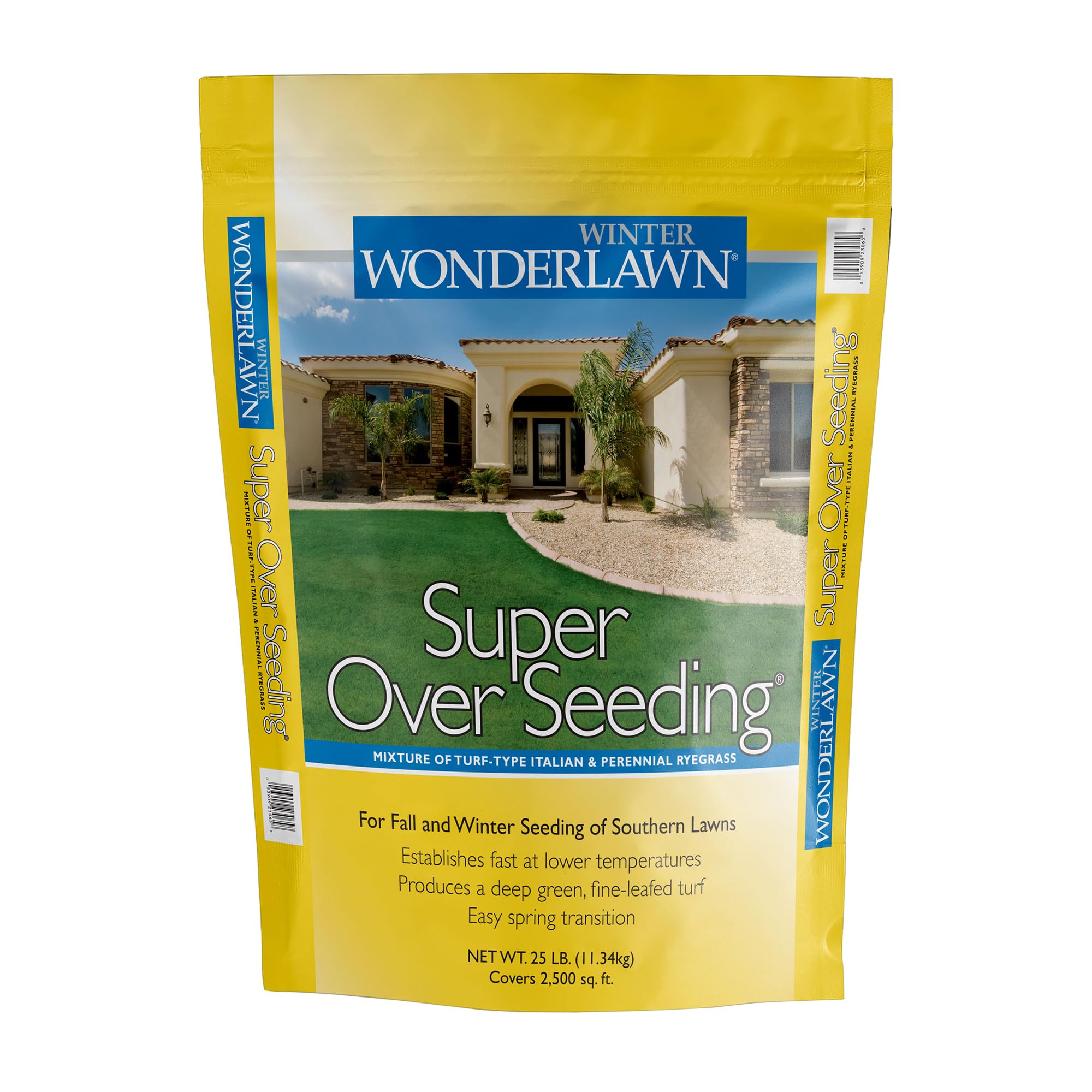
Keeps a southern lawn green through the brown months.
This is not a stand-alone lawn — it is a winter overseed, and it does that job differently from everything else here. The blend pairs perennial and Italian ryegrasses that germinate in just 2 to 4 days and transition naturally in spring without chemicals. While your Bermuda or Bahia rests and browns, this keeps the yard green. That is why it is labeled for southern climates and a 25-pound bag: overseeding a whole lawn takes volume.
Owners mention results that match the spec. The grass grows well even in high-traffic areas, and sprouts within a week in most cases. Yards turn pretty and green with no weed growth to speak of. Buyers praise quality most, and the fast germination backs that up. The fine-leafed turf (thin blades) blends smoothly with southern lawns, and it carries the attractive look of perennial ryegrass.
The catch is what this is not. It is an annual cool-season rescue for winter color, not a permanent Florida lawn that survives summer as a permanent stand. Plan to use it over an existing warm-season lawn, and expect to repeat the process each year. A few buyers did report it failing to grow, so seed-to-soil contact and moisture still matter here like anywhere.
Its one job, done well: 2 to 4 day germination plus natural spring transitioning means green color fast, with no chemical removal step later.
Set expectations first: this is a seasonal overseed, so buy it to protect winter color, not to be the only grass in your yard.
Choose it if: you want a green lawn through the cool months on top of existing warm-season turf.
skip it if: you are seeding bare ground from scratch and need a permanent lawn.
7. Pennington Signature Series Tall Fescue Blend 50 lb

A big bag of fescue for northern Florida and shade-heavy ground.
A 50-pound bag that covers up to 10,000 square feet gives you room to work — seed the whole lawn or scoop from the same bag for spot repairs all season. The blend is researched-before-market varieties, and the Blue Tag label points to tested seed.
Fescue is a cool-season grass, so treat this as the pick for the cooler end of the state or for a shaded lawn that stays gentler through summer. Buyers cutting at 4 inches report it takes the summer heat well where the climate is moderate, tolerating both hot and cold stretches. One owner kept using it all season for overseeding and bare spots and found it dog-tolerant. Applied with a walk-behind spreader, it goes down easy.
Germination is the mixed variable, as with most seed. Most of a lawn sprouted within two weeks, with small patches failing where thick straw blocked the seed from reaching soil. A few buyers got zero germination, though the seller is reported to have handled that with a full refund. Keep the surface moist, cover with peat moss or a light layer, and never bury fescue seed under heavy straw or mulch.
Where It Fits
- 50-pound bag covers up to 10,000 sq. ft. — enough for whole-lawn or spot seeding
- Blue Tag, researched varieties for tested seed quality
- Handles full sun to partial shade
- Cut at 4 inches, it takes summer heat in moderate climates
Where It Strains
- Fescue is cool-season — a tougher fit for full-sun deep-south lawns
- Germination is mixed; thick straw or mulch can block sprouting
- Heavy 50-pound bag needs a spreader for even coverage
Strong match for: northern Florida lots, shaded ground, and anyone who wants one big bag for year-round repairs.
Look elsewhere if: your lawn bakes in full southern sun all day — a warm-season grass will hold up better.
Know the Specs
Coverage Rate
Coverage is the square feet a bag is rated to seed, and it is usually given two ways: a new-lawn rate (thicker seed for fresh ground) and an overseeding rate (lighter seed over existing turf). A bag rated at 10,865 sq. ft. for new grass covers roughly double that when overseeding. Measure your lawn, then compare bags on coverage, not on bag size alone — a heavier bag that covers less is the worse deal.
Grass Type And Dormancy
Warm-season grasses like Bermuda, Bahia, Centipede, and Zoysia grow hard in heat and go dormant — brown and slow — in cool months. Cool-season grasses like ryegrass and fescue grow best in mild weather and are often used as a winter overseed in the South. Dormancy is a normal rest period, not death. Knowing which type you have tells you whether winter brown is expected or a problem.
Coated Versus Uncoated Seed
Coated seed wears a protective layer that shields it and removes the need to add mulch — useful in hot climates, and it helps hold moisture around the seed. The trade-off: some of the bag weight is coating rather than seed, so check the seed count, not just the pound weight. Uncoated seed is pure seed but often wants mulch or a light cover over it to hold moisture.
Sun And Shade Tolerance
Sun exposure decides which grass will thin out and which will hold. Full-sun lawns want Bermuda, Bahia, or Centipede; tree-covered ground needs a variety labeled shade tolerant — Centipede is described as more shade tolerant than Bermuda. Get this wrong and even good seed fails, because a sun-lover planted in deep shade cannot build the energy it needs to spread.
Common Questions
What grass seed actually works in Florida heat?
Can I plant grass seed in Florida in summer?
How long does grass seed take to sprout in Florida?
Is Bermuda or Centipede better for a Florida lawn?
Why does my new grass seed not come up?
What does coated grass seed mean?
Does warm-season grass really turn brown in winter?
How much seed do I need for a full Florida lawn?
Can I use a northern grass seed blend in Florida?
Should I buy the cheapest seed to save money?
The Bottom Line
The pick that covers the most ground with the cleanest seed is the Scotts Professional Turfgrass Seed Sun & Shade Mix. One 50-pound bag is rated for 10,865 sq. ft. of new grass or 21,735 sq. ft. of overseeding, and at 99.9% weed free you are seeding grass, not weeds. Give it real prep and twice-daily water and it rewards you with a full lot in one go. The catch worth planning around is germination — do the tilling and watering properly and the odds swing your way.
If your goal is different, the path changes. For a full-sun yard that fills its own bare patches, the self-spreading Pennington Bermudagrass is the one. For acidic sandy soil with less mowing and feeding, the no-dormancy Gulf Kist Centipede fits. And if you want green through the cool months on top of your existing lawn, overseed with Barenbrug Winter Wonderlawn. Match the grass type to your sun exposure and soil pH first; brand and price matter far less.
How we choose
We do not accept paid placement. Every pick is matched to a real buyer and a real use-case; we do not hands-on test units.
Sources
Specifications: manufacturer listings and product documentation. Review insights: verified customer reviews, as of October 2026. Pricing: not shown on this page (it changes often); check the current price via the retailer link.
As an Amazon Associate, Aappliancez earns from qualifying purchases. This does not affect which products we feature.