Disclosure: Some links in this post are affiliate links. As an Amazon Associate I earn from qualifying purchases, at no extra cost to you. Learn more
Specs are compiled from manufacturer listings and verified buyer reviews and can change over time — please confirm the key details on the product page before buying.
If your lawn turns into a mud pit every time it rains, the fix is not more seed — it is the right seed. Waterlogged ground rots the wrong grass before it ever sprouts, so you want a mix that germinates fast, tolerates constant moisture, and knits bare patches together before the next storm. This shortlist covers five seed options that hold up in wet, shaded, and poorly drained ground.
This guide is built by comparing the manufacturers’ published specifications and the patterns across verified customer reviews, so you get each pick’s real strengths and trade-offs instead of marketing spin.
Expect honest trade-offs: some of these sprout in days, others demand patience for weeks. Below you will find each bag’s real coverage, germination window, and what happens when soil stays damp — the details that decide whether your wet patch comes back green or stays bare, which is exactly what makes a smart pick of grass for wet areas worth the research.
Top Picks

How To Choose The Best Grass for Wet Areas
Wet ground changes the whole game. Seed that sits in soggy soil can rot before roots form, so the speed at which a bag germinates becomes the deciding number. A bag that sprouts in 3 to 7 days can grip a damp, muddy patch before the water has time to ruin it. A bag that needs 10 to 14 days is running a longer race against that same moisture.
Germination speed is your first filter
Look at the stated germination window, not just the shiny reviews. Fast starters like annual ryegrass give you quick green cover on bare mud and dog-traffic trails. Slower fescue blends can still work, but they need steady, consistent moisture through the whole sprouting window rather than a single downpour.
Know your coverage before you spread
Every bag lists how many square feet it covers, and that number is the honest limit. A 10-pound bag covering 2,000 square feet goes a lot further than a 3-pound bag that covers 1,800 square feet. Measure your wet patch first, then match the bag to the job rather than guessing.
Sun versus shade in a wet spot
Wet areas are often shaded areas too — under trees, beside a fence line, or in a low corner where water pools. Some blends are built for full sun and need 6 to 8 hours of it. Others are sold specifically as shade-tolerant. Read which one the bag actually claims, because a sun-loving seed in a dark, damp corner is a wasted bag.
Side-by-Side Comparison
| Model | Best For | Bag Weight | Coverage | Germination window | Amazon |
|---|---|---|---|---|---|
| Pennington Annual Ryegrass, 10 Lb★ Best Overall | Fast green on muddy, high-traffic ground | 10 pounds | 2,000 sq. ft. | 3 to 7 days | Amazon |
| Jonathan Green 40600 Dense Shade, 3 lbShade Specialist | Shaded, damp corners under trees | 3 pounds | 1,800 sq. ft. | — | Amazon |
| GreenView Turf Type Tall Fescue, 7 lb | Sun-and-shade lawns that dry out between rains | 7 pounds | 875 sq. ft. new / 1,750 sq. ft. overseed | 10 to 14 days | Amazon |
| GreenView Pure Perennial Ryegrass, 7 lb | Permanent lawn that comes back year after year | 7 pounds | 1,750 sq. ft. new / 3,500 sq. ft. overseed | 7 to 12 days | Amazon |
| Outsidepride Legacy Fine Fescue, 5 lbs | Dense shade and low-maintenance fine turf | 5 pounds | — | — | Amazon |
Detailed Reviews
1. Pennington Annual Ryegrass, Grass Seeds for Lawn, 10 Lb
Our pick — 4.0+★ from 1,000+ verified ratings; the strongest balance of quality and price.
The mud-patch specialist that sprouts in under a week, before the water can rot it.
Here is the number that earns this bag the top spot: it starts growing in 3 to 7 days. In a wet area, that speed is everything — seed that germinates fast grabs the soil and forms roots before standing moisture turns it to mush. It also covers up to 2,000 square feet from a 10-pound bag, which is real ground for a single spread.
The weight is where it separates from the pack. At 10 pounds it is 3.3 times heavier than the 3-pound Jonathan Green bag, and it covers 2,000 square feet against the GreenView tall fescue’s 875 square feet of new-lawn coverage. Translation: you spread one bag across a big soggy yard instead of buying three. Buyers report it creeping into the exact spots where dogs tear up the lawn and turn it to mud, with green pushing through within days of a rain.
What wins people over is the sheer speed of visible change — thin northern lawns get a quick hit of color, and warm-season lawns like Bermuda and Zoysia get an overseed that fills the winter gap. Annual ryegrass is a temporary fix by nature, though, so expect to reseed the following season. It also wants 6 to 8 hours of full sun, so deep shade is not its job.
Where It Pulls Ahead
- Germinates in 3 to 7 days — the fastest starter here
- 10-pound bag covers up to 2,000 square feet
- Tolerates foot traffic and resists disease
- Overseeds Bermuda and Zoysia for winter color
Where It Stops Short
- Annual grass — you reseed again next season
- Needs 6 to 8 hours of full sun
- Moderate watering, not a plant-it-and-leave-it mix
Grab this one if: you have bare, muddy, high-traffic ground and want green cover in a week.
Look elsewhere if: your wet spot sits in deep shade or you want a permanent lawn from a single bag.
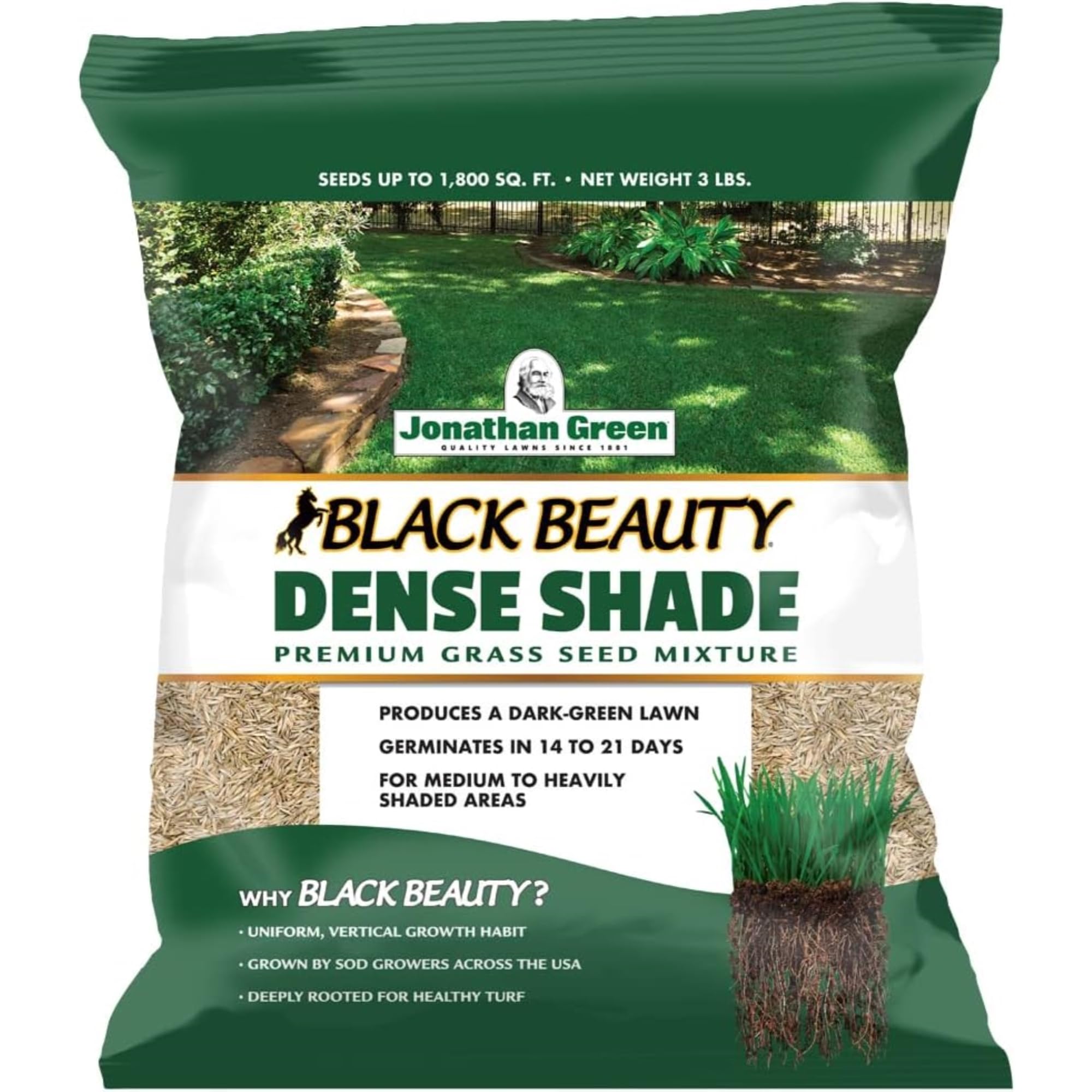
2. Jonathan Green 40600 Dense Shade Grass Seed, 3 lb
Built for the soggy corner under a tree where nothing else will take hold.
Damp ground and shade often live together — think the low spot beside a fence where the sun never quite reaches. This blend is sold specifically for that job, labeled shade resistant, and it spreads 1,800 square feet of coverage out of a 3-pound bag. That coverage-to-weight ratio is unusually generous for such a small bag, which makes it a smart fit for a single problem patch rather than a whole yard.
The honest catch is germination, and it is the one thing to weigh carefully. Plenty of lawns come up thick and dark green from this seed, sometimes with no topsoil at all, while other buyers spread it, water daily, stay off the ground, and see nothing after 12 days. This is a blend that rewards soil prep and reliable moisture — get the ground loosened and damp, and it does its part.
It also has staying power once established. In heavily shaded yards, owners mention this blend surviving 95°F heat and high humidity, going dormant at the peak and greening back as temperatures dropped. Tuck it into damp, shaded ground and give it a couple of weeks before you judge it.
What the bag promises: shade-resistant seed at 1,800 square feet of coverage, sized for patching rather than whole-lawn renovation. If your wet spot is dark and under trees, this is the mix aimed at it.
What to plan for: germination is uneven from bag to bag, so seed it generously and keep the soil moist — this is not a mix to scatter and forget.
Suits: shaded, damp corners that have defeated other grass.
Think twice if: you want guaranteed fast sprouting on a lazy scatter — this one wants prep.
3. GreenView Turf Type Tall Fescue Grass Seed 7 lb

A tall fescue that shrugs off damp heat and keeps its dark green once rooted.
Once this one is up, it is built to last. Once rooted, tall fescue resists heat, drought, insects, disease, and brown patches — useful in a wet area because a lawn that gets waterlogged in spring often bakes dry by midsummer. The 7-pound bag seeds 875 square feet of new lawn, or 1,750 square feet when overseeding existing turf, and it works in all common soil types.
The trade-off is patience. It begins germinating in 10 to 14 days, which is a long window for wet ground — that is where the Pennington bag above wins, starting in 3 to 7 days. Keep the soil consistently damp through those two weeks and tall fescue rewards you with a rich, dark green color and a medium-to-coarse texture that fills in a whole lawn rather than just a patch.
What wins people over is the sheer density once established, plus a seed tested at 99.9% weed-free. One negative worth knowing: some bags germinate slowly and too sparsely, so plan for a second overseeding on stubborn spots rather than expecting a one-and-done result.
The durable-lawn angle: deep-rooted tall fescue built to resist heat, drought, and disease once healthy, at 875 square feet of new-lawn coverage per 7-pound bag.
The patience test: it needs 10 to 14 days to germinate, and germination can be uneven — keep watering through the full window.
Pick it for: a sun-and-shade lawn where you want one seed that handles both and lasts past one season.
Pass if: your wet patch needs green cover inside a week.
4. GreenView Perennial Ryegrass Blend 7 lb

Permanent ryegrass that comes back every spring instead of one winter of color.
This is the long game version of ryegrass. Where the Pennington bag is annual and temporary, this perennial blend returns year after year — it sprouts in 7 to 12 days and spreads 1,750 square feet for new lawn or 3,500 square feet when overseeding. That overseed coverage is double the tall fescue’s 1,750 square feet, so a single bag refreshes twice the ground.
What wins people over is the color and texture: a dark green, medium-to-fine blade that holds up under damp, shaded conditions and works in all common soil types. It also carries a 99.9% weed-free test claim, so the bag is almost entirely grass seed.
The honest note is the watering. This blend is listed with constant watering needs, which in a wet spring is free but in a dry spell is on you. And germination is mixed from spot to spot — some lawns fill in within days and some come up thin at the bag’s suggested spread rate. Sow it a little heavier than the label and keep the soil damp, and it settles into a lasting lawn.
Why it earns its place: perennial roots, dark green medium-to-fine blades, and 3,500 square feet of overseed coverage from one 7-pound bag.
The honest limit: it wants constant watering and can come up thin at the suggested rate — go a touch heavier on the spread.
Best for: a permanent, weed-conscious lawn that gets reliable moisture.
Skip if: you cannot commit to steady watering during a dry spell.
5. Outsidepride Legacy Fine Fescue Grass Seed Mix, 5 lbs
Pure fine fescue with zero weed seed, made for damp shade and a soft, fine blade.
The blend itself is the story: 20% Hard Fescue, 40% Chewings Fescue, and 40% Creeping Red Fescue, sold as raw seed with 0.00% other crop and weed seed. Fine fescue is the fine-bladed side of the lawn world — soft underfoot, tolerant of shade, and happy in cooler, moister ground than a coarse ryegrass.
What wins people over is the texture and the shade tolerance, plus that zero-weed promise in the bag. Fine fescue tolerates full sun through dense shade and, once mature, holds up under heavy foot traffic and harsh weather. Give it a compost or high-organic base and it grows thick with minimal water and mows less often.
Here is the thing to know before you buy: fine fescue is slow and fussy. It wants constant moisture for strong germination over roughly 7 to 9 days, and it grows slowly — dense in rich soil, spotty in heavy clay. Germination can be uneven from bag to bag. If you are patient and your soil is good, the fine, uniform result is worth the wait.
What Makes It Different
- Pure raw seed at 0.00% other crop and weed seed
- Fine texture that stays soft and uniform
- Handles dense shade to full sun
- Tolerates heavy foot traffic once mature
What To Expect
- Slow growth, especially in heavy clay
- Needs constant moisture to germinate
- Germination can be uneven bag to bag
Choose it if: you want a fine-bladed, low-mow lawn and can give damp shade a patient start.
Hold off if: your soil is heavy clay or you want fast cover in a hurry.
Know the Specs
Germination window
The number of days a seed takes to sprout once it is watered and warm. In a wet area, a short window — like the 3 to 7 days on the annual ryegrass — matters because fast roots grab the soil before excess moisture rots the seed. Long windows of 10 to 14 days mean the seed sits in damp ground longer, so steady moisture through the whole stretch is critical.
Coverage per bag
The square footage a bag seeds, usually listed separately for new lawn versus overseeding. New-lawn coverage is lower because bare soil takes more seed; overseed coverage is higher because you are thickening what is already there. Match the bag to your measured patch — a 10-pound bag covering up to 2,000 square feet goes further than a 3-pound bag covering 1,800.
Shade tolerance
Wet ground is often shaded ground, so whether a blend is sold as shade resistant or built for full sun is a real filter. Sun lovers want 6 to 8 hours of light; shade-tolerant fescue blends handle the dark, damp corner under trees. Pick the one that matches the light your wet spot actually gets.
Weed-free percentage
A tested figure for how much of the bag is pure grass seed rather than other crop or weed seed. A 99.9% or 0.00% claim means what sprouts is overwhelmingly grass — helpful when you are trying to win back a wet patch from weeds. Still prep the soil weed-free first, since the test covers the bag, not your ground.
Common Questions
Will annual ryegrass come back next year in a wet area?
How fast will grass seed sprout in soggy soil?
Can I plant grass seed in a spot that stays wet all the time?
What is the difference between new-lawn coverage and overseed coverage?
Does shade-tolerant seed also work in a wet, sunny spot?
Is a 99.9% weed-free claim the same as no weeds at all?
How do I keep new seed alive in a wet spring?
How much seed do I need for a large muddy patch?
Will fine fescue grow in a poorly drained, heavy clay area?
The Bottom Line
For most wet, muddy patches, the grass for wet areas winner is the Pennington Annual Ryegrass because it sprouts in 3 to 7 days and covers up to 2,000 square feet from one bag — the fastest, widest green cover here. If you want a permanent lawn that returns each season, reach for the GreenView Pure Perennial Ryegrass. And for the dark, damp corner under a tree, the Jonathan Green Dense Shade is the mix built for that exact job.
How we choose
We do not accept paid placement. Every pick is matched to a real buyer and a real use-case; we do not hands-on test units.
Sources
Specifications: manufacturer listings and product documentation. Review insights: verified customer reviews, as of October 2026. Pricing: not shown on this page (it changes often); check the current price via the retailer link.
As an Amazon Associate, Aappliancez earns from qualifying purchases. This does not affect which products we feature.