Disclosure: Some links in this post are affiliate links. As an Amazon Associate I earn from qualifying purchases, at no extra cost to you. Learn more
Specs are compiled from manufacturer listings and verified buyer reviews and can change over time — please confirm the key details on the product page before buying.
Your dog eats grass — every owner knows the routine. The real question is whether the grass he grazes on is clean, or whether it’s carrying lawn chemicals and whatever the neighbours’ dogs left behind. The safest answer is to grow a small pot of clean grass yourself, and the picks below are the ones worth planting. Everything here is a seed or live-grass product you grow or place at home, so you control what your dog chews.
This guide is built by comparing the manufacturers’ published specifications and the patterns across verified customer reviews, so you get each pick’s real strengths and trade-offs instead of marketing spin.
Wheat, oat, and barley are the usual grasses sold for pets — all cereal grasses, all easy to sprout on a windowsill. Below you’ll find the top picks for the best grass for dogs to eat, ranked by how reliably they sprout and how eagerly dogs actually graze them.
Top Picks


How To Choose The Best Grass for Dogs to Eat
Dogs eat grass for reasons nobody has fully pinned down — fiber, an upset stomach, or plain curiosity. What you can control is what’s on the blade. Grass grown in your own tray has no lawn spray, no road dust, and no mystery about what’s in the soil. That’s the whole case for growing it yourself, and it’s a strong one.
Seed versus live grass — pick your convenience level
Seed is the cheaper way in and gives you batch after batch from one bag. Live grass arrives ready to graze, which suits anyone who doesn’t want soil on the windowsill. Seed needs a few days of watering before your dog gets a single blade; live grass needs a spot near light and a little water to stay fresh.
Which grass type suits your dog
Wheatgrass is the most common and carries the most fiber. Oat grass is the tender one — softer blades that some fussy dogs prefer. Barley and rye show up in blends. If your dog has turned his nose up at wheat before, an oat-heavy bag is the sensible next try.
Germination rate is the number that matters
A bag of seed that half-sprouts wastes your time and your windowsill space. Look for a stated germination figure or a plain “guaranteed to grow” promise — and note that seed stored cool and dry keeps its sprouting power far longer than seed left in a warm cupboard.
How much grass one dog actually eats
Less than you’d think. A single small tray more than covers a ten-pound dog for a week or two, so a large bag of seed goes a long way. Two pots started a week apart beats one big pot, because grass thins out fast once a dog starts pulling at it.
Side-by-Side Comparison
| Model | Best For | Format | Grass Type | Size | Amazon |
|---|---|---|---|---|---|
| PowerGrow Organic Wheatgrass Seed★ Best Overall | Best overall bulk seed | Seed, bulk bag | Hard red wheat | 5 lb | Amazon |
| Mountain Valley Seed Co Organic BlendBest Blend | Multi-species blend | Seed, bulk bag | Wheat, barley, oats, rye | 12 oz | Amazon |
| Handy Pantry Organic Cat Grass SeedCertified Organic | Organic, certified | Seed, bag | Wheat | 12 oz | Amazon |
| Easy Peasy Wheatgrass Seeds | Big-bag value | Seed, bulk bag | Wheat | 10 lb | Amazon |
| Groundio Cat Grass Seeds Mix | Mixed wheat and oat | Seed, resealable bag | Wheat and oats | 1 lb | Amazon |
| Magic Grow Wheat Grass Seed | Stated germination rate | Seed, resealable bag | Hard red winter wheat | 1 lb | Amazon |
| Handy Pantry 3-Tray Kit | All-in-one kit | Kit, 3 trays | Wheat | 3 packs seed | Amazon |
| Handy Pantry 1-Tray Kit | First-time kit | Kit, 1 tray | Wheat | 1 pack seed | Amazon |
| Sow Right Seeds Sweet Oats | Oat-only seed | Seed, packet | Oat | 10 g | Amazon |
| Rex Products Oat Seeds | Oat seed by count | Seed, resealable bag | Oat | 1 lb | Amazon |
| Pet Greens Live Original Pet Grass | Ready-to-graze live grass | Live grass | Wheat | 6-pack | Amazon |
Detailed Reviews
1. PowerGrow Organic Wheatgrass Seed 5 Pound
Our pick — 4.5+★ from 1,000+ verified ratings; the strongest balance of quality and price.
Five pounds of organic hard red wheat that jumps out of the soil within two days.
One bag can keep your dog in fresh grass for months. That bag holds five pounds of certified organic hard red wheat — a cereal grain that sprouts into the fibrous grass dogs graze on. A single small tray feeds a dog for a week or two, so the bulk format saves you from buying live trays again and again. For most households this is the best overall pick, and it’s a crowd favourite with a strong record behind it.
Sprouting speed is what wins people over here. Owners’ biggest point of praise is germination — hundreds of them mention sprouts appearing within about two days. Soak the seeds and give them water and they move, which is exactly what you want when you’re feeding a dog who’s already waiting by the pot. Multiple harvests from one planting are a recurring note, too, so you’re not re-sowing every four days. Buyers report: “I’ve only used a small amount of the seeds, but they all sprouted and grew into a nice amount of grass. My cat, Torpedo seemed to enjoy eating the grass, without issue.”
The catch is durability at the tray level. A planting of grass tends to thin out and die off after about five days of steady grazing, so the bag lasts months but each tray does not. Start a second pot before the first fades. Also check the storage: a big open bag of seed wants a cool, dry cupboard.
What earns it the top spot
- Certified organic hard red wheat in a 5-pound bulk bag — months of trays from one purchase.
- Germination is the standout: owners repeatedly note sprouts appearing within about two days.
- Often delivers two solid harvests from a single planting.
- Sweet-tasting grass that dogs and cats go for without fuss.
Where it asks a little of you
- Each individual tray thins out and dies off after roughly five days of grazing.
- A 5-pound bag needs cool, dry storage to keep its sprouting power.
Go for this if: you want one bag that covers months of fresh grass for a dog who grazes daily.
Hold off if: you’d rather buy grass already grown and skip the watering entirely.
2. Mountain Valley Seed Co Organic Cat Grass Seed Blend 12 oz
Four cereal grasses in one bag, so a picky dog gets a choice of blades.
Some dogs are fussy about texture. This bag answers that by mixing wheat, barley, oats, and rye — four cereal grasses that each sprout into slightly different blades. Oat and barley tend to come up softer than straight wheat, so a dog who’s ignored one type may take to another in the same pot. It’s certified organic, 12 ounces, and made by a company that also sells under the Handy Pantry name.
Germination is the star of this bag. The single biggest thing owners talk about is how their pets take to it — and close behind is germination rate, with sprouting reported inside two days and plenty of growth inside a week. Chewing is the whole point here: dogs get the fiber, and one owner’s note about a cat with digestive trouble passing hair more easily after grazing captures the everyday appeal. The blend also has the variety to keep a routine grazer interested longer than a single-grass bag might.
Storage is where this one needs attention. It’s a 12-ounce bag, so it’s smaller than the big bulk wheat bags — fine for a few weeks of trays, not for a whole season. Keep it sealed and cool, and expect the grass itself to thin after a week or so like any tray.
Why it’s worth a look: the four-grass mix separates it — wheat for fiber, oats for tenderness, barley and rye for variety. A dog who’s turned up his nose at wheat alone often takes to this blend.
The honest limit: at 12 ounces it’s a starter-sized bag, not a season’s supply, so heavy grazers will want a bigger bag alongside it.
Reach for this if: your dog is fussy about grass texture and you want a blend that covers several bases.
Look elsewhere if: you want the largest bag for the money and don’t need variety.
3. Handy Pantry Organic Cat Grass Seed 12 oz
Certified organic wheatgrass that keeps its sprouting power for years in the bag.
This is the bag for a dog owner who wants organic certification they can actually verify. The seed is certified organic by OTCO — a third-party organic certifier — and it’s non-GMO hard red wheat, the same cereal grain used across the category. Twelve ounces is a middle-sized bag; the maker’s growing guide suggests soaking seeds six to eight hours and harvesting in seven to ten days, which is the standard rhythm for wheatgrass on a windowsill.
What keeps people buying it is longevity. The seed stays viable for years, so a bag that’s been sitting in a cupboard can still sprout. That matters if you buy in bulk and use it slowly. Owners also flag fast germination — a few days to green shoots — and steady growth indoors on a sunny sill. Mix this with the Mountain Valley blend and you’ve got a two-bag rotation: the blend for variety, this one for reliability.
Plan for one thing: some dogs ignore wheatgrass in favour of lawn grass, and owners mention exactly that. Their dog still begs at the back door but eats the home-grown tray when the lawn’s not available. That’s not a flaw in the seed; it’s a quirk of individual dogs. A dog with a strong lawn habit may prefer the oat bags below.
What stands out
- OTCO-certified organic and non-GMO hard red wheat.
- Germination holds up even after long storage in the bag.
- Grows quickly indoors, with a stated 7–10 day harvest window.
- Dogs and cats both graze it; also works for rabbits.
What to keep in mind
- Some dogs turn their nose up at wheatgrass and hold out for lawn grass.
- 12 ounces is a moderate bag — not the biggest value per ounce.
Top pick for: anyone who wants verifiable organic certification and seed that survives slow use.
Think twice if: your dog has already rejected wheat and needs the softer oat type.
4. Wheatgrass Seeds 10 Pound

Ten pounds of non-GMO wheatgrass — the biggest bag here, built for a serious grazer.
If you’ve got a dog who grazes every day and a windowsill you’re happy to keep stocked, this is the bulk buy. Ten pounds of non-GMO wheat seed, grown in the USA, with a resealable bag and clear sprouting instructions. It dwarfs the 12-ounce bags above — it’s built for households that will actually work through it. If you’re planting one small tray a week, this bag will last a very long time.
The seed performs as well as the volume suggests. Owners’ most-cited strength is how readily it sprouts, and seed quality is close behind — the seed still sprouts after a year in storage, a genuine test of freshness. Owners mention the value too: “The filet mignon of cat grass!” is how one sums it up. The same owner came from smaller packets that sprouted poorly and were bug-infested, then found this bag a different experience entirely. Dogs and cats both graze it eagerly, and the resealable top keeps it usable.
The obvious trade-off is scale. Ten pounds is more seed than a single small dog will get through in a year at one tray a week, so this is best shared or committed to a steady routine. Storage cool and dry is non-negotiable at this size.
The case for the big bag: this is the volume pick — if you’ve decided growing your own grass is a permanent part of your dog’s routine, buying at this scale makes the per-tray cost tiny.
The honest catch: ten pounds is a commitment. A household that plants only occasionally will end up storing more seed than it uses.
Best suited to: daily grazers and multi-pet homes that will use a 10-pound bag consistently.
skip it if: you’re testing the waters with one small dog — a smaller bag fits better.
5. 1 Pound Cat Grass Seeds for Planting- Wheat & Oat Seeds Mix
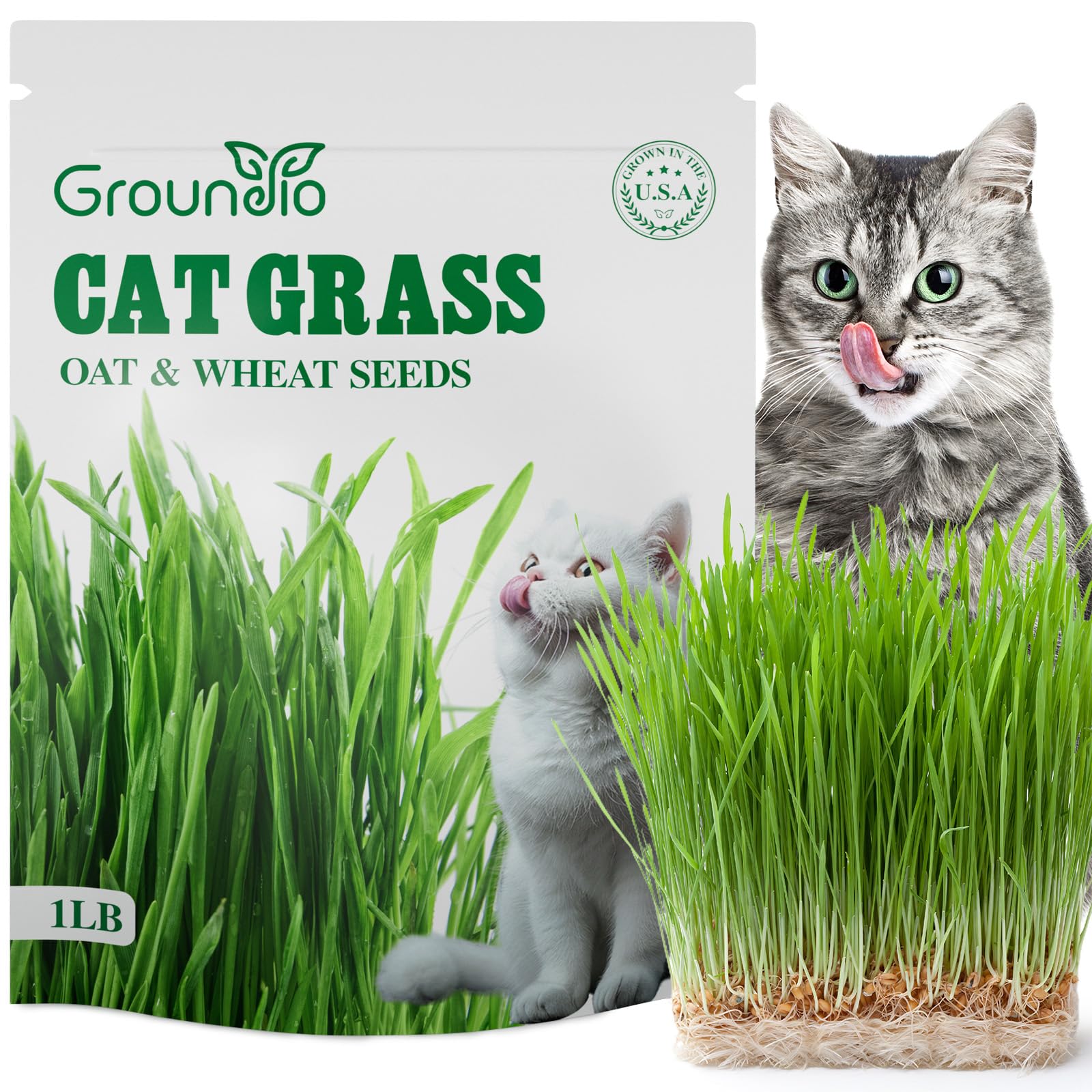
Wheat for fiber, oats for tenderness, in one resealable pound.
The clever thing about this mix is the split: wheatgrass carries more fiber, while oatgrass blades come up more tender. Together they give a dog two textures in one tray, which matters if he’s been picky before. A pound goes into a reusable waterproof Ziploc bag that keeps sunlight and moisture off the seed between plantings. The instructions are simple: soak six hours, spread on soil, cover with about a centimetre, water, and park on a sunny, ventilated indoor sill.
Germination leads the way in owner feedback, and it sprints — shoots inside a week, then grass ready to graze quickly after. Dogs take to it without drama, which is the whole test. The growing window is the number to plan around: the entire growth period runs roughly two to three weeks, and the seed reaches its best condition when the blades hit 10–20 cm. That’s your harvest cue. A pound, spread across a few planters, gives a steady supply.
The one inconsistent note is seed life. Some bags come clean and sprout reliably; occasionally a batch rots quickly instead. Cool, dry storage and not over-watering is the safeguard. A few dogs have also declined it, so watch the first tray before committing a whole planter.
What buyers appreciate
- Wheat and oat together — fiber plus tenderness in one bag.
- Resealable waterproof bag protects the seed between plantings.
- Straightforward soak, scatter, and water instructions.
- Clear harvest window: grass ready once blades reach 10–20 cm.
Where it can wobble
- Seed life is inconsistent — the odd batch rots rather than sprouts.
- Individual dogs occasionally refuse it outright.
Worth grabbing if: you want a mid-sized bag that offers both fiber and tender blades.
Give it a pass if: you need the biggest, most reliable bag and can’t tolerate the odd inconsistent batch.
6. Wheat Grass Seed 1lb – Guaranteed to Grow

The maker puts a number on it: above 95% germination, tested weekly.
Most bags of pet grass stay vague about how well they sprout. This one doesn’t. It’s hard red winter wheatgrass with a stated germination rate above 95%, tested weekly by the maker, in a 1-pound resealable bag. If you want a concrete number to judge against, this is the pick. Non-GMO and grown for both indoor and outdoor sowing.
Growth is fast and the dogs are into it. The maker lists an expected plant height of 20 inches, but you graze it well before it gets there. A tip that recurs in feedback: soak the seed for around eight hours with a few rinses before planting. One grower who soaked for eight hours saw grass in six days versus 17 days planting dry. That’s the single biggest trick in this category, and it applies to every bag here.
Not every batch is identical. Germination can slip a little on a second planting even with the same method, and storing the bag for many months runs the usual pest risk that comes with any bulk seed. Reseal it, keep it cool, and use it within a season if you can.
The spec that sells it: a stated germination rate above 95%, tested weekly — the rare bag in this category that puts a number on sprouting.
The reality check: results drift batch to batch, and seed stored for months in a warm spot is vulnerable to the same pest trouble as any bulk bag.
Pick this one if: you want a documented germination number and a resealable 1-pound bag.
Pass if: you need guaranteed freshness across a long storage window.
7. Handy Pantry Organic Cat Grass Kit 3 Trays

Three trays, three soil pucks, three seed packs — no separate shopping list.
This is the kit for anyone who doesn’t want to source soil and seed separately. Three 4×4-inch trays, three pre-measured soil pucks, and three packs of USDA-certified organic non-GMO wheatgrass. Add water, put it in a sunny spot, and you’re growing.
The appeal is having a rotation built in. Three kits let you start one tray while the last is still grazing, which is exactly the rhythm the whole category rewards. Customers note a full, thick crop that goes down well with dogs and cats alike, and having three means a supply rather than a single burst. It’s also the cleanest option for an apartment — no bags of seed or soil to store between grows.
The one trade-off is size. Each tray is 4×4 inches, so a bigger dog will clear it fast, and the whole kit is a two-to-three-week supply, not a season’s worth. Plan to buy refills or graduate to a bulk seed bag once you know your dog is into it.
Why it earns a place
- Everything included — trays, soil pucks, and organic seed in one box.
- Three kits let you stagger plantings for a continuous supply.
- Sprouts within about three days; ready in under a week.
- Cleanest option for apartments with no seed or soil to store.
What to plan around
- Each tray is only 4×4 inches — a larger dog clears one quickly.
- The full kit covers roughly two to three weeks of grazing.
Ideal for: first-timers and apartment owners who want the whole setup in one box.
Not for you if: you’re already set up and just need seed — a bulk bag is better value.
8. Handy Pantry Organic Cat Grass Kit 1 Tray

The smallest step in — one tray, one puck, one packet of seed.
If you’re not sure your dog will bother with home-grown grass, start here. One 4×4-inch tray, one pre-measured organic wheatgrass pack, and one soil disc — enough to see whether he takes to it before you commit to a bigger setup. Certified organic by OTCO and non-GMO. The maker says it’s ready within five days of planting.
For a new grower, this is forgiving. The instructions are clear enough for someone with no gardening history, and the grass comes up reliably with daily watering. Place the puck in a small pot near a window and you can have an inch or more of growth in a few days. It’s also a tidy little gift for a dog or cat household — small enough to wrap.
Two things to know before you buy. The tray is small, so the soil puck is on the shallow side; with a shallow layer, a dog who pulls at the blades can drag clusters out of the soil, which means replanting sooner. And the single kit is a short-term supply — about two weeks of grazing — so treat it as a test rather than a steady plan. The three-tray version above solves both.
Good starting point if: you want a low-commitment trial and aren’t sure your dog will graze indoors.
Better to go bigger if: you already know he’ll eat it — the three-tray kit or a bulk bag gives far more grass.
9. Sow Right Seeds Cat Grass Seed

Pure oat seed — the sweet, tender blades for a dog who’s rejected wheat.
Here’s the thing about oat grass: it’s the sweeter, softer option. This packet is 100% oat seed, no wheat mixed in, which makes it the pick when your dog has already snubbed a wheatgrass tray. Oat grass is also known in this category for being gentle on the blades — no stiff, wiry growth to turn a fussy dog off. The packet holds a minimum of 10g, about 450 seeds, with instructions on every packet.
The growth numbers are clear. Germination takes 10–20 days when soil temps sit between 60–70°F, and the grass grows 4–6 inches before maturing in 60–90 days; plant 1/8 inch deep, in partial shade, in USDA zones 3–11. Slower to start than wheat, but each planting runs longer. There’s a real guarantee behind it too — Sow Right Seeds will make it right if the seed doesn’t germinate.
Keep expectations on quantity realistic. This is a single small packet, not a bulk bag — fine for a few trays, not for a dog who grazes daily all season. Owners also note the grass thins after a few days, so rotate planters weekly. Keep water in the bottom of the pot to stretch the crop a bit further.
The reason to choose it: pure oat seed is the tender, sweet change-up for a fussy grazer — a different texture from every wheat bag on this list.
What you’re accepting: a small packet and slower germination than the wheat picks, so it’s a supplement rather than a sole supply.
Reach for this if: your dog has refused wheatgrass and you want to try the softer oat blades.
Look at the bulk wheat bags if: you need a big, fast-sprouting supply for daily grazing.
10. Oat Seeds 1 Lb (3000+ Seeds)- Cat,Dog,Pets- Oat Grass Seeds

A full pound of oat seed, counted out at 3000-plus seeds per bag.
One pound of 100% oat grass seed — the bag states more than 3000 seeds — in a resealable bag, fresh packed weekly in the USA. Oat is the tender, sweet type. Dogs, cats, and birds all graze it. The maker says it sprouts in three to four days.
Once you’ve got a routine going, this bag keeps it running. Plant one container, then when it’s ready, plant another and keep alternating — the approach that gives a dog grass on hand all the time. Oat grass pulls up enthusiastically (dogs tend to nibble and yank at it), so a steady rotation matters. A pound is a decent run for a single-pet home.
The honest caution is germination. It’s inconsistent on this seed — some bags sprout quickly, others less so, so watch the first tray. A separate point worth knowing: this seed has had reports of wheat weevils on a second bag, tiny insects that can appear weeks after opening. Freezing the bag for two weeks before storage is a common safeguard, and a few owners note the bugs are harmless if a dog eats a stray one.
What’s in its favour
- One pound of 100% oat seed, stated as 3000-plus seeds.
- Resealable bag and weekly fresh packing in the USA.
- Sprouts in three to four days per the maker.
- Tender oat blades for dogs that prefer something softer than wheat.
What to weigh up
- Germination can be hit or miss between bags.
- Weevil reports on stored seed — freezing the bag first is worth doing.
Suit yourself to this if: you want oat grass in a sizable bag and don’t mind checking the first tray’s germination.
Better off elsewhere if: you need seed you can trust to sprout nearly every time.
11. Pet Greens Live Original Pet Grass 6-Pack

Grass that arrives already grown, so there’s nothing to plant or wait for.
For anyone who wants zero growing involved, this is the shortcut. Six trays of live, fully grown wheatgrass arrive ready to graze — no soil, no seed, no waiting days for sprouts. The grass is 4 pounds across the six-pack, and the trays are large (15 by 11 by 7 inches) — bigger than the little 4×4 kits above. Sweet, smooth wheatgrass, labelled gluten free, for all breeds.
The appeal is the predictability. No germination guesswork, no failed tray. Owners describe it arriving alive and thriving, fresh and ready to go straight to the pet. Cats take to it readily, and dogs can graze the same trays. The shelf-ready format makes it the one to grab when you’ve run out of home-grown grass or you’re heading away and want an easy supply.
The honest catch is that you’re paying for someone else’s growing. Live grass has a shorter shelf life than a bag of seed — grass dies off, so you’ll be reordering. Keep it watered and near light to stretch the crop. For the money, a bulk seed bag gives far more grass over time; this is the convenience option.
Why it wins on ease: it’s the only pick here that’s ready the moment it lands — no soaking, no soil, no windowsill wait.
The trade-off: live grass is a perishable, so it’s an ongoing purchase rather than a one-off bag of seed.
Best for: anyone who wants instant, no-effort fresh grass or needs a supply while away.
Choose a seed bag instead if: you want the lowest cost over time and don’t mind a few days of watering.
Know the Specs
Germination Rate
The percentage of seeds in a bag that actually sprout into grass. A high rate means less waste and a fuller tray; a low one means bare patches and replanting. Wheatgrass usually leads on speed, oat grass can run slower but longer.
Grass Type
Wheat, oat, and barley are the three cereal grasses most sold for pets. Wheatgrass carries the most fiber and sprouts fastest. Oatgrass is the tender, sweeter option for fussy dogs. Blends mix them for variety in one tray.
Bag Size
Small kits run a few trays; bulk bags of a pound or more cover months. The right size depends on how much grass your dog actually eats — a single small tray feeds a light grazer for a week or two.
Growing Method
Kits with trays and soil pucks suit beginners and apartments. Loose seed needs your own pots and soil. Live grass arrives ready with nothing to do. Soaking seed before planting speeds sprouting across the board.
Common Questions
Is wheatgrass or oat grass better for a dog to eat?
How long does a tray of grass last before it dies?
Do I need to soak the seeds before planting?
How much grass does a dog actually need?
Is it safe for my dog to eat grass grown indoors?
Can I grow cat grass for dogs and other pets too?
How do I stop mold forming on the soil?
What is the harvest height for pet grass?
How should I store a bulk bag of seed?
Can I plant these seeds outdoors instead of indoors?
The Bottom Line
For most dog owners the grass for dogs to eat winner is the PowerGrow Organic Wheatgrass Seed. It’s five pounds of certified organic hard red wheat that sprouts within about two days, so one bag feeds months of trays. If you want a blend that covers wheat, barley, oats, and rye for a fussy dog, reach for the Mountain Valley Seed Co Organic Blend. And if you’d rather buy nothing but pre-grown grass, the Pet Greens Live Grass six-pack arrives ready to graze with zero planting.
One honest nudge: whichever you pick, soak the seed first and start a second pot early — those two habits matter more than the brand on the bag.
How we choose
We do not accept paid placement. Every pick is matched to a real buyer and a real use-case; we do not hands-on test units.
Sources
Specifications: manufacturer listings and product documentation. Review insights: verified customer reviews, as of October 2026. Pricing: not shown on this page (it changes often); check the current price via the retailer link.
As an Amazon Associate, Aappliancez earns from qualifying purchases. This does not affect which products we feature.