Disclosure: Some links in this post are affiliate links. As an Amazon Associate I earn from qualifying purchases, at no extra cost to you. Learn more
Specs are compiled from manufacturer listings and verified buyer reviews and can change over time — please confirm the key details on the product page before buying.
If you want grass fed yogurt you can actually trust, the answer is simpler than the shelf makes it look: buy a starter or a clean collagen and make the batch yourself. Store cups hide sugar and thickeners behind a “grass fed” banner. The five picks below skip that game — they are powders and cultures you mix into milk or coffee, so you control the tang, the thickness, and the add-ins. One of them is the crowd favorite at 4.5+ stars across 500+ ratings, and it earns that spot on a single ingredient list.
This guide is built by comparing the manufacturers’ published specifications and the patterns across verified customer reviews, so you get each pick’s real strengths and trade-offs instead of marketing spin.
What follows separates a true culture from a flavored powder, explains what “grass fed” actually changes in the jar, and shows which pick fits a travel bag versus a weekly family batch. Every pick here is a grass fed yogurt building block you mix yourself, so the texture and the tartness stay in your hands.
Top Picks

How To Choose The Best Grass Fed Yogurt
The first decision is not brand — it is format. A live starter culture ferments a quart of milk into a full batch of yogurt. A yogurt powder is a dry dairy base you reconstitute with water for a single serving. A collagen peptide is neither; it is a protein you stir into an existing yogurt or drink. Decide which of the three you actually want before you compare anything else, because they solve different problems.
Live culture versus dry powder
Go with a live culture if you want a repeatable weekly batch from real milk. You heat the milk, cool it, stir in the starter, and hold it warm for hours. A dry yogurt powder skips all of that — mix it with cold water, chill it overnight, and you have a single portion. The powder wins on convenience and travel. The culture wins on volume and on texture you can dial in yourself.
What “grass fed” really tells you
On a dairy or collagen product, grass fed describes what the animal ate — pasture rather than grain. It is a sourcing claim, not a nutrition label. It says nothing about added sugar, thickeners, or fillers, so you still have to read the ingredient list. A short list of one or two ingredients is your best evidence that the grass fed claim is doing real work.
The texture question
Runny batches usually trace back to temperature, not to the starter. Milk held too cool during incubation sets loosely. Whole milk sets creamier than skim, and straining a finished batch overnight thickens it further. If a thick scoop matters to you, plan for a longer incubation and a strainer — not a different powder.
Side-by-Side Comparison
| Model | Best For | Format | Key Spec | Grass Fed Claim | Amazon |
|---|---|---|---|---|---|
| Equip Foods Grass Fed Collagen Powder★ Best Overall | Stirring into coffee or an existing yogurt | Hydrolyzed bovine collagen peptides | 15 g collagen per serving, 30 servings | 100% grass-fed bovine, one ingredient | Amazon |
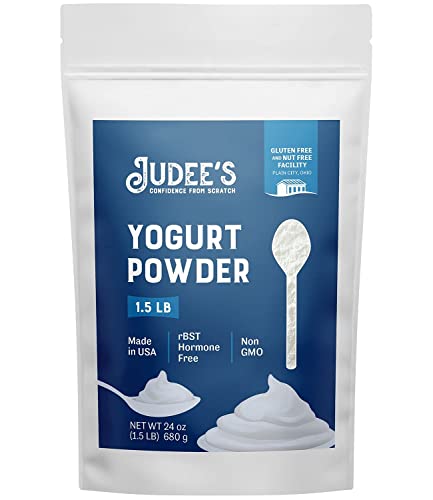
| Judee’s Gluten Free Nonfat Yogurt PowderBest for Travel | Single servings on the road | Shelf-stable freeze-dried powder | 1.5 lb resealable pouch (24 oz) | Not stated — real dairy, nonfat milk solids | Amazon |
| Spring Sunrise Cultured Grass-Fed Organic Ghee | Cooking and frying instead of butter | Cultured clarified butter in glass | 9 fl oz jar, 485°F smoke point | USDA Certified Organic, grass fed cows | Amazon |
| Viva Naturals Collagen Peptides Powder | Daily protein in coffee or smoothies | Hydrolyzed Type I & III peptides | 19 g protein per serving, 1 lb tub | Pasture-raised, grass-fed bovine hide | Amazon |
| VIVO Probiotic Yogurt Starter | Making full quart batches at home | Freeze-dried live starter culture | 10 bottles, up to 30 quarts | Not stated — 10 culture strains listed | Amazon |
Detailed Reviews
1. Equip Foods Grass Fed Collagen Powder
Our pick — 4.5+★ from 500+ verified ratings; the strongest balance of quality and price.
One ingredient on the label, and that is the entire sales pitch.
Buy this one if your yogurt is already made and you just want a clean protein stirred into it. The tub holds nothing but grass-fed bovine collagen peptides — no flavoring, no sweetener, no filler — and each serving carries 15 grams of collagen across 30 servings. That is the whole ingredient list, and it is why this pick takes the top slot.
What wins people over is the sourcing and the silence. Owners consistently describe a powder that vanishes into warm coffee or a smoothie without changing the taste or leaving grit, and the plain-label formula is the reason. The other draw is the amino acid profile — the same thing you would normally get from a yogurt or a broth, in a scoop. As buyers put it, it is “grass fed” with “nothing wrong with Equip,” and the only quibble in that review is that a competing brand costs less.
Stack it against the Viva Naturals tub and the difference is weight, not scoops. This bag weighs 1 pound, while the Viva tub also ships at roughly a pound — so you are choosing on ingredient count, not carry size. The package itself runs larger, at 10.2 x 7.32 x 2.6 inches, which makes it a pantry item rather than a travel one. If you want the same clean scoop in a bigger bag, check the Viva pick lower down; if you want the shortest ingredient list available here, stay put.
What earns it the crown
- A one-ingredient formula — grass-fed bovine collagen peptides and nothing else
- 15 g of collagen per serving, with 30 servings in the tub
- Dissolves fast in warm liquids and leaves no taste behind, per owner feedback
- No artificial flavors or added sugar to interfere with your yogurt
Where it costs you
- It is a protein, not a culture — it will not turn milk into yogurt
- Owners who priced it against a rival collagen found this one the pricier option
- Collagen benefits build slowly, so you need several weeks of daily scoops before you can judge it
Buy it for: a flavorless scoop you can add to coffee, a smoothie, or a bowl of yogurt you already own.
Think twice if: you expect a fermented batch at the end — that job belongs to a live starter, not this bag.
2. Judee’s Gluten Free Nonfat Yogurt Powder
Yogurt from a pouch and cold water, no fridge required.
This is the pick for someone who lands late, opens a hotel-room drawer, and still wants a bowl of yogurt before bed. The pouch is freeze-dried and shelf-stable, so it sits at room temperature until you mix it. It comes as 1.5 pounds — a 24-ounce resealable bag — and it is built from real dairy, specifically nonfat milk solids.
What the bag does well is the travel scenario. You mix a portion with cold water, chill it overnight, and the texture comes out surprisingly creamy — the kind of set that makes you double-check the bag. One detail worth knowing before you buy: this is a yogurt base, not a grass fed certified one, so the label makes no pasture claim. If sourcing matters more to you than portability, the Spring Sunrise ghee and the Viva Naturals collagen below both carry a grass fed claim this pouch does not.
The honest catch is flavor. The pouch earns mixed reactions on taste — the tang and the body land well, but some batches finish with a back note that people find odd. That tends to happen when the base is stretched with fruit powder or extra sweetener, and it is fixable by mixing plain first and tasting before you add anything. Keep the bag sealed and dry between uses and it holds its freshness. For the extra space it needs, the bag measures 11.26 x 6.81 x 2.8 inches, so plan for a pantry shelf rather than a carry-on.
How it handles a batch: Mix it with cold water, refrigerate overnight, and the set is thick and creamy — owners keep using the word creamy for a reason. The flavor runs strong and tangy, which is either the point of buying it or the reason to pass.
The trade behind the pouch: You gain shelf stability and single servings, and you give up any grass fed sourcing statement plus a chunk of counter space. Buy it for convenience, not for the label.
Reach for this if: you travel, work late, or want one portion without buying a quart of milk.
Look elsewhere if: you want a certified grass fed claim on the bag — this pouch was never built for that.
3. Spring Sunrise Cultured Grass-Fed Organic Ghee

The cultured fat you fry in when butter keeps burning.
Most dairy gives up in a hot pan. This one holds at a 485°F smoke point — hot enough for frying and for baked goods — and it is made in the USA from grass fed cows raised on evergreen fields. It carries a USDA Certified Organic seal, which means the grass fed and organic claims are both audited rather than self-declared. It is cultured, keto friendly, gluten free, lactose free, dairy free, casein free, and paleo friendly.
What owners keep coming back to is the depth. The cultured process gives it a fuller flavor than an uncultured ghee, with the creamy rather than oily texture that people notice in the jar. It is also shelf stable — the hand-filtered glass jar keeps for months unrefrigerated, so it lives in the pantry, not the fridge.
The friction is the size. The jar holds 9 fluid ounces and ships at 7.52 ounces, and the packaging takes 6.69 x 4.8 x 4.49 inches of room — a small jar for what it costs. Compare that to the Judee’s pouch, which is 11.26 x 6.81 x 2.8 inches, and this one is the more compact of the two, but it also gets used up faster. The texture and the price draw mixed feelings, with the common note that the 9 oz jar goes quickly when you cook with it daily. Plan it as a finishing and frying fat rather than a bulk pantry staple.
The flavor is the reason: Cultured ghee tastes richer and deeper than the plain kind, and the creamy body means a little spreads far. For cooking and frying, it does the work butter cannot.
The size is the limit: A 9 fl oz jar is a small amount of cooking fat for the money, and owners who cook with it every day find it empties quick.
The right jar for: cooks who want a grass fed, organic fat with a 485°F smoke point for searing, frying, and baking.
Not the right jar for: anyone buying in bulk — 9 fluid ounces will not last a heavy cooking week.
4. Viva Naturals Collagen Peptides Powder

The collagen that vanishes into cold water, not just hot coffee.
If your smoothie is iced and your coffee is on the counter, this is the powder built for both. Each serving delivers 19 grams of protein from hydrolyzed Type I & III collagen — Type I and III, the collagen types most studied for skin and joint support. The tub is 1 pound, it is unflavored, and it is sourced from pasture-raised, grass-fed bovine hide and third-party tested. Non-GMO, Paleo Certified, Keto-Friendly, Gluten-Free, Dairy-Free, with no fillers or artificial additives.
The mixing behavior is the standout. The fine powder dissolves completely in hot or cold liquid with no clumps, which is why it works in a chilled smoothie as readily as a hot coffee. In reviews, owners most often mention stronger nails and calmer joints after a few months of daily use. It is also a heavier bag than the Equip pick: this one ships at 1.06 pounds against the Equip’s 1 pound, so on weight alone the two are close and you are really choosing on serving size and powder fineness.
The catch worth planning around is the serving math. At two scoops for the full 20-gram serving, the tub can run out in about three weeks rather than a full month. Read the scoop size before your first shake, and buy with that in mind. Also budget for time: owners describe changes only after months of daily use, so treat a tub as a long-term habit, not a quick fix.
Where it pulls ahead
- Dissolves completely in cold liquid, not just warm — no clumps in a smoothie
- 19 g protein and 20 g of Type I & III collagen per serving
- Third-party tested, pasture-raised, grass-fed bovine sourcing
- Unflavored and fine-powdered, so it adds no taste or texture to your yogurt
The cost of the formula
- Two scoops per serving means a 1 lb tub empties in roughly three weeks
- Buyers report visible nail and joint changes only after months of daily use
- It is a protein, not a starter culture — it will not culture milk
Pick it when: your daily routine is a cold smoothie or a hot coffee and you want a clean, unflavored protein in it.
Pass it when: you measure value by weeks per tub rather than by how clean the powder mixes.
5. VIVO Probiotic Yogurt Starter

Five boxes, ten bottles, and up to thirty quarts of homemade yogurt.
This is the only pick here that actually ferments milk into yogurt, and it does it in volume. You get 5 boxes with 10 bottles total, enough starter to make up to 30 quarts of yogurt. Each bottle is a freeze-dried blend of 10 culture types — Streptococcus thermophilus, Lactobacillus bulgaricus, two strains of L. acidophilus, two of Bifidobacterium lactis, plus L. casei, L. rhamnosus, L. paracasei, and Bifidobacterium infantis. It works with lactose-free cow milk, goat milk, sheep milk, and soy milk.
The thickness is the thing owners come back for. Working with lactose-free milk, the batch sets thick and creamy with a mild tang, and it stays consistent across repeated batches. One owner put it plainly: “I could scoop out the fat free milk version with an ice cream scoop.” The method that gets you there is heating the milk to 185°F, holding it above 180°F for 30 minutes, cooling to 104°F, then incubating for 12 hours at 104°F. It also runs clean in an Instant Pot on the Yogurt setting with ultra-filtered milk.
The trade is that this is a project, not a scoop. You need a thermometer, a warm spot, and a 12-hour window. Thickness draws mixed results — some batches set firmer than others — which usually traces back to milk temperature during incubation rather than to the culture. If you want yogurt without any of that, the Judee’s pouch is the no-equipment option. If you want a repeatable family batch, nothing else on this list does the job.
What you get for the effort: Real fermentation, 10 culture strains, and up to 30 quarts — the highest yield on this list by a wide margin. The batch can be scooped like ice cream when the milk is fat free and the incubation holds steady.
What it asks of you: A thermometer, a warm 12-hour window, and patience while you dial in your own milk. skip it if you want yogurt tonight.
Built for: the home cook who wants a weekly Family batch from real milk and does not mind tending it.
Not built for: grab-and-go mornings — this starter needs a stove, a thermometer, and time before it earns you a bowl.
Know the Specs
Culture strains and what they do
A live starter lists the bacteria by name — Streptococcus thermophilus, Lactobacillus bulgaricus, and so on. Those are the organisms that eat the milk sugar and turn the batch tart and thick. More strains usually means a more complex tang. A yogurt powder or a collagen has none of this; they are food, not cultures, so check the label before you assume a jar ferments anything.
Grams of protein and collagen per serving
This is the number that matters if you are adding a powder to an existing yogurt. A higher gram count per scoop means fewer scoops to reach your target, but check the serving size at the same time. A formula that needs two scoops per serving empties the tub faster than one that needs one. Read both numbers together, never the gram count alone.
Incubation temperature and time
The cultures in a live starter need warmth to work — roughly 104°F to 115°F held for hours. Too cool and the batch sets loosely; too hot and the culture struggles. That 12-hour window is typical for a thick set. This is the single biggest reason a homemade batch goes runny, and it has nothing to do with the brand you bought.
Smoke point of a cooking fat
Smoke point is the temperature at which a fat starts to burn and turn bitter. Butter gives up early, which is why cooks reach for ghee — a clarified butter with the milk solids removed. A higher number like 485°F means you can sear and fry without the burnt taste. For a plain cultured dairy product, this is the one spec that decides whether it belongs in a hot pan.
Common Questions
Is a yogurt powder the same thing as a live yogurt starter?
Will a collagen powder turn milk into yogurt?
Why does my homemade yogurt come out runny instead of thick?
Does grass fed mean the yogurt has no sugar?
Can VIVO starter culture be used with lactose-free or non-dairy milk?
How long does a ghee jar last without refrigeration?
Is a 1 lb collagen tub actually a full month of servings?
Can I reuse my finished yogurt to start the next batch?
What milk works best for a thick homemade batch?
Should I add fruit or sweetener before or after the culture sets?
The Bottom Line
If you want the cleanest thing to stir into your morning bowl, the Equip Foods Grass Fed Collagen Powder is the pick — one ingredient, 15 grams of collagen per serving, and a flavor that stays out of the way. If you would rather make the yogurt yourself and stretch a pack across weeks of batches, the VIVO Probiotic Yogurt Starter delivers up to 30 quarts from its ten bottles and earns its place as the highest-yield option here. And for anyone who cooks rather than stirs, the Spring Sunrise Cultured Grass-Fed Organic Ghee brings a USDA Certified Organic, grass fed fat with a 485°F smoke point to the pan. Buy on the job you need done — protein, culture, or cooking fat — and the choice stops being a guessing game.
How we choose
We do not accept paid placement. Every pick is matched to a real buyer and a real use-case; we do not hands-on test units.
Sources
Specifications: manufacturer listings and product documentation. Review insights: verified customer reviews, as of October 2026. Pricing: not shown on this page (it changes often); check the current price via the retailer link.
As an Amazon Associate, Aappliancez earns from qualifying purchases. This does not affect which products we feature.