Disclosure: Some links in this post are affiliate links. As an Amazon Associate I earn from qualifying purchases, at no extra cost to you. Learn more
Specs are compiled from manufacturer listings and verified buyer reviews and can change over time — please confirm the key details on the product page before buying.
If ants and fleas keep marching back across your lawn every few weeks, the fix is not another spray bottle — it is a granular insecticide that sinks into the soil and keeps killing. Granules are tiny treated pellets you scatter by hand or with a spreader. They fall through grass and mulch to the dirt where pests actually live and nest. This guide covers five picks that a normal homeowner can apply without a license, and it tells you plainly which one suits which yard.
This guide is built by comparing the manufacturers’ published specifications and the patterns across verified customer reviews, so you get each pick’s real strengths and trade-offs instead of marketing spin.
You will learn what the active ingredient actually does, how long the residual lasts, and how much ground each bag covers. The result is a straight answer on the best granular insecticide for your lawn, perimeter, or garden bed.
Top Picks

How To Choose The Best Granular Insecticide
Granular insecticides look alike in a bag, but they split into two very different jobs. Some are contact killers, meaning the chemical sits on the insect and stops it. Others are baits, meaning the insect eats it and carries it back to the nest. Picking the wrong type for your pest is the most common reason a bag seems to “not work”.
Contact granules versus bait granules
A contact granule works on whatever it touches. You scatter it across a lawn and it knocks down fleas, ticks, and surface-crawling insects as they move over it. A bait granule is food mixed with a slow poison. Ants and roaches pick it up, carry it home, and share it — so the colony dies even though you never touched the nest. If your problem is a mound or a trail, you want a bait. If your problem is a whole lawn, a contact granule fits better.
The granule carrier matters as much as the poison
Look at what the poison is riding on. A sand-core granule is heavier, drops through thick grass and mulch, and releases slowly into the soil below. A corn-husk or coarse granule tends to sit higher and break down faster. That carrier choice is why residual times differ, so the label’s “how long it keeps working” line tells you more than the brand name.
How much ground one bag covers
Coverage is where most people under-buy. Labels quote application rates per 1,000 sq ft, and a bag that sounds huge can vanish fast across a full lawn. A 20- or 25-pound bag is a sensible size for an average suburban yard, while a 1-pound shaker bottle is built for spot work along a perimeter or a few mounds. Measure your yard roughly before you buy, and match the bag to the job.
Side-by-Side Comparison
| Model | Best For | Active Ingredient | Size | Stated Residual | Amazon |
|---|---|---|---|---|---|
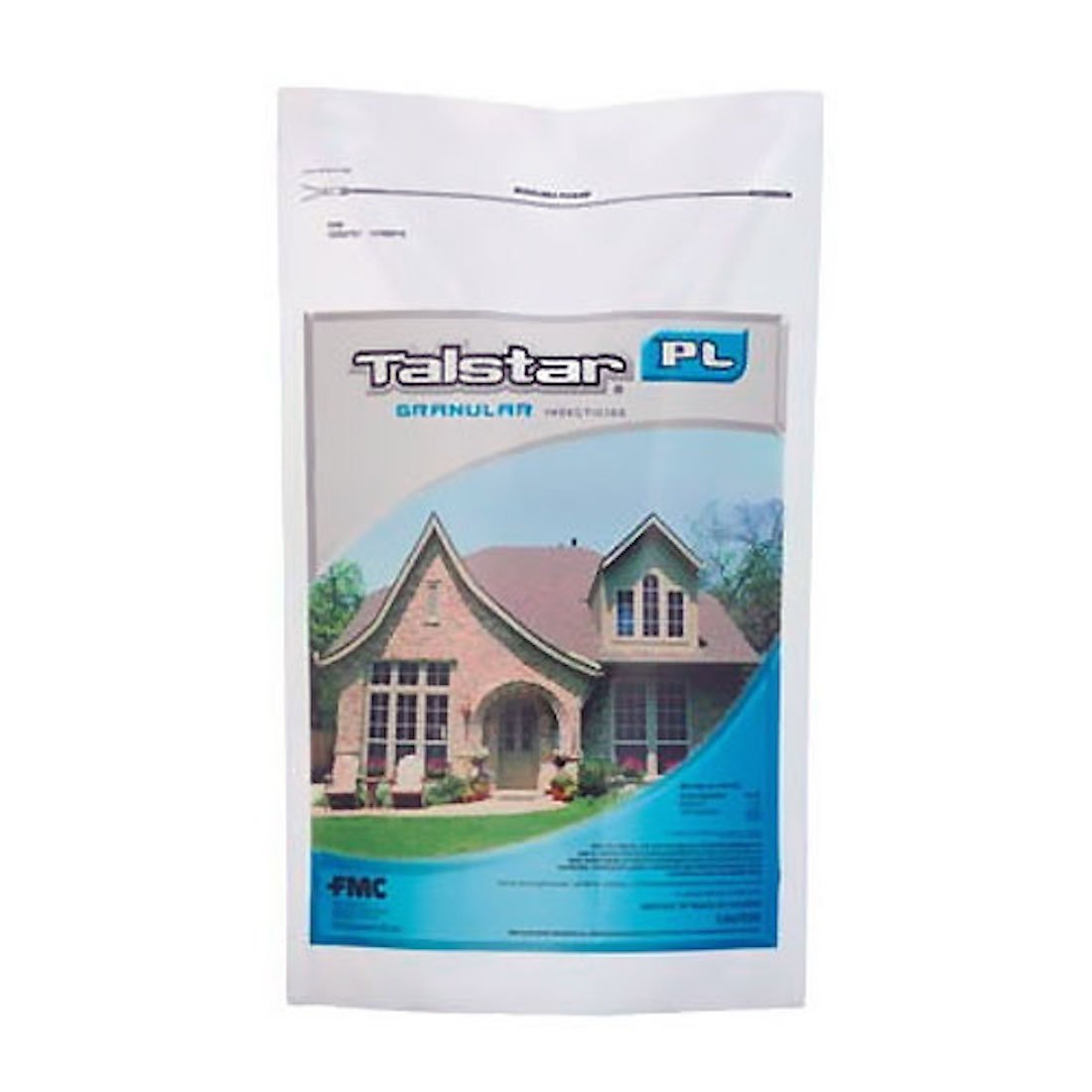
| Talstar PL Granules Insecticide★ Best Overall | Whole-lawn outdoor protection | Bifenthrin on a sand-core granule | 400 oz | 2 to 4 months | Amazon |
| Niban Granular Insect BaitBest for Crickets | Baited perimeter and indoor-edge control | Orthoboric Acid 5% | 4.2 lb | — | Amazon |
| Advion Insect Granular Bait | Spot and band treatment for ants | 0.22% Indoxacarb | 1 lb | — | Amazon |
| Sevin Lawn Insect Granules | Large yards with mixed pests | — | 20 lb | — | Amazon |
| Bifen Granules | Big lawns and multi-acre property | Bifenthrin 0.2% | 25 lb | — | Amazon |
Detailed Reviews
1. Talstar PL Granules Insecticide
Our pick — 4.5+★ from 750+ verified ratings; the strongest balance of quality and price.
The lawn defender that keeps working months after you scatter it, with no watering required.
The headline here is staying power. Talstar is built on a sand-core granule — think of a grain of sand coated in the active ingredient, bifenthrin — and that sand shuts down too deep for sun or a light shower to wipe out. The label states a 2 to 4 month residual, the longest of the five granules here. For you, that means one afternoon with a spreader covers the whole bug season instead of a monthly re-scatter.
It drives through mulch and grass to reach the soil where the nest is, and it does the job without needing a hose afterward — you just broadcast it. That solves the real pain of granular products, which is walking around the yard with a hose when you would rather be done. Buyers using it as their ant and flea defense for a full outdoor perimeter repeatedly describe it as the product that finally shut the ants down for good. Fire ants, grubs, spiders, and fleas are all in its lane.
The honest catch: bifenthrin is toxic to fish, so keep it clear of ponds and runoff toward water. It can also irritate skin if you handle a concentrated amount directly, so wear gloves while spreading. And it is a slow worker by design — one scatters are still seeing live ants for about two weeks before the colony falls. Give it that time rather than doubling the dose, because the label says a stronger mix only kills the ants on the surface and never reaches the nest.
What earns it first place
- The stated 2 to 4 month residual is the longest among the granules here — one application spans a season
- The sand-core carrier drops through mulch and grass to the soil, no watering needed
- Handles ants, fleas, grubs, and spiders, including fire ant populations
The trade-offs to plan around
- Toxic to fish — keep it away from ponds and water runoff
- Slow acting, so expect up to about two weeks before the colony breaks
- Skin irritation is possible if you handle concentrated amounts without gloves
Buy this if: you have a full yard, border, or foundation line to protect and want to scatter once, then forget it for months.
Pass if: your pond, koi, or stream is right against the treatment area.
2. Niban Granular Insect Bait
A bait, not a spray — insects carry the poison home and share it with the nest.
Niban is 5% orthoboric acid, which is just boric acid under its formal name, and it works as food the pest eats rather than a chemical that lands on it. That is the difference that matters for a basement or crawlspace full of spider crickets. The bait gets carried into the colony, so the ones you never see die too. It is labeled for ants (fire ants excluded), cockroaches, crickets, earwigs, silverfish, snails, and slugs.
Coverage runs about 6 oz per 100 sq ft, or 4 lbs across 1,000 sq ft, which makes the 4.2 lb bottle a decent match for a whole perimeter band. It goes down from the bottle itself, or you can load it into a mechanical spreader. One odd detail worth knowing: an 8 oz bellow hand duster will not push these coarse granules, so plan on the shaker or a spreader instead of a puffer.
What wins people over is plain function — this is the pick that handles the creepy crawlers sprays miss. Stone-and-crawlspace owners describe spider cricket numbers dropping night by night until the sightings stop, and a roach problem behind a stove and fridge went quiet for months after a failed spray. The mixed note is value: boric acid baits are not the cheapest per pound, and a few find the price a stretch. There is also a packaging quirk — the loose lid has let granules spill into the box on the way. Not a product fault, just shake it over a tray on arrival.
Best match: basements, perimeters, and dark damp corners where crickets, roaches, or earwigs settle in.
One limit: the label excludes fire ants, so use a bifenthrin granule for those.
Ideal for: anyone fighting a cricket or roach problem in and around the house who wants the bait to do the nest-clearing work.
Not the one: if fire ants are your target — the label leaves them off.
3. Advion Insect Granular Bait, 1-lb. Shaker Bottle

The shaker-bottle bait that turned an ant trail into a two-day cleanup job.
Advion runs on 0.22% indoxacarb, a non-repellent poison — meaning the insects do not smell it and avoid it, so they walk right into it. It also uses what Syngenta calls the MetaActive effect: the poison only switches on once a target pest eats it, which makes it less likely to affect non-target organisms. For you, that is a bait that focuses its fire on ants, roaches, crickets, silverfish, and earwigs without scattering harm everywhere.
The 1-lb shaker bottle is built for spot work — a band around the outside perimeter, or a few piles where you see the trail. Compared with the Talstar bag above, this is a targeted bait rather than a broad-lawn contact killer, so the two solve different problems. The ask from owners is a slow kill, and that is the point: the ants that grab the granules live long enough to carry the bait back and pass it around the colony. A week of patience tends to finish the job the first day starts.
Where this really shines is fire ants. Infestations that had people at their wits’ end vanish after a couple of applications a year, and one yard cleared its mounds within about a week once the ants took the bait. If a granule feels too big for tiny ants, crush a pellet into smaller bits and they will haul it away within minutes. It is a bait, so common sense applies: keep it off kids, pets, and food areas, and scatter it where the ants actually travel.
Why the ant crowd reaches for it
- Non-repellent 0.22% indoxacarb means insects walk into it instead of avoiding it
- The MetaActive effect switches the poison on only after a target pest ingests it
- Handles full fire ant mounds when given about a week to work
Where it asks a little of you
- The 1-lb bottle is spot-and-band size, not a whole-lawn bag
- It needs a week of patience — it baits the colony rather than dropping ants on contact
- Keep it clear of kids, pets, and eating areas while it is down
Grab it when: you can see the trail or the mound and want the colony wiped, not just the ants on your porch.
Look elsewhere if: you need to cover thousands of square feet of open lawn in one pass.
4. Sevin Lawn Insect Granules, 20 Pounds

Twenty pounds that treats the whole lot — lawn, ornamentals, and the strip around the house.
If you are managing a big lot rather than a single flowerbed, the size is the story here. This is a 20-pound bag labeled to kill over 30 listed pests, and it is cleared for use on lawns, ornamentals, around homes, and on vegetables. The label names ticks, fleas, worms, ants, and several other pests. That breadth makes it a one-bag answer for a mixed yard, where you are not sure whether the fleas came from the lawn or the shade bed by the garage.
The pattern owners describe is straightforward: it does the job on the creepy population. Garage and pole-barn owners cleared spiders, ants, and caterpillars under one spread. Where this bag beats a spot bait is pure bulk — you are not walking a trail with a shaker, you are covering ground with a spreader and moving on. Its listing also cites a USDA specification, meaning it met a defined standard.
The recurring honest note is about application, not the chemical. Scatter it evenly with a spreader rather than dumping piles, because an uneven coat leaves gaps where pests survive. A few find it less decisive than expected on their particular bug, which usually traces back to a skipped re-application or uneven coverage. Price-wise owners consistently call it a solid value for the ground it covers. Plan the spread for a calm day and get it watered in lightly if the label calls for it.
The spreader rule: even coverage with a spreader does more for results than any extra handful of product.
The value read: a 20 lb bag goes far across a lawn, so the outlay per square foot stays sensible.
Reach for it if: your yard is measured in acres and you want one big bag to treat lawn, beds, and the house edge together.
Think twice if: you just need to bait one ant mound — a spot bait is a better fit there.
5. Bifen Granules, 25 pounds

Twenty-five pounds of bifenthrin built for lawns, fields, and the long edge of a property.
Bifen is 0.2% bifenthrin on a ready-to-use granule, and it is labeled for outdoor use only — lawns, turf farms, golf courses, parks, and sports fields. This is the largest bag in the roundup, and that is its whole reason to exist. On a big property you want a bag you can load in a spreader and work across, and this is that bag. The spreading rate makes it go far: treating a lawn at roughly 2.25 lb per 1,000 sq ft turns the 25 pounds into serious ground.
The pattern from owners is that bifenthrin granules simply work on the fiddly stuff. An earwig problem that two professional visits had missed went to zero after a perimeter band and a light watering with the hose. Fire ant mounds dropped overnight when a quarter cup was mixed with a quart of water and poured on each hill. The granules are sand-like with almost no smell, and they hold up to rain — though if the forecast is dry, wetting them in with a hose is what gets them working.
Set expectations on duration. While the broad bifenthrin granule lasts 2 to 4 months on paper, the practical owner reports put ant control at roughly three weeks before another pass is wanted, so budget on reapplying a few times a season. The other catch: the listing labels the target species as fish, which is a strong hint to keep it well clear of ponds and runoff. Broadcast it with a spreader for whole-lawn control rather than spot-piling it on mounds, since the bag’s own directions point to the broadcast approach working better.
Where it earns its keep: a 25 lb bag on a large property, spread out with a hand spreader for perimeter and lawn in one pass.
The honest catch: plan on a re-scatter every few weeks for ants, and keep the granules away from any water feature or pond.
Pick it for: the homeowner with an oversized lawn or field who wants the biggest bag and the cheapest path per square foot.
Skip it for: small-town lots or garden-only work where 25 lb is more than you could use in a season.
Know the Specs
Active ingredient and percentage
The active ingredient is the poison or bait itself — bifenthrin, boric acid, or indoxacarb are the three you will see here. The percentage tells you how strong it is. A bait like Indoxacarb at 0.22% is a small dose meant to be eaten and carried home, while a contact granule like bifenthrin works on the insect it touches. Match the ingredient to your pest: bifenthrin and boric acid for ants and fleas, indoxacarb baits for fire ants and trails.
Residual time and granule carrier
Residual is how long the granule keeps killing after it is down. A sand-core granule can hold its stated 2 to 4 month window because the sand slows the breakdown, while a bait is designed to be eaten within days. Read the carrier and the residual together: a long-residual contact granule saves you re-scattering, but a shorter bait clears a nest completely. Neither is better — they suit different problems.
Common Questions
Do I need to water in granular insecticide after spreading it?
What is the difference between a bait granule and a contact granule?
Will Niban kill fire ants?
How much granule do I use per 1,000 square feet?
Are granular insecticides safe around pets and children?
Is bifenthrin harmful to fish and ponds?
How long do granular insecticides keep working?
Can I use these granules on vegetables?
Do granular insecticides work in the rain?
Why is my granular insecticide not working?
The Bottom Line
For a normal homeowner who wants to protect a lawn, border, or foundation line in one go, the granular insecticide winner is the Talstar PL Granules — it pairs a 2 to 4 month stated residual with a no-watering sand-core granule, and it does the job on ants, fleas, and grubs outdoors. If you want a bait instead, the Advion Insect Granular Bait puts 0.22% indoxacarb to work on fire ant mounds and trails, and a week of patience usually finishes the colony. And for a big lot where you want one wide bag, the Bifen Granules covers serious ground with a 25 lb bag. Talstar has the longest stated residual of the five, so for most yards it is the one to start with.
How we choose
We do not accept paid placement. Every pick is matched to a real buyer and a real use-case; we do not hands-on test units.
Sources
Specifications: manufacturer listings and product documentation. Review insights: verified customer reviews, as of October 2026. Pricing: not shown on this page (it changes often); check the current price via the retailer link.
As an Amazon Associate, Aappliancez earns from qualifying purchases. This does not affect which products we feature.