Disclosure: Some links in this post are affiliate links. As an Amazon Associate I earn from qualifying purchases, at no extra cost to you. Learn more
Specs are compiled from manufacturer listings and verified buyer reviews and can change over time — please confirm the key details on the product page before buying.
You want one thing from a GPS tracker with a kill switch: the power to stop your vehicle from starting when it is not where it should be. The app, alerts, and geofences matter, but they come after the wiring choice. The catch is that a kill switch only works when the wiring is right and the service is active, and those two details separate a tracker that protects you from one that frustrates you. Below you get seven units ranked by how well they deliver that core promise, plus the install and subscription catches you need to know before you buy.
This guide is built by comparing the manufacturers’ published specifications and the patterns across verified customer reviews, so you get each pick’s real strengths and trade-offs instead of marketing spin.
Some units need a professional install, others plug into your diagnostic port in minutes, and a few bundle service so you never face a monthly bill. The picks below include hardwired, plug-in OBD, and service-bundled units. Read on for the gps tracker with kill switch picks that actually let you cut the engine.
Top Picks

How To Choose The Best GPS Tracker With Kill Switch
The first decision is whether the unit is hardwired or plugs into your OBD port. A hardwired tracker taps into the ignition and power wiring behind the dashboard, which is what lets it cut the starter. A plug-in OBD tracker uses your diagnostic port and generally tracks location and driving data without a true engine cutoff. Know which one you are buying before you compare anything else.
Hardwired relay versus plug-in OBD
A hardwired unit includes a relay that interrupts the starter circuit, so you can prevent the engine from starting remotely. That is the real kill switch. The trade-off is installation: it connects to your power and ignition wiring, and on complex vehicles or push-button start systems a professional installer is often the safer route. A plug-in OBD tracker installs in minutes but typically does not include a starter-interrupt relay.
What the kill switch actually does while you drive
On these units the relay prevents the vehicle from starting once the ignition is turned off. It does not shut the engine down while the car is moving. That design is deliberate — cutting power mid-drive would be dangerous. So think of it as an anti-theft lockout for a parked vehicle, not an emergency stop button.
The service plan question
Every cellular tracker needs a data plan to send location and receive commands. Some ship with a service period included, after which renewal is optional. Others require a subscription from the start, and the kill-switch feature may sit behind a higher plan tier. Read the plan details before you buy, because a tracker with no active service cannot receive a remote command.
Coverage and accuracy limits
These devices rely on cellular networks, so a dead zone means no live updates and no remote commands. Accuracy also varies — some units land within roughly 50 feet, others drift more. Geofence alerts can arrive late when the vehicle sits still. Set your expectations around the network, not just the hardware.
Side-by-Side Comparison
| Model | Best For | Kill Switch | Connectivity | Install Type | Amazon |
|---|---|---|---|---|---|
| Mini PRO II 4G GPS Tracker★ Best Overall | Everyday anti-theft on a budget | Remote ignition cutoff | Cellular | Hardwired relay | Amazon |
| SPY SPOT GV53MG (B008YHR04U)Fleet Favorite | Fleet and rental monitoring | Remote starter disable | 4G LTE | Hardwired behind dash | Amazon |
| SPY SPOT GV53MG (B00H8AO8WG) | Driver monitoring and teen tracking | Remote ignition disable | Cellular | Hardwired behind dash | Amazon |
| GPS7000 G1 Hidden Tracker | No-subscription plug-and-play | Not included | 4G LTE | 2-wire battery connection | Amazon |
| Trackhawk VL03 | Driver behavior and fleet security | Integrated kill switch | 4G LTE + 3G/2G fallback | Hardwired with backup battery | Amazon |
| Moto Watchdog OBD Tracker | No monthly fee, quick install | Not included | Cellular | Plug-in OBD | Amazon |
| TrackmateGPS Dash T11 | Full fleet control and remote lock | Remote engine kill switch | AT&T and T-Mobile SIM | Hardwired | Amazon |
Detailed Reviews
1. Mini PRO II 4G GPS Tracker for Vehicles with Kill Switch
Our pick — 4.5+★ from 550+ verified ratings; the strongest balance of quality and price.
The small, weather-ready tracker that hides easily and still cuts the ignition.
For a first anti-theft setup on a personal car or a work truck, this is the one that balances price, size, and a genuine hardwired relay. It measures 3.4 x 3.4 x 0.5 inches and weighs 1.76 ounces, so it tucks behind trim or under a seat without drawing a second look. The hardwired ignition relay is what lets you disable the vehicle remotely.
Owners praise the software most. You get real-time tracking and route playback, plus update intervals as fast as every 5 seconds on the right plan, so you can see exactly where the vehicle has been. One buyer summed up a short install: “Simple 30-min install, up in an hour.” The ABS plastic housing (a tough, weather-resistant plastic) is built to handle rain and snow, which matters if the unit lives near a wheel well or under a hood.
The catches are a 6-hour internal battery and an occasional monthly reporting dropout. Rated battery life is 6 hours for the internal cell, so this is a vehicle-powered device, not a standalone one you can leave running for days. Some units stop reporting roughly monthly until support pushes a remote reset — an older SIM is the usual suspect, and a free replacement is the fix. Budget for the cellular plan too, since the kill switch and live tracking both depend on active service.
What earns its keep
- Hardwired ignition relay for real remote engine disable
- 1.76-ounce body hides in tight spaces
- 5-second update intervals on higher-tier plans
- Weather-resistant ABS shell handles rain and snow
What to plan around
- 6-hour battery means it needs vehicle power to stay live
- Occasional monthly dropout fixed by a remote reset
- Cellular plan required for tracking and kill switch
Great fit for: a single personal vehicle or small work truck where you want a concealed relay without overspending.
Think twice if: you need days of standalone battery life — this one counts on the car’s power.
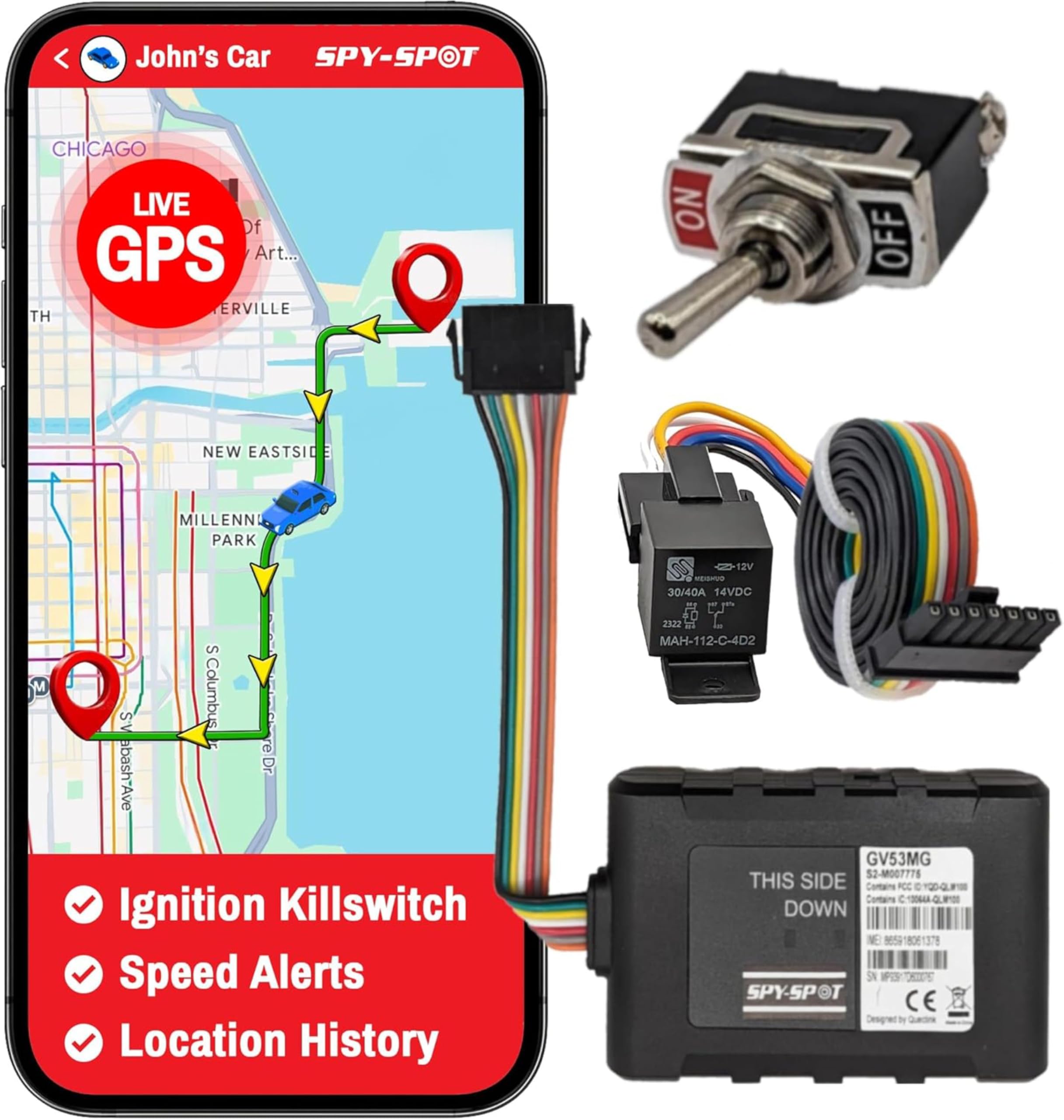
2. SPY SPOT GV53MG 4G LTE Hardwired GPS Tracker with Kill Switch
The fleet-minded unit that safeguards the starter and keeps six months of trip history.
If you run several vehicles or rent them out, this is the pick built for that job. It tracks multiple vehicles from one account dashboard, keeps up to six months of location history, and covers the United States, Canada, Mexico, and Puerto Rico on a pre-installed 4G LTE SIM. It is noticeably more compact than the Mini PRO II — 2 x 1.8 x 1 inches versus 3.4 x 3.4 x 0.5, a tighter footprint that slips behind a dashboard with less fuss.
What owners value most is how closely it follows the route. The locator pins the vehicle by the minute on many plans, and the software layers in geofence alerts, speed notifications, and ignition on/off reports. The kill switch is the safe kind: it prevents a restart once the ignition is off, so you are never cutting power mid-drive. A 190 mAh internal cell keeps the draw on your car battery low while parked.
The trade-offs are a required subscription and a hardwired install that often needs a pro. Installation gets mixed reactions — some buyers are done quickly, others find the instructions thin and call in a pro, and a hardwired relay in a push-button-start car is not a weekend DIY for everyone. Value is also a split verdict: the subscription is required and some find the plan pricing steep. And this is not a plug-in — budget for an installer if wiring is not your thing.
Where it shines: multi-vehicle management, six months of history, and starter-interrupt safety make it a serious anti-theft and oversight tool.
The honest catch: it needs a subscription and often a professional install, so plan for both before you commit.
Worth it if: you manage a fleet, a rental, or several vehicles and want one dashboard for all of them.
Pass if: you want a quick plug-in with no installer and no monthly plan.
3. SPY SPOT GV53MG 4G LTE Hardwired GPS Tracker with Kill Switch
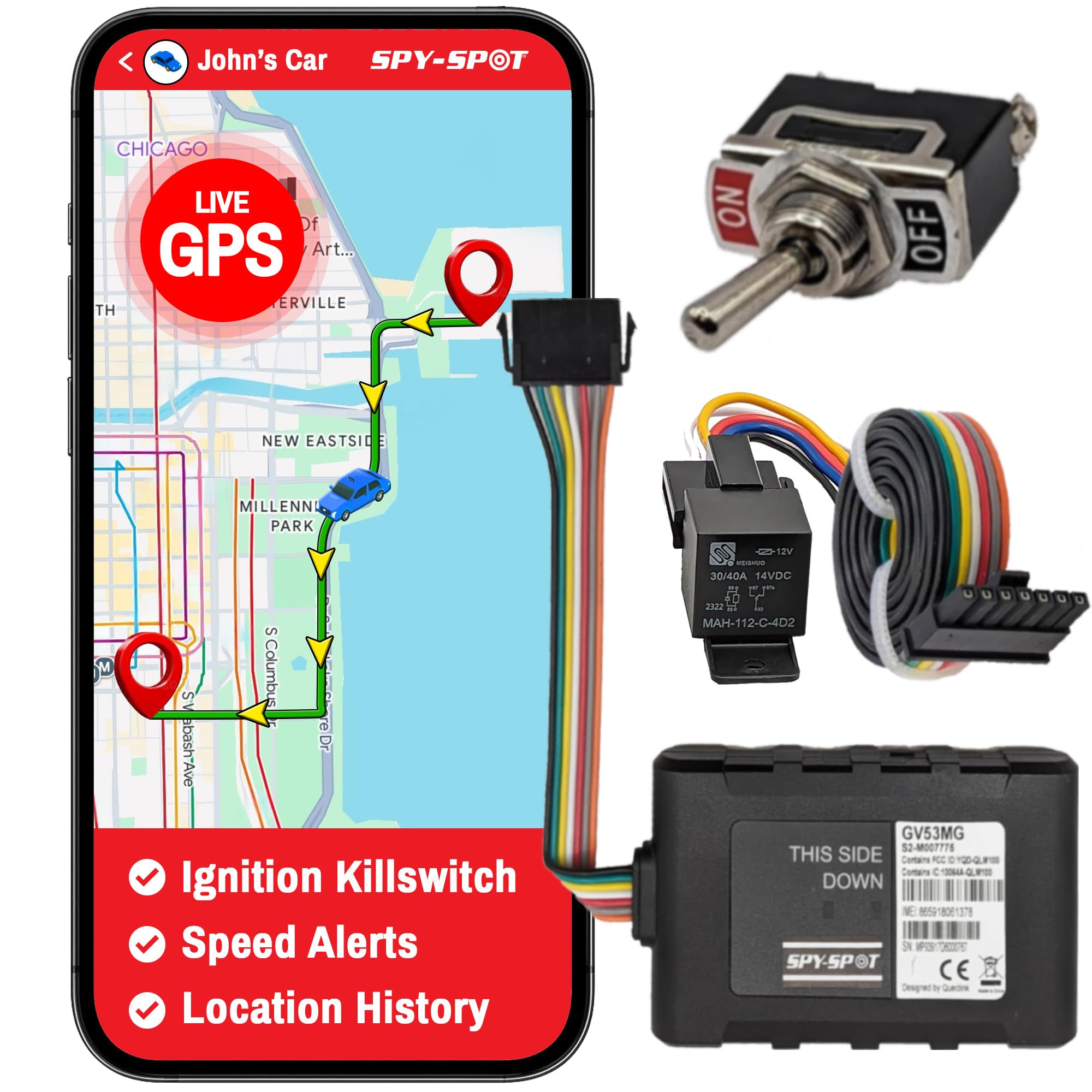
Aimed at parents and fleet bosses who want to see speed, routes, and who started the car.
This version leans harder into monitoring than the pick above. You get location, speed, route history, and ignition on/off events, plus geofence alerts when the vehicle crosses a boundary you set. The remote starter interrupt works the same way — prevent a restart after the ignition is off, which suits driver oversight and theft protection alike.
Coverage spans the United States, Canada, and Mexico, and the app or web portal works from a phone, tablet, or computer. The subscription is required, and premium plans step up to minute-by-minute updates while budget plans drop to hourly reporting. The relay hardware is discreet enough to stay hidden from a casual attempt to remove it.
The main thing to know is a battery-drain risk. At least one owner found the unit reporting every 60 seconds despite a 60-minute setting, which drew the car battery down — an outlier, but a reminder to verify your settings after install. Installation is best handed to an audio shop or service center, and the kill switch may need a call to support to activate on some plans.
The read: strong for teen-driver monitoring and fleet visibility, with the same safe starter-interrupt design as its sibling.
Keep an eye on: confirm your report interval and plan tier after install so the unit does not over-report and stress the battery.
Reach for this if: you want speed and ignition reports to keep tabs on a teen or an authorized driver.
Look elsewhere if: you want a no-install, no-plan plug-in tracker — this needs wiring and service.
4. GPS7000 Hidden GPS Tracker
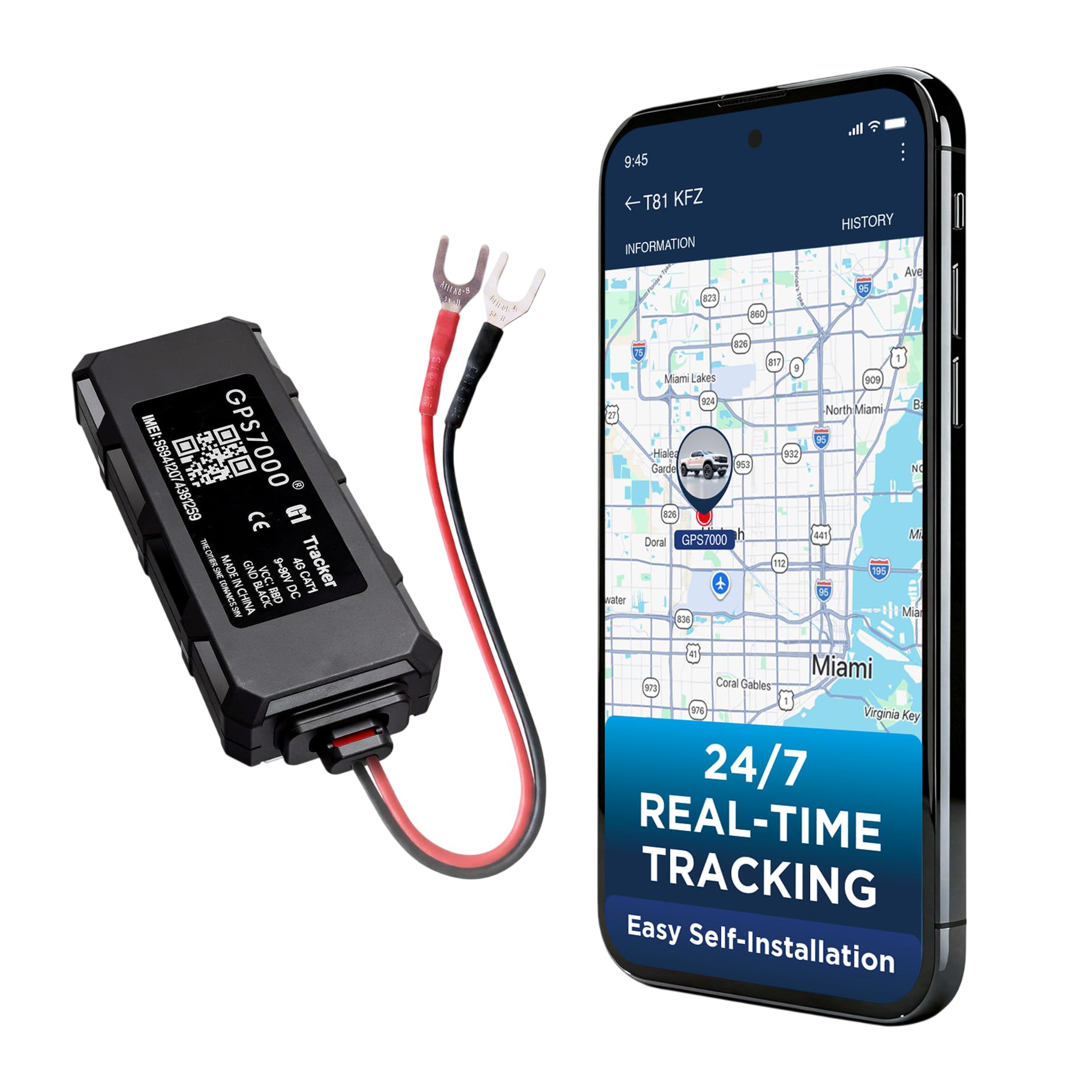
Twelve months of service baked in, and a two-wire hookup that skips the mechanic.
Here is the pick for anyone who hates the idea of a surprise subscription. It ships with service already active for 12 months, and after that renewal is optional on a monthly basis you can cancel any time. The install is a simple two-wire connection to your vehicle’s 9–30V battery — no OBD port and no pairing. It is not suitable for vehicles above 30V, so e-scooters and e-bikes are out.
The tracking side runs on 4G LTE across all 50 states plus Mexico and Canada, with live location, speed, route history, geofence alerts, and driving behavior reports on iOS, Android, Windows, or Mac. The body is small enough to hide with the included Velcro, and it suits cars, trucks, trailers, RVs, and fleets. This is a location and reporting device rather than a true kill switch — there is no starter-interrupt relay — so treat it as an anti-theft witness, not an engine cutoff.
The recurring gripes are accuracy and app access after the included period. A few buyers report the location drifting or the app locking them out once the free window ends unless they pay — so read the renewal terms closely. Others find setup smooth with responsive support. The 58-gram unit is easy to place, though mounting it under the hood makes it easy for a thief to spot and pull.
The value story
- 12 months of service included up front
- 2-wire battery hookup installs in minutes
- 4G LTE coverage across the US, Mexico, and Canada
- Works on iOS, Android, Windows, and Mac
Worth knowing
- No starter-interrupt kill switch
- App access depends on an active plan after the included period
- Hood mounting leaves the unit visible to a thief
Best for: trailer, RV, and fleet owners who want tracking with no monthly bill for the first year.
Not for: anyone who needs to actually cut the engine — this one tracks and reports only.
5. Trackhawk VL03 GPS Tracker

Watches how the car is driven, then lets you shut it down when it should not be moving.
The differentiator here is driver-behavior monitoring. It flags harsh braking, rapid acceleration, and sharp turns, then sends alerts so you can see how a vehicle is being treated. Pair that with the integrated kill switch and you get both accountability and control. Connectivity runs on GPS plus 4G LTE with 3G/2G fallback, so it holds a signal where a pure-4G unit might not.
Functionality is what wins owners over, and the location accuracy and kill switch both get consistent nod. The remote disable can be enabled or disabled with no fuss, and a built-in backup battery keeps monitoring alive through power interruptions. The kit includes the tracker, wiring harness, relay, and a manual override switch, and it runs on the Trackhawk fleet app for iOS, Android, and web.
The caveats are a reported unit failure inside a year and a plan some call steep. At least one unit failed inside a year and blocked a truck from starting until the ignition was rewired — a single case, but enough to make you keep the manual override switch handy. Value divides opinion; some find the plan reasonable, others call it steep. Installation runs about an hour on a familiar vehicle, and the instructions are thin, so many lean on outside guides.
What it does well: behavior alerts, remote kill, and backup battery make it a strong choice for rental and delivery fleets.
The caveat: keep the override switch accessible and treat the wiring install as a careful job, not a rush.
Choose this if: you want to see how drivers treat the vehicle and still hold a remote engine lockout.
Skip if: you are not comfortable with hardwiring and want a simpler setup.
6. GPS Tracker for Vehicles, No Subscription, No Monthly Fee
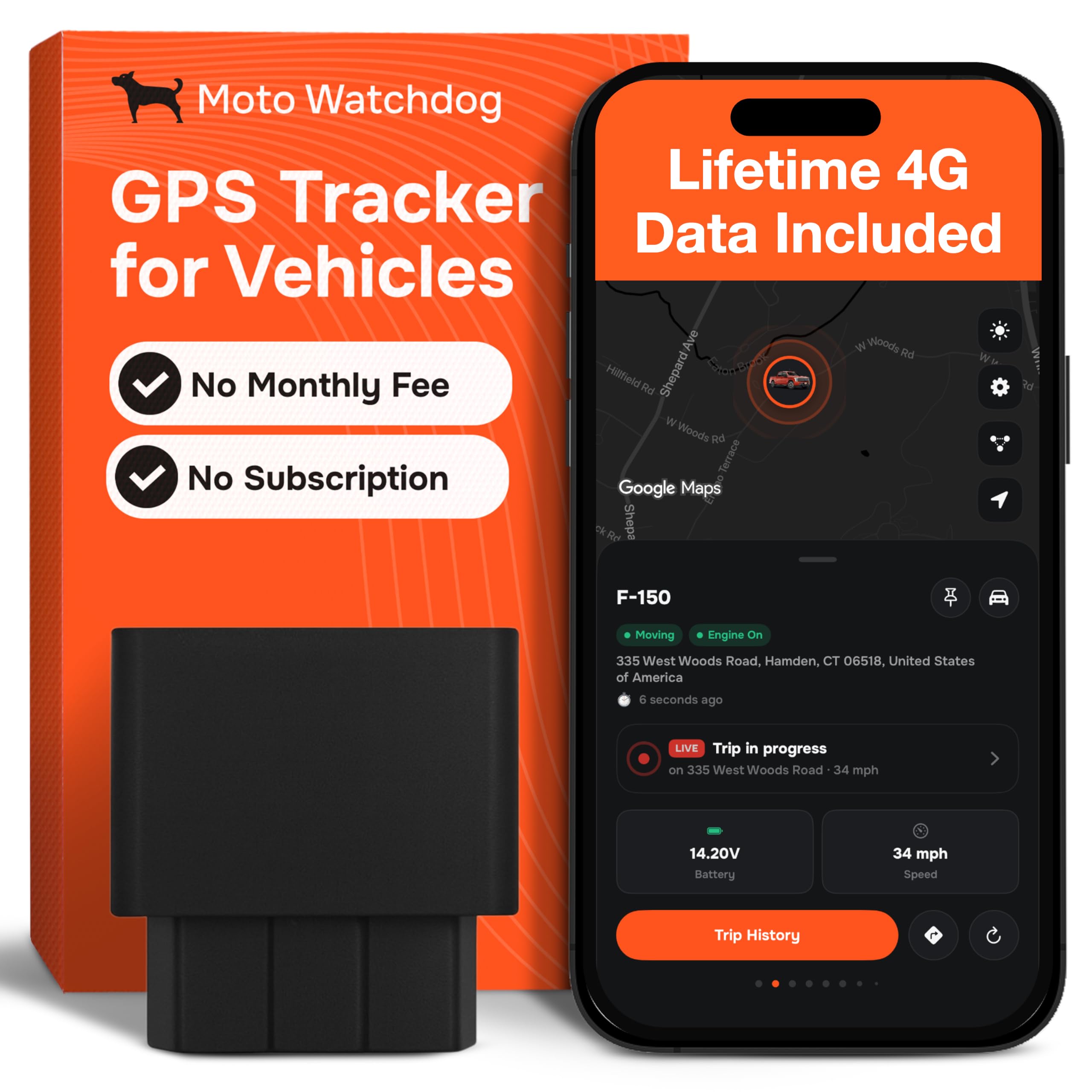
Plug it into the OBD port, skip the monthly bill, and start tracking in minutes.
This is the one to grab if the subscription model is your biggest objection. There are no activation fees and no monthly charge, and it works in 170+ countries including the US, Canada, and Mexico. Setup is a plug into your OBD port followed by a short calibration drive. A 200 mAh cell backs it up, though you should treat it as vehicle-powered for daily use.
Tracking is real-time with instant alerts, customizable geofencing, route history, and mileage and speeding monitoring — and you can move the unit to another vehicle without a new fee. A strong magnet holds it in place, and the app is simple enough to manage a fleet from one screen. What buyers like most is that it does the core tracking job without a recurring bill hanging over them.
It needs a roughly 12-mile calibration drive during which the app can look dead, and a few units throw false movement or trip alerts even after sensitivity is lowered. This is a location tracker, not a kill-switch unit — there is no starter interrupt, so it deters and documents rather than disables. A rare reviewer reported inaccurate trips and unresponsive support, so buy from a seller with easy returns.
Bottom line: the straightforward pick for families and small fleets who want location and mileage data with zero monthly cost.
Trade-off: no engine cutoff, and the calibration drive plus the odd false alert take some patience.
Pick it if: you want real-time location and history without ever paying a subscription.
Look elsewhere if: you specifically need to disable the engine remotely.
7. Dash T11 Fleet GPS Tracker for Vehicles Motorcycles Trailers

The control-freak option: remote door locks, engine kill, and a horn you can trigger from your phone.
This is the most feature-loaded pick of the group, and it is built for fleets first. Beyond live tracking, you can remotely turn the ignition on or off, lock and open up doors, and sound the alarm-horn from the app. Geofences trigger enter and leave alerts, and driving history plays back routes, idling time, harsh acceleration, and harsh braking. A dual SIM runs on AT&T and T-Mobile networks at once, with a worldwide provisioning option.
It also monitors fuel gauge and odometer, and the app supports groupings and tags to sort your vehicles. The 4.96-ounce metal-housed unit installs in about 30 minutes on a familiar vehicle, and it is compact enough to hide away. For a rental operation, you can send renters a temporary link to locate and open up the car — a genuinely useful touch.
The recurring friction is a roughly monthly dropout that needs a remote reset. Some units stop updating roughly every month until support pushes a remote reset, and occasional SIM issues have been replaced under warranty. The app and web portal can also show a command as sent without confirming the vehicle received it. Owner support is fast, often same-day, which is why most people stay happy.
Where it leads the pack
- Remote engine kill, door locks, and horn from one app
- Dual AT&T and T-Mobile SIM with worldwide option
- Plays back idling, speeding, and harsh-driving reports
- Temporary renter link to locate and open up the car
Where it asks patience
- Occasional monthly dropout needs a remote reset
- App and web should confirm commands were received
- Full feature set assumes an active service plan
Made for: fleet owners and rentals that want remote lock, engine kill, and behavior reports in one place.
Weigh first: the command-confirmation gap and periodic resets mean you still want a backup plan for a dead connection.
Know the Specs
Kill switch and starter interrupt
The relay that lets you prevent a restart once the ignition is off. It is an anti-theft lockout, not an emergency stop — the engine does not cut while you drive. Look for a unit that states this safe design clearly, and keep the manual override switch reachable if one is included.
Hardwired versus OBD install
Hardwired units tap power and ignition wiring behind the dash. That wiring is what enables a true starter interrupt (a remote engine cutoff), but the job often needs a professional. Plug-in OBD units (they plug into the onboard diagnostics port under the dash) install in minutes and skip the wiring, but they generally lack engine cutoff. Pick based on if you need to disable the vehicle or just track it.
Cellular bands and coverage
A 4G LTE unit with 3G or 2G fallback holds a signal where a pure-4G device drops. Coverage across the US, Canada, and Mexico matters for travel and fleets. In a dead zone you get no live updates and no remote commands, so the network is as important as the hardware.
Update intervals and history
Faster intervals like every 5 seconds or by the minute give near-real-time movement, while hourly reporting saves data on budget plans. Longer history, such as six months, lets you review past trips. Match the plan tier to how closely you need to follow the vehicle.
Service plans and included periods
Some trackers bundle a service window such as 12 months, then make renewal optional. Others require a subscription from day one, and the kill-switch feature may sit on a higher tier. The device cannot receive commands without active service, so factor the plan into your choice.
Battery and power draw
Internal cells on these units are small — rated in hours or milliamps — and are meant as backup, not primary power. They run off the vehicle’s battery while parked, so low draw matters. On hardwired units, verify report settings after install to avoid draining the car battery.
Common Questions
Does the kill switch stop the engine while the car is moving?
Can I install a hardwired kill-switch tracker myself?
Do I need a subscription for the kill switch to work?
Which tracker works without a monthly fee?
How accurate are these trackers?
Will a hardwired tracker drain my car battery?
Can I move the tracker from one vehicle to another?
Does the kill switch work outside the United States?
What happens if the vehicle loses cellular signal?
Can a thief find and remove the tracker?
The Bottom Line
For most buyers, the gps tracker with kill switch that earns the top spot is the Mini PRO II because it pairs a genuine hardwired ignition relay with a 1.76-ounce body that hides easily. If you manage several vehicles or rent them out, the SPY SPOT GV53MG adds multi-vehicle management and six months of history. And for a no-subscription tracker with a two-wire install, the GPS7000 bundles a full year of service.
One honest nudge before you decide: the starter interrupt is the core promise of this category. If disabling the vehicle is your whole reason for buying, stay with the hardwired picks. If you mostly want to watch location and mileage, skip the wiring hassle and go plug-in.
How we choose
We do not accept paid placement. Every pick is matched to a real buyer and a real use-case; we do not hands-on test units.
Sources
Specifications: manufacturer listings and product documentation. Review insights: verified customer reviews, as of October 2026. Pricing: not shown on this page (it changes often); check the current price via the retailer link.
As an Amazon Associate, Aappliancez earns from qualifying purchases. This does not affect which products we feature.